She Who Conquers: Jane Alm and Paisley’s Life After the Lab
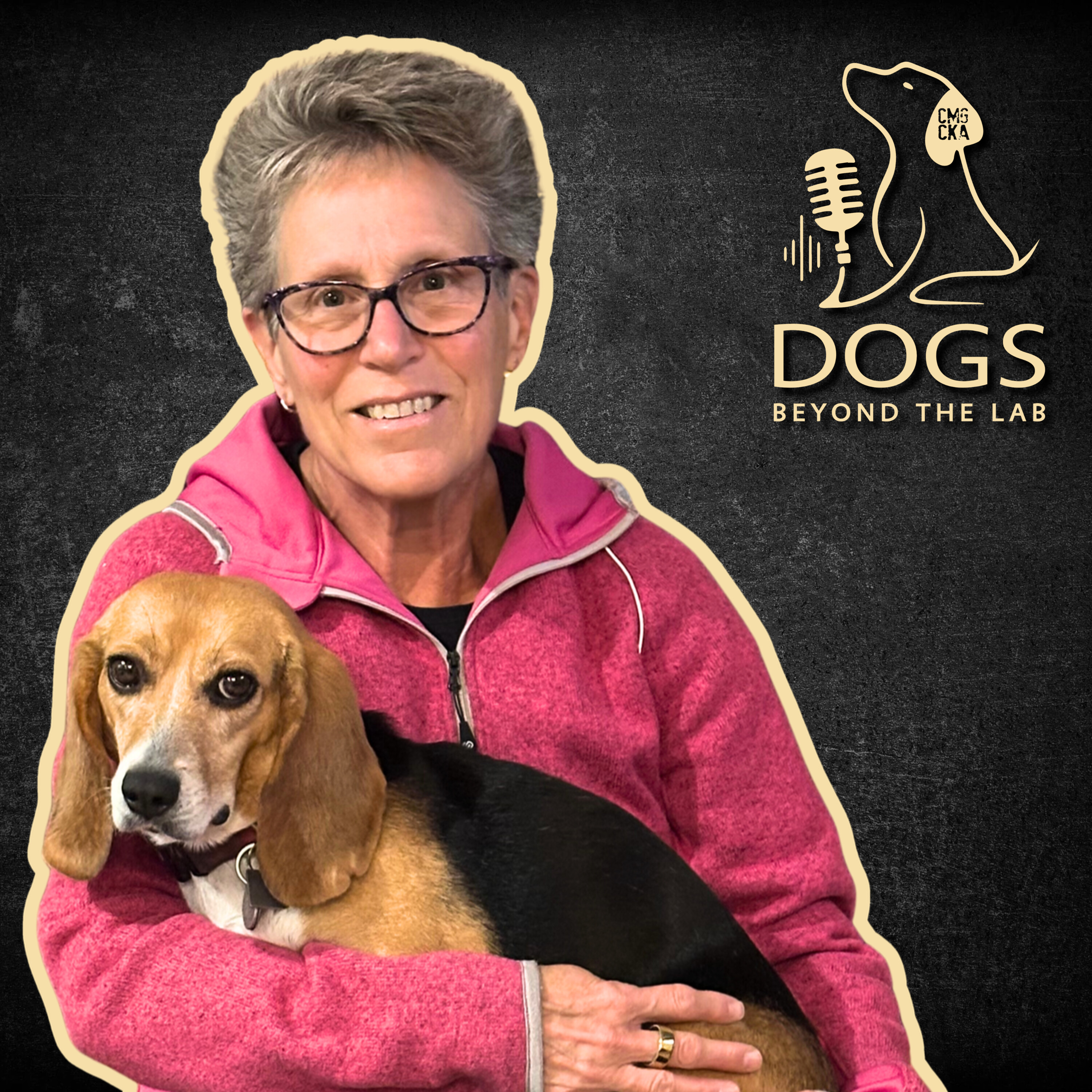
When Jane Alm brought Paisley home, the former research beagle was so shut down that even drinking water, accepting a treat, or stepping outside felt overwhelming. Jane began by sitting nearby and reading, giving Paisley time to feel safe.


Jane joins John Ramer, Lori Cohen, and Chelsey Marino to share how patience, routine, and small steps have helped Paisley begin to trust. From her first confident walks to initiating play with fellow beagle Oban, each breakthrough offers a glimpse of the dog she’s becoming.
Jane also shares the value of keeping a progress journal, finding support from other adopters, and meeting a fearful dog where she is. Together, they explore how sharing these stories can raise awareness about animal testing and life after the lab.
For anyone adopting, fostering, or learning to understand a fearful dog, Jane and Paisley’s story offers practical insight and plenty of hope.
John Ramer 0:00
I'm John Raymer from Kindness Ranch Animal Sanctuary in Wyoming,
Chelsey Marino 0:04
and I'm Lori Cohen from the Beagle Alliance in Manitoba, Canada, and I'm Chelsea Marino from Keeper and Kin in Charlotte, North Carolina, and this is Dogs Beyond the Lab. Welcome back to Dogs Beyond the Lab. I am so so so very excited for our guest today. I am really excited for you to hear her story because to me, she is the epitome of what a committed patient adopter is. So much to the point where I didn't know if this dog would succeed as much as she has, and it is all because of Jane. And I was talking to to John before we started recording here, and I told him that Twinkle was her name at the beginning, came from Kindness Ranch, and I was there and evaluated her. And towards the end of my stay, I have conversations with John about the dogs and Twinkle was so shut down. I was very close to telling John, I don't know if this dog should go to Beagle Alliance at this point. I don't know if she's ready to go into a a foster or adoptive home. I think she needs time to stay here and open up. I I just don't think she's going to do well. I think that she's going to hide from them. And you know, I I wasn't sure. And um, I didn't say it because I trust kindness and I trust Beagle Alliance. And I told Lori, Lori, this dog has to go with somebody who is patient and committed, and who does the work because she will not succeed if that doesn't happen. And so Jane got twinkle, and Jane called me, you know, knowing that we're going to have to put in some work. And the first phone conversation, Jane, I don't know if I ever told you this, but the first phone conversation you and I ever had, I hung up the phone and I went to my husband and I said she's going to be on the podcast one day because I just knew at that point that this was going to be so successful. I am so very excited. Jane is here, as you can tell. I'm very passionate about the work that she is doing with Paisley, who was Twinkle before. So, Jane, thank you so much for coming on the show. Oh, thank you for having us. Hi, sweet Paisley, the velvet goddess with the longest, most beautiful years ever.
John Ramer 2:27
She looks amazing, doesn't she? Though
Lori Cohen 2:30
she truly reminds me of Poppy, but that's not why I adore her. She is her own dog, and she's gorgeous.
Chelsey Marino 2:38
There's so many angles to to this story, because obviously Jane and I have a great relationship, and Lori and Jane have a great relationship, and Twinkle Paisley came from kindness, so we're all connected here. So if I think we start with Jane and tell us life before Paisley, and then I also at some point, want to hear you know the conversations you first had with Lori when you know the type of dog that you might be getting, and you know what was your thoughts when all of that was happening?
Lori Cohen 3:11
And they go way back, Jane. There wasn't it wasn't 100% that you were going to take a former research beagle.
Speaker 1 3:17
No. So to start with, I was a financial wealth advisor, senior wealth advisor for 48 years. I had decided I was retiring a few years ago, and I had set the date for the end of January 2026. We have had beagles since 1998, so we've had a total of six and seen, I think every spectrum of personalities that could possibly exist, from really dominant to really submissive. Last November, November 2025, we lost our our little one who was 11 and a half years old to cancer. We knew we wanted one more because, given our age, we're kind of going. You know, we want to be around longer than the dogs, not vice versa. So, what do we want to do? Do we want a puppy? Do we want a research dog? Do we want a rescue? Like, what do we want to do? So, Lori and I have had conversations off and on for probably about since you guys have been in existence. Because I've been supporting you since then about you know the dogs and about what happens and what's going on, and I should say that I studied pharmacology in university, so I have a pretty good idea of of lab life from that perspective. I didn't finish, so I didn't have to go down that road, but I'm glad I didn't finish in in hindsight. In December, I talked to Lori. We talked a lot about what happens, what the process is. If I wanted a research beagle, what is the process? How do I put an application? How does this work? How is it determined? So fast forward to February, I'm retired. Now my husband has hip replacement. Then we fast forward to March, and I get a phone call from Lori asking, "Are you ready to have a research talk?" And I look, I went up to talk to my husband, who is still in his, still mostly in bed at that point, and he said, "Yeah, go for it." Me full well knowing that the responsibility was going to be like 99% mine because he just wasn't going to be physically able. Laurie at that point didn't know what the dog who the dogs were, so she knew she was getting bringing five, but she had no idea gender, age, anything at that point. The first time I knew that Paisley was shut down was actually when I was picking her up. So I drove three and a half hours to another city to pick her up and met Lori there. And when she saw me, she said, "This is the most shut down dog she's ever seen. Are you okay?" And I went, "Yep, I'm good." So then we, I was alone because my husband couldn't drive that far at that point. We got in the car to come home, and we got to drive through a snowstorm for. It was
Lori Cohen 6:09
nasty. It was terrible, Jane. Remember? Yeah,
Speaker 1 6:13
I I do remember. And so being alone in the car, there was no way I was stopping anywhere other than maybe a drive through to grab a bite to eat because this was taking a heck of a lot longer than it should have. Little Miss Paisley Twinkle at that point had diarrhea three times in her kennel, so it was not a fun ride for either of us. But we made it. When I got home, my husband met me in in our garage, and we've got an entrance into the house from the garage, and I handed her to him and wiped her off really well, and then pulled the kennel out and cleaned it out. Then put her back in the kennel to bring her in the house to meet our other dog. And Oban, he's five. He's super submissive, super timid, super shy. He basically sniffed the kennel and walked away. I went, oh, okay, you know that's better than the the alternative. She came out of the kennel a little bit. Took her probably three days before she would come out of the kennel when we were out in the open. She would sit on our sofa and cower and just tremble the entire time for the first probably five or six weeks, for the first three weeks, at night she wouldn't come out of her kennel. I had to actually physically take her out every morning so she could go to the bathroom and have something to eat. She always had a great appetite. She would not drink water. Period, unless it was in her food. There was nothing about water. Nothing about water that she would have anything to do with. So one day I was walking open and I thought, well, she likes yogurt. So I thought, well, let me just try dissolving some yogurt in her water, and that was a hit. So I finally had her drinking water, and we, working with my vet,
Chelsey Marino 8:00
we said, okay, how much water should she consume? And I was just very careful about making sure she got enough. Fast forward to today, so this is now four and a half months. She'll drink water occasionally from a water bowl, still not regularly, but she'll drink water with broth in it. Now she'll drink water if she likes fruit, she likes cherries, and she likes strawberries, and she likes blueberries, and she likes chicken and cheese and cucumbers. So as long as they put something in it, she'll drink it. We did a. I called it. Let's teach her to bob for apples. And so we're expanding her palate and seeing if we can get her to bob for bob for pears was the first one, and just kind of see if it's just yogurt, or you know, expand her palate, see what we can do.
Speaker 1 8:45
Yeah, and so now she drinks. Now she she's drinking some from our plain water bowl occasionally, but still not regularly. So is still keeping on doing it. She's really come out of her shell. I would say in the last three or four weeks, it's been frankly amazing. It's been the first six weeks. I sat and read next to her. I at first she was on the floor on a bed, dog bed, because she couldn't get onto the sofas or chairs. I would just sit there and read my book next to her, and then I moved to sit down on the dog bed next to her, so she would let me sit closer. And then I was sitting in a chair, and I would lift her on my chair and read my book. And this is hours at a time. I was reading about a book a day, is how many hours I was spending doing this. Potty training was non-existent at that point because I was more worried in having about her trusting and about her being okay than about anything else. She did have a stint of Giardia, which slowed down potty training too. But that's besides the point. So after we started doing that, a. Little bit. She started to. She wouldn't come to us. You'd have to put the foot down and turn away if she wanted her to eat. If you wanted her to drink, you had to be a long way away. She wouldn't take a treat. That took a long, long, long time. Outside was scary. Every time the wind blew, we have wind chimes, and lots of dogs in the neighborhood. Okay, I'm gonna put you down, Kate. There you go. Every time the leaves blew, every time somebody started a a horn, she would just freeze. She loves outside now. I have to work to bring her in. She doesn't care if there's a thunderstorm. The thunder can be over her head, and she doesn't. It doesn't bother her.
John Ramer 10:43
At the risk of all of this starting to sound kind of like an infomercial for Keeper and Ken. At at what point did you reach out to Chelsea, and can you describe what the process was like once you started working with her.
Speaker 1 11:02
Laurie was influential in through all of this. I say I wouldn't be where I am today with Paisley with Chelsea, but I wouldn't have Paisley if I hadn't known Laurie. So I want to say that, and we wouldn't have her if we didn't have you, John. So it's kind of everybody's it's everybody's journey, not just ours.
John Ramer 11:23
No, thank you.
Speaker 1 11:24
Yes, thank you, Jane. One of the things that Laurie and Chelsea had done was a town hall for new adopters, and I went on that town hall. That's where I met Chelsea. As soon as we got off that town hall, I was on to Chelsea to phone her to say, "Okay, where do we go from here? If I want to do privates, how do I do this? Because I've had a lot of dogs in my life. I've never had one like this. I cannot do this alone." And I was really upfront that I cannot do this alone. At points, I wasn't sure I could keep her because I wasn't sure how much I had to give. I guess is the real question.
Lori Cohen 12:06
I think that's a common thread, and I just want to see how it played out with you, because I I know you're very thoughtful and self reflective, and just wanting to offer the right experience and and all that you have to give. So, just I think it's a common thread. Not so much that you didn't know if you could keep her because of her. It was because you weren't sure that you were the right
Speaker 1 12:30
person. So, what did that look like for you? What What did you think that what was missing? Did I personally have the patience and determination and resilience to be able to deal with all the ups and downs.
Chelsey Marino 12:46
Gosh, and you know that makes of all people. I'm just I'm laughing because
Lori Cohen 12:53
of all people sitting reading.
Chelsey Marino 12:54
You are the epitome to me of patience and resilience for her. And I don't know. I don't know you prior to Paisley, but I mean, I could just boast about you all day, and I probably will throughout this episode. It's funny to me to hear you wonder: Do I have enough patience?
Lori Cohen 13:13
Jane is Paisley's role model. Essentially, everything, all the resilience that Jane exhibited, is exactly what Paisley needed. I think
Chelsey Marino 13:24
what's great about Jane is she helps Paisley and she lets Paisley help herself and she lets Paisley get help from Oban and you know finding that balance of when to push her, when to let her figure it out when to stop something because it's too much for her, and like just I think you're just so great at that be being that role model, but also knowing you know when do I step back and let her do her thing, and let her build that confidence on her own.
John Ramer 13:56
I was wrong. This is an infomercial for Jane.
Speaker 1 14:00
It is. It still is. I said I could talk about Jane all day. I think a lot of that kind of how I do that kind of thing is probably related to having a team of 17 people under me, coming from very different backgrounds, very different experiences, and having to help them lead them and mentor them through various levels of their, you know, where they were with our team and what they were working on, and clearly understanding that you don't get anywhere without failures. A baby doesn't learn to walk without falling, so therefore you have to let every person and animal go through this try, and then try again, and then try again, because that's what builds the resilience. If Paisley tells me she doesn't want to do something, we stop. And I always have to come back to what you guys told me, which was meet her where she is, not where you want her to be. So when she wouldn't go on a walk out front. With me alone, we just stopped. I just went. No, we're not doing this. I'm not. I'm not going backwards for the sake of this. This will come, and that's kind of how I've done with everything. I won't push the issue because it's really if she's not ready, she's not ready. It's not going to help me.
Chelsey Marino 15:16
I wanted to talk about walks for a second because I have. I made something, Jane. I I don't know if I've shared it with you, but I shared it with Lori a couple weeks ago of a a before and after of Paisley and walks is one of the things on there. And I don't know if you remember everything, but her leash and harness made her freeze. She wouldn't move anywhere outside was scary. Any fast movement, any noise, she would run back home. The wind, the nature would not do anything. So tell us now, what's going on with walks?
Speaker 1 15:47
So I started walking her with Oban. The first one was a little tentative, but she made a kilometer, which is almost three quarters of a mile. Call it, which I thought was pretty darn good for her first try. So we did a lot of walks with Oven, and I would do one day with Paisley, and then two days she would get to recover because the whole stressing. I was concerned I didn't want to overload her to today. So today, even before I came on the podcast, she was down by our in our laundry room, which is another huge first, trying to figure out if it was time for that special thing. When I pull out their harnesses, she comes running. She dives her head through it. Amazing! That's amazing.
Speaker 1 16:37
And Monday, Oben goes to a special day training program every few weeks, so he was at school. So I thought, oh, I'll just try taking her by herself. She did almost a mile
Chelsey Marino 16:48
first walk by herself, and her tails up,
Speaker 1 16:50
tails up all the way. She's
Chelsey Marino 16:51
taking treats.
Speaker 1 16:53
Yep, taking treats on the walks, sniffing, stopping, potting, like not scared at all. We went had to go buy some heavy construction equipment because they're fixing some sidewalks. I carried her past that because there again, there's no point in pushing that envelope. But yeah, it's that has turned into one of her favorite parts of the day.
Chelsey Marino 17:14
But it's been weeks and weeks and weeks. It's not just she's getting there, you know. Like she's just building confidence. Like there has been a lot of work from from you of what are we gonna do? We're gonna stop walks in the front because she doesn't like that. Okay, can she walk in the house on a leash? Can she walk in the backyard on the leash? Is it the noise thing specifically? Okay, she does better with opens. Can can we do walks with open? And then after X amount of walks with Oben, let's see is she now brave enough where we can do it without Oben. So it's not just oh she was scared and she got more confident and now she's great. It's a lot of work that was done by you and a lot of her trust in you to know that she's safe enough to try something new.
Speaker 1 18:03
You have to trust each other. I have to trust her to tell me when it's too much, and she has to trust me to not put her in a position that's going to scare her. And so I kind of think of it as that kind of mutual, mutual trust. We're looking forward. We went on our first nature walk. We went out to a nature preserve. She went up and down ramps that were wooden and had rubber and were metal, and walked on a wood board walk and saw lots of other people. That was the first one.
Lori Cohen 18:36
In the beginning, it was really a decision between: Do you go to a breeder and and follow the same path that you had done in the past? But of course, you have been supporting us amazingly since the beginning, and we've chatted. But it was still up in the air as to which direction you went. What what what was the tipping point? What what what made you say, "Okay, Lori, I'm gonna. I'm doing the. I want to work with a former research beagle.
Speaker 1 19:06
Part of it was Oban because he's five. He's a big boy. He's about 30 pounds. So she's Paisley, super tiny. He's very large, but he's very timid. And I wasn't sure I wanted to introduce a puppy with all the stuff, the chewing, the biting. I just didn't think that was right for him, and yet I still wanted another dog. So I thought long and hard about you know what do I want? Do I want to go to a rescue here? Do I just want like a dog that's been surrendered? And I went, if I'm going to do this, I want to want to help a dog that may not get help otherwise. Is I guess where it came to, and that's where I thought, given my educational history, I could have been working in one of those labs, and so. So this is kind of my way of giving back to to all the animals, and certainly all the people that are in that position. Because most of them, I'm sure, it's not what they want to do; it's what they have to do for their careers, for their jobs, and for a lot of other things. So I spend a lot of my time when I'm talking about Paisley advocating for the lab workers, advocating that they are not bad people. That if the legislation didn't exist, they wouldn't be doing this. Like just understanding that they're people first. But choosing a research dog had a lot of those kind of inputs in it. It had a lot of the helping someone who couldn't, you know, who was going to really need it. I knew I had the time with being retired. I knew that our home, because it's just my husband and I and Oban, was a good home. I knew that our yard is, after six beagles, is pretty darn beagle proof. I I I know the breed well enough that I know some of the traits that you have to watch for. So I just thought, you know, why would I want to go to a breed? You still don't know what you're gonna get. I would rather help someone who really needed it.
John Ramer 21:16
You've got a big heart, Jane.
Lori Cohen 21:18
I think it's fascinating that. Sorry, my little Lily is here. Has decided to join, but I think it's fascinating that you can hold this because I think this is something that John and I try to hold and sometimes get some flack for holding these two things. I really appreciate that you, having adopted a former research beagle. Instead of going the direction that we understand that some people go in their brains is to to hate animal care workers and individuals in laboratories and and sort of be unforgiving in in many cases, you actually went the opposite way, and I I appreciate that because I think that in order to call yourself compassionate and have the amount of love that you do for the dogs, that you have to extend that compassion to everybody's situation and and be open to the fact that there's a humanity there and and that the only way to continue on and to make a difference, I think, is to be open to the humanity of everybody involved and and find common ground. You took that perspective even after seeing the trauma in your own former research beagle. It really speaks to the kind of person you are. I've always believed that you are what you give. So if you give compassion and you're empathetic to people, that's generally what you what you get back.
John Ramer 22:46
Agreed.
Speaker 1 22:47
What has what has Paisley given back to you at this moment in time? It's so heartwarming. It's so rewarding to watch her grow. It's so amazing to me to watch Obin, who's so timid and submissive, to become confident and be a leader, I think. And this might sound weird, but I think she's going to be the dominant dominant of the two in a few more months' time because she's the one that already she instigates play.
John Ramer 23:18
Sweet.
Speaker 1 23:18
This morning they were playing outside, and they have a rope that looks like a bone, and they were tugging on it. And Oban had it, and she went up and was tugging on it with him,
Chelsey Marino 23:30
which is incredible for me because at the beginning, obviously, play was nowhere near her brain. Like it, you a squeak, forget about it. Something that moves, absolutely not. There was no play whatsoever, and you know, I tell the people that I work with, food's great, but if you can get a dog to play, it's even better because when they play, they have to let go and they have to like give up control a little bit, and and it's the same with humans. You know, if we don't have playfulness in our lives, you know. Typically, we live a life full of stress. So, for her to start playing is one thing, and for her to start playing with Oban is another. Because Oban's fast movements used to scare her, and also Obin was her guide at the beginning. He showed her what's safe, what's not safe. How do you dog? And now he's almost turned into a friend versus a guide. And you know, do you see that shift happening with the two of them, where their relationship is now evolving because she doesn't need to borrow his confidence in all of the situations anymore.
Speaker 1 24:46
100%. I see him learning from her. I'm working on place with her, and I'm just using it as a word association right now because she's got a spot she goes to anyway. So I just kind of have named it, and now I tell. Oban to go to his place and her to go to hers and they both go there and wait for a treat. So we've worked a lot on that. I can if I ring the dog bells to go outside and Paisley is with me, Oban will come running. And if Oban's with me, Paisley will come running. So I see it being more. We want to be together. We want to play. They're in the same room more. They're on the same chairs more. They're they just want to be together. So it seems like they're becoming friends. There's still a long ways to go on some stuff, but they are. Obin is very protective of her on walks, which is part of his reactivity, which is an interesting challenge when I walk them by myself, but we're making progress. And him making progress on that means that Paisley's making progress on it too. And her making progress on walking means that Oban's making progress. So I'm. It's kind of a an interesting virtuous circle right now. Is we're getting lots and lots of stuff. The one thing that we discovered with Paisley, because she doesn't like treats very much, is our training is before breakfast. So I take some of each of their food. Obens goes in a treat ball, and he goes. We have a a house with four levels, so he goes in a different level. Then that gives me 567 minutes with Paisley, which is about all she can handle. But we can get in some really good training, so that treat ball has been a lifesaver for and learning that to only do the training first thing in the morning when she's hungry.
John Ramer 26:38
For those that seem to be struggling with the the same, maybe not the same, but on some level the same shut down nature of your little girl. It seems that you have a great level of consistency in how you go about working with the dogs, and it's been my experience that consistency can be one of the most key factors. How do you find that level of consistency to be working for you? And was that something that you also picked up from Chelsea, or is that something that you did on your own,
Speaker 1 27:22
I think it's my nature. I've very, very, always been very process driven. Very things happen at certain in certain ways at certain times all the time. I've used that with all of the dogs I've ever had. That consistency, whether it's consistency of mealtime, consistency of water, consistency of walk, consistency of of training. Hey, I still do training with Oban every single morning because it works for them. In that way, it works for me because it means that I can do. It just builds for things for other thing for other kinds of stuff, because you know, dog sports, I have to have consistency, or it's never gonna work out the way I want. So I think it's just a part of who I am. But it's also, you know, I have a schedule for feeding. I have a schedule for water. We have, and that schedule allows that I can can I can get pottying happening outside more, which is better for Paisley because then she learns, and it's better for me because I don't get, you know, I don't get down on myself because I miss something. She doesn't tell us yet when she wants to go out, so that schedule is critical in my world of making sure that I can keep her on a positive trend.
John Ramer 28:43
It's fascinating because we've had some guests. One just recently that was describing how when when their mom watched their dog, that they got frustrated because the the mom would feed the dog at the same time every day, and they wanted more flexibility, so they wanted the dog fed at different times every day. If it works for them, that's great. There is no wrong way as long as the dog is happy, healthy, and thriving. But it's just fascinating to to hear the different schedules and methods.
Speaker 1 29:20
Yeah, and I think my schedule and method is partly because I did work for all the years until like this is the first dog I've had where I wasn't working, so I had you know I had to leave for work. I came home from work. It's it was part of how life worked, so that schedule works, and and I have other things that I like to do. I like to play golf, so you know, I my golf is played around making sure there's somebody here to feed the dogs at the right time. And I don't know. I think it's partly of who people are and how they run their own lives, whether they want that more randomness or whether they thrive on a schedule. I.
Chelsey Marino 30:00
Drive on a schedule, and I know that. Me too. I am very Type A, so I like routine and processes. My son says I'm AAA.
John Ramer 30:20
And now, dogs beyond the lab continues. What's an upcoming challenge that you're looking forward to tackling? I'm
Speaker 1 30:28
learning Tai Chi, so I've taken the summer off my Tai Chi classes because I wanted to spend the time with Paisley, and it's too nice here in the prairies of Canada to not spend it outside, so I'm looking forward to more Tai Chi. I love learning about wine, so I've got a whole bunch of more wine courses to do when it gets really brutal and cold here,
John Ramer 30:52
which is coming up.
Speaker 1 30:54
Yeah, Paisley is going to start have more adventures, and we're going to go to where Oban goes to school, they're going to let me come in early one day to let her just come in and sniff, and as a starting place, and go from there. Working on trying to figure out. I have the one giant question mark that my husband and I both have right now is how do we get away for a holiday, how do we manage that with this dog?
John Ramer 31:26
Put him in the car and come to Kindness Ranch.
Speaker 1 31:28
Yeah, not quite warm enough for what we're thinking for the middle of January. February from here,
Lori Cohen 31:35
you know, you've mentioned your husband. We forgot about Mark. So yeah, what does what did that look like for Mark? Without speaking for him, unless you feel like you can,
Chelsey Marino 31:45
it's much slower with him. So first, I'm not a very big person. Mark is a is a big man, with a big voice. He and Paisley have, I would say, tolerated one another. Chelsea, she barked at him a lot at the beginning. Every time he would walk, every time he would move, she was not okay with it.
Speaker 1 32:05
Well, and and she still has her moments, but it's usually around meal time. Like if you're moving, you better be getting my dinner, basically. But they are getting better. Mark is he's a very sensitive man, so it really it's it's it's really hard for him when the dogs don't just come up and jump on his knee like he would like. But the last night or the other night, we were sitting outside in the backyard, and he had his legs stretched out, and Paisley came up and sniffed his shoes. So that was the first time. When I went golfing on Wednesday evening, he was preparing dinner. She came in the kitchen to see little steps. If he's in the living room, she'll come up and lay in the living room with him. We're taking tiny steps now. Part of that was intentional because first we we felt that with a dog like this, she needed to learn to trust one of us first, and then transfer that trust to the second one.
Chelsey Marino 33:05
Once we got Paisley to stop really barking at him, where he felt uncomfortable living in his own home. Once we kind of got to like this neutral-ish realm, we we had conversations about what are the other major things in her life, and you know, we have to kind of pick and choose where we're going to go first. And yeah, like Jen said, we were we're building up her confidence in Jane and her confidence with Open, and then her confidence in herself. And especially now that she's starting to play, like I think we just have all of these bridges. We're going to start to work on this relationship with Mark now, that Paisley is confident and comfortable and willing to do that. It's just it's unfortunately for Mark been on the back burner a little bit because we needed all of these like soft skills, if you will, in order to bridge that relationship. And now we have those, and you know that's a goal that we have.
Speaker 1 33:59
Yeah, and it took Mark a little longer to recover from his surgery than we had first expected. He had some unexpected other things that happened that pushed him back a little bit, which meant that he there was some things that he just couldn't do. So his what he does now every day is he goes out with a handful of itty bitty tiny kibbles and scatters them in the yard with the dogs following him to see where they land to find them in the grass. Our hunt game, which Paisley absolutely loves, so now when Dad comes out, she expects that there's going to be gibbles landing everywhere to find. It's it's coming. She lifts her head so he can pet it. It's not. It'll come. It's just she's very slow to trust, and that's what we understand. And we have to give her that time.
Chelsey Marino 34:48
We had to see: Does she have the skills to to do this? Right? Does she have the resilience? Does she have the willingness? Is she able to be like independent from you and open? And try these things, and we've seen her overcome her fear in so many ways that for me, it's a guarantee she can do that with Mark because she's if she was so afraid of this, and now she's not, and she's so afraid of that, and now she loves it, then you know, Mark is just another thing that she will overcome her fear of.
Lori Cohen 35:25
It's very common. This is also a very common thing: the tone of voice, the size, and then we hear a lot of the male spouses in families. I mean, I say to a lot of Spouses that don't take it personally, it'll come because the men get a little upset. They they want to enjoy the love of the dog too, and for a lot of times they are secondary, and and it takes quite a bit of time after that. But it does come. It does come. Yeah,
Chelsey Marino 35:59
I have a lot of clients that we're working with, even a lot of like the Ridgeland Beagles, who have hyper attached to one person and the other family members, they couldn't care any less if they were never in the home again. And I have some clients who I have a nine year old child who is the enemy to the dog. I have a a wife of the family who is the enemy to the dog. Working with them. It is. It's hard because I can't imagine feeling that way when you got this cute little puppy who you just want to love and tell them that they're safe, and you can't communicate that with them. So it's tough. But yeah, there are hyper attachment to one person is normal. You're the safe place, you know. And what whatever reason that happens, it happens, and it's a lot more work for the dog to form that relationship with another. So even if it's taking people a while, and and you know something that we do with with our clients is again like what are the skills we need to do this instead of working directly on the relationship. You know if the dog doesn't have the skills to trust themselves and try and anticipate something positive is going to happen tomorrow, if those don't exist, then they can never start to trust a person. So it's it's not just a trust with the person; it's all these other factors that that we work on. But it is so possible. Sometimes, unfortunately, it just takes a little while. But who can blame these dogs? I think they should be more apprehensive of more people. Frankly, well, and I've noticed
Speaker 1 37:30
like our son and son-in-law come over to visit every week, and Paisley will accept pets from them now. It's coming. She'll accept treats for Mark. She won't take him from his hand, but he can put a blueberry down in front of her, and take one step back, and she'll eat it. Now that might sound like not progress, but he used to have to leave the room before she would take it. So that's huge progress in our life.
Lori Cohen 37:59
Obviously, the majority of our podcast is speaking with people who have adopted former research beagles. But for all the things that you're saying right now, you've entirely altered, and most people do alter their lives around their dog, former research dog or not. What makes the dog? What makes your relationship with the dog, the dogs in your life, so important that you have to work around
Speaker 1 38:30
your vacation, sit and read with your dog, pull that. I mean, it just speaks to how important dogs are in our life. But what is what is that for you? I don't know that I can truly say, I know the pain of losing them because I've had so many, but I know the joy they give me through my through their lives. And their life is small, so the amount of time that I give to make their life happy is not very much compared to what it is that they get, so that's probably why our dogs have always been what we focus largely on. We only have one child, so you know, could spoil him rotten, or I could add a pet and spoil them both. But I think it's it's. I'm not sure that it's something that can be learned or taught. I think it's in some ways who we are as people, and that when the animals connect with us on a different level, I've always said my animals live in my heart. Their memories might live in my head, but their souls live in my heart, and that's that connection. And I don't know how to explain it.
John Ramer 39:48
Well, do you have questions for us, Jane?
Speaker 1 39:50
First, I'm so glad you guys have Chelsea working with you because anybody who has one of these dogs and is lucky enough to get one from you, John, or from you, Laurie. To have, you guys can't do all the support. To have Chelsea there to provide that ongoing, at the touch of my text, help. I have this is going on. I don't know how to deal with it. Is really, really, really important.
John Ramer 40:19
She's a diamond for sure.
Speaker 1 40:21
Oh well, thanks, guys. Definitely is, and you know I know the number of dogs that go through the facilities. Your organization, Laurie, yours, John, and so there's no way you guys could do it alone. But I think the questions then become for me, which is much of of what I've been looking at is how do we, how do we have people be aware that testing is still happening on all animals, other than talking about it loudly. How do we get that changed, and how do we have people understand how important the ongoing help on dealing with all dogs, but specifically these dogs, is so important because these dogs, none of us know what they've been through. We might know the journey they took to get to us, but we don't know what happened. So if we don't know what happened, we don't know what a trigger is. So we have to figure these things out by trial and error. And that trial and error, if you're not mindful of what's happening, it's really hard to adjust. I know my husband when we got Paisley, I was going a little bit crazy because I couldn't see any progress, and he said, "Well, why don't you start a journal? Why don't you make a diary and write down every day or every week the things that have happened? Because then you can look back." And that has been probably one of the best things that I've ever done was that diary. And I still do it every day. Now, what's that may not be big entry, but it's you know what happened new today? Did anything happen new today? Was today I call it a recovery day, where we're just kind of quiet. We don't do too much. We just kind of hang and you know do our normal stuff, but not anything too stressful. So my question is, what do other people do? what What are some of the other things that that have been tried? You know, what are some things I haven't thought about? To
John Ramer 42:21
touch on on part of that, Chelsea is is really good with her analogy of it's all links in a chain, and everybody is their own link. And in regards to simply raising awareness, there's a lot of different ways that people can do that, and how each individual is drawn to what they feel is their strength. Some of that is holding a sign and marching and screaming at the top of their lungs, and if that's how they feel they contribute, then that's that's their method. What Kindness Ranch does, and Lori and I have these talks often, is we don't shame the individuals. You said yourself that you you find the nuance in that, and that the caretakers in these facilities, a lot of them build really strong relationships with these dogs and feel that they're contributing as best they can in trying to comfort the dogs, and that most of them, it's they don't feel like it's their calling, and a lot of them really don't enjoy what they're doing. But they're they're taught and told that it's necessary. So instead of shaming people who feel like they're contributing, we choose to raise awareness at the institution that has for so long practiced what you know these these things are legal and coming down from from federal levels here in the states it's mandated and it's unfortunate so what we do is we raise awareness to alternatives we do our best to find ways to incentivize the non-animal methods of testing, to just simply let people know that animal testing is still very much a thing, and let them draw their own conclusion. And most people, it's in the states. 98% of people that have a dog or a cat in their house view that pet as a family member, and none of them could ever imagine donating a family member to a research institution for them to be. Head open and have their organs harvested for toxicology testing. So we we kind of frame things like that just to raise that awareness. And most people are compassionate people and would choose to not support animal testing. With that being said, there's a lot of people in the old guard, that view animal testing as necessary. So, for that, what we do out here at Kindness Ranch is we work with a lot of youth organizations and bring out a bunch of high school kids and let them interact with animals that have survived animal testing. Explain the process of what animal testing is and how small a percentage of those animals make it out of research facilities alive. And in the next couple of years, they're going to be able to vote the old guard out and bring in all of the new non-animal methods and. I find that exciting, and it allows us to keep going.
Lori Cohen 46:08
Thank you for that, John. And of course, we do things similarly. It's a little bit different in Canada because we're not readily releasing animals from facilities at this point in time. We're behind, but I look at it as, you know, we're holding the baton right now, and eventually we will have to pass that baton. So we we run our race and and do what we can, and and it is in the same fashion that Kindness Ranch does in a non adversarial way. Taking it from the holistic point of view. I come from a holistic health world, and you do not treat the symptom; you treat the root cause. And where the system allows is where the system must change. And so, I mean, I fundamentally believe that people can change their point of view. That's where my hope lies: is that is that people can change and and want to change and fundamentally don't want to cause harm. But I believe that everyone has a role, and as an as an advocacy organization, every individual and organization must decide what role that is for them and what works for them. And we all are a part of the change, and different roles are, of course, needed. And I respect that. I don't personally understand why there would be we would focus on what the facilities are doing, in that they are operating under the law, as John said, and so therefore, if they are operating under the law, as citizens of what we call a democratic country, we are representatives. The laws in this land must reflect the values of its constituents, and therefore, we need to then go straight to the root problem, which is the lack in Canada, it's the lack of laws protecting animals in research, and of course, the funding of non-animal methods, which are emerging. They're here, and why wouldn't we adopt them? Because, of course, it's going to do it's going to cause less harm for animals and do better for humans. So I think, I mean, I guess I'm preaching to the choir. But when we focus on those things, that's how we spread awareness. And I think John touched on a really important thing, and this is something that we do as well: is that we speak in schools because the pe the the kids are the future. They're they're the future advocates. They're the future scientists. They're the future lawmakers, and that is where I'm going to pass the baton. Those are the people I'm passing the baton to. So that's how we spread awareness: is by making sure that more people know that the right people know, and that we're doing it in, for lack of a better word, but I guess it's perfect here because Kindness Ranch is my partner that we do it in the most kind way possible, and we allow and believe that people can change their their their belief systems and be open to to other things.
Speaker 1 49:30
One of the things that you know there was another adopter that got one of the same dogs second foster from the group that Paisley was in, Lori was out of town. You were going out of the country, so Chelsea connected us, and I think that was really probably one of the most powerful things for me to be able to help somebody else who was going through some self doubt of whether they were. Whether this was right for them, and just some of the experiences, so I think that that's really important. One of the things that she said to me was, "Has this dog turned my life upside down?" Answers overwhelmingly yes. Is it worth it? Absolutely, 100% yes, and I think that that comes back to your, you know, why do you do it? You guys are the greatest advocates as well, and I think that's it's really important
Lori Cohen 50:30
to make note that this is exactly, and I think John, you would agree, but this is exactly why we each have Facebook groups for the fosters and adopters because you guys can learn from each other, and you guys can be each other's support system. You know, you know your dogs the best, and what and your experience is the best. And I think that there's a lot to be said for the most beautiful, I think, community that we've all been blessed to be a part of, and and have come to to be a part of, and and that's that's pretty special, I think. But you guys are really the fosters and adopters are the best advocates and and the best people to share experiences with and to learn from. Truly,
John Ramer 51:15
just knowing that you're not alone and you're all in it together.
Speaker 1 51:19
That is key. That knowing you're not alone, and I think that that's where Laurie, Chelsea, that's where you guys have always. It's always given me that feeling of having
Chelsey Marino 51:30
a backstop. Trixie and Twinkle now Paisley went into Foster's at the same time. Jane obviously adopted Twinkle and now Paisley, and Trixie I think had gone to like a couple fosters for whatever reason, and so this was a new foster reached out to me like with the same issues, of course, that Paisley had at the beginning, and she was, I am so overwhelmed. I don't know, you know, what do I do for this dog? Am I doing the right thing? And yeah, like Jane said, I was going out of the country, and I said, "You know what? I have a perfect person to talk to because your dogs are very similar. They came together, and I know that you have felt the same things that she was feeling at the time. So I, so much community that we have built here that I was able to pass my baton to you to say like giving her to you to build her trust back up in herself so she can give this dog all the support that she needs and I will forever appreciate you doing that because I knew she would get so much value in in speaking with you and it's it's great that you also got some from speaking with her, and it's all for the dogs at the end of the day.
Lori Cohen 52:45
I think the most important question at the end of this year is that: Is Jane going to end up on the keeper and kin payroll?
Chelsey Marino 52:52
Yeah, I mean she should. Well,
John Ramer 52:55
I mean,
Speaker 1 52:55
well, I said when I was asked what I wanted to do in retirement, I did snoo dog training, but I didn't know what that really what that might entail.
Chelsey Marino 53:05
Yeah, I mean, let's do it.
Lori Cohen 53:08
Jane is going to be on our advocacy spreading awareness team, and then she's going to be on the keeper and kin team. She's going to be the
Chelsey Marino 53:16
alliance board. Yeah, yeah. Jane is going
Lori Cohen 53:19
to be all things to all people. I think by the and
John Ramer 53:21
vacation at kindness and vacation at
Lori Cohen 53:23
kindness ranch. I mean, it's over. Yeah, yeah. I
Speaker 1 53:26
have got all my girlfriends at golf now researching everything they buy to see if it's tested on it. I don't know. I love it. And
Chelsey Marino 53:34
you know what? When you ask what can people do, there are so many things that people can do. And I think you know, having conversations anytime you talk about Paisley, anytime your friends talk about Paisley, anytime your friends now go search for a new shampoo or you know whatever. Anytime you know we have some some of our people that we have interviewed who interact with children, and those kids go talk to their parents, and like that itself is the the biggest thing to do. Like, let's start talking. Everyone has a role, and any little thing that we can do, even listening to this podcast, you know, it's just there's all so many things that we can do to help them.
Speaker 1 54:15
Have I ever told you guys, you, Lori and Chelsea, about how what Paisley's name, where it came from, and what it means. No,
Speaker 2 54:22
no. So as you know,
Speaker 1 54:24
we've got Oban, which is a Scotch whiskey, also a town in western Scotland. Paisley is a town west of Glasgow, and it's where they make the fabric, the Paisley fabric. That's actually Middle Eastern is where it came. Her middle name is Maeve, which is Celtic, which means she who conquers. So, in our terms, she's a beautiful, brave, strong little girl.
John Ramer 54:51
That's perfect.
Lori Cohen 54:52
You might have just named named the episode "She Who Conquers." She who conquers.
Speaker 1 54:59
We just couldn't make. May have worked when you were trying to figure out how you would call her. So that's why
Chelsey Marino 55:03
I think it's perfect. She is she is one, and you know the caretakers at Kindness Ranch who were there when she was there. I hope that they hear this episode because to see where she has come from, where you know I thought, "Wow, is this dog ready to leave?" It's incredible for me, and I've been in dog behavior for a decade. But the transformation that has happened is remarkable.
Lori Cohen 55:33
Well, I think it's a testament to both of you, and I apologize because while you were saying this beautiful thing, Chelsea Poppy was literally jumping on the counter. Poppy,
Chelsey Marino 55:44
she opportunistic. She
John Ramer 55:45
who conquers. She who she who conquers.
Lori Cohen 55:49
Yeah. Why would a beagle
Speaker 1 55:50
mother leave food on a counter?
Lori Cohen 55:51
I didn't. In fact, I was just about to chastise my niece who did so, and we'll hear from me in a moment when we're finished this podcast. Thank you, Jane.
John Ramer 56:03
Jane's the MVP for sure.
Speaker 1 56:05
I think I needed her as much as she needed me in a lot of ways. I needed something to give my to focus on after retirement. So she's given me that.
John Ramer 56:15
Well, thank you so much for joining us.
Speaker 1 56:17
Thank you.
Matt Cundill 56:20
Thanks for listening to Dogs Beyond the Lab. For more, including comments, feedback, and ways to get in touch with our hosts, go to beyondthelab.dog. Produced and distributed by the Sound Off Media Company.