Divya Sharma: Opting Out Is a Privilege
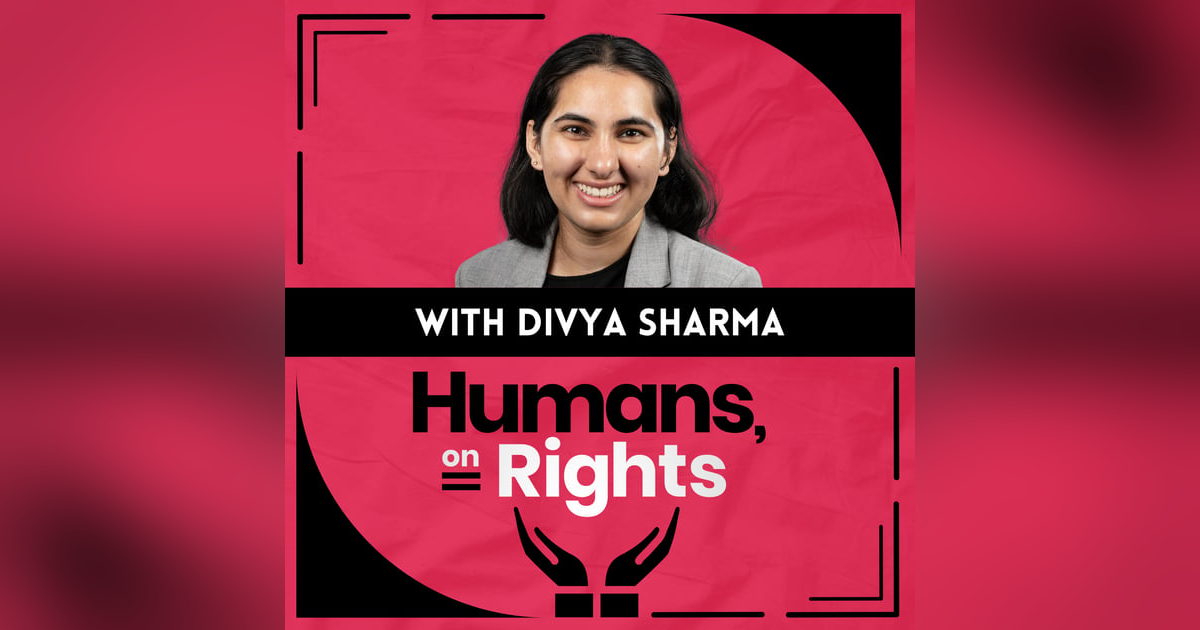
At 21 years old, Divya Sharma has already led a $16 million student organization, represented Manitoba at the United Nations in both New York and Geneva, and is writing her honours thesis on the human rights implications of artificial intelligence. Her story is a reminder that age isn't a barrier to meaningful change — and that the most powerful advocacy often starts right in your own community.


We're talking:
- Her COVID-19 project that started with a few micro-grants and grew into 16,000 care packages for frontline workers across Canada — recognized by the United Nations as one of the top stories of the pandemic
- Her path to becoming the 100th and youngest president of the University of Manitoba Students' Union (UMSU)
- Advocating for international students' access to healthcare as a human right, and the successful push to expand bursaries and bring menstrual products into university washrooms
- Her take on the biggest human rights challenge facing Canadians today: literacy, in every sense of the word
If you want to know what the next generation of Winnipeg changemakers looks like, Divya's a pretty good place to start.
Get Involved:
Stuart Murray 0:00
This podcast was recorded on the ancestral lands, on treaty one territory, the traditional territory of the Anishinaabe Cree Oji Cree Dakota and the Dene peoples, and on the homeland of the Metis nation.
Amanda Logan (Voiceover) 0:20
This is humans on rights, a podcast advocating for the education of human rights. Here's your host, Stuart Murray.
Stuart Murray 0:30
You know, I have a guest today on my podcast, humans on rights, who has an incredible resume of accomplishments, and it's almost probably easier to maybe talk about some of the things that my guest has not done other the things that she has done. Divya Sharma is definitely a dynamic community leader with extensive experience in governance, nonprofit advocacy and international representation. She has done so many things, whether it's at am su or at the University of Manitoba or the United Nations. And I want to be careful how I say this, because her runway is long in front of her. She's not she's done a tremendous amount at what I would call a very, very young age, but it is so impressive. Divya, Sharma, welcome to humans on rights.
Amanda Logan (Voiceover) 1:20
Thank you so much for having me. Stuart, I am so grateful for the opportunity to, of course, sit with someone way more accomplished than I am, but I'm glad that we get to share this space. So thank you so
Stuart Murray 1:33
Divya, just we're going to get into some of your background, but just for those listeners, just tell us a little bit about yourself and introduce what you're doing and what you're what you're passionate about. Currently, I'm
Amanda Logan (Voiceover) 1:45
21 years old. I am doing my bachelor's degree, bachelor's of honors in global political economy as of right now, I actually do have exams going on, so my focus is very directed towards there. But I'm also doing an honors thesis this year on AI, and how the political economy of it sort of centers the world as of right now, and how it'll continue to shape the world. And that's sort of the piece that I'm very much passionate about and exploring, even just in my real life. And of course, with some of the experiences that I've had in international spaces and human rights spaces are very much centered around making sure there's equity that's available, especially as emerging technologies come out, including AI and the literacy piece around that I'm also passionate about sports. I love reading on the side, and of course, woman empowerment is a really important piece in my own life. It's something that I've seen just on a more family level, but also I see and try to embody wherever I go, whether that's in boardrooms, as you said, I'm oftentimes the youngest one in some in some of these spaces, so I try to bring that whole of myself, just to make sure that all those perspectives are being represented.
Stuart Murray 3:02
So Divya, just on that. I, you know, I want to just be very sensitive to one thing. You know, there is an issue around sort of, I'll just use the term age discrimination when somebody talks about, you know, how is it that somebody so, quote, young, can do so many things and so, yeah, I wanted to say this in a very respectful way, because when I use the fact of what your fact that you're as you say, you're turning 21 your resume is full. I mean, your resume is full of accomplishments. And I want to kind of come back and talk about that, because I don't want you to sort of say the notion that, when you put your mind to it, everybody can do something, the fact of life is, is you have done an amazing amount. And there's something in your DNA, something in Divya, sharma's personality, something that you have drives you to want to do these things. So, so let's talk just a little bit about set the table. So you came here when you were nine years old. You came to Canada. What? What brought you to Canada
Amanda Logan (Voiceover) 4:00
primarily, was my family. Wasn't necessarily my decision at the time. But knowing you, I'm not sure about that, but I'll go with you. Yeah, fair enough. It's one of those immigrant stories, if you will. Oftentimes we see, and I still see Canada, this opportunity where or this, this space where there's so much opportunity, there's so much available here. And you know, again, just for my own life, I think as long as you again, like you said, you put your mind to it, there's so much in front of you that if you leverage those supports, if you, you know, have mentors, and again, if you have those support systems that you create for yourself along the way. I think Canada is sincerely the place to be. So again, my parents saw that when in 2014 when we came here and we again, there was obviously lots going on our family. We were fairly young family. My parents were in their mid 20s at the time. Again, I was fairly young as well. And when we sort of came here, it was just again, like that runway, if you will. And my dad came here as someone who worked a lot in the medical field in India. So then again, coming here, he would have to redo a lot of his education. So he ended up going into the trucking industry, and he's still a truck driver to this day. And my mom was a teacher back in India. I had a very stable background. But then again, as she came here and just ended up working those odd jobs, until, you know now, she works as a male claims processor with Canada life. So again, very successful immigrant stories. They they work their way up. They worked very, very hard and again, just kind of seeing them and seeing a lot of you know, immigrants around me achieve those goals along the way because of how much hard work they put in, is kind of my story and how my parents sort of really integrated themselves here in Canada.
Stuart Murray 5:57
So Divya, can you just kind of take a moment and think back to a nine year old Divya. Sharma comes from India, comes Punjab. I believe you were, yeah, to you arrived to Canada. I'm sure was Winnipeg your
Amanda Logan (Voiceover) 6:11
first stop. It was very cold. It was, I was a little surprised, because in Punjab, it's fairly warm and hot all the time. And when we came here, I remember our first winter, and I hated wearing ski pads, like, I remember this very specific I did not like it.
Stuart Murray 6:26
So that was going to be my question. Like, what was your first reaction? I mean, you come here, and you sort of come to this country and, I mean, everybody has, you know? I mean, you could be nervous, you could be excited, you could be anticipating a lot of things, but you recall back kind of what your first reaction was. Okay, here's gonna be my my new home Absolutely.
Amanda Logan (Voiceover) 6:43
So I remember first of all, going on the plane. It was my first time ever on a plane. I'd been on a helicopter before, but just like, you know, staying on a plane for like, however many hours we were on it. And just as a kid, I remember like, talking to someone who was sitting beside me, and I'm someone who likes asking a lot of questions. And I remember just like asking her a million questions until she fell asleep. And when we, you know, we finally got here, and we had some of our family receive us, and that was fairly special. I remember it was June, very specifically, it was fairly green, and I was just so excited to, you know, finally be here. But I also remember calling my grandparents back home and just like crying the first couple of nights, just saying, like, Oh my gosh. Like, I miss you so much. And, and, you know, I think as a kid, you don't really have a great perception of, like, space, per se. So I always just said, Oh, can we just go there and by and, and I'm going there, like, much, much later. But that was one of the scary pieces, just like, kind of abandoning this, like, entire lifestyle and coming here, I was also fortunate, I guess, like privileged enough that the school that I went to in India taught English, so I knew English. My accent wasn't very strong, but by, like, grade six, so I was in grade five. When I got here in grade six, I was doing fine, but yeah, that, like, there was definitely a cultural shift. I remember bringing like, a peanut butter and jelly sandwich to school one day, and I didn't realize, oh, well, like, people are allergic here to things, and that's one of the things I picked on really fast, is like, there's so many allergies and cattle, like, everyone's allergic to something weird. So that was like, and again, like one of those, like cultural shifts, if you will. And there were so many of those along the way, but that was one of the coolest things, while also just seeing so many other people from so many different backgrounds, kind of striving towards the same thing, which I think makes Canada very special.
Stuart Murray 8:39
So let's just advanced a little bit here. So you get to the University of Manitoba, and you become the president of umsu. And I think there's a couple of things there that you were the, perhaps, not talking about your age again, but you, I think the youngest president of um sooth. Am I correct about that? Yes, right. And then were you the first woman to be president of umsu?
Amanda Logan (Voiceover) 9:00
Not the first woman, but the youngest.
Stuart Murray 9:03
Yeah, okay, the youngest. All right, so what, what would drive you to take on that role? What? What? What did you see that you felt in your your your sort of ability, your education, your background, and what you saw in Canada, what drove you to sort of say, that's a position that I want to go for, because it's an elected position. I mean, you had to get elected so, you know, you have to put yourself out there. What made you do that?
Amanda Logan (Voiceover) 9:28
I would say I had no interest in politics when I was in Grady nine, like zero, and I remember, you know, just, I remember I wanted to go into the military, or, you know, become a dentist. Those were sort of the two options. And I remember in green, I my teacher, we were learning about the like judicial system in India or in Canada. Story. I remember her talking a little bit about the House of Commons, how provincial and federal politics works, how there's a Supreme Court and all. These different things, and that really piqued my interest. This teacher was also my ultimate coach, so I spent a lot of time with her. And her name was bunny McClellan, really, you know, just very passionate individual. And she went to Fortune collegiate, which is the high school I went to, and I remember her telling her towards the very end of, like, grade nine, and as I was going to move into a different high school, she said to me, when you go there, I want you to try to get involved in student politics, if you will. And there's a specific song that they sing. And her experience was really great for Richmond collegiate so that, I think really influenced me at the time, and I did like Sports Council back in middle school, and because sports were just such a formative part of my life, that sort of carried into my high school experience as well. So my first year in grade 10, I was the lead of the Sports Council Richmond. This included like, you know, making sure we celebrate like student athletes of the month, or helping out and taking the lead on pep rallies, and then covid hit, and that was again, like one of those, it's your formative years, and now you're, like, forced to stay home. So student council was really my way of connecting and staying connected with school. And ever since I was like, young, I've never been the type of person who just, like, sits around, just doesn't do anything. Like, I constantly need to be thinking, constantly, need to be doing something. So then again, in grade 10, because covid hit, I remember just sort of staying home, and I wanted to figure out, like, what was what could I do to help the situation? And I told you, my dad was truck driver, and I would see him working these, like long hours, and it was really hard for him, especially during covid, because you would have to go out, and everyone you know was home, and interactions were very limited. So I applied for this grant through the rising youth program, which is connected to taking it global, which was funded by the Canadian government at the time of the Canadian federal government, basically, I was able to create 16,000 care packages for frontline workers across Canada. And that was a really cool project that taught me a lot about leadership, working with people from like across Canada. And I was 15 at the time, and that was just again, one of those, like, formative things. So I was, well, like, you know, as I said to myself, I think leadership and organizing things and helping people out is really cool, and this is a space I know I can thrive in.
Stuart Murray 12:30
Covid hits. You decide that you're going to do something for frontline workers? Yes, right? So let's just kind of unpack that for a second. So, so what? How do you decide what you were going to do. How did you mobilize people? And, I mean, you did what, 16,000 so how did you assemble those? What was involved in that? And what sort of did you wake up in the morning and sort of say, Okay, now I know what I have to do. Where did that come from?
Amanda Logan (Voiceover) 12:55
It really came down to, like, just seeing my dad in that space. And a lot of like, my friends, one of my friends, I remember her mom was actually a police officer, and I remember her putting in so much time during that time, and it's mentally straining, right? So I think it was just like in back home in India, there's this really big concept of seva, which is giving back without expecting anything in return. And essentially, I think it really came from that foundational element where I just wanted to do something, because it like, I was just like, Well, okay, so I have so much time. There's something here that needs to be solved. There's a clear gap. And I like, I have so much time on my hands, and I really want to do this. So my initial step was actually reaching out to banks. So I remember, I remember reaching out to like BMO and like a credit union at the time, and then basically a single one credit union, and I got very micro grants from them, and they did, like fundraisers, even just in the bank. So then I was able to create smaller care packages that, again, I delivered to my dad's workplace, and then some of the police officers and firefighters and then, and then I was like, well, there's so much opportunity to like, again, scale this up. So then I applied for the rising youth grant, which was originally $750 and through that, I was able to create care packages for frontline workers at the Victoria Hospital and then the Health Sciences Center. And throughout all of this, my dad was such a huge help, like he would drive me. We picked up, like, all the groceries together. And this, again, taught me how to budget and make sure, like, again, like I'm doing things properly, and the whole organizing piece, and then I was able to apply for a higher grant because the first project was so successful. So then that was a $5,000 grant, and again, like I'm a 15 year old handling a $5,000 budget, and that was just so cool to me. And then I was able to, like, connect with one of my mentors out rising youth, and then we were able to. Establish connections across Canada, including the territories up north, which, again, like, it still shocks me that we were able to pull together something in such a short amount of time. But I think it really goes to show if there's a willingness, and especially for young people to do this, like, it's really accomplishable. So then I connected with them again from across Canada, over the phone. We would do zoom calls. I would ask for updates, reports, whatever you had to keep track of receipts. There were so many receipts by the end of it, I like my laptop was about to crop, yeah. So then I, you know, submitted a final report. And one of the coolest things that kind of came out of this was everyone was able to connect. And we made a little video that we sent out, just put put it out, and just seeing that we were able to accomplish this was so so special. And then this project was also awarded by the United Nations, or recognized by the United Nations as one of the top 150 or 50 stories of heartwarmingness during that time, and just getting again, like recognized by the UN at such a young age, was like mind boggling to me.
Stuart Murray 16:13
Yeah, well, I mean, you should be recognized. I mean, it's such a great story, Divya, and I guess when I look at it, it sort of has your trajectory all over it, and kind of the other things that you've done. So, you know, I did ask you initially about your running to be the president of umsu. And sorry, you're kind of winding me up through your higher grades before you get to university. But this would have been one project where, I mean, you know, you looked at it and thought about, how can I make a difference? What sorts of things would be important, and you put together a whole project, and as you say, to be recognized by the United Nations. You know, that's a tremendous, tremendous feat. I mean, that's a tremendous, you know, accolade. And so congratulations on that. Continue on with your journey. So what did you do in the rest of your your later years in high school, before you got to Tom Su, I
Amanda Logan (Voiceover) 17:01
was done this super cool project, and then grade 11 came along. I was the vice president again, continuing to sort of hone in on those skills and having fun along the way, of course. And then grade 12 came along. I was elected the president, and that was my final year. I was so lucky to have a normal graduation. And then that year, we accomplished some very, very cool things. We held rallies, and again, like did so many drives and fundraisers, especially for Ukraine, I remember very specifically, and that was one of the, like, a really cool story came out of it in the news, where we were, like an EA, an educational assistant. Her dad was stuck in Ukraine. He was blinding one of his eyes, so my, like, one of my classes, we kind of came together and mapped his route out while a lot of this insurgency was happening. And then We fundraised a lot through, like, parolees, and again, like a lot of this really shaped me to become the person I am today. And then so again, when I graduated from high school, I remember going to university, but during the summer, I called up one of my mentors, and I said, Hey, I want to get involved. How do I start that? And at the time, she was president of the art student body Council, so the Faculty of Arts, she was the president of that so then she said, Okay, hey, like, I am here right now. I can connect you with some folks. You can have an appointed position, I'm sure, and or you can apply, and then we can go from there. So I applied to be the umsu rep that year, and I was lucky enough again, very lucky to have mentors who were able to guide me throughout the way. So my first year, I already had an appointed position, which is totally unheard of. And then my very first year, I remember in November, I had a conversation with some folks who, like, friends who I'd known in high school, and they said, Hey, why don't you run for Amster? And I said, okay, like, that's a little bit insane. Most people like, think about running maybe in the third or fourth year towards the end of their degree, and it was like it was one of the most insane ideas ever. And I did it. I think I had a lot of people around me who were very supportive. Again, it wasn't easy, but I've never liked things that are easy. I really like things that are hard challenge me. So then I ended up running for vice president. My very first year, I was 17 at the time, I ran against an incumbent. The incumbent was in again, like in the very later years, like again, it was very scary to go up against someone like that, but and I had my best friend, Yasha on Wu. She really helped me, push me, someone who really kept me on track. And yeah, so my first year I was elected vice president. Then second year, it was a lot easier, because I knew the ropes. It was scary regardless. But again, running for president at the age of 19 in your second year, essentially is still very like neuro. Were acting. So I was president, and I was one of the coolest things I still think about this is I was the 100th president and the youngest, and I think that really allowed for, like, a legacy to be built, almost. And, you know, to this day, like I still keep up with everything, and I really try to stay involved as much as I can. But again, it's shaped because you're running, like the $16 million organization, you're having meetings with stakeholders, you're advocating on national and a provincial and a municipal level, and you know, you're making bylaws, you're doing governance work, and it's so formative. And I'm to again, really shaped the person I am today. So that's how I ended up where I am.
Stuart Murray 20:41
I didn't want to interrupt you, because you're getting to becoming the president of umsu, which is what I asked you about. So fair comment, but, but Divya, one of the things you mentioned about you had a in high school. There was a an EA who had who, there's somebody over in Ukraine. Yes, her father, her her father was in Ukraine, and and he was blind in one eye. Yes, okay, so, but, but the point, I think, what you did is, is he was looking to get help, and so we didn't know what to do. And so here you are in Winnipeg, so you get on the internet. And, you know, I mean, just because I read the story, you helped to give him the information to sort of Google Map him so he could know where to go to get help. And did he ultimately escape out of out of Ukraine?
Amanda Logan (Voiceover) 21:31
Yes, yeah. So he was able to find Wayne Poland. And this was sort of a very like big class initiative that we did, because it was like, I believe it was a more like global class that focused on, you know, looking at, like world issues and things like that. And this was sort of like a textbook that was right in front of you. And I think that's where I oftentimes find the most meaningful. And the best experiences is there's this world in front of you and you it's literally your textbook. You can get what you want out of it at any point, and you can apply what you're learning on a day to day basis. And I think that application really allows me to I'm a very like visual learner. I really like hearing stories and listening to things, so when I'm able to apply them, it just makes it better and sticks more in my brain, and then it gets reinforced. So I think that's how my brain works.
Stuart Murray 22:22
Yeah, no, for sure. So that, I mean, so again, I'm just saying it's, you know, it's pretty incredible to to be able to sort of help somebody from Canada who's in Ukraine who needs assistance, and you're able to Google map them and give that information to them so that they know which route to go to, to where they need to get help, and then ultimately, to to help them get out of that country. I, you know, that's, that's pretty incredible. So, you know, congratulations to you and your team. I mean, that's amazing. Thank you. That's amazing. And so then, Divya, coming back to my original question about becoming the the youngest in the 100th is the key word, 100th president of umsu. So you had a little bit of experience, you know, sort of being around the council there and Vice President, when you decided to run for president, what was your message? Why would you ask people to vote for you?
Amanda Logan (Voiceover) 23:11
Yeah, so I think the second time that you're running, there's obviously some people may call it the incumbent advantage, and some people may call it the incumbent disadvantage. I will say, I think for me, I think I needed for just my peace of mind and for my state. I wanted two years to make the changes that I really wanted to in my first year. I think I really understood how governance works, and I think the role the President really focuses a lot more on governance. And I thought there was a lot of internal sort of things that needed to be become, that needed to be better so that things can run more efficiently. I also really wanted to take more of like a lead on things. And I remember, you know, being president in my high school and just being able to work more so with like a team and telling them, Hey, like, here's some pieces, and looking at really a more higher level vision. And that was sort of my main message, that it's more about the long term. And I'm very grateful for the general manager, Thomas Boomer. He just such a supportive individual. He's been there for many, many years he He's almost like a guiding figure and a mentor, even to this day in my life. So we both really had that synergy while we were working there. I think, I think that's really important. So when I was putting my message out there, I really wanted to focus on a long term vision. We had a strap plan in mind, and one of the things that we launched to that strat plan is we want to own our own building. And the main reason why we wanted to do that was so that so we can start generating its own revenue. We were looking at other student unions who've done sort of similar things, and so that we could lower student fees at the end of the day, right? Because students have so many constraints on them. So again. My mission was always to think longer have, you know privacy policy in place, have certain policies in place. But again, just coming back to that strategic plan, to really give um to the vision that it needed for the next five years.
Stuart Murray 25:13
And part of that, I think, had to do with mental health. Yes, yeah. So talk about that program,
Amanda Logan (Voiceover) 25:19
mental health was one of the biggest, of course, coming out of covid, one of the biggest things, but also just as university students and just, I guess, young people in today's age, I think there's so much around us, and I think one of the one of the biggest things, specifically surrounding mental health, is jobs for students. That's to this day I still hear, you know, I have all this experience, I have my degree, I can't find a job, and that like that can be a really hard thing for a student to kind of go through with. And then, of course, just the stressors of, you know, just regular day to day life, along with, well, like, you know, textbooks are like 200 $300 on top of that for international students, they have to pay health care so like, and again, these things like, build up. We did a year long mental health campaign during my year. We engaged a lot of students during that time, and we got a lot of feedback, positive and negative, but the positive was, Well, we appreciate that mental health is being recognized, and we appreciate that there's things being done around it, and we also wanted to make sure that we were also providing legal supports at the time. So again, things like housing is oftentimes on people's minds. So we ran a bunch of housing workshops, and we like we run clinics and stuff in the past, but again, things that really allowed us to connect with students, where we hand out chips, for example, like even just a little token of appreciation can help light up someone's day. And that was, again, a really positive piece of feedback we got.
Stuart Murray 26:55
Yeah, I you know, it's a, it's a great initiative. I mean, it's a, I'm glad, I'm glad you mentioned it in some of the, you know, literature that you have about who you are and what you've done, because I think it's a huge achievement. And I'd love to Divya, get your sense when you're talking about mental health, you're talking about some of these issues around homelessness. Was it housing that you were involved in?
Amanda Logan (Voiceover) 27:14
Not housing specifically, but around mental health? It was more so about, how do we get people to like a better, you know, in a better state of mind, just being a
Stuart Murray 27:24
human rights podcast frame, if you will, your conversation, your thought process around you know what you were doing with respect to mental health and human rights. In a position as being the president of the student body at the University of Manitoba, when I
Amanda Logan (Voiceover) 27:41
talk about mental health, I do want to circle back to specifically international students in this case, and healthcare being a human right, right. So this has been an agenda that, obviously, with Student Union and again, student unions from across Manitoba and even on a federal level, have been trying to push for having healthcare for international students, at the end of the day, they do really bring a lot to Canada, especially in that economic sense, right? Because they're oftentimes paying much more than your average domestic student and and there were so many times where we would hear of cases where students would have to decide between calling an ambulance versus being driven to the hospital. And I think in a situation like that, where you know you have to think about that twice, is is already too late. So and during my time, and even again, just to this day, these are things we're continuing to push for just as a student's union, to make sure that like mental health and health care specifically for international students is available. Another piece that we again wanted to advocate for and were successful in was raising how much the province gives in terms of that additional like support for students, increasing bursaries, increasing scholarships, which, again, the province was able to do, and that was a really big advocacy win for us. We lobbied for menstrual products as well. And I know this year there was a really, really big push on that. So having, again, that as a as a healthcare as a human right in all the bathrooms across the university. So those were, I think, just a couple things that we were able to accomplish.
Tara Sands (Voiceover) 29:29
And were you successful in getting menstrual products into the mushrooms?
Amanda Logan (Voiceover) 29:32
Yes, yeah. And that initiative continues to be pushed on by the council that's in office today, and I think it's just something that's going to continue being ramped up.
Stuart Murray 29:43
Yeah, that's great. You know, I did a podcast on that. Divya was period politics, and it was really quite alarming, frankly, to find out that, you know, the statistics in Canada is that one in four women have to make a decision about whether they buy menstrual products or buy food. And. You know, again, just such a difference between, you know, men and some of the challenges that women face. So I'm delighted that you were able to be successful. I know that I try when I go to washrooms to ask if there's menstrual products for women in restaurants. I mean, they're public places, and it only makes sense that there should be. We got a lot of work to do on that. So you know, thanks for pushing, for your perspective and what you're doing. So that's fantastic. Let me just shift a little bit to the UN. Okay, so you have been to the UN on in a number of ways, as a delegate, and so talk about your experience being selected, and what your first impressions of the United Nations was when the physical building, when you got there, and some of the opportunities you had,
Amanda Logan (Voiceover) 30:44
I've been to auster by outlining that I've been to the one in New York, and then I've also been to the one in Geneva very recently. So the one in New York, that's the one that everyone like has photos of, and all these different things. So again, just as a as a kid, I was very young at the time, I was 18, I remember, because my degree is in global political economy. This is, again, just like everything any child, any young person in my shoes, could have dreamed of doing, because we learn about this in textbooks. We learn about this in classes where all these key decisions are being made, the Security Council. So I remember walking in my very first time, we had to stand in line for badges for three hours, and it was so cold. So again, going there I the first time I went was for the 68th Commission on the Status of woman, primarily because I was involved with the provincial Women's Advisory Council, but I went through the International Council network, which, because I'm a part of the mattitill Council for international cooperation, they're part of a bigger sort of a network, which is again the International Council or the inter Council network. So when I went there was with them as a representative for Manitoba, so as an as an NGO, and even at the UN there's oftentimes you'll okay. So it looks very cool from the outside, but there's systems in place, and it took me just two days, I think, to figure that out. But essentially, there's these passes and badges that you get, and the badges have different sort of letters on them. So there's a D badge for delegate, there's a T pass for temporary, which you get if you're a part of an NGO, there's an S that you get for staff, and then if you're like an official ambassador, you get a different pass. And according to that, you're able to access different things and different rooms. And even in that, I think it really showcases, like, even if you're at the UN like, there are different levels and different privileges that you get. So that was kind of fascinating to see. And then I remember going in there my for, obviously, I think this is a lot of people's reactions. I was very, like, Star eyed, very star struck, like, oh my gosh, this is, like, the real thing. And I remember just like, taking a couple breaths, and I really had to just ground myself. And then we went into the General Assembly Room, which is also just like, it's so profound, but in order for one to get there, so the Commission on the Status woman is the largest, largest, largest forum that the UN hosts, like, in general, let alone, you know, for that particular cause. So it's it was just massive and huge career. You're in this sea of people. Some of them are like, there's Prime Ministers in that building, there's security, there are ambassadors, and there's people who are, like, literally shaping policy at the time, and then there's folks from NGOs, and we have our senators that go there are politicians that go there. And that was very special as well. So just sort of seeing that as a really young person was, was like, wow. Like, this is really happening. But I remember, in order for you to get to the General Assembly Room, you had to get a really special ticket. And I wasn't able to get that until like, day day five. It was very late in the game, but essentially, you, like, you have to almost fight your way to get into that room, even just listen to it. And I think that really showcases like, well, what are we really here for, right? So the first couple, the first time I went there, I think I just really had to learn the ropes. I got, personally, I got a lot more out of value, out of some of the other discussions that were happening in whether that was like side events. There's obviously the main events that the UN host, but then there's side events that are that can be hosted by either member states, which is like countries, or by NGOs. And I think I got a lot more value out of those, because anything that's sort of happening in the General Assembly or just sort of the main events can oftentimes feel and it is sometimes script. Did. It's already gone through so many the revisions, so many people have looked at it. It needs to be diplomatic in a really specific way. And one of the things that we often talk about in class, like today, I give a lot of like credit to Professor Andrew Strawn. She really understands, understands the system, but essentially the way that the UN functions is, in a way, almost eroding. It's like democracy, right? Like it's the best system that we have, but it's not perfect, and it would take so long to start up another organization like the United Nations, but it's, again, it's not a perfect system, but it's something that exists has the UN done things that are really important and have actually provided benefit, absolutely. Can it sometimes feel like it's very like, polarizing towards maybe even the Western world, and because of like, whether that's like finding cuts XYZ that come in absolutely, and again, like, I think we really have to come down to, like, why it was created so that superpowers don't go against each other. And it wasn't to maintain peace for the common person. It was to maintain peace between superpowers and nations. And I think oftentimes, we sort of sometimes can forget that almost. And in that sense, it can oftentimes appear that it's very like nation centric, or even like US centric, if I dare to say that. And I think that can sometimes pose challenges with how it's perceived and what powers it actually has over over the world.
Stuart Murray 36:41
And do you think that the UN is a place that you would like to spend some time? Would you see a career at the UN?
Amanda Logan (Voiceover) 36:49
I can see myself there, and I think not, maybe as a career, but in, you know, still continuing to advocate in that sort of a space. One thing I think I realized is that oftentimes we, you know, see the UN as an end, but this past trip that I made to Geneva, very specifically, really helped me understand that the actual advocacy actually happens on the ground. It's not at the UN that's where people oftentimes come to share. Okay, here are some things that we've done, but the actual advocacy, whether that's, you know, even if we're talking about the higher level at Red Cross International, like, you know, at international humanitarian organizations, like, they actually do that advocacy. There's a lot of talking that happens at the UN you can think about placing sanctions, but the actual execution delivery really happens on that ground level. And I think that's really inspiring, but also very humbling and grounding. So do I see myself like continuing to go to forums and advocating for certain policies to be changed absolutely but where do I really see my work centering it's really at that ground level, and I think in this past year, I've really been able to sort of start that, or not start that, but continue that, because during that period of um, so you know, you're so high level and you're doing all these things, but it's nice to just, again, be in the community and really do some of that groundwork.
Stuart Murray 38:16
And what specifically Divya took you to the UN in Geneva.
Amanda Logan (Voiceover) 38:20
So that was the forum on business and human rights, and often a specific sort of focus area this year was around artificial intelligence, and recently, I've been exploring a lot of that space. Recent, as in, I would say, just within the past year, because it's been such a big deal at the university and the way students use it, and of course, because it's being starting to like being it's starting to be executed within businesses at such a rapid scale, we oftentimes forget that there's a lot of literacy that needs to be done still for the common person. Because if we're implementing a lot of these things for our regular day to day lives, and if we don't even understand how these systems work, if we don't understand how to use these systems to our benefit, who's really going to benefit from these who? And this is something that, again, I'm exploring in my thesis, who owns this data? What biases are in this data? Obviously, AI isn't something that's like metaphysical. It's something that's actually physical. Because there's so many data factories, there's data sets that are like that are literally in factories, and they need to be cooled down with fresh cold water, and because fresh water is such an important resource. How do we make sure that that's being balanced out with, of course, our climate but also, again, just some of the day to day biases that might come up in AI and how it becomes that prediction model, almost so
Stuart Murray 39:57
when you, when you put a human rights lens on it, as. Looking, what are some of your as you're doing, your your your research, what do you what are you finding? What concerns are you finding?
Amanda Logan (Voiceover) 40:07
So I'm currently in my literature review phase, so I'm literally just reading all day, and one of the things that I'm finding is oftentimes people are scared of something that's again, so like, far off because we, I think we've had a couple, like, technological changes. So my grandpa, he tells me how there's a time when there weren't even cameras, or cameras were just a cool thing that had come out. And then my dad tells me what a time when there weren't phones, and now we have phones and film and XYZ. And then I remember a time where I didn't really know what a laptop was, right? Because I operate on a computer, and knew what a CPU was and all these different things, but I didn't know that there was, you know, like, now I have a MacBook, and it's just like this thin machine that you can travel without anywhere and work with that. And who knew there would be a thing like zoom, where now we're able to connect across continents, and we all actually have to see each other in person and but we can still have a conversation. So I and I think AI is almost like that, right? It's a tool that you can use, but it's on a much more rapid scale, because now there's things like deep fakes and it's it can oftentimes be used as a tool to weaponize, almost because, because it's this AI race between, you know, China, the United States, some of the Arab world and Europe. And there's so many, you know, global powers here at play that again, it can be taken either way. So then again, from from that sort of a lens like, how are people ready for this? Maybe. And one of the things that oftentimes, when I'm talking one on one in person, to people about AI, the biggest concern is, is it going to take over our jobs? And as someone who's kind of looking at this from, like a global, political, common lens to that, I would actually say, No, I don't think it will take over jobs. Will it take over simple tasks like things like recording meeting minutes and things like that? Will make things easier? Yes, absolutely. But also, you can argue that for like things like calculators. And now that you know we have calculators, we don't need to do every little formula by hand. Also when, you know, new technology was, you know, implemented, I would say in the later 1900s people were scared, like, you know, where jobs gonna go? And now we actually have more jobs than ever, ever before, where people can work, and, you know, still make a living. And that was one of the scariest parts of the new technological changes that were coming again in the earlier 21st Century. So again, I think we're, we're okay in that realm. But again, how, how does it like take away that almost like labor and that human component away from jobs like our jobs just going to become like, less human centric, very likely. How do we avoid that becoming a point of contention? How do we make sure that humans still feel like they're valued? And again, one of the biggest things I'm finding is the biggest skill that people will need, actually, it's not, you know, prompt generation or whatever it's it's actually empathy. And how do we connect with people? Because, you know, businesses still needs to run. Ai can't make, you know, emotional decisions. Ai can't make like AI, does it? Obviously, it has this like set that it can make prediction from. But I think for humans, it's a little bit different, because you're taking into consideration so so many factors. So can AI help with the decision making? Absolutely, can it just make the decision for you? Not because there's so many other factors at play.
Stuart Murray 43:49
One of the things that I was fascinated with, and I wanted to sort of get your thoughts on Divya, is your background the um su president, being at the United Nations and experiencing in both in New York and in Geneva. You talk about further learning and literacy and advocacy in some organizations. If there were somebody listening to this, and they were saying, you know, are there any organizations that I can get involved in to to learn about some of the issues that you know, Divya has talked about in this in this podcast, what would they be?
Amanda Logan (Voiceover) 44:19
Very good question. I would say my first top one. And like, again, I'm involved with the board. So shameless plug here. The council for international cooperation. They run so many amazing events throughout the year, whether you know, it's ranging from poetry to just workshops to you know, conversations, and they are very focused on sustainable development, really understanding things from, like, a more holistic perspective. So that would be my really number one sort of recommendation. But also, if you're more so involved with, like, interested in getting involved with the United Nations, they have newsletters, and I think our own actual like, federal. Government does a really good job of this, actually. So you can subscribe to anything that you're actually really interested in. So like, if you're interested in, specifically economics, you know you can go on economic development and subscribe and understand how does the federal government actually deal with economics? Again, one of the things that I often find is people aren't subscribed to press releases that come out from the the you know, whether it's our provincial government, like vanitill government, or even the Lieutenant Governor of Manitoba, like I think, you know, her honor, Anita Neville, does a wonderful job of putting out, you know, opportunities where people can visit the Government House. There's oftentimes things going on there that are of value, whether it's, you know, film screening or just a conversation or dialog. So I would say those two are really key resources, along with, of course, federal newsletters and one things that actually makes me really upset when people say is, oh, I don't want to get involved with politics, or politics is an interest to me and XYZ and to each their own. But I think we're at a point where politics is such a critical part of life, I think it becomes our obligations as citizens, as global citizens, to make ourselves aware of what is happening, even if you don't want to get involved, that is perfectly fine, but I think it's really important to understand that we are constantly being shaped by politics. Human rights are constantly being shaped by politics. And I think if you don't care about that, I think you're in a very privileged position on that
Stuart Murray 46:40
basis, this podcast is not about breaking news, by the way, but just would ask you the question, would you ever see yourself getting involved in politics at some level, civic, provincial or federal?
Amanda Logan (Voiceover) 46:52
Yeah, absolutely that. I would say definitely. A couple years down the line, I still want to make sure that I gained all the experiences that I want to my number one goal is finishing up my degree, of course, but yes, politics. I think I do see myself ending up in that space. I think I'm I think I'm privileged enough to have naturally ended up in this space. I think I've had mentors along the way who really allowed me to thrive in this space, but I think at the root of it, I would like to still stay very connected with the community. I think that's where I thrive the most. And if I can do that alongside of staying involved that that is
Stuart Murray 47:35
my goal, yeah, and you should, because I think you've got, you've got the appetite for it. Certainly, you've got the leadership DNA inside you to take a leadership role in a community way. Divya, one of the things that kind of, as we wind down in the conversation here, I just wondered if you could sort of just, you know, stop for a moment and reflect on on kind of your your life in Canada, your experience in the education, on the sports side, on the political side, the umsu side, University of Manitoba, which you're still a student at the University of Manitoba, having been to the UN in both the New York and Geneva. If somebody were to say, to stop you on the street and say, give you Sharma, what do you think of the the human rights issues that are most important facing people in
Amanda Logan (Voiceover) 48:20
Canada, I think it really comes down to the idea of literacy. And I think I think education is such an important tool. And I'm not talking about like education a formal sense, of course, that is critical. But I think education in the sense of, of course, AI literacy, but also knowing your constitutional rights. I feel like oftentimes, just as human beings, we tend to stay so focused in our day to day lives, that we forget that, you know, there are things around us that are again, constantly shaped and changed, and there's people being affected on a very again, that that base level, on the on a very ground roots level. So I would say one of the biggest human rights issues is literacy. I think we need to make sure that people are educated again, whether formal or just understanding in day to day life. So for if we really want to bring this down to, you know, molecular and systemic issues. And I know you mentioned the idea of, like, homelessness before, and mental health, I think if we're able to meet create a population that's educated, whether that's about their mental health, whether that's about, you know, formal learning, I think we can eradicate a lot of issues. So education would be my top answer to that. That's a
Stuart Murray 49:38
great that's a great landing spot Divya, because I I've always said, you know, when I was at the Canadian Museum for Human Rights, people sort of said, you know, let's talk about right or wrong. And I kept saying, you know, it's really not the issue. It's not right or wrong. It's about the education of the issue, the understanding that, you know, sometimes two stories can have a different outcome, but they can still both be two stories that have accuracy to them and are. Relevant to the conversation. So, you know, give me a Sharma. I can't thank you enough for taking some time to be part of this conversation and to share your vision, your views, your background, of what you believe in and what you've done to to make Winnipeg and a better city and a better community, and still spend a lot of time in school to to get your degree. It's been a it's been a delight to have this conversation with you. And I thank you for for sharing your time with me today.
Amanda Logan (Voiceover) 50:28
Thank you so much, Stuart, and thank you for all the work that you do. You know, of course, your role at the Canadian Museum of human rights, but also just continuing to sort of do that work. I know oftentimes, you know, when people have exited such roles, they tend to go into retirement or whatever, but I think what you have here is really special. So thank you for creating that space for me today, and thank you for again, the work that you do.
Matt Cundill 50:54
Thanks for listening to humans on rights. A transcript of this episode is available by clicking the link in the show notes of this episode, humans on rights is recorded and hosted by Stuart Murray, social media marketing by Buffy Davey, music by Doug Edmond. For more, go to human rights hub.ca.
Tara Sands (Voiceover) 51:15
Produced and distributed by the sound off media company.


