Brad Lambert: The Bullets Saved My Life
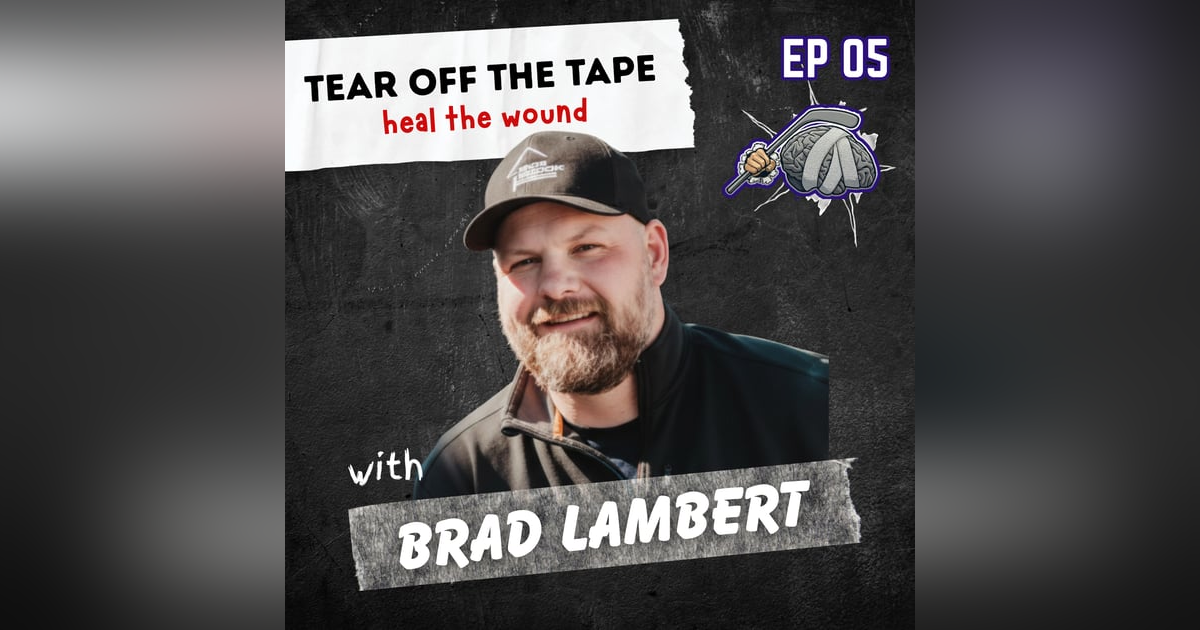


Brad Lambert joins host Bob to share his powerful journey from small-town Alberta hockey kid to junior and pro enforcer, and ultimately to survivor and community pillar. Brad describes leaving home at 16, being thrust into the role of fighter, and living with constant anxiety, fear, and performance pressure while wearing a mask that everything was fine. He details the unhealthy coping of partying, addiction, and gravitating toward chaotic environments, culminating in being shot eight times in a Montreal bar. Treated more like a criminal than a victim, Brad spiraled for years in anger, self-destruction, and hopelessness. His turning point came when becoming a father and finally asking for help, entering a program that gave him tools to process trauma, manage anxiety, and let go of hate—including writing and burning a letter to the man who shot him. Brad now lives sober, supports others, and stresses that asking for help is an act of strength, not weakness.
Matt Cundill 0:02
This is tear off the tape, a project from the group at I got mined discussing the often overlooked emotional and psychological toll of trauma. Now here's your host, Bob Wilkie,
Bob Wilkie 0:18
hi everybody. Bob Wilkie, here with you excited for this edition of tear off the tape. You know, the whole podcast and all the stories that we've shared so far have been very impactful. People practicing tearing off that tape. You know, when, when we get wounded and life throws us curve balls like it often does. You know, we can we can hide, we can feel shame and regret. And the whole purpose of the podcast is to make sure that you understand when we can share our stories, when we can accept our stories and really start to tear off that tape. It's a whole different way of living, and the conversation today is going to be a great one. I'm really excited. I met this gentleman a couple of weeks ago. I'm very fortunate with what I do. I get the chance to go and meet different people in different communities, and I was asked to speak in Airdrie for the Airdrie 100 men who give a crap. And if you get a chance to look it out, check it out on the website. It's a very cool initiative. It was very emotional evening, sitting there on the stage in front of 140 men who are making a difference in the Airdrie community, and to listen to all the stories of how their hard work and commitment has has improved things in the community, the different resources that it's providing, it was just It's exceptional to see. And, yeah, check it out, because it's worth learning more about. Maybe it's something you can bring to your community. It's what it's all about, is trying to heal, heal the communities that we live in. So today, we're going to be talking with Brad Lambert. And Brad was the guy I got to sit with at this event in Airdrie. We started, you know, connecting through hockey. It's such a small world. You know this guy, and yeah, he knows one of my old teammates from Swift. And, you know, we start telling stories back and forth. And as I was listening to his story, it's like, Oh, what a great story to share. So I'm really excited to have Brad here today. Brad, welcome to the show. Excited to have you here.
Brad Lambert 2:12
Thanks, Bob, and excited to be here as well. So
Bob Wilkie 2:14
as we begin, you know, we always like to try and get a whole picture. We're telling some stories here today. So tell us, where did you start your journey? Where are you from, and how was it growing up for you? I grew up
Brad Lambert 2:27
in Leduc. I'm just about 10 minutes south of Edmonton. Childhood was was typical. Both parents were involved. Dad worked hard. Mom worked hard, just a typical Alberta hockey family. Played all my minor hockey there. My mom did a few different things. She had some hairdressing salon. She worked for the school board. She was always doing something, taking care of us, obviously, on road trips. And, you know, playing high level hockey all the time was, you know, that's basically what it was all the time. So travel, travel and get to the rink and back. And dad was, you know, hard working, hard working man. You know, I owned a exteriors company himself. And yeah, had two sisters. And yeah, life was good. I mean, we never struggled to have food on our plates or anything. Everybody was loving and yeah, just, just a fantastic childhood. So played my minor hockey in in Leduc, played up until midget. My first year midget, I played midget double A and then the year after, ended up making sure Park crusaders in the AJ, and started there at 16, and moved out to Sherwood Park with a billet family there after high school. And from there, I went to Fort McMurray and then crows nest pass and finished my junior year when I was when I was 20. So bit of a bit of a suitcase, as they call it, but no All in all, a pretty normal, good upbringing
Bob Wilkie 4:01
so but small towns, you never know, right? There's different things that go on. There's different challenges within those communities. You got a couple sisters, 16 years old. You're moving away from home, and you're moving to Sherwood Park, 45 minutes away or so. How was that adjustment for you? I know that, like when I first left home, it was a real difficult time playing, you know, wasn't sure if this is what I really wanted to do. Like, it made me question things. What were some of the things you went through when you made that transition to be on your own at 16?
Brad Lambert 4:32
I guess, like I said, I was, you know, going to school, everything else. And it was, it was hard. I mean, you leave at 16, and, you know, you know how to make craft dinner and cheese, and you know, you barely know how to use the laundry machine. And, yeah, you're, I mean, as great as the billets are and stuff, you're just kind of thrown out on your own a little bit. And, you know, you got to, you got to grow up real quick. So it was, it was a train. Transition, obviously, like I said, with, you know, mom and dad being there and, you know, that kind of support kind of goes away a little bit, so it's, you're tossed into being an adult real quick. And I think a little too quick sometimes, right? I mean, at that age, and kids leaving and stuff. It's, yeah, yeah. You're a man now you're on your own figure it out, type of thing. And I don't think at 1617, you're, you know, mentally capable of that so,
Bob Wilkie 5:32
and I don't know how you were, but I sure felt like I knew everything at 1617, 100% and it wasn't until I got out on my own where it's like, oh shit, I don't, I really don't know anything.
Brad Lambert 5:43
Yeah, yeah. And, I mean, I made a decision when I got traded from Sherwood Park to Fort McMurray, I was going to Nate at the time. So I had to make a decision on if I wanted to keep, you know, going to school, or if I wanted to end my career and, you know, focus on something else. So I kind of made that decision. I look back on, you know, some of the decisions I have made in my life, and that was probably one of the wrong ones. Probably should have stayed in school. But hindsight, being 2020, I think as you go through life and you make right and wrong decisions, that it makes you who you are, so I wouldn't look back on anything on my life, or this is the big decisions I made on that, and say I would have changed that. I don't know who I would be today if that wasn't the case so.
Bob Wilkie 6:31
Well, that's a rabbit hole that spend lots of time going down right trying to figure out what, what else could have happened. Or, you know, what should I what could have but it doesn't change the reality of where we're at as you get out on your own. You know, one of the things we've talked about in the past is to live a big life, you know, like we wanted, you risk a lot, right? You left home. You risk so many different things. What were some of the things that you started to see, Brad, that maybe changed your perspective a little bit about how the world was as you're 1617, 18, kind of traveling around Alberta here.
Brad Lambert 7:05
I mean, that's a that's a tough question too, right? I guess just the lifestyle we lived playing hockey was, was a different one. You had 20 your best friends that, you know, didn't have jobs either. So it was just different and trying to, you know, acclimate into that, you know, at the same time, trying to find out who you are and figure that all out at once and maintain everything was, you know, that was tough. You said, there's not a lot of, you know, other than maybe some of the older veterans trying to help you out and stuff. It's tough, just something that you figure out as you go. So, yeah, it was just a different lifestyle.
Bob Wilkie 7:42
So the environment we've learned, you know, just about human development, the environments are so important. And unfortunately, a lot of the environments that we grew up in not setting the best example. We don't have the best role model. So we we kind of go along, like you said, you know, we're trying to fit in, trying to show that we're worthy of, you know, being part of the team, all those different things, any of the behaviors that you started to see, you know, like growing up as a kid, they always said, you know, athletes don't drink, they don't smoke, they work hard, right? They do all those things. But then I started getting to those levels, and it's like nobody's doing any of that, and everybody's drinking and party, and it was a big eye opener, and it was a real conflict for me at the beginning, especially because it was kind of going against the values that everybody was trying to instill, and yet none of those values were being lived
Brad Lambert 8:33
big time. I mean, it started from, you know, not even so much the party and everything else you talk about. And kind of, you know, stepping out of who you are, my role was, you know, I fought twice again. That's all I did. And that for me, that's not really the type of person I am either. I mean, I did it because I was good at it, and that's what got me on the team. And, you know, with that comes anxiety and fear and something I wasn't used to something that I really wasn't. I was doing it because of that lifestyle. And, yeah, it's, you know, it progressed as from junior and you're drinking and you're having fun and you're out with the boys and, you know, partying here and there, and, you know, smoking weed here and there. I mean, I didn't even drink when I was, you know, staying at home and focused on being an athlete and any of that. So, yeah, it's, you know, especially when you got up to Fort Mac, it was, it was a different lifestyle. So, I mean, that's kind of where I I started. The downfall there was, you know, just trying to fit in.
Bob Wilkie 9:40
There's so many guys that I've played with and talked to afterwards, right? Because nobody talks about anything when they're in it. Brad, it's usually after when, when we don't have to worry about someone judging us or condemning us, that it kind of comes out. I spent a lot of time with Dave Schultz, the hammer from the Philadelphia Flyers when I was playing there. And hammer talked about, you know, same kind of story as you coming out of junior was a goal scorer, you know, scoring 50 goals for the swift career and Broncos. And all of a sudden he gets an opportunity to play for the flyers, and he has one fight, and he beats the crap out of this guy. And the next thing they come to him and say is, if you want to stay here and play in the NHL, that's what you're going to do when you got thrust into that role. You talked about some of the fear and a lot of the stress. What did it start to create for you, knowing that this was going to be a regular occurrence of having to, yeah, beat the crap out of someone or get the crap beat out of you every night.
Brad Lambert 10:39
Anxiety, like I said, I don't think I ever had anxiety before I really got into that. I was always scrappy on the ice and physical and everything else, but same type of thing. I was 15 and went to my first Junior camp and ended up beating the crap out of a one of the toughest guys in the league, and he was 20, and at that point, it's, that's, that's kind of what you're gonna do. So like I said before, I played Midge double A the one year and the next year, I went into camp, and I think I fought everybody 10 times as much as I could. So I guess throughout that just anxiety. I mean, there are some guys that just love it and live for it and it doesn't affect them. And that wasn't me. It was, you know, this is my job. It's something I have to do to stay here. It was like feeling like you're gonna get into a bar fight. I was fighting four or five times a weekend, and I knew it, and I knew who I was fighting, and I had that gut feeling, and I was sick and I was I didn't want to do it, and I didn't want to get on the ice, and I was anxious to show up to the rink, but as soon as I, you know, stepped on the ice, it was a challenge to myself. And, you know, I never, never backed down. And that's kind of carried on even in today, if I walk into a hockey arena, it's I got the jitters. I mean, I go to a flames or Oilers game and I'm standing there in warm era, Oh Canada, swaying back and forth, like I'm gonna get into right? So, I mean, even just stuff where, you know, if I hype myself up, like, if I'm, you know, excited about something, or I'm nervous about a podcast this morning, I'm I'm jittery, and, you know, I'm in fight mode until I, you know, take a punch in the face. So that's, that's kind of what's carried over from that.
Bob Wilkie 12:17
So we start to, you know, develop some coping mechanisms. My coping mechanism started, yeah, I probably did that first year junior, 16, same as you, you know, just lots of stress trying to perform right, like we're not talking about anything that's really happened. It's just every night knowing that you have to do certain things to be able to continue to get what you work so hard for? What were some of the coping mechanisms that you saw others that maybe you started to adopt into your own life to deal with this, this new anxiety.
Brad Lambert 12:51
I mean, unfortunately for me, it was partying. It was, you know, going on after getting wasted and just forgetting about it. That was kind of the coping mechanisms that, you know, I was taught at a younger age was, you know, go, get so messed up that you don't remember it, and you're not thinking anything else of the next day. So I wouldn't say I had any healthy coping coping mechanisms. I mean, I think the other one that you kind of learn, and I've heard you talk about on, you know, previous podcast, was, you know, wearing a mask. And that's the most tiring thing that anyone can go through, is pretending that everything's okay and showing everybody that everything's okay and you're fine. There's nothing wrong, and you can look up to me and I'm not struggling with anything. And, yeah, I struggled with that for a long time too, right? Just, you know, I don't need help. I'm fine, and, you know, I'm okay with this. And you know, so as far as coping mechanisms and learning coping mechanisms, I didn't really learn that until a much later time in my life.
Bob Wilkie 13:52
I'd be real curious to know, you know, your parents watch you grow up, and this is who you are as a player. All of a sudden, they're watching you play junior hockey, and it's a different player. What were some of the conversations that they had? Is, you know, especially curious about what dad would say when he sees that now, all of a sudden, you've turned into this role of enforcer versus who you are as a young kid. How are those conversations?
Brad Lambert 14:15
I think they struggled with it at the start. I mean, obviously mom watching, you know, her son getting punched in the faces is tough for him. I think after the first couple years, they realized that, you know, I was okay and you know I wasn't getting hurt and I can handle myself. So they kind of grew into the role as well. I guess they would always go sit on the other side of the of the arena with the opposing fans, and, you know, kind of just sit there and listen and giggle and, you know, talk to them. So, yeah, they just kind of grew into it. As far as my dad goes. I mean, he was watching it, going, What the hell are you doing? Right? I remember having conversations with him, and you know, him saying, you know, I'll pay for your schooling. I'll do whatever you if you want to do something else. He didn't see why I was doing that. And. What I was doing with my life. And, you know, he worked hard his whole life, and just wanted, you know the best for me. So him looking from the outside in, you know, what the hell are you doing with your life? And we, actually, I always remember the story of, you know, I didn't talk to him for a couple years. He had come out to Quebec to flew out to watch, and the two games I played, I fought the first shift, the second shift, and then I was out of the game. So they had come over to my apartment afterwards, which was a 200 square foot dump. And my dad just kind of looked at me and said, you know, what the hell are you doing here? Come back home and, you know, find something else. And like, my response to him was, you know, when was the last time 15,000 people were chanting your name climbing the ladder. So I didn't talk to him for a few years after that. And, you know, we had our struggles with that, but, you know, looking back, it's he worked hard, and he saw what I was doing, and he worked so hard that, you know, so I didn't have to do those type of things. But at that age is, I don't know anything else, right? So it was tough on the family. I mean, yeah, I mean, that's all I was doing, was fight after fight after fight. And my parents could see me kind of, you know, slipping down the road of, you know, partying and everything else. So I'm sure it was tough on him, yeah.
Bob Wilkie 16:18
I mean, it scared my mom terribly. Dad was, yeah, I think kind of turned a blind eye to a little bit of that, you know, because I was getting closer to what we had, you know, always kind of wanted and talked about growing up. So it caused a big conflict in our house and made it even tougher, right? Dad was a resource for getting me the money I needed when I was broke and, you know, coming in to town and just kind of helping out. And then mom stopped going. She was a lot like your dad, where, you know, you need to get out of this. It's not a good environment. She grew up in an unhealthy environment. So it kind of reminded her of what she grew up in, you know, with the abuse and just all the chaos that would happen. So it was a very difficult time. You playing junior hockey, yeah, kind of finding a new persona. People are cheering your name, like you talked about, right? That that fuels our unhealthy ego, especially at a young person, when we're trying to figure out who we are. How was that? Because it's different, right? For enforcers, especially at that time, you guys were the crowd favorites. How was that for you, knowing that you had all that support, and I'm sure you felt it in the community too, right? You're going to different events, and everybody's wanting their picture with you and right, wearing your jerseys. How was that for you as a young man? What? What did it feel like?
Brad Lambert 17:40
It was something completely new. I mean, in the small towns you played in, I mean, it was, yeah, that was the show in town. That was, that was the only thing to do on a Friday, Saturday night. So, I mean, you'd go out afterwards. And I don't think I ever bought myself a drink. It was, yeah, people talking to you and looking up to you, and kids asking for autographs. And it was that, you know, fed your ego. I mean, it was exciting. I mean, I can't say I hated every minute of it, just out of adrenaline. And, you know, being in front of that many people, and not many people cheering or booing you, or it was, yeah, it was something that, like I said, a lot of people don't experience or get a chance to experience, and you know something I'm glad I did. Yeah, it's just a feeling you can't describe, just happy that I went through it.
Bob Wilkie 18:31
There's always good and bad, right? Brad, that's the thing. Is great when you're done, right? Great when you're getting into it, but not so great when you're in the middle of it. Okay? So you leave Western Canada. What's your path now? You finished junior hockey. You've aged out. What kind of offers are coming in? Where do you find yourself in the world playing hockey?
Brad Lambert 18:50
I was getting some offers when I was 19 from down in the central League and a few other places. And ultimately I decided to go out to Quebec, to the North American Hockey League. And, yeah, I mean, I don't know where to start with that place, but the money was, was five times as good. That was right around the 2005 ish lockout years. So it was really, really good hockey at the time. It was just, you know, as a fighter, if, in my mind, if I went there and couldn't make a name for myself, and as a 20 year old, if I could go there and make a name for myself, then you know, sky The sky was sky was the limit for that. So I went out there at 20 and I always remember my first game. We're playing in Laval, and you walk up and there's a maximum security prison on one side and 150 year old rink on the other. And I walk out and in warm ups, and there's a flag with my name on it. They're waving back and forth with blood, and we have a five minute bench brawl in warm ups. And I come out into the room afterwards, and I start taking off my skates, and like. Coach walks up and he goes, What are you doing? Kid, I said, Well, I just fought five times. I'm done. And he's like, not in this league, put your stuff back on. So first shift of the game, same thing. Another, another five, eight minute bench brawl. So that pretty much sums up that league at that time. So it was, yeah, I can't explain after that fact. So I was out there for, for, you know, pretty much my whole career. I kind of went elsewhere here and there, but I just ended up going back there every time. For, you know, the fighters were paid more than the top goal scorers in the league. So you go down to the states and you make five, 600 bucks a week, and you go there and you're making 10 times that. So I just kind of kind of ended up going back there every time.
Bob Wilkie 20:43
So in that constant fight or flight, right? It's like chaos. It's survival. What are some of the things you're starting to do to cope with all that fear? Brad, I mean, it's got to be nothing more than that, right? Because you're, you're basically fighting for your life every night.
Brad Lambert 20:59
Yeah, it's uh, once again, not having coping mechanisms. At that time, it was, you know, you partied more. I mean, you making all that money, and you got nothing to do but a couple games on the weekend and the practice here and there, and the lifestyle and going out and being a so called celebrity and, yeah, just, you know, the more money you made, the harder you party, pretty much to just kind of forget it all. Yeah, like I said, moving out at 16 and maybe not figuring out, or being taught those, those type of things, when things get tough, you just kind of figure it out on your own, while the easiest things to pick up a bottle or shove something up your nose or, you know, it's kind of, kind of, was the escape and with that, and, you know, I was 20 at the time, and I was probably one of the youngest guys in the league by, you know, five, eight years. Just that's what other guys were doing, and that's what the that's how you fit in. So I
Bob Wilkie 21:58
know my experience, and didn't recognize it when I was doing it. But a lot of the people that I was hanging around with as I as I really got on my own in that 20 to 25 you know, you're completely independent now. You got to pay your own rent and all those different things. I found that I was really gravitating towards people that were very much like me. So a lot of my friends were, were cops or firefighters, because of the trauma, because of what they went through. You know, it was that same lifestyle, lots of party and lots of craziness. What were some of the situations you started to find yourself in as you're gravitating more towards that unhealthy coping mechanisms, it can lead to places that we don't necessarily think
Brad Lambert 22:37
we'd ever be. And that's exactly it. You know, I've told you about kind of how I grew up and I wasn't around that stuff. I didn't see that stuff, the people I grew up with weren't involved in that. Just some of the situations as we got older and into that was it was surreal. I mean, a lot of the stuff I saw and didn't, especially in Quebec, was something I thought I would never, never be around, never, never be involved with. Yeah, it was just survival at that point, yeah, I said, I look back now on that portion of my life, and I said I wouldn't, wouldn't change anything. It's made who I am. But at the same time, it was like, Where the hell out was I? What was I doing there? Yeah, that's something I can't really explain.
Matt Cundill 23:27
And now more with Bob Wilkie and tear off the tape,
Bob Wilkie 23:33
so much that the conversations that I would have with myself is, you know, there was still that, that old, good kid, right? This isn't right, you know, the value you're not living. So I became hugely conflicted inside, and because that caused even more pain, I found that I went even further into the unhealthy coping mechanisms. Found myself in some situations. You know, there was a night in Detroit, I was with a guy. We were out partying. He was drunk and flipping off the car next to us. And, you know, in Detroit, that's not the best thing to do, so I'm terrified, and we're racing through communities trying to lose these guys, and it didn't end very well, you know, having to ditch the car. And I've never been that scared in my life. Any situations like that occur for you where you just realize that you're not living your best life, and bad things continue to show up
Brad Lambert 24:29
almost weekly out there. I mean, from the first weekend I was there to, you know, the last weekend I was there. I mean, it was situations where playing in some of those towns, you're kind of untouchable, or you feel untouchable. I mean, you learn that early in junior where, you know, you got caught driving and you're drinking, and the cops, you know, pretty much just escort you home and let you go. And you know, Quebec was no different where you know it was. It was lawless. At some times, she just felt like there's nothing I can do that, you know, it's gonna get me in trouble. But, I mean, that wasn't who I was, that was tough to be around. Yeah. I mean, I could sit here and tell you a million stories of stuff, where what we were doing, or what was going on was, you know, something not to be proud of, and I wasn't at that time. And it was, you know, you're just trying to fit in. And, you know, you're 2000 miles away from home, and, yeah, it's just, you're just trying to fit in at that point, right?
Bob Wilkie 25:37
So there's a part of your story that you shared with me a little bit, and I'm hoping that you're okay to share it with the audience, because I think it's important to show just where we can end up when we don't recognize what we're going through and we continue down that path. Tell me the story about what happened to you while you were out in Quebec, because I think it's something that people definitely need to pay attention to. Who might be sliding down that slippery slope.
Brad Lambert 26:03
Yeah, so it was my last year there, obviously, but I was 2024 25 at the time. Actually, next year, I believe, is, or next month is the 2020, years since it happened, but we had lost out in playoffs, and we ended up going out to downtown Montreal to a bar down there. And basically, the, you know, some of the people that we were with kind of got into a heated argument with, let's say, an employee at the bar, and that guy came back in firing. I just remember, you know, sitting there and hearing he's got a gun. And I stood up, and I turned around and took a couple in the stomach, and, you know, turned around, started running the other way, and took a couple more in the arms in the back, and fell into a guy that the guy was actually trying to shoot, and my arms over top of his head, and the guy walks out from about four feet away and tried putting three into his head, and they all kind of hit my arm, so I ended up getting shot eight times at that bar. Yeah, just I can remember it like it was yesterday, laying on the floor, bleeding out, not knowing what's going to happen if I live, I'm going to die. And then just, you know, right from right, from that instant forward, it was, I was just treated like a piece of shit, criminal, you know, I had real no involvement in somebody shooting me. And, yeah, laying on the floor, cop over top of me, not willing to help, because it's a crime scene, yeah, going into the hospital and going through surgery and, you know, waking up in ICU and having two cops sitting there. I couldn't call my parents, so I couldn't call anybody. They obviously didn't want to know. Want everybody to know where I was, but open up the Montreal paper, and I'm on the front page of that and saying which hospital I'm at. And, yeah, just a real bad time in my life. But I also look back on it now, and you know, going back to things I wouldn't change, I think if I didn't get shot eight times, I'd be dead, and that's something weird to say, but have so many friends that, you know, played till they're 40, and, you know, came out and had nothing, or, you know, just lately, everybody's overdosing. Seems like a weekly call I'm getting of an old teammate or an old friend that's an overdose, and we're going to their funeral. So I said, I think that's one thing where I wouldn't change that. You know, if I didn't get shot, I'd be dead right now. So struggled with her a long time after that, but yeah,
Bob Wilkie 28:53
the journey of, yeah, trying to recover from that. How does that go? You get out of the hospital and what happens next for you run,
Brad Lambert 29:03
it was, what do I do? I mean, I had to stay there. There's obviously court stuff going on, and, you know, I needed help from victim services and and, you know, I kind of had to stay there, no job, no work, no help. I mean, I always remember, and you know, I kind of related to your situation, and I didn't quite get it, but I remember being in the hospital. There's a psychiatrist that walks in and she starts talking to the guy next to me in the bed next to me, and, you know, I said, Well, you know, you gotta come talk to me afterwards. And apparently, if you have a slip and fall. The guy had fallen down the stairs and hurt his back, and he had a psychiatrist appointed to him to kind of help him out. And for me, it was, you're released. I was out six days later. And, I mean, I think my head was messed up more than my body at that point, and it was. Just figure it out. I mean, I was left on my own. I was, you know, by myself, out there, just trying to survive. And it was, it was 10 years of thinking I'm gonna die tomorrow anyway. So what's, what's the point? I mean, partied. I didn't really do anything with my life. I was feeling sorry for myself. I was I was angry. I was, yeah, I was everything, but, you know, getting better, I was just getting worse. So, yeah, you're just kind of left on your own. And I mean, obviously, from the league, there was no help from your team. They don't care anymore. They can't, kind of, you know, use you anymore. So thank you. Bye was was kind of, you know what I got all over the place. You know, my family was still there, but I pushed them away because I was embarrassed of where I was headed and what I was doing. So, yeah, it was just 10 years of me inside my head, there wasn't really any help.
Bob Wilkie 31:05
I wandered from place to place trying to make sense of where I was, because it wasn't who I started out to be. What's your journey during that time? Where do you end up? Where are you going? What are you doing? You talked about your partying, still you pushed your family away. Where do you find yourself in those days?
Brad Lambert 31:24
Brad, well, I stayed out there for year, year and a half, until you know that trial was over, and then he got, like, a year, and he was getting out, and I kind of knew what was going to happen to him after, who he was going after, so I'm like, just, I can't be around this. I don't want to, you know, get that phone call of, where were you last night? So I flew home, kind of tucked it in and flew home and, you know, told Mom and Dad, it's time to change. And, you know, I stayed with them and worked for dad. And, you know, same thing. Just kind of kept partying and partying until, you know, I outstayed my welcome and went up back up to Fort Mac and worked up there for a bit. And same thing, just partied and, you know, outstayed my welcome there too, and just kind of ended up calling a buddy one day, and stampede was going on in Calgary, and I said, I'm, you know, looking for a place to crash and then come down and party. And, you know, I was, it was about 14 years ago, so even at the start of that, it was, it was the same thing. It was, I would work, I would party, I would, you know, not plan for the future. Just didn't care. I'm gonna die anyway. Was, was kind of how I live my life, and, yeah, I just lived like that for 10 years. Just let everything pile up and pile up to, you know, almost a point of no return.
Bob Wilkie 32:50
So, but you were able to return. And I'm really curious, because this is the point where a lot of people, I'm sure the ones that are listening, are going, Holy shit. I can't believe what this man went through there. There's a turning point. There's something that happens. There's someone that comes along. There's something there's something that changes your course of direction. Brad, what was it for you that that changed your course of direction to put you where you are today?
Brad Lambert 33:14
I mean, getting help, you know, not trying to do everything myself, was it was the right course of action. I mean, I went a few years after I'd moved here, met my ex wife, now at the time, and, you know, started to turn my life around. And at that time, you know, growing up, it was family and kids and everything else. And I thought, well, this is what I'm supposed to be doing right now, and this is going to fix everything, and you know, this is going to change my life. And you know, I'm just going to dive into into that. So that worked out for a couple years. And you know, I still had so much anger and hate and demons in my head that, you know, after a couple years, I just I slipped back into my past. It wasn't until I found out that, you know, I was having my first kid, who's 10 now, he was probably about a year old when I was still partying and, you know, just not being a dad I wanted to be, but I just decided I need help. I can't do this on my own. I was so deep into debt and depression and anxiety and addiction, and I just pretty much called my dad and said, I need help. I need to borrow some money. I need to, I need to, you know, turn this around. And, you know, Dad's was, this is this? Is it? I'm gonna help with this. And if that doesn't, if that doesn't do it, then don't call me again, type of thing. So I ended up going to call it a rehab, but it's the house of courage, which, it's not an operation anymore. I wish it was but a real exotic. Based program. The people there were, you know, they weren't doctors, they weren't psychologists, they were they were x acts that kind of turned their life around. And, you know, having that, you know, a kid and somebody that was relying on you, I just, I went in there, and I just said, it's enough. I'm done. I'm going to put my nose down and just work and work. And, you know, that's kind of just how I am when I fixate on something, or I finally decide to do something, it's, it's all in or nothing. So I ended up just going for a month, and I just, I worked and I did what I was supposed to. And, you know, just some of the stuff that they had there were, you know, it was, it was just life changing. It was, you know, working on my anxiety, coming up with plans, letting go of hate. I mean, we had to do and I just remember this to like it was yesterday again. We went up near the end of the program, we would go two days, and you weren't allowed to talk. You weren't allowed to watch TV. The only thing you were allowed to do for two days was was write letters. And it was write letters to whoever. And I wrote letters to my dad, my mom, my father in law at the time, my dog, my son. I had written, I don't know, 50 letters at the time, and then finally, I'm gonna sit down, I'm gonna write one to the guy that shot me. And I never really relive that moment, or, you know, thought about it, I just kind of, I'm fine. Everything's fine. I, you know, I'm okay, that doesn't bother me. And I sat down and I couldn't write this letter. And eventually, I don't know, probably three hours of staring at this piece of paper, I start writing it, and the hate that came out was, was, you know, mind boggling for me. And I just stopped. And, you know, I went to talk to my counselor at the time, and I just got, I don't know if I can write this like this is there's so much hate in this. And she goes, that's okay. And I think at that point, I just kind of realized that, you know, it was okay to take that mask down and, you know, be vulnerable and, you know, not be okay in that moment. So we took those letters, and, you know, it was me and my counselor at the time, and we went out and we had a fire, and we, you know, read the letters, and one by one, I throw it in the fire, and just kind of letting it go at that point. And, yeah, I just, from that point on, it was life changing for me, where I've come in the last 10 years is, I mean, something to be proud of, for sure. Yeah, so it was just finding help. You can't do it by yourself, in my opinion. You can pretend you can, and you can maybe get by for a little bit. But yeah, it's okay to ask for help. I mean, I was always the guy on a team where I'm protecting everyone, and I, you know, I'm the go to guy to ask for help, and I'm the strong one, and I'm the mentally and I live my life like that for 10 years, and I wasn't that person. So when I finally said, I need some help, I need some guidance. I need some tools. I need, yeah, that was the turnaround point for me, for sure.
Bob Wilkie 38:27
So you have your turning point, you process, you recognize how much anger you're holding on to, and you come out of that. So you've been in a month. What are some of the things that start to change for you? What are some of the things that, yeah, are different. Do you start to see the old Brad in there and starting to enjoy life a little more? What's happening for you now that you've really taken your healing seriously? I think
Brad Lambert 38:53
it was just a new Brad, right? Like I didn't know myself. I was, you know, 30 at the time, and had been 15 years of fighting and everything else. I don't even think I knew who the real proud was. You know, I was pretending for 15 years to be somebody that I wasn't. So it was just a new discovery of of myself and what I was capable of, and then just having stuff in place with, you know, my anxiety and, hum, simple as it was, I just remember, you know, the the office I had my basement, and I would procrastinate on things, and I would leave things, and they would build up in my mind as this big thing that I can't tackle, and I'd be anxious, and I, I just remember, like my office was the one thing. And, you know, some of the small tools I got when I was, you know, there was, you know, time yourself, pick a task and actually time yourself and run a timer and see right? So I remember that office was, you know, the bane of my existence of a year and a half. I didn't even go in that room, and it's going to take me forever to organize the paperwork and clean it, and it didn't do it. So first thing I did when I got home, literally, the first thing I did is I walked in the basement. I. Started a stopwatch, and it took me 15 minutes to clean that and organize that room. And I had lived three years of, you know, anxiety of it, and tools like that, and, you know, new friends. I surround myself with different people at that point. I mean, surround surround yourself with people that you want to be is great advice, just changing work ethic, changing priorities. I mean, having a child is, you know, you don't really have a choice at that point. I mean, you're doing everything for them, as much as you're doing you know, for yourself. So just having tools to, you know, recognize what's going on in my mind and in my chest and everything else was, was life changing, and you know, without getting that from somebody else, I would have never figured that out.
Bob Wilkie 40:50
How much do you still deal with that today? How much do you have those moments of anxiousness, and how quickly can you overcome them now with these new skills?
Brad Lambert 40:58
I mean, not as much as I used to, I mean, I still have anxiety. I mean, I think everybody almost has a little bit of anxiety in them. I mean, I just have the tools now to I'm not perfect. I'm not perfect every time, I still struggle with it. Sometimes there's still things that pop up and, you know, I deal with it, but I just deal with it in a healthy way now, except I have the tools to deal with those instead of drinking or partying or any of that stuff, been sober for for a long time, stop gambling. You know, that was another big thing for me. It was a rush, and it was an escape and everything else, and I only made a $2 bet on the golf course in 10 years. So, yeah, it happens. It's work, it's stress, it's, you know, it's a whole different type of stress. Now, right? I got people that rely on me. I got employees who family, you know, their families rely on me. And, you know, that's stressful, that's pressure. That's a little bit different. But I've just learned and have the tools to, you know, to deal with it proper, in proper channels.
Bob Wilkie 42:04
You've been vulnerable with us this entire time. You've mentioned it a couple times. The vulnerability, what is it that you've learned about the ability to share and be open with others with your story? What's the benefit to you?
Brad Lambert 42:21
It's a benefit to me. There's a few things I don't have to hide behind something that I'm not I don't have to pretend that, you know, I'm perfect, and nothing bothers me, and everything's okay, and it's just nice sometimes to be, you know, I'm human too, right? But I guess one of the, you know, one of my things, for me is being vulnerable and being open with my story is, you know, connected with a lot of people. It's connected with a lot of my friends. I'm usually the first person a lot of guys come to and say, you know, I'm struggling. You know, I see what you've gone through, I've heard what you've gone through, and I'm going through the same thing right now. And for as many guys as that's, you know, called and told me this, and didn't do anything, and I ended up going to their funeral. There's just as many guys that you know called and are happy as ever. So for me, if I can help that one person, or if somebody can take some, you know, solstice in what I've been through, and see there's light on the end of the tunnel. Then for me, if that just, you know, means me being vulnerable, and yeah, any day of the week,
Bob Wilkie 43:27
Brad, I can't tell you how much I appreciate you sharing the story. It's a very impactful one. I know it's gonna hit our listeners for sure with everything that you've been through. Any final words of advice for people who might be out there struggling a little bit. What? What can you share that you've learned on your journey to help them start tearing off the tape.
Brad Lambert 43:48
I guess for me too, when you say tear off the tape, you know, in my, my world, it means, you know, asking for help. I don't think, I think that's the strongest thing somebody can do. I mean, I would never, ever look down on somebody that, you know, asked for help. I would look down on somebody that didn't. And, you know, I gotta go to their funeral. And, yeah, I mean, just help. If you need help, ask for it, find the avenues. Yeah, if I could, you know, put one thing out there right now that would, that would be it. It takes a brave, strong person to ask for help.
Bob Wilkie 44:28
Great thing about the world today is there's more help out there than ever, and there's more easier ways to get it. But it's important that we take that first step. Brad, thank you so much for sharing your story today. I really appreciate it. I'm just going to wrap up the show here. Thanks everybody for listening to this. It's been wonderful. And Brad, again, thanks for your courage and sharing your story. Thanks, Paul, appreciate it. Yeah, another great story of somebody who's experienced the hardships of life, not a place that he wanted to end up, but has been able to recover and is a pillar of the community. And. Changing Lives now is such a powerful thing, and it's not until we finally make that decision that we're going to tear off the tape. And like Brad talked about, just raising our hand and saying, You know what, I might need a little support. Here is a great first step. And if you see somebody out there who is struggling, you know being able to phrase things a little differently, I've noticed a difference in you, has something happened to you? Is there anything that you'd like to share or talk about with me? Those are all things that can help people get on that healing path. So thanks for listening to this edition of tear off the tape, and we'll see you next time you've
Matt Cundill 45:33
been listening to tear off the tape for more about this show and how you can continue the dialog about trauma, go to I got mind.ca. A production of the sound off media company.