Are You Clutch? The Science Behind Performing When It Counts



 RSS Feed
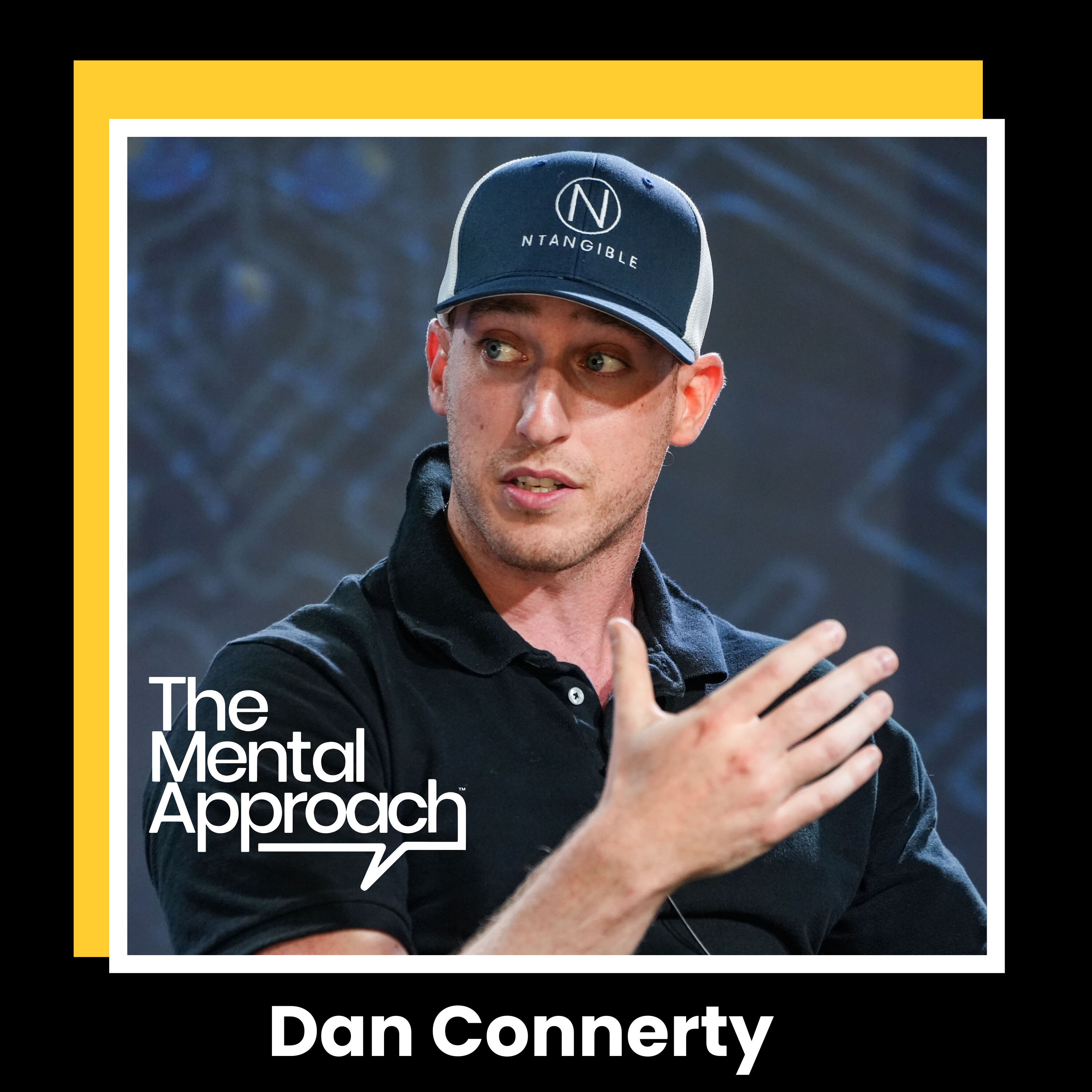
 In this conversation, Todd Arkell interviews Dan Connerty, founder of Ntangible, a company focused on enhancing mental performance for athletes through innovative assessment tools. They discuss the importance of measuring mental resilience, the science behind Ntangible's assessments, and how these tools can be applied in various sports and even beyond athletics. The conversation highlights the need for personalized mental training recommendations and the role of coaches in supporting athletes' mental development. Dan shares insights on the accessibility of their tools for different levels of sports organizations and the potential applications in fields like law enforcement and corporate leadership.
Find out about Ntangible - www.ntangible.co
takeaways
- Ntangible provides tools to measure mental performance in athletes.
- The assessment focuses on how well athletes perform under pressure.
- Mental performance is often overlooked compared to physical skills.
- The tool offers personalized recommendations for mental training.
- Ntangible's assessments are accessible to various sports organizations.
- Coaches can use the assessment to make informed decisions about player roles.
- The scores indicate a player's mental resilience and readiness for high-pressure situations.
- The tool can be applied in non-sporting environments, such as law enforcement.
- AI capabilities enhance the personalization of mental training drills.
- Understanding mental performance is crucial for developing well-rounded athletes.
See Privacy Policy at https://art19.com/privacy and California Privacy Notice at https://art19.com/privacy#do-not-sell-my-info.
Matt Cundill 00:01
Dan, this is the mental approach where we discuss mindfulness, mental performance and the tools available for coping in a high performance world. Here's Todd Arkell,
Todd Arkell 00:11
boy, do we have a show for you today? My guest is Dan Connerty. Dan is the founder of a company called intangible.co, if you want to check them out, their mission is to measure the unmeasurable. So throughout this podcast series, we talk about all these different ways to increase your mental advantage at various sports. Well, Dan and team have come up with cutting edge assessment tools like the intangible assessment and it basically is a tool that can predict and enhance mental performance, particularly for athletes in baseball and softball. Right now, they're spreading out into 10 different sports. We talk about that. They're spreading out into the corporate world. Some of you might be, you know, reminded of a test back in the day called the Wonderlic if you're if you're an adult, you know about those, and maybe you were subjected to one of these at work to kind of do some personality profiling, but their flagship offering, the intangible assessment, is a tool that coaches can use to evaluate players mental resilience and how they perform under pressure. It's a pretty cool product, and I hope you enjoyed the conversation. Dan, welcome to the show.
Speaker 1 01:25
No, I appreciate it. Todd, it's great to be here and really provide a platform for obviously, what we're doing. And hopefully those in the network and those in the in of your listeners might pique their interest. And obviously we're looking to expand out as we grow, and I think it's a great opportunity all
Todd Arkell 01:47
involved. Well, two things, how this came about. For those listening, you'll probably hear that episode first, but I was interviewing an individual named Jeremy booth, you know, we were talking a little bit about your tool, and he goes, Well, they're Canadian company. And I was like, What Canadian? I had no clue. But that aside that we have in common, I think what's really awesome about what you guys are doing, and why I wanted to have you on the show is that we talk about mental performance and things players can do and all these other things, but you're offering a way for people to actually measure kind of where they might be at. And we'll talk a little bit for the how to take actions on that, and then maybe re measure and see if there's anything that's improving as far as how they're going. So I think it's really cool, because it's like, it just seems so esoteric. Sometimes it's out there in the world, and, oh, you do some breathing and some journaling, and you'll be fine. Some visualization, right? But it's like there's a little bit more to it. So I think it's pretty cool.
Speaker 1 02:48
Is there any other industry where a good sign is you don't actually see the person who's administering the train? Yeah, no kidding, right, right? That's, that's, that's mental performance to a T, you're considered good if you're not actually going to see a mental performance provider. Oh, they're okay in all sports. If you're a basketball player and you're working on your shooting, you go see a shooting coach. But once your shots good, it's not like you stop shooting and you stop seeing the shooting coach, you just continue forward with it. So yeah, you're totally right in terms of, you know, what this industry is, is like where it is, and obviously, you know, on our end, we think that we can really provide a true stamp of approval to show not only our players improving, but also to say, hey, maybe there's a reason this player is not going to see you right now, because they're actually they're doing well. And instead of them saying we're confident and we feel pretty good, now you can put a number to it, which is, you know, quite exciting.
Todd Arkell 03:40
Let's start. I know you're a baseball player, played in college, and you can talk a little bit about your background, but what inspired the creation of intangible and how does your mission align with supporting mental resiliency in athletes.
Speaker 1 03:53
My background, I played professionally for the Hamilton Cardinals for a couple of years. Played travel ball in Ontario, worked my way down to Michigan, played at Northwood University, which is a stronghold d2 in Mid Michigan for a few years, and graduated with a BBA in entrepreneurship. So all I ever wanted to do was start my own business. My capstone project was actually building Cressy performance Canada. Oh, wow, yeah, that was my whole idea. It was in 2015 we could build the best facility in Canada and Cressy and bring it up. And that was because I trained there during my summer league in the south Florida collegiate league. But from that time, I became the VP of Business Operations at the baseball Development Group, which at the time was Canada's first data driven Training Center. We had a rapsodo machine before the Blue Jays even did so they were sending pictures to get rapsodo readings. And there we had a ton of early players, top level draft picks, one of which is Denzel Clark. Right now. He's now obviously the starting center fielder for Oakland.
Todd Arkell 04:56
Human highlight reel for those who are not initiated, i. Right. And
Speaker 1 05:00
even back then, he was pulling down 100 to 101 miles an hour at 17 years old, which is wild. He's always, he's always been physically at that level. And so we were always talking and having back end conversations of physically, there's going to be a point where we tap out what we can measure. And so we were talking about what really is next. And mental was always this not taboo concept, but kind of was where, you know, people didn't really want to talk about it, and if we knew someone had an issue mentally that we were working with, we didn't really know what to do. Other than say you should go talk to somebody about it. There was no really actionable step towards it. And so from that point, I was mutually connected to Dr Ed Levine, who's informally known as the godfather of industrial psychology in the US. He popularized the Myers Briggs assessment in the 80s and 90s, and basically any industrial psychology 101 textbook across North America. He wrote it, and we just started talking. And I told him, I said, Look, we're going to be fighting. I said, the same thing. We're going to be capping out our ability to measure things physically. I think mental. There really is something there. And he asked, What's in the market today? And I told him, Well, the wonder looks being used consistently at the top level. And he just started laughing. And he goes, Dan, what's what was the Wonderlic created for the Wonderlic was created to identify executive assistants on Wall Street in the 1920s what's the first question of the Wonderlic? Are you a lion or are you a zebra? That might be great. That might be great to know if I depending on what animal you like the most more than anything else, but that's been the standard bearer used for professional sports identification on the mental side for years, and especially in the NFL, right? So that was the initial ideation of this project. It took a couple of years of data collection, but we we really focused on one thing specifically, which was how well someone can perform under pressure. Because personality is great to know, communication styles are great to know, but they don't really correlate to performance, right? And so we wanted to identify, can we put players in certain situations to really get a feel for what their mindset is in those moments? So because we know for a fact, those moments are the ones that correlate the most to winning. Who do you want to have the final shot? Who are you putting as a closer in your game? Who's pinch hitting or pinch running when you really need that stolen base things of that nature. We, we've been very excited, obviously, with the results, but, yeah, at a very high level, that's that's the genesis of this product.
Todd Arkell 07:51
Can you describe the assessment and how it, how it measures mental performance in high leverage situations? You know, kind of high level for those who are listening,
Speaker 1 08:02
it's based off of the science of projectives. So most assessments are very much, you know, how closely do you associate with X, Y and Z? If this were to happen, what are some of the four options that you know you'd be okay with? You know, 16 PF things of that nature. We wanted to really put people into the situation and introspectively get exactly what they're thinking. So that's where projectives Come in. The most notable one is the Thematic Apperception Test and the Rorschach test. The Rorschach test, you get pictures with ink blots. You've probably seen it in movies before, and it's just a bunch of ink blots, but people elicit feelings from that. And so what we've done is we created this test where we took athletes in specific sports, gave them pictures with no definitive outcomes, there's no right or wrong answers, and we ask players what they're thinking, what they're feeling, and what's going to happen next in that situation. And with the vast improvements in AI and large language model building, we've been able to effectively take our psychologist knowledge base and build out a full AI neuro linguistic scoring guide model that can aggregate the scores to create your total intangible score. And like I said, there's no real right or wrong answers, which is the beauty of this assessment. But it's the keywords you use, the phrases, the ways in which you use the phrases, and also the tonality associated to your to the words that are used, that really help build out this score to make it personalized to you, which is very exciting.
Todd Arkell 09:39
So he talked about the science a little bit. How can you ensure, how do you ensure that the assessments scientifically valid and it's reliable for predicting performance under pressure? I mean, it's easy to, oh, I took this fun little quiz on the Cosmo magazine, you know. But how scientifically? How are you. You. How are you validating the results?
Speaker 1 10:02
Yeah, so we've got our we've got our psychologists building up our peer reviewed submission over the next little bit. Right now, it should be submitted in the next couple of weeks. But in terms of what we correlated it against baseball is beautiful in the sense that there are as many statistics as there are anything comparatively to other sports. And so we started with our additional baseball sample, and we used the leverage index and the bases out leverage index. Have you heard of the leverage index before Todd? I haven't. No, okay, so the leverage index was a byproduct of Bill James and some of the other high level statisticians that effectively can associate how high leverage a situation is in a baseball game based off of the number of outs the inning, the run differential and where you are within that inning. So for example, you're the home team. It's the bottom of the seventh. You're down by one run. There's a runner on second base, and it's a two one count that's considered a 2.6 on the leverage index scale that'd be considered high leverage. Interesting, anything above a two is considered high leverage. Anything below a two is considered low leverage. So what we did to cross correlate this is we took our Collegiate Baseball sample, which is the largest one we were able to gather, and we went through their play by play data and aggregated their performance within those high leverage situations to determine which players scored higher correlate to those that perform better aggregately In those high leverage situations. And what we found so far right now is in baseball, we're running 14.2 times more predictive than the Wonderlic. And in softball, which is a larger sample of ours as well, it's actually higher. We're running 16.8 times more predictive. So while we thought we were when we were transitioning into other sports, and by the way, we have seven sports now, by the end of by the beginning of q3, of the 2025 we're going to have 10, all the major ones you can think of. When we started expanding, we hope, you know, inferred that not only would this transfer over, but that the predictability would be similar. It actually seems like it's higher in other sports outside of baseball.
Todd Arkell 12:12
Yeah, that's interesting. I was actually going to ask, you know, you started with baseball and softball, but you know, what are the plans to expand, kind of beyond these sports and maybe even non athletic, high pressure environments. So maybe you can talk a little bit
Speaker 1 12:26
about that right now. Outside of baseball and softball, which are two flagship products and flagship sports, soccer seems to be our next major sport, especially in Europe. Right now, we've got some pretty major stakeholders and professional European teams that are very interested in not only getting their hands on this, but it also seems like a lot of these European teams outside of the top tier divisions, mental performance isn't a thing, and they don't really have mental performance staff. So they actually see this as almost an assistant, an AI assistant, to provide them the knowledge that someone on their staff would when the budgetary restrictions are there, which is, which is exciting, but our our product, we can do this in 10 languages. Again, the AI capabilities are, are quite fascinating. Right away. You get your automated reports within 15 seconds, and you'll get full suggested. I mean, we can dive into what it is when we talk about your report, but on the expansion side, outside of sports, what we found so far out of testing over 5000 athletes, is that a large portion of this score is innate. And that was a big question when we started this build out with Dr Levine and I was is clutch performance and the ability to perform under pressure, a trait or a skill. Because if it's a trait, you can't train it. If it's a skill, you can, and then it's a matter of how much you can. And so we found off of all of our data collection, a large portion of it is innate. It's a trait. The top end portion is a skill, and so it's reflective in terms of, you know, intrinsic and extrinsic factors. We've seen from we've seen examples from poor performance major injuries. I can tell you right away that there's about a 20% dip in your score if you're going through Tommy John surgery right now, just on average across all the players we've tested, which is quite indicative to say someone at later rehab time might say they're they're actually physically ready to go, but mentally, There's just nowhere near ready, which is, which is interesting. But then there's other examples, such as, I just broke up with my girlfriend. I, you know, one of the funniest ones I got. I went back to my ex girlfriend. I knew I shouldn't have done it, but I did, you know, that was one of the responses in the assessment. But their score significant. You know, it was dropping because they were making bad choices off the field, right? And so it's funny. There are, there are certain circumstances where, you know. So again, that top end is reflective, so we like to say that this is a capacity for your ability to perform under pressure, but by no means is it static. It can move day to day. So that's why we test twice a year, and we administer that
Todd Arkell 15:15
so somebody does a test. Do you? Does your tool, then give recommendations for the player of things they can do to kind of train their mind a little bit more.
Speaker 1 15:27
So that's the beauty of where we are right now and the AI capabilities. If you were to ask me three years ago, would we be able to do this, probably not, but with the beauty of where we are right now and the large language model that we built out, we've we call it insights on our team, so sure, the intangible assessment is the main flagship product, the large language model is called insights. And what we're able to do is off of all of the inputs that we've received so far across all these athletes and all these sports, we can effectively personalize suggested sports psychology drills for these players to improve what is needed within those moments. So one of the one of the questions on the assessment we ask is, how well someone for them to provide us a situation they recently excelled in and a situation they recently struggled with? And players are very open about that in terms of what they're doing, and, you know, introspectively, how they felt within those and from just some of those responses, we can personalize exactly what's needed towards that player, more so than just providing something super general. So you mentioned earlier, you know, everyone needs to breathe, right? The idea of administering general breathing drills or box breathing well, that's there's nothing wrong with that, and I think there's a lot of merit to it. But if I tell someone who feels overwhelmed and anxious in certain situations going up to a net bat that they should just do a general box breathing drill, how much more merit is that, comparatively to something where we can personalize exactly what's needed to be done when they need to breathe, and this is exactly what needs to happen when they're in that exact situation that they identify they struggle with. That's really the idea behind insights, is we wanted to personalize it as much as possible to this athlete in order for them to improve the skills that are inhibiting their ability to perform in these high leverage situations, which, again, is very key.
Todd Arkell 17:26
I've got two questions, two parts, but we'll start with this. How accessible is your tool? Like we're talking about, hey, you know soccer, professional soccer, you know college baseball, college softball, all these different things. How accessible is this to, like, say, smaller teams, or even, you know, minor sports organizations that have limited resources to have their players kind of get involved with your with your product,
Speaker 1 17:49
I'd say stay tuned more than anything else. So right now, we're, we're very much finding the right partners and all of these sports that we enter. So in baseball, you mentioned Jeremy booth. Future Star Series has been a great partner of ours. In baseball, if you want to take the intangible assessment, you have to be involved with future stars right now. We see this as a lot of these organizations. Outside of providing this knowledge base, there's a major use and competitive advantage for recruiting, and when we see these players, especially at the top end level skill, they're looking to not only put their players on another level, but also identify what are the differences between two players that physically are the same. Because right now, there is just the innate gut feel that makes that final decision as a coach, if I know they're getting the same scholarship and they throw the same speed in baseball, for example, as a pitcher, it goes to do they have a good head on their shoulders? Did they shake my hand strong enough? Do they come from a good family? Are they east coast or west coast? I don't like West Coast players as much. They don't handle East Coast weather. Well, like all these little things that you know, these are our subjective biases, the intangible score pushes through all that, and we have the ability to provide an objective metric now that says, mentally, this player will perform better when the game's on the line than someone else, which is, which is the ultimate goal of this product?
Todd Arkell 19:16
Absolutely, I just think about as I'm listening to you explain it, how valuable this would be for, you know, any any kind of sporting organization or team even to say, okay, we can create a baseline for our players. We can create sort of a suggestion of training that they can do to improve. We can have, now have an intervention of a mental performance coach, a human being interjected and helping to work with the players on that training so that they get more value out of it. It's not just something esoteric, just in the wind, right? And then retest and go forward. It seems like I
Speaker 1 19:52
would love to, I would love to, but we, we've run into a couple of issues, which is, one, coaches don't like being. Told how to coach, you have to be very understanding of that. And also, coaches don't like being told that how they think about certain players might might not be the case. And then secondly, we've also seen, you know, a little bit of inhibition on the mental performance side, which is some people see this as a tool that, instead of being the best addition to their processes that they could ever hope to have. They see this as a potential replacement, or potentially shows that what I'm doing is or the work I'm doing with the players is not actually performing very well. So that's kind of one of my goals about obviously having this platform and being on this podcast is just to say that is totally not the case with this product right now. Our goal is to provide this as the best AI sports psychology assistant that you could, you could hope to have. And exactly like you said, this is in my mind. This is the this is the spin rate of mental skills. When spin rate first came out in 2016 2017 it was a cool number, and Garrett and Garrett Cole threw 2500 nobody knew anything about it, right? And that was it. Three years later, driveline created pitch design training took three years for us to understand all the data of spin rate in order for us to be able to design exactly how to tailor specific sliders change ups and off speed pitches, but it took that long time of data collection in order to do it. For me, that's where we are right now. We have a number that's quantifiable and predictive, and we know what it can do, and it's going to be very exciting to see those early adopters, especially on the mental performance side and sports psychology side, to run through this and be able to say exactly what specific modalities and training implementations do improve these skills that truly matter the most. You might say visualization is great, but is there a specific type of visualization and when that actually does improve these skills more than just standing out in left field during spring training with all the other base, you know, all your other players, closing your eyes and visualizing hitting a home run. You
Todd Arkell 22:07
know? I think the thing is, is where I think people have to wrap their heads around it, when, when I think of AI, is, it is a it's a tool, right? And if you've trained it, which it sounds like you guys have done a really good job at training this, it really can shorten the cycle to get to the root cause, you know, like, it's just like, it's even like, using it for research, if you're you know, they talk about it even like with schools, oh, kids should not use AI chat, GPT, Gemini, you know, co pilot, whatever. You know, all these large models that the big boys and girls have out there. But you know, the reality is, for you to go and do research, like when I was in school, you had to go to the library. You had to try to figure out, where's the subject matter, get a whole bunch of books, go through all these books, try to identify things that kind of matched your your thesis, or thesis, or what you were writing about, right? Like, I mean, now you can say, hey, grok, giving Elon a little props there, you know, can you tell me a little bit about this? And it spits out, like a whole lot, and you go, Oh, that's interesting. Okay, let me go, sort go look up this a little bit more. You know what I mean? Like, it shortens that cycle of the work you're doing. And I think it's, it's really important. People were, oh, it's going to take over, and maybe it will. In a lot of cases, it can do a lot of very menial tasks. But I see it as just what a great tool. If you were a mental performance coach, I would love to have this in my in my kit bag, because it's so much so simple to kind of go through. I mean, I think it took me 20 minutes to kind of go through and and and go through the test. And, you know, there you go. So there's a good segue. Why don't we talk about that? So I took a test, I took one of these assessments, and it was, it was very like, hey, no answer is the wrong answer. Just write all your stuff in here. And then, of course, a lot of word association. And how do you feel about this and that which I'm familiar from, from the from the Wonder licks of the world and and, and the other personality tests I've been given or throughout my, throughout my illustrious career. So maybe talk a little bit about, I guess the output, what that sort of means.
Speaker 1 24:23
Just to touch back on the on the AI point and acceptance, there was a recent study that came out, I think, from Boston University, but it was a couple of months ago, AI chatbot therapists, people who went through human therapy sessions, like General General therapy sessions, versus using the AI chat bot, they were 40% more positive towards using the chat bot than they were talking to an actual person, because they felt they were getting judged every time they were talking to someone human, rather than the computer. So this idea. Idea of interesting leveraging some of these tools to get truer answers, because players provide more answers than what you would hear, or because in person, especially a coach facing conversation, or a mental performance coach facing conversation. How do you feel today? Oh, I feel great. It's very rare that players will open up, unless in a true, open setting towards it, because they have other circumstances. But just from an from the AI standpoint, it seems outside of the sports side, and from anecdotally, what we've seen so far with our our players and the data we're able to provide, there is merit there to being able to leverage this in order to get truer answers and more in depth data.
Todd Arkell 25:42
I talked to, I talked to a guy the other day, and he has a bunch of people that sit in a room and do cold calls, right? And they call out, and they go, Hi, sir. Would you like my ABC product? Hi, sir, you know. And he said they could do about 50 to 60 calls a day. That's in an eight hour day. And they were paying them, you know, X amount of dollars, and then he came across and kind of, we called it a high salesman. He goes, it was ridiculous. It was like, I talked to this bot and I couldn't tell it wasn't a human. And it was like Wolf of Wall Street had an answer to every question, I you know, every objection, and kept pushing back it says, And the chat bot can do 10,000 calls an hour, and you're going, Okay, this is where I see, you know, AI being able to replace humans in certain roles, but it is mind boggling as you kind of go through that as to what it could truly do if you If you set it up properly.
Speaker 1 26:41
So jumping back on, on the other, on the other topic of, what do these scores meet? And I think that's really been for us, where we're really pushing out our true understanding of that right now, getting that message across, because a lot of our early collection when we didn't know as much of what these numbers meant was, this is a cool number, but now what? And then, that's what led to the Insight suggested drills, and also, just from the vast numbers we have now we have an understanding. So basically, at a top end, I can tell you flat rate, an 800 or anything above an 800 is considered an elite level of mental performance, and that goes across sports. And we've seen, on average, those players that are above that 800 level. They're at their professionals at the top of their field, all Americans or top tier recruits going to, you know, Power Five conference schools in the US for the most part. 725, to 799, that's kind of your average score for the most part, or above average. Sorry, where within that frame there's a mix of players that are either, you know, decent performers and mostly starters for the most part, but also there could be players that are more fringe that are just waiting for the opportunity to get a bit more playing time, more than anything else, anything below a 650 that's considered below average on this assessment right now. And that doesn't necessarily mean that a player is bad by any stretch. And I think that's one thing that we're very clear with, or we're trying to be with this assessment. We don't want to be the dream killers. If someone scores poorly on this assessment, it's not the end of the world. What that only means is your mental skills are just nowhere near as good as your physical skills, and we see that all the time, especially at the high school level, where, by default, if you throw the hardest, guess what you're you're considered the best doesn't mean you're a good pitcher. Just means you throw the hardest, right? And we just overvalue physical skills. So this is really a good aggregator to say, do your physical skills actually match up with your mental skills or with the ability to perform when you need to, and from there, if they don't, then guess what? That's my red flag scenario as a player and a parent to say I need to work with somebody, or if they do, then I'm more in line and more inclined to be able to be put in those situations and transfer up as I go through higher levels of play.
Todd Arkell 29:13
Yeah, I think there's, I mean, that's actually part of how this podcast originated, was I found a lot of elite players focusing all of their time on the physical skills, and they were absolute basket cases when it came to the Met like they were just like very roller coaster however they felt that day, you know, they let things derail them, you know, whatever it is, they weren't consistent in their physical performance because they weren't prepared to deliver the same sort of level of output. Sometimes it's physical, for sure, but I really felt that kids needed to have some tools to be able to deal with a lot of the stuff, because then I'll keep preaching it. I call it the professionalism of youth sports, that at a very young age we got. Kids in Canada, anyways, dressing up in ties and suits to go to hockey games at nine years old. I won't give my opinion. I think those you're listening, no, I was gonna say, how many of them are going to the NHL, right? And it's like, well, we want to create this. You're a professional. You're you know. Okay, so what are you doing on other sides of things. But anyways, that that is what it is. So let's, let's dip into the test. We use me as a guinea pig. Let's dip into the testing, and you can talk a little bit about, you know, my score, what you think it means. You know, I'm no longer an athlete, so you know, it is what it is, but it's interesting. Just the same, you scored a 739,
Speaker 1 30:40
on the assessment, which would put you in the average range of mental scores. Just so you know, we have seen across our professional sample and our ex pro sample decay in these scores. Oh, interesting. So a lot of current players that are always thinking about these certain situations, it seems their scores are much more consistent, but we have measured some all star players and some Hall of Fame players where they just they're not continually coaching, they're just out of the game, playing golf and enjoying life as they should, and their scores are a little bit lower than what we would have expected. And to me, again, that's that top end of that score, where we've been able to identify, that's the skill portion, where, if you're not continually working on it or thinking about those situations, your thought process within it will decay. It's like going to the gym. If you go, if you stop going to the gym, guess what? You're not going to be as strong as you once were, right? Comparatively,
Todd Arkell 31:37
you look like me, not like Dan. That's what happens if you stop going to the
Speaker 1 31:41
jersey? So 739 is a good score, and it really reflects, you know, if I was a coach looking at that right away, comparatively, I'd say that that's not a red flag scenario for me. That's considered to say I'm consistently okay, that if I put Todd in a certain situation, he'd probably perform on average or above average, comparatively to where his competitive peers are.
Matt Cundill 32:09
Now, more of the mental approach with Todd Arkell,
Todd Arkell 32:13
what kind of insights can they use to kind of help help that player along, as opposed to just going, Okay, well, I'm going to all my above average guys are going to be in baseball in the 2345, slots, and then everybody else is, you know, changing the batting order, that way, type of thing. What are ways that they can kind of, I guess, help along. Those players support them. Two
Speaker 1 32:35
main uses we see so far on the on the coaching side of things, not mental performance side, like I'm a coach of my roster, lineup decisions. So this is not, by means, a deciding tool that says you're starting versus you're not. We've seen this to be able to decide certain positions where people and players are going to maximize their capabilities, so that we've worked with a couple of major division one programs on the baseball side that have used this to effectively measure who's going to be my closer versus who's going to be my middle reliever. I've got four middle relievers at the back end. These are the guys I'm thinking I want to throw, and they'll go with the one who scores the highest on this assessment, and they end up performing actually we we've got a great example of that. There was a d2 program we were working with who went to the College World Series. They had four players, middle relief, player, pitchers that they were thinking of considering, and one of them was a d3 walk on. He was no no athletic scholarship. He was 78 to 82 from a funky arm angle, and he was overweight, short and overweight, just like if you walked through and he showed up to a camp, it'd be very, very rare that this player would get any sort of offers or any sort of looks. His dad was a VP for the NFL for years, and Dan Marino was at his house all the time, along with some of the other top NFL players at the in the 90s, in the 90s and early 2000s and he's just, he was just around all these players. So they were talking to him. They would play catch in the backyard, things of that nature. But physically, this guy just was, he wouldn't come off the page. And so our scores, he scored the highest at about that group of four, and he was up against players that were throwing 92 to 95 and the coach said, You know what, I'm going to go with the intangible score, and I'm going to have him be our closer. In that year, he finished third in all of NCAA. And say, Wow, all of NCAA. And it just again, any type of verbiage you hear, Bulldog mentality, gamer, competitor just loves to compete, eats, breathes, sleeps, baseball, all those, again, subjective markers that we informally use were all put towards this player, but it came through, and it came through with this performance. So. That was a prime example of just being able to leverage some of these numbers for selection and maximizing which players are going to be used properly or should be on the development side. These scores, again, provide a roadmap for you to say, is this something where I should talk to the player and with these players now being able to get their insights drills if I'm a pitching coach, and again, we're using baseball a lot, but it could be any coach. If I'm a coach, I know they're getting these drills, and I'm hoping, and I expect, that these players at this level will work on the drills that are suggested for them to do, but just having conversations about it can really be insightful. We had a division one program again on the baseball side, they had a pitcher who physically had it all. He's on the draft list, but that season, he struggled, and he put up a nine era. Couldn't find the strike zone, and coaches were like, what's going on? Like this guy we thought was going to be a stud this year, and we tested him. He was the second lowest scoring pitcher on the team, and he was all fear based in all of his responses. You know, I'm worried coaches are going to get rid of my scholarship. They're going to cut me I drive all the way to practice. He drives two hours to practice every day he lived off campus, and he's, you know, he's like, it would be, it would be terrible for me financially. I don't know what's going to happen my I don't want to let all my teammates now, like everything was just fear based. And so without us even providing this was pre insights, without us even providing an understanding of what they should do, the coaches just talk to him differently. You know, the head coach came over to him and said, Hey, right away, I want to tell you, we believe in you. You know, you're not going to lose your scholarship whatsoever. We want you to be a stud for this program. The pitching coach would start talking to him and say, you know, why? Why are you worried about what's going to happen? You know, why are you worried about the worst thing that's going to happen before you go out on the mound, we have to flip your mindset to think about the best things that are going to happen and how much you're going to perform, and so just these things that are informally always done all the time. You know, for the fair amount of coaches, this just provided some guidance to say this player needs that. And we retested him at the end of the year, he scored about 80 points higher, which is statistically significant. Anything we see above a 5% variance, either high or low, we consider that a significant variance. To say that some intervention occurred, either be coaches, informal or actually a formal intervention. But he scored higher, and that season, he was the number one starter. He switched everything up. He finished with a 3.8 era for the season, and was back on the draft list, and unfortunately, he blew at his elbow this year, so now he's going through he's going through rehab, but we tested his score, and he dropped another on average, 120 points, like I said. But there's a great example of just taking, you know, this score, and then, informally, just talking to these players differently. So that would be my suggestion, if I'm a coach. Is this is by no means the only tool you should use, but this is a tool on the mental side, where you might not be a sports performance coach or a mental performance coach, but this is something where you can start inferring, I need to start talking to these players differently, or have the ability to work on them a little
Todd Arkell 38:25
bit more with future stars as an example. How are, how are they kind of using that? Is it, you know, for their players, obviously, they, they, they run a bunch of regional combines, into national combines, into these big events and stuff. How are they utilizing the testing for themselves,
Speaker 1 38:43
internally, for their for their modeling, more than anything else. Obviously, you know Jeremy. Jeremy is very strict and regimented in terms of exactly what he expects to do in terms of his rankings and how he weights this score. Again, We by no means think that this is the sole thing you should use from a recruiting aspect or a scouting aspect. This is one tool in your toolbox, but it makes up a nice chunk of a makeup of a player. They're using it internally for their systems, for FSS plus, and really allowing to establish and identify those early performers. So this tool is great. We can test as low as 13 years old. Anything under that. It's more just a vocabulary than anything else. Why we don't do so. But at 13 or 14 years old, we can identify players that have a mentality or a mental acuity closer to what some professionals do. One example of that outside of future stars is Alliance fast pitch, which is our softball provider. They're the largest softball company in America. 50,000 girls running through their tournaments annually. And the highest score we've tested is a 14 year old girl who plays for the 18 year national championship team out of California. She's the starting center. Fielder, and her moniker, even though she doesn't like it, she's been self titled The Ken Griffey Jr of softball. At 14, she scored 30 points higher than any professional softball player we've tested so far. And so just having the ability to identify these skills early, physically they might not be there, but mentally, they are. You know, that's something we've never had before. So on, on the future star side of things, and all these other youth organizations that we're going to be partnering with, to me, that's really where the value is, is identifying talent early and knowing that mentally, as they progress, they're either going to consistently stay where they are or they're going to be improving where they are and their physical skills are going to catch up. Yeah, it'd
Todd Arkell 40:43
be interesting to even interview her, to try to understand is this, as you talked about, how much of this is innate, how much was maybe learned by the environment they're in. I mean, you mentioned Denzel Clark earlier. I was watching a highlight. If you have not seen it, go, go, look it up. He basically climbed the fence, spun in mid air, caught the it was just a ridiculous catch. And somebody asked, you know, how did you learn how to jump like that? And he said, My mama and his mom was a, was a Olympian, and, yeah, track star. And so, yeah, you know, there's obviously some of that physicality was passed on right that he was able to do and learned because of him being a track participant as well as a baseball player. But it's it'd be interesting to know how much her environment portrayed or how much was just that was her right in her mindset. It would be
Speaker 1 41:36
fascinating how much parental mindset, and again, being around that high level mindset does impact these youth players, I mean, but informally throughout the years, everyone looks upon, I mean, look at the holiday kids, for example, that are going as high as they are, right? Any ex professional players are always look their kids are always looked fondly upon because they've been around it so they, you know, informally, we assume that they're going to be more accustomed to that lifestyle and not only be able to be in it, but produce it. Yeah,
Todd Arkell 42:09
no, I can't think of too many, you know, too many major league players where their kids were kicking around at 345, years old, and now they're coming up. And usually they're all pretty good. And mostly because I think they're around it, mostly because they probably, I don't know if you've ever seen any videos of the setup at the holiday household, but the the facility they have in their backyard rivals most major league facility, like, it's like money being able to pour into, not that, not that, that's anything, because you watch videos of kids in the Dominican hitting bottle caps with sticks. There's a lot of different ways you can train things, but it is certainly an advantage out there. However, drive is something to it too. You can stick a kid out there and say, Go hit for three hours. They don't necessarily want to do that. You know, I can think of even back to to my son, when he started, he goes, I want to play baseball. I think he was, like, three. I'm like, well, you're number one, you're too young. But we, you know, we use a little plastic tea and plastic bats and balls and everything else, and then he'd want to be pitched to and at like, four years old, he was hitting balls that were pitched to him. And I was like, That's odd. And so I just said, Okay, well, you know, here's how you field. And he would go out in the backyard for an hour and throw a tennis ball off a wall and make all the and it was all he was just self amused by all of this stuff, right? Throw balls up and hit them, hit them off the tee, whatever. And he would go out there and do it. And when he started playing at like, I think he was, like, five or six in in T ball. People would say, Well, how can he, how can he feel like that? And I said, Well, he's like, got, like, probably 1000 hours in just on his own, just his own enjoyment. It was naturally there of something. He was the same with hockey. He would shoot in the driveway, so he had a very good shot, could raise the puck at six years old, and other people are like, and I go, well, is your kid in the driveway for an hour every day shooting pucks like, I mean, it, it. There is certain things that you're driven internally. You enjoy that, and that helps sharpen your physical skills, which, now let's you know that kind of is why, hey, you do that. So what are you doing every day to sharpen your mental skills.
Speaker 1 44:23
And again, informally, throughout the years, we've used key terms to identify those types of players, right? Those are the ones that off the field or off the ice or off the court. That's when the most important time is for those players. You know, I'd love, I'd love for this player, a coach will say, I want all these players to work just as hard off the ice as I do on it. Right? We've been talking about that. Now we can measure and identify early who those players actually are, and who are the ones who are just naturally gifted with their skill, because those are the ones that should have all the opportunity. In the world, but they don't, and at BDG, especially, I hated it the crux of, oh, they just couldn't cut it at the next level. That's a cop out. That's the biggest cop out in all of sports. They couldn't cut it at the next level. Physically, they had it all, but they just couldn't cut it. No, they just didn't have the guidance or the identification that these skills were poor early, that's really what it was. And now we do. And I can tell you the amount of coaches I've talked to that have said, I wish I had this when I played, or I had I wish I knew this when I played well. Now we do, and it's just a matter of being able to leverage that and build in my mind. And what I hope to do with intangible is we build the most mentally prepared generation of athletes in history. These are the players that we know can perform, and then develop them into the into the players that actually will I know, I think
Todd Arkell 45:55
high level hockey player. I know, he said to me at one point, like, somebody left their junior team and went home, just kind of gave up, and he goes, Well, it's not for everyone. And I was like, No, it's not. But if you have, if you're at that level, skill wise, there's got to be something you can do to kind of, you know, do that. In the case of that particular player, his parents were constantly interfering and in his head that he should get this or he should have that, and then, you know, that's that. It's definitely not a growth mindset. If people are telling you, hey, you deserve more and whatever, and then it becomes just a spiral towards your towards your play and different things like that. And it's, you know, when I, when I think about it, there's just so much opportunity. I talked to, I talked to an owner of an OHL team, and said, hey, you know what? There's this, there's this intangible company. You guys should, you guys should use that for the kids before you draft them. And he goes, we're not allowed. It's against the rules. So it was kind of funny. I was like, Oh, this would be a perfect way to kind of, if you go, Hey, I like these two players. How do I figure it out? I you know, the NHL does a lot of stuff.
Speaker 1 47:05
So the the NHL actually is one of the few leagues that actually does not allow mental testing as part of their draft combine. It's in, it's in the CBA, which is
Todd Arkell 47:16
they used to do, I think. And I don't know when that changed, because I know they used to do like psychological profiles. They'd have you fill out all kinds of things, because I know there were certain players that sort of got dropped from their status or were much lower because teams felt different ways, right? But that's interesting. Why not? Right? It's like the players are going well, I don't want anybody you know, to affect my ability to earn a living or whatever, using that information. I mean, obviously some people would use it for bad, but other people would use it for good. Like, hey, you know what? We really like this kid, and he seems like he has the makeup, but we're gonna have to work on that a little bit more. You know, maybe he's a diamond in a diamond in the rough, like, let's find a kid. You see all these, all these people that are, that are late round picks, that used to be in the in the MLB draft, the 30th round or the 27th round, and somehow they made it right. They weren't. Obviously, nobody thought they had the physical tools. I think it just shows you how the delta is a lot smaller from the first round to the 20th round. And often a bias, oh, he's a first round draft pick. We're going to give him more rope than we're going to give the 20/20, round guy, no, 100%
Speaker 1 48:38
and the higher we go in these skill levels, the delta that we've seen on the intangible score also narrows as well. Right at a certain professional level, you are expected to be in a certain range, and then it's a matter of how low you are within that range, that determines how well you're going to perform. And the easiest way to correlate our score, the higher you score on this assessment, the more likely you are to perform in high leverage situations. That's really it. So as we go up, and it's similar to physical you know, as the in baseball, the ever rising average fastball speed, which seems like if you're a middle reliever, if you don't throw 97 now, it was 95 a couple of years ago, but if you don't throw 97 you're not touching the field. The same thing applies on the mental side. We see it from high A all the way to the major league level. But you were, you were mentioning about on the testing side. It's interesting, because we thought agents would be inhibitive towards this if leagues are hasn't been the case. We've tested Scott Boris clients. We've tested, Wasserman CAA clients, and they all find the appeal in it, and they're interested in it, and they actually want their players to have this data. So, you know, we thought they would be most inhibitive. That just doesn't seem to be the case. It's a lot of times again, leagues and structures and bureaucracy that gets into play more than anything else. But I mean, that's life in general outside of sports too, yeah.
Todd Arkell 50:04
And if they can't do it ahead of time in the draft, it doesn't mean a team can't use it as a tool when they're developing players as well, right? We've
Speaker 1 50:11
got some teams now that are using it during the interview process as it's just as part of the interview process, and they're asking these questions on the fly, and then they're transcribing it and putting it
Todd Arkell 50:20
sneaky, no. Sneaky. What's a unique application of this test to us? Maybe something that's not traditional sports that you guys are working on.
Speaker 1 50:32
So we were just entered into the North America's first police tech accelerator, which we're really excited about it's based in Coburg, and through that partnership, we're going to gain access to potential testing of 1500 police officers to develop a public safety assessment. And when it comes to anything outside of sports, there is a much more regimented and structured data collection process that needs to occur for racial biases and things of that nature because of hiring decisions in unions. Unions are the I want to say unions are the worst, because that's the case. But when it comes to something, adding something like this union, unions make things harder. So we're excited about that with the idea of, can we identify those officers that potentially are more applied or have the skills necessary to make the right decisions in those right roles, is someone meant to be more of a low key officer versus someone who's being sent to the front lines all the time? If I'm a small division officer of a small department where I have to do everything, versus the Toronto Police force or the New York Police Force, where you're specific exactly to a role and that's it. You don't, you don't really stray away from that. You're in one division and one division only. It's going to be very interesting to see what comes out of it, and the genesis of being able to move forward from this, and it's a bad scenario. Is one of our team members is close with the chief of Hillsborough County, which is Tampa, Tampa, Florida. And he said right away, the chief, when we were talking with him, he said, I need this to determine who I put at school? And the example he used was, there was a school shooting, a recent school shooting. At the time we were chatting with them in Florida, where the person who was on call when someone started firing, ran away and called for backup. And because of that, a ton of people died. And if that person went in and apprehended that person and had the skills to do it instead of running away because they were scared and called for backup again, major life and death to death decisions. But there's an application right away, where is this person ready to perform or when they need to in that high pressure moment, and it doesn't get more pressure filled than that in that in that sector. So it'll be very interesting to see how it comes out. I think, you know, the real big case here for outside of sports is actually in corporate leadership more than anything else. When it comes to pro athletes, again, we believe this is a life skill, and even collegiate athletes and youth athletes in general, in you take this into whatever you do in your next role, in your next life. I mean, you did that with what you're doing right now. I imagine your son, when he transitions into sports or outside of sports, he's going to take that drive that he had in sports, and just put it into his next venture, right?
Todd Arkell 53:42
Yeah. I mean, that's the biggest benefit of team sports, is what you what you learned, if it goes according to plan and you have good environments, you know, it transitions you into a good teammate in a job.
Speaker 1 53:56
We've been talking with some people, some fortune 500 companies, about what would be interested in, you know, what their interest would be in something like this, because they measure, they do a bunch of other personality profiles and communicated style profiles, but it does not seem that there is an assessment like ours in that sector. And the goal would be to measure, you know, at least from our informal conversations, which CEOs are going to be the ones that sell, or which are my closers in a meeting when I need to make the final deal, and how much is that worth financially to me to put those right people in the right situation? So again, it's more iterative right now. We're going to be really exploring that the process is a bit longer, but if all goes well, and all is planned on our pipeline, probably by mid 26 we'll have a full public safety assessment and a CEO assessment ready and waiting to be implemented.
Todd Arkell 54:53
That's, that's kind of cool. Well, I think that, you know what, honestly, with with what you're doing, I think the sky's the limit. You know? At the right science and and being able to train these different models, as far as you know, giving them the data of what they're looking for and then analyzing it is a pretty it's a pretty cool sweet spot.
Speaker 1 55:11
You want to hear something even crazier. Our newest R and D product right now, which should be live in a month. It's a short assessment, and this came from a conversation with a power five conference coach that asked for recruiting portal players when I'm talking to them on the phone and I can only talk to them for 10 minutes, are there three or four questions I can ask where you guys are able to just on the phone? Three or four questions I can ask where I can get a full psychological profile of them. And from what we're working on right now, it's five questions, and we can measure, as of pretty accurately, in this early version, team chemistry fit with your roster, we can identify red flags, mental red flags that you might want to look out for based off of this player. And at a very high level, we can, we can mention to coaches a suggestion of, would you recruit this player or would you not? Which is wild, but obviously, again, the the advancements in AI, and what our model that we built has been able to provide it's very appealing. I mean, the idea of, I've got 20 recruits that I'm talking to right now,
Todd Arkell 56:27
and I can only pick
Speaker 1 56:27
two or whatever they can only pick two with the roster I have. I can this, this assessment can tell me seven of them are going to mesh well, and 12 guys or 12 girls are are totally going to clash, and it would create a poor environment.
Todd Arkell 56:43
Yeah. And it's interesting, you know, you bring it up, obviously, for Portal players. And, you know, if, depending on who you talk to these days, I mean, the portal has been around for a long time, but I think the way it's being used now, it is, is crazier, and there's a lot of negativities. Maybe the heart is maybe not the best word, but I think to a certain extent, for people who've been around the game for a long time, you know, talking about, you know, come on, why don't you stick it out for four years? You know, why are you leaving? Because you just weren't getting any playing time. But there's interesting things like, and I don't disagree with some of that, because I see like, there's a kid who was with Murray State, which is like a small school, and they went to the College World Series this year, and he's transferred to another d1 school like, you know, chances are it's money, because he was an integral part of what they were. And with n, i L and schools being able to offer funds to players. I don't blame them, but I also kind of, you know, there's probably people that are wanting to go to your point because it is not a good fit, you know, either psychologically, or maybe they're selfish, or whatever it is, right? Like they maybe you're blocked, maybe you are, and you go in the portal, and that's that's fair, but maybe you're just not a good person.
Speaker 1 58:06
Well, on the player side, that that totally could be the place, but on the coaching side, now, you can't afford to make a mistake, and I think that's really key here is it's not just athletic scholarship money that you can wash off, or academic scholarship money that can be washed off. We're talking about booster dollars that are going to and collective dollars that are going potentially to waste. And you need to be right every single year as much as possible, and especially with the hard roster limits, thanks to the house settlement, you can't have people on the sidelines anymore and hold them
Todd Arkell 58:41
no and now that you know, it used to be 11.7 scholarships, for those who don't know, for a 40 man roster. And now, if the school is fully funded, you've got 34 scholarships. So go to a school like Tulane, $85,000 US a year. You're offering that kid, basically almost a $400,000 payday just in school alone, to go play at your school. Like it's a big investment. And I think people don't realize that so much. They're like, Oh, you know that this kid's gonna go here, that kid's gonna go there, but, you know, coaches are getting paid millions of dollars. They want to keep their job. There's a there's a lot of stake. There really is
Speaker 1 59:23
college sports. Is the ever ending circle that just keeps evolving. But I guess my takeaway, and my comment on this, is, if you're not thinking about improving your practices and just doing the same old same old, you will be left behind, and that goes for both players and coaches alike. So looking to use a system like intangible or something similar should definitely be on the radar in terms of, you know, making sure that you're you're right more often.
Todd Arkell 59:51
Yeah, I think it's like, honestly taking the test. It obviously was very easy for, you know, for me to do it. Did it from my phone sitting on. Couch, you know, obviously giving it some thought, not just, you know, not just blowing through it, but it's fairly easy to use. And you know, what a great tool that nobody had before to just help develop a player. A little bit further right, I think that that's to me, anyways, is the is the cool part about this, and I'm absolutely stoked to see where you guys go, especially, you know, being Canadian myself, and you know, like to cheer on Canadian entrepreneurs. I think it's, I think it's pretty cool one. One other question I was just going to ask, because we talked about levels and above average and everything, where would be, say, a division one baseball player, kind of where do they sit, number wise?
Speaker 1 1:00:44
So right now, off of our sample, they are around a 732 across the what was my score? 739 so congrats. Oh, I
Speaker 2 1:00:54
could have been a d1 baseball player there, if I could have hit the curve ball.
Speaker 1 1:00:59
There you go. But, but what we've seen at the collegiate level and across sports is normative levels are different, and we've also seen that with gender as well. I don't know if this is a male female thing, but it seems like women seem to tend to or tend to be harder on themselves across the board. No interesting take that for what you will. But that does affect the scores a little bit, and things are less rational and more emotional regarding their answers. It's much more introspective on that front, but it's not varied to the point of at the division one level, you'll see, you know, they're in that certain range of 718, all the way to 745, the lower tiers you go, that's really when you start seeing the Delta drop. So, you know, at the high school level, like I said, on average, the high school level could be all the way from a 612 and women's soccer to a 685 in men's basketball.
Todd Arkell 1:02:00
That's cool. It certainly is incredibly fascinating. Dan Connerty, thank you for joining the show. I wish you all the best with intangible and your tool. I think it's going to be, I think it's going to be the wave of the future. Thanks for your time. No, appreciate
Matt Cundill 1:02:16
it. Todd, thanks for listening, for more, including resources and more about the show. Go to the mental approach.com A production of the sound off media company you.

