Travel Baseball Spotlight - Inside The Culture of the Okotoks Dawgs with Tyler Hollick
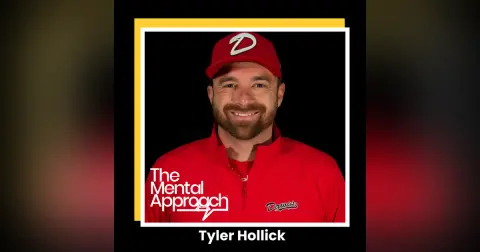
This is the first in the series profiling some of the top Travel Baseball programs in North America. In this episode of The Mental Approach, host Todd Arkell sits down with Tyler Hollick, former JUCO standout, MLB draft pick, and current President of Baseball Operations for the Okotoks Dawgs.


 RSS Feed
 Tyler shares his baseball journey from starting his collegiate career 0-for-38 to becoming the Junior College National Player of the Year. He dives deep into the mental performance, culture, and high-level development strategies behind the Okotoks Dawgs—one of North America’s top summer collegiate programs and an academy boasting a 100% college placement rate.
Matt Cundill 0:00
This is the Mental Approach, where we discuss mindfulness, mental performance, and the tools available for coping in a high-performance world. Here's Todd Arkell.
Todd Arkell 0:12
Welcome to the Mental Approach. I'm your host, Todd Arkell, the podcast about providing mental performance and mindfulness tools for competitive youth athletes, parents, and coaches. Today, I'm talking with Tyler Holick, a former JUCO Bandit, MLB draft pick, now president of baseball operations for the Okotoks Dogs. Their summer collegiate team has won eight league titles, and the Dogs Academy, where they report 100% college placement rate. We get into what he learned when pro ball ended, how you coach a teenager to bounce back from mistakes, what goes on in their new mind gym, and what he'd tell the parent on the car ride home. Tyler, welcome to the show.
Tyler Hollick 0:53
Yeah, thanks for having me, Todd. That's awesome.
Todd Arkell 0:55
Yeah, no, I'm I'm loving it. And for those who are catching the videos, I'm representing with a dog's hat, having visited Okatokes this summer, and we'll get into that a little bit for a little bit later. But first question: Is it true in your junior college career, your first season started with an O for 38?
Tyler Hollick 1:12
Yeah, definitely the the classic late bloomer, I think, and the undersized Canadian going down there trying to be a small fish in a big pond type of thing. And I had played on the college summer team here in my senior year a little bit as an affiliate, and I was very well coached through the academy and everything. As it was in his younger stages in Okatokes, but I went down there, and the speed of the game kicked my butt a little bit. It was 47 degrees Celsius, and I was playing with some some really good players, and I think it was a combination of chance to be in my own way and playing, getting up to that speed of the game. So it was, it started over 30. I think it ended two for 52. I thought I was getting cut at semester break there, and the head coach at the time, and now the AD is one of the biggest influences in my baseball career in my life. Was Coach Russ Lu said once you start believing in yourself as as much as everybody else around this table does, you are going to really take off. And for whatever reason, that that was like one of those marquee moments of my career. And went back over Christmas break and worked out in the field house here at at home, and came back, and the game just seemed to click a little bit and slow down. And had a freshman campaign there where I started most of the games and took off from there. So no, it was it was a rough start for sure.
Todd Arkell 2:17
What was going through your head at the time? Just I'm gonna get cut. That's it. My baseball career is over.
Tyler Hollick 2:23
Pretty much, yeah. I called my dad like three weeks into the fall and said, "This is too much, and I don't think I can do this. And tears in my eyes, and think I'm just, I think I'm done. And he basically just said, "You're overreacting, and have a good night's sleep, and put one foot in front of the other tomorrow, and see what happens. End up having a pretty good day, and for whatever reason, just stuck to it. And obviously, was the the best thing that ever happened to me in a really good conversation with my dad, who's also another obviously massive influence in my life. But yeah, it's it was not easy. It's definitely trying times, and I think without the right support system around guys at the right times, it can be tough. So it, yeah, glad it worked out the way it did for sure.
Todd Arkell 2:59
Yeah, no, absolutely. So tell me a little bit about the dogs program that maybe none of us would be aware of. What you think makes it unique compared to other, we'll call travel programs because it's not entirely a travel program. But maybe tell the listeners a little bit about the program. What you guys do there?
Tyler Hollick 3:15
Totally. So the the dogs were founded in 1996 by still our founding managing director John Erkandia, very successful lawyer, had a vision and a passion for creating something outside that little league mantra. Wanted to create the best facilities, the best program, the best coaching possible for for kids to have the opportunity to go play collegiate and/or professional baseball. The dogs run two programs parallel with one another underneath the dogs' umbrella. So there's the dogs collegiate summer team. We've ranked top three in North America in college summer league attendance, averaged almost 5000 fans a night last year. Very community driven and great food and beverage and hospitality and fan experience and just high level. It's Canada's premier summer leagues. A lot of the top Canadian players and players from prominent schools across the U.S. are coming back to play in the WCBL. That's from May till about mid July or mid August. Sorry, and then the second part of that program is the Dogs Academy. So we run eight teams under the Academy umbrella. It essentially works out to 213 U, a 14 u2, 15 U, a 16 U, and 218 U programs. I think one major thing that separates us, or a few major things that we really like to utilize is the facility. It's a $25 million Disneyland for baseball complex where we have two full-size fields, a 50 new field adjacent to it. The stadiums are immaculate, and what John and the original vision looked at is just unbelievable. What came into fruition, and we're so fortunate with what we have access to, and then the indoor facility. Obviously, Alberta weather and Canadian weather in general isn't the the sexiest all year round. So yeah, there's a full indoor infield here, so it's about a think of a full size infield, about 30 feet out in the outfield, all turf netted and domed, so we can't hit or throw a baseball anywhere in here that's going to damage anything. We can pull. Full live games, compartmentalized the facility to different drills and stations, and recently expanded through a private donation and government funding to triple the size of our weight room. So updated all the equipment, technologies, and access to resources for our players in there, and then built a full hitting and pitching lab as a 6,500 square foot expansion to our field house here comes with six gages. The lab itself, we can do a lot more concentrated work in there. And I guess the second half of it would be we have 24 coaches, so all with collegiate and interprofessional experiences. Obviously, Matt Stairs and Lou Pota, the headliner resumes there, both with World Series rings and played professionally for over four years. But all of us come with varying degrees of professional and college experience, and we have we have a little thing internally here with the staff. It's like white collar facilities with a very blue collar mentality. We absolutely get after it. Our guys go at minimum six days a week. They are lifting before school. They got extra work before practice. They have two three hour practices after school. We're playing a ton where we are absolutely getting after it. Very fortunate to have obviously facilities, but all the coaches as a resource, and then the time to really stretch out what we need to get after before we start our 80 or 85 game schedule across North America.
Todd Arkell 6:11
It's I can certainly attest. I've been to the facilities, and I will attest to the food and beverage. Because as we were chatting off air, my wife and I still dream of the farmer sausages with the freshest condiment station at any stadium I've been to, including major league ones. I guess probably we love pickles, and they just slice these pickles so good. Anyways, I don't remember the message.
Todd Arkell 6:32
I probably should have. I probably should have had some some lunch before we did this. We did this thing. I'm now thinking about it, but let's talk about the volume and workload. Is one thing I wanted to bring up. Is you've got 18 new players as an example who have been in your program, perhaps for numerous years, maybe five years in in a lot of cases. Early waits, two a days, heavy travel. How do you spot potential early burnout in some of these players?
Tyler Hollick 6:56
For sure, I think it starts with the mentality of the program. Our program isn't for everybody. We want to push the envelope with every possible facet of the game that we can possibly do. I think there is a balance there of understanding they are still kids and they are still like human beings. That recovery is part of it, but is there ways that we can continue to improve that might not be physically taxing when we have a really heavy week or a heavy practice or whatever, maybe we have a lot of talk about mentality and approach to the game. We have a lot of chalk talk, a lot of video review that we've reinstituted this year into our program. But there's always ways to get better, and we're not just competing. I think the common misconception, not just in our program specifically in our program, but across the entire country, and this goes with states and regions that we've we have good connections with as well, but you're not competing against baseball players just within the dogs or within Alberta or within Canada. You're competing with scholarships with guys in Oklahoma and Texas and California and Georgia and Florida and all these you know great baseball states and all across the world. A lot of these guys, their goals are to play professional baseball or the highest level of college baseball they can, and getting most, or if not all, their school paid for. It's a grind. Baseball is an everyday thing. It's I always tell our guys it's synonymous with life. If if you're going to be a dad or a business owner or whatever it is, you can't pick and choose what days you want to show up and be good at it. It's every day, and I think part of the mentality and the approach to the game comes through our work and showing that you can't just show up on a Tuesday and have a good Tuesday because you have Wednesday and Thursday off. We have Wednesday early morning weights. We have early infield before Wednesday's practice. We practice from four to six, and then we have extra hip and mobility care. Like it's a full approach to how we can improve and be a professional about our work every day, and it's just it's balancing that workload with the relationship that we have with our players. We are very fortunate, like I said, we have a very large staff. John has has put every resource first for the kids and the baseball program to be the best baseball program can possibly be, and we get to spend a lot of time with our guys. So we get a very personal relationship with them. We get to check in on them when we do feel like there's a little bit of burnout or a little bit of they're dragging a bit. Change up the drills, change up the practice, change up the mood, whatever it is. I think from the outside looking in, you look at our schedule and it is grueling. But it's not baseball boot camp. We have a lot of fun at practice. We got music going. Guys are dancing. We're playing different games. But it's just a ways to trick them into to really loving what they do and having a smile when they walk in the and on their face every time they walk into this building every day. But we're not apologetic about the work we put in. It's just framing it in a way that it is going to be best for the kids. But it is also teaching them that if you want to be the best player you can be, it's going to take everything that you have, whether it's athletically, obviously, but off the field, community involvement, academically, how you associate with your teammates and your family is all kind of goes into what it means to be a dog, in our opinion.
Todd Arkell 9:51
Yeah, I think it. I appreciate you kind of drawing the parallel to what the demands of the sport deliver to the demands of what. Everyday life is because I think that's the biggest thing about team sports, and I think that's why a lot of employers like to hire former athletes, just because of what they can bring to the table as far as that goes, and that you are showing up. I think that's a really important thing, and there is a little bit more to it. People are investing in their kids' athletic careers, and I hope that investment is really about what it's going to mean for them in their future of their life, not just not beyond the sport, right? So
Tyler Hollick 10:26
totally, no, 100% We tell our kids like come across whether they're from Okatokes or Calgary or from across the country. You come out here for say you play in the program for four years. This isn't a four year investment. This is 100 year investment into your kid's life, and I think I talk. They're very easy examples for us to use, but we have the two best examples, in my opinion, in the country. We got Stairs and Loupot here, where they did pretty well everything you want to do realistically in a baseball career. They played at the highest level. They both have World Series rings. They got to play against the best players in the world, and obviously, Stairs is one of the best Canadian baseball players of all time. But eventually, through that whole thing, whether you're a 20 year professional or you're a four year college player, whenever anywhere in between, eventually that jersey is coming off your back. Do you have to identify and recognize what you really want to be? What kind of husband and father do you want to be? What kind of plumber, teacher, or CEO, or psychologist you want to? Whatever it is that you choose to do in your life, and the the iron sharpens iron mentality where we have players that that are surrounding each other with like minded individuals that they know what they want to do to prepare themselves their body off the field and they they want to get most or if not all their school paid for at the next level and do all these different things it is you're the average of the five people you hang out with if you could take out any five people from our program, and I think they're all very like-minded, and they're all going to be driven towards the same thing and doing that kind of stuff. I think that surrounding yourself with those types of individuals is going to get those results that you want, and you're going to push your teammates and the people around you to be that much better because of it too. Yeah.
Todd Arkell 11:55
So the physicality is one thing, and the talent in the sport, but this show is about mental performance, and I know that probably in 2020 you started to have players doing meditation and visualizations and stuff like that. How did the teenagers take to that when you first started it?
Tyler Hollick 12:12
I think everybody feels it out, and they think it's kind of woohoo, and it's not mindfulness, and it relates to so many things. And I think that there's the mental performance side of it, and that stuff we talk about in drill work, and when you play in a big pressure environment like the Rodoka Tokes or the fall trip that our guys were on playing against Washington State yesterday, and like you're in these hyped up moments. But training at a championship mentality every day, and with that approach, will angle you towards that sports performance piece. The other side of it is the mindfulness and mental health piece of it, and I think mental health is obviously very prominent, and not just youth sports or youth, but all of society. And we don't want to use it as a buzzword or weaponize it or anything. And I think it's a fine line between kids understanding what's going on with their mental health and it is real, and being able to use that as a strength and a learning tool, and build empathy for one another and throughout your own career, and give yourself some grace and build resiliency as they go through the whole thing. But then that's not the whole thing, meaning their journey and life and their baseball career and everything. But it also gives the kids on a very simpler level a break from their day. These kids are so connected nonstop with social media and their rankings and their stats and their analytics, and then they have their own social groups and their own interests and everything. To give them 10 or 20 minutes a day in the middle of their day, they just came from early work before school. Then they go to eight hours of school or seven hours of school in the day, and then they come right to practice. It's such a hustle and bustle that it kind of allows them to a be with their own thoughts, but teach themselves to slow down, understand their breath, and kind of be where their feet are. I'm a big proponent of it. I know our staff is too, of not only obviously mental health and being strong mentally, but the mental performance side and how much it can really lead into it. And it's something that we preach a lot, we talk a lot, and we're going to continue to do it and find creative and fun ways to have them do it. Yeah, but the initial time they did it was pretty funny, and you can hear each other breathing. Sometimes you do it in the middle of the fieldhouse because you got 20 guys at practice or whatever it is. But I think afterwards, a lot of them use it as a tool moving forward, where they're going to do it on their own time. And some of them, it's not for everybody. It's not a it's not a perfect science and not a perfect A to B type of match, but I think a lot of them do utilize it as a tool for their performance and general life.
Todd Arkell 14:26
Yeah, I was reading. I guess recently you rebranded. You branded the Mind Gym. So can you maybe elaborate, or maybe if I answer the question, but you can elaborate a little bit more? What's involved in that program? In what do you have staff wise?
Tyler Hollick 14:41
Yeah. So I think a the mind gym is still a work in progress. We're we're utilizing it throughout the entire facility. So I'm sitting in our boardroom right now. There's TV, computer in here. You have access to any seminars we want to watch. If we want to do some, the the whole basis around it is what I. Originally touched on is like finding ways to get better, maybe when your body or your training program is at its limits for how much you physically can do. But that goes into the sports performance, like mental performance side, the mental health side of it, vision training, reaction based, like light training. We're we're looking to institute as well, and video review analysis, understanding some of the data analytics and some of the stuff they're getting thrown at them from Trackman or Blast, or the velocity-based training stuff we have in the weight room. Like, there's a lot of technology that we've. It's been the theme or the underlying tone of this this recent expansion that John and the dogs undertook to the tune of two and a half million dollars. But all this technology and what's being thrown at them? So the mind gym is more encompassing, all encompassing of the mental side of it and the approach to the game, but also a lot of the data and the vision-based, non-physical stuff that they can get better at. There's a few dedicated spaces to within the field house right now, but just generally applying that to what we can do in the field house or on the field and making that a priority for our guys' development in the program.
Todd Arkell 16:03
Amazing. So, what would you say the percentage of kids are like? Do you have many kids that kind of live at home, or are they almost all with host families?
Tyler Hollick 16:12
Yeah. So we're like we're about 80% Well, a little bit over 80% local. So we're primarily Okotoks, Calgary, surrounding foothills area. We do supplement our local talent base with some of the premier players from across the country, and they are hand selected. Some families are quite a few families actually are relocating to Okatokes or South Calgary to be a part of the dogs program, which I think is really special and a testament to to the experience that them and others have gotten. Yeah, I think it's twofold. It's that iron sharpens iron approach. You're training and playing with better players is going to make you better, but it opens up a lot of doors. The old adage, "If they're good enough, they'll find you" is is true to some extent, I believe. But it does open up the doors when we do go to a tournament down south, or we're having the opportunity to play in a showcase type environment that a college coach or a professional scout doesn't have to go there and travel X amount of miles to come up to Canada to watch one or two good players that can come watch hopefully 30 or 40 that are ready to be at that level. Even right now, it's open up the opportunity. We played 21 games in 17 days down in the states right now against some of the premier schools, the who's who of college baseball: Oregon State, Utah, Gonzaga, Washington State, Seattle, Portland, and a lot of JUCOs as well, where you don't get that opportunity to showcase your skills in front of them, and then also develop your talent against Division One baseball at 1516, years old without quality enough players for those schools and that level of baseball to warrant it. It's a definite. It's very deliberate the approach that we do, and it's very intentional with who we recruit. And it's not just finding the best baseball players, but it's that mentality of player that wants to put their best foot forward and and try and train 365 days a year to be who they can be. Yeah, and then obviously the talent side is what brings us together, but it's the family, it's the kid, it's the academics, all those things that kind of piece it together and make it a true dog, so to speak.
Todd Arkell 18:02
You talked about earlier too about hey, you're not just competing against your own play, your own teammates, or other kids from Canada. So, what do you think a kid from your program has to overcome that maybe a kid in Arizona or Texas doesn't?
Tyler Hollick 18:15
It's hard to say. I don't. I did live in Arizona for five years, but I don't know what the landscape necessarily would be like for anybody else. I think there's a lot of great programs out there, not only in the states but all throughout Canada. And I speak to what we do. I think one discernible difference is the schedule. We are unrelenting with how much work they put in. I would put up our schedule versus anybody else across North America for how much work and time our guys put in and how many dedicated hours, not just in practice, but in weights and the mental performance side, and school and community involvement, and extra work that they have to put in. I think it's a massive separator. I think there's some tenacity and some toughness that has to be built from that, and I think it means a lot to them with how much time they put in from call it 15 to 18 years old to go down to the states and have an opportunity to play in college or professional baseball that they've really earned this. Where I think in Arizona you could throw a rock and hit three professional scouts and some of the best baseball players in the country. You're going to get a lot of that naturally through high school baseball or travel ball and all these different things. But it's something that you kind of have to have a little bit of chip on your shoulder-that old school, you know, old-time hockey, you know, Canadian mentality, where it's you got something to prove always. And I think that's something that, again, they can carry through with their baseball career, but their life. But I don't think I have a lot of pride in what we do. I've been here for this my 21st year as part of the program as a player, coach, or in the role I'm in now, and I believe in what we do. I've seen it for almost 300 alumni that have come through here before me when I was here, and well after, and the influence it's had on their life. But we're not the only program that can do this. We're not the savior. We're not. We never tell kids that you have to be a dog to go play college baseball. You've seen what a lot of great Canadian players have done from coast to coast, playing down in the states at the college and. Professional levels, and you see what the guys are doing at the big league level with Cade Smith and the amazing gear he had. And you go out to Ontario and you see what Naylor has done and Mala. I was just naming a few off the cuff here, but there's so many great players that it's not that we're the only way to do it. But we we believe in what we do, and we believe that approach will help them as they go off to college and kind of create that little bit of, as you said, advantage over potentially some other guys that didn't have to go through what these guys or what these kids go through.
Todd Arkell 20:30
Yeah, it definitely is different, and I think you get a bit of a grind mentality. I don't know whether it's our hockey mentality in this country or not, or whether that translates to baseball, but it is what it is. What would you say is wasted money in the exposure game when it comes to baseball?
Tyler Hollick 20:47
It's a tough one. I don't know. I think everything's so circumstantial. I think it it depends where you're at in your career, and our staff talks about it all the time. And I think there's so much noise in the world, and it's just drama where there are these rankings, and there's the and which are fine. They have their time and place, and all the social media stuff, and the self promotion, and the I heard Tim Corbin speak at the ABCA conference 10 years ago, and you talked about the Church of Me, and everything's about as the players about me, and it's about me, it's about me, which is fine and which is good to some extent. But I think you you can't lose track of the goal, and the goal is to find a way to get better every day, and that's in every facet of it. That's a better player, a better student, a better kid, a better teammate, whatever it is. And I think a lot of times it's focused on the promotion of it and being exposed, quote unquote. But there's a difference between exposure and being exposed. I think the goal, whatever you can pour your money into, so to speak, to find a way to get better at those things, I think the better players, the better kids, the better students are going to end up in better situations more often than not. There are the odd opportunity through showcases or camps if it's a school you really want to go to with other opportunities available as part of it, that you want to be a part of, I think those are great too. I'm not, I'm not, I don't think there's a one size fits all, or there's something you shouldn't do or you need to avoid. But there is a lot of noise out there and a lot of stuff where I think the kids and the families really need to be centered in their approach and look at what the real the real goal is here. And from you, we got a really cool opportunity that I think a lot of Southern coaches that understand what Canadian baseball is like, and they draw a lot of Canadians that we have an advantage over everybody. Where we are forced inside for six months a year, starting in about four weeks. Here, we have no choice but to be in a cage or our field house or in the weight room. Really, be centered in that approach where you can and you can find a way to get better every day. That's where the whether it's a sprint coach, whether it's strength coach, whether it's into a program like HPP, like the Dogs, like wherever these programs that have a lot of resources and coaching and development opportunities. That's where I think the value is, where they can a get better, but also it's okay to have a really good day. It's okay to enjoy where you are. It's okay to enjoy the game and enjoy your coaches and enjoy your teammates and the drills and the games and stuff like that. I think kind of being where your feet are, so to speak, and continue to get-it's a cliche for sure-but get 1% better every day. That's gonna-that's gonna be where I think the best investment is made.
Todd Arkell 23:17
Yeah, I think there is a lot of noise as somebody who's had a kid who's gone through the baseball side of it, and I really don't care what sport it is. If you're trying to play at the whatever the next level is, there's always going to be noise. There's going to be somebody that says, "Oh, you need to do this, or "Oh, you need to do that. And I agree, it's not one size fits all. I've seen even just in recent recent days, a kid who I used to call up every once in a while on the team I coached, who played high school baseball with my son. He's a year younger than my son. He was on Junior Team Canada, committed to a U.S. college school, and then boom, out of nowhere, he signs with the Atlanta Braves right now. Before he's even, and people are like, "Whoa, why is he doing that? And it was like, okay, I get it because you kind of look at it and you go, "What's the evolution, right? Oh, you're going to go through the draft, you're going to do this. What? Why did you sign as a free agent? I guess they wanted to start a pro baseball career, and that's that, right? And so, there's more than one way to get there. He was out at the out at the Blue Jays event and performed really well, and a week later, he signs a professional contract.
Tyler Hollick 24:22
That's exactly right.
Todd Arkell 24:23
Good for him, right? And he's probably
Tyler Hollick 24:25
a kid that's gotten found a way to get better every day. And like I've heard some really good things about about him, so it's awesome. Yeah, and it's I look
Todd Arkell 24:32
at that and say everybody's like, okay, then Jesus, I better be in that Blue Jays event then, because that's how it's. And it's like you just you just never know. And I'll tell the story. My my son was in in the Jays event last year, and three weeks before got violently ill on their college trip, and we had to fly him home, and he didn't play a game, and he lost 20 pounds, and he had to show up and play as good as he could at 160 pounds as opposed to 180. Pounds, right, and give 100% of what he did have, and it is what it is. When I know that he felt a little bit defeated or deflated in some ways because he wasn't the player that he knows he was when he was at that event, but he still took it in, competed, did the best he could do, and moved on and said, "Next, we got to go forward and go there. And I don't think it did. It maybe change his path a little bit. Maybe, maybe it didn't. Nobody really knows what that is. But so I think that's the thing: is to not be so concerned about. Oh, I didn't get mentioned in the prep baseball report rankings, or I didn't get mentioned, and I'm not. I don't have a perfect game, 95, or whatever it is, right? I think there's a lot of chasing that goes on along that way. So
Tyler Hollick 25:45
I think it's the same thing, like the PVR stuff and the perfect game stuff, like Toronto Blue Jays, for example, Team Canada, like the provincial teams. Like it's an opportunity. It's not the opportunity or your only opportunity. Like you look at examples, and we have some really great examples as alumni. Tristan Peters is a Major League All-Star this year. He never made Team Canada. He went to junior college, same junior college I did. Went to Southern Illinois and Major League All-Star. Hippo Cycle hit five home runs in five games and tugboat. He took the world by storm with his nickname and pitchability and all the things he does. But he never made Team Canada, and he was concentrated on getting better every every year. And then you got a guy like Eric Hartman, who wasn't a sexy prospect or anything like that, and was a sixth to last pick in the draft, the 20th rounder at a high school, and he's minor league breakout player there. He's number one prospect in the Brave system. And you look at guys at 13 or 14, and they're trying to put the carriage so far in front of the horse. I think the lesson is you just don't know where that journey is going to take you. Like I, I myself got cut from baseball Alberta, Team Alberta in grade 11, and then three years later, I was lucky enough to be the National Player of the Year in junior college. So if you look at if you take a in a vacuum one kids tournament or a weekend or even a season, and you try and you know project that onto these kids years into the future, it's just it's a unfair and it's irresponsible, but it's just not the way the game works. Like I think my most prominent alumni is Jim Henderson. He's a major league pitching coach of the Brewers now, but he went to an NAI school as a two-way player and hit 23 home runs. Everybody thought he was going to be a hitter, and ended up being drafted as a pitcher and Rule Fived, and we're playing for the Expos and 10 years in the minor leagues, and ended up getting I don't know. I think there's three dozen saves in the big leagues and made a whole career to play in Major League Baseball. So it's just it's crazy to think about all these stories about kids. They look at a weekend and they go, "You can't do that because you did this. And it's just it doesn't define you. It's just an opportunity to move forward. And there, if you continue to, like I said, be centered in that approach to get better every day, hopefully you have a lot of them. So you just have to capitalize on one of them, and takes one guy to like you.
Matt Cundill 27:46
Now, more the mental approach with Todd Arkell.
Todd Arkell 27:50
So I was reading a post last night on X. I'm wondering if it's going to go a little bit viral. We'll see, but it's a kid, a kid who's playing Canadian university baseball, and he wrote a bit of a Jerry Maguire thesis and said that kids' fascinations with playing U.S. college baseball is killing Canadian U sports opportunities.
Speaker 1 28:11
Food
Todd Arkell 28:12
thoughts on that?
Tyler Hollick 28:13
I don't know. I think, yeah, that's a tough one. I'd I'll be very interested to read it for one. I think just on the yeah, that'd be great. I think the Canadian baseball circuit has a lot of positives to it. I think it's a really good spot for a lot of kids. I know a lot of the coaches, not all of them, but I know a lot of the coaches involved with it at the collegiate level, and obviously the youth level do a fantastic job. Their heart and their mind is in the right place, and they run a really good program. And you've seen players come through there that had the opportunity to be drafted and play professional baseball and move on and have a really good experience, regardless of the professional side of it, have a really good experience there, get their degree, be a part of a team, and have the call the true college baseball experience. I do think, just off the cuff, hearing it for the first time, I can sympathize and relate to the idea that the glamor of chasing something that you might not fully understand in the states because you think it's better because it is the states might not be better, and it's not because it's higher level baseball or because they're better at this or whatever it is. It just might not be the best fit for you. You know, you could go down and you know pay a significant amount of more money or not play right away or be in a worse educational opportunity or whatever it may be, it's it's it doesn't make it better because it's in the states. I can't understand that. I just I think there's a lot of opportunity out there for everybody, and I think there's a lot of great fits. It's just finding the right one for you. But yeah, I'm definitely interested to hear that one.
Todd Arkell 29:38
Look, it I kind of hear what he's saying, but I also kind of look at it and say, "Look at when it comes to college athletics. I'll even go back further. It comes to high school athletics, like I can tell you, my son's high school team in Ontario were disgusting. You have two MLB players, two maybe yeah, two. Almost everybody's. At a college now, they won one provincial championship. That was after my son left, but they won a bronze. The year they won the bronze, it's because eight kids on the team, their travel program, thought a an event in Indiana in June was more important than playing for a state state province championship, right? Where they would have easily they would have easily won, and you get parents say to me, "I'm like, that's really disappointing. And parents go, "Oh, high school baseball's dead, and I'm like, "Right, and there's this mentality I think in Canada where people don't really care. I joked the other day with somebody; they were like, "There was a video, and it was the largest high school in Texas, Allen High School. The thing's massive. They got a they got a stadium bigger than any CFL stadium. It's it's ridiculous, and it's a high school. And I go, yep. And there were four dads watching us play high school football when I was in high school. The games were during the day. Parents worked. Nobody came to watch. There's this total different, I think, philosophy. I'm not. I think if we put it on hockey, everybody's okay with hockey. But all these other sports, you got a 20 game schedule in in in Canadian university baseball. It's not huge, and so I think personally, if you have dreams of doing something post high school that maybe involves, I would say professional baseball because I would say most people, arguably most kids, who are in programs like yours, aren't looking to go play Canadian baseball, right? Like in in university baseball, they're looking for something further than that. And that's not to say one is better than the other, but it's just you're not getting to Major League Baseball by going to play at McMaster University, it just is. That's fair,
Tyler Hollick 31:44
and I'm a lot less educated on the East side of it. I know that in the CCBC out here, I don't think any league or anything. I don't think the SEC is perfect, but obviously the CCBC isn't falling in the category of perfect either. But there have been guys that have gone to they they play much more than 20 games. They run a real fall schedule. They have real off-season programs, but then they go play. I don't know how many games, 40-ish games in the spring or whatever it is. And you look at Trevor Brigden, who was drafted by, I believe, the Braves or the Rays. You look at Dustin Mulliken, who was a big leaguer out of PBA, and Jay Johnson. These guys that I kind of grew up looking at through the PBA program and what Coach Kubachek and what Hubka is doing down there in PBA and Jeff White and all these guys, I think it is. It sounds like a lot different experience. And draw back to your earlier point. I think that is a separator for a lot of Canadian programs from the baseball landscape. There is, and like again, I'll speak more to the West Side because this is much more of what I know. There is a lot of pride to play in your program out here, and there's a ton of pride to play for the dogs. It is a that kind of American model where I play for Alan. Like I play for I'm a dog, and I wear that very proudly. And I think through all the work and like I mentioned, the vision that John had for this place, like there is it is more than just being a baseball player. You play for something bigger than yourself here, and it's really nice. Our guys get to play together, and this is very common the academy model. But they train together all off season, and then they come in from September all the way until March, and they go play their full spring and summer season. There's no disconnect. Your kids are playing football and then basketball, and they're coming for 20 high school games, and then they go play travel ball with somebody else. They're all together all year round, and it is it means something to be a tiger or to be a an OBJ kid or a Langley kid or whatever it may be. Same thing with the dogs. So like it's it's nice it's nice that way. But it's I would encourage kids just like to that article's point to to look at what they're really trying to get out of this. If they're trying to get a post secondary education opportunity to get better and play, and there is some some and again I can't speak to the the programs out east, but the programs out west there are some really great fits for for kids in that regard.
Todd Arkell 33:46
Oh, you're absolutely right. It's totally different. It is, and I've always said if you wanted to keep the better talented kids in Canada, start giving scholarships for athletics to people. Right? It's it, and honestly, like Canadian universities are cheap, cheap and cheerful. It wouldn't cost too much money, but it's just there's a different there's just a different mentality, and that we could we could spend an hour talking about that on on itself. But I'll pivot. Yet you've had numerous players drafted in the past couple of years. How do you help a family weigh the draft versus college. Considering you were an Ohio State commit and chose to sign with the Giants, obviously I know everybody's situation is different. But how do you help them weigh the pros and cons between those decisions?
Tyler Hollick 34:33
That's an hour-long conversation right there. I think the biggest thing is leading with just to seek to understand where they come from and where what they want out of this whole experience. You look at a family, and it's very easy to say, "Oh no, he's a pro guy, or he's a college guy, or he needs to go develop more, whatever it is. That's they're going to make that decision for you. That part of the decision, if you're good enough to play or not. Professional scouts will say, "Hey, Timmy Piazzentine, you're gonna be a top five rounder." This and if you want to go play pro ball, the opportunity is there. Okay, now the ball is in your courts. I think a lot of people feel like they have to decide, and there's so much pressure around that. And that's again, find a way to get as good as you can every day, and then let the opportunities come from you there. But once they're faced with that opportunity, it really is about what's important to you. A lot of kids aren't ready mentally for pro ball, and I think a lot of parents and a lot of kids have a hard time understanding that pro ball is not sexy. Playing the big leagues is cool, but it is an absolute grind and extremely hard to make it. And then I've talked to numerous big leaguers that say the hardest part is not making it, staying there. And to they see Shohei Ohtani and Aaron Judge and all these fantastic Mount Rushmore of current generational players, and everybody wants to do that, and that's great. I think that's a fantastic goal for everybody. But understanding who you are and having a realistic self-evaluation of what kind of kid you are, what kind of career you expect, and where you are going to be in the next three or four years is really important. But I, it's got to come from within, and I don't think that it's fair for me as well as I know these kids and the staff knows these kids and have trained them and all and worked with them and all these different things to say you are this or you need to do this. When you take a kid like Eric Hartman, I think a lot of people had said 20th rounder out of high school, go to Michigan, go get your education, go play baseball, and continue to get better. Maybe a higher pick, but he's the number one prospect in in the Braves system. He's a top 50 prospect in baseball and knocking on the door of the big leagues at 20 years old, he is one of one motor. It is the kid and the family is unbelievable. His older brother Max should get an opportunity in professional baseball at some point, my opinion too. No question, but that is not the same fit for a lot of kids. And you take a you take the educational piece into it. One of the best pitchers ever to come out of our program, Michael Yessipchuk was at Missouri State right now, and was a Friday night guy as as a freshman, 18 years, 19 years old. There was certainly professional opportunities, and he wasn't that caliber of player. But him and his brother both came to the program. Very educated family, wanted the opportunity to play in college, and that college experience continued to get better. And he's having a fantastic career now too, and hopefully gets that opportunity as well, but I I think it's a debate that goes back and forth. You take one in the hand and you go play professional baseball, but understanding it's not going to be that team style environment as much, and you're not going to get you know maybe that true educational holistic experience of meeting some lifelong friends and sharing a common goal and being a part of a program as you are, you really are a commodity. You are a player in their system, and and you're drafted to play in the major leagues. And it's a real big boy business.
Tyler Hollick 37:28
Where unless you're really signed on to do that at 1819, years old, and you play with teammates from from college to Dominican Republic to high school guys to different ages, and it really is about you and your performance-it's obviously everybody's goal and a great thing to accomplish. And but there is a lot of benefits to going to college that that you will skip if you go straight to Pro Bowl. So it's a long-winded answer to say I have no idea. I think there would be great to have a formula to say X, Y, and Z equals yes, you're a pro-level prospector mentality or whatever it is, and you're not over here, but it's really circumstantial. It comes down to the the kid and the family's goals, and obviously signing bonus and scholarship opportunities and everything like that. So it's really a case by case basis, and hopefully we have more guys coming up, and as we did in the past number of years, where they get the opportunity and the choice. We'll see, but we'll go with it as we go,
Todd Arkell 38:20
so what do college coaches call you about when they're vetting a player?
Tyler Hollick 38:24
I think it's pretty well known now. Like the first question they always ask us is like, "What kind of kid is he? I think the natural, the baseball will always bring them together. They'll see a video of a kid throwing 90 or hitting a ball at 100, or they'll know that he hit 400 on the blah blah blah travel team, and they this guy got referred to him or saw video whatever, so they know that they like him at some point, or we're telling them the schools to watch out for this kid because we think he could be a good fit for their level, their program. After that, after the baseball side of it's checked off immediately, it's like, what kind of kid is he? What kind of student is he going to be eligible? Is he going to thrive in this environment? What are his goals? Obviously, academically, athletically, is it more important for him to be part of a winning program where he might not play as much? Is it more important for him to play and have an impact as a freshman? Is it like geography is a big thing? Them getting to know the player, I think, are the best recruiters, and in understanding what makes them tick and seeing if it's a true fit for them versus just yes, the baseball makes sense. We're going to do that. It is. We spend a lot of time on college placement. We're very proud of our college placement. Last year we had 24 seniors. All 24 are in college baseball right now, and one's in professional baseball. But the other 23 are obviously in college baseball, and it is again-it's very non-vanilla, blanketed approach. It comes down to geography and academics and scholarship opportunities, and then some kids don't want to go to junior college, although it might be the best fit for a lot of them. Baseball wise, a lot of kids want to spend the same four or five years in the same city in the same institution. That's great. Some kids are late bloomers like myself and many other kids across North America, across the world, where they need to go prove themselves against 19 and 20 year old fresh. And sophomores to get an opportunity to move on to a four-year level. Like I had zero for me, for example, I had 04-year offers out of high school. So there was no, it was not an option. I had zero. I had one option to go to junior college. It's it's really comes down to what's the best fit for the family and the best offer we can get them.
Todd Arkell 40:18
Gotcha. So every program talks about culture. What does it mean inside the dogs in terms that, let's say, a 14-year-old kid might recognize?
Tyler Hollick 40:27
It's a fantastic question. I think that's another hour-long conversation. We could talk for a while. I think going here, but
Todd Arkell 40:32
there you go. You got
Tyler Hollick 40:34
time. The dogs. I think this is passed out a lot, but this really means something to. It's like a family. It is like a true brotherhood. We have the privilege of recruiting players from across the country, mixed in supplemented with that 80 plus percent local talent base. Everybody knows what it's like to be the new guy here. We all come from different walks of life, different backgrounds, different cultures, different family dynamics. Some kids don't even speak English as their first language. Some kids come from inner city Vancouver and then northern Alberta in as farmers and everywhere in between. I think it's really cool the dynamic that we have in our just to start off with our baseline culture and understanding that this is more than just baseball. You guys are spending a lot of time together and you guys all share similar goals and similar paths, but you guys all come from different backgrounds and that's something to be celebrated, but it takes time to get to know that and understand the fabric of our community and our program, and really be acclimated with one another. And then the dogs truly is playing for something bigger than yourself. It's bigger than myself or any coach or any player. It's not about you. It's about us. And I think if you so to speak protect the shield, as cliche as it is? You continue to put the program in a better position than when you found it that day or that year or when you started compared to when you graduate. It's going to be in a really good position. I think it a it attracts a lot of players here because it's some you always want to be part of something that's special and that you're working towards, and you always want to try and be the best. I think that's your natural inclination as a human being, but it alleviates a lot of pressure for these kids. Where we talk about the individuality of sports, and we talk about the recruiting rankings and their scholarship opportunities, or if they're going to get drafted or whatever they're going to be selected for, and these goals that they have, that's all great, and that can all be at the forefront of their mind and their motivating or their why, so to speak. But to have 20 or 25 other guys around them alleviating that pressure, and they're very well insulated with their work and their training and their games and everything, they're all going after it together. It doesn't feel so heavy to make that lift on your own. I know that when I'm taking ground balls at shortstop in practice with two other guys, they're on the same path as I am. We're working toward this together. They're helping me get better. I'm helping them get better. It makes kind of that whole process a little bit easier for them, so to speak. I think that's a big part of our culture as well.
Todd Arkell 42:48
Fair. What's a non-negotiable that gets a player or family removed, regardless of talent?
Tyler Hollick 42:54
The day our guys step in here, you know, they sign a four-page accountability contract of community conduct, host family conduct, academic and academy conduct type of thing, and those are strict rules that we want our guys to follow. I think you were a young kid at once. I was a young kid at one time, and everybody was. So they understand that this isn't a linear process in developing not only forget the athlete, but the human being. And a lot of these kids are going through this this process for the first time and and together. But I don't think there's any one thing you know outside of the the obvious getting in trouble with the law or fighting or anything like that that would get them removed. But I think it's just walking with them kind of hand in hand and saying, okay, this is navigating through the the waters of the recruiting landscape and being a part of a new program, or continuing to move out from 13 U to 15 U to 18 U and that kind of stuff, we really want our players and our families and even our fans in the community and everybody to be advocates for the program. I think that's where we see the most success, and I think when you're proud of where you go to work every day, and you know what program you're part of. I think that leads with good intentions, and I think that's contagious with the rest of them. So it's not necessarily a removal or a disciplinary thing. It's a lot of times, how can you put your best foot forward individually and as a group to continue to evolve and change and improve this place?
Todd Arkell 44:17
Fair parents, what does an ideal dog's parent look like from your side of the fence. All these lots of conversations about parents being involved or not involved or whatever. I met my son's college coach. He says, "Hey, call me any time. And I said, "The helicopter has landed. You won't be hearing from me. But all jokes aside, what are you kind of looking from parents, and even just advice for people on how they probably should behave that can probably take the shine off their kid?
Tyler Hollick 44:49
It's another great question. I think it's back to my previous point: is you want them to be advocates for the program. You want them. You want to provide a program and a practice plan. And leadership and mentorship with for their kid. Kid parents always want what's best for their kid. Obviously, that is not a secret. That's been tales all this time. We treat them like our own, so we want them to feel that. We want them to be, like I said, advocates and proud of what they get. For some of them, it's our kids. For some of the younger coaches, it's their little brothers. But every day, they're getting every coach's best, and it's something that we want our guys to be proud of, and I think a little bit of advice for parents. I think the most impactful time you can have with your kid is that car ride home, or the phone call immediately after the game, or whatever it is. Where you, it's like life. Like you don't want if you're typing up an email and you mistype a couple keys, you don't want somebody breathing down your neck of how could you miss the P to the L to the T or whatever it is? It's the same thing where they're just way more magnified and they're so put on this pedestal in little increments of time where they get a ground ball hit to them at short. It's all about them, or they're on the mound and they're it's three two count. It's all about if they can throw a strike or not. They don't need to be hammered down on what kids are smarter than we think. They don't need to be hammered down on what they know they can work on. It's more stuff they can control. How was your attitude? What was your preparation like? Were you good teammate? I notice you're a lot different today when you were three hits versus last week when you 0 for 10 type of thing. There's a lot of things that you you can have that are extremely impactful to their life, but also their career in those short little bursts where they are the most vulnerable. Whether they're riding a high from really good weekend or game or season to a really low point where they're 0 for 38 to start their college career, whatever it is, they're anywhere in between. So it's not a one size fits all. And I think that the I'm not in any position to give advice. I don't think that I think that kids come from like I said different families and different dynamics. And I was raised I was the youngest of four boys. My dad was extremely hard nosed, and we believed work, hard work, was the solution to everything. And I still, in in a lot of ways, believe that. But it's not always perfect. Not everybody has the same relationship with their parents or their family, or deals with. I was not a very good emotional regulator as a kid. I still am working on it as a man now, as a father of two and a husband. But we're try and put the best foot forward every day, but I think there's a very common misconception, or not misconception, but a common attitude amongst youth sports, not just Canadians or baseball or anything, between like the parents slash the players versus the program or the coaches. It doesn't. Our approach to it is not adversarial. It is not this collision of that you guys stay there. You're the parents. You pay your fees and get out. Like it is. Now we're not taking. I'm not having Matt and Lou sit down with a parent and talk about baseball after they're them being in the game for 70 years and stuff like that. That is our job, and we put a lot of pride into putting the right people in place to have the right philosophy and the right movement patterns and the right training regimens layered onto their programming. We're not talking about form on a backhand or extension in your swing or anything like that, or why we're not teaching it properly. But they want what's best for their kid, and so do we.
Tyler Hollick 47:51
We become an extension of their family and them ours of basically creating barriers around this kid to push him down the path that he wants to go, making sure he's mentally in the right spot, he's checking the right boxes physically. He's continuing to improve, and like I said, it's okay to have a good day. It's okay to have a really good experience where you're at, and making sure those things are involved. I don't think it's a situation where it's baseball boot camp and or boarding school where you drop your kid off at 14 and hopefully it all works out and check in when he's 18 and leaving. It's a it's a process of walking through this together and making sure we're the kids in the best position possible to succeed, be happy, and accomplish what he's trying to accomplish. And I think the the problem comes when one side or the other kind of steps out of their lane, or the approach slash goals slash vision of it become unrealistic. Of Mike is going to play in the major leagues, or you do X, Y, and Z, and I promise you this as a coach that that's not going to work. I think anybody promises you anything in life, they're lying to you. Where you can you can do these things, it doesn't guarantee you it, but it's going to put you in a really good position to succeed in other things. And I think the last part of it that I think our staff does a really good job with here is these kids? We don't identify them as baseball players. I think that's a really dangerous game to play with kids and athletes in general. I think you spend your whole life saying you're a baseball player. They start putting their value into it. You know, you're a 400 hitter in high school. I'm that great. No matter how you treat your teammates or your family or anything like that. But eventually, and we talk about Stairs and Lou and our coaches and everybody else that's played the game. That jersey is coming off your back. So if you put all your value into being a baseball player your whole life, and that jersey comes off your back, then does does all your value or your identity kind of get stripped? And that's not right. You could be a really good teammate. You could be an older brother. You could be kind or empathetic or thoughtful or funny, or whatever it is, that's who you are. You just happen to play baseball, which we can use a lot of these these avenues and baseball as that vehicle to help you move on to the next level and better your life or your future self. And that's all great. That's what we're here to do. That's what we all share the common interest to do. But it's not who you are. It's what you do, type of thing, right now.
Todd Arkell 50:01
Absolutely. So, what did you believe about developing players? You've been there 21 years. You said you've seen a lot. What did you believe about developing players, say a decade ago, that you now think was wrong
Tyler Hollick 50:14
from a technical standpoint?
Todd Arkell 50:16
No, just anything. Like you say, like a lot of people that it you get a lot of these coaches, and it's probably still the same in U.S. college, where you get guys who are like total hard nosed. You gotta run poles. You gotta this. You gotta that. What are things that you were like? You gotta do this because that's what's going to make you great. And now you're like, maybe that wasn't such a big deal.
Tyler Hollick 50:36
Yeah, that's fun to that's fun to talk about. I think the game is such a unique sport where if you're not, if you're coasting, you're going downhill. And I think one of my favorite coaches to look at is Ron Washington. He's been in the game longer than way longer than I've ever been alive at the professional level, and he's still talking about ways to improve Major League infielders with Albies and Boston Riley and all these different guys and all the different places he's been, and you talk about the approach to getting better and improving, not only as a person but as a baseball coach or program. The game is changing so fast, and I think there's it's like drinking water of a fire hose at times, where the data analytics wave is coming through, and then five years ago is this launch angle wave, and they're still trying to deal with remnants of that, and it's before that. It was the velocity uptick, and everybody needs to train for velocity. You're glaring all these different things on that are important, but they're not tested yet. Like we don't know what it's going to do the long term effects of the game, and same thing with the shift and all these different the HLP swing is it's a uppercut to launch angle layer and judge type of thing. So it's fun to to talk about, and I do think I had the privilege of when I first started here, I got to play for some really good coaches and and leaders, and I think it's a similar approach I had my whole life. Of there's no substitute for hard work and the reps, and I think that's something that I think you don't want to lose, and I think that is something that I'm probably more convicted on now than I ever have been is that they're the best players in the world. They take ground balls every day. They throw every day. They hit every day. Where I think a lot of these drills and a lot of these things that people want to do is trying to create shortcuts or trying to separate themselves as a programmer, a coach, where they got guys foot up on a bucket and they're swinging bells and whistles and doing all these different things. Where it's like that's all well and good, and I think there are time and place for that. Like we do utilize some tech, obviously, as I alluded to earlier, with blast motion, which I think is a great tool for certain things. And we'll pull out Trackman and maybe portable Trackman here as part of our facility and some pitching and velocity based training in the weight room stuff, but I think just understand there's no substitute for hard work and deviating away from kind of the fads or the trends or what might be sexy to post on Instagram or this list hitting guy swears it's going to make all of our hitters raise our batting average 100 points or whatever it is, and really putting your nose to the grindstone and continuing to push through some of that is really important. And then I think with anything, imitation is the best form of flattery. So, like, you look at a lot of the stuff that the like the Houston Astros went through and whatever was late 2000s with Cole and re you know reinventing his whole arsenal from being sinker slider guy, high 90s power sinkers pitching at the bottom of the zone and understanding that there's a lot of different ways to get guys out and perceive velocity, vertical break is a big thing right now. Spin specifically at the top of the zone, building out a repertoire. If a guy's an east-west guy or a natural pronator on the mound, building out his repertoire and his his pitching arsenal like that is really important. Or if he's more of a true spin guy, maybe we're not going to get more of a lateral slider. We're going to teach more of a 12 six breaking ball, or work off the changeup and stuff like that. And then on the other side of it, it's just countering it. I learned from a lot of great coaches at ABCA and just listening to people and talk to really good baseball people.
Tyler Hollick 53:58
You want to learn how to hit, learn how the pitchers are trying to get guys out. We talk about when I was growing up, even when I first started coaching, everything was set up as like a low T. You need to learn how to pitch at the knees. Every pitcher's look throwing at the knees, throw at the knees. So it's like, okay, why don't we just learn to hit the pitch at the knees better? All of a sudden, a little bit more launch angle came into effect. They understand that it's a lot harder to get on top. We have a high fastball and 90 with high spin plays a lot firmer than 90 with lower spin and where it's located. All these different things, teaching kids to really focus to stay on top of the baseball and velocity based training and some some different things to slow down your mind and your vision. Like all those things have evolved over the years, and I'm I feel very fortunate that I get to walk in here. We get to a walk in coaches convention with how many coaches and backgrounds that we have in here, where we can challenge each other's thinking and really stay up to date with what the modern day baseball players doing, while staying true to our roots of hard work and reps, and trying to navigate the whole thing. But I think it's a it's arms race. Everybody's battling the same fight. It's just understanding what's happening in real baseball and what's realistic to happen at our level and continue. To progress their careers the way they should.
Todd Arkell 55:02
Yeah, fair enough, Tyler. I appreciate the time. Good luck with the with the upcoming off season into the season, and with any luck, I'll be back in Okatokes munching on some of those fine farmer sausages next summer.
Tyler Hollick 55:16
Thanks so much. Yeah, thanks for the time.
Todd Arkell 55:18
Take care.
Matt Cundill 55:18
Thanks for listening. For more, including resources and more about the show, go to themmentalapproach.com.
Voice Woman 55:27
A production of the Sound Off Media Company.

