Beyond the Drills: Coach Craig on Body Language, Recruiting, and Building Unbreakable Athletes


 RSS Feed
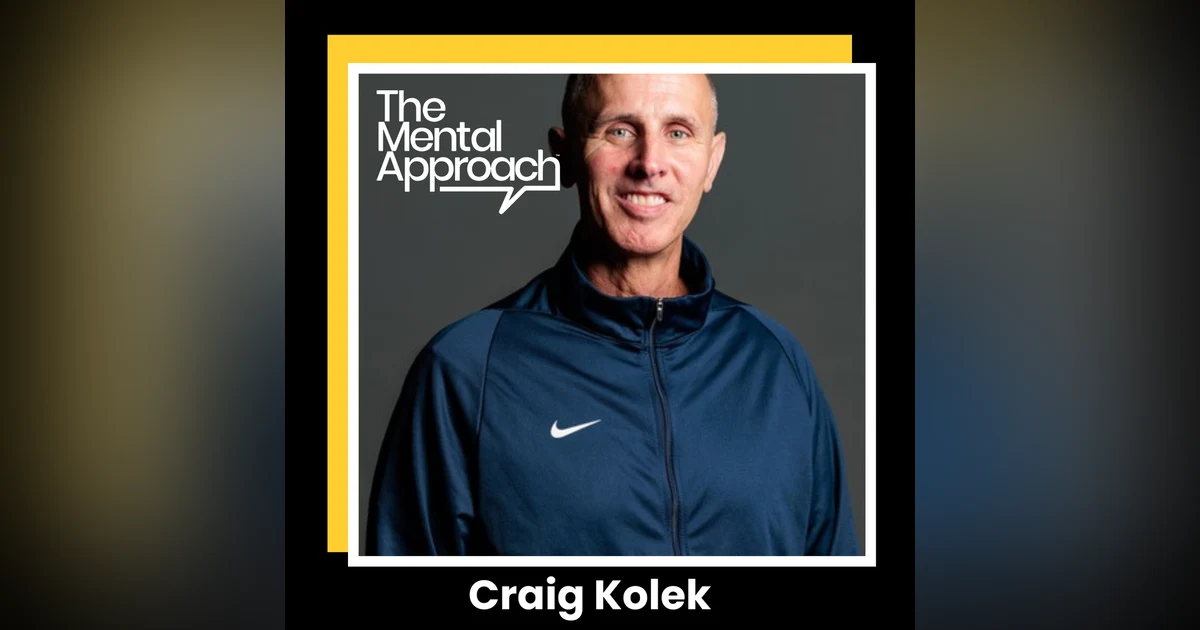
 Coach Craig Kolek , a former NCAA volleyball coach who has transitioned to a mental performance coach joins the show emphasizing body language, focus, and self-talk. He highlights the importance of athletes' ability to bounce back from mistakes quickly and maintain present-moment focus. Craig's approach has evolved, now seeking athlete input before coaching. He stresses the significance of goal setting, routines, and intrinsic motivation. Craig advises parents to model composure and let athletes learn from their mistakes. He also discusses the need for athletes to play multiple sports and manage social media to avoid distractions. Craig's philosophy is rooted in building trust and leadership through values and communication.
See Privacy Policy at https://art19.com/privacy and California Privacy Notice at https://art19.com/privacy#do-not-sell-my-info.
Matt Cundill 00:01
Todd. This is the mental approach where we discuss mindfulness, mental performance and the tools available for coping in a high performance world. Here's Todd.
Todd Arkell 00:10
Arkell, thanks for joining today. My guest is Coach Craig. Craig kollick, a former many division NCAA volleyball coach, has coached at all kinds of levels, but pivoted to be a mental performance coach, and we'll kind of get into that and what he can share with us around tips and tools. Craig's joining us from Massachusetts today. Craig, how are you doing? Well, nice to see you. Todd, good to see you. Good to be seen is what I usually say. So let's, let's jump on the hop. So what experiences in your coaching career kind of shaped how you coach athletes from a mental side today,
Coach Craig 00:52
like you said, I've been coaching volleyball. I've been coaching volleyball for three decades, and the biggest fail that I had seen for my teams, when we were struggling was that we couldn't quite get over the hump. We were struggling with confidence. We were breaking down in pressure. And so when I was younger, you know, it's like, okay, more drills, more skills, more physical stuff. And then seeing that that wasn't happening, I decided to take a different avenue, and kind of really, kind of look into more about the mindset of athletes, and I had been interested in it too when I was younger, an athlete and things like that, and had studied other other athletes that were better than me to help myself get better. So decided to apply as much as I could to my team. So they were kind of the guinea pigs for what I teach today, for better or for worse. And so it's, for me, it's awesome, because it just allows me to be able to touch a lot more athletes, to be able to help them have maybe that aha moment, help them get, you know, past any hurdles that are in and out of their sport, you know, outside their sport as well, and all different sports. So I love, I love doing it, and it's been a passion for for a good number of years. For me,
Todd Arkell 02:03
that's awesome. So like when you think about mental coaching, do you have any non negotiables that you know you kind of talk to about your athletes that could help them bring value to what they're doing?
Coach Craig 02:16
I think for for non negotiables, it's, it's getting them to focus on the body language is the biggest piece. It's one of the things that I'll really harp on right away with athletes. And then the next two is focus and self talks. Like those three things, I think we need to be focusing on those three things, like those are confidence cues for athletes. So if the bio language was gone, or if they're focusing on the wrong thing, or what they're saying to themselves is not necessarily an empowering light. They're all good giveaways as far as they need to be, helping themselves build more confidence through those three things.
Todd Arkell 02:59
I agree with that for all sports, especially having been a high school volleyball player, also being a high level volleyball referee and official, it's such a momentum game that particular sport that you have to continue to be up. And I think if you watch it after every point, win or lose, everybody always does the old, okay, we're all good. High fives as the team, right? Like, you have to kind of keep that mental energy up, especially in that sport. And I think it's the same in others. But, I mean, I just, it's something that just kind of, you tweak that when you're talking about, I'm thinking, yeah, body language is, is a big deal. Has anything evolved in your approach over the last, you know, say, five years or so, like, where you believed one thing, and now you're you've kind of changed your approach on how you either deliver the message or or maybe even what you thought.
Coach Craig 03:50
There's always different phases, right? So kind of what I mentioned earlier, when I was younger, it was skill, skill, skill, skill. So eventually you kind of, you get older, you get wiser, you get something where you incorporate some new things. I think as far as, like, the last five years, covid obviously had an effect on a lot of people, so I have found myself asking for more input from the athletes before I jump to a conclusion of teaching them. And so a lot of times it's just a simple thing when when a drill or skill happens, and let's say, the player makes a mistake, like, I've I saw what happened, and I and I have an opinion of what happened. A lot of times, if I'm teaching my athletes the right way, I'll just ask them, like, what happened there, and if they can describe it, then they're good. I did my job earlier by by helping them learn that and so they know and they can make that adjustment if they can't describe it, then that's when I kind of go into more coaching, whereas before I was more like, do do like, Do this, do this, do this, without really letting them express their emotions or their feelings, as far as what had
Todd Arkell 04:57
happened in your experience. What do you what do you think separates athletes who thrive in competitive environments and those who struggle? And it's a two part question, and then for those who struggle, how do you help them?
Coach Craig 05:13
Yeah, I think the biggest difference for the athletes that thrive are the ones that can bounce back from mistakes the quickest. The ones that can get back into the present moment focus faster. Those are the athletes that are going to continue to grow. You can have an athlete the exact same skill level, two athletes exact same skill level, and the one that gets back into the present moment faster, quicker. That's a better athlete. That's the athlete that's going to continue to grow, or is the other one's going to kind of stay where they're at. As far as tools, a lot of it is dependent upon each athlete. So very you can, you can have very generic things. You can tell them, right? Say something positive yourself. But a lot of times that doesn't hit home. So what, what I like to do is make sure that we have a couple of things, like, how do I get them back into the present? I want to have some kind of physical release for them, using volleyball like an example. If you're a setter, let's say sometimes, like, they might wipe their hands, right? And it has nothing to do if that's going to change anything except the only thing that's going to change is that, Okay, it's time to get back into the next play. It's a slight cue for them so that breathing, it's amazing how many athletes don't know how to actually take a really good deep breath. You know, when the breath can control of the body and the mind is is massive. If they can really take that deep breath where they rise up and they can feel it going through their chest, it brings their shoulders back, it brings their head up more, it makes them just feel bigger, and then they can release it. It's a huge step for that. And then obviously saying something empowering to themselves is, is always a good thing as well.
Todd Arkell 06:58
Yeah, there's all kinds of videos on the internet, internet, for those you watching of athletes talking to themselves, there's one of Aaron Donald, I love, where he's walking around going, who did you do this work for you? Can, you know, do this? And he's like, literally yelling at himself right as he's prancing around. And you're like, going, that's like, next level. He's like, firing himself up like crazy. I think about it like in the coaching way, and you think about athletes, and okay, you're working with somebody, and you've given them some things to do, and they do it, and they have a little success, and then maybe they don't do it for a while because they think, Oh, that was it. I was fixed. That was cool. I had one session or whatever. How do you, how do you kind of put this together and package it up so that it becomes something that's sustainable, like that. They can actually continue to grow through the process, because they're gonna, okay, oh, now I got a cue. Okay, great. Now I know how to breathe. Okay, great. What you know? How do you stack that stuff on and make sure that this stays some sustainable for an athlete?
Coach Craig 07:58
Part of it is goal setting. So finding the motivation. Motivation is fleeting, right? You can say you're motivated before you go to bed and you wake up in the morning and you've lost your motivation.
Todd Arkell 08:10
That was me this morning. I was like, why is this dog whining at 6am man, I do not want to get up, exactly.
Coach Craig 08:18
So part of that is okay. We need to have, let's set some goals right, and then from those goals we want to develop very specific routines, systems strategies that allows you to just run right, allows the machine, the machine being you, it just is on autopilot as soon as you get up where you're not relying on that motivation like, I you know that I need to do this. I have to do this. You just go out and do it. So having routines that are very specific to off court or off sport, or routines also in their sport as well, makes a big difference. And then having that vision of the goal, like, what are you looking to really get out of this and making it, making sure that goal is very intrinsically moving for them, not just like I want to win like that doesn't really move the needle, right? So, so generally asking why, and then asking why a few more times, will get down to a really deep internal motivational goal, and that's kind of like, okay, if I if I want to get that goal, then I have to do this, this and this, with these routines regularly. I have to incorporate that into my habits,
Todd Arkell 09:34
yeah, and I think, you know, even just with having an athlete in my house too, right? Like you're asking questions, you really do need to drill down into. Sometimes they don't even know the motive, certain motivations of or whatever. Well, why do you think that? Oh, well, you know. And trying to get that, trying to get the answer out of them, it obviously doesn't come right away. So what are some misconceptions? Get you work with athletes. Obviously, their parents are probably somewhat involved. As far as you know, they know what you're doing or you're explaining all that stuff. But what are some of the what are some of the misconceptions you see parents have about the mental side of the sports?
Coach Craig 10:14
Ooh, for me, having parents understand that their role is just as important as it is if they if, as if their kid is working with me as well, because how they model things, if they're modeling things, well, we want the athletes to move forward like that as well, right? So getting parents to understand like this is also something for you to take a look at as well, because we want, we want leaders who are going to be able to empower teammates, and we want leaders who are going to be able to rebound from mistakes, and we want leaders who are going to be able to handle pressure situations with character. And if they're, they're so riot to their parents, right? And if their parents aren't able to actually adjust to these things, it's going to be hard for their athlete to do that as well. So understanding like, Yep, I'm trying to help your athlete, but, but also we need, we need something from you as well.
Todd Arkell 11:14
Yeah, absolutely. I've seen it over the years. I remember a kid who was a goalie in hockey when I noticed his dad was always in the corner that he was defending, and after a goal was scored, the kid would always look over towards the dad. And I'm like, don't look over there. Don't look over there, because you may not like it. Actually, it's funny even, like, I even think about my my son, when he played hockey, he'd know. He goes, Oh, you were blah, blah. Like, I guess you know when you're sitting on the bench, you have time to kind of scan around the rink. But he'd know where everybody was, Oh, mom was there, over there, you were over there, whatever I usually kind of, either, yeah, I tried to stand away from certain things or situations that might entice me into being that bad hockey parent, right?
Coach Craig 12:10
So absolutely, I tell you what. I can tell you this like for for volleyball, any athlete at all, but from my experience being on a bench, my athletes know exactly when their parent came into the gym. They knew exactly where they're sitting. They know exactly what they're saying, like they can tell you every person that's in the crowd.
Todd Arkell 12:30
It's insane. Yep, I remember back to when I played sports. Not a clue. Yeah, not a clue. That none of that ever and I don't know whether that's just a generational thing. I don't know what that is. I think I'm gonna have to start asking some kids that question, you know, Hey, how come you kind of look around, figure out who's here. I never cared who was there. And I never, it never, ever crossed my mind, same with me. I mean, other than high school football, I went to this small high school, and there was two dads that would come to every game. Not not like Texas, it's Canada. Canada. High school football is a little different than American high school football. Like two dads who could get up, they probably work midnight shift, and they could get off because gate, when I, when I played games were during the school day, right, or just after school, one of the other, like towards the end of the school day or at the end of the school day. Now, a lot of the sports, at least in the area I'm in, in Toronto, a lot of the schools do it during the school day because teachers don't want to work after school, I guess, you know, and I would argue that you know, any teacher who volunteers to coach sports, you know, they're certainly giving up a lot of their time. So I'm not, I'm not ripping on that, but it's funny, because now, if it's during the day, how many parents can come watch, right? So it's a whole nother level. Like, if parents actually want to support their kids, it's kind of hard to do. Or, you know, I've even been told, Oh, don't bother coming. Like, you'll be the only parent there, you know, if you had the ability to be there, right? And you're like, okay, whatever. Can somebody set up a video camera I could watch anyways, it is, that's we're gonna, we're gonna get to the bottom of that question. Now I'm gonna make it. Make a note of that. Do you ever coach teams as well? Like to like a whole team as well? Is just not okay?
Coach Craig 14:16
Yeah, I actually, this past fall, I worked with six different colleges, okay? Consulted with six different departments
Todd Arkell 14:22
based on that answer, I can ask the one question I prepared was, what do you what does a healthy team culture look like to you
Coach Craig 14:29
based off of values? One thing that we really stress when we kind of talk with with teams and with coaches, is that the value system is the North Star, and so one you need to develop a mission for what you want your program to be and or the whole athletic department itself, you're always going to have a vision, like coaches do that pretty well, like, what's the vision for the season coming up? But then, what are the what are the values that the team wants to live? Buy. Because once you can establish team values, and we have, like, I want athletes to be involved in this decision making process. I just don't want to coach to say values are this, this and this. I want players to be involved, because then there's more buying from them. And if you can have really solid values, then it's easier for coaches to be able to say that was above the line or below the line, as far as that action with our values, and it's easy to redirect it like let's adjust that action so that we're more in line with our values, because our values are going to get us to our vision and eventually what our mission is, how
Todd Arkell 15:41
do you intentionally build that like, is it sitting down, starting with the coach, and then kind of building that out, and then kind of pulling it through to the team?
Coach Craig 15:50
Yeah, because we we're all from from different areas, right? Especially in colleges, you have so many people come from different areas of the country or countries and and you're raised with a different value system by your own parents. So understanding the athletes to understand that your values are different than the team values. But we need to come across. We need to get across to them that what can we all agree on as far as value. Since a lot of conversations, it's a lot of, you know, if you start again with the goal setting of what you want the season to be, and what you know, again, the mission is, is kind of the coach, right? This is the mission of what I want to do for the next five years. I want to empower so many leaders, you know, in a certain amount of time. And there's really no end line to that right? But the vision where there's an end line start to finish, you can go back to the players and say, how do we want to represent that during the season? And so it's a lot of dry erase stuff, a lot of listing things out, what people's values are, and just breaking it down, and being able to eventually coming up with three to five main themes that really make a difference for the athletes and for the program.
Todd Arkell 17:09
No, that's awesome. I love that. You know, there's a lot of people who play sport who are naturally vocal, and you know, maybe people kind of see the vocal people as leaders. But how do you coach leadership in athletes who may be naturally quiet or hesitant to speak up? How do you, how do you get them to kind of come out of their shell and and participate?
Coach Craig 17:31
It's interesting because I'm working with two clients right now, two athletes exact same question, you know, from the parents and things like that. And so like, first of all, I want to like the definition from for me, for what a leader is, there's two main things to it. It's a leader is able to get whoever is following them. So whether you're a coach in the team, or if you're just a player on the team, you're able to get the team from A to B. But the the important piece of what your question is is the second part. It's, it's being able to build trust, and a good leader builds trust. So a lot of people think that if you're the loudest in the court, you're the biggest leader, and that's like, probably the biggest misconception of of all time. It's the people that we go back to again that are living their values. So who are you as a person? What are some values that that you're like, Okay, I am trustworthy, I work hard and I care about my teammates. Okay? So bring that every single day, and you're going to be a leader, because people are naturally going to go to you by your own value system, people gonna see who you are. You're not trying to be fake, and you're not trying to overdo things. You're just being you, and people are gonna follow you. And so that's the biggest thing, is not getting them to be like, you don't like the Libero, like, you're supposed to be super loud. Like, like, yeah, you have to communicate a lot, yeah. But and generally, liberos are generally these super energetic people, but there's going to be liberos that are just even paced right? They're just doing their thing, but they're still empowering the teammates. They're still walking up to them and just saying some things. They're still communicating in between plays. It's just not at a level that people have expectations for but it's the communication of that and the communication your values that makes great leadership.
Todd Arkell 19:26
I couldn't agree more. I want to zone in on the parents again, since this is a parent and athlete piece, but I think we talked a little bit about what role you believe parents should play. They should kind of, you know, mirror what's going on. But what do you what do you wish parents more parents understood about their kids journey in competitive sports.
Coach Craig 19:50
We are at a point where we like to do we care a lot about our kids like that's obvious, right? And that's what parents do you want to give the best possible? Support and the best possible circumstances for them, for their life, but understanding that they have to to go through their journey a little bit on their own and fail a little bit and learn how to fail is eventually going to catapult them to where they need to get to. And so we tend to shield our athletes from that failure, right? And we tend to to, I want to say baby like baby is not not the right term, but we tend to like we want to, we want to protect them, and ultimately, we're making them not learn from what they need to learn to get better. And so that's, that's the biggest piece for me with the parents, like I rub parents. Parents are passionate. I just want them to understand that we've got to let the umbrella go a little bit and let let the kids kind of go out in the rain themselves and see where it goes. Yeah.
Todd Arkell 20:53
So if you had a chance to give all parents, because you're going to when you answer one piece of advice that would reduce their stress and maybe improve their athletes experience. What would that? What would that advice be? What would it look like?
Coach Craig 21:07
So for me, is to make sure that one, like I said earlier, like you need to model as much as you can, composure, confidence, emotions, like it's okay, like we want emotions. We want emotions from athletes. We want emotions from parents. We from parents. But what do you do after that emotion happens? Are we reacting to that emotion, or are we going to respond to that emotion? Reacting means you just go off and fly off the handle. Responding means like, Okay, I took a deep breath. It's not the best scenario. I'm going to correct it, whatever, whatever it may be. So understanding that being able to mirror that is only going to give your athlete more confidence and more freedom to play the sport with love and with passion, and that's the biggest thing, because they're not afraid of disappointing the parents,
Todd Arkell 21:57
great advice. So when an athlete shows up on your door. They're a new client. Potentially. They say, hey, I want to play at the next level. I want to get recruited to play whatever that level is. Could be NCAA, you know, whatever play college, college sports is, you know, probably the first step that most people think about. What's one of the first things you look for beyond skill in that athlete
Coach Craig 22:22
communication, being able to, and a lot of times, is what I have to work with them on, but being able to communicate what they're feeling, and naming their emotions, because we want those emotions to happen, because those emotions are going to happen when they're in, you know, in contest. So once we can name them and understand that they're happening, then we were going to be able to to move on from it and give very specific skills and strategies and systems to be able to just see that as a little bit of a speed bump. So the first thing is, like they need to be able to communicate, like we want to be able to talk to me as a coach, where they can share what's going on. Like, oh, I know everything about their life. I just want to know what they're feeling with what just happened, right? So having them be able to communicate, or teaching them how to communicate, one of the two is really important, because ultimately, it's marketing yourself to get to that next level. You have to be able to have those skills to be recruited to to go to whatever, whatever showcase you're going to go to, like you need to be able to have those communication skills. So it's that's really a big piece for me.
Todd Arkell 23:35
Yeah, so, and you've been on both sides of the coin. You've you've been a recruiter of talent, and you're helping work with athletes that are trying to get recruited. How should families? I'm doing a whole series on recruiting. So, you know, I this is, this is stuff I find fascinating, is, how do they deal with the mental highs and lows of the recruiting process?
Coach Craig 23:57
Yeah, it's a grind, like it's so being able to to have families understand that it's just like, this is it's a marathon and not a race, and there's going to be days of silence from coaches because coaches are busy, coaches to figuring things out. There's, there's a long period of time between things like just understanding it's the same thing is, as when you're in sports or you're dealing with a job and things like that, like you have to have resilience when things come up, and it's not going to move super fast, but you it's the day to day, just being consistent with your actions, of like sending emails and talking to coaches and Updating your video, and just, if they can just focus on the process, and not like, who's talked to me yet, who hasn't looked at my video yet, like just all that will come through if you just keep focusing on the process of the day to day stuff, and understand, like, treat it like a game. Treat it like it's. Fun, right? Because we look at that long term, it's this is a big thing for my future. If you're putting all of that on yourself right then and there, it's going to be a lot, a long struggle. So being able to just have fun with the recruiting, like I get to go visit the campus, this is awesome.
Matt Cundill 25:20
Now more of the mental approach with Todd Arkell,
Todd Arkell 25:24
coaches want every person they're recruiting to think that they're the one. And I think, from my perspective, people need to understand that they need the athlete needs to let every school that's trying to recruit them think that they're the one.
Coach Craig 25:39
I think athletes are in more control of the recruitment than the coaches at times. And I try to tell families that, like you're you're in control of this. This is up to you on the direction of how this goes. So the more clear you are at the coach, the more power you're going to have. Yeah.
Todd Arkell 25:56
And, I mean, I think it varies, obviously, depending on your sport. There's, I mean, there's some coaches that'll be really communicative, and there are other ones that will vanish for a while then come back, and even if you ask them, hey, what's the process, they may tell you the process and then not follow the process. So I think, you know, I think that can be, I feel like it's a little bit of a black box for families. And I That's why I talk about, like, what should you prepare for? Because all of a sudden you're getting, you're having all these conversations, and these things are happening, and then you're like, oh, nobody's talking to me now did Oh, my God. What happened? Like, oh, no, that's like, that scholarships worth X.
Coach Craig 26:35
When do I commit? When do I not commit? When do I commit? Like, don't, don't worry about it. You'll it's all gonna, it's all gonna work out. You'll know when
Todd Arkell 26:43
I know, I think, I think so. I think it's hard, right? Like, I mean, and you have those, you have those choices, right? And I think again, yeah, the athlete has some, obviously, some say, you know? And I think I just, I also would say, you just have to be realistic. Too many people think their athlete is XYZ capable, and it's like, if those schools are not recruiting you, then you're probably wrong. That'd be another piece of advice is that you're probably in the wrong thing.
Coach Craig 27:14
Being realistic is a really good it's a good one. We so where we are here in Boston with volleyball, like, we're behind as far as the country skill wise for us, us wise. And, you know, parents don't understand that. They look at their kid and be like, Wow, he's really good in high school. Like, yeah, but let's, let's go travel Chicago for for a weekend. Let's go watch them play, and let's have our son and or daughter play against them and see where we're at.
Todd Arkell 27:39
I can tell you a little funny story. I remember when I first started refereeing volleyball, and club volleyball was really new, like it wasn't a thing, because this is in the Dark Ages. Listeners back when they had tablets and stones and chisels, probably in the 80s. No, is it? Probably, yeah, sometime in the 80s, 80s, late 80s, early 90s. That sounds like a long time ago, doesn't it? And I went from refereeing, like high level events for high school, and then I got, oh, we need, we need some people for this club volleyball event. Oh, okay, cool. And I went there, and at a high school level, you know, a hitter would hit the ball, and I could actually watch the net, and I could turn my head and I could see whether the ball was in or not, nine times out of 10 at the club level, the first, very first hit, boom on the net. And I turned my head, and the ball was like hitting the back wall. And I just looked at the guy in the corner for his in or out. Because I go, trust your lines been now, because, but it was like, I go, wow. Like, I remember thinking to myself, That's interesting. And it was just like, take the best player from every high school team and then put them on these club teams, or it would be like, travel baseball, or, you know, and a lot of these things that it was like, Oh, the level of play is way up there. So, yeah, I think, I think if you get out of your own pocket, that also helps you understand kind of where you're at, and what can you do. So what are some red flags you see, either in the athlete themselves that's going to hold them back from being recruited, or even red flags, maybe from the family that you try to advise them to turn them into white flags.
Coach Craig 29:21
To start with the family thing. Like, like, coaches look at at parents interactions, you know, and coaches look at how parents are in in the stands, what they're doing. Like, that's, that's an important piece these days, is you're finding more and more coaches are recruiting families, and so it's important, you know, the the other thing too, is the coaches want to talk to the athletes, and it's a flag, red flag when the dad or the mom is constantly emailing the coach or there's going to be time for the mom and dad. To talk during the on campus interview, but if they're taking over the interview before it's that time, like they want the coaches, want the relationship with the kids, and they want to see how the athletes can respond, because that's important as well. Like, how are they responding to to having a conversation with a coach is going to kind of signal a little bit how they interact on the court, you know, and how they how they interact with their teammates, and are they? Are they leaders? Like we need to find that out as coaches to build that right culture piece for what's comfortable for us and what we're trying to build.
Todd Arkell 30:36
Spent a lot of time the last few years just sitting in a chair and not saying anything, you know make sure that that that is the case. So, you know, obviously you talk about three decades of coaching and being involved in sport. So today, athletes have different pressures, right? It's like social media. They can quickly compare where their friends are and where their friends aren't early specialization. So, you know, you Hey, you got to start playing volleyball at 10. Only volleyball, because somebody's business is, you know, to kind of make that happen. How do you kind of coach through some of those challenges and really provide advice to your athletes and families that you're on your own path, and you should play as many sports as you as you can.
Coach Craig 31:26
I always start out like I am a huge play as many sports as you can, especially at a young age, because when we play things that we're if we specialize, we become good at it. We don't learn how not to be good at things, and then when you learn how not, you don't know how to rebound when you start to stink. And eventually, even though you're good at one sport, you're going to always hit a new level, and that new level is going to be as good or better than you. And if you don't know how to handle not being good at something, you're not going to help yourself. I love that. And so the specialization is, is massive for me, plus the all the physical benefits and and all that comparison with social media is, is it all time high, right? So for me, what I like to tell athletes again is like, Yep, you're on your own path, but let's build your path so what, what does your day look like? And if, can you agree that if we can cut down the scrolling for maybe two hours before a game and work more on yourself, your visualization, your self talk, your affirmations, your team, you know, talking with your team, going over strategy of your coach, these are all things that are fun, and it's in your your zone of like, I love the sport. So can we just focus on you in the sport for those two hours, or the, you know, an hour before, all during competition, because the other stuff's still going to be there after you leave your sport, right couple hours later. So getting them to to try that and break those habits is really the challenge, but once they do, you start to see really a lot more buy in with I am, you know, even like I'm going to work on my diet, I'm working on my sleep, I'm more, you know, they just start to compete like an athlete and train like an athlete,
Todd Arkell 33:21
turn off notifications airplane mode, not even, not just set the app not to push notifications. I mean, I had to do something on my daughter's phone, and she's 20 the other day. Oh, can you help me? There's, I can't remember what it was, where I was doing, but I said, Yeah, no problem. And I go, how do you function? I've had 25 Snapchat pings in the last minute. Like, how do you function? Like, Pavlov would have a, would have an absolute field day with this. I'm like, going, Oh, it's like, a freaking leash and you're 20. Like, I mean, like, I get it for, like, the 1213, year olds. I go, but no, like, I mean, I can't function. I mean, I'm literally somebody, I know. They go, okay, Boomer or Okay, old guy. But the reality is, is, there's reason why. You look at iPhone, they go, Oh, we have focus mode. Oh, you can turn off this focus mode. Yeah, you need to focus. Like my email does not make a sound at all. And people are like, well, how can you do that? I sent you an email, and I go, Yes, an email is not an immediate form of communication. In my mind, if I get back to you within 24 hours, and typically it's within 12, but if I get back to you within a day, I think that's pretty good for an email for me, if you really need me, you text me and I'll decide whether that's immediate requirement or not, like a kid texts, I need money. I'm busy, but I'm in line. I've ordered, you know, whatever, stuff like that. Goes on, yeah, or you just leave them on red, like they do. I pay for your phone. You don't read my text. Come on. What's going on? I think it's so funny because, I mean, you think you're the only parent that has all these challenges with these devices and their kids, and it's like, you start talking to other parents that you're like, Oh, this is exactly the same thing. I was doing an interview the other day with a coach, and her son plays NCAA baseball, and he was home for Thanksgiving, and he comes walking in. It was kind of weird, done. We were just waiting, waiting for something, talking a couple things, and he walks in. Oh, hi, hi, nice to meet you. And then it's like, Hey, did you get enough protein? There's a smoothie there I made for you. There's this, you know. And I was like, laughing. I go, it sounds like our house. Hey, have you had lunch? Have you made yourself food? Right? Like, so it's this constant, weird parental vibe. So I'd also say parents, let them just do it, and it is what it is, right? But, yeah, I think I just feel like there's so many, especially with social media, there's so many pressures on them. It's totally a different, different thing, that's for sure. Yeah. So what do you recommend for to your athletes, you know, like a daily type process, or, you know, how do you kind of build it in for them on things that they can do to start to kind of build that mental game.
Coach Craig 36:22
It's all daily, right? So it's if you think about your skills that you've learned, right? It wasn't that you just decided that I'm going to be really good at hitting 100 mile hour slap shot. I had to do skill work for days and days and days and days. So it's the same thing with the with the mental piece, and building confidence and build in routines that allow you to get to that level. So starting at a very small a small space, a small step each day, and building up to it is really important. A lot of things that we are trying to get better at means that we have to change some of our habits. And so the very small step is like, How can I change the habit that I know is that's not benefiting me to get to where I want to get to. So having awareness of that, and then having a strategy for each day is really important. So, yeah, like, like having habits, just like you brush your teeth, you know, brush your teeth and say some affirmations to yourself. You know, kind of have it, stack those together and just start out small, just start out something that's taking steps to build consistency, and then you're going to see it's going to get easier. You can build off of it more.
Todd Arkell 37:38
I think Michael Phelps saw something where he said he would say an affirmation every time he went through a doorway. That's, you know, I think everybody feels like it needs to be, I need to set aside time to do this. And when the reality is, we'll get back to the phones. And what you said, Well, how much, what's your screen time every day? Okay, so how much of that can you carve out to do something to maybe change, right? Change the way you're approaching your life on a daily basis, around your sport, to kind of help yourself get better.
Coach Craig 38:10
Take a deep breath. How many did you take a deep breath today? Like walk through a door and take a deep breath.
Todd Arkell 38:15
So we were talking about leadership earlier, and I wanted to ask too, as a leader, yourself, as a coach, right? Like you have these beliefs, and whatever, the difference between obviously a fixed mindset and a growth mindset is, you know, you're like, you're feeling that you know you can accomplish this, and a growth one fixed one is you're kind of, like, very stuck, you know, stuck in your ways. So as as a coach, what were some areas of that you believed in one way, and then there was a shift, and you were able to kind of pivot your mindset and change your mind. Because I think a lot of people get they talk about, oh, they're stuck in their ways. And I think people do get stuck in their ways, and, you know, evolution, and maybe they're concerned that if I change my mind, or I change my opinion, people are going to think I'm weak, right? So you extrapolate if there was even a question in there, but yeah, I think you know what I meant. Yeah, for me,
Coach Craig 39:14
you know, I think starting out as a young coach, it's, it's, it tends to be like, I know what I'm doing, and it's my way of the highway, right, especially way back in the day. I think as I grew as a coach and as I grew as a person, I wanted to get more feedback from the teams and how they wanted the team to function. And again, when it goes back into that buy in from the athletes to be part of something that's bigger than themselves. And if it's just me going, they're not really getting buy in. The type of athlete these days aren't buying into that, like they want to have a say, like coaches still, you still have the end all. Be all say, you can say, yeah, it's a great idea, but probably not going to do that right now, but it still gives a sense of community and a sense of everybody is a leader here. So let's figure out how we can all do this together and make this the best possible experience for everybody involved. And so for me to kind of go back to the whole thing, it was before it was it was, like, my way to highway, and now it's like, how can we all do this together and give me some feedback that's going to make you guys Excel, and then I'll adjust from there. Like, it's our job as a coach too. Like we asked players to adjust. Like, you need to change this. You need to fix this. We need to evaluate ourselves as a coach. Like, I don't care how old you I don't care how long you. Care how long you've been coaching for. Like, sometimes you have to adjust, to stay updated with your team and to be able to help them to grow more. You have to be able to change your ways at times, and not just say, well, this is how I am. Like, that's, it's not a thing anymore, no.
Todd Arkell 40:58
And it's, it's interesting, because even just like outside of sport in society today, I'd say we as a group of individuals can be very polarized, because you have people that have a certain belief. We'll talk on the more political ideology spectrum. They have this belief, and somebody else has another belief, and regardless of whether you believe what somebody else does. That doesn't matter, but not everybody feels that way. It's like, you don't believe the same as me. I don't like you. And it's like, yeah, but I've been your friend for 25 years. That's very weird, but it's the one thing that I found interesting, is when somebody has a particular belief, let's maybe it's a political ideology, and then they've done a bunch of stuff, they've read, they've whatever, and then they they go, Oh, actually, you know, maybe that's not I shouldn't maybe I shouldn't have thought that way. And it might not be about polygamy, but just about anything. But I feel like people stay stuck in their old beliefs because they're afraid to admit that they were wrong or that they've changed their mind and they've, you know, like I really do, and I, I think it's one thing, you know. I think when you put it in the context of coaching and athletes and stuff, it's okay to have multiple thoughts on the same subject and trying to because nobody has all the answers right, and it's not weak. We'll try to figure it out as a coach, sure, and it's not, it's not weak, I mean, and I always joke, I say, Geez, when you're a teenager and you're a young adult, and you're in university or college, and you know, you're probably more left leaning politically, you know, and then you get a job, and you start paying some taxes, and you get a little bit more centrist in your theory, and then you get older and you want to keep all your money, and you become a little bit more right in your politics. You know, there's, there's a lot of that that goes on, like there's the evolution of you as a self that changes certain things. And I think that's the same, you know, for whatever that subject is, the older you get, that experience you've had can certainly, certainly play. And so I think for athletes, you know, it's helpful if they can lean on their coaches, both, you know, their actual Sport Coach, maybe their mental coaches, their skill coaches, for advice and and help to kind of how to, how to kind of govern themselves.
Coach Craig 43:19
Yeah, they want, they're looking for somebody that will walk with them in the journey, you know, and not just tell them, this is the journey like this. If you got that person walking next to you, then you, you feel, you feel better, and you, you can achieve more.
Todd Arkell 43:31
Yeah, I think the athlete in it, and I also think it's, it's more of a perspective nowadays that the athletes need to be coached differently than they were, 2530, years ago.
Coach Craig 43:42
Today's generation, it's a lot of why? Like, do this drill, why they're not doing it to be a wise ass. They're doing it because they just want to know. And if you just tell them why, they're like, Oh, cool. I'm gonna go do it, you know? I mean, but older coaches or coaches are looking their ways. They're like, What do you mean? Why? Because I told you to do that. Like, well, just explain it a little bit more. Little bit more. Yeah, they'll be fine.
Todd Arkell 44:04
Why? What is this going to do for me? What is it? What is the purpose of this? Like, trying to really, yeah, I know it is, and I think it's, it is difficult, right? Like, you know, coming there is a generational gap. I think sometimes think what people think, why is questioning your authority? And it isn't sometimes it's they don't have a clue, right? You know, they really don't. If you could design the ideal environment for a young athlete, what would it include? Like, you know, their daily like, what would their day look like? Wow, ideal environment, huh? No phones. We already, we already figured that out. Anyways, we
Coach Craig 44:44
can go back to no phones back in the 70s. So I for, for me for ideal environment, would be a day we'd be able to get their day going with good habits, because the habits of. Going to set them up for the rest of the day. And if they're able to just have routines that can get them out of bed, get them in the good spirit, get them focused on on who they are and who they want to be, then the rest of the day is just going to flow with good and bad, but they're going to just be able to go right through it with control. And so for me, it's about being able to have that headspace, being able to have that mentality where things are going to happen, I'm okay with what happens, and we're going to figure it out. And being able to do that's going to get them to go to that next space that they're looking to go to, like, I, for me, like that's an ideal day, if they can just not too high, not too low, just understand that things are going to happen, and they know how to handle it. They have the tools to handle it.
Todd Arkell 45:50
Do you think having things spelled out in a schedule help with that
Coach Craig 45:55
from some athletes? Yeah, I do. I have some athletes half and half. I have some athletes that we are breaking it down every 15 minutes of what's happening in their day, and we're planning out the week, and we have every single day for that week, and then we look at it and we analyze the week for the following week. And I have some other athletes who are kind of like, I'm going to get this done this week, this done this week, and this done this week. I've got a list, and I'm just gonna knock it off right, and neither one is right, neither one
Todd Arkell 46:25
is wrong. Yeah, it comes down to the individual. Yeah, the individual, it's figuring out for yourself. Yeah, what works for them? I mean, yeah, you got an ADHD kid, maybe they don't. You don't want them to be distracted by every squirrel that comes along along the way. And they can stay they can stay on task and kind of get it done. What do you think athletes this may be too broad, but, I mean, I think about it, what do you think athletes are actually afraid of? What do you hear the most of?
Coach Craig 46:53
I think for me, it's a couple of things. It's they really care about what their parents and what their coaches think, and they fear letting them down. And then the second thing is, and this is not everybody, it's a very specific athlete, but some athletes don't want to look bad. Some athletes are afraid that if they make a mistake, it's going to cost something playing time, friendship, whatever. So it's so from that, especially at a young age, it's hard. Like, you know, you're, you're a young teenager. You just want to fit in. You want to be the, you know, friends with everybody. But then you're the person that dribbled that ball off your foot at the end of the game. You're wondering, what are people, what are my friends? Thinking, right? Yeah.
Todd Arkell 47:43
Not everybody can be the high school senior hero that hits the buzzer beater shot to send the team to the state championship, right? But everybody
Coach Craig 47:53
can be that player that goes to that person who dribbled the ball off his foot and go up to him say, Don't worry about it, yeah. 100% 100%
Todd Arkell 48:01
so what's it? What's a good book that athletes can read to to get themselves more into this space?
Coach Craig 48:12
I can, I could tell you if I have the 400 alumni that I that I've coached in my college career, if they are watching this right now, they all have already answered that question in their heads. Mind Jim by Gary Mack.
Todd Arkell 48:24
Mind Jim, there you go. I'm gonna add that to the list. What's, what's the best piece of advice you ever received?
Coach Craig 48:33
The problem isn't a problem unless you think it's a problem.
Todd Arkell 48:38
Interesting. And where did that come from? That came from a
Coach Craig 48:41
former coach of mine way back.
Todd Arkell 48:44
So if you were going to give advice to 13 year old Craig, what would you tell him?
Coach Craig 48:50
13 year old? Craig was not confident back then. So I would, I would say that things are going to be okay, things, things work out and believe in yourself. Awesome.
Todd Arkell 49:02
Craig, thanks for the time today. Appreciate you joining me. I love the conversation absolutely same. Thanks for having me. Let's keep it going for these kids, take care
Coach Craig 49:11
absolutely thanks. Todd,
Matt Cundill 49:13
thanks for listening for more, including resources and more about the show. Go to the mental approach.com. A production of the sound off media company.

