Embrace Change or Stay Stuck


 RSS Feed
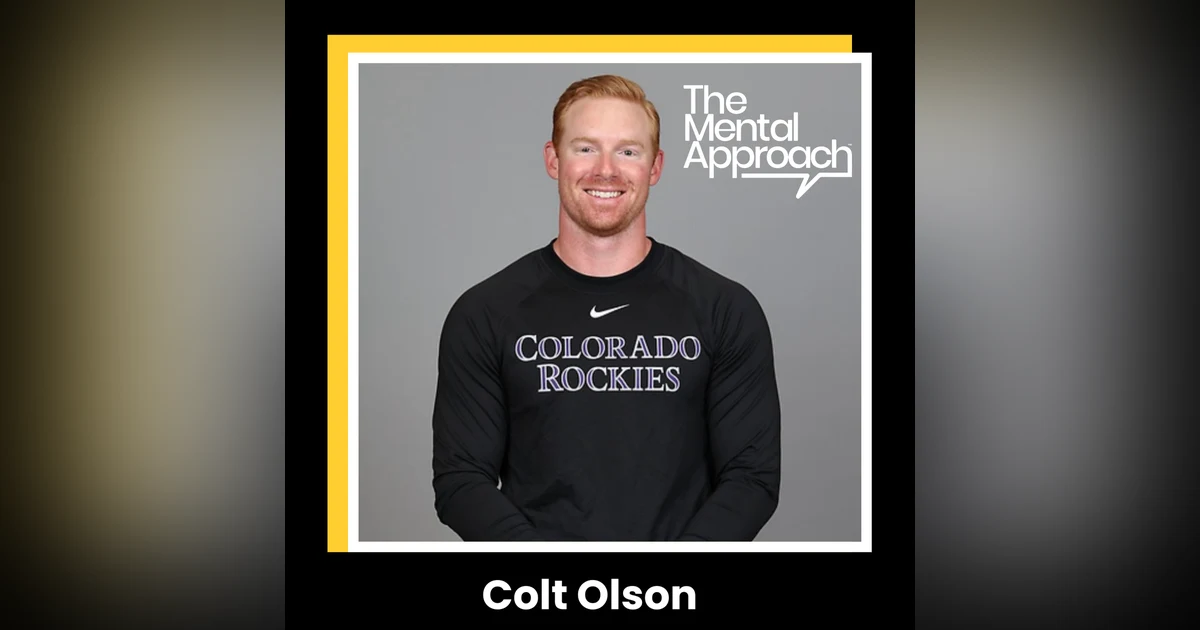
 In this episode of the Mental Approach podcast, Todd Arkell interviews Dr. Colt Olson, a mental skills coordinator for the Colorado Rockies. They discuss the challenges of being a student-athlete, the journey into sports psychology, and the importance of mental skills in sports. Dr. Olson shares insights on building confidence in athletes, the role of education in sports psychology, and effective goal-setting strategies. The conversation emphasizes the significance of focusing on controllables rather than outcomes, and the integration of mental skills training in spring training for baseball players. In this conversation, Todd Arkell and Colt Olson explore the importance of delegation, the impact of reading and journaling, and the significance of mental resilience in personal and professional growth. They discuss practical tools for self-improvement, including journaling techniques and morning routines, and share valuable book recommendations. The dialogue emphasizes the need for change and the benefits of servant leadership, while also reflecting on the lessons learned from past experiences and interactions.
See Privacy Policy at https://art19.com/privacy and California Privacy Notice at https://art19.com/privacy#do-not-sell-my-info.
Matt Cundill 00:00
This is the mental approach, where we discuss mindfulness, mental performance, and the tools available for coping in a high-performance world. Here's Todd Arkell
Speaker 1 00:12
today. My guest is Dr. Colt Olson, former collegiate football and baseball athlete. Great baseball name, Colt Olson. Gotta love that he's turned expert in sports psychology world. He is currently the mental skills coordinator for the Colorado Rockies, lives itself in Colorado. We were talking off air about the difference in the, in the altitude and what that does for your lungs, and it certainly, I can attest to the fact, having been there, it certainly is, I How you doing?
Speaker 2 00:44
I'm doing well. Appreciate you having me. I'm excited to be a part of the show. And yeah,
Speaker 1 00:48
let me, let me ask you a question. They say being a student athlete is kind of one of the hardest things you could ever do. It's a difficult task, you know, the amount of effort that goes into just doing all the work for your sport, the lifting, the training, all of your school, you were a two sport athlete in college. How did you manage to make that work for yourself, time wise?
Speaker 2 01:09
Yo, so growing up, I always played a bunch of sports, like throughout high school. My senior year of high school, it was a small school, my graduating class was 47 so small private school, but with the school being that small, I was given the opportunity to play a lot of different sports. So, my senior year, I actually played five. I played football and golf in the fall, and then basketball in the winter, and then baseball, and ran a little bit of track in the spring. It was mostly like, hey, we need a guy to come run this race, will you come jump in, which was terrible, because I was in baseball shape, and I would just get absolutely crushed out there. But so, it was always just kind of what I knew. It wasn't, you know, I didn't, I didn't think anything of it really. I was just like, yeah, you know, I have sports, I have, you know, baseball, I have football, whatever, and then I have homework to come do after that. So it was, it was kind of no big deal. I didn't think anything of it, but looking back, I'm like, man, that's that's a lot of work. It was a lot of work. It was fun, though. I enjoy it all. Yeah,
Speaker 1 02:00
I mean, I have to wonder, were you on scholarship for either of the sports or
Speaker 2 02:04
no?
Speaker 1 02:05
Okay, wow,
Speaker 2 02:07
no. So it was, I went, so I transferred schools, and then I was on a baseball scholarship the first place, but then, yeah, the second place I was, I was a walk on, so no
Speaker 1 02:15
walk on, and got on to both teams, not bad at all. That's, that's, that's pretty good. Also, kind of followed your schooling. You did a lot of school, you got, you know, your psychology degree, you got a master's in sport and performance psychology, and a PhD in educational psychology. So you spent a lot of time working on your craft. What, what led you down that path? Like, what, what was it that intrigued you to kind of keep digging along that and kind of make that a career,
Speaker 2 02:42
yeah. It was interesting. So, probably my junior senior year at high school, they offered one psychology class in my high school, and I think you had to be a senior to take it. And leading up to that, I'd always kind of been interested in the brain, I was fascinated by thinking psychology stuff like that. So, I took that class, and then after taking the class I realized, okay, this is this is where I want to go. I do love this stuff. So, got into my undergrad, declared a psychology major right away, never hesitated, stuck through that all the way through, stuck to it all the way through. And then I went to do my master's because I got interested in sports psychology. I had had the opportunity to meet a couple of guys who were early in the mental performance game in baseball, they were with the Pittsburgh Pirates, so this would have been like 2012 I had a chance to meet, it was Bernie Holiday and Tyson Holt, who Bernie is still there, but kind of early, you know, the Pirates are one of the first teams to employ full-time mental performance professionals, so I was fortunate enough to rub elves at those guys, saw what they did, loved it. Bernie actually went to school at the University of Idaho, so he got me into contact with the guy there, and I ended up going to do my master's at the University of Idaho. And I knew going into it, going into my undergrad, I was going to have to get a master's. That was a non-negotiable. Going into this field, my parents were like, you have to go to grad school, you can't finish with undergrad, or else you're not going to get a job. So, knew I was going to do the master's, but was not totally sure about the PhD. But then it was interesting. During, I think it was the second semester of my master's program, I was brought into, like, a sports psychology for undergrads, like a class that my advisor taught, and he was like, "Hey, actually, you and your classmate are going to teach this class. I'm not going to teach it. And I was like, oh, I was, I was scared to death at first. I was like, geez, man, like, you're just going to put this on me. He was like, yeah, so just pick the topics you want to teach, and I was like, I don't want to teach any of them, right? I kind of, I don't want to do this. But I remember, I'll never forget, I taught a class, it was on a flow, on flow state in psychology, and it was just like I loved it. It was, it was fantastic, super exciting experience, kind of gave me the same feeling sports gave me. So I fell in love with teaching, and decided, like, you know, maybe I want to, I want to teach as a career, like maybe I want to be a professor. So I decided I was going to go get a PhD in Ed Psych and try. Transition, maybe, into academia, and there were really a lot of parallels between educational psychology and sport performance psychology. Ed psych is kind of like performance psych for the classroom, so lot, a lot of overlap, which made it easy, but went to do my PhD at UNC Northern Colorado here, and taught the whole time there. Absolutely loved it, but as I was going to school there, my work with the Rockies slowly started to pick up, and I was around more of the guys, a little bit more involved in stuff, and as that work ramped up, it just so happened that they were like, "Hey, we think we can hire you full time at the end, like as soon as you finish your schooling. So I decided I liked baseball more than I liked school, and I liked academia, so I made the jump, you know. I still, I went, I ended up going away from the professor path and more towards the mental skills coordinator path, but it was, it was good. I loved it all, and it all, I learned so many great skills, so it was a long journey, but I want to enjoy. I would do it again.
Speaker 1 05:57
Yeah, no, the, the allure of the stadium won out over the allure of the classroom, I don't, I don't blame you, I get it, you know, it's, it's interesting, you know, I tell a lot of kids this, I've got four kids, we've had conversations, you know, along the way with my kids, my youngest is still yet to go off to college, university, so he's, he's, he's very close, but it's always been just take something you enjoy, because then you'll do well, and so many people I know started off in one field, and you know, as you're saying, you had an idea. Okay, I want, I like psychology. Then it's like, well, I better get a master's, because there's not too many, there's not too many psychologists that don't have a master's, that's for sure. You're not getting that job, maybe you get into just like regular therapy or something, whatever, right? But it, it's a journey, right? It's like all of a sudden something happens, you go, "Wow, I didn't think that was possible. And then it expands kind of your thought and move forward. I love it, because that's, I think, a lot of people go, "You know, I was, I was a human kinetics major. I'm certainly not doing that, and I mean, I know people that have taken it, and I said, "Do you, do you love it? They're like, "Oh, yeah, yeah. I go, "Great, what do you want to be? "Phised teacher. Okay, cool. I said, "I realized that I didn't want to be a phys ed teacher, so I moved on from that, right? And, but education is about educating yourself and learning, not just I'm going to go to school and do this and be that. Some people have that presence of I'm going to be a doctor or I'm going to be a lawyer, but a lot of people, I think it's a journey, just like you took,
Speaker 2 07:32
for sure it is. And I think, like you said, passion counts for a lot. If you like what you do, you're going to be enthusiastic, you're going to enjoy it. People are going to see that, and they're going to be attracted to it, so you're going to end up in the right rooms. You might have the right conversations, and you don't know where the path is going to take you, but if you're, if you're enjoying the path you're on, stick to it. Like, like we said, and I wouldn't have - I would never have guessed that I would have thought, you know, I wanted to go into academia, I wanted to be a teacher, but I love teaching. Found my way back to baseball. I still get to teach a bunch with the Rockies, so it's kind of the best of both worlds, but you're right. Do it, you know, find something you like, enjoy it, get in the right room, see where the path takes you.
Speaker 1 08:07
How did the position with the Rockies come about? Was it like an internship sort of thing that you started while you were in school, like you said it was while you were in school? Is that kind of how it came about?
Speaker 2 08:16
Yeah, sort of. It was interesting. So I was, I was in the last semester of my master's, and the guy who's my boss now, Doug Chadwick, ran into my advisor at the ASP conference, so ASP is the Association for Applied Sports Psychology, and it's kind of like the premier association for performance psych, so they run into each other at a conference, and they were talking, and Doug had just started as he was mental skills coordinator with the Rockies, in it was in 2017 so it was his first year, and he was like, "Hey, I'm, I'm kind of swamped, I'm the only guy doing this work. Do you have anybody that you could send my way that might just be able to help out, or you know, talk with some of the guys? And so he gave him my name, he was like, "Yeah, we got this kid, former college baseball player, school is going well, like I'll set you guys up, I'll connect you, and you see where it goes. So ended up connecting with him, and after a lot of conversations, I like found my way. It was at the time we had our rookie ball team was in Grand Junction, Colorado, and I was living in Colorado, so I was like, "Hey, if you're going to be in Junction, why don't I just drive out there? I'll hang out with you for a few days, and we'll see how it goes. So, met up with him, hung out with him for a few days, helped him out. Things went well. The next year I came back, and he was like, "Hey, let's do a little bit more, like instead of just going to Grand Junction, like you go to Grand Junction, and then one more affiliate, you'll go out to North Carolina and see some of these guys in low A. And then every year it just kind of slowly built where it was like I went from taking one trip a season to three to five to now it's like, you know, whatever, 30 or 40, whatever, however many trips it is, but yeah, slowly kind of ramped up from like I said, an internship type role, and then as I finished my PhD, they were ready at the ready to bring me on full time, so it was cool journey, it was fun.
Speaker 1 09:58
Oh, that's that's awesome. So I guess for any young athletes who are listening and kind of think, oh, that's a career path I want to get on, is that really that's really it, probably right? Psychology, get a little bit more educated, or do are there guys, do you think in the business that maybe don't have that background and they're just really intuitive, or is a lot of, a lot of the folks pretty educated in that in that stream,
Speaker 2 10:21
so currently there are some, you have some former players who fit into these roles.
Speaker 1 10:26
Sure,
Speaker 2 10:26
but generally, the way the field is trending is education is taking over, so there's, you know, there's a push for more certifications. You don't have to have a PhD. A lot of the, a lot of really good practitioners don't have PhDs, that's not a requirement, but they're requiring more certifications. Education is becoming more important, I think. Just in general, as this field becomes more popular, they're vetting people a little bit harder, because there's just more access to it. So, yeah, I think education is the right way. And, obviously, it's a lot of former athletes that end up in these roles, just because they love sports, they want to stay around, they want to stay around the game, and they want to help people through experiences that they didn't work through very well themselves. So, yeah, I would say, you know, a long answer to your question, yeah, I think education is definitely the place to go, and, and particularly a place that is going to teach you the right way and get you around the right environments and things like that, and set you up for success. So, absolutely,
Speaker 1 11:20
how do you find the, I call it the uptake on the stuff you're preaching to the players? Are the older players a little less? Are they more resistant, I guess, is the word, than some of the younger guys? I mean, I don't know. What do you think? Without, you know, we're not asking you to call anybody out, just in general.
Speaker 2 11:39
No, for sure. I think, in general, yeah, they are. I mean, you know, it's funny because nowadays, like, the old guys are like my age, like people who are like 32 years old, it's like those are the old guys. But for sure, and I think even looking back to when I played, so my last year in college was 2016 thinking about the game of baseball and the feel around this stuff in 2016 it wasn't really there, we were in college, for sure. We didn't talk about the mental game at all. You know, these guys that came up in pro ball, you know, we have a lot of guys that came up with us, you know, from around around that time to now. They didn't have any of this. It just wasn't part of the game. I don't know if it's as much resistant as them being in a position now, and they're like, hey, I never really had this. They don't see it as being integrated into the game as much, so they're just not ultra interested, especially if you know they're in the big leagues and they have established themselves well. Some of them are more than willing to come up and they want to talk and they want to learn, but other ones are just like, "Hey, man, what's going on? Good to meet you, and they're not, you know, they don't want to learn anything. I shouldn't say they want to learn, it's just not something that they're looking to add to their repertoire right now, so yeah. In general, they're a little more resistant, but I mean, nowadays the young players, man, when they come in, it's like it's seamless. We're in right away, they know how important it is, and they're excited to get moving.
Speaker 1 12:52
Yeah, until the older player has an O for 30, and then maybe he'll be banging on the door asking for
Speaker 2 12:58
that. That happens a
Speaker 1 13:00
little, a little, what is going on, man? I don't know, can't figure it out. There's a, there's a, there's a good thing. So, you know, an athlete comes to you and says, okay, I'm kicking it, I'm kicking stones right now. I kind of lost my confidence. What are some of the steps that you kind of maybe take them through through that kind of conversation to sort of get them to help right the ship.
Speaker 2 13:21
Yeah, so baseball, I think, especially is interesting because it's one of it's such a unique game in the sense that you can be doing everything right and still get punished for it. Sure, right? Like, you can, you can go up there, you can have the best at bat of your life, you can hit a ball on the screws at 120 miles an hour, and the first baseman might just catch that thing and throw it around, and you got to walk back to the dugout, like, dude, I did everything right, this game sucks, right? That makes it really hard, and confidence, especially, is tricky with that, because you can get caught up looking for confidence in the wrong places, like most guys, especially guys that played a high level, have been really good, so their confidence is rooted in outcomes, they are, they feel good about who they are and what they do, because they produce on a consistent basis. They've hit 350 or 400 their whole lives.
Speaker 3 14:08
Yep,
Speaker 2 14:08
haven't faced a lot of adversity. I've always been the best guy. So, when you let your confidence come from things outside of you, it gets tricky. So, when guys come to me and they're struggling, they're slumping, they can't find it. The first thing I do is we take a step back and we go okay in every in a special let's say it's an offensive guy, what are the things you can control every single time you get in the batter's box? What are your controllables? And for me, I give them like five, I'm like, if you don't know, I'll give you the ones you can always control, like, hey, you can control your attitude, you can control your at your energy level, your effort, you can control your breath, you can control your plan, and you can control your response to anything that happens to you on the field. So that's five controllables. And then I'm like, so you need to go all in on these controllables. We need to forget outcomes, and you need to decide every at bat, every pitch you're controlling these controllables. And then we'll work back, and we'll talk about. Up, what's your, what's your, what's your routine before you're at bat? Are you following a specific routine? Are you staying in charge of your own thinking, your mechanics? Are you prepared when you get in there, which, again, are just more controllables? Right, I'm just steering them farther away from outcomes. And then we go all in on those, we'll put together a plan, fill in any gaps that might be there, and then we then we make a decision where we go, okay, you're committing to these aspects now, you're letting go of the outcome dependence that you have, you're going to go all in on your preparation, your routine, your controllables, you're going to keep your attitude and your energy high, and you're going to compete, and you have to trust that it's going to come back to you, you have to trust that eventually it's going to work out in your favor more often than it is now, and that's a hard decision for a lot of guys to make, because it's not sexy, it's not something that's super fun to do, but it works. Get it, getting guys back in that mode, away from the outcomes, giving themselves the power back, and going all on the things they can control. That's how you do it. That's how I do it. At least it's a
Speaker 1 16:00
good plan. It's a good, you know, from all the people I've interviewed and things that I've read and talked about. I mean, that's definitely it. Is outcomes are outcomes are a trap,
Speaker 2 16:10
they are,
Speaker 1 16:11
you know. I laugh, Steve Springer. Do you know Steve? Do you know Spring?
Speaker 2 16:14
Yes,
Speaker 1 16:15
he's always like, batting average is the biggest trap. He goes, like, he's got all these things, and he's got it like it's like right off the top of his head, they're all like catchphrases, almost. He's created them, right, but it sticks with you, right, when you start hearing things like that more and more and more again. And Diamond Hall, with the with the Orioles, you talk about 2016 20, I think 2015 around that time he became, you know, a mental skills coach with right state, and nobody in college was kind of doing that, and so, and he was one of the first guys that I met in this space, and we started talking about it, and then 10 years later a podcast came out of that conversation, so it's kind of a bizarre, a bizarre thing, but that was also one of the first things when I saw him in video, hey, hitters control what you can control, and you know, and it's just very.. again, I get it's not a magic pill, it isn't sexy, but it's like, what is the process? What is your process? You kind of have to stay in that, right?
Speaker 2 17:12
For sure. And I think you know, I always tell guys, success is simple, but it's really difficult, like you know, you sticking to these things that you're in control of, owning these routines, sticking to them, deciding, you know, you, you're going to understand who you are, what you do, leveraging your strengths, and holding yourself accountable. It looks simple on paper, but it's really hard to do over a long period of time. So, it's, I mean, that's the challenge, right, is finding new ways to keep these guys engaged with this stuff and help them buy into it, and then take ownership of it, so they can commit long term to all right, like I'm going to get rid of the outcomes, and I'm going to stop focusing on that at the highest level of the game, when the outcomes do get me paid, but I'm going to trust that it's these things that will create what I want long term.
Speaker 1 17:55
Yeah, I saw a picture of Bobby with Junior's Glob, and he's got Simplify on the outside of the one, and then there looks to be a little.in on the thumb, almost like that, looking at the spot, the ink.on the bat, whatever, just to kind of,
Speaker 4 18:10
yeah,
Speaker 1 18:10
re-go. I found it a good way of keeping, keeping that going. I had e written on the thumb of mine, just to remind me that you could make an error, you can make an error, so just don't you know, focus on not making that. Maybe that was a negative cue, but I always, I always felt it wasn't negative to me. It was just, I go, just a reminder that that's possible if you're not doing things right, right. So,
Speaker 2 18:35
hey, if it works for you, it works for you. I don't know that I would have wrote that on mine, but if it keeps you in the right state of mine, I don't judge, whatever works, works. I always got the ways.
Speaker 1 18:44
Well, you know, I was young and didn't, didn't know better. Now I know better, right? So that's too funny.
Matt Cundill 18:51
Now, more of the mental approach with Todd Arkell.
Speaker 1 18:55
Take me through, you're about to go to spring training. What's spring training look like? How many people are part of the mental skills team with the Rockies, and what does that look like for you guys when you hit spring training?
Speaker 2 19:07
Yes, there's three of us, it's myself and two other guys. So, like I said, my boss, Doug Chadwick, is our director, and then we have another coordinator, his name's Jerry Amador, and he is, he's Puerto Rican, so we're very fortunate that we have someone like Jerry, who is culturally Latino, speaks Spanish, played pro baseball, and has a psychology background. So, Jerry and I typically stay more in the minor leagues. We oversee a lot of the minor league development, stay with the younger guys. Doug will transition up to the big leagues a little bit more than us, but spring training wise, particularly on the minor league side were very involved, which we're.. I'm super thankful for that. We're very fortunate, because I know it's not like that everywhere, but we are involved every single day of spring training. So we have opportunities to get in front of the guys as a group, like morning announcements. Once a week, we'll go up. We always come up with a theme for every week of spring training, so. On the first day of every week, so it's about four weeks, we come up, give a little five minute talk that relates to the theme of the week, and kind of give the guys a challenge or an emphasis, something to keep their minds on as they go through a certain weekend. So have that every week, and then just about every day we are on the field in the dugouts, working in as a part of like a rotation positionally, so if the guys are taking BP, or they're doing a hitting rotation, one of their stations will be with us, so they'll maybe they'll shag, then they'll, they'll do, they'll be able to do bunting one, then they'll actually take swings on field, then they'll come in the dugout and be with us for 10 minutes, so we'll get them in there, talk to them about something specific to hitting, maybe give them some tools, things they can implement now, and take on into the season. So, we'll have four or five groups a day with that, and then with pitchers, we do visualization bullpens. So, again, as a part of their station work, they may come from PFPs, or they're doing some on-field stuff, and they'll come with us, and we'll take 10 minutes, and we'll get them up on the mound, and we'll, and we'll talk about the importance of imagery visualization as a pitcher, and how it's hard as a pitcher. You only have a certain number of throws in your army. It's not like free throws, you can't throw 1000 pitches a day and get better, but you can use a tool like visualization to trick your brain into thinking it's real reps, and you can prepare yourself to go perform. So, we'll get them up on the mound, have them visualize some certain situations, pitches they're working on, battling through adversity, things like that, being in game, all that stuff. And then it's not mandatory, but we offer meditation twice a day, every single day, 10 minutes in our theater, do some meditation, and then we'll have some additional group sessions as well, probably three to four times throughout camps, maybe we'll get two with position players, two with pitchers, but get them in the theater and get a big group meeting done as well. So, like I said, we're very involved, and then obviously in game spring training games, we're up around in the dugouts, hanging out with guys talking, so it's fun, it's busy, and it's a lot, but it is. I wouldn't have it any other way. It's awesome.
Speaker 1 21:58
Yeah, sounds very, very good, and very involved, which is awesome. Goal setting, I read somewhere that you're, you're very big on goal setting. What are some tangible things somebody listening to this can kind of do to sort of focus on how to set goals? Because you know, a lot of times it's like, I want to hit 300 again, we're going back to outcomes, yeah, right. So you talk about smart goals, they got to be measurable, they got to be, you know, repeatable, all these different things, but I think it's a little bit different for baseball. So, how do you go about what are some of the things that you suggest for people to kind of, how they can build that out, and whether they should have, you know, a small amount of goals, as opposed to, you know, 10 goals, because you're not going to hit all of them, type of thing, right?
Speaker 2 22:39
Yeah, so I think, like you said, baseball, especially people get caught up in outcomes, and you know, I don't have any issues. If you want to set a goal for a season and you want to hit 300 that's fine. If we want to make that a long-term goal, because I mean, the season is five, five months, ish, whatever it is. If we want to say, "Hey, by september 1, we want to have a 300 average, that's fine. Or, if you're a pitcher, I need my ERA sub two five, okay, that's a reasonable goal, and it is. It's specific, measurable, attainable, realistic, time bound, all of those things. But then we got to dig a little bit deeper here, and understand, like, you don't really get to choose whether or not you hit 300 We can make sure that you are in the best position to do that every day, but you don't get to pick it. So let's break it down and turn this goal of a 300 average into real actionable steps that you can do every day, like one of the things I'm big on is just moving the needle, right? So, let's move the needle one little bit today. How can you get 1% better every day? So, what we do is, if a guy has a goal like that, we break it down right away and go, okay, let's turn this into controllables. What are the things that puts you in the best position to hit every single day? You're going to give yourself the best chance to hit 300 and then what does this look like on a day-to-day basis? Because throughout a baseball season, too, you're playing almost every day, you don't have practice there, it's not things like that, there's no practice session. So it's like, how does this fit into your daily routine and then game day routine as well, when you're going up to hit, how are we handling this? How are you, you know, transitioning from game to game, all of these things. So really, we just break them down into much smaller pieces, make sure they're all controllables, and then we're really big on helping guys turn these action steps into routines, into processes that are repeatable, replicable, and if somebody else wanted to, they could adopt it to make it their own, but adopt it, so that's what we do. And I think another direction I take on goals, which I don't know how many people do. I really like this, though, especially for older, more mature guys who have a little more experience with it. I love, like, identity-based goals, so that's actually it's from the book Atomic Habits. If you haven't read Atomic Habits, fantastic, but in that book, James Clear talks about it, where instead of finding an outcome, one of the things you can do is paint a picture of the identity you're trying to develop. So, if you're looking at yourself as a baseball player, as a student, as a professional, whatever, go, okay, what's the best version of me look like? How does that version of me handle problems? How do they show up to work every day? What's their attitude? What's their energy? How do they communicate with people around them? And then you can turn that identity again into action steps, or things you need to do every day, or or protocols for handling situations. So, again, that's a little more of a mature perspective, but I love getting guys down and going, 'Hey, let's paint a picture of the best version of you, and decide what it's going to take, exactly what it's going to take for you to get there over time. So, both of those are really good ways to go about the goals. Again, simple but difficult.
Speaker 1 25:30
Yeah, I mean, it sounds.. oh, perfect. We'll just do that tomorrow, and yeah, but you know, I.. I argue the biggest challenge in why I think you know shows like this and conversations like this are helpful, because I think it at least keeps reinforcing to kids who are, you know, regardless whether they're playing baseball, diving, 10, it doesn't matter, it's all the same on what they're trying to do, because they're practicing so much skill wise and they're not putting as much effort, I think mentally, or they're not given the tools to kind of do that, and I think reading is a big part of it, and so I continue to say, hey kids, put down the phone, read a little bit, read a little bit, because there's a lot of great information out there that can kind of help you develop further kind of your mindset on how you want to go about doing things right, I mean, I read a book, number of years ago, called The Four Hour Work Week.
Speaker 2 26:24
Oh yeah,
Speaker 1 26:24
and everybody goes, oh yeah, I've worked four hours. I go, No, you're missing the point.
Speaker 2 26:29
Yeah, it's not what it's about. Yeah,
Speaker 1 26:30
I said the guy realized he was the log jam in his life, and he was controlling everything, and he needed to take himself out of a lot of situations, and so literally I was working in a high-tech environment, and I said to my boss, I said, "You know, I have this habit of, you know, I get copied on emails and I'm always jumping in and doing other people's jobs, right, just to help satisfy the client, making sure that I'm trying to direct traffic all the time. I said, "So I'm gonna, I'm gonna do a little experiment, I'm going to stop replying to those emails now. Why am I telling you this? Because I'm going to read the email, but if it's not related to what my job description is, I'm going to let the people that are supposed to solve the problem solve the problem. I'll monitor it, I'll keep what's going on, but you might get a few phone calls that I'm not being super responsive, but just so you know, you can ask me any question anytime, I'll tell you what's going on. So, he goes, "Okay, and I was, I made President's Club that year, which is for all the high performers. So, it was just like that, and it was a small little thing that you read something here, you take a little bit from that, you read something somewhere else, you take a little bit from that, and you kind of put it together into your own persona, what you think you can manage or what you think you can do. And it was a really interesting exercise. I am really hard on my calendar. People say, "Oh, I want to meet this time. If I don't want to meet that time, because I'm doing something else, I go, "I'm not available. Like, there's just little things from that book that you know pulled out that really changed, sort of just the way I went about things, where I think we all, we all want to solve every problem. It sometimes get involved in things that you don't need to get involved in,
Speaker 2 28:12
for sure. And I think the big thing for that, when I hear you tell that story, is you know you read something that was impactful, and then you immediately looked at it and said, okay, so what does that mean for me? What does this look like into my world right now? Because that's what it's all about. I mean, I love reading. Reading is one of my favorites, and I've learned a ton. Like, I can honestly say that the books I've read have changed the way I go about my business in a number of ways, but it's all about that. Hey, can I read this book, figure out what they're trying to say, what are the general principles in here? And then immediately look at it and go, okay, does this apply to my life, and if so, how can I use it to make things better? And I agree. I, one of the things I encourage guys to do, especially young guys in our org, start reading, pick up some books, like we have about, we have some books in our mental skills office, and we have a few guys that come in and out all the time, and pick them up, and I'm like, you don't have to like every book you read, like, and if you don't like it, just bring it back and pick up another
Speaker 3 29:03
one.
Speaker 2 29:04
But it's important that you learn from these things, because, like, there are going to be lessons, and I promise you're not the first person to struggle through what you're struggling through. One of these books might provide some good insight. It's, it's such an important thing to do,
Speaker 1 29:15
and they spend enough time on the bus, they got to find something to do,
Speaker 2 29:19
for sure. For sure, there's plenty of time to read.
Speaker 1 29:21
Do you, do you have, do you have guys on your team journal? Is that something you talk about? Yeah.
Speaker 2 29:26
Oh gosh, all the time. I mean, we've.. that is one of the things, one of the skills that we try to get guys on right away. I think, especially in baseball, I think journaling is really powerful, because one, it helps you track where you've been, where you're going, it helps you understand your habits, so that you can look back. If you get in a slump, you can look back to six months ago. Okay, when I was, when I was playing well, what was I doing? So, I think the tracking aspect is great. We encourage guys to journal too, as a part of a daily routine, just have some gratitude. Hey, write down what you're, what you're grateful for today, again, your control. What attitudes, effort levels are you choosing for today? What are your priorities? What are the thoughts you're managing today? Think, what's something you might have to battle today, and how will you overcome it? We encourage guys to embrace a little bit of a routine like that, but one of the, I think, most powerful uses for journaling that we found with guys is moving on from game to gamer, day to day. So, one of the hardest things for almost any baseball player, any competitor, to do is move on after you've had a bad day. You know, it's not fun going back in the clubhouse when you were over four with four Ks, and the whole stadium was booing you, right? It sucks. You feel bad about yourself, and it's really hard if you don't have any tools to leave that in the clubhouse and go live your life outside, like, and you know, in the minor leagues you have people's family coming to town and stuff like that, and I've got guys tell me, like, man, I had a couple bad games, my parents came to town, I couldn't let it go, so I wasn't present at dinner, so I had a bad dinner with my parents, and I was more upset about everything, so I had a bad day at dinner, then I couldn't sleep, then I woke up the next day angry, and I walked in the clubhouse, still mad about last night. They need to have a tool to move on, and journaling is one of the best tools for that. And you can, we use simple exercises, right? Like just a simple, like, hey, a well, better, how? Hey, give me two things you did really well today. Okay, give me two things you didn't do very well today that you have to do better tomorrow, and then tell me exactly how you're going to do it. Okay, that's the plan. Close the book on to the next one. Or, you know, we have a lot of guys that are over thinkers. I think human beings are over thinkers. Just write your thoughts now. I promise you, if you're, if you're spiraling, if you're in this, you know, repetitive cycle of bad thoughts, get a piece of paper out, write down exactly what you're thinking. When you write it down, more often than not, you'll be amazed at how short of a sentence it is. And then you look at it, and you're like, "Okay, that's my problem. Let's see if we can find a solution. Okay, good, we'll think about it tomorrow. And then you move on. So, just the ability to get things out, make sense of things, have a little bit of a process, move on. It's a very powerful tool, and still, as much as it's talked about, still an underutilized tool.
Speaker 1 32:03
Yeah, I find it's especially with young players. I mean, I have a young baseball player in my house, and we've talked about it. He's had other younger players, you know, kids that are in college, say, yeah, you should do this, you should do that. I know he's not doing it yet, and it's like, what do you got to do to attract them? And maybe the journaling, the journaling app needs to be on the phone, Colt. We just came up with a new one. We got a journaling app for young athletes on the phone, but yeah, I mean people like Travis Snyder, who I've interviewed. His company actually creates a journal that has all the prompts in
Speaker 3 32:34
it,
Speaker 1 32:35
which I think is kind of cool, right? And want to try to give them that opportunity, just to like anything, you know, learning a new skill is definitely difficult, right? Where do I start? And I liked how you simplified it, you know, like, hey, what are a couple things that didn't go well? What are a couple things that did, and you know, and go forward, right, which I think can at least lead to expanding your, your, what you're doing.
Speaker 2 32:58
Yeah, and journaling is a tough one from that perspective, because it is very foreign to a lot of people, and I think a lot of people have a bad taste in their mouth about writing, just because it was part of school, and you don't want to write anymore when you become older, so they don't like to do it, but it has to become their own, and, like you said, I think those apps, or those programs that have some prompts built in, are great starters, you know, having a simple, like we just talked about, the well, better how exercise, great starter, but like anything, it has to become yours, it has to be internalized, it has to become something that you value, and you know, you place importance upon, or else you're going to give up, so we try to give guys all the time, we give them the prompts, we give them stuff to start with, but we really just try to hit on them all the time, like, hey, I know this is foreign, I know it's adding a little bit of work to you, but if you can spend two minutes after a game going through this well, better, how, and it's going to make your transition out of the ball field way easier, isn't that something you'd want? And most of them say yes, so them seeing the benefit makes a big difference, but you've got to want to do it, especially a journal, you've got to want to do it, because it is also more effective the more often you do it, so it's got to become a habit, and have new habits are hard,
Speaker 1 34:13
yeah, you just got to start doing it one leg in front of the other, it is those things, I mean, there's a lot of, there's a lot of a good, a lot of good simple things you've talked about that it just takes an athlete to start, just start doing it, and then you know, and see if you know, like, what's the worst thing that can happen. One
Speaker 2 34:33
of the things that you know I've said to some people, I don't say too often, because it comes off a little harsh at times, but at the end of the day, you're saying, you're telling me you don't want to do these things. Well, you've been doing it your way for a long time. How's it working out for you?
Speaker 1 34:44
Yeah,
Speaker 2 34:45
maybe not that well, right? You're maybe not that well. So, let's entertain something new, because change is hard. I have a hard time, as hard a time as changing as anybody else does. It battles our nature as humans, but every once in a while, you got to look at yourself and go, okay. If what I'm doing isn't working, maybe I should try something else, because nothing, nothing's going to change if nothing changes, right? So you have to be willing to dive into that uncomfortability a little bit, set the ego aside, and go, okay, I'm going to do it, I'm going to give it a shot for three weeks and see how it goes.
Speaker 1 35:16
Yeah, no, 100% I mean, I think we can always figure out ways to just try to be a little bit better, and again, you've got nothing, nothing to lose by giving it a shot, and and just have to be willingness to be open, that's that's for sure. It's like, what is the definition of insanity, doing the same thing over and over again, and expecting a different, expecting the
Speaker 2 35:36
same result? Yeah,
Speaker 1 35:37
you know, so it's like that is that is definitely one of those things, and if you want, if you want to get better, you got to try different things to kind of get there. So I get towards the end of the conversation, and I asked the same five questions of everyone. So let me, let me see where we go with this. What's one book you could recommend to read right now?
Speaker 2 35:58
Oh gosh, I've got so many.
Speaker 1 36:00
I know that's always tough for people, but yeah,
Speaker 2 36:02
I think you know one of the ones I read recently that I think is really good, and it's really good for application, is called The Confident Mind. It's by Dr. Nate Zinser. So, Nate, or Doc, Doc Z is the.. he's run the Center for Enhanced Performance at West Point for a long time. So, my boss, Doug, worked at the Center for Finance Performance. I have another good buddy who worked there, and so they've done some good work. But yeah, the confident mind is very good, very good perspective on confidence. And I think confidence is something that everybody's interested in. It's kind of this weird, like tricky word that everybody hears it, and you kind of know what it means, but you kind of don't. You sort of know what it means to have it, but you also don't know how to get it, so that it breaks it down in a really nice way. I think the confident mind is a good one. Let me give you one more something. Another, another good one, even for younger athletes, too, is "It Takes What It Takes" by Trevor Moab. I don't know if you've read that, but another really good one that focuses on, you know, the pursuit of greatness and the idea that if you want to be great, it takes what it takes. There's no, you know, he says that you have options, but not choices, so you have the option to not take the path to greatness, but if you do choose it, there are no more choices. You have to be great. So that's a good one too.
Speaker 1 37:14
It's funny, because I'm the oldest of the siblings that I've said to my sister at one point, I go, "Hey, we all made choices, you know, about what direction we wanted to go, or whatever, because she's like, "Oh, man, I just worked so hard. She's, she owns her own law firm, and I'm like, "I go, yeah, we all make choices, that was your choice of what you want to get, oh, like, and she just looks at me kind of funny, and I'm going, "Yeah, man, let's just.. we all decide where what we want to do, you get presented with different opportunities, different options. I think one of the greatest things I think we can be is is open and aware. Why did I meet this person today?
Speaker 3 37:52
Why
Speaker 1 37:53
did they come into my life? Is there a lesson for me to learn? Is there is there something I should be additive to their life, like, did they come into my life so I could help them? Did they come into my life so they could help me? What is that? I know that sounds like overthinking, but I often do, like, when I get introduced to somebody new or whatever, I'm kind of like, okay, why did this happen? And not to ruminate on it forever, but just to kind of be, maybe they're talking about something, I go, oh geez, that's very interesting. Like, why am I hearing that message, or what does that message carry on later? At least, that's that's kind of some of the ways I look at, look at interactions, is trying to just be open to what's going on.
Speaker 2 38:32
Yeah, and I think you should be. I think I think it's a number one, I think it's it's good whenever you meet somebody, it's good practice to assume they know something you don't
Speaker 1 38:40
absolutely,
Speaker 2 38:41
there's something to be gained, because they probably do, nobody knows, even close to everything, they probably have something that you could use, and then you never know what's on the other side of that interaction, I'm sure, like you, I have had countless interactions that I thought at one point were going to be useless and ended up being super impactful in my life, so you've got to be ready, and you've got to be open, and again, you've got to be willing to take a little bit of a risk, and go, "Okay, yeah, I am going to go have lunch with this random guy who has an idea and see where it goes, because it might be something great, you just don't know,
Speaker 1 39:10
might be the guy who just created the next Uber, and you missed out,
Speaker 2 39:13
you never know,
Speaker 1 39:14
I have a great story on that, I've got a buddy of mine who is incredibly wealthy, and we were about 2526 years old, and we were sitting in a bar having a drink, and he goes, "I bought an apartment building today, and I went, "Okay, how did you buy the apartment building? He goes, "Well, I've got 90 days to come up with the money, so I'm going to put together a group of investors, and that's going to be the money for the downstroke, and then I'm going to manage the building, and I'm going to take 1% of the rent. Would you be interested in getting in? And I went, no, like, I, I couldn't wrap my head around this, right?
Speaker 2 39:50
Yeah, you're like, you're nuts. Yeah, I
Speaker 1 39:52
go, this is crazy. So, forward 20 some odd years, and he's like very, very wealthy, but. One of the, you know, salt of the earth guy, never know he had two nickels, super generous, lovely human. Anyways, I tell him this story, I go, do you remember when we were sitting in the bar, you told me this? He goes, no, I don't, and I said, because it wasn't as impactful to your life as it was to mine.
Speaker 2 40:18
Yeah,
Speaker 1 40:19
I missed, I just missed, and that kind of always resonates with me. Is like, okay, why are you telling me this? Not that I have to jump at everything that comes, but it was just like one of those moments that you look back on and go, geez, if I, you know, who knows? I mean, nothing might have happened. It might have been a total abject failure. It could have been something amazing. I could be, you know, we could be business partners for life, you never know, right? So now it's, but again, he never gave it another thought, and I don't dwell on it every day, but it does come up in my mind every once in a while. Ah, I miss that one.
Speaker 2 40:53
That's interesting. That is a good story. That's crazy.
Speaker 1 40:55
Yeah, I missed that one. So, what's one small change you could suggest to somebody that they could make to their daily routine, that would make a big difference.
Speaker 2 41:04
I think one thing that could help everybody is, we talked about a little bit of morning journaling, and I can, I can give you, so this was given to me by by somebody who has spent a lot of time coaching leaders and high-level people, and it's, it's four minutes in the morning, so here's the structure. It takes, and it takes, it depends, you know? I think a little bit, so it takes me like six minutes, but four to six minutes. Prompt number one: five things I'm grateful for today. Boom, write them out there. Number two, a little reflection. I do the well better. How? Okay, what was one thing I did well yesterday? There we go. What's one thing I didn't do well yesterday? I want to do better today. Have that, and then the how. How do I do it better today? That's number two. Then number three, I list out my priorities for the day, and it's usually it's not everything I have to do, but it's like my top three things. I never put more than four, so my top three priorities, and then next to each of those priorities I write down the energy level on a scale of one to 10, I need to have for that activity, so if it's like, hey, podcast today, energy level nine, got to be locked in, family time is always one of my priorities, and that's always a 10, so I remind myself when I'm with my son, my wife, I have to be at a 10, and then it's other work stuff, I have to put together a presentation that's a seven, so you put down the priorities, and the last thing I do is I write down the sort of like it's like an attitudes and affirmations, but just like the attitudes I want to make sure I bring today, so it could be confident, courageous, empathetic, things like that, and then a little bit of an affirmation in terms of what I'm pursuing or where I'm going, like, hey, I'm expanding professionally, I'm pushing myself from a creative perspective, whatever it is, all that stuff. Those are your four. Write those down, like I said. It takes me six minutes, and I think it's really impactful because it reminds you of all the good things you have in your life. And when you do gratitude every day, you start finding little things that you're grateful for that you never thought about, like a warm cup of coffee, right? You're going to be grateful for a warm cup of coffee, and then the reflection is really good, and really the priorities and energy levels is really, really helpful, because it gives you a little bit of a structure for your day, but also gives you a chance to decide ahead of time. All right, How am I going to enter this space when I have to go to this meeting? How am I going to show up, because something might happen along the way to that meeting, that's going to make you mad, and you're going to want to show up and be distracted and be at an energy level five instead of an eight, but no, you chose an eight, so you got to find it. Those exercises are really impactful, and for five minutes every day it's a pretty good return on the investment.
Speaker 1 43:36
Yeah, no, I think that's great. I thought you were, maybe going to say journaling, and I love it, because I really, you know, the more I used to do it more frequently, I still write some stuff here and there, but not as regularly as I should, and it's been this convert again, these interactions I'm having on these shows are telling me there's something I need to be doing, right, so you got to be open and listening. What's a piece of advice you'd give 13 year old Colt?
Speaker 2 44:05
13 year old Colt, man, 13 year old Colt was young, I think
Speaker 1 44:09
maybe even 15 year old Colt. It's okay, back in the teenage world,
Speaker 2 44:13
yeah, teenage teenage colink. You know, looking back, I would tell him, and this, this rings true from even till today, like I know you love the physical work, like you love the way room, you love going to practice, you love working on these skills. You're all in on that development. You need to take some time to put the mental work in as well, because the mental work was something that I never really thought about until I got into graduate school, right? Took me getting a master's degree to figure out that I would have been better off on the mound with some mental skills, right. So I think going back and telling him, like, hey, as much as you love the physical work, as much as you want to get better physically, it's probably not the physical aspect that's going to hold you back, it's going to be what's going on up top, because that drives everything. So I would tell him to find a way to find. Find some information that's going to help you get stronger mentally, just to just self-assess a little bit, look at yourself actively, ask for feedback, get some information, and put some mental working on top of the physical work.
Speaker 1 45:10
Yeah, great advice. Great advice. What's the best advice you ever received?
Speaker 2 45:15
I'm going to give you one. My dad, my dad told me this one. I can't remember how old I was. He told all of us, I have two siblings. He told all of us this. He said, and this has gotten more impactful for me as I've become an adult, but he always said there is a God, and it's not you, so you should stop serving yourself. And at first, I like didn't really get it, but as I've gotten older, I'm like, oh, okay, like, now I see, because there are a lot of people who don't have any other interests besides themselves, and they think they are it.
Speaker 1 45:46
Yeah,
Speaker 2 45:46
so it's like your life is going to be better if you can think about other people and remember that you're not the center of the universe. So that one, for me, like I said, as I've gotten older, I've seen that, and it's been, it's been really impactful. So that's that's a good one for me.
Speaker 1 45:58
I like how we phrased it. My dad had the world, the world does not revolve around you.
Speaker 2 46:03
Yeah,
Speaker 1 46:03
now that's easy to say when you're a teenager, the world does revolve around you, because your frontal cortex is not developed. But that's okay. I mean, I, you know, now that I've had four teenagers go by me, you realize that they're all sort of self-serving to a certain degree, right? You know, but yeah, servant servant leadership, I love it, that's good advice. The final question is, what's one guest you could, you would suggest would be great for this podcast?
Speaker 2 46:30
Oh man, oh man, there's a, there's a lot of them, I think there's so many good people, I think this would be an awesome guy to have on, and he's been someone I've never actually met in person, but I've watched from afar and has been really impactful, just in terms of how he goes about his business. We've had players in our organization that worked with him and have loved him, but, uh, Justin Sua, I don't know if you've heard that name,
Speaker 1 46:51
I have, and I know I'm trying to manifest that one. He's a
Speaker 2 46:55
big, yeah,
Speaker 1 46:56
put that out to the universe. I love
Speaker 2 46:58
him, he's, yeah, he's, he's big time, I think. I think he's fantastic. I'm trying to think. I have another one, someone who's been helpful for me as of late. I do, I do some work with him. He's a Navy SEAL, but is transitioning out and does like some leadership, executive coaching. His name is Jason Cooper Hart, and again, I don't, I don't know his availability or things like that, but he's, he's been impactful for me the little time I've known him, and he'd be good to have on.
Speaker 1 47:23
Yeah, absolutely. Navy Seal, they go through a few things,
Speaker 2 47:26
yeah, a lot.
Speaker 1 47:27
That's that's mind over matter. No, no question, no question at all. No doubt. Cool. I absolutely love the time. I think the Rockies are just in our small interaction. Rockies are probably blessed to have you there. I think that's, that's awesome. Enjoy the Arizona sunshine for a few weeks, and hopefully it won't miss too much family time.
Speaker 2 47:48
No, no, it'll be good. It'll be good to get out of the cold, and yeah, they'll get to come down and hang out for a little bit, so it'll be good. Spring training is the best. I'm excited.
Speaker 1 47:55
All right, thanks for joining us. Appreciate your time. Thanks.
Speaker 2 47:58
Appreciate you.
Matt Cundill 47:58
Thanks for listening. For more, including resources and more about the show, go to The Mental approach.com
Tara Sands (Voiceover) 48:06
a production of The Sound Off Media Company,

