Playing The Long Game


 RSS Feed
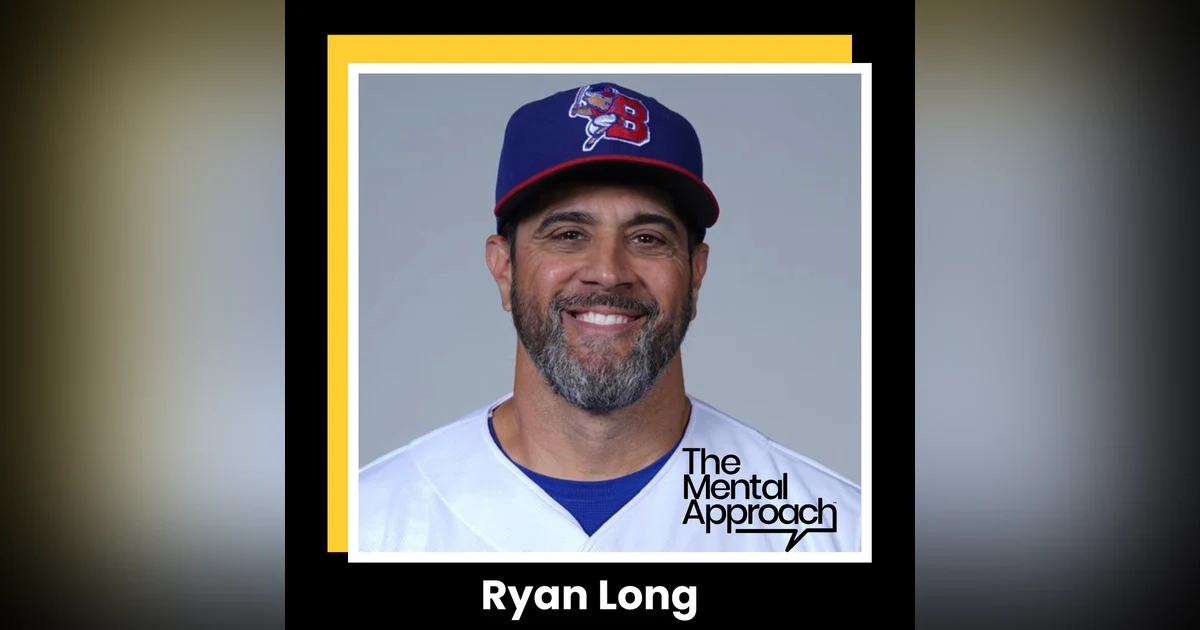
 In this weeks episode, host Todd Arkell talks with Ryan Long current hitting coach Witherspoon the Toronto Blue Jays AAA affiliate the Buffalo Bisons. The two chat about the difference in culture and mindset between North American and Japanese players. Growing up in Texas, being recruited to LSU and drafted by the Kansas City Royals. How his experiences led Ryan to coaching and how he applies that knowledge today for those up and coming professionals.
See Privacy Policy at https://art19.com/privacy and California Privacy Notice at https://art19.com/privacy#do-not-sell-my-info.
Matt Cundill 00:01
Todd. This is the mental approach where we discuss mindfulness, mental performance and the tools available for coping in a high performance world. Here's Todd Arkell,
Todd Arkell 00:11
welcome to the show, and thanks for joining us. Ryan long is the hitting coach for the triple a buffalo bisons. They are the Minor League affiliate of the Toronto Blue Jays. He joined the bisons in 2024 and he brings extensive experience, both from the MLB time and also international baseball coaching roles. Ryan is a native of Houston. We talk about growing up as a young baseball or in the Texas area to his drafting by the Kansas City Royals and his career throughout the minor leagues, and then transition into coaching. We talk a lot about the mental side of hitting on things that they work with with players. It's just a guess. It's not all mechanical. It's mostly not all mechanical. Ryan's a great guest. I think you're going to love some of the stories. Stick around and like and subscribe on whatever platform you're listening to. Enjoy the show.
Speaker 1 01:11
Ryan, thanks. Welcome to the show. Hey, Todd, yeah, thank you. Glad to be here and just appreciate you having me on.
Todd Arkell 01:16
Yeah, no, it's, it's, it's awesome. It seems we're, we're definitely, you know, being, being myself based out of the Toronto area, seems, getting a little blue jay love here and there from time to time on guests. So that's, that's awesome. So why don't we start off, maybe tell a little bit about, you know, where you're from, and kind of a little bit of your background coming up, coming up, through, through baseball,
Ryan Long 01:39
sure, yeah, it was a from the Houston area, grew up there, went to high school down in the south side of Houston, a school called doby played, played multiple sports, early football, baseball and basketball, you know, just kind of played everything, you know. I think, I think back then that was, that was, that was big, that we were, you know, just involved in a lot of different sports. And it seems like that landscape has changed a little bit and ended up excelling in baseball. Wasn't really sure that was my path until I was about a junior and started getting the, you know, the notoriety and things like that. Took three visits to Texas, Texas A and M and LSU. November of my senior year, I signed a letter of intent to be an LSU Tiger, and then was drafted in the second round that that summer after my year, and ended up signing with the Kansas City Royals. So I missed out on, I think, two or three championships with LSU. Probably. Yeah, what a program. But, but, but, yeah. I decided to go to the the sign route at that at that time in my life, and end up being a royal for eight years. Made my major league debut with him in 1997 was fortunate enough to get a couple get a couple of bats or a couple hits, I'm sorry, in about a two week span. So, you know, a cup of coffee. But you know, most memorable, obviously, my first major league hit, Randy Johnson. You know, Hall of Famer. You know, a hard hit, base hit up the middle, RBI to Ken Griffey, Jr, who comes up firing. I believe Johnny Damon, at the time, at the plate, couldn't throw him out. My balls bouncing around, and I'm like, Man, I got to get that ball. That was only thing I was worried about. I think the throw was, I think it was even a bad throw to the plate, and I don't think I advanced. So I was so just kind of locked in on getting that pit ball back. Yeah. So that's kind of the extent of my playing career. I played a couple more years after that as a minor league free agent, was asked to coach with the Chicago White Sox after I finished my career there, and funny, I hit 20 homers that year too and in the minor leagues, and they said, you want to coach, I'm like what I thought you guys would ask me to play again. I was relatively young. I'd played 10 years. It was a high school sign, but I was still young, and thought I'd still had left, and just kind of reached out to the job market. At the time, it wasn't as strong for me. Then this would have been 2000 and decided to go the coaching route with the White Sox had some really good mentors over there. Mike Clum the First Hawaiian ever play in the big leagues. Greg Richie was another guy that had come over there, so it was a really good foundation for me to start in coaching. And I remember Michael, I'm telling me, he's like, you need to, you need to coach at every level of the minor league so you know, you know what, what to expect from each level. So it's always something I've held on to, and it's been really, really good for me in my coaching career, end up being with those guys for a while, got lucky and got a ring. Was over there in 2005 obviously, in the minor leagues, but our the owner, Jerry Ryans Dorff, was fortunate enough and very, very nice to give everybody in the organization a ring that year in 2005 and won the World Series. So that's awesome. I do have one of those, which is, which I you know, which is really cool. And then it, you know, how baseball works. Some of those guys went to, uh, end up, end up being with Pittsburgh and different or different jobs in in different areas. So I ended up being a pirate as well for 11 seasons prior to that. In between those two, I did go back and work for the Kansas City Royals. My my draft team that I played with so long, you know, I was in the. A single day with them, but just memorable with some of the players I had. Mike Moustakas was one of them, and I got to coach him his first year of full season baseball, where he really, you know, he really, yeah. He really
Todd Arkell 05:10
stood out, yeah. My, my son loved him when he was, when he was playing. I think it was maybe the antlers, you know, the moose. Whole thing he loved
Speaker 1 05:17
about it. He was young, just a great kid. And really was, I'm just, you know, lucky to be a part of his, small part of his, his career there early on, and then coach was a pirates for 11 years. Got an opportunity in 2020 to do the international thing. Another ex teammate and coach, Coach a friend of mine, Larry Sutton, had played there GM. He had GM of the Lotte giants, who he had played with formally, had reached out to him and us about coming over as a foreign group and helping lead their their major league team with the Lotte giants. Thought about that for a while. Very tough decision for us. I was already, I was gonna go back to AAA, Indianapolis, with Pittsburgh. You know, after a few nights, a few tough nights, we we decided to kind of add that that feathered our cap, and take that journey to go overseas with that opportunity. Just saw it as an opportunity of growth, obviously an opportunity to travel and do something a little different too, but, but just, just an opportunity growth for us as, you know, as one of our things when Pittsburgh was to to, one of our mottos, was to kind of impact the world or through baseball, you know, and so I literally got to do that, going overseas, right? Go to a different country, you know, in in try to impact and help those guys just grow as players and obviously win for the low tech giants.
Todd Arkell 06:32
So awesome. Well, we're gonna, we're gonna talk about that in a little bit, but one of the things, as I was researching for today was, you faced a team in high school with Andy Pettit pitching against you
Speaker 1 06:44
guys. Yeah. So, yeah. So we, yeah, I did, we know doby versus Deer Park, and it was the, actually the game to go to. We call it regionals there. So you go to the state championship, whoever wins that game. And at the time, was in Austin, and so, yeah, we faced Andy Pettitte. And ironically, that summer before we would play what they called, like a legion, yeah, Legion League. It was pony. I think it was Legion. But I think this was Colt baseball, where you could actually bring some kids together from the same area. And we did, he played, we did play together. We want to, we want a World Series at that level with, uh, with, you know, he was one of our pitchers. So, um, is really, really good team, but, but it
Todd Arkell 07:18
was, he, was he still just as dominant as a high school kid, as he ended up being, yeah, I mean, best, best pick
Speaker 1 07:23
off movie, I think in that, in that regional game, he did, we got, we didn't get too many guys on base, but the one we one of the ones we did, got picked off, that's where Andy had one of the best pick off moves that I've ever seen. You know, and I think he went on to be, I'd say, probably in the big leagues. He still went on to have one of the better pick off moves from a left hander around. So, yeah, got to get to play with him, and obviously we played against him. And then ironically, in a coaching in 2010 Andy makes a rehab start for the Trenton thunder versus the Altoona curve in the eastern League Championship Series. He throws game one. He throws game one of that player else. And we were like, man, they're throwing a they're throwing a Hall of Fame rehabber against us in the championship series, you know, come on, Yankees. But, you know, that's just how it worked out, I think, with the timing of him coming back. So, so that was, that was actually the last time I think of I've seen him, and we chatted after that a little bit, but yeah, well, that's,
Todd Arkell 08:15
that's, that's kind of cool, like, cool, cool memories, really, when you think about it, first hit off Randy Johnson play high school against Andy Pettitte. It's not, not so bad people would people would want those experiences in their life, wouldn't they? So let's talk about Korea a little bit. What? What do you think? What cultural or mental approaches to hitting Did you observe that are maybe unique to those players versus North America, even just, you know, how they approach the game,
Speaker 1 08:40
yeah, I mean, it's, it's a and that's, you know, that think that's the difference. I think, you know, I think baseball is, is baseball in terms of that fact of it, but the, I think the biggest learning lesson for me over there from the mental side was that the way they learn in the way you approach them, is different than maybe some some players over here in terms of ownership, they respond better, a little bit better, to being told kind of what to do. They thrive on that, versus over here, we encourage our players to take more ownership, especially at the higher levels of what they want to do. And then we, you know, we walk beside them and guide them, actually keep them in the lane still. But over there is a lot more you get a lot better response from basically telling guys what you want and what you expect from them. And I think that was the biggest, one of the biggest cultural differences that I saw from from compared to the States. Well, how
Todd Arkell 09:29
do you, you know, what's your approach? I guess you know what? Everybody you know, obviously, as a hitting coach, there's the mechanical, right? But you know, I seem to, at least from my, we'll call my limited experience in baseball, you know, I don't like to no expert, as I tell people. However, I think it's a lot more mental than obviously people think. So. How do you handle how do you develop mental resilience for your players to kind of, if they're going through long overs or, you know, big. Droughts, or whatever, like, what are you doing to help them out? What kind of cues, what kind of tips are you? Are you giving them?
Speaker 1 10:06
Yeah, I mean, I think, I think, I mean, obviously that's, I think that it's like, you nailed it me. I think that's the biggest part of what we do. I'll share, I'll share this with you, is that I think a lot of the times and being at the triple A level, which is, obviously it's the most different level, right? Because you got guys, we have guys going back and forth for us, from Buffalo to Toronto in a lot of times, and that's the only level where you have that so. And the thing is that people don't, it may, may or may not realize is when a guy comes down from the major leagues to triple A It's not like he's going to come down a lot of times and just tear it up, right? There's a there's a reason probably why he's coming. He probably, probably wasn't, maybe having the best success up there. So sometimes you're not getting them in their best spot, right? So a lot of the initial conversations we have with those guys coming down, myself and the manager will sit down, and maybe a few other guys, and we'll be more on the mental side, all right, and a lot of it gets back to what that player's strengths are, I would say that's probably been the biggest conversations we've had, first and foremost, before we even go into mechanics. Are you owning and honing in on your strengths and focuses? Are you kind of more more worried about your weaknesses right now? So I think that's one of the biggest avenues that we have when players come down. And one of the biggest conversations we'll have first is just, are you nailing that? And nine times out of 10, they're not right. They're kind of worried about how they've been exposed up there, what their weaknesses are, and they just want to get to work into that. And it's like, well, hold on a second. Let's get back to where you're good. What got you there, right? What got you the big leagues originally, and then what's changed that? And why have we changed? Obviously, I think the biggest thing is has been guys change because they're chasing results. Right for us, it's they'd be chasing hits. So I think one of the biggest tie backs to that is we have to find other, other ways to evaluate themselves, other than results. Results matter. Obviously, that's what's going to matter ultimately. But how do we get those results? And that's when we'll lean back into All right, are you training your strengths and your in your early work? Are you? Is your routine geared to to build confidence in that way? You know, what are you? What are you doing? And then, are you evaluating yourself in game at bats? And what does that look like? Are those result oriented when you're challenging and when you're, I'm sorry, grading yourself? Or are they? Are they more on the process part of it. Did I get a good pitch? Was I ready to hit? Did I stay in my strength zones? Those are the conversations we'll have. Mo first and foremost before we go to the mechanical stuff. Because, you know, nine times out of 10, yeah, there might be some flaws, but we're a triple A in a major league level. There's those guys are pretty good in terms of their swing. They're pretty good. They're pretty dialed in. They they move the way they should, for the most part. You know, the bat speeds there, all that stuff's there. It's normally going to come down to, like I said, Are you staying with your strengths? Are you more concerned with your weaknesses right now and then and then? What does that look like in terms of, at the end of the day, how are you, how are you grading yourself, and what are you looking at in terms of what kind of, what kind of
Todd Arkell 13:00
process? Yeah, I mean, it's funny. I was just talking to my son last night, and he had a game, and he had three Ks, and he's, like, unusual, right for him. And he was like, how trizzy goes, I don't know, my swing felt great. I, you know, I, you know, BP was good. Everything was good. He goes in. He goes, I'm just missing the ball. And then we, I started saying, so like, what are you thinking about? He goes, Well, he kind of admitted he was sort of pressing about wanting to get a hit. I said, Okay, well, you gotta, you gotta let that go. Oh, it's easier said than done, right? And it's true, right? It is. You start scuffling, and you're like, the next about, you're like, okay, whatever, right? And so, you know, he had had, they had videos of the bad so he's watching them back, and he goes, Okay, I put good. So I just kept missing, like, fouling off pitches, and then, you know, whatever, right? So it is, it's such a hard game. And I, you know, that's the thing I think about even person that comes to mind, I think, with the Jays, is David. There's a guy who came up to the big leagues huge splash last year, made a huge impact, and then gets sent down from for scuffling a little bit, and he did something with him, because he's back and looks okay, so hopefully, you know, yeah,
Speaker 1 14:13
I mean, that's, that's the he was one of the ones I was thinking of there when we talked about getting back to the strength and then what's that look like for him? So, but, yeah, like, to your point, he came down and, you know, in honestly, he was scuffling with even when he got to Buffalo for the first few weeks. Obviously, we're so excited for him to get it going again and then now contributing, you know, I think he had a couple three ribbies the other day and, and just, you know, just to contribute and get him back on page. But, but yeah, I mean, that's a great example of a guy that went up there got exposed some areas we talked about that when he came down, where he was exposed. And then what do we got to get back to for him to kind of own in on it? He was a guy that we talked about his strengths versus weaknesses. Like this is where you're good Davis, this is what you did to get yourself there. And let's get back to that. And then, you know, some little just some, some time. Need mechanical flaws and tweaks, but a lot of those came because of just the approach he was taking at the plate. So,
Todd Arkell 15:05
yeah, it's interesting to thank God nobody said, hey, just shave your mustache. You'll feel better, or something like that. Ruin his whole persona. Ruin his whole persona. What specific men do you have any sort of mental strategies that you work with hitters on to stay focused when it's high pressure, you know? Or do guys all have their own things that they do? Or is it or stuff that you kind of help with as well? There's
Speaker 1 15:27
a few things that, and I think it's changed a little bit with the with the landscape of the quickness and play right with the shot clock. Now, one of the things that we used to talk about that back in the day was just having a really good reset from pitch to pitch. So I know guys would step out of the box. Sometimes they would just reset by by looking at their focusing on their their label, on their barrel, on their bat, barrel, right? Something, something just to distract them from from the noise around. I think that's one of the biggest ones. Now, what they'll do, the only thing they can do now, with that is, because there's not a lot of time between pitches, is to they get one time out per bat, which is really interesting, because if you, if you, if you watch it, you know, I know our guys, I'd say 95% of them, not even our guys, the whole league the hitters will take to use their one time out when they get to a two strike count, which I which I think is, you know, I was thinking about that, and I was like, hmm, I'm wondering, you know what? Why? Why do they use it in the two strike count so much, you know? And so then it gets back to me, is like, okay, all right, the way, I think is critical with two strikes, right? And this is one of the things I'll talk to with our guys, is, you know, there's two ways this can go. There's two ways of thinking here, right? And say, in a two strike approach, I can either take the thought of, man, I don't want to chase something down in the dirt right here, right? I don't want to obviously, you know, start thinking about the punch out. I don't want to strike out. I don't want to chase so you think more about the negative or what you don't want to do. Or there's the thought of, all right, I'm in two strike count. I'm going to get some up, out over the plate. I'm going to stay inside it. I'm a right handed hitter, and I'm going to hit a bullet to the second baseman, right? Those are totally two different thoughts. But I'm in this I'm still on the same count. So these are kind of the things I'll share with especially some of our young guys that maybe come up from double A that are having some scuffles in those counts. And just, you know, we got to learn to we got to learn to separate pitch to pitch, as hard as it is, if you watch major league players, especially like I think of some of the pitchers sometimes, and some of these calls they'll make or won't make, and they'll throw strikes. And these guys, I'm not saying it doesn't affect them all the time, but there's times that they just It doesn't even look like they didn't even phase them, and they'll just move on to the next pitch. And that in itself, is probably, I would say, the biggest separator between getting to the big leagues and the minor leagues is how well you can block out the noise from pitch to pitch and really, just just kind of stay in that moment. One of my mentors, I would call him mentors, Clint hurtle. I know you've had conversations with him, with Pittsburgh being a guest. Yeah, Clint used to say one of the favorite things he'd tell he'd say to our group, and he'd say, if I have one foot in yesterday and I have one foot in tomorrow, I'm basically taking a crap all over today. So, like, be where you are, right? So, like, there's just one thing that stuck with me, that one of the sayings, he'd say that, that, you know, I try to, I don't share it necessarily in that way, but just, just try to, just try to keep that
Todd Arkell 18:12
in mind. Well, you know, now he's, now he's got a whole book full of them with his hurdle isms. I'm sure that one's
Speaker 1 18:17
in there. And I feel bad we haven't got the book yet, but, but, yeah, we will. We got read him every time I'm on his his email, his email list.
Todd Arkell 18:24
So that's awesome. So you mentioned, you know, double A to triple A. I mean, how is the adjustment for a player? Because pitchers are more advanced at triple A, like double A, you know, maybe guys got two pitches, but triple A now they're, they're getting ready, right? So, how does that affect? Yeah, the
Speaker 1 18:42
biggest, I mean, it's, so, you know, again, we get back to the triple A level, right? It's the most unique level in baseball, because you have, like you said, you'll have a double a hitter come up that may have faced a pitcher, you know, I'll use Robert stock, for example, with Boston. That's that has major league time, right? It's, he's based Major League hitters, right? And you're now, you're a double a hitter coming to triple A for the first time. So it's the only level where you have these, these two things kind of coming together like this, right? You're not going to see that in any other level. So, you know, besides the big leagues, but it's triple A guy coming up. So, but, yeah, I mean, I think that's the biggest thing. I think the adjustment would is, you know, I used to tell our guys like, at double A, you know, you got, you got prospects at triple A, you got, you got guys pitching for different, different reasons, right? You got, you got guys that have been around a while, maybe that have pitching they're pitching to feed their families, right? And double A, you may not have that, all right? So their their why, and their why, of why they go about things is different. So they're, they're, they're gonna, they're gonna pitch differently, right? Or they're going to attack differently, or they're going to play differently, I'd say just, just, just metrically wise, what we'll see mostly is in double A and a ball, you'll see more fastballs as they get to the triple A major league level. They start to, they start to kind of go away like you'll see less fast balls, even probably less than 50% between, depending on which or. Organization you're facing, you're going to see less than half of your pitches. You'll see a fastball, so you're seeing a lot more off speed, but yet, they do have really good fastball. So that's kind of the major, the biggest, I'd say, the biggest difference, and just the number of different pitches you'll see. Like you said, if a guy goes from a fast four seam slider repertoire, you might get up here and face a guy with that uses all five pitches, or something like that. So again, it gets back to, how can I block out some of that noise? What are the two or three best pitches he has so that I can eliminate and make things simpler for myself when I'm up there to play
Matt Cundill 20:33
it now, more of the mental approach with Todd Arkell,
Todd Arkell 20:38
keeping in the theme of, you know, things to help hitters with. You know, are there anything that you recommend players to kind of reset mentally after a bat at bat or a poor game? Or is it, or is it on the organization that they've got mental coaches? Like, how does that interaction work at the on the team? Yeah, yeah.
Speaker 1 20:58
I mean, we do. We do have that. We do have the mental coaches, but they're not always with us, right? So I think, I think more than interaction lies upon the the, you know, the staff, the boots on the ground, the everyday working, working with guys. Yeah, there's, I mean, there's a lot of different stuff. I mean, obviously we have all the reports we have. We have things to get yourself prepared. I think that's the one thing most guys do the most is lean on, you know, the the advanced reports we have, right? So their preparation, I think, I think we got it. We got to lean back. We got to be really good at our preparation, right? And I think the best hitters are, yes, we know it. You know, the staff knows, knows, knows the the advanced reports, but they need to also be doing their homework. I think the best ones are doing that for themselves. So with that preparation, I think it just helps me be more confident. Can Help me simplify my approach to plan to a player, and then, you know, from our end, just just, you got to ask a lot of questions, you know, I think you know, and it's tough sometimes, right? You're in the moment guy strikes out, or whatever. You know you got to, you got to know when to approach him, right? The timing of it is big, right? You don't, you don't want to get on and right away, but it's like, what you want to get him for his next at bat? Like, hey, what were you thinking there? Hey, well, this is, this is how they're kind of attacking you, just to kind of bring that focus back to simplicity. I think that's, I think it's the biggest thing we can do for our hitters, is just kind of bring it back to the simple as possible. Because if it's not subconscious, and that's why the see it and hit it mentality works so well, right? Because more times than not, the biggest issues we see are guys, what we call in between with timing. So they've got a guy on this shoulder going, Hey, you're gonna get a fastball right here. And then they got a guy on this shoulder going, you know what? Maybe he might throw his breaking ball here. So that's the guy that ends up being late on the fastball and early on the on the on the on the off speed pitch, right? And, and if that's an early count situation, you know that's what we're trying to stay away from, right? So we want to, we want to be really good at committing to kind of what we want to hit in our we call it our pre 2k or our pre two strike approach. And we get to two strikes, we don't have that luxury, because we just don't have any more pitches to work with after that. But in our pre 2k that's, that's probably the biggest thing that we'll see, and those are what most of our conversations are, is like, Okay, what were you committed to? And where was your conviction lie, right? And that's what I'm looking for myself. And a guy, sometimes a guy will tell me, right? I mean, I'm standing with him right there for he goes on deck, and he'll tell me, Hey, I'm committed to this. And then it'll get to the plate. And for whatever reason, you know there's, there's different reasons, you know, you'll see a change right? The guy will change the plan and change the approach. So can you, can you hold on? Can you commit to something right or wrong? Right or wrong? Can you commit to something and prove that you can, you can hold on to that throwing at bat. And then, for me, that's going to be the difference between your major league hitter and your minor league hitters is, how well can they commit to the conviction of having that approach and then, and then go ahead and carry it out through an impact, for me that builds more confidence than anything, I think, because through that, you'll get the results you want.
Todd Arkell 23:51
Yeah, and you talk about reports, and I was thinking about that earlier, you know, like, if you're a kid playing baseball, you might face a pitcher, you know, maybe twice a season or something, depending in your league, or whatever. And there's no advanced scouts. But you know, at the pro level, you're, you can be exposed by a hitter, because you got, like, tons of data nerds going, this guy can't hit anything down and in, and so they're just gonna throw it to you down and in until you can prove them wrong, right? So it does make, it does make a difference. So how do you you do you incorporate any data and analytics into mental prep, for, for, for, for batters, for hitters? Absolutely.
Speaker 1 24:33
I mean, I think we're, you know, we're doing that daily with our sheets. I think, I think the biggest thing, like, I think I'd mentioned this earlier is that I'm trying to find out, what if this guy's strengths and weaknesses, how they match up to my guy's strengths and weaknesses, right? So I think, from a mental side, one of the biggest things that happens is when I'm seeing reports, is these guys will be like, Oh, he does this, this and this, you know what I mean? And you know, maybe I don't do that well. So what does that look like? Right? Right? So that's where guys tend to get off track. So helping them navigate through, yeah, this is what he has. But, like, what do you want to do, right? Like, what do you get in again? What are you good at? What are your strengths? Right? This guy's got, it's, it's hard to if you go stand on a mound, and I do it sometimes, and I'll have hitters do it, it's like, Go stand out there, 60 foot, five inches away, and look how small that home plate looks. It's it's tough to consistently throw balls to the edges per se, or throw balls exactly where you want to. Yeah, they get better. They get to the big leagues, but they all make mistakes. Yeah, they all make mistakes. So it's like, am I hunting those mistakes? Or am I? Am I getting wrapped up in what he wants to do to me too much at times. So that's kind of the game within the game. And that's a that's a really cool thing. I think a lot of people kind of maybe miss look, or don't look deep enough into but again, man, I think the best players in the world kind of continue to, kind of, yes, they're going to make some adjustments, and they have some adaptability. But are they really, really good at what they're good at, and are they nailing that daily first before they get caught up in the other
Todd Arkell 26:04
stuff. You know, it's, it's interesting. Watching a game the other night, there was a pitcher. He had kind of a gross, sort of late breaking it was maybe a small sweeper, whatever you want to call it, a right handed pitcher. And I'm sitting behind home plate, I'm watching and it's like, the left handed hitters, he kept throwing it almost to the back foot, and it was off the plate, but the right handed hitters, it was a strike. And I started watching a little bit more, and I'm going, Oh, he's starting it more in the middle of the plate for the righties, because if he does it against the lefties, somebody's gonna He's gonna hang it, they're gonna crush it right? And it was just, it was interesting. I go, okay, if I'm a left handed batter, I'm going to eliminate that pitch immediately, right? But it's like, it's funny how people say to me, I hate baseball. It's so boring. And I'm like, Man, that's fun for me. I sit there trying to figure What's this guy doing. How are they playing him? That means that's how he's pitching him. You know, like all the different things that are going on in the game. It's, it's very, very cerebral. I don't know how anybody hits a baseball actually, when you when you really just put it all and then you watch pitching ninja, and you go, like, what guys are throwing frisbees, I don't know. Like,
Speaker 1 27:15
it's, yeah, no, it's, it's, it's, it's got, I'd say it's gotten harder, yeah, since I played. I mean, in because, you know, you know, starters used to go, they used to go longer. They just did, you know, that's just, it was just the it was the, it was the mentalities. Like, I can remember Nolan Ryan watching some of his videos, one of my boyhood, you know, just my idols. But, you know, he said, If I, if I start a game, I intend to finish it, you know, and that's, that was the mindset. And I'm not saying the pitchers don't have that mindset nowadays, but we just don't, as an industry, don't, as an industry, they just don't let guys do that because of the numbers and things like that, and health, obviously, but Sure, but yeah, it's hard to hit. It's harder to hit. Now we have so many, so many different relievers coming out, and that's where these reports, obviously, for us come in big. Like you said, like, I can, for instance, that you talked about that sweeper. We'll have that right on the notes. So it's, it's there. It's like, he throws the sweeper, yeah, this many times, but he can't Outland it. We highlight, you know, if he can throw for a strike or if he gets chase on it. So again, and trying to simplify for our players, that's all we're trying to do. If we can eliminate and simplify, we're going to make the mental side of it just just that much easier for
Todd Arkell 28:15
us. Know that simplify? That's a word, word a few people have used try to simplify. So you spent about a decade, as you said, in the minor leagues. What do you think was the toughest personal challenge you faced as a player?
Speaker 1 28:29
I think, you know, just, I think the every day, I think the every day is the separator for our game. You know, not to take anything away from other sports, but it's not just like getting up for a weekend. I mean, it's, it comes at you as and, you know, as a position player like myself, and again, not taking it from pitchers either, but as a position player, it's coming right? So no matter what you're doing, how good you're doing, how well and and like anything else, when I'm going, good, yeah, it's, it's, it's, it's easy, but it's like, you know, how many times a year is that? And most of the time I'm having my struggle. So I think the hardest, the hardest thing is, is when I'm struggling, and then it's coming back tomorrow, and it's coming the next day for me, and it's coming unless I'm getting a day off. But, I mean, hopefully I'm not admire the goals we need to play our guys and get them at bat. So I think handling the day to day for the young players is the hardest thing. You know, day game, night game, you know, that kind of stuff. And then I think along that, just kind of learning your routine and kind of where it works for you. And I think that all goes hand in hand, like, what time do I need to get up? Do I need to feed myself? And those things have all gotten really a lot, much better than, you know, than when I played in the 90s. It just, it just has, man, there's more. There's more staff now there's more. There's so many resources for these guys to improve and get better with every team that I think that's a separator. But I'd say, yeah. I'd say the biggest challenge is just the day to day as a hitter and just handling that mentally, when you're when you're not going, you know, at your
Todd Arkell 29:53
best, yeah. And I bet back in the 90s, the pay was not so good. It was
Speaker 1 29:58
not, it was not. I mean, it was very. We, you know, obviously, yeah, I just was, it wasn't great. I was lucky that, you know, I did get a little signing bonus, or whatever, the second round or not, not what, not what they would have got today, but, but, yeah, I mean, that, that part of it was, was obviously tough, man. We had to, and again, we weren't fed like these guys are now, these, these nutrition budgets that we got. I mean, I couldn't, you know, it's it started changing a few years back, but it's like, and these guys are really taken care of. And then that, that part of it's, it's gotten, it's gotten pretty good.
Todd Arkell 30:26
I've always kind of thought about, here it is, you know, okay, baseball, it's America's past time, and all these different things. And it was like, minor league guys are making 800 bucks a month, 11.7 scholarships for 40 man rosters at college, which, as we know, is changing now, and, you know, for the good and for the bad, because it's creating all kinds of chaos as well at the sport. And I'm thinking, like, Come on, man, this is where all the development happens. Put some money in there. It's surprises me to the, you know, to the 10th degree, right? It's very bizarre. Yeah, so you've been with the bisons for, I guess that's a full season last year, and then this part this season. So what's, uh, what's a rewarding personal moment that you, that you've had since you've been with the bisons?
Speaker 1 31:16
I mean, I think the most rewarding personal would be sending guys to the to the big leagues for the first time. You know that again, that's the other unique thing about triple A right, compared to other levels, is that, like, yeah, we have, we have some that we've that we send, that obviously have been there before, but, but the first timers, right? The guy that's kind of kind of earned his way up there, and you know, it's going to be his first time to join a major league, Major League roster. And just like you said, just working through. I mean, I can recall my first time in I was in Nashville, my manager, Mike gersley, who's still managing in Omaha right now, calls me in the office, and it's like, you know, and I wasn't even on the roster, and he said, you're, you know, you're going to big leagues tomorrow. I'm like, This is unbelievable, right? So it's just like, you know, you you finally, you finally get to see what it's all about. It's sad in a way, because a lot of the guys, most of our guys, won't, won't get to see what they've been working for. Not that there's a lot of good things can come from, and they should be proud of what they've done here, too. But, but when you get there, it's like, okay, this is what I've been working towards. Because it's, it's different, like, it's just different. You know, Clint hurdle used to say, there you guys can get them ready, and you can prepare them, and you can work and all this stuff, but you can't prepare them for the fourth deck and in wherever, in Yankee Stadium, like you can't, you can't prepare them for that. So it's like, this is really cool, like, this is what I work for. And you just, it's the show. And they call it that for a reason.
Todd Arkell 32:34
I think, yeah. I mean, from a player's perspective in the sport, sport of baseball, specifically, I think, and I think any sport, if you have the ability to get to the next level, because, as you know, the funnel shrinks. It's, you know, and it's like, if you got to the next level, you know, if you're, if you're high school baseball player, and you're able to play college baseball, you did something that, regardless of what college you played at or level, or whatever you did something most people couldn't do. You know, if you go on from there and you get into pro ball and, you know, maybe single a, double A, you know, it's whatever level you kind of it ends at, you've done something nobody else could do, or very few have. So there's definitely no, no shame in that, I think, you know, especially, not at all, especially in a game, a game like baseball, back to Korea, what were some of the, what were some of the moments that stood out for you there coaching? What, how were the players, I know, we talked about the cultures a little bit different, you know, but, you know, how was, I mean, baseball is baseball, but how was the, the kind of atmosphere in that, in going through that on a daily basis, yeah.
Speaker 1 33:43
I mean, it's, yeah, I can't lie to you, it's different, you know, you're coming in as a foreign coach. Obviously you have to, you know, the biggest, the biggest difference would be the, you know, the communication, right? So Lotte was really good about, you know, giving us each translators with our foreign staff, yeah. So we had a, we had our own kind of personal so I had a, I had a guy with me all the time from the hitting side. So, but one of the challenges there was, sometimes these translators are, although they're very good translators, they may have, may not have been baseball people, right? So for me to get my point across in a simplest way, I had to, at times, train my translator on hitting and then kind of fill him in more on what I was talking about, right? Because, as we know, like message given and message received sometimes are just way two different things, even here, right, even when I'm speaking to guys that speak the same language. So just a lot of questions, and I had to really be thoughtful on how I was going to approach and say things to our hitters, so that it came across. Obviously, I wanted to get the message, but so that it came across on a simple way where they could, they could understand it. And then, you know, I think the biggest thing was just getting, you know, trying to get buy in. You know, I'm a new guy coming in to our major league club. I've had, you know, the. Veterans. I mean, some of the veterans there played for, you know, 1015, years, right? So I have, I have veterans on the team. The culture is very respectful culture. So that part of it went pretty smoothly, like they, they, they give cult, they give respect right away, especially to their elders, which at times, here's, you know, it's a little bit more earned, I would say, than than given. But there it's, it's just kind of like, automatic, right? So, you know, at least they, at least they, they do it that way. I was, I was uncomfortable, you know, some of our young players bowing at me at first. I'm like, you know, I get it. You guys do have to do it to them. I don't, you know, I don't necessarily need you to do that to me. And I don't see it disrespectful, but they do. So it's like, yeah. And those were the things, you know, those were the things with even our foreign players that we'd have, we'd have three foreigners every year that would, you know, if they could handle those types of cultural differences, that those are the guys that usually succeeded, the ones that couldn't, or the ones that, you know, we would have to, you know, maybe go looking for somebody else to have, and they just didn't have the success. So,
Todd Arkell 35:57
yeah, oh, man, that's, yeah, I can say that's different for sure,
Speaker 1 36:01
just a really, obviously, a really cool experience, growth, growth experience for me, just a really fun time, you know, playing in front of playing meaningful, meaningful games for a country that that really, I couldn't believe how much they love baseball. I mean, it was, it was really cool. So, but, yeah, I think, I think just, just that part of it just coming in as a new the new face, trying to get the respect and then and then trying to, you know, obviously bleed in some new some new ideas, without being too forceful, but, you know, trying to bring a little bit of our baseball culture to them without, like, kind of changing who they are. If that makes sense, is that I think that's the most, that was the most difficult
Todd Arkell 36:40
part of it. So skipping back to the bisons, for those who are Blue Jays fans out there listening, who are the ones to watch? And you're going to say everybody. Can't pick your favorites, but who are some, who are some people you think are kind of on the cusp that you might, you might see up sometime soon?
Speaker 1 36:57
Oh yeah, man, we were excited. Like you said, we're excited for all of them get the opportunity. Leo Jimenez has come back. He got a significant amount of time up the last year with injury, so he's come back, and he's looked pretty good at the plate here this past week. And obviously we've sent, you know, we've sent road and road and starting team up there. Barger started with us, and we sent him back up. So we're very, you know, we're happy with him. He's sitting on top of the Order
Todd Arkell 37:21
Bar. Just is okay for people listening who've never seen this guy. He's built like a freaking linebacker. He's stacked that kid, and he just seems to be crushing baseballs. Yeah,
Speaker 1 37:31
yeah. I mean, he is. I mean he and he always has been able to, it's just he's, he's honed in his his his approach a little bit, especially his mental approach. And then again, talking about getting to some strengths. He's done. He's done a good job of getting back to getting back to where pitches he can handle and things like that. And just, you know, I would say, I would add that there's a comfortability to him knowing probably that he's going to be in the lineup every day. People don't realize that that like that plays a big toll on players, and it's hard not to know if you're gonna if you're gonna be playing one day or the next. It's one of the biggest challenges I see, is guys that don't play every day, when they do get in there, they want to do so well that sometimes they'll come out of their skin to to change their approach, or just change their mentality, to chase again, typically chasing hits, and it gets them away from their plan and their approach. And then you see, you see him not do as well. So it's like, almost like, I want something so bad that that it actually works against me. So I think with barge getting the opportunity this year, like he has, and then, you know, I think that shows a lot of confidence. And he probably feels like they have a lot of confidence in him. I think that's huge room. There you go.
Todd Arkell 38:41
Everybody. Confidence is king, that's for sure. Is there anything you draw upon from your career, like a story or a moment that you kind of use as to offer some inspiration to players? Anything comes to mind?
Speaker 1 38:54
Yeah, I'd say just just, and I think just just the grind. I think being able to kind of try and try different things sometimes, and try new approaches. I personally, I think, you know, I'm thinking back to myself and I played, there's a guy named Kevin long who was, who's the hitting coach for the currently for the Phillies. Been in the big leagues for hitting coach for a long time, but we played together one year in the Royals organization and and, you know, he was kind of like, he was almost like a player coach. Then he was that came back in his career. He was still playing for us, but he would help guys out a lot. And he had told me, he goes, Man, you need to take a strike. You need to take one strike every, every back. Because I was a free swinger. Didn't walk. And I was like, Man, I don't know if I want to buy into this, right? I started doing it. I started taking I was in double A Wichita. We were there together Texas league. I started taking a strike. And what happened was I started seeing the ball a lot better. They started throwing me more balls, because a lot of the pitches I would swing at were balls. Anyway, long story short, the results were 18 homers and 48 RBIs in the second half. Half of my double A season, it started triple A the next year, and kind of continued the same stuff, and then got my call up. So, like, I credit that, what I would call taking that risk, right? It was, it was, it was risky for me. It was something new. It was something that that I had never done before, and it was scary, right? And I think, I mean, I think I mean, I think that's the thing, I think that's the biggest hold back sometimes, is guys are, guys are not willing to kind of adjust like that, right? Like, man, you need to take this risk. Obviously, I was glad that I did it. It opened up a new world for me. It was crazy. It changed the way I was being attacked. Pitchers were, like, surprised and made an effect on them. They're like, Oh, God, this guy's not chasing sliders away. So then they started throwing me in the middle, and I could hit him, right? So it's like, so I'll share that story sometimes with guys, just like, hey, this is, you know, this is, this is kind of like, this, listen to this. This is a risky, a risky thing I did in my career, and it worked out, you know? And, yeah, obviously I gotta, I gotta pick my spots on who I use that with and and how we use it. But I think that's the biggest thing, is being able to to buy into something and kind of get over that hump a little bit and take that risk. And when you can do it in game, in a competitive environment situation, I think that's, that's obviously where the job anybody can do it in training, you know. But like, how do you do it? How do you do it when it matters? Like, when it's going on the back of your card, even though it's a minor league card. And these are really, just, really, these are just kind of, you know, I'm trying to win them all, but they're practice games for, hopefully, the big league level. You know, can you take that next jump? And I think that's, that's what I'm looking we're looking for guys to do when guys can kind of buy in and take that risk and get over that hump, I think that's when you'll see the guys just kind of take off the next level.
Todd Arkell 41:39
And as they say, Hey, if you hit, you do not sit. So I guess it is scary. If you're not going, well, I'm going to try something new. That might, that might be worse,
Speaker 1 41:48
yeah. I mean, yeah, it could be, yeah. I mean, it's, it's like, it's, you know, it's that risk. And we, we talk about it like, I'll talk about it with our hitters in terms of, like, in game, like, hey, I want you to sit on my first pitch, breaking bar here. Or, you know what, I mean, like, or even like taking strike, like we got, there's a lot of guys that don't, they're scared to take a strike, you know? I mean, so can you get comfortable? I guess the storyline would be the biggest learning point would be, can you be comfortable? Being uncomfortable, right? So it's like, can I get over that part once I do? Okay, now, okay, now, I'm okay. It was all right. It worked out. I think that's the biggest, I think that's probably one of the biggest hold ups for most guys, is that that's, there's just that getting out of their own skin and getting getting uncomfortable to grow a little bit. Oh, I
Todd Arkell 42:30
hear you. So what's one book people should be reading right now? You got any books that you read long time on the bus? You got to do something.
Speaker 1 42:38
Yeah, we're doing the Yeah, we're doing we're doing the kind of a mechanical book right now, but it's called the way we move, and it's about, we do it as an org so it's pretty it's pretty good stuff, but we kind of meet as a hitting was that you think Coach group? I would say this will work. But in this particular book, we talk about just talking about movement patterns and the way people move. People move for a different reason, right? Or they're born with the way they move. And so there's different, different ideas. It helps me as a coach a lot, because I think in this world of YouTube and seeing things, and our eyes get trained to like a certain way a movement would happen, but it doesn't necessarily fit. I think we all, we all kind of born to move the way we move, right? If you think an arm slot or or you know the difference they're hitters, like, how deep they sit in their legs, or how vertical they stand up, that's all stuff that's kind of like what we're born with. So it's really helped me open my eyes to like, Okay, I don't, I don't necessarily, it's not in my mind. I have a picture of what I want this to look like, but it might not necessarily fit this particular player on the way he'd move. So, but that, yeah, that's, that's a, that's the one that we're kind of currently working through right
Todd Arkell 43:47
now. Cool. What's one small change you could somebody could make to their daily routine that would make a difference? Daily routine?
Speaker 1 43:53
I would say, I would say, just, just prepare to prepare, right? So, like, I'll have a lot of times where guys come in the cage, sometimes I'll be, like, what do you want to do? You want to do? Like, I don't know. I'm like, Well, you haven't, you know, you didn't. You're not prepared. We're going to root the preparation part of it. But you got to prepare to prepare for this preparation, right? So you had to have had some thought of, okay, this is what today looks I'm not saying all the time, but I do have got, we have a lot of guys that come in like, Hey, this is what I do today. I want to do bang, bang, bang, because of this. And I want to knock this. Out. So I say, I say I'd say that was, that'd be one thing, just to prepare, to prepare. And then I think the other thing would be, just a, from a valuation standpoint, is just, is just hunt the good stuff. I think one thing we used to do with hurdle is we do it two ups, two ups and one down process where we go through the we'd go through, he'd ask the whole this, and I'm talking about now, so September, just to take you back a second triple A used to be end in September 1, and the AAA staff and about 10 to 12 players would also go to the big leagues. The roster would expand to 40, right? So I had the opportunity to go up with them several times when I was at Pittsburgh and be around hurdle and things like that. Well, one of the things we would do with the NH series would he go around the whole staff room. Do it two ups and one down. So we'd have to, as a coach, you have to go do two things you liked we did, well, offensively for me, and then one thing that we could get better at all right? So I challenge our guys at that a lot is like, okay, you know, because they it's easy to hunt the bad stuff, definitely start to hitting. But like, Okay, what did you do? Well, well, you know what? I owned my zone. I swung at pitches I wanted to swing at early in the count, and, you know, I was ready to hit right? Okay, what didn't you do? Well, there's a couple times I was kind of in between my thoughts. I wasn't committed to one pitch or other early count. All right, so let's get let's do that better tomorrow. So I'd say, just that, just that, sit, just sitting for one second your locker. Have a post game, you know. And truly, truly keep it at two to one. All right, because obviously I think we want more, more more good pump good stuff, but find something, find something good to grasp on from the hitting side that you did well, and then try to carry that on. Because I think especially from the hitting landscape, the way we the way we think, is critical that the positive self talk, or whatever you want to call it, but finding things to grab on to other than that, sometimes other than the results, is just huge from the from the hitting side, taking you in
Todd Arkell 46:04
the next day. Yeah, I think you got to trust it. I mean, it seems silly. You go, I'm going to go up and say, I am the greatest. I am the greatest. I'm going to do whatever it is. But I think it helps. It does just with
Speaker 1 46:14
anything. There's no doubt the positive self talk helps. I'll give you one more story that I had a player with Pittsburgh, and I had a player this year reach out to another guy, but I'm gonna use this one first. I had a player with Pittsburgh. He knew Manny Ramirez, reached out to him. Manny said, What do you think of me in the box? And he's like, Dude, you look like you're just locked in every time he goes, dude, there was times I was like, Oh, for 25 but you couldn't tell when I stepped up there. You couldn't tell because I have this belief that, like, this next pitch is gonna be, this is gonna be the one, or this is gonna be the at. Bat, where I get going? Get going again. So I've had so much more better results just talking guys about belief and like, what they're good at, and hunting that good stuff then, then just making mechanical adjustments and changes sometimes. So especially at this level, where guys are, like, I said, they're already pretty solid, but yeah, so it very it helps so much to have those sometimes mentors, guys that had done it and been there. We had one more stories. We had, you know, we had Joey Votto here last year for a little significant month and a half pointed time. And I can tell you this just from listening. Is he, he? He grasped it on to Alan Rhoden. And Alan Rhoden ended up being the Player of the Month in the international league and in in August. And he probably should have wanted in September. He had a better September. He had a better September. I don't know, they gave somebody else, but like, in one of the things that it Joey would do, and he's really good at, was he would, he would just share with our guys every day, you know, he would share what it's like to be up there. He would share his some of his thoughts. And he wouldn't say, like, this is the way I do it, but he would just, you know, he really, he was really good about just sharing approach thoughts with these guys, and kind of how he goes about his day. And I think it really helped Alan Rhoden last year, just just the way the messages he was, he was given with him, and just leaned into him. So it's so
Todd Arkell 47:54
critical. I think it's great. Like, I mean, honestly, I think I think of things like, it's not a black box, and some people want to keep it like a black box. I got the secrets I'm not going to tell you, and then other people are going to want to share. And I think if you make everyone better, that's the goal, right?
Speaker 1 48:10
100% I think, I think, and that's what it's, one of the things I loved about the hurdles, like he would share. He's so transparent. This guy, this guy will share. He would share everything with us, right? So, I mean, it helps. It really does. It just helps. And I think, I think we learn to be good coaches from obviously, we're going to have our we're going to take things and mold them kind of how we want them, but we're going to learn. We're learning from somebody else all the time. And I know he would say the same, that we're just kind of taking, taking pieces and parts, and just kind of always learning from people to share with us. So to pass that on is, like you said, is one of that that's that part's rewarding
Todd Arkell 48:45
as well. What's one piece of advice you'd give 13 year old? You Ooh, 13 year old
Speaker 1 48:53
me, man, I'd say, I'd say, You know what? I'd say, you gotta, you gotta hunt the good stuff. I'd say, Be pleased with yourself, and, you know, and not be too hard on yourself. And you really got to kind of enjoy what you do. I mean, it is a grind. It's sometimes it's sometimes it's not enjoyable, winning losing at this level. Sometimes it's just a grind. Because, like I said, the every day, but I'd say, I'd say the 13 year old knee is, is you just got to be, you got to be, you got to be easy on yourself and find and hunt the good stuff. I think a lot of, I think a lot of hitters are very hard, very hard on themselves. And honestly, some of that's, you know, it's going to be parroting and how we how we treat our kids, but, but, yeah, hunt the good stuff. Have a good time. Find something enjoyable about the game. And, you know, luckily enough, I played, I was the guy came up in that era where we played outside and backyard and figured it out ourselves. I hear you, yeah, we did that. They're not doing that as much now, but, but yeah, you got to be have a hitter. You got to have it. You got to have a sense of ease for yourself and and, you know, hopefully the coaches are kind of on that same page.
Todd Arkell 49:55
Yeah, I recall, you know, every Saturday for a lot of years as a kid, hop by. Your bike, throw your glove on your handlebars and try to balance your bat and race down to the field, see if anybody was there, and start with two guys, maybe then you'd end up with 10 and play 500 up or whatever. And even, even in university, we had this quad, and we went out there and we we played, we drew a strike zone, and we played wiffle ball, and we had all these crazy rules that we made up, and that's, that's where, like, 1920 years old, still, you know, it's a, it's a kid's game, everyone. It's a kids game, no matter where you go to but, yeah, it's, I love it, yeah, enjoy it because you got it. You got to have fun, for sure. What's the best advice you ever received?
Speaker 1 50:37
Hmm, I'd say, I'd say, I'd say, as a coach, I would say, with Mike long he taught me, you know, you know you got to be you got to be patient with some of these young hitters, I think, to be able to show that that patience and not get frustrated when, maybe when they don't get something. I think that's helped me out a lot as a coach, especially with like, like youngsters. I mean, even to this day, I can go work, I can go do a less than the off season with a young kid, and it's just for them. It's just different, right? It comes across different because there's a there's a patience there. It's not that you're not expecting have high standards, but the same time you gotta, you gotta have some patience and know that things aren't going to come overnight. I think that's, I think that's where a lot of the us as coaches kind of can go wrong sometimes, is we want, we want things to happen really, really quick. Yes, they do need to be expedited in today's game, but there's also, like, a sense of, there's also a sense of, there's urgency, but you got to do that with some patience same time, and it's a tough balance. But I think that that'd be one of the best things that I know. Mike lemon had taught me from the from the early from the early stages.
Todd Arkell 51:36
Ryan, it has been a pleasure chatting with you. Enjoy the bus rides. It's, I'm glad I just got a hop on last night. Yeah, I know, right. I'm sorry. Right back into the fire. Get on the Get on the Get on the Get on the podcast. But would definitely hope to see in Buffalo this summer. We usually get there at least once or twice. That's a nice little drive. And like some Canadians were not afraid to go to America these days. So anyways, all right, Ryan, thanks very much. Appreciate you having me
Matt Cundill 52:07
on. Thanks for listening for more, including resources and more about the show. Go to the mental approach.com A production of the sound off media company. You.

