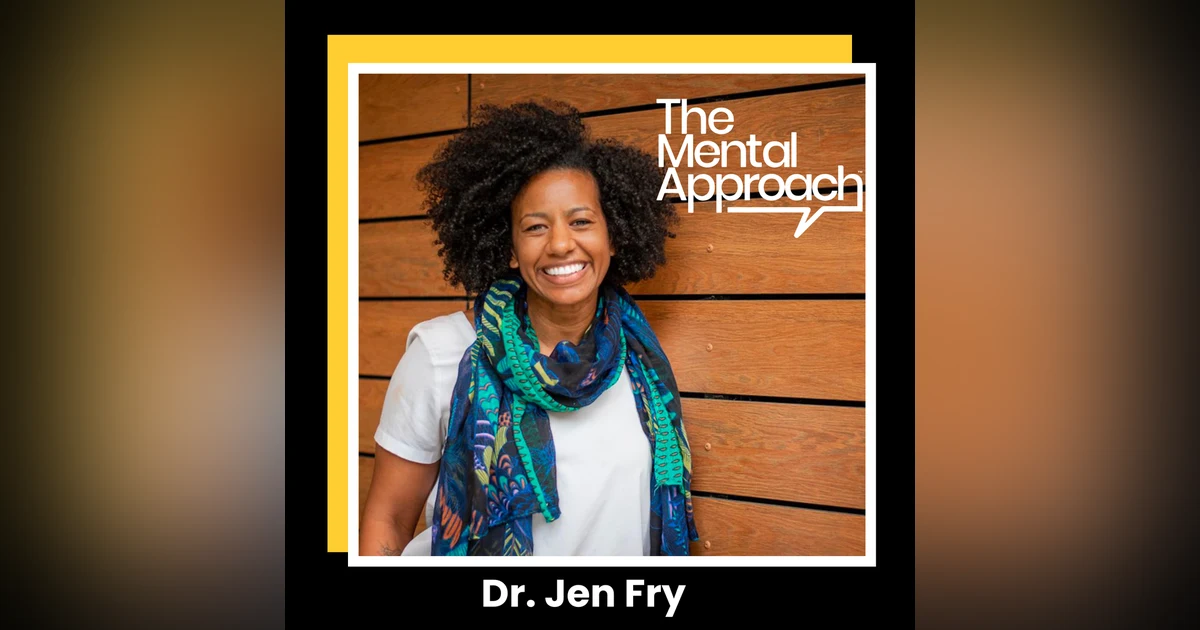
The Conversations That Shape Team Culture with Dr. Jen Fry


 RSS Feed
 In this episode of the Mental Approach podcast, host Todd Arkell interviews Dr. Jen Fry, a TEDx speaker and conflict expert, about the role of conflict in sports and organizational dynamics. They discuss how conflict can be a driver for growth, the importance of acknowledging different identities and experiences, and the challenges of creating inclusive environments in sports. Jen shares insights from her experience as a volleyball coach and her research in sports geography, emphasizing the need for proactive conflict management and the impact of identity on performance.
See Privacy Policy at https://art19.com/privacy and California Privacy Notice at https://art19.com/privacy#do-not-sell-my-info.
Matt Cundill 00:01
This is the mental approach, where we discuss mindfulness, mental performance and the tools available for coping in a high performance world. Here's Todd Arkell,
Todd Arkell 00:11
welcome to the mental approach podcast. I'm your host, Todd Arkell, and today my guest is Dr Jen Frey. Jen is a TEDx speaker, conflict expert, author who helps teams and organizations build the skills, courage and capacity needed to navigate conflict and shape their culture. Jen specializes in transforming organizational dynamics. Lots of big words that I that I wrote here, but by addressing how conflict and culture shape leadership and overall business outcomes. She is a veteran volleyball coach with over 15 years experience coaching at the collegiate level. She understands how conflict within athletics, corporate and professional settings can impact the team. Jen, welcome Todd.
Dr. Jen Fry 00:56
I appreciate you having me here. I
Todd Arkell 00:58
think this is a cool topic, because, you know, while it's not traditionally a mental performance, air quotes, comment, it sort of is because if you can't deal with conflict in a team setting, it's going to affect your mental capacity.
Dr. Jen Fry 01:16
To me, if you can't handle feedback, it's going to is going to affect conflict in all aspects. Sport is all about critique. You're always going to be doing worse than you want. I mean, think about it. In baseball, if you're hitting 300 you're doing really well, that means seven of the 10 times you're getting out that's like, that's a wild number to think about. And so there's, there's always mistakes going to be made. And so if you can't handle critique, if you can't handle conflict, butting heads, talking it out, can be really hard for you to be an excellent team member. Yeah.
Todd Arkell 01:52
So how do you think being a volleyball coach for so long, I mean, playing at the Collegian level and then coaching, how did that shape your views on conflict and identity within performance.
Dr. Jen Fry 02:04
You know, I wish I would have had this when I was younger. I think about how much when I played this. This was never brought up. It was, there's conflict on the team. The head coach, the captains, need to handle it. The captains, who are woefully equipped, are expected to handle it. And that's how it always is. It's like, Okay, Coach, two players are in conflict. Okay, go handle it. They have zero skills, but they're expected to do really hard things. And then when I got to be a coach, I look back now and wish I had it, because it would help me be able to navigate harder topics with my players. But when as you're a coach, if you don't have conflict skills, you're either going to be aggressive, you're going to ignore it, because on both ends of the spectrum, it's scaring you. And so if I'm not good with conflict, then my team isn't going to be good with conflict. And that's it's a byproduct. Whenever I go in to talk to teams, or do I go in to talk to the coaches, and the coaches are like, you know, my players are bad at XYZ, and I'm like, well, you're probably bad at it. There's no way you can have a conflict fluent team that has a really bad coach that's really bad in conflict. It just wouldn't happen, right? Because the power dynamic really wouldn't allow it to happen.
Todd Arkell 03:17
Quick pivot. Because one thing I wanted so you have a background in sports geography. What is sports geography?
Dr. Jen Fry 03:23
Yeah, so I'm probably one of the only people in the world that have it, and I looked at race, place and space with my PhD, of the racial experiences of professional black female volleyball players in Europe. I think many times people look at geography as just like a map, and there's so much aspect about it. Sport is very geographical. If you think about, well, just take baseball again. Think about the way Dominicans train, think about how the Americans train, think about how the Japanese train, how the Koreans train. It's all very different. It's all very geographical. You know, if you get an athlete from Japan, there are certain ways they're going to train. I know in volleyball, we knew 100% what we got from different athletes. We knew, even if you want to say, like, work ethic, right, practice and maybe Brazil is going to be longer. Athletes are walking, talking Japan, everything is disciplined. And so sport is very geographical in it, and so I wanted to capture that of saying, like, what does it look like to be a black woman athlete playing in Europe? What does that look like? What does that feel like? So that I can help future athletes who want to play overseas, I think that a lot of playing overseas is romanticized, and they don't understand the really hard parts about it, of sometimes you might be paid under the table. Sometimes you might go play another country. You don't have a visa. Sometimes the billionaire who is responsible for it decides he doesn't want a team anymore. You go to walk to practice, and there's padlocks on everything. And so I really wanted them to know. What to expect,
Todd Arkell 05:01
you know, it's funny, I know, I know a kid actually, who's very into volleyball, and, you know, potentially getting a volleyball schedule or, sorry, scholarship. And we were talking about, you know, path, right? Because you talk about different sports, and you know, some sports you might play at a collegian level, and then you kind of just move on and you get your education and you kind of move on, and what is the path? And so I was asking, what's the path for volleyball these days? And they were talking about Europe, right? And again, also a person of color. So this might be an interesting podcast for them to listen to, if we talk about it a little bit more. Yeah, absolutely. How do you think identity? And we talked about race, maybe even gender. People's background impacts, you know, an athlete's different their mindset, because you think it's different from from from race to race or gender.
Dr. Jen Fry 05:54
Absolutely, I think every aspect of your identity directly affects you. We tend to have a problem in society of not recognizing that people of different identities go through different things. There's no way I will say this with the Hill I'll die on. There's no way that someone who is disabled and missing a limb is having the same experiences as me. There's no way like and if people were to say that I'm like, You're lying to yourself, there is no way somebody who is missing an arm is having the same experience of me. There is no universal experience. I think the problem is, is, if I go to someone, I say, Todd, do you think that me and someone who is completely will in a wheelchair, we're having the same experience. They would say, no, like, it's it wouldn't even be a rational thing to tell how could I argue with you? Tom be like, Absolutely, this person in a wheelchair is having the same experience. There are 60% of buildings they can't even go into, but they're supposed to have the same experience as me. If they get in the building, they can't even get to the top floor like I can't because it's only stairs. And so when I talk about it with with disability, it makes sense to people, but when I mentioned race or gender, then the mind is blown as if two people of two different skin tones also can't have a different experience. I think the problem is, is that people don't want to connect the dotted line if they have a different experience, that means someone's having a better one, someone's having a worse one. What does that mean? And there's a you, right? You go down the domino effect. But the reality is, is that identity in all aspects affects us. If someone has kids versus me, who doesn't have kids, that identity is going to be very different. And so there's a point where we have to kind of pull off the sunglasses and admit that these different aspects of our identities absolutely have us have a different societal experience.
Todd Arkell 07:50
Yeah, no, I think it makes sense. You know, I grew up in an area that was predominantly white. I was an athlete. There was, I mean, I kind of joke about, I go, there were six black families in the town I grew up in, and people go that, yeah, right. I go, No, I could name them, because I played sports with every single one of the the brothers. And the reality is, is that I felt it was a pretty, pretty laid back down, and everybody was chill. And then later on in life, in talking to some of them, how they echo their experience, was so much different, and that did kind of blow my mind, because I was like, Well, no, we were all buddies, and we were all, yeah, but not everybody treated us the same, and there were these different expectations. And I think it's things that you don't think about every every day, as far as that goes. So if you're, if you're a coach, how do you, how do you deal with some of that, I guess, as you know, coaching different, you know, obviously people that are gonna have different experiences, so they're gonna take maybe instruction or feedback in a different way, potentially, based on their how they've kind of gone through the world to that point?
Dr. Jen Fry 09:01
Yeah, well, I think the first thing is to acknowledge that everyone has different experiences. I mean, that's like, to me, the baseline aspect of it. You know, I even can I use the example of no sibling has the same parents. You can have 234, siblings. Every single one of them has a completely even if they all were birthed from the same parents, every single one of them will have a different experience. So for instance, if the four of you all went on a road trip, you might remember and be like, Man, that road trip was amazing. I loved it. We had the best time because you had your own seat. Two of your siblings had to jam into one seat, and they were like, this was the worst trip ever. We had to share the iPad, right? We couldn't do that. And maybe a third sibling is like, oh, you know, I got to see I got to hang out with mom the whole time. This was beautiful. And everyone was in the same vehicle. And so I think the thing about it is, the first thing is the coaches. To understand everyone's identity experience will affect them in different ways, and to be to be okay with naming that. We're not sitting here saying good, bad, otherwise, we're saying the reality situation is that if you have a one of my good friends who I went to grad school with, her mom was in a wheelchair and her dad was blind. So now, as a coach. What does that mean? What you're going to think about with facilities when they go to watch games, that's just something to think, because that might not be something they ever thought about. But now you have a athlete. She was like Player of the Year, like soroki was amazing, but both of her parents were disabled, so now what does that mean? You can't treat her the same as able bodied parents. You can't be like, well, they'll figure out where to sit. Like, you can't do that. And so it's just kind of the same. It's not that we're saying you completely change how you coach this person, but you do have to take some of that into account. I had a kid who her like, fifth grade teacher was her guardian, so she was kind of technically in foster kid, but not really. That changes how I engage with her. I'm not giving her free passes, but I have to be cognizant of what those experiences, how those experiences affect her, is what I need to think about, because if we're dealing with people's kids at 1213, 1419, 20, we're dealing with people's kids, and this is why I say that our job as coaches is different than any other job. If one of your employees at a job gets arrested, you're not their first call. If one of your athletes gets arrested, you're their first call. So there's a very different and we can't sit here and say that their identity doesn't affect them because we're lying, and we're going to be doing insane, harmful things, because we're not willing to acknowledge that
Todd Arkell 11:54
in the example of the athlete whose parents were disabled. I mean, I think that's just being aware, right? Being aware of what that might even affect them, mentally worrying about, did my parents get in here? Did they do they have a safe, safe passage to get down to the floor or whatever, right?
Dr. Jen Fry 12:12
So think about that stress of being like it. Will my parents even be able to watch me? Does this? Does this facility have a ramp like that, the bare bones of it, of now you're going to play a game, and you're worried that your parents, who drove three hours away to come watch, you can't even get into the facility. What kind of crap is that? Right? Like you your kid, and you can't tell the athlete, just don't worry about it. Focus on the game. Absolutely not. You can't say that. And that's I think. The thing is that when you try and ignore identity, you're missing on the things that they're worried about. If one of your athletes who you got recruited, and they came from California, you have moved all the way across the country, and they have a single mom with four siblings, of course, they're gonna be worried about money. Of course they're gonna be thinking about, maybe I should transfer back to help with help with the bills, so you can't sit there and ignore that, because that's gonna have a direct effect on them.
Todd Arkell 13:13
You know, when 100% you know, I'd say, you know, I don't think I was as cognizant about mobility issues for people who were in wheelchairs, until I started having kids, and I was moving around with a stroller all the time, and then it became very like, hugely evident to me how certain spaces were not set up for for People with with with with disabilities that had had mobility issues. I was like, You got to be kidding me. Like, I, you know, and I know, as society, we've done a much better job of trying to make spaces available. But there's still, it's still not 100% you're not, you're not getting all access. Like, like you said, you're getting partial access.
Dr. Jen Fry 14:00
No, oh, no. Well, I worked at Duke, and my office was in the President's building, and my office was in the basement. And to get to the basement, you could not go from the parking lot easy, because it was like a hill. And I remember having to push carts up that thing. And I was like, this is miserable, so you had to go and And mind you, my office, there was like a set of steps. So there's like maybe four steps from kind of the parking area that could easily get you in there, but there's no ramp. So instead of you going easily up a small ramp to get into there, you have to go up this hill, up and around to this old, dusty outside elevator that would sometimes break. When elevators break, they really don't take time right to get them fixed. And this was in the president's office. And so I say that of so many places are unaccep are unaccessible, but when you don't worry about accessibility, it doesn't bother you. And. Like you said, you have a kid, and now you realize you're having to carry strollers and a bunch of crap and a kid up 1520 stairs, and it's brutal. But people don't think about it until it starts to affect them.
Todd Arkell 15:13
That's perfect. They don't think about it till it starts to affect them. They think through your life experiences, all of a sudden you start to realize things. I think hopefully, if we're all in a position to grow as human beings, then, yes, it does. It's great if you decide to ignore all that and say, I don't care. It's all about me. There are people like that too. We call them narcissists, but you know, it is what it is. Let me shift gears here a little bit. Part of your philosophy, and I reading, is that you you say that conflicts, not in higher inherently negative, because, you know, most people see it, oh, somebody yelled at me, or I'm whatever it is, it's they feel it could be negative, but you don't see it that way. But you say it could be a driver of growth. Could you unpack that a little bit more?
Dr. Jen Fry 15:58
So your example, that you used of when you said people feel conflicts bad because they said someone yelled at me. So what that means to me is not that conflict is bad, but how it was managed was bad. And so we have to parse that out, and that the way that's managed can also make it feel bad. And so I think we have to parse it out, because people will then attach anytime conflict happens, it means I'm gonna get yelled at, and then I hate conflict. When we talk about conflict being a growth opportunity, especially for innovation, is that your first idea in anything is never going to be your best idea, you have to keep iterating on it. And so when you have to keep iterating on it, that means that there is going to be grappling over the idea. And that's how you innovate and get better, is that you keep put, you keep pushing and tugging and pulling off strings. But the problem is, is that many people, once the pushing start happens, starts happening, they get upset and they they can't handle the feedback. They can't handle the critique. And this idea doesn't get to go into a beautiful, fully flame, fully grown out rose bush. It stays as some twigs, because people aren't willing to be get get Katrina, get feedback, get pushback, get any of that stuff. And so that's why I'm saying that when you have places that welcome conflict, because conflict is two people with different ideas, and if you're welcoming that, then you're whatever these ideas or these things are, they're going to grow more than if you are not willing to engage in it at all.
Todd Arkell 17:40
How do you think athletes can be leaders in creating inclusivity in a team environment?
Dr. Jen Fry 17:49
I think the first thing is, like I said, it's basic, acknowledging everyone's different, acknowledging that people's experiences lead the way, people's identities lead the way. I think teams are really great testing grounds for people, for athletes to build themselves up, you have to learn when you're really pissed at someone, how do you work together to win? You have to learn that you're with this person 15 hours a day. How do I work with them, even though I'm really frustrated you're with this person 15 hours a day, you have to learn that they are in a position. They're starting or doing something that you wanted, and how do you still work with them, even if you're jealous or envious? You have to learn all of those skills while being on a team. And so I think the thing about it is, is that when we think about a team creating inclusiveness, it's to show what does it look like we have all of these different personalities, people, thoughts, to still work together for a common ground also, while understanding that part of that might mean that everything is not 100% agreed upon. What is the percent that you have to agree on stuff for it to go because I think sometimes we see these situations where it's like everyone didn't agree, everyone's not going to agree. How do the people that don't agree still move on, even if knowing they didn't agree?
Todd Arkell 19:17
Yeah, interesting. I mean it. It does take, you know, I think if you're dealing with college age kids and kids coming in, 1819, 20 years old, it certainly starts at the coaching level, doesn't it, to be able to guide them
Dr. Jen Fry 19:35
in that way? It starts at the coaching level at nine or 10.
Todd Arkell 19:38
Well, sure, but that doesn't always happen. That's the problem,
Dr. Jen Fry 19:42
but it's not that if a six year old can get called the N word at six, a six year old can learn about identity and inclusiveness, like for some reason, people like want to protect white kids from things and say they're not old enough if a disabled kid is old. Enough to be called a name. Kids are old enough to learn about able bodied and disabled bodies and that stuff, and coaches are old enough to teach this. The problem is teachers are scared of coaches because they don't have the skills, right. They don't have the skills to end the language, to talk, to talk about disability, and that's part of the problem. Is that, for me, this is all skill based learning. If we're teaching soccer players and coaches how to teach kicking, how to teach setting, how to teach throwing, we should also be teaching coaches how to do these things. Yeah.
Todd Arkell 20:29
I mean, it's interesting. There's a lot of different programs out there. Now. I know in Canada they have an NCCP program, where for every sport, they have all these courses, but it's all about skill development. There's nothing about human development, right? Which, you know, I think that comes down to the person. And you know, I always think about it in certain sports. I talk about this as the professionalism of youth sports, and it doesn't always create psychological safety for kids, either from their parents who are expecting them to perform and be a professional athlete at 10, or from their coaches who are being paid a lot of money to get results, not necessarily develop young women and men. So how, how can like in your practice and what you do, you know, how can, how can teams and, you know, between the coaches and athletes kind of build, build a, I guess, in a psychological safety zone, like, how do they create that space so that it is a safe space for them to compete.
Dr. Jen Fry 21:45
I mean, I think the first thing is, is that the clubs have to have a direct they have to have an importance on these type of topics. They have to focus, they say, like they have to teach the coaches how to talk about these type of things, many club directors will kind of put their head in the sand and wait until a problem pops up, and then it's like, Okay, now we're going to fix it. Versus how do we start problem solving this beforehand? How do we get the skills? And that's what I do. When I go in to talk to coaches and clubs, I'm like, here's proactive ways that you can you can make sure that some conflict doesn't happen, but you have to start thinking about it in very proactive ways. I think a lot of people like to put their head in the sand and say, well, this won't happen to my club. This would never happen to me. I'll never forget I did this workshop, and we were doing some role playing, and there were a few coaches that were like, well, our athletic director would never do that. He is He would never, never, never. And then guess what happens? Three months later, he leaves. And now where we at right? And so I think a lot of club directors will sit there and say, this thing won't happen on their team. And because of that, then it leaves them very ripe. The the amount of teams that have the this would have never happened to us. Happening is pretty big.
Todd Arkell 23:09
Yeah, I would agree that. I mean, I can I think of coaching a variety of sports over, you know, a 3040, year period, and even just recently, with with hockey in that there's a lot of changes they're trying to make. You know, Hockey Canada, as an example, is trying to make changes to culture and how things are done. But a lot of the stuff, they're just like dumping on coaches, saying, Okay, you need to communicate this to your team. And guys are like, going, nice out on the board, and we're going, okay, but I'm not sure every coach has the capability of delivering this message. So how are we actually gonna, like, how are we going to train them to talk about that? And, you know, like they they went to a new policy for for kids that you have to show up to the game basically dressed, no changing in the change room. Yeah, that seems odd, too. I know I felt that way. I go, okay, so you got to come in your under undergarments that you're going to wear under your hockey gear, which, if you've ever been around hockey players, that stuff smells like heck. But that was kind of the idea. And it was like, well, we want to get we want everybody to, you know, not have to show off their body. And you know, if they're showering in the dressing room, they need to be they need to have, you know, bathing suits on. And there's a whole variety of different things that they kind of put into play. And you're going, Okay, that's great, but now you're asking a whole bunch of coaches to kind of come in and lay down the law on this, and then how do you and you're supposed to police it, and then how do you police that? And then what if your kids don't want to abide by that, and then you're in trouble? Is the like, there's so much to unpack on that particular thing, but that just gives you an example of an organization at the top says, Hi, we have this new policy, and we think it's going to. To do this. And even to this day, I can't even articulate what I think they were trying to address. I believe they were trying to address things about players who might be transgender or binary, you know, all these different things that have, you know, and give them a safe space. But in doing so, it was very weird. And there was also at play where they said, Okay, so if you have a player who would be more comfortable based on their orientation, that they can have their own dressing room, and that the facility has to kind of organize that for them. And I thought, how are they going to do that? Because some ranks you show up, there's there's four dressing rooms, and it's two for the team that are on the ice and two for the team that are coming on the ice. And it rotates. And I remember playing lacrosse as a kid, we had a female player on our team, and she dressed in the women's washroom, which at 13, I was like, This is ridiculous. Like, you can't find a better situation for for this person to kind of get ready, I mean, and then it'd have to be okay, are you guys all dressed? And then you combine everything and whatever. But which, I understand the reason for that, but it was she wasn't really given a great option to be, you know, to kind of, to kind of deal with that
Matt Cundill 26:27
now, more of the mental approach with Todd Arkell,
Todd Arkell 26:31
how do we handle those things better as organizations? To kind of, if you're trying to make real change, which I, I think they were trying to make change for the right reasons, but just a horrible execution, like, how can you kind of execute upon that within an organization?
Dr. Jen Fry 26:47
So this is gonna be a weird analogy, so I need to stick with me. Todd, I will. So I am, I have a rental car and I have a Buick. It's a small SUV on clef enclosed, yes, on
Todd Arkell 27:00
Clive had one of those rentals myself. Yep.
Dr. Jen Fry 27:03
So, so maybe you could, you can walk with me on this. So on the outside, the outside is beautiful, like it is a gorgeous looking video vehicle. And when you get inside, it looks good, and then you start to see some of the stuff that doesn't make sense. So for instance, where you would before, have the gear shift, now it's just a dial for the music. That's all just to for the volume. It doesn't make sense, because then right in front of you, you have all of the like, little toggle things for the temperature, and then you have this really wide screen. I mean, the screen's probably two feet wide or two feet long, and then, but you can touch it, and you could turn up music, and you could turn up the heat. You can do all that. So, so you have that. Then instead of having the gear shift the way you do reverse, you do all this stuff is by on the handle, and you just do, you pull, push out and down for drive out and up for reverse. And if you want to park, you just push the park button. But then you know, you need the windshield wipers. You need all these things, but they put them all into one handle. So now you can your lights, your turn signals. You have to turn the little dial for the wind. All of it is one thing. And the reason I am using this example in theory for the person he was probably like this. This makes sense to have the dial for music, to have the it, to have everything and what it makes sense to them. But the problem is, is it feels like they didn't try their own product. Whoever the designer was, didn't say, let me go driving. What? Why do I need just this dial for the volume that it all it does is volume. Then I got the steering wheel and I have, like, the little, like, you know, you can, like, change gear from, like, the little butterfly things behind, yep. But then below it is buttons on the back for volume and then to change the channel. But, like, you have to figure that out. So you have so much stuff going on that I'm like, did you really drive it? Because if so, I don't see why you would think that this was okay. And so going back to these rules, I don't think some of them actually were like, let me go to a facility and see what implementation looks like of this idea. They were just like, we're going to have the idea. And so it's really important, when you have ideas that have grand gestures behind it, that you also go and see what the testing is. Because here's the thing I know about trans folks, especially trans kids, they're probably not changing in those rooms with a whole bunch of people. They're really scared. They're scared they're going to be hurt. They're scared they're going to be terrorized. Most likely, they're changing in the bathroom. So people are worried that trans kids who are transitioning are going to be out there, butt naked. I do not believe it's true. From the trans people I know and working with the trans community, they are scared. I. Yeah, but when you don't involve them in the conversation, when you kind of have the pendulum swing all the way, one way, well now people are upset because the rules can feel and seem dumb. And so that's my thing. Is that if, if companies and organizations want to have really good rules that people feel well, you're never going to get 100% right. You're never going to get 100% but if we can get where majority are feeling good, you have to test them out. You have you can't just theorize, but you have to test them out and say. What does this look like in a four room, dressing room facility? What does this look like in the 50 dressing room facility? And you're, you're starting to get more information, versus saying, this is the rule and that's it.
Todd Arkell 30:51
I don't disagree. I think it doesn't always, doesn't always match the intention,
Dr. Jen Fry 30:58
and the people who, many times, that the rule don't have the experiences,
Todd Arkell 31:02
yeah, 100% I mean, you see all kinds of things online where they talk about, oh, look at, here's the here's the committee that's going to decide female reproductive rights, and it's five males on the committee. And you're like, how did that happen? I'm not really sure what what we were doing, and I'm like, look it. I'm the first person to say I don't need to be on any committee making a decision about anything that I have no experience with. There's like, if I don't like, why would I want to try to come up with ideas that might be a mystery to me, right? But I guess it is what it is. We live in it. We live in an interesting world. So, pivoting a little bit, what are, what are some? What are some concrete things that a coach or an athlete listening to this can maybe start implementing, you know, as the you know, in their day to day experiences to help improve the culture on their team. What are some things they could they could do?
Dr. Jen Fry 32:10
I think the first thing is that no conflict through text. I think what we tend to see is that a lot of conflict, type of things. People text back and forth, and it just makes it worse, because the emotion, the feelings behind it all that. So I'd say none of that. I'd say the next thing is that coaches teaching their athletes to be more comfortable with conflict or with feedback, with giving feedback and receiving feedback, we are really bad at both of those because we don't teach it. We always are like, you should be able to accept feedback, but they've never had to accept feedback before. So I would say that's one thing, is that we have to teach what does it look like, or does it feel like to have to deal with feedback? What does it look like to deal with it when you thought you were doing really well. So look and what does it look like to give feedback and to give it to your best friend, to give it to the teammate you hate? So I think that's the type of thing. I think another thing is to not allow triangulation to happen, meaning, if I don't want to talk to Todd, instead of me just handling it. I'll go and talk to someone else and say, Hey, can you give this feedback to Todd? I don't want to talk to Todd. And so now we have this culture where people don't communicate with each other, and so that's a really big thing, is, how do we get them to communicate, in person, verbally, with each other? And part of it is not being willing to be the middle man. We have to have stop people from being the middle man. We have to teach our teammates to go talk to each other. I think we also have to teach what does it look like to work and win with someone that you don't like at all? And so to really think about that. But a lot of it has to deal with how we teach them how to communicate, and not just communicate on the field, on the pitch, on the court. But how does it mean to communicate in all the other realms?
Todd Arkell 34:15
Yeah, and I think it takes a little bit of discipline from somebody to go, Oh, hold on, don't tell me. Go tell them.
Dr. Jen Fry 34:25
Yeah, it does. It 100% does. And that's the hard thing that people have, is to tell them, so they'll be like, Okay, I'll just listen. No, tell them to go talk to someone else.
Todd Arkell 34:36
Yeah, I'm you know, I wonder how many coaches that are saying to their athletes, hey, you have to be better at accepting feedback. How good they are at accepting feedback?
Dr. Jen Fry 34:47
Well, I mean, I think that's another thing that coaches don't realize, is how you handle the first time an athlete pitches, how, how the first time an athlete pushes. Back wants clarification. How you handle that directly affects how your app or the rest of your team is going to do it, because you can't think you're going to shut down one athlete and everyone else is going to come and talk to you. That's a huge thing. Is that you have to be able to handle pushback, handle feedback, because that shows everyone else how you're going to engage in the situation.
Todd Arkell 35:26
I think there's still a good cross section of coaches out there that kind of say, this is the way you're doing it. And somebody goes, well, why? And then it, you know, becomes a big issue, because they think you're challenging them. You're just, maybe you just want to understand, why do we do it that way? Or maybe I have a better way. I have a better idea that would be more, you know, and it's like, almost like, you're up against that power dynamic. Some people can't their ego can't take being told that they don't know what they're talking about or whatever that is, right? Like, it's a, I think it's an old school you know, people talk. Oh, that person's an old school coach. Well, that might mean they're not very evolved in conversation. 100% 100% Yeah. So what's, what's your vision for the future of high performance sport, if we embrace identity and and stuff like that, like, how does that? How does that? You know, identity conflict. How does that change the performance model?
Dr. Jen Fry 36:35
It means that we can create a space where people know that if someone says something problematic that the team or the coach will hold that person accountable. Right now, people are really afraid of holding other folks accountable, so they will try everything they can to make the person who held them accountable feel bad. I'll tell you example so my alma mater, Montello, the women's soccer team, got locked in a elevator. I mean, it was just they, you know, most elevators have like a buzz whenever it's over capacity. This one must not so like 1110, nine players got stuck in the elevator, and some of the comments on there were just rude. Like, this is a normal college thing athletes get how many times we pile into an elevator? Like, that's normal, and some of these comments are rude. And so there's this one woman who her daughter had played high school soccer, and I was like, what you're saying is unacceptable. Like, you don't Why are you talking to them? Why are you calling people stupid? Like, that's unacceptable. And then I tagged her daughter in it, and I said, you need to see what your mom is doing and what your mom is saying. And so woman, well, she never responded, of course, right like that. But another woman said, How petty are you to tag her daughter in there? And I said, her mom is in public saying these things, so I'm supposed to let that go. The problem is, is you're trying to make me silent instead of saying what she said was rude, because, you know it was rude. And so that's the problem, is that folks don't want to hold others accountable. They want to stop people from holding them accountable. And so that's something, is that as coaches, is that we have to learn how to better hold people accountable, especially your star in those hard situations,
Todd Arkell 38:22
I don't, I don't disagree with that at all. I mean, I It's true, right? I mean, how can you expect, you know, I think, as a parent, if you want your kid to be treated one way by a coach, how can you expect that to happen if you're behaving kind of in the same way, just to strangers?
Dr. Jen Fry 38:41
Absolutely, because I know if somebody had said all these things on her daughter's soccer picture, she would have been livid. But you think I was actually doing a webinar, or not webinar a workshop a while ago, and one of the women in the workshop mentioned how she was mad that she'll say this is the policy, and people will push back. And I said, you kind of strike me as someone that if someone tells you it's the policy, you'll find all the ways to go around it. And she was like, Yes, I am. I said, So then why? Why can't people do that to you? Why is it you expect people to completely listen and not push back, but you get to do every which way? And she was like, Oh, I'm like, that's a problem, right? We, for us, for her, she would do every which way if she in, like, the policy, but other people can't push back, and you get upset, like that doesn't make sense.
Todd Arkell 39:31
Yeah. So tell me a little bit about your book. I haven't read it. I said, No, I what I love is forget about the title. It's the next part is the No bullshit guide to setting boundaries, speaking up and being unbothered by other people's feelings. That part I love,
Dr. Jen Fry 39:48
yeah, it's called I said, No, have a back line of boundaries without being a jerk. And my sole goal is to help people navigate through these hard things that society doesn't train them for. Society does not train. Us to have boundaries. Society does not train us to navigate hard situations. Society trains us to not have boundaries. Society trains us to if there's a hard situation, run away. And so how do I help people with the hard things so they can be better humans and better for themselves?
Todd Arkell 40:17
Maybe that'll help with the transfer portal issue, where people are running away. Oh man, well,
Dr. Jen Fry 40:24
people are running away. And the one thing I actually just did podcasts on it, and I said, once you you cannot dip your toe, once you put yourself in the portal, your scholarship does not exist anymore. And I said, the other problem is, is that you're leaving because you're not playing, but you don't have stats, you you're leaving a full ride. Why? If I'm a coach, am I going to pick you up with no stats versus someone that has it, keep, stay at the school, get get them, get the stats, and then transfer. And I also said that I think there are some data that said there's like 40 or 50% of the men basketball portal which people either didn't find a school or went lower. So understand, you might go into the graveyard and have to pay for school yourself. And are you prepared for that?
Todd Arkell 41:14
Yeah, no, it doesn't always work out to everyone's advantage. I mean, it certainly. I mean, look at the portals always existed. It just seems to be more prevalent now. People are talking about it more than I think, because it made it it was a little bit more wide open now than it was right.
Dr. Jen Fry 41:29
So there's a few differences. Before the transfer portal, pre 2015 if you wanted to transfer, you had to get the okay from your head coach. So if your head coach said No, you wouldn't transfer. And your coach can literally have a list and say, Okay, let me look at these schools. We play this school in three years, this school, and they would go through this list, and you would have a list of five schools that you could transfer to. Also, if you wanted to transfer in conference, you it would take, you would lose two years football and basketball. Sat out of the year. So it just, it wasn't worth it in some ways. Now, if you want to just go hit the button, and then your coaches will find out later
Todd Arkell 42:09
it is crazy. And I think I urge people, I think sometimes you got to work through things, and I think that's kind of what you're talking about as much as part of this conversation. So what gives you hope about sports culture and where it's heading? Is there anything that gives you hope?
Dr. Jen Fry 42:25
I think the first thing is women's sports and how they're growing and getting what they deserve. And I mean, I just am loving how women's sports is growing. So I think that's one thing. I think the next thing are the kids of the future are awesome. They're awesome, their knowledge, their empathy. We just have to keep giving them the skills, but they're great. So those are two things that give
Todd Arkell 42:47
me hope. Maybe we need the more enlightened people coaching the kids of tomorrow.
Dr. Jen Fry 42:52
We need them all coaching. We need to get as many kids out playing sports as possible.
Todd Arkell 42:56
I don't disagree. All four of my kids were mandated to play sports regardless of what level. House league doesn't matter. Find your level, be active, be involved. And you know, I think there's a there's a lot that comes with being part of a team and in your future life, because obviously, you know, you do coaching into executives and different things as well. So what do you see? You know, I always have a little joke, as I say, I can always tell at a company who didn't play team sports when I have a conversation. But yes, you know coaching executives like, what is that like? As composed as compared to dealing with with teams? Is it very similar?
Dr. Jen Fry 43:42
I think it's hard, because when you're on a team, you have to learn how to win with someone you don't like. It's kind of not the same way in corporate you could run them off. And I think with it, when you're talking to executives, it's more about the bottom line, and how is this going to help the company, versus the feel good stuff. So you have to figure out how to make sure that this, the impact that they see and feel, in a way, is helping them make money or not lose money or not lose talent.
Todd Arkell 44:13
It is, I think that's a fair comment about running people off, because, yeah, if you don't like somebody, you can make their life pretty miserable, depending on the power dynamic. There's no question. I mean, it's no different in sport, though, really too. The coach doesn't like you. You're not going to be around around very long, that's for sure. Jen, let's see, I usually, I usually start to wrap with some interesting questions. So how about what's the best advice you've ever received, always bet on yourself. And if you could look back now and give 1314, year old Jen, some advice. What would that be?
Dr. Jen Fry 44:50
Is Keep being weird girl. Keep being weird. I was a weird I was such a weird kid. Keep being weird. Keep like I didn't conform to anything. I just keep being weird. It, it'll be okay. You'll find your group awesome.
Todd Arkell 45:03
Name a book people should read. You can name yours. I've we already talked about yours, but you know any other books outside of yours that you'd suggest that are good reading for people?
Dr. Jen Fry 45:15
Oh my gosh. So there is a listserv called Book, bub, B, O, O, K, book. And then B, U, B. And so you sign up, and you put in this stuff that interests you. And then you will get, you will get, like the e book. You can get them between $1 9999 cents between 299 it's amazing. I absolutely love it. And so I would probably say I think one of them is, who not how? I think, who not how? Is an excellent book, because so many times people don't think about who do they need to connect them to the next thing they are thinking of how. And when you think about how you're making yourself the mill, versus saying who is it that I need to talk to? And that, I think was a really life changing experience for me, because it got me Okay, who do I need to talk to? And then also knowing that that one person you talk to is kind of like a domino effect to the next one, and so that has been really, really helpful for me.
Todd Arkell 46:25
Yeah, I'm a big believer in that, and I'm a big believer in trying to be, trying to understand, you know, different people come into your life for different reasons. You don't always know what those reasons are at the time, but eventually you might figure it out if you're paying attention. So it really does. It really does have that effect. I mean, you're like, Why is this person in my orbit? What are they? What am I supposed to learn from them? Or am I supposed to teach them something? I always have those thoughts that may be weird for most people, but I'm always like thinking, no, no, it's 100% true. Yeah, I'm always just thinking about that in in context of, you know, what? You know, what is this? What is this gonna what's the outcome? I mean, sometimes it's nothing. I mean, it was funny. We were at a restaurant the other night. We had this really personable server, and he was chatting us up about different things and talking about the food there and different restaurants. And I mentioned one that was new in our area, goes, Oh, I've been meaning to try that, and so that we had this whole and then kind of, at the end of the night, I just said, I said, I'm not sure, you know, he was talking about it's, I love this job because, you know, I graduated school, I don't know what I want to do, and it's nice to meet people with different perspectives. And you never know where that's going to lead. And I said, Yeah, I have no idea what meeting me meant for you. Maybe the universe placed me here to make sure you went to that one restaurant. That's all it has to happen, right? And then we had a little laugh, and off we go. And hey, you never know for sure, Jen, thank you for sharing your perspective, one that I think athletes rarely get, but they absolutely need. Thank you for your
Dr. Jen Fry 48:03
time always. I just want to help people be better humans, and this is a way through it.
Speaker 1 48:07
Buy the book. People read the book, buy the book. Buy book, buy the book. Thanks. Jen, Thanks son,
Matt Cundill 48:15
thanks for listening for more, including resources and more about the show. Go to the mental approach.com. You A production of the sound off media company you.

