The Say Nothing Challenge: The Fastest Way to Help Your Athlete


 RSS Feed
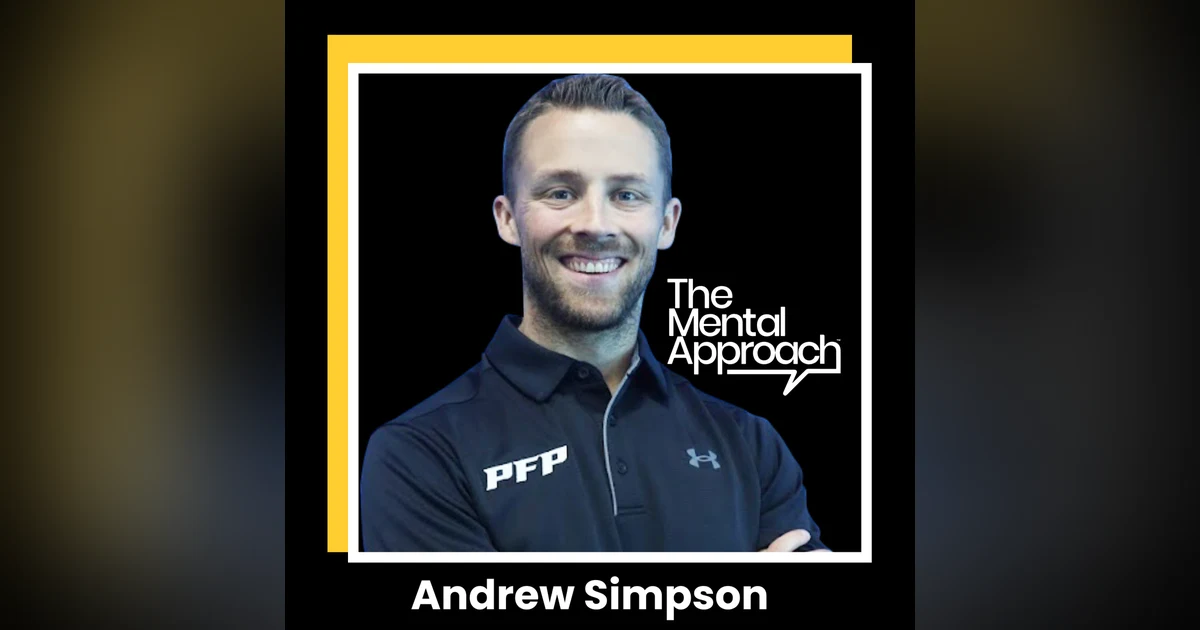
 In this conversation, Todd Arkell interviews Andrew Simpson, founder of Players Fitness and Performance, discussing the importance of mental performance in youth sports. Andrew shares his journey from a fitness enthusiast to a successful entrepreneur, emphasizing the need for a holistic approach that includes mindset coaching, nutrition, and physical training. Andrew outlines his "peak performance state triangle" and the "say nothing challenge" for parents. The discussion covers various topics such as parental pressure, early specialization in sports, and practical mindset hacks for athletes. Andrew also highlights the significance of coaches in shaping athletes' mental resilience and the unexpected positive outcomes of integrating mental performance training into athletic programs.
See Privacy Policy at https://art19.com/privacy and California Privacy Notice at https://art19.com/privacy#do-not-sell-my-info.
Matt Cundill 00:01
This is the mental approach where we discuss mindfulness, mental performance and the tools available for coping in a high performance world. Here's Todd Arkell,
Todd Arkell 00:12
Today, my guest is Andrew Simpson. Andrew is the founder and chief vision officer. Love that title of the player's fitness and performance. It is known as PFP. It's in Frederick, Maryland. He started in about 2013 taking his education and Exercise Science from Salisbury University, and started as a youth fitness specialist and built that into a training facility that really became a holistic program that combines both physical training, nutrition guidance and, ultimately, mindset coaching for young athletes, you know, aged you know, eight to 18. I think you're going to enjoy this conversation, because it's rather a unique situation that that his organization has put together, or they they notice the gap much like I did in this space, and really started to branch out into helping young athletes harness both the mental side of the game as well, as well as their physical he's an author of multiple books, things like the youth truth and athlete. I'm talking to you seven mindset hacks that'll dominate sports in life, very interesting individual. Hope you enjoy the show today. Andrew, welcome to the show. Thanks for having me. Todd, why don't we jump right into it and say, You know what kind of sparked your journey, from, you know, being a fitness enthusiast in college to founding players fitness and performance. And how did that mindset become a core pillar around training for athletes?
Andrew Smith 01:47
Yeah, well, I'm definitely a grateful accidental entrepreneur. Was not planning to open up my own business. I was actually working for another guy who was doing sports performance training for athletes, and I thought I was going to work for him for my entire career and help him open up training facilities. And, you know, life took us a different path. And so I ended up leaving his gym and going out on my own. And then it just became clear, after a bunch of doors kept closing, that this was the path. And so I opened up, you know, my own small, 1800 square foot warehouse, signed a one year lease, and it was called, you know, called it PFP player spin this in performance. And in that first year, not because of my genius by any means, because I was not that skilled as a business person, man, we grew from about eight clients working with eight athletes up to 100 in one year. Wow. And it became very clear that the area that we were in, we were providing something unique and different. I think it was because we had the mindset piece early on, we knew we wanted to help athletes, not just with the physical but the mindset and character overall and leadership, but then also, our customer service was just phenomenal because we had a woman come in, and again, I didn't plan for this, but man, she just greeted people when they came in the doors and built relationships and just made it this really fun place. And so, yeah, that's, that's how we got started with PFP. And then over the last 11 years, it's just evolved, and we've got four facilities now across the state of Maryland, and plans to continue expanding. And so, yeah, we think we've got something pretty unique in the market of youth athlete development. And it's been a fun journey.
Todd Arkell 03:16
You know, obviously, by the growth, you can sort of tell you're doing something right. That's usually, that's usually a good sign. Yeah, very true. So can you share pivotal might be strong word, but, you know, share an early story, a pivotal story, from your early days and where, when focusing on mindset, kind of led to, you know, a breakthrough as far as where you guys were headed so
Andrew Smith 03:41
it was very early on. It was 2016, about, I'll call it about 15 months after we opened up the doors. Like I mentioned when we opened, we did have a focus on more than just sports performance training, but we didn't necessarily have it directly focused on mindset and mental performance. It was more like we'll talk to the kids about leadership, we'll talk to them about character. We didn't really understand the mental game side of things. And so I received a phone call, and I remember this like it was yesterday. I received a phone call June of 2016 from a mom who was just frantic on the other line. I mean, she was yelling at me pretty much. She's like Andrew, it happened again last night. Megan. She made one mistake, she spiraled. She got pulled out of the game. Her head was down, her body language was awful, and she didn't get put back in. And I can't stand watching her inability to control her emotions and frustrations in the game. You got to help her. Can you help her? And I'm just listening, and I'm like, I honestly I felt like such a failure as a coach, because we claimed to help athletes reach their full potential. But in reality, this girl had a 27 inch vertical jump. She was strong as an ox, 4.0 student. She had all those those skills, yet because she didn't know how to control her mindset in sports, she was essentially just underperforming. She wasn't even close to her full potential. And so. Became very apparent that we needed to learn this thing called the mental game if we were going to claim to help athletes reach their full potential. And so that's when I went on a, you know, multi year journey, learning everything I possibly could about psychology and mindset and mental performance. And then our coaches obviously started to learn as well. And so that, that one story, though, is kind of what catapulted us towards this whole mental performance journey,
Todd Arkell 05:21
yeah, 100% I mean, there's a reason this podcast exists, and it's because of a very similar experience on my side of the things watching athletes, kind of, the coach loves me, the coach hates me. The coach, you know, this whole up and down roller coaster, and kids with all these incredible skills I could see around me that were really struggling in some ways, just because they couldn't be consistent, right, and they couldn't stay consistent in their thoughts. And I thought, Geez, there's got to be, got to be some resources. Why don't people spend more time on this? They spend all kinds of time shooting basketballs or pucks or skating, you know, whatever it is, spend all this time on skill work, and then when it comes down to it, there's, you know, not going to say, Everybody folds, but they maybe don't perform to the level that they think they should based on their their skill, right? So that that's, that's why we're here. So we have two simpatico minds on, on the line today, for sure. So as an author, you wrote, it was two books, right? Youth, truth and athlete. I'm talking to you, yeah?
Andrew Smith 06:30
So actually, at this point, so this year, in October, I'll actually release, uh, it'll be the fifth book. Oh, wow. Okay, plus two, yeah, plus two workbooks, parent edition books. So yeah, it's technically seven in total, but five unique books, so just one a year right now.
Todd Arkell 06:46
There you go. Not bad. So how do your books address the mental pressures youth athletes face today?
Andrew Smith 06:53
I mean, they're honestly most of what's in my books are real life stories different names. I use different names, but they're real life stories of kids that we meet with every single week, every single day, that you know, and there's, there's versions for parents as well that we have of books, but it's real life stories of the kid who you know, they like I said, they they can't control their their emotions when they get pulled out of a game, or when they when they're they're not performing well, or they don't know how to get their self in a proper state of mind before a game, so they're just nervous and they're overthinking or they had they're hesitant and they they aren't being aggressive enough because they're fearful of failure or embarrassment. And so all the books really address the most common mental blocks and pressures that athletes face. And then I've also kind of, I don't know if I wouldn't consider this mental performance, although it's all tied in. But like, you know, I like to really address time management in my books and and how an athlete's time and what they're spending their time on, and they overwhelm that they're feeling it could be tied back to their schedule or their values, right? Like, are you, are you living in alignment with your values, or are you comparing yourself and trying to be like other kids? It's not, quote, unquote, mental performance, but it's like, it's just life performance, right? How do you be better at life?
Todd Arkell 08:08
Yeah, no. I mean, I think at least at my age, when I was a kid, you just went and played, and there was no Instagram to go watch somebody else do something better than you, or getting more accolades than you, or whatever you could, you could be free, right? Yeah, and play free. And I think, you know, it's, it's such a double edged sword. You have this opportunity to also show people how great you are at your particular sport, but you also have a comparison tool in your hand at the same time, right? That can, that can push you down. So it's a little interesting when I pivot just a little bit, what you know? I know you guys, you know, physical nutrition, mental performance. What kind of role do you think nutrition plays in supporting mental resilience?
Andrew Smith 08:51
In supporting mental resilience? I think, I think it's twofold. The first thing that comes to my mind is obviously the physiological changes that happen in your brain if you're not eating the right stuff, and if you're eating garbage and eating processed foods and not drinking enough water, like there is a physiological response undoubtedly, where your your mental performance is going to suffer, right, in some way, shape or form. Like, if you're not drinking enough water, your brain needs water. So your brain is literally not going to function properly as you take a sip of water, if you're not drinking enough water, right? That's one piece the other piece that I think is under valued or under or not talked about enough, is as an athlete, when you know you're doing the right things, let's say, with your nutrition or your sleep. When you know it, it creates this confidence within you that you show up on the field and you know that you've been putting in the work in the areas that matter most. And so it's almost like this psychological confidence that comes from knowing that you're doing the right stuff and you're taking care of business, like a Kobe, like a LeBron, like, you know, Tom Brady, like, like these athletes that clearly prioritize nutrition. You know, I think it just builds that belief that you are. Are an elite athlete. I put quotes around elite, right? You are an elite athlete because you're doing the right stuff. So it creates this kind of personal or this persona that gives you a better belief in yourself. I would say, Yeah,
Todd Arkell 10:11
I definitely am not a fan of the word elite, because it gets over overused a lot. What is elite really? You know? I mean, I think, and we'll talk about that a little bit later too, about kind of kids sports and the pressures that are kind of coming in around that. But what are some key mindset hacks that you think directly can enhance, you know, cognitive function like focus and decision making, under under under pressure.
Andrew Smith 10:38
Whenever I start with an athlete on mental performance and how to control your mindset. I always start with the triangle, which we call it the peak performance state triangle. And there are three elements. If you think of the triangle, the top point and then the bottom two points, there are three things that directly impact your mental and emotional state. So the mental emotional state is in the middle, and then the three points on the outside, they directly impact the mental and emotional state. The first one is your self talk, right? The language patterns that you use, and self talk also includes labels, right? Because we give things labels to simplify them in our brains, but oftentimes labels like I have, I have pre game anxiety. Well, if that's a belief, and that's the way that you label your experience before games, that feels a lot different than I just get a little bit nervous before games, right? The two the words you use really matter. Your words create worlds. And so whether it's self talk to push past pain and discomfort, self talk after you get pulled out of the game self talk before a game to get yourself in the right state of mind. There's so many elements that self talk has to do with impacting your mental and emotional state, which is in the middle of that triangle. The second element of the triangle is bbe, breathing, body language and energy. Bbe, your your It's basically your physiology, right? How you use your physiology to impact your mental and emotional state. If I take deep, slow breaths, what is that going to do to my mental and emotional state? It's going to calm me down. It's going to help me focus more. If I take fast, rapid breaths, it's going to help me get more energized and pumped up. And so my breathing directly impacts my mental and emotional state, my body language, right? If I were to slump forward in this chair right now and put my head down and get this sad look on my face, and if I try to feel really excited and confident right now, it's very difficult, because my body language drastically impacts my mental and emotional state. And then lastly is your energy. And so sometimes, as an athlete, oftentimes we have to get our energy levels up by jumping up and down high fiving a teammate when we don't feel like it. Steph Curry likes to sprint from center court to the baseline before a game, and part of that is to get his energy up because your energy impacts your mental and emotional state. And so those are the two bottom parts of the triangle, breathing, body language, energy, self talk, and then the top part of the triangle is focus. Focus frame is how we call it, and where your focus goes, your energy is going to flow. And so what are you focused on? Whatever you're focused on, you're going to feel whatever you're focused on is drastically going to impact your mental and emotional state. So if I focus on what I have versus what I don't have, the two lead to very different feelings. If I focus on what my skills and strengths are versus what my weaknesses are and where I'm falling short, that focus is going to determine my mental and emotional state. And we teach athletes the quick hack is, if you want to change your focus, change the questions that you ask. And so you know, a great question if you're feeling anxious and stressed before a game, a great question is, when, when I'm at my best and feeling confident, what am I thinking? Right? If I ask you that question, you're going to start focusing on an answer, and if you can find that answer, it's going to change the way you feel. So that's a high level overview of the triangle. Is focus, frame, self talk and breathing, body language and energy. That's like the all encompassing way to impact mental and emotional state. That's like the ultimate mindset hack. And then within that, there's a million different mindset hacks, so
Todd Arkell 14:19
many variables, yeah, no. 100% Well, I think about, you know, asking that question of yourself, you know, how do I feel? You know, feel about this, or how do I get my confidence? Or, you know, I find, you know, journaling is a good way to kind of talk through those things with yourself. Like, oh, what was I thinking there? Or whatever. I mean, just recently, my son was playing in a big game, big baseball game, and they were down, and one out, runner on first, goes to steal, gets caught. It's now two out. He's down to the last out. And, you know, I said to him, we were watching a video of it, and I said. So what were you thinking right there? And he goes, I was thinking, oh, man, is the game over? Like, he just kind of like, and then somehow, you know, you could see him kind of walk around in a little bit of a circle and change, just sort of change in a big deep breath next pitch laces a ball in the right field for a single right and I was like, you know, not bad considering, you know, the situation, right to kind of put through that, right? But he couldn't put it into words after that, he goes just, I was thinking like, oh man. But then you could just tell how he sort of tried to change that, you know, mindset in that, in that instance, which I found really interesting So, and it's not so much more, it's not so much about his success, but just about, you know, kind of how we can probably just say it's over, I'm done, and you just kind of, and you don't perform, or you roll over in that situation, right? So it's, it's, it's, there are a lot a lot of things that come from that. So I think you know, if you can journal that stuff out, you can certainly, certainly help yourself in in situations like that. So I do think that that's a good way. I like the framework. It's, like you said, it's, it's good and basic. It gives you a good reference as to where to apply, you know, information. But there are so many, so many layers to there. How do you balance, you know, the physical and the mental, like you guys are doing this, this training and, you know, is there certain amount of time you kind of spend on it, or do you weave it together as far as, as far as that goes?
Andrew Smith 16:34
Yes, so we do allocate a dedicated, you know, this is tactical, but, you know, dedicated five to seven minutes at the beginning of every workout session. So we've got small groups, six athletes that come in and work out at a time, and the first five to seven minutes, the athletes are seated, and we're either going through sometimes we go through one of my books. Sometimes it's a different motivational message, something related to mindset. We ask the athletes questions. They have to think through things. Sometimes they journal so tactically, definitely spending five to seven minutes before a practice, or in our in our setting, a performance training facility, five to seven minutes before a session. That's important. But then really, it's all about the coaches skill, skill set in in mindset, their understanding of mindset, because, like the gym, for example, is such an incredible environment to see what an athlete's mindset is like, right? That last they go to do chin ups, and, you know, they had one or two in their tank, and they stopped early, right? And so they're either they were either scared of failing, scared of being embarrassed, they didn't want to go through pain. So it's like those are all mental related challenges that was not physical, the athlete could have pushed past and done a couple more. And so our coach has been able to recognize, oh, there's an opportunity. There a mental opportunity to improve their their mental performance, and they go up and ask the question, hey, what were you afraid of there? Hey, if you would have given it two more reps, what could have happened? Hey, in light of your future goals, what do you think would have been best there? Right? So there's a lot of different ways that you could have that you could attack mental performance training within a physical practice, but I definitely think coaches, and there's more of them out there that are gaining a better understanding because of podcasts like yours, but yeah, I think that coaches could definitely be doing a lot more mental performance training within the context of a physical practice or or training session.
Todd Arkell 18:21
We talked a little bit about pressure earlier. But how do you address parental pressure on the youth athletes? Because I know that it's there, whether it's real or implied. You know what I mean, whether, whether parents think they're providing pressure or they're not. How do you how do you address that with your athletes?
Andrew Smith 18:41
So does it come up? Oh, yeah, for sure. We address it indirectly at first, but then directly. So and what I've also found, I'll tell you a story here in a minute, but I found that most parents don't even realize that they're putting the pressure on the athletes. Otherwise they wouldn't
Todd Arkell 18:54
do right? Yeah, that's what I meant by indirectly. They don't what am I doing? What am I saying?
Andrew Smith 18:59
No, parent really wants to sabotage their kids success, at least that I found. So anyway, again, this is tactical, but I think it might be helpful for some of your listeners. So in PFP, again, it's physical performance training. The athlete's very first session, they fill out a questionnaire, and on that questionnaire, there's a statement that says, my parents put a lot of pressure on me to play well, and it impacts my performance. And then I fear disappointing my parents and coaches, like something like that, and we just asked them to bold the statement, if it is true for them. And I would say eight out of every 10 athletes, they bold that statement, and they don't really realize, like, oh, like, am I? Am I gonna have to tell my parents that I did this? Like they just are. They're sitting in a room by themselves. We give them a couple minutes and they do this, and then afterwards, it creates this really amazing opportunity to to invite the parent in and say, Hey, this is, this is what your athlete said. And we know that you're not purposely trying to put pressure on them, right, but this is how they're perceiving. Maybe your the question. Questions that you're asking after a game, or the questions that you're asking them before a game, or the things that you're constantly reinforcing and pointing out to them. The reason why athletes feel pressure from parents is because, again, knowingly or unknowingly, intentionally or unintentionally, the parents are over emphasizing and over prioritizing the outcomes, right, which they don't even truly value the most? Right? Most parents, when I ask them, What do you value most? They're like, I want my kid to have fun and I want them to be healthy. And then I ask the parent, so why? Why don't you ask them the questions, like, before games or after games? Did you have fun and are you feeling healthy, right? If that's what you value, then the questions we ask always determine what we value the most. We had a parent, two parents, mom and a dad bring their two daughters into PFP. This is a few years ago, and these two daughters, quote, unquote, track stars. They were actually pretty good, but man, mentally they were like they were. They needed a lot of help, and we found out why pretty quickly. When mom and dad brought them in during their tour, mom and dad at least like 10 times during that tour, right in front of their kids, they were just criticizing their two girls. You know, Sarah does this, Molly does this, and she can't get out of her head, and she's never gonna reach her full potential. She's underperforming them. It was like, That was that was the intensity, and I'm just like, Oh my gosh. Like, no wonder why these girls are struggling. So I said, You know what? I'm gonna come to their next track meet and see where I can maybe add some value and help. So I went to their track meet and it was like, it was the same thing. It was exactly what I expected mom and dad before the girls races were all over them, right? Just like again, just what they were saying to them. I'm like, Oh my gosh. Like, leave these girls alone. Let them, let them just prepare themselves, right? And so during the race, Mom was screaming at the top of her lungs for her daughter to run faster, which her daughter, it wasn't too far away. She could hear it. So it was like a nightmare. Afterwards, I decided I'm going to write a blog about the four things that parents should stop doing at sporting events. It turned into the five things called the say nothing challenge, and we it's a parent challenge now that we do. But anyway, so I wrote this blog and I sent it out, and the next day, or no, I'm sorry, about three days later, mom comes into the gym to bring her daughters to work out, and she walks in the front door, and she looks at me, and she says, Andrew, I read your article. And I was like, I was like, I write these all the time. You know, I write these every week. I just, I always write. And she started crying. Mom started crying, and she said, Andrew, I had no idea what I was doing to my daughters and that as well. And she said, Andrew, the day after we read your article, they had the they had their next track meet, and it was a qualifier for the New Balance Invitational. She said, My husband and I, Dave, we, we applied those four things we didn't do any of them. Both girls ran their best races they've ever ran, and they both qualified for New Balance Invitational they had never done. They had never done it before. And I'm like, whew, all right. Well, I'm off the hook. It worked. And so it just like, man, most parents, if you're a coach, most parents, they just need to lovingly be called out and led to a better pathway, because they don't want to sabotage their kid's success. They think they're helping, but sometimes they just can't help it. Yeah, I'd
Todd Arkell 23:31
say I was probably very akin to that myself for a long time, and then sort of came to a realization through various ways, that maybe that's not the right, not, not, not the right approach. And like, I don't even, I don't even talk to my son after a game. It's like, about, I just go, Hey, good game, and let him do whatever he wants to say or do or whatever. Right, like, it's, you know, and then just kind of support that. But, you know, it's, it's kind of funny. I call it the the professionalism of youth sports, right? That just, there's the parental pressure, there's the expectation of coach, you know, everything that's on these kids now. And it's like, instead of just, hey, I ran into track meet, but no, we've created all these events like you just said that New Balance Invitational that sounded, Whoo, that's very that's very important. There's the perfect game World Series. There's the, you know, you go through all these things, and it's like, I mean, the goal is from those businesses is obviously to attract people to those events and everything else. And it's, it's part of a business. And I would argue that in a lot of cases, these things are much higher level competition than what kids would have normally had in their local town in the past. And, you know, but it is crazy when you think about the amount of money that's spent. And, you know, I have a kid who plays a high level sport, and, you know, we just came. Back from another province where, you know, we had to spend a bunch of money going to watch him play. Well, we didn't have to, but we chose to. But the reality is, those are the things that go on. People are traveling, you know, 1000s of miles and hotels and everything else. And, you know, how can there not be some sense of pressure? So, you know, with the increase in that, you know, what's your take on the potential downsides of early specialization? Because I think that that's also something interesting. We have this whole, you know, professionalism piece. But then there's all this pressure to, oh, you're really good with this. Just, just stick with this sport. Like, where do you where do you see that? Do you recommend they play multiple sports? Do you try to discourage specialization early? Or where do you stand on that?
Andrew Smith 25:50
Yeah, so I wrote, I write about that that in detail in one of my books. I think it's the unstoppable athlete book is where I write about that, and I share a lot of examples of the pro athletes out there and and the route that they take. And, yeah, I definitely discourage against against the specialization for many reasons, and but I think it ties back into just what we were talking about with the pressure, like the the recipe for for high performance and for reaching your quote, unquote, full potential. And whatever you do, the recipe is keep your passion high for as long as possible, right? Because when you are passionate about something, when you're energized and excited to do it, you're going to do it better. Keep your focus while you're doing the thing. Your focus and intensity has to be high, and that's only possible if you're not scared of failing, scared of losing, scared of what people are going to think and then, number three, you have to stay healthy long enough to have a long career, because you're never going to reach your full potential unless you get to, you know, many, many years of working towards your craft without getting injured and beat down. So, you know, I think that that's the when you specialize in a sport early on and put your whole focus there. It's like you're only going to really hit one of those three right? The passion and the excitement and energy you're not going to have that. The second piece, the laser focus and intensity, you will have that one. But that's like the CEO of the major corporation who doesn't have a life outside of his business, everything else in life is going to fail, which eventually your business will fail too, right? Like so you get that one. But then the third piece, which is longevity, your health not breaking down or burning out like you're not going to have that one either. So I just think that early sports specialization, if you think about it as like a tripod, you're only going to have one leg standing by the end, and a one legged tripod can't stand for long.
Todd Arkell 27:36
Yeah, no. And, you know, I think about, you know, athletes. I just happen to be scrolling on social media, and saw this video with with Bo Jackson, and he's, he's in a Chicago White Sox uniform. I think it was probably like a spring training, and he's talking to one of his teammates kids, and it, I think at this point he's a coach, and he's just there for instruction, and he's talking to one of the one of the guy's kids, and he goes, Do you know what the Heisman Trophy is the kids know, he goes, that's for the best college football player in the nation. I won that, right? Like, the kids like, what really they're the kind of look at the guy and, and he goes, Yeah. And I also played for the Kansas City Royals and the Chicago like, and the kids like, just like, what really look at you like, you know? And he's, he's one of those guys. Like, I think both him and Deion Sanders, kind of, in my time frame as growing up, were like, to me, it was just amazing what they were able to do to play two professional sports. Just incredible, incredible athletes and that, you know, I know that's a small sample size because there's not a lot, but it's kind of like, you know, there's a lot of things that translate to your games.
Andrew Smith 28:42
Yeah, well, along that, those same lines, yesterday, I saw a video of Michael Jordan. He was asked, you know, hey, like, you sports are crazy nowadays, like to get to the to get to your full potential, like, it's so tough. And you know, what were you doing in eighth grade, Michael, he goes playing baseball, like not playing basketball, like I wasn't even focused on that. I was just playing baseball. So, you know, these are obviously anomalies, maybe in some ways, but there are, there are countless stories of athletes, high level, elite, quote, unquote, Hall of Famers, professional athletes, Olympians, who they played multiple sports growing up their entire lives, and they didn't stop at eighth grade or ninth grade. Once the competition got high. They just kept doing it right, like because they enjoyed it.
Todd Arkell 29:31
Yeah, absolutely. I coached you soccer years ago, and I was, I was assigned an assistant coach, volunteer and very, very nice man his he was the father of silken lawman who was a multiple gold medal rower for Canada and and he said to me, he goes her older sister was a better rower, but just she had something there that just kind of drove her right. So again, that. Intensity piece there's, there's some things that are maybe sometimes intangibles, or maybe, maybe you can grow that
Matt Cundill 30:09
now more the mental approach with Todd Arkell,
Todd Arkell 30:13
if you could kind of overhaul use sport guidelines that that to prioritize mental performance as much as physical wins. What changes? What would you advocate for?
Andrew Smith 30:25
That's so funny. Actually, I there's a chapter in one of my books about that exact thing. I already read the book, I swear, yeah, that's great. One thing, this is like a small thing, but it'll lead me towards other things. One thing would be like, Ban energy drinks from youth sports. Oh God, kids can't drink a Celsius before they go out and play small one, but a good one. I think that what you were just saying as about the early sports specialization like, I think a coach's influence, obviously, is the greatest on this right? A coach who looks at their players and maybe the coach is the lacrosse coach, but tells like a coach that builds influence with their players and then tells them, I want you to be playing basketball or football or whatever, and in club, I think the dilemma there is these coaches are paid for their players to play year round, right? Like they get paid more when their players stick with their one sport. And so it's just like, man, like the kids are getting the brunt into this because money's involved. And so I just think that there's got to be some guidelines around early sport specialization. I don't know who that would be. The powers that be that say kids cannot play one sport year round. It is required that you play two sports and not at the same time either, right? Like take a break from one and go play another. So that would probably be at the top of the list, man, if I had the power to change the rules, that would be one of the top ones for sure.
Todd Arkell 31:54
Yeah, I had a, you know, a multi sport, sport athlete, you know, with winter sports and summer sports and overlapping seasons, and, you know? And he also wanted to play multiple sports in the summer, and he played a higher level of baseball, and, say, like, house league soccer. And I told the soccer coach, we'll be here when there's no baseball, right? Like, you know, we can't, you know, we're just, we're just here. That's what it is. It's just more for he loves playing soccer too. Yeah. And we're, you know, it's just keep him kind of doing something different. But you know, when you get into September and baseball is getting near the end, and then it's like hockey starting up, and coaches are pushing more and more and more into the into the summertime for skating and everything else. I'd always just, nope, sorry. We're, we're a baseball family right now. We'll be a hockey family soon. I think, you know, I, my advice would be to parents, is to stand your ground. Yeah, on that. And I had, you know, I had, I coached a kid in baseball who was a high level hockey player. And you know what? We knew hockey came first. And if there was something that was very important, hockey related, they went to hockey, and otherwise they came to baseball. And they were at baseball most of the time, right? But, yeah, he was just drafted to the NHL for hockey. So, you know, Hey, what the heck, right? So, you know they were, they knew, you know, he knew what, or they knew whatever it was, but they didn't really, you know, he played all sports, right? He didn't just kind of stick to just playing hockey. Yeah, that was his focus, that was his passion. But he still, he played other things, and the kid had a high compete level, and it certainly, certainly showed across across other sports. So I like, I like that. I don't know how you work. I don't know how you organize that. I don't either. I don't like the I don't like the government getting in everybody's business all the time too. But it's almost be legislated because it's, it is, it's, it is a business, right? Like, I mean, like hockey clubs, if it's, you know, an elite hockey club, oh, I'm, you're paying me $10,000 a year for your kid to play hockey. And I demand that you're, you know, I, you know, I think just some people, I think as coaches, maybe, you know, and if there's coaches out there listening is like, just relax on. If the kid misses two or three hockey practices because he's got baseball finals or something, or basketball, whatever it is, like, just have a little bit of a relaxed point. You know? Yeah, that kid might be the best player on your team, and, oh, it might cost you a win, but it's 11 U hockey, that's right, you know? And I think that that's part of it too, is you get coaches that are paid in a lot of cases too, and then, geez, if my record stinks, the club's not gonna pay me. And that's part of my living because I was a hockey player, I was a basketball player, and now I'm coaching because I did this, and everybody thinks I know everything, yeah, because I played the sport, we know that's not true either. Sorry for those who are out there listening and believe that, but Wayne Gretzky couldn't coach hockey worth a lick. Sorry, Wayne. He couldn't explain why he was so freaking gifted, but it was what it was. Um. Hmm, some people, you know, I, I find the worst players are often the best coaches, because they had to try that much harder. They watch so much more they, you know, I think they took more in. I it just seems to be, seems to kind of some of that. Anyways, enough of my soliloquy. This is all about you. What? What do you think is when you started instituting mental performance into working out and nutrition and everything else, what was the most unexpected outcome you witnessed coming from that once you kind of mix that in,
Andrew Smith 35:35
I think it's all the like again, because we define mental performance like much broader, right? It's like, it's like helping a young man or woman be better in life. And so we taught things like, you know, how to, how to improve your communication skills amongst teammates and adults, right? Shaking people's hands firmly, looking them in the eyes, calling them by first name, asking good questions. You know, how do you build better relationships with your teammates? How do you show up and and contribute, versus wanting to impress all the time like so we took a very holistic approach to, you know, mental performance. And so it was just all the it made kids, like just more joyful and and less stressed in life, and feel like they have better balance while also being more successful. So those are some of the things that we never really obviously was a goal of ours, but we didn't know that it was going to have that big of an impact, holistically in kids' lives. And so I think when you go down the rabbit hole of I'm going to start to do mental performance with my players, you can't help but to bump into all the other opportunities to help a young man or woman again just be better in life along the way. And so it's just a I feel like it's a step towards getting away from this compartmentalization of I'm just going to be their skills coach or their speed and agility coach, and it's a step towards recognizing, again, as a coach, you've got incredible power and the words that you share with your athletes. I mean, the two most powerful words that come out of a 21st Century adolescence mouth are, but Mom coach said, the dad coach said, you know, like so coaches just have this incredible power and opportunity to influence, influence kids.
Todd Arkell 37:18
Yeah, I coached a kid when he was seven in baseball, and coached him for a number of years. He was not a very good baseball player, and a lot of the other coaches were like, ah, you know, you gotta, you gotta, you gotta cut this kid. I'm like, we're gonna write a kid off at 789, years old. I go, you know, he's left handed. He might be an excellent pitcher, and he just got dropped off by his parents this fall at a, at a at a JUCO to just begin his his college baseball experience post high school. So, but, you know, it's funny, because you know the dad I talked to the dad, he goes, Well, I was talking to him about this one school like they're, they were interested in him and, and he said, But Coach said, because he goes, so I need you to call him and fix that. And I go, Well, I yeah, I can tell him, you know, I'm not going to tell him I talked to your dad and your dad, you know, I basically just had a conversation. Said, Hey, are you happy with this? Is this where you want, you know, all those different things, right? Like, I wasn't going to pigeonhole him into something, and ultimately he made the decision to to go to that school. And I said there were, there were small reasons why. I said, maybe you don't go to that, that particular level of school, or whatever it was, right? Because it was more about financials, what I thought you could get more at a different level, right, as opposed to at what you chose. But so I said, don't, don't be misconstrued. But I thought that was funny that, you know, it just reminded me when he said, Coach said, yeah, so, you know, it's, it's nice to have the impact on people that way. And you know, that's a to me, that's such a great lesson I tell so many people. I mean, honestly, if people wanted to, you know, like they're writing off kids, oh, he's not that great. Well, what is it? 3% go on to play college baseball, something silly like that. Maybe it's seven. I can't remember the stat, but, you know, there's a kid who never would have played the sport again had we just said, Oh, you're not good enough. They would have gone on and done something else, and then, and then what happens? Right? So I think, you know, we got to cheer for the late bloomers. That's right, because it, you know, not every kid has hand eye coordination at five. It's true. It is what it is. So if, if listeners can remember, say just one insight from your work that they can use to elevate their child's mental performance. What should it be? I think
Andrew Smith 39:48
it's different if it's a coach versus a parent. I think for the parents I did mention it earlier, and I think that we could reiterate it. It's the whole question. Questions and values. Comment that I made earlier about as parents, parents have, I'm assuming most parents are like me, like you've got a very strong idea of the values that you want to instill in your son or daughter long term. And it can just be so like, I come across parents all the time that they basically say some version of when they look up their kids calendar or their kids stress level in sports and all this stuff, they just are like, how did we get here, right? And so it's just like, how did we get to this place? Well, little by little, and it happens all of us. We just made small decisions without really thinking about, what do we actually value most, and what's most important to our family and to our kids, and what do we want for our kids. And so I think asking that question and always ping ponging it back against, what are our core values, if you will, as a family, such an important thing, because where we spend our time, our energy, our money, and what we talk about most, that actually reveals our values most. And so again, like I said earlier, if you really value fun, that your kid has fun, or that they learn a lot, then make sure you're asking the question, did you have fun today? Not, how did you do today? If it's learning, ask the question, what did you learn today? Not, how did you perform today? So it's just little things like that for parents. And then I just the say nothing challenge. I know I didn't share didn't share all the quote, unquote rules for that, but it's such a fun thing that parents love. Well, they don't love it when they're doing it, but then they see the benefit of it, and I'll quickly share those if you don't mind. Absolutely, the five parts of the say nothing challenge are number one, don't send your kids any pregame motivational quotes or, like, pump up things before a game. Let the coach do that. But from Mom and Dad, it's just perceived as pressure. Number two, no bribes, right? Like, I'll give you $1 for every goal you score. Don't do any bribes. Number three, this is a simple one, but it's really difficult. I've witnessed no yelling at refs or coaches during the game or at the athletes. Just cheer right like that's a hard one for a lot of people. Number four, you mentioned it earlier, but it's the no post game critiques or criticisms. So the car ride home, give it 15 minutes, and if you really like, you're like, ah, but I just want to help them. Then ask them the question, Hey, would you like to talk about the game at all, instead of just going right in and giving them all the, you know, all the things they could have done better, all your notes, right? So that's the fourth one, and then the fifth one is, I actually can't remember the fifth one off the top of my head, but there's a teaser. It's in the books.
Todd Arkell 42:41
You wrote it so long ago. You can't be, it can't be a computer. That's right. That's right. Well, and, you know, going back to something you said earlier, and talking about, when you're talking about mental performance, you know, I, I feel like, from a, from a parental perspective, I think it's, it's so, not even so much. I don't even see it so much as performance. I I feel like it's mental health, because you like, talked about building the athlete, you know, leadership, all these other things, and just giving them the opportunity to kind of have good mental health and not be stressed out about this or stressed out about that. And it's not to say they won't be. I mean, I know, went out for dinner with my son just recently, and he had a big game the next day, and he was like, Oh, I'm not that hungry. And I said, really? And he goes, I'm a little little butterfly in the stomach. And I said, Well, I said, Well, you know, do your best to eat it. We'll take it back with you to the hotel and maybe eat it later. And I said, Maybe you should journal and write out all those things, you know, and that way, you kind of get it out of your system so it isn't rolling around in your head, as we all know, when we're lying in bed at night and we're struggling with a problem or or something, and then all we do is replay that movie in our mind, and you get a horrible sleep, And it just, it kind of about, you know, compounds itself right on that so, you know, it is, it is those things that they put enough pressure on themselves. They're, you know. And I think nervousness is excitement, and, you know, you just kind of want to get it, you want to get into it. You want to get into the game and get it going, right? But I think just prioritizing that, that mental health piece, I think, is really, is it's really, I mean, we call it mental performance, but I think it is mental health really, yeah, when I think about
Andrew Smith 44:29
it, yeah. So that was for the parents, the one I would leave for the coaches, as far as advice, every athlete I've ever come across wants to do well, right? So we don't have to, I don't, I don't think we have to give them too many reminders or encourage them to do their best, right? Because that's like they already want to do their best. I think our role, that we have an opportunity in is to reduce pressure and fear of failure, and one way to do that is man Giannis, the pro basketball player. Yes, he gave this speech one time after a game, after. Actually, after 20, I forget what year was, but they had just lost to the heat in the playoffs, and they were supposed to win. They were absolutely supposed to demolish the heat, and the Heat won. And the news reporter said, so Giannis, do you consider this season a failure? And did you see this? This is incredible seeing this. Oh my gosh. Giannis, like, again, he's so calm and collected. But it's like, you could just tell, like he wanted to rip this guy's head off. He's like failure. He said Michael Jordan didn't win a championship. His first nine years in the league were the first nine years of failure. I mean, he said, No, no, it's steps to success. And so when an athlete starts to view every single game, every single tournament, every single pitch, every single shot, as a step to success, whether they miss it or make it win or lose. If they're just like, this is part of my development. And if coaches start to communicate that type of language instead of guys, we really got to win this game. This game is like, if we don't win, then this like, if that's the vibe, then there's fear, but if the vibe is like, guys, like, truly go out there and do your best, and this is just steps to success. Like, it's all just part of your development. It's not a big deal whether you succeed in a moment or fail, because we're looking at macro, right, your full career, your full life, right? This is about getting better in life, and man, that whole steps to success. Video, I would recommend watching it. I show it to my athletes all the time because it's just a great like this is a professional athlete who doesn't view a season where they were supposed to win and they lost. He does, genuinely does not view it as a failure. He's like, nah, this is a step towards my success next year. We're good. Let's move on.
Todd Arkell 46:43
Yeah, no, I mean, and as much as I'm sure he was incredibly disappointed in absolutely as well, because it's like you're not playing to lose, yeah, exactly kind of not the goal of sports. You know, you're playing to win, and it makes it it can make it that much harder. So let's talk about, get your mind right. G, y, M, r, what inspired the collaboration with Todd Durkin on your mindset coaching certification. How does that kind of how did that come about? Well, Todd
Andrew Smith 47:14
starting back in 2014 when I attended a retreat that Todd did, he started coaching me back in 2014 Todd works with he was Drew breeses performance coach and mental performance coach. And Drew Brees, Drew Brees, best friend coach, Mike Chandler, Darren Sproles, I think Steven Strasburg, a whole bunch of MLB, NBA, NFL guys. He's, he's a strength coach and performance coach to so many pro guys. And so he started to see what I was doing in this space, with the books that I was writing and the mindset coaching that I was doing, and even how we intertwined it into our performance training gym at PFP. And he wanted to be in that space. He wanted to make an impact. Todd cares so deeply for the youth, and like you mentioned, there's that bridge between mental performance and mental health. If you help them with their mental performance, it's probably going to help probably going to help them in some ways with their mental health, although we do not claim to be, you know, mental health professionals by any means or or anything like that. But there is a correlation between when you help them with their mindset in games and then their overall how they feel emotionally and so, you know, we, we started working on this earlier this year, really seriously earlier this year, with the whole goal of certifying coaches honestly, moms and dads. There's a bunch of moms and dads that have now gone through our certification and gotten certified as mindset performance coaches, but then also sports coaches and trainers, just like myself in this space, who want to learn and understand the mind of the athlete the way it works? Why they fear failure, why the pressure gets them and then tools to reframe it and to help these athletes simply get out of their head and start mastering their mindset? So, yeah, it's a it's a really cool thing. We're seeing a lot of success stories come out of it, and just the ripple effects of one coach impacts, you know, hundreds of athletes over the course of their lifetime. And so if we can instill these mindset principles to be able to impact the mental game for these athletes, it's, it's, you know, 1000s and 1000s of kids that we could touch,
Todd Arkell 49:10
yeah, no, I think, I think it's awesome. So I think you have what, seven hacks. Is that, in part of it, is that that correct? I mean, there's probably more, but I think as core principles, yeah.
Andrew Smith 49:21
So there's eight modules in the training, but seven, seven core modules. And then, yeah, yeah, we go through, yeah, all the different major areas that athletes struggle with, as far as mental performance goes, and then how to deploy certain techniques and tools to be able to help the athletes overcome those challenges.
Todd Arkell 49:38
What are one or two of those hacks that kind of can directly boost cognitive functions. Let's tease this out. Get people registered for this thing,
Andrew Smith 49:47
yeah, so within the certification. So I already mentioned the triangle, right? And that is such a foundational part of the certification. But like you said, we go deep into each of the different elements of the triangle and the certification. Question, all the different ways to impact self talk, all the different ways to impact breathing, body language and energy, and then all the different ways to impact focus frame. But I'll tell you one of the most powerful things, if you're a parent or coach listening to this and you have athletes that struggle with perfectionism, right? Good is never good enough. I'm never satisfied with my performance. I'm always focused on getting that shiny object ahead, and it causes me to never really be present in the moment or reflective on all the ways I've made progress and have grown. If you've got athletes like that, which I work with a ton of athletes like that, we teach something in the certification that is called the gap in the gain. And it's really simple. It's this it's this practice. It's this system for reflecting on how far you've come, right and the progress you've made. Whereas most athletes, they are against perfectionists, they're just laser focused on the shiny object ahead, right, the big goal, the college scholarship, the whatever that thing is way out in front. And when an athlete is so focused on that and how far they currently fall short of that, we ask we've asked so many athletes this that we know the response, what do you feel when you're only focused on what's ahead? You feel anxious, stressed, overwhelmed, you don't have confidence, but you feel motivated, and that's the thing that keeps you focused on that thing that's ahead. But on the flip side, when I ask an athlete, hey, over the last three months, tell me all the ways that you've improved, made progress. How have you grown? How are you better or different today than you were three months ago or a year ago? It takes them, honestly, it's scary how long it takes them to come up with answers, but then once they finally do, start searching for those things. You see them sitting up taller in their seats right their face turns from sad to a little bit happier, and they start to actually feel more confident in their ability to reach those bigger goals in the future, because they've reflected back and recognized, hey, I'm not where I want to be yet, man, I've come a long way, and I believed the lie for so long. Todd, that you should never be satisfied, right? Always keep pushing forward. And it's like, Man, I just thought about it one day. I'm like, if I get to the end of my career, and I was never satisfied, like that sounds miserable. So we need, we need athletes to experience the satisfaction of progress and knowing how far they've come, and even being able to look back and recognize the moves that they made, the decisions that they made that helped them have big, big leaps, which is part of the process. And then when we ask athletes, all right, what do you feel now that you've reflected back on how far you've come in all this progress, they're like, Man, I feel strong, I feel powerful, I feel confident, I feel focused, and I still feel motivated, like I can reach my bigger goals. So that's one of the things, man, that I'm excited about in the certification, because we teach coaches and parents how you can rhythmically put that into your athletes, days, weeks, months and seasons, because it's something that every coach should be doing with their team at the end of a season to to find out how they can keep getting better.
Todd Arkell 53:06
Sounds to me, like even just non athletes listening, you know, that that could be something that could help you, just in everyday life, you know, never be satisfied at work, or, you know, take some, you know, those types of things, right? Like that's that's how it could roll into your into your personal life as well. Definitely, definitely, what's one book you'd recommend everyone to read? It can be one of yours. But are there other ones that you'd recommend
Speaker 1 53:34
everybody or every athlete?
Todd Arkell 53:36
Well, anybody you know, there's a great now you're calling me on my questions. Anybody, anybody?
Andrew Smith 53:44
Oh, man, a book that I would like to see everybody read. You know, this is a really good one that I come back to often. It's called win the day by Mark Batterson, the way that Mark Patterson writes is just so motivating. For one like, you read his stuff and you like one, I'll just like run through a wall, but at the same time, it's so practical and it's so actionable, and he uses stories and analogies and so win the day. Are these seven principles for really achieving your goals, but doing so in a way that you remain healthy and happy and high performing along the way. Mark batterson's a pastor, and so he writes from like, a faith based approach, but his stuff is just so good for anybody, no matter where you're at. And as far as faith goes, he's got some good stuff. So that's the first one that comes to my mind, is win the day, because if you can win the day, you can win the year.
Todd Arkell 54:39
I hear you, yeah, what's one thing a listener can do right now when they're listening to this, what's a small change they can they can make to kind of help their mindset?
Andrew Smith 54:50
Number one, they can impact their bbe, their breathing, body language and energy by smiling, sitting up tall, walking out, high fiving somebody. You. Jumping up and down, doing some push ups, right? I always say, man, if you can get your physical body and energy right, it's like, state first, then your story improves, then your strategy follows, right? So by getting your state of mind right, it's like, go for a walk, go for a run, overcome that inertia, right? Of like, I just want to like, I've been sitting for so long, and an object at rest stays at rest, right? It's like, I just got to get up and move. I just think moving your body and and getting your energy going is such a great way to improve your mental state. So first thing that came to mind was, don't grab the coffee. Grab, you know, go outside and go for a walk.
Todd Arkell 55:34
Yeah, I know. I think recently I've been thinking about that, people say, Oh, how are you I'm so tired, and all that does is make you feel more tired. I'm like, Okay, I got to stop saying that if I'm tired, I got to try to figure out a different way to kind of shake out those cobwebs. You said you're an accidental entrepreneur. What advice would you pass along to teenage you
Andrew Smith 55:54
start reading books earlier and start getting around the people that you want to become more like. When I was 19 is when I finally recognized that the crowd I was hanging around was not the person I wanted to become. And I was, you know, pretty lonely for a period of time, but I made the decision that I'm just not going to keep filling my mind and fill in my time with people. And it wasn't a judgment on them, because I was them, right? It's like I just knew I needed to get around some, some different people. And so I started looking for those people. I started, I got, I went to a gym, right? It's amazing when you go to a gym, you find some people who are a little bit more motivated, right? And you go to your coach, and you ask your coach for help. So I think I would have asked for help more, because I thought I had it all figured out, and I would have asked for help more. I would have gotten around better people more and read books faster.
Todd Arkell 56:49
Books? What are books? Kids don't know what books are.
Andrew Smith 56:53
That's the thing you put headphones in and listen to, right?
Todd Arkell 56:55
Yeah, something like that. What's the best piece of advice you ever received.
Andrew Smith 57:01
Don't give up what you want most for what you want now. There you go. It continues to preach every day.
Todd Arkell 57:09
I love it. Andrew, thank you so much for the conversation. I've absolutely loved it. I think I have some books I have to read and maybe a certification to look into. Thanks for taking the time, and you have a great day.
Andrew Smith 57:23
Thanks for what you do. Todd, appreciate it,
Matt Cundill 57:24
brother, thanks for listening for more, including resources and more about the show. Go to the mental approach.com. A production of the sound off media company. You.

