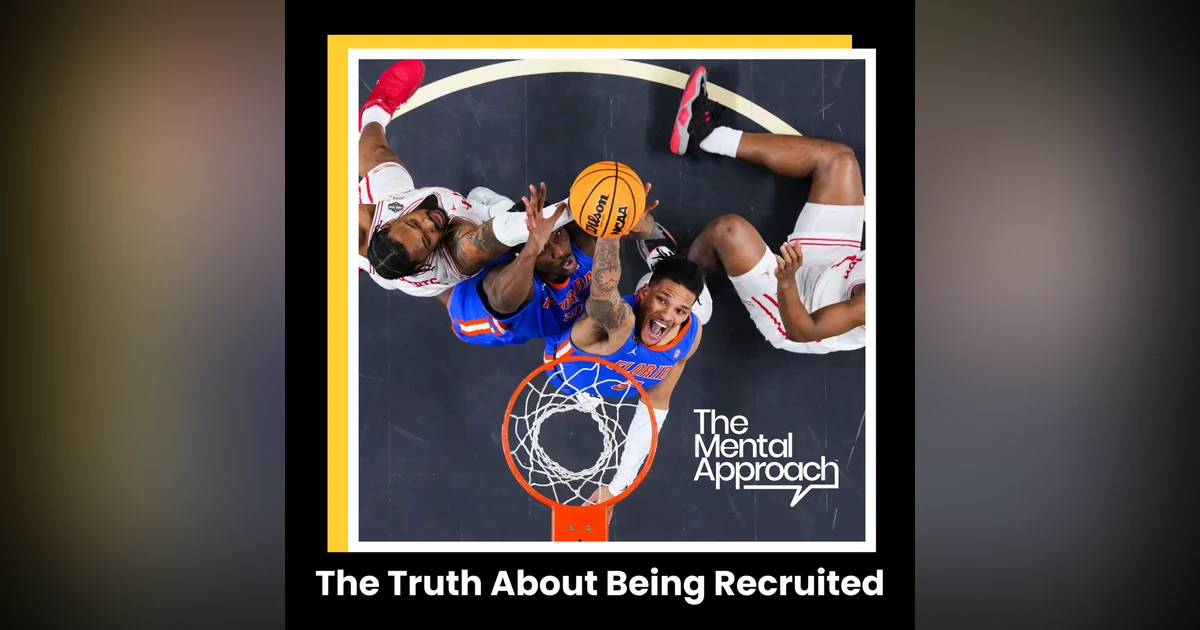
The Truth About Getting Recruited - The NCAA Landscape is Shifting


 RSS Feed
 Your kid isn't getting recruited. And it's probably not for the reason you think.
A 4.0 student can be ineligible for the NCAA. A five-star talent can lose his spot to a "glue guy." And that $3,000 exposure tournament you just paid for? One Power Four coach compares it to waiting 90 minutes for a three-minute Disney ride.
In this two-part compilation, Todd Arkell sits down with recruiting coordinators and compliance experts from Michigan, Oregon, Boston College, William & Mary, Sam Houston State, and more — to tell parents and athletes the truth nobody at the showcase is telling them.
Inside the episode:
- Why "competitiveness" beats raw skill — every time
- The Parent Trap: how driving the bus is costing your kid the scholarship
- The Core GPA most families don't know exists until it's too late
- How the Transfer Portal is quietly shrinking the high school class of 2027
- The four-question gut check before your kid signs anything
Featuring Jake Valentine (Michigan), Tracy Joyner (Oregon), Rob McCoy (William & Mary), Beth Krysiak (Boston College), David Wood (Sam Houston State), Bo Wills (Southern Indiana), Mike Eversole (Akron), Shaquana Miller (NextPlay Athletics), and Walter Beede (player advisor)
See Privacy Policy at https://art19.com/privacy and California Privacy Notice at https://art19.com/privacy#do-not-sell-my-info.
Matt Cundill 00:00
Todd, this is the mental approach, where we discuss mindfulness, mental performance, and the tools available for coping in a high-performance world. Here's Todd Arkell. Welcome
Speaker 1 00:12
to the show. Over the past few months, I've sat down with NCAA coaches, compliance experts, and recruiting advisors across baseball, softball, and soccer, both men's and women's programs, from Power Four schools to JUCO powerhouses, and asked them one question: What do families actually need to know about the recruiting process? The answers were honest, sometimes uncomfortable, but consistently eye-opening. This is the first of a two episode compilation, where we bring you the best moments from those conversations. If you're struggling with the process or searching for advice from those who talk to athletes and families every day, then I urge you to listen. Following this series of audio only episodes, you'll be able to find the full length video versions with each coach on our YouTube channel, youtube.com back backslash at the mental approach. Subscribe today to make sure you get the content the moment we release it. So let's get started, shall we? The wake up call: what families get wrong. Let's start where most families start with a set of assumptions about how recruiting works, and according to coaches and advisors I've talked to, most of those assumptions are wrong. Walter Beatty has spent 17 years helping family navigate the process. He told me the biggest problem is that parents are operating on an outdated timeline,
Walter Beede 01:39
maybe out over their skis with regard to dealing with coaches, the now timeframe of coaches. You may be, you know, it's like musical chairs, the music may stop, you may not have heard it. So, those that are late to the dance, as far as you know, I have a lot of high school juniors and seniors that are 611 58 that there's a lot of, there's a lot of catching up you have to do there, you know, there's a lot of shortstops that run a seven two to seven four, you know, that's not going to play at the collegiate level, you know, and then there's the guys that really throw strikes and they control the running game and they throw 82 to 84 okay, that has a place, but it's not going to be at the Division One level, and I think a lot of parents that have spent a lot of money, where they throw money at development, they end up figuring out I have no recourse, I can't go back and buy back time, I don't have a lot of options. Without options, you don't have opportunities. The parents that chase the exposure are often getting exposed. Their athletes get exposed, and so they're ill-prepared for the time crunch of 12 months. You can't fit much into 12 months, you can into 48 months, but not 12.
Speaker 1 02:59
Bo Willis, assistant coach of the men's baseball program at the University of Southern Indiana put it into terms that every parent needs to hear
Beau Wills 03:06
from our perspective. Something that kind of gets missed out on a lot is what the expectation is for the player to put themselves kind of in the best position. People think that we're recruiting kids when they're 12 years old, which is why you'll see families spending generational savings to put their kids through travel ball at 12 years old. I think that's kind of one of the biggest things that seems to get missed on is, you know, our expectation when we're recruiting somebody isn't that they were the greatest player ever at 12 years old and are playing for the best travel organization at 12 years old, I think that's that's industry wide. Somewhere along the way, the line got blurred. I don't know when that was, but somewhere along the way the line got blitzed. Yeah, I mean somewhere along the way, right? Where those lines got blurred, and you mean you got.. I mean, it's sometimes it's crazy to find out what families are spending, and I don't know the terminology they're hearing, maybe where they're kind of getting marketed, where this is where you got to be in order to be when you are 1617, and 18 in the position to be recruited at a high level. I'm guessing that's kind of what the the the verbiage is there on that,
Speaker 1 04:20
and then Walter actually had a great analogy for what parents are doing when they chase exposure too soon,
Walter Beede 04:26
so many parents are so preoccupied with a destination rather than enjoying the journey, and I often tell parents, you know, I always use the analogy of going to Disney, like we don't go to Disney to make ourselves smarter, healthier. We go there to hopefully create memories, you know, moments that we'll remember. But you know, you stand in line to go on Space Mountain for about an hour and a half. The ride lasts about two and a half, three minutes, and then you're done. And then obviously. And the kids are younger, they want to run back and wait in line and wait another 90 minutes for a three minute ride. Well, you know, oftentimes parents are chasing an illusion that they are being sold in order to, you know, begin to chase the all powerful scholarship, when in reality, 90% of all youth athletes, high school athletes, will not participate in college baseball. Those that do participate in college baseball, let's call it 10% for a nice round number, you know, maybe one or 2% are going to earn, you know, in today's world from the collective or the name, image, and likeness, and maybe they'll get a significant scholarship, whether that's stacked with academic and/or just athletic, but at the end of the day, college baseball is the final frontier of team sport, and so I think where parents get it wrong is when we start to talk about time management and routines. The number one thing that parents do not take the time to understand truly is how much time are you managing, because for the vast majority, students and parents, they get to their junior year and they find out, well, I need another 20 to 30 pounds. I don't have enough time. I don't have enough time to put that kind of weight on. I don't have that time to develop that skill set, you know. I'm only 8385 I need, you know, more time, you know. And I try to get parents to understand that when you're a student athlete of 16, the power of free will takes over, and you're no longer piloting the scholarship ship, meaning now you're putting keys into your student athlete's hands, and now they get to determine, am I going to take the ride to go work out, am I going to go to the field and get some extra reps, or am I going to go over to my buddy's house and watch a ball game, or play video games. You know, their time, when they get their license at 16, you know, really is different. So I always try to get parents to understand if you're prioritizing team tournaments showcases you're probably going to find that you chase the wrong rabbit or rabbits and so the sooner they begin to understand the talent the evaluation of their student athlete and they seek out weaknesses and deficiencies they're probably going to end up on the outside looking in,
Speaker 1 07:44
so if chasing exposure isn't the answer, what is the answer? Rob McCoy, new head coach at William and Mary Baseball, flipped the whole question on its head.
Rob McCoy 07:54
What I see from, I guess, a negative standpoint with recruiting is that everyone's trying to get recruited, I guess, on the fringes is what I would say, instead of taking a step back and instead of trying to figure out what is what's going to get you in the door recruiting, why not make it impossible for somebody to not recruit you, and, and I understand that's not always up to somebody to do that, but as the roster size shrank at our level, it's harder and harder to sort of, like, you know, get your foot in the door, so to speak, if you don't deserve it. So back in the day, we might have been able to take an extra guy on the roster if we had a connection with them and give them a chance, and but that's just not the thing anymore,
Speaker 1 08:42
and this isn't just a baseball problem. Tracy Joyner, head women's soccer coach at Oregon, sees the same thing: parents who don't realize how wide the gap is between their kids' level and the next one. The
Tracy Joiner 08:55
most important advice, or delusion, even I should say, is it's really hard. I think there's a lot of parents are like, well, my kid's not getting recruited, but she's the best on, you know, her team, and there I think that there's a lack of awareness of like what actual top talent and top teams look like. They're not, they've never seen it, right? Or their kids not maybe playing in that top level. Yeah, your daughter might be as good, you know, the best at that level, but there's a whole other level, maybe multiple levels higher. You don't need to rely on recruiting services. I think most college coaches delete those emails that don't come directly from the player.
Speaker 1 09:36
Head softball coach Beth Chrisiack at Boston College told me the comparison piece is eating these kids alive. You really need to focus on your own personal path.
Beth Krysiuk 09:46
These kids are under so much more pressure now than I certainly ever remember being under. I think recruiting feels so much more public now than it ever felt before. Softball, Twitter is. Very big deal, it's, and like, kids are, who are you? Are you posting enough? Are you tagging all of this kind of stuff? And it's, you know, you see all the visits other people are going on, if you're not going on them. And so I think it's there's a big game of comparison in the softball recruiting world right now that is really, really hard on these kids, because everyone's journey is going to look really, really different, and it doesn't mean it's right or wrong, but it can feel overwhelming, and especially with there not being any one right way or right path to get recruited at a really high level, or a mid-major level, or a d2 d3 and AI, you call like they're all great software programs, and all of those recruiting looks different, and they even look different based on how the coach recruits. So, I think it's really tough for these kids to watch other people go through a process and find what is defined as success there when they're maybe not at that point in their journey yet, I
Speaker 1 11:03
Okay, so if families are chasing the wrong things, what are coaches actually looking for when they evaluate a player? I asked every single coach this question, and the answers were remarkably consistent, and it wasn't just about talent. Jake Valentine, Assistant Head Coach and Recruiting Coordinator at the University of Michigan men's baseball program broke down what separates the players they recruit from the ones they pass on.
Jake Valentine 11:29
I think ultimately we're, you know, it's a talent acquisition business, right? Like we're trying to get the best person at that position, but I think a couple things that can help the recruitment piece is making sure you're crushing the academic side, because if you're, if you're looking at a person head to head and there's a similar skill set between two individuals, and one's a three oh and one's a three seven, there's a no brainer of who I'm going to go a little bit heavier into, because we're looking at everything that they do, are they, you know, checking every single box? The other piece is it kind of goes back to your first question on, you know, how you treat people that can't help you, like even if it's a university that you're not interested in, like we're going to do our research on the back end with high school coaches, travel coaches, trying to find somebody that doesn't have any skin in the game that's going to give us an honest evaluation of what kind of human being that kid is, so just be a good person. And the other part is like, you never know who's watching, so at these events or these team camps, or whatever. Yeah, like at a prospect camp, we know they're gonna bust their tail because they know we're all watching,
Walter Beede 12:37
sure. But
Jake Valentine 12:37
is that how they, is that how they go about their business when they're in just a regular conference game, you know, at their high school or their travel ball team, like, because we're going to be watching. Sometimes we like to go to games not wearing any of our Michigan stuff, so that we see exactly how they're acting, you know, interacting with their teammates. Like, are they.. I'll be honest, there was a very high level recruit, and I won't go into details. There was a high level recruit that we were pretty hot and heavy on, and then we found out, you know, down at futures that some of the interactions we had with the coaches and the players were not positive reviews from those people, and they didn't have any skin in the game, because they're just there showcasing, but they were really honest with, yeah, maybe the makeup isn't exactly what we're looking for, so it's hard because nowadays with social media and everything, those kids are under a microscope from the time their phone gets turned on, and do I think it's fair? No, but is it a thing that's actually happening. Yeah,
Speaker 1 13:43
David Wood, recruiting coordinator at Sam Houston State, told me they have a name for the kind of player they're looking for.
David Wood 13:49
You know, we call him an OKG, an hour kind of guy. We are looking for kind of a grimy player. This program has been built on kids that predominantly play within about a 50 to 100 mile radius from our school, so they're very aware of what East Texas is like. We are starting to branch out more from that, just based on being in Conference USA. We want a guy that is versatile, that is very athletic, can do multiple things on the field, because we don't want to just recruit one position guys. We, it's important to know that if we bring in two of two guys that are pretty comparable, that maybe they can, we can plug them into another position on the infield, or we can slide into an outfield position. We just want athletes, athletes that are fast, explosive, but also like kind of like a chip on their shoulder, like we thrive on chip on the shoulder guys here, guys that maybe get overlooked a little bit, need to put on 1015 pounds, got to develop a little bit. We love freshmen here at Sam. Still in an age where the game is very old, we try to go find young high high ceiling guys that maybe haven't tapped into that ceiling.
Speaker 1 14:54
And Rob McCoy at William and Mary, he said it comes down to something you can see the moment a player steps on. Field,
Rob McCoy 15:00
it's all the stuff that everyone else says. It's just like it's high motor, it's energy, it's someone who looks like they're having fun out there, and it's not.. it's not like a job or a grind, you know. The best players that I've coached are guys that they look like they're working hard and grinding, but they don't see it as that. They're just.. they're just out there having fun, you know. One of my, the best players I've ever coached at Niagara would take the most elite batting practice ground balls and reps that you've ever seen, and he wasn't doing it because he was trying to earn a starting spot. He wasn't doing it because he was trying to be a pro. He was doing it because he genuinely loved all that baseball challenged him with, and he, and he leaned into it, and I have a kid here at William Mary, like that same thing, so you know, obviously not every player is going to be cut from that exact same cloth, but about, I don't know, about eight years ago, Coach Spadafora, who's at the head coach at Niagara now, and I sat down and we're like, listen, we have to start recruiting guys that love baseball. You'd be, I mean, you would be surprised how far you can make it on talent alone and not genuinely love the game.
Speaker 1 16:14
And if you can believe it, Tracy Joyner at Oregon put it even more bluntly, for her the single most important trait isn't speed or skill, it's competitiveness.
Tracy Joiner 16:25
I think the most clear indicator of success, and I'm speaking probably not for everybody, but for me and the players that I think thrive under, you know, my coaching are competitors, and I know that that kind of sounds like a no-brainer, but I would rather have someone that is like a die-hard competitor, sacrifice, do whatever it takes mentality, then someone that's an Uber talented, raw talent player that doesn't know how to compete, and there's a really big difference between just playing to play and playing to win. College soccer is a grind, it is, that's a lot of, like, you said, delayed gratitude. It's a lot of, it's a lot of hard work, and, like, you have to really love it, and you have to compete, and every single day, like, there's no days off, right? So, in the sense that, like, when you step on the field, you are either fighting for playing time, you are fighting for the travel squad, and now, because of the portal, and how, like, crazy everything is, like you're fighting for your spot every day, and that didn't used to be the case. It was like you made a commitment, you were going to be there for four years, like that's not really how it is anymore. So, if you're not a, if you're not a competitor, then this is not the spot for you.
Speaker 1 17:34
Bo Willis from Southern Indiana made a really compelling point about the difference between looking good in a training facility and actually doing it at a game. I
Beau Wills 17:42
think in this day and age, players are so accessible, there's no shortage of the ability to find a player. You're talking every kid's got a Twitter account, right? Every every kid's gone to a PBR, a perfect game showcase, and you know you can show up to, you know, any one of the big summer tournaments, and you're going to see 200 grand teams, obviously means you're going to see 2000 or 3000 players there. I think it's become so accessible to just see players that if you are looking at the wrong things, they blend together. If the only things that matter are the the metric stuff, and you know what, what you can put on a computer screen, they're all, they're all eventually going to just start to blend into the same, the same boat, right. So this is maybe a me personally thing, but for me, the numbers have to matter in terms of what they are producing as an actual player. I think the industry is moving more and more and more away from that guy that's going to post a video of him in his training facility doing something metrically,
Speaker 1 18:52
and Mike Eversole over at Akron, he gave me a term I think every family should learn the difference between a glue guy and a talented guy.
Mike Eversole 19:00
I think coaches are always looking for glue guys, you know, guys that could hang on to the things that are important to the coaches, the team, the program, the school, you know. I think the guy that's coachable, you know, those are those are the glue guys who can hang on to those values and really, really, really help elevate the guys surrounding them, you know, the guy who's talented, you know, he's probably all about those things when he's playing really well, but when he's struggling, you know, maybe some of those things are sacrifice, and that, and you don't always see that, you know, I've been fortunate to have a couple talented players who, you know, really valued those things, and we're like, you know, that that year we probably won some more games that we weren't supposed to, or won a tight ball game. I think those things just really get exposed when it's a tight game, when it matters most. And you know, and I've won some of those games and been part of some of those wins, but I've also been part of some of those losses too. And it's just, how can you be consistent in the things that help your. Team, and your teammates,
Speaker 1 20:05
all right. So, now we have a little bit of information on what coaches are looking for, but how do you actually get in front of them? This is where I think families make some of the biggest mistakes. Let's start with your inbox. Rob McCoy at William and Mary told me he gets 30 to 50 emails a day from kids who want to be evaluated.
Rob McCoy 20:24
I'm sending you back a blanket camp invite, like I'm not. I can tell when it's a personal email, and if it's a personal email, there's a, there's a chance I'm going to just email you back and say, look, best chance for you is to invite you to camp. We don't have like this, we don't have like this, you know, you see that meme with the numbers coming out of the guy's head, we don't, we don't have a brain that's going to allow us to put a matrix together to watch every single kid that's ever emailed us, right, like you need to be from a, at a good, or you need to be at a good travel team, you need to be at a good event, and that increases your chances of getting seen by the most people. Might not be us, but it might be the most people. But if you target a school, you better be prepared for that coach to say, "Come to our camp. I'm not, I can't coordinate 30 people a day into a schedule that that we see everybody, so the fact that kids and parents would email us to come see them when, if they're interested in us, just come to our camps, like we have lots of camps, so that's the one that's one way to look at it. Now, the thing that I wrestle with is if a kid says, well, can you look at my video and tell me if you would be interested in a guy like me, and, and I understand that sentiment, but the same thing, like, what are we watching here, a two and a half, three minute video, and how many of those are we watching a day, and so things do get lost like that, like, yeah, I mean, you run a, you run a six 960 all right. Well, to your point about that story, maybe they showed up and didn't run that, because I have that happen all the time. So, if, if you tell me you run a six nine and you have 100 exit velocity, and you show up and it's a seven three with a 95 exit velocity, that's not the same player, so I might email you at the end of that and say, yeah, now you're just not fast enough because you didn't run what you said you did.
Speaker 1 22:29
Then David Wood at Sam Houston said the same thing from his end, he can tell instantly who's done their homework.
David Wood 22:35
I'll go through on a daily basis, probably about 20 to 30 recruit emails, and just kind of sift through them, but the Twitter DMs have been become more of a thing, which is good. I, I like that. I think it's kind of more like a text message in a way, so like I'm able to sift through that pretty well. I do get a ton of those, though. I feel bad that I can't respond to all of them, but you know, we try to work through them as best as possible and figure out which ones we might need to reach out to others again, like if the kids listening to this in the next two weeks and they're like, well, Coach never responded to my Twitter, I don't respond to all of them because we do get a ton, so but I want to encourage kids to keep doing it because I think it's good publicity for them, there's so much content that they can put on their, on their ex profile that is good for us, that we like to see, so it's a very good tool for these kids. I'm not huge on Instagram as much as I need to be, probably, but Twitter is kind of my go-to
Matt Cundill 23:36
now. More of the mental approach with Todd Arkell.
Speaker 1 23:40
Here's a piece of advice that I think is gold, and it comes from Bo Willis at Southern Indiana: persistence. Don't just reach out once if you really want to attend that school.
Beau Wills 23:51
So, the same idea of if they're getting a personal outreach from a coach about a camp, it's similar to us a little bit too, where you know if we're getting a personal outreach from a player that feels better too, where it's okay, there's that actual interest in what you know we're doing in our program, you know. Hey, I'm playing around, you know, I'm throwing Saturday at 10 o'clock at this field, and you know, love to see you there. Okay, can't always guarantee that we're going to make it, but the more often that we get those, you know, encounters and those interactions of, hey, there's a strong interest in that, you know. And here's the whole thing: don't just send that email one time, send that email every damn weekend of, hey, if I really want to go to this program, or I really am interested in this program, man, send that message every weekend, because eventually you're going to look at that email and go, all right, man, he really wants to come here, I got to better go see if he, if he was done, because he sent me seven emails for seven weekends of he is throwing this day and this time, and he really wants us to be out there, man, I guess you better go see. Them right, and I think it's, it's kind of the same way, where you know, I think, I think for kids, where you can get a message from a coach consistently of, "Hey, we want to hear it, we want you here, we want to see you, we want to see you. Eventually, like, I really want to see, and it's like it's like a girl, right? Like, it's like a cute girl, she keeps, keeps texting you, saying, "Hey, I want, I want to hang out. Yeah, I guess I better hang out with her, right? Like, you know, it kind of works like that a little bit, where those personal interactions, right, that's that matters.
Speaker 1 25:31
And it isn't just limited to that baseball sport. Again, on the soccer side, Tracy Joner at Oregon, she said the same thing. She's never annoyed by a player who keeps reaching out.
Tracy Joiner 25:41
Let's say, like, we get 1000 emails before a big event, so, like, are we reading every single email? Like, no, we're not. I'm being really honest. Are we reading a lot of them? Yes, I would say what can be really helpful is when it's more helpful when club coaches reach out, where they say, "Hey, listen, or travel ball coaches, for you know, Canada, but if there's four or five players on one team that they think are at that level, it's way more worthwhile for us to come and watch and take a look, but if there's like one player on one team that isn't necessarily playing at like a level that we would normally like go watch, it's a little bit harder to get to, but I think what's really important advice is be really persistent. If you really are interested, you're never going to be annoying, right? Like, I'm not, I'm not ever being like, gosh, this girl wants to come to Oregon too much. Like, I'm like, this player is really committed, you know, and like, this is a really, like, this is where she wants to go. I love the perseverance, like I'm never annoyed by that. What will end up happening is, if we've seen you play, like at some point we will reach out and say, thank you so much for your interest, like this. We've seen you play, we don't think this is necessarily the best fit, like expand your, you know, horizons, but like until we get to see you, like write us emails, tell us, like, give it, just give us updates, like, I love getting updates from girls, and, like, because what happens, this is a good story, is like, when we go to an event, and I might be at a game to watch another player, or a handful of players, and then I'm, I'm looking at the brochure that they hand out, and I see this name, and I'm like, I don't know that name, and I'm like, oh, that's the girl that's emailed us 1000 times? Okay, perfect. And I go back in my email, I'm like, yep, here she is. Well, good. Okay, this worked out great. So, like, name familiarity is really important. So, emails is a great way, but I think outside of that, coming to ID camps is a great way to get, you know, one on one time, and get, you know, be able to meet us in person or have your, your coach reach out directly if they think you're, you know, at the level, because now we've got something that's kind of, you know, it's validating, you know, your emails.
Speaker 1 27:49
Now here's the other side of this. What happens when the communication stops, when the coach goes silent? Parents and players panic when they feel like they're being ghosted. Mike Eversole at Akron gave me a really practical explanation of why this happens.
Mike Eversole 28:03
I think just the changes, you know, in the recruiting calendar for Division One. You know, I know there's been some changes, obviously, in the last couple years, you know, to my knowledge, coming into, you know, fortunate to come into this level this year, and I feel like there's been a couple times where, you know, I might be on the phone, you know, with the player that you know, Coach Valentine assigned, assigned to me to reach out to and connect with, and you know, I'll touch bit, you know, how's the process going, and you know, hey, I talked to so and so a couple weeks ago, you know, I didn't hear from him, you know, ever since, and I'm kind of like, well, hey man, are you familiar with like the recruiting calendar, and they're like, no, you know what's that, and it's like, well, that was during, you know, that was like right before Thanksgiving, so you know there was a shutdown, actually, you know, right around Thanksgiving, so no, actually, if you don't hear from us the week of Christmas, it's because we're in another shutdown.
Speaker 1 28:55
Tracy Joyner at Oregon was really honest about what's happening when coaches goes to player,
Tracy Joiner 29:00
I feel like my staff and I, we are, we're a little bit more professional than ghosting a player, but what happens is they, they lost interest and they found another player, like that's really the main thing, is they're they probably found another player that they, you know, thought was more talented, and instead of just, you know, letting you know, like it's time for you to move on, you know, they just don't want to have that tough conversation, or they're too busy, which is an excuse. I don't think anyone's too busy to be respectful, but it's that it's either that they found a player, or something happened behind the scenes, where maybe your club coach, or someone else, you know, maybe didn't have great things to say about, like, your training habits, or you know, you did something like behavioral relief that they felt like might have been a red flag. And what's really hard for college coaches, right, is like we got - we have champagne problems most the time, right? We got a lot of - we love our jobs, we're in a good spot, but like we rely on 18 to 22 year olds to make good decisions. Decisions in order for us to keep our jobs, you know, and so we have to be really, really picky, like it's not just, oh, you know, we think you're talented, like, are you the actual right fit, because our livelihood depends on it, you know, so there's a lot that goes into it, and you know, going back to your question about, like, delusion, and like, what's what do they not know, like, like they don't ever think about it from our perspective, of like, we also have families to take care of, we also have ambitions and dreams of what we want, like, it's not just about your daughter, you know, a lot of the time, and so, yeah, that's kind of what I got on that
Speaker 1 30:34
one more point on communication, and I think this is important, Jake Valentine at Michigan made the point that the baseball coaching world is a very small fraternity, and I'd say the same for all coaches that work in the NCAA level. How you treat one coach affects how others might see you.
Jake Valentine 30:52
You never know, you never know, because the other part is like the baseball world is such a small fraternity on the coaching side that if you say, say it's a place that maybe you don't know if you have interest or not, and as opposed to big league in them and not responding or something, like be cordial, have the conversation. I mean, don't waste somebody's time, like if you don't have interest, I appreciate, let them know, but at the same time, like if you're big leagued them, you know, I might be, you know, at an event with that guy down the road, and he was like, "Yeah, do you hear about that dude? He didn't return my call, and like, that gets implanted in our heads as well. I think it's just like anything in life, right? Like, first and last impressions are the most important, so just make sure you're taking care of those situations, I Now, one
Speaker 1 31:44
of the things that comes up a lot when you talk about a variety of sports are the camp question. Camps, you've reached out to a coach and they say, "Hey, that's awesome. Why don't you come to one of our camps? Some people will tell you, "Well, that's a cash grab. I wouldn't go there, you know. It is probably the most debated topic in recruiting. Are camps worth it? Are they a cash grab? Should you go? I asked the question and got answers that were across the board, and I think the truth is more nuanced than most people think. Jake Valentine at Michigan didn't sugarcoat it well,
Jake Valentine 32:22
I'll say this, and I can only speak from our, you know, the way that we run it, obviously other people perhaps do it differently, but we use it, we use it as a recruiting base, especially with the new rules in place, like with the age restrictions and everything, I think it's a great way, for, like, for instance, right now the 2028 like it's a, it's a great way to create the relationship with them in a competitive environment, legally, because we, you know, we can't have any interaction with them, besides in a camp setting. The other part, too, and we tell all the campers at the end, is no matter who comes to that camp, we're, we're going to give a very honest evaluation. We sit in after the camp, and we go through every single individual, and we create that system that you were talking about, and we try to put in a percentage standpoint as best as we can, based on what we saw in a one day period of what they potentially could do, but I think what you get in those situations, one, you're gonna get eyes on you, right, the recruiting coordinator, the head coach people that are actually, you know, making decisions on the recruiting side are going to be in there, and then the other piece too is like you said, you're going to see how you stack up against other people your age, but for us, whether it's getting one last look at a guy or getting our first look at a guy, like we, and there's a reason that we price it the way we price it. It's not a money grab, like we use it for recruiting. I think you just have to do your research, just like anything else. Maybe it's on the price point, maybe it's asking whoever sent you that email, who's going to be there? Like, is the head coach and the recruiting coordinator going to be in attendance? Because if so, then that tells you right there that there's going to be people that on the recruiting side can make decisions again without sounding too much like Switzerland, there's there's going to be people that you know probably do use it for a little bit of a monetary to help supplement their staff while also doing some recruiting, and then there's people that you know price it and have the people there to make it just a recruiting event,
Speaker 1 34:24
and Sam Houston's Dave Wood was equally direct. Yes, there's a financial element, but the recruiting value is real.
David Wood 34:32
Yeah, so the ones that that we are more actively recruiting in terms of that process, we want to see, you know, if I'm kind of borderline on a guy like, or hesitant, where it's like, you know, I, I just don't know, I like them, but like, I'm not all in, like, I want, I will get into camp and have all of our coaches evaluate them, right, and so that's big for us, if any coach who ever got on this thing and said that there wasn't motive to. To get, just, you know, a good amount of kids there, they'd be lying, like we do use these to help, you know, our incomes. I mean, it is part of it, you know, the baseball coach college coaching world is still not the most lucrative business in the world.
Speaker 1 35:11
Rob McCoy gave what I think is some of the best advice around camps that I heard across all these interviews.
Rob McCoy 35:18
My advice is this: I would pick three to four camps at different levels of college baseball, and I would work. I would do institutional camps that invite other people to be there. Now, that's not, that's not a, it's not a necessity, but it just increases your chances, right? But it's not. It's not necessary, because if you go to four different levels, three or four different levels, and you go to those camps, whoever you hear from after the camp, that's the level you're at. So, if you go to d1 d2 d3 junior college camps, and you hear from the d3 coach, but you don't hear back from the d2 or the d1 coach, you're a d3 player right now, or you're projected to be a d3 player right now,
Speaker 1 36:08
but Willis had a story that proves the dream scenario actually does happen.
Beau Wills 36:13
I won't say I won't say the name, but he came to our camp, he was everything they're looking for, and we didn't let him leave. He committed, he committed that week, and it was, you know, as something where we had seen a video, had really seen in person, you know, like it was there was things that we had liked, and came to our camp, and like, yep, that's exactly what we're looking for. So, yeah, it's not, it's not like it's not something that you're just all three of our high school commits or campers, it's not, you know, it's not just the money making avenue that it can made out to be like, you know, it's it's our biggest way of, you know, highlighting guys that have a true interest in our program and that we think can come in and compete, or yeah, like these are the guys, the guys that came to, you know, as a we signed, guys came to our camp,
Speaker 1 37:00
Beth Kresiak at Boston College added something families don't always think about, even when a camp doesn't lead to an offer from that school, it can still open doors.
Beth Krysiuk 37:09
I think one of the biggest things is, like, just because one place doesn't work out doesn't mean it didn't help you. So many of us coaches all know each other, and if we build a relationship with a kid that we really like, and they just end up not being a great fit for us, for whatever reason, it doesn't mean that we're not calling some of our friends and being like, hey, we, this kid can play ball, we really enjoyed them, we really enjoyed their family, you should take a look if you need an outfielder or xyz position, whatever that may be, I know I've definitely done that a ton with my friends in the coaching field, and at all levels paid, I think they could really be successful here for you guys, so I think that's something that's a big misconception is if, if you go to a camp and you don't get recruited by them, it's a waste of money, a waste of time, but so often it's still getting your name out there, especially if you do well and you, you know, do the kid everybody wants, you're picking up the balls and you're yes ma'am, no ma'am, or respecting whatever version from the South, so people up here don't necessarily say that, but respectful to the coaches and helpful and cheering on the teammates that you just met that day. I think all of those things factor into like what we notice at camps, and so often, while they may not be a fit for us, we're like, you know what, I think they would really help out my friends. So sometimes I think kids just view camp as if I'm not going to Boston College, why would I go to Boston College's camp? And so often it can be a bigger exposure than they think.
Speaker 1 38:28
Just to wrap my thoughts around around this subject, you know, I think from what you've heard from these coaches is think you have to have a plan, you have to identify schools that you actually want to attend, you're not just doing a spray and pray emails, and you know, attend camps where you want to basically go and make an impact in front of that coaching staff, and then use that as a launching pad for next things. I mean, that's kind of the way I look at you. The parent trap. I'm a parent, and you're listening to my shows on a regular basis. You know, I have a child who's gone through the recruiting process. It can be stressful as a parent to, in many cases, leave the process to your kid, right? You're turning over the keys to the car for them to drive their own recruitment process, and I can tell you that one of the hardest things is knowing when to step in and when to step back, but in my opinion, your role should be one of a sounding board and support, but you can't drive the bus. To validate my hypothesis, I asked every coach about the role parents play in recruitment, both good and bad. David Wood at Sam Houston State, he didn't hesitate.
David Wood 39:49
Parents, you know, I love the parent relationship side of this thing, because they have played a huge role in their son's lives, in terms of getting them to this op. Opportunity for them, I'll tell you this, Todd. Like the biggest thing that we, that gets us hesitant is when we have a kid on campus with his parents, and the kid never speaks for himself. The parents are answering a lot of the questions in a way, worries us about how independent the kid might be able to be, how much he can stand on his own two feet and do it, even though we know that the parents are doing it in their best kids' best interest, they don't know that it could be hindering them once they get into a program where we kind of allow the leash to get out a little bit, and they, we need them to grow up and become their own man. We're going to reel them in when we need to, but the more dependent student athletes that we get, the more that they struggle in our program, so you know, kids that the parents that kind of just sit there and soak it all in and are allowing their kid to speak for themselves, you know, those usually we can feel that that would be the right fit, a more confident kid, you know, a kid that looks in the eye, and again, like, you know, we try to do that research before they get here, but you know, the biggest downfall to a kid sometimes is the parents that just try to do too much for him.
Speaker 1 41:06
Jake Valentine at Michigan, well, he sees the same thing,
Jake Valentine 41:09
whether it's an email or a text or a DM or something like that. Make sure it's the kid writing it. I think most parents have understood that, but there's definitely rare cases where I'll get an email or a DM or something like that, like, 'Hey, my son's interested in Michigan. Well, is he really, or are you interested? Because I got the note from you. The other part is, and this is something, maybe when it, when the recruiting gets a little bit further on, and you actually come on campus, and there's, you know, one on one interaction, allow them to run the visit a little bit, because I think one thing that sends up a red flag for us is when the kid doesn't say a word on the visit and the mom or the dad runs the entire visit with questions and stuff like that. Now I get it, they're there, they've been in this life longer than then the recruit, so like they, they do have a little bit more definitive questions, and but at the same time, like if I'm asking the kid a question, I would, I would hope that he's the one answering nothing.
Speaker 1 42:12
Coach Cresciak at Boston College took this even further and gave some very practical advice.
Beth Krysiuk 42:18
I think so often parents want to ask the hard questions for their daughters, instead of letting their daughters ask the hard questions, and it's, you know, once they're here, they're adults for the most part. Maybe someone comes in at 17 but turns 18 pretty quickly, but they're adults for the most part. We're going to be having those hard conversations with your daughters, and so I think having giving them the room to fail at those hard conversations is okay too, like I would much rather go through an awkward conversation with a 16 year old who's struggling to find the words and wants to ask this really hard thing, because I know it's hard for them, but like, man, I'm proud of them, like they figured out how to, how to ask me this really hard thing, and then have a parent do it because the thought in the back of my mind is if this kid doesn't play or if this kid's unhappy with whatever their playtime is, are they going to be able to come to my office and talk about it, or are they going to sit on this emotion and stew because they don't know how to have that hard conversation, and it doesn't even mean like I'm concerned about a parent calling me, but I'm concerned if that player can put themselves in a position to accept their role and be happy with their role, because they understand it better, and so often they need more clarity than we may be giving them day to day, but without that hard conversation, we may not know that, as coaches teaching them to ask uncomfortable questions, even if they're like, oh my god, that's so embarrassing. I feel like that's the line I hear a lot. That's so embarrassing. Be embarrassed, like it was something our team even talked about this fall. Like, embarrass yourself, like go for it. Like, no one's watching. Who cares? Only if you go tell someone is someone gonna know about it. Like, like, we don't, we don't tick tock on a practice, so you know, like, go, go fail,
Speaker 1 44:04
and Mike Eversole at Akron summed up the one thing parents need to stop worrying about,
Mike Eversole 44:09
what everyone else thinks, that's probably, that's probably the biggest one, you know, parents have social media too, and I know I'm very active on social media, you know, I love connecting with coaches and players, and you know, sometimes I even get reconnected with former players that I had, you know, who are now in the real world, but I know how parents are, and you know, they love sharing, you know, the latest and greatest news on what their child is doing, and it's because they're proud of them, and, but I think internally, you know, I think as much as players are seeking validation from coaches, I think parents are sometimes maybe seeking the same validation, maybe just from other people, and those things just, just essentially don't matter, they just don't matter.
Speaker 1 44:54
I'll close this segment with Rob McCoy, because I think he said something every parent needs to hear when they're evaluating. Program,
Rob McCoy 45:01
some people think it's cliche, like when they see on social media the get to know the guy you're going to play for, and if he believes in you, and all that kind of stuff, but I'm telling you, like I've been sitting in this chair a long time, and of course I'm biased, but I treat players well, and I help them when I go recruit a player, I believe they should say yes to me, because you're really, you're really buying into the coaching staff, to the head coach, the coaching staff. Do you trust them? Do you, that kind of stuff? Because I've seen kids go for the shiny things and the bells and whistles, and those are great, and we try to keep up with those, no matter where you're at. You try to keep up with those, but at the end of the day, that's not going to keep you warm at night, and that's that's not the guy that's your batting gloves and your bat aren't calling you and telling you happy birthday 20 years from now. So that stuff matters, because if you don't like the people you work with and work for, you're not going to, you're just not going to thrive. Do not, it's not going to happen.
Speaker 1 45:59
That's going to wrap episode one. I trust you found value in the conversations. In our next episode, we're going to talk about what it actually takes to be ready for college, the physical side of athletics, the mental side, even the eligibility cliff that catches families off guard, and how to make the right decision when offers come in. If you're enjoying the content, subscribe to the show on your podcast platform, so new episodes automatically arrive when they're released. And don't forget, subscribe to our YouTube channel, youtube.com backslash at The Mental Approach.
Matt Cundill 46:31
Thanks for listening. For more including resources and more about the show, go to The Mental approach.com
Beau Wills 46:39
a production of the Sound Off Media Company,

