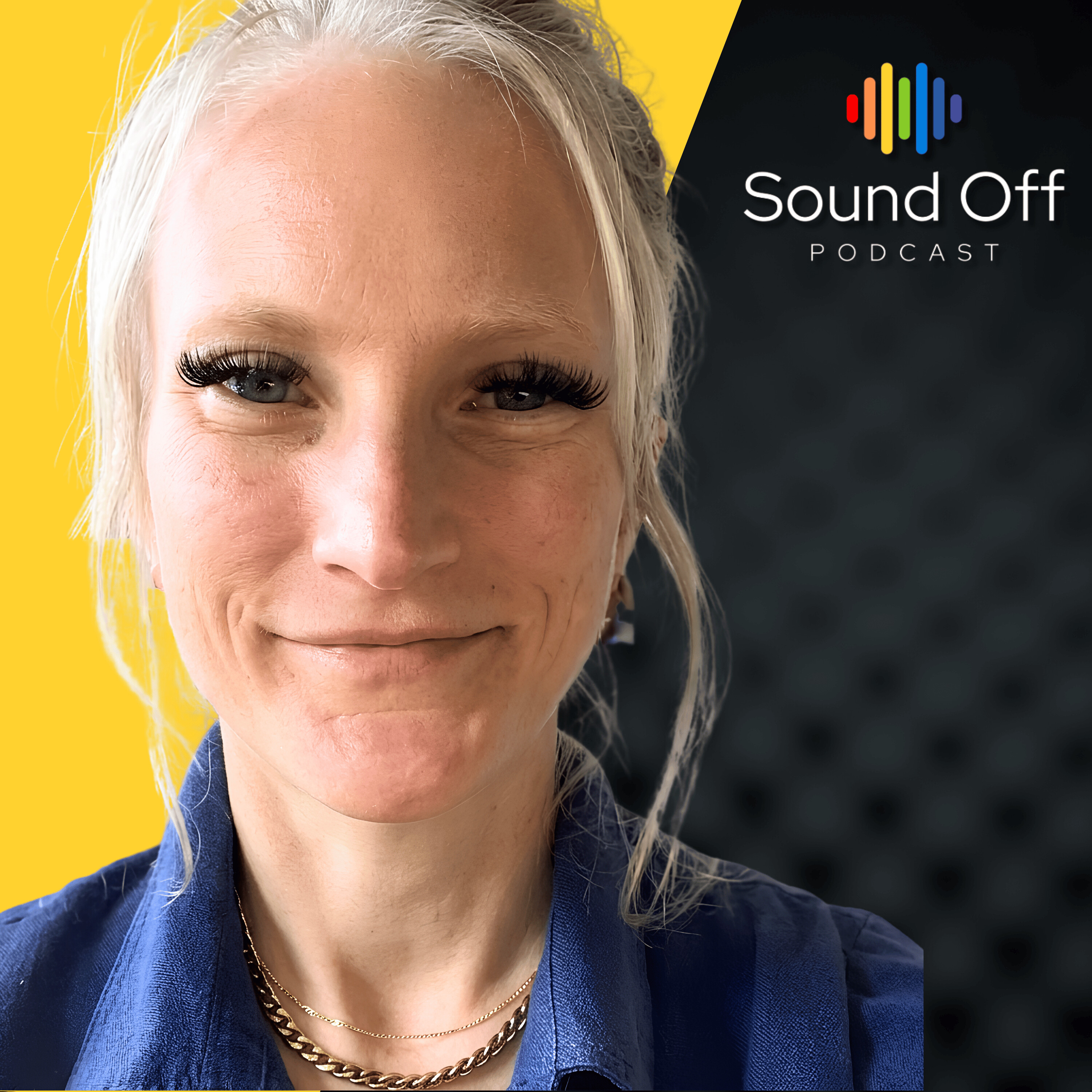
Lauren Passell: The Slow Art of Podcast Growth

 Apple Podcasts

 Spotify

 iHeartRadio

 Amazon Music
How much time are we spending chasing the next big thing in podcasting—and what are we giving up on too soon?
Lauren Passell is the founder of Tink Media, who wants to call her business “the slow company.” She helps podcasts grow through thoughtful recommendations, strong relationships, and the kind of consistent work that rarely delivers overnight results. Our conversation had me questioning where I put my own time and how quickly I expect it to pay off.
We start with what it took to put on the International Women’s Podcast Awards in Toronto, including the struggle to secure even small sponsorships and the people who showed up to support women in audio. Lauren is candid about the disappointment, the joy, and what she learned about community when enthusiasm didn’t always translate into support.
That same question—what does meaningful support actually look like?—runs through our discussion of podcast discovery and growth. We get into why promo swaps deserve more patience, why the right audience matters more than the biggest audience, and why I care more about time spent listening than downloads.
Lauren also shares the inspiration behind her upcoming podcast, Welcome to the Bathroom, and reminds me how much possibility there is in simply being curious about people.
Tara Sands (Voiceover) 0:02
The Sound Off Podcast starts now.
Matt Cundill 0:09
Have you ever finished working on a podcast, looked at everything you're supposed to do to grow it, and wondered when this became a completely different job? That's why Lauren Passell is here today. Lauren runs Tink Media, helping podcasts find their audiences. One of the things I love about Lauren and Tink Media is how she slows it all down. She doesn't get sucked into every shiny new podcast toy that comes into the space, and she understands that slow and steady wins the podcast race. And I'm sure she would even tell us that it's not a race. Imagine saying that when everyone wants results yesterday. If you're putting your heart into your show and wondering why it isn't reaching people, I think you'll hear yourself in this conversation. And now, Lauren Passell joins me from Philadelphia. What did you learn by putting on the International Women's Podcast Awards.
Lauren Passell 1:03
I learned. I mean, I learned. Wow! Do you want to talk about what I learned about putting on an event, about raising money, or about community? Because those, I think, are the three things that I learned the most. The three buckets of things that I learned the most about.
Matt Cundill 1:20
So let's start with the money.
Lauren Passell 1:22
Okay, ooh, that's not a fun one to talk about. I mean, it was impossible to get any money. I'm gonna be really honest with you here. Like, it was disappointing because we purposely, you know, Naomi of Everybody Media had been putting this on for years and was very easily able to get large sums of money. And we went in kind of like we're just going to ask for smaller sums of money. We made some of the options like $200, and we couldn't get $200 from some pretty big companies. So I'm not going to name any names, but I'm going to be super honest with you. I'm also probably going to say something that I haven't said to anyone publicly, and that you're going to be the first person that I had to be like say to my team, "Is it okay if I say this?" So anyway, pins and needles, but yeah, it was tough. It was impossible. It was way harder than I thought, and the whole thing was way harder than I thought it would be.
Matt Cundill 2:18
So I find that interesting because I had an ask from Sarah Burke from Women in Media to support this, and I was like, "That seems pretty easy to do." And again, it wasn't a lot of money to become a program sponsor of the event.
Lauren Passell 2:30
I know, thank you. And also, we brought on Sarah Burke, who did an amazing job. I've already said I'm going to name my next child Sarah Burke, first name Sarah Burke, because Sarah Burke came in and just with her entire heart and all of her energy, more energy than I don't even know how she did it all, but was able to reach out to people and get the support that we were struggling to get initially on our own. But yeah, because of people like you, we were able to do it. But it just I went in thinking that raising money would be a no-brainer, and that wouldn't be the hardest part. And it was, it was also just, it wasn't just the money when we went out to sponsors because that was the first step. It was just that we went in so, so, so excited about it. Like, come on, everybody, join us. We're putting on this event. We support us, and the energy was not met. Like our energy for it, it was like the response was like not the same. People were not as excited as we were, so that was like a bummer, you know.
Matt Cundill 3:29
So, do you think that that's an extension of award fatigue? That there's a lot of award shows out there. There's a lot of money, you know, to enter a show. And by the way, yours does not cost a lot to to enter, but there's a lot of award shows out there that people like another award show. Where does this fall, and does my thing fit in? And you know, is there like kind of like subscription fatigue? Is there maybe award fatigue?
Lauren Passell 3:51
That's a really good point. But from what I see, that people are still excited about the awards and care about winning the awards, and I don't know. I mean, I have to wonder if it's that it's a women's international award that maybe didn't seem as important as some of the other awards. I don't know. I'm not really sure. I mean, to your point, we did things very differently. We it was $50 to enter. You didn't have to pay for your trophy. We sent, we shipped trophies internationally on our dime to the winners. We paid our judges. We had a scholarship so that everyone could enter. We really tried to do it the right way, and we didn't overwhelm our judges. Like there were only a few things that they had to judge, so we really did try to do it the right way. Maybe it's just hard to do things that way,
Matt Cundill 4:42
and a lot of people say, "Oh, this is the International Awards, and then it's held in Los Angeles." But you actually left America to go and have the event.
Lauren Passell 4:50
I was like, "I'm not bringing people to the hostile United States of America." And Toronto is a great audio town, and we have someone on our. Team in Toronto, so Toronto seemed like a perfect fit.
Matt Cundill 5:04
Yeah, it's it's great because you you know international destinations. If you're going to go to Canada, pretty much every plane is going to go through Toronto anyhow, so it's pretty easy to get to. Radio Days North America is another event that takes place there, and it's uh it's easy to get to. You just need a passport.
Lauren Passell 5:20
So easy. I was like, "When am I going back?" The second I got back, and it was so. I was like, "This was too easy. This was too perfect." So anyway, I'm planning my next Toronto event as we speak.
Matt Cundill 5:30
Have you ever been to Montreal?
Lauren Passell 5:32
Never. Is that next? Should that be next for me?
Matt Cundill 5:36
Well, what will happen is I'll probably put a couple of drinks into me, and then I'll start talking about how Montreal and Toronto are sort of juxtaposed in terms of culture.
Lauren Passell 5:46
Okay, see, I'm new to like Canada culture, so I need to be informed with some drinks.
Matt Cundill 5:54
Yeah, Quebec is a whole different story, and I mention that because that's where I am right now. So, and I'm a Montreal Canadiens fan, and most people in Canada sort of turn their nose at Toronto, but that's because Toronto is sort of like the center of the universe. Well, I mean, you have the same thing. Everyone's like, "Oh, New York, I 95."
Lauren Passell 6:14
I know you're right, and LA, yeah, yeah, yeah.
Matt Cundill 6:18
Tell me about the community that grew from from having this event,
Lauren Passell 6:22
I mean, the best part was all the introductions to people that we got to have. That was by far the best part, and just you know, we struggled to get people to come, which was understandable to me, not because of award fatigue, but because of event fatigue, it was a very very busy fall for me too. Like I was exhausted. I came back from the International Women's Podcast Awards and had a couple days here before I had to go. Well, got to go. I love to go to these things, but to resonate in Virginia, like it's just it was a really busy fall. So understandably, and this event used to take place in the spring in the UK, and because of the timing of when we decided to co-host, we had to do it in the fall. So that was a big reason that it was hard to get people to physically come. So what I learned about community was the people that showed up. I guess in general, like I learned, who will show up for us and who will show up for women, like you, you know, like the people that showed up in all sorts of ways, and I mean any way, even just to show enthusiasm to me. Those are people that showed up, but the people I said this because I was the host, which oh my goodness, I was not prepared for that, but I was like, I set this on stage. I was like, I want to kiss every single one of you on the mouth that is here right now because every single person that showed up, I was like, I love you. I love you all. That physically, and and that day we were getting ready. I was like imagining everyone like picking out an outfit and getting childcare or pet care to come and like coming from all over to join in this space and celebrate together, and it was like really moving. And you know we were worried at first because it was hard for people to come, understandably. And also that goes to say like we this event was about supporting a lot of small niche independent podcasts that are under resourced. That's kind of the point. And so, guess what? They didn't have the resource to come to Toronto, understandably. So there was a lot of people that won that couldn't come, and we were kind of like, "Oh, they've won, and they can't even understandably accept their award in person, and we were like, "Is this an event? If there's not people accepting their award in person, that was like a worry for a second that we had." And I was the host, and we had presenters, and the presenters would give a speech announcing the winners, and then we'd play a clip of their moment that won, and then they would have a video of them giving their acceptance speech. Well, the presenters. I was unprepared for how moved I would be. So when we talk about community, it was the community of people that came to present. For me, that's a big part of it. I cried twice on stage because of things they were saying and why the importance of being together. And they really moved me. The presenters, like of course, the people accepting the words, but the presenters shocked me. And somebody, I was saying this to somebody, and somebody said, "Well, that's a testament to the people that you know and that are going to come." I was like, "Uh, that's a testament to Toronto." And to me, that's part of it. Like this was a Toronto celebration or a Canada like a celebration of Canada to me, because those were the people that really, really, really showed up, and that I left in love with all these people, and a lot of them, it is because of the Toronto and Canadian community. So that's the new community that I found through this event specifically.
Matt Cundill 9:56
Yeah, and so to your point, by the way, I I could not make the event.
Lauren Passell 10:00
No, yeah, I understand.
Matt Cundill 10:03
Well, you know what? I love driving, and I'm now within driving distance of Toronto, and that's that's good for me. I like that. I was in Winnipeg for a while, and you know that that's a plane ride. But this was within driving distance. But you know, to your point, there was a resonate. There was a Calgary podcast event, and I had an event in Buffalo as well. It's been a busy fall.
Lauren Passell 10:24
Oh my gosh! Resonate was earlier because of the election. Podcast movement was later. Everything was in a very short amount of time. I when people said they couldn't come, I was like, "Yep, I know." I was not like confused why people couldn't go. So,
Matt Cundill 10:38
yeah, I think, and also, I think there was a Canadian Thanksgiving thing too because it was the Thursday before the Canadian Thanksgiving popular night. The categories are fascinating. Like I've never seen category titles like this. So moment of visionary leadership, moment of comedy gold, moment of pure emotion, award for changing the world one moment at a time. These are unique.
Lauren Passell 11:05
Yeah, I think so too. I think it also. I mean, a lot of almost all of them we inherited from Naomi. Like she's the one. I have to give her a lot of credit for coming up with these. And I think it really makes these words very distinct. And also, when you enter them, you have to be really thoughtful. It's like kind of a limbs test for like the price is not expensive, but the price and your your time and putting this together and thinking very thoughtfully about this is high. So the one category that we included, and my team was like at first they were like are you doing this I wanted art artistry and advertising and they were like why are you doing this and I was like I was remembering I think if you've been listening to podcasts long enough you remember a day when ads used to be good and it was almost like before people realized how powerful they could be and I feel like there was a lot of experimenting with ads, and like, so everyone hates ads now, for the most part. And like, I wanted to. No, that's not true. But do you know what I mean? Like, listeners just get annoyed by.
Matt Cundill 12:14
I've already seen it. I've already seen it this morning. Somebody was doing a baked in on a YouTube, and I watched somebody you know hit fast forward three times and complain about the ad. I said you got to fast forward through it. You don't need to complain about it.
Lauren Passell 12:26
Yeah, I think what is happening though is there's certain networks that are just pounding, pounding, pounding ads for it's like Poly Market and
Matt Cundill 12:37
there's a lot of gambling ads out there. There's a lot of the same stuff,
Lauren Passell 12:41
and they're poorly like done. So anyway, I was trying to like inspire people to go back to be creative. When the example that I think about a lot is I don't remember what year it was, but Cards Against Humanity gave this tech podcast. I don't know if you know the story because I I can't believe I don't remember the names of the name of the show, it was a tech podcast. They sent them one toaster a week to review the toaster on the tech podcast. Now, what? Okay, so the hosts loved it. They had so much fun doing it. The listeners loved it because it was hysterical and made no sense. And Cards Against Humanity won too. Everyone won, and I feel like that's an example of that seemed too crazy to even make sense. You know, for now, that would that just doesn't happen. With that award, I was trying to inspire people to remember they could be real. You could go out of the box. We could break free from the ads you're hearing today. So anyway, that's why I brought up that we started that category, and I think I don't know. I feel like once I explain it to people, they're like, "Okay, got
Matt Cundill 13:48
it." It's, I mean, it's important because that's was the roots of podcast advertising was somebody being delivered a mattress. The host could dump all over the mattress and say that it, you know, their their back hurt, and the mattress company would still be happy with it, even though it got like a negative review on the podcast, because you would tell a personal story inside the ad, and I did notice, by the way, that there was a lot of pushback when Megaphone said, "Yeah, your ad can't go more than 90 seconds." Well, that runs against exactly what you're doing here with this moment of artistry and advertising. I don't know if Megaphone has changed that they should if they haven't by now. But that's the sort of thing that podcasting is up against: is losing the art of creating a great mid-roll ad or baked-in ad or infused, you know, branded content into a show.
Lauren Passell 14:33
Something that works for everybody makes everybody happier. Yeah. Do
Matt Cundill 14:37
you have a business? The business is Tink Media. What does Tink Media do
Lauren Passell 14:41
we do podcast growth? So we have clients. We love indies, but we also have some larger clients like ESPN, and we do a combination of PR and marketing. We also buy ads for people. The reason it made a lot of sense was because I mean we. Love audio. I've never hired a marketing person or a PR person before. I hire people that love podcasts because I can't teach someone how to love podcasts. I can teach someone marketing and PR. So we're all audio lovers. We all have podcast newsletters, and we were producers and journalists and stuff. And we also have something called audio delicacies at the end of the year, where it's our list. We go out to people in audio and say, "What was your favorite thing that you listened to all year?" And to me, it's the best end of the year list because it's all the diamonds in the rough. It's not the same shows that are on every single list at the end of the year.
Matt Cundill 15:35
So when I imagine what you do all day, I'm really thinking about you're listening to podcasts all day, and you're on a microphone like this all day, but you're not really. You're doing a lot of other things at Tink Media.
Lauren Passell 15:47
When we were getting on this call, I was like, "I don't. I'm not on the mic that much. I am behind the scenes. You know, my team now there's eight of us all over the world, and they're doing a lot of the in the weeds, like boots on the ground stuff, which is setting up promo swaps. You know, pitching for interviews, pitching for editorial coverage. A big part is pitching our clients to be interviewed on other podcasts. All that stuff that works. I mean, if you ask me what works in one second, I would just say borrowing audience. Period. But that's there's so much to that. Oh my goodness! My favorite thing to talk about that we do is pitch letters. Our pitch letters are, I think, poetry. We do not use AI for anything. We do not do blasts. We hire sensitivity letters for these pitch letters. I'm obsessed with thinking about pitch letters. I'm obsessed. So that we spend a lot of time doing that. But my job really now has kind of turned into connecting podcasters in any ways. Meeting with podcasters, hearing what they have going on, figuring out if I can connect dots, even if they're not my clients, because I believe that all ships rise. And if I can help somebody else, it's going to help one of my clients. Knowing what people are doing, knowing what people are prioritizing, is always good for me. So I'm always like, it doesn't matter if you're my client or not, please tell me what you care about, what you have going on, what you need, what you want, because I'm trying to connect dots. That's a big part of my job: talking to podcasters and connecting dots.
Matt Cundill 17:12
As you're giving me that answer, I'm thinking to myself, "Oh, she pitches people," and then I remember, "Oh, wait, she pitched me on an episode which I did with Michael Osborne, famous in gravy.
Lauren Passell 17:24
Oh, that's right, that's right. Yep. Thank you for doing that.
Matt Cundill 17:29
I got to remember all this stuff. When you hear things like podcasting has a discovery problem, what's the first thing that boils into your mind?
Lauren Passell 17:38
I think it's true. I used to think I went through a period of time where I didn't think that was true. I thought that it was just that there were a lot of people making podcasts that they they weren't trying to market, and also that they didn't think at first is there an audience for this. I really kind of thought that. I don't know if I was just trying to be like rebellious or something, but I truly think there's a problem, and and truly, it's why I started my newsletter. I mean, I started. I have a newsletter called Podcast Newsletter, and I started it when I was working in book publishing. I wasn't even in audio. I just loved podcasts, and I was like, they're hard to find. I discovered them myself, and I was like, I need to talk to someone about these podcasts because we're not talking about them enough, and if I write about them, maybe more people will start listening and finding the right one for them. Because I truly believed, if you find the right one, you'll convert. And actually, Tank did this thing a couple years ago called Adopt a Listener Month, and we spent one month. We made adoption certificates. We had social media posts. We had resources. We had playlists. We had quizzes where we we were trying to get our community, everyone, to adopt one non listener and convert them into a listener and find the perfect show for them. And we spent one day in a park in New York City interviewing people and giving them podcast recommendations because we believe if you can get those people that don't listen to convert, they're going to start listening to tons and tons and tons. And I still believe that, but it is still very hard to convert a non-listener to a listener, and it's because of the discoverability problem. I don't think there's enough people writing about podcasts. It kind of kills me a little bit. I wish there were more newsletters and outlets. I can't pitch to myself and my team. We we have like 60% of the podcast newsletters. I wish that there were more places for people discover that weren't just the apps. And that's why one of my questions is for people like, how do you discover? Because I don't know how people are finding them.
Matt Cundill 19:40
Yeah, and it's great because you. I think you put it, and I think it's the newsletter you're referring to, the one that I get every week, where you know, here's 10 podcasts that I texted my friends, and one of the things you do is you you will say this is how I discovered this, and I think that's one of the hardest things for people to do is is recall how you discover something. So I came from. Where you people had to write down what you listened to. Well, who remembers what they listened to at 815 last Thursday morning, right? And even you did it in your latest newsletter. I say, I think I, I think I heard about this at this particular conference. And so that idea of discovery, we really don't know how you know we discover things. Word of mouth we know is very powerful. I think people will remember that one more than ever. But this this shorts and reels nonsense that that that's going on now, where people are saying, "Oh, I found that on TikTok." I said, "Well, how do you listen to the show?" Oh, I on TikTok. So you're just watching the clips. Okay, great. Thanks for coming out. It's getting more and more complicated to corroborate where we first encountered, you know, these podcasts. So I, I do think that that is a bit of a problem. But I think when people say, "Oh, I've got a discovery problem," I think there's the other thing where people think, "Oh, everybody should listen to my podcast," and well, that's a marketing issue.
Lauren Passell 20:58
Yeah, I seriously, I and that's one reason why I like the. I wish more people would track how they discovered things, and that's why I always include. Like sometimes I'll in my newsletter I'll write, I saw this featured on Apple Podcasts, but it didn't interest me. But then I heard a friend talking about it, or like, but then I saw it written up at the Guardian, like I'll explain that's because sometimes marketing takes a couple times, you know, usually does. So I also am interested in that. Like, how many times did it take me to actually hit play? Because sometimes it's not the first time.
Matt Cundill 21:35
That's the same with sales. You want to sell some advertising. It's usually about three or four meetings before somebody says, you know, truly yes or truly no to that sort of thing. I look at Apple, Amazon, Spotify, even YouTube, like the front pages of those apps and platforms, as what Tom Webster calls the Tower Record sort of portion of of the whole thing. And now we see that you know Apple's going to discontinue curation for for companies. So I'm as a Canadian. I wake up. I'm going to be served not necessarily Canadian stuff. I'm going to be served whatever Apple wants to show me. How important is all that stuff, like the display rack in the app?
Lauren Passell 22:14
It's so important, and I used to love Apple's. I mean, it'll be interesting to see what they do. But I used to think they did a really good job with the discovery, and it wasn't. I know that I think Pocket Casts. I use Pocket Casts. What do you listen on?
Matt Cundill 22:29
Three different devices. So if I if I'm traveling, I will use Apple because I know it's downloaded and I know it's there and it's going to be reliable inside the home. I will probably use Spotify because it is centered on my computer to the eight devices in the house, so if I'm going to the kitchen, I can sort of move the podcast down to another place, and you know sometimes I'll use a something like I'll use True Fans because sometimes I want to send people some satoshis or you know those micro payments, so it's mixed. But I Pocket Cast is one that everybody raves about, and I'm just haven't been able to get there yet.
Lauren Passell 23:05
Yeah, I mean, if I ask who listens on Pocket Casts in public, if they're like, "What's Pocket Cast?" If I ask it resonate, ever everyone raises their hand. So, but I mean, even they, I mean, what Apple is going to be doing is using the algorithm to show you things that it thinks you want. Which, I mean, Pocket Cast has done that. Started doing that too, and I'll get a lot of like, you liked this, so you'll also like this, and I'll think, I didn't like that. I listened to it. Like you're, you know, like how do you know that I liked it? I listened to it. That doesn't mean I liked it. So I don't know. I feel like we're we're losing a lot by using the algorithm for all that. I don't know. I I really do think I think we need more people writing. I wish that there was more ways. I don't know why the New York Times doesn't have a podcast newsletter. And a lot of times, I've probably once a week someone comes to me and says, "I just got laid off," or "I want to enter the audio community. What should I do?" And I'm like, "Start a recommendation newsletter. It's how I got everything I have. That newsletter started everything, and they're like, "No, no one wants to do it."
Matt Cundill 24:06
Well, newsletters are hard, like, and that's a testament to the work that you do in getting a newsletter out that you know has no AI in it, is written from the heart. By the way, thank you for finishing your newsletter with "I love you." That was very nice.
Lauren Passell 24:21
Oh, I mean, if you make it to the end of that, I truly love you, whoever you are.
Matt Cundill 24:27
Yeah, I mean, once I get the recommendations, my next job, I should probably have the recommendations open and then have the phone with me too, so that I can at least, you know, I'll hit follow, so it will remind me later to catch up with that. But newsletters are hard, and Substack and Beehive, they're now in the podcast space in various ways, and I think you've probably played with the Substack part before because I've seen you live on my, and maybe I don't know if that was through you or through Ariel Nissenblatt, but you know, what do you think of the relationship between newsletters and podcasts now?
Lauren Passell 24:59
I mean, I think they've. Always been good drivers. I have noticed like social media does not drive listens, but newsletters have. I've experienced that. And to what you were just saying, it's funny because I always tell people that not to look at the click rate so much because people often have their phones in their hands and they're not clicking on it. They're adding it to their phones. They're not. They don't click it because they want to add it to their phone. So anyway, that's a way that people, you know, that drives them. Yeah, I don't know. I think I haven't done much. I really like the Substack lives, though. I've been doing them for with Ariel a little bit, but also Podcast Marketing Magic. I have another. Well, I have three podcast newsletters, but one of them is called podcast marketing magic, and that is all marketing advice. It is, I'll have to. It's really good. I don't write it anymore. Sometimes I write it, but my team writes it. So I open it up every Friday morning, just like everybody else. I'm like, dang, this is good. We're like, we don't hold back any seekers. It's everything we're doing and what's working and what's not working, and we do subcycle lives for those, and it really drives a lot of engagement. I love it. I love the community aspect. What I love about the newsletters too is it allows people to own an audience. You know, if you're just listening on Apple Podcasts, I don't know that you were ever there. You could go away. I don't have no way to get in contact with you. But also, these platforms allow people to make money and have a community and have like and engage with their listeners and all that stuff that I think is really really important because I'm also this is like you know we're so obsessed with the download numbers and I've I know that so many of us are like we have to focus on other things other than download numbers and talking about engagement and you know how long are people listening and caring less and less about the download numbers and more and more about what are the actual piece? It's okay if you have a small audience, but what are they doing? How how how much are they showing up for you? That's an important thing to consider, and newsletters help with that.
Tara Sands (Voiceover) 26:56
Sound design of the Sound Off podcast is inspired by Mega Tracks, the sound of entertainment, providing music and sound effects for radio, podcasts, and media professionals. Mega Tracks is your one-stop shop for library and custom tracks. Start your music search now at megatracks.com. The Sounding Off newsletter delivered free to your inbox, featuring Matt's media hacks, hot takes, and retakes. Sign up now at Sounding Off News.
Matt Cundill 27:30
You know, eight years ago, I used to wake up every morning and check my downloads, and now I'm I just I really just care about the time spent listening. And Apple and Spotify gives you that stuff, and it's really all that matters, because when I see that an episode only got 50% listening, I'm like, oh, something went wrong. Yeah, you learned so much, right? We need to make we yeah, you need to make that that more, because in the end, that's just one download. But you should be caring about the person who listened to 100% of the show, not the person listening to 50% of the show should be learning from both sides. It's information.
Lauren Passell 28:04
Yeah. What other numbers do you look at?
Matt Cundill 28:07
That's it. Consumption. You know, it's like if you're a chef and the plate comes back to the kitchen with half eaten food, that's a pretty bad review. Ooh,
Lauren Passell 28:16
that's good.
Matt Cundill 28:18
Same thing here with, and you know, give it 30 days, and that's all I really care about. You know, for the episode, you know, downloads could could reflect a bunch of things. Could reflect a popular guest. It could reflect great marketing, great sharing, a bunch of other things. But you know, really, what gets you through the doors is how many people actually sat and spent time with it. And we used to do that in radio. You know, oh, I work at the station with a million listeners. That's good. Or do you want to work at the station where people listen all day from nine to five, even though it doesn't have a million listeners, and you can't say you have a million listeners? Time spent listening, and the sales department loved time spent listening, and now I do too.
Lauren Passell 28:59
Yeah, have you ever made changes about your show based on like noticing that things are dropping off or something like that?
Matt Cundill 29:07
Absolutely. So the intro to this show used to be about 20 seconds or 30 seconds long, and it's gotten shorter over the years. Now I'm like, it's got to be under eight seconds before I start talking and we get into it. My introduction to the show is short as well. There will be skips because some people already know Lauren Passell, and so they're going to go right to Lauren. They want to hear Lauren. They're going to skip what I have to say. They know Lauren, and they want to hear what Lauren has to say. That's okay. I'm okay with that. But I will see a dip there. I've also calculated the dips on the mid roll to the show, and you know what? It's pretty good. Only 10 to 15% of the audience are going to skip through the mid rolls. That's pretty good. And then my other favorite one is at the end of the show. There's a lot of podcasters who do this, and they need to stop, but they don't know, right? And they're they're going to give clues to the guest in the interview. I've only got two questions left. Or we're going to wrap up in just a sec. Little clues, the exits coming up, and then they do a quick evaluation in their head and say, "Do I need to hear these last two questions? Have I gotten the most out of this?" Somebody has determined and said to them, "I think you're full." It's kind, you know, it's kind of like saying maybe you don't need the the last three bites of steak on your plate, maybe you've had enough.
Lauren Passell 30:23
Yeah, you're right. So then, what do you do?
Matt Cundill 30:26
I edit those out. First of all, I don't say it, but when when I have clients and I'm producing their podcast and they say it, I get rid of that right away. There's to be no indication that this thing is going to be ending anytime soon. You want to make that question nine sound as fresh as question two and three.
Lauren Passell 30:43
You're teaching me a lot because, as I said, I don't, I don't make the podcasts. I grow the podcasts. This is interesting.
Matt Cundill 30:50
Yeah, and so and so, a lot of it is just you know, get out, get people to the end. My extras gone. I got rid of show credits. Show credits are now in the show notes. I love my staff, but why do show credits exist? Show credits exist because the show was over, and you had to thank people when the credits rolled at the end of the TV show or even the radio show. It's podcasting. We have show notes. Go to the show notes. They're there. They'll publish SEO. It's all going to be there. You know, and I think completion rate. People began to really fuss about completion rate, and I got worried about promos. And this is where I want to talk about show promos, because at the end of the show, I love to have show promos, and I'm not going to get rid of them, and I don't really care about that part of the completion rate. So, tell me about the value of show promos and promo swaps.
Lauren Passell 31:34
I think someone just asked me what what has changed in podcast growth in seven years because Tank just turned seven, and I was like, "Well, tons of stuff like tech-wise, and who's out there wise, what shows are there, and the people." But really, not much has changed, and it's that promos work, period. And that's what I tell people if I have one second to tell them about podcast growth. It's borrowing audience, and the funny thing is, like, I do PR and marketing. The PR to me is if there's something splashy, if it's a new show, a new season, get everyone talking about it, get everyone excited. That usually, or like, get featured in Apple Podcasts or something, and that usually causes a spike. But that means you got in front of a lot of the wrong people, and they went away. And to me, the engine is the promo swaps, and they might not. People will be like, "Oh, I tried that and it didn't work." I'm like, "You have to do them all the time. It's the engine. It is your endurance. You never stop doing the promo swaps." And one thing that's interesting is, I used to allow people to work with us for two months, which is not enough time to do. Well, that was when I started my company for marketing and promo swaps. It's not enough time. Then we did three months for a long time, and then we're like, still, it's still not enough time. So we started doing four months. And what I noticed, quite honestly, with four months, more people started coming back and saying, "I need more months," because that's how long it took for the promo swaps to work, because they started seeing the results if they worked with us for four months, and if they didn't, they weren't sold on promo swaps yet. That happened a lot, so I just think. But also being really, really creative and thoughtful about them. Oh my goodness! If we can get a host read and a host to introduce maybe some audio from the show. If if it's a well produced show, maybe it's not. Maybe the host read is more important. Being really thoughtful, giving a specific podcast recommendation in the promo for what should you listen to. I'm really obsessed with that right now. People need to know what their hook episode is. What is the hook to get people to listen? Because if you go to a podcast, you're just going to listen. Maybe listen to the last episode. That might not be the best episode. What is the hook? So really, we you know, as I said, we don't use AI like writing these so thoughtfully, spending so much time on writing each promo differently, thinking about each one individually. All that extra time is worth it because it's important, and it's the only thing I do. It's the only thing I focus on if I had to.
Matt Cundill 34:06
So I'm running promos through this network all the time, and I found that six months was the minimum before you can even, you know, understand if if it was effective or it worked, or if people even begin to know about it. Three months is is pretty short.
Lauren Passell 34:21
Yeah, we need to start bumping things up to six months because otherwise they don't see the impact.
Matt Cundill 34:28
So here's one that I wrestle with: Is it better to have the host of the other show promote my show, or can I just voice my own promo and then send it to them?
Lauren Passell 34:39
I mean, it always depends on the show. If I'm working with a beautifully produced show, I'm like, no, no, no. The people have to hear it, so send them a file. Or if you have something really compelling to send, like super duper compelling, like me being like, I'm about to tell you something I've never told any. One, you know what I mean? Like, I. But if the host also is, you know, hostiness. If they're a host that you know has a very strong like following or something, if I'm like, no, people love that host. They'll do whatever that host says. That's a show where the host is the star. Sometimes there's shows that aren't like that. So if the host is the star, I'm like, I want the host to introduce it. But what I've been really trying to do is both like have the host be like I'm about to play something really great and that's why it's like these relationships are so important and why part of my job is just making relations with people because you have to know people and people have to trust you to go in with something a little more creative like that like hey can we can we work together to like you know figure something out and the other thing that I'm really obsessed with. I don't know what you feel about this. Matching the numbers doesn't matter to me, and it matters to my clients. So I understand that. But I love it when I have a client every once in a while that says, "I don't care if I'm promoting with a show that's smaller than me, or I don't care if I'm giving less back, because I do so much research on the correct audience. I think I'll do anything to get in front of the correct audience, even if it's a little means a little bit less for me. Now, unfortunately, my clients are you know I have to do what they believe, but every once in a while, I can convince someone this partnership is worth it, even though I'm getting a little bit less back because the audience is perfect.
Matt Cundill 36:14
So size doesn't matter to me. Size does not matter. I don't care about the size of your podcast because how do I know how many people are going to be like engaged with this particular thing that's being pitched? You can't measure it just because you have a million. I've seen, I've dealt with podcasts that have hundreds of 1000s of downloads that just don't move the needle, and I've dealt with podcasts that have 150 downloads that do move the needle. It all has to do with the audience and the engagement, and this is an excellent time to talk about one of my favorite websites. It's TinkMedia.co/swaps.
Lauren Passell 36:49
Oh my gosh! Thank you. Go on.
Matt Cundill 36:54
Well, you know, you've got active people on there, and this is a place. It's actually a bit of a community within side a community where people can come on. This is my show. Here's what we do. Happy to do a guest exchange. Happy to do a promo swap exchange. Perhaps a fee drop. There's all sorts of options in there, and people have emailed me, and we've done swaps, and it works.
Lauren Passell 37:15
Thank you for telling me that. Thank you, thank you. Because listen, there's my big to do list at Tank Media. On that to do list is to make that database a little bit more usable, more beautiful, like searchable. Because I made it and I made it free. A lot of people charge for that. I made it free because I was like, "This is going to help the whole industry. I want people. This is so important. I want people to be able to do this." So I just threw it up on the website, and it's not fancy. And I don't know if this might not make sense to you, but I'm I'm often telling people it's kind of like shopping at TJ Maxx, where you kind of have to like you have to spend some time shifting through the hangers and and going and finding things that might not be organized perfectly, but it is worth it if you spend some time in there. So thank you, I love hearing this, and I have the best stories for I've been I was at Podcast Movement, and someone was like, "I met my co-host for my show in your database, or like I met this person on my panel in your like." That's why if you look now, it says friendship database because I'm like, this isn't just for this is like we all need to be friends in this space to grow. So whatever you want that to mean, if it's promo swapping or inviting someone on your podcast to be the co-host or panel, whatever is just so important. So I'm thank you for telling me that you have had success with it.
Matt Cundill 38:29
Okay, so here's the thing that I really love about it, and I'm not going to say I hate about it, but it's not a cemetery of podcasts that die because I think when your membership and you need to renew it. I think every every year or so. So, and I've just remembered. Oh, I think I need to renew my you know my podcast in there so that people get some stuff. Because I had a client this morning just said, "Oh, I need guests. I'm having trouble getting guests." I was like, "Well, this show is a gimme for guests, so why aren't you getting guests?" I was like, "Ah, you have to relist in what is essentially what was classified. It feels like classified ads more than anything.
Lauren Passell 39:05
It is. It is. It's like yeah, the community board, and I use it for my clients too every day. So love to hear
Matt Cundill 39:13
it. Desperately seeking Susan, a podcast.
Tara Sands (Voiceover) 39:16
Yeah, that's what we should call it.
Matt Cundill 39:19
Yeah, I mean that's that stuff is great. And by the way, some of the bullshit that I've heard over the last you know couple years too is like, oh, a promo at the end of your show is going to ruin the completion rate. That's algorithm BS, and it goes on and on at more and more conferences and get-togethers and online and Facebook and Reddit. And you know, I'm looking to make changes every day, but you haven't made too many changes to what you do. I feel like Tink Media evolves more than anything, and the rest of us are always like, "I need video, I need reels, I need this. I'm going to upload all 90 minutes of my show to Instagram tomorrow."
Speaker 1 39:53
Yeah,
Lauren Passell 39:54
that's true. Like, and you're right. Like, yeah, everything's changing, but not a lot has changed over with what we're. Doing essentially the heart of what we do is very similar, and I that just feels right. We I I want to call us. I should just put this on the website. I want to call us the slow company because we do things really slowly because we think that that's what works. We do everything slowly, and it takes a long time. And so, we have a sales call with someone, and they seem invested in spending a long time. We know that they're going to probably work with us for a long time, and they're going to succeed. But people that come in and want something really fast, you know, that doesn't always work with us.
Matt Cundill 40:34
Well, it's three years to build an audience, and I see a lot of people not really willing to spend the time, money, energy, and creativity to do three years. I think everybody wants a show to hit and hit fast. And I actually kind of discourage people from starting a podcast and working with me because we're going to be doing this for three years because that's what it takes to build an audience. And so this brings me to Netflix, right? And so I think this was one of the bigger takeaways from from podcast movement this year was you know Tom Webster sort of presenting hey where do you find and where do you access your podcast and Netflix becoming one of the top places people do that and it's sort of launched a level of confusion into the podcast space so we don't have time all the time at Podcast Movement to have these breakdowns but I'm glad I have you here now to have this breakdown with you
Lauren Passell 41:21
yeah I mean, I think I probably heard it on your show. Like, it's taking away the accessibility. What we loved about podcasts is that we were all there, and it was all easy to access. And my show was on the same place that every other show was on, and that seemed beautiful. And the Netflix thing is really taken away from that. Yeah, I also just don't. I mean, there's so many people that are so enthusiastic about it, but it's so new. We can't. I just don't even think how can we see. I think it's going to take some time to see. You know, what about those people that went on Netflix and had to get rid of their YouTube, right? So, like, what's going to happen? I hope that you're on Netflix forever because when you go back to your YouTube, where are those people going to be? You're going to lose them. So I don't know. I that's why it's like not a lot has changed. We're the slow company. We'll take our time to jump on something new.
Matt Cundill 42:14
Yeah, you don't get sucked into stuff like I do, where it's like, oh, that's new. I have to try that right away, and then I sail six months in the wrong direction on something. How do you maintain that self control?
Lauren Passell 42:25
I think it. I don't know. I I feel like my husband would say it's an aversion to adapting to new technology. I also have the same sweater I've had since I was in middle school. Like I don't something about my personality. I guess I don't know. One
Matt Cundill 42:40
of the best things you do that you don't do enough of, but again, you're busy all day, and that's that's the streeters. So you mentioned that back in you know back in I think it was like it was 2021. You started doing streeters and talking to people about podcasting, and I think a podcast movement you were doing there you were again doing more streeters and just talking to people about podcasts and video and and just just getting feedback.
Lauren Passell 43:02
Honestly, if I could do that all the time, especially because I love Ariel so much, we have so much fun doing it together. So, but we learn so much. Like, it's funny because I feel like, ah, gosh, Tom Webster presented us on stage. He kind of like we presented some of the stuff we were learning on these man on the street interviews and like Tom Webster was like, I forgot how he said it, but he was like, you guys don't like get data right, but it works because we're just people that love podcasts that are enthusiastic and unafraid to ask people. So we're not the traditional, we're not doing it the traditional way, getting data from people on the street, but we are getting it, and we're getting some interesting stuff. So I don't know; it's not a lot, but what we learn is pretty interesting.
Matt Cundill 43:46
So, what's something that you've learned from the people who don't know what podcasting is? Like, you'll say, "Hey, what's your favorite podcast, or what did you listen to, or do you listen to podcasts?" What's some of the stuff that I would go really? You got that reaction?
Lauren Passell 43:58
Yeah, I mean, I think the first year was the most the strangest that we did it. We thought that we were going to be giving people podcast recommendations, like we were like thought we were going to be converting people. We realized that people didn't even understand how to listen to them where they were. Like that first year, which wasn't that long ago, it was like it was more of a podcast awareness campaign where it wasn't like us going, you know, here's a good podcast for you. It was like there are podcasts, and it's funny because Tom Webster gave me advice before. He was like, "Loren, when you're giving recommendations to people, don't get too cute about it." And I know what he meant because I'm very likely to be like, "Oh, you're from Ohio? Did you know there's a podcast about Buckeyes?" No, no, no. He's like, "Give everyone the best. Give everyone this American life or whatever, get them to listen to the best thing if it's the first thing ever listened to.
Matt Cundill 44:46
Play the hits.
Lauren Passell 44:47
Yes, so that was illuminating to learn what people didn't know. One woman thought I was stealing her phone because I was trying to show her an app she could listen. Like, and that wasn't that long ago. So that, but then it's been really interesting to. Watch how fast people know, and also how I would say more people mention women when they're listening. Then that's been a big, big, big change. And how the the first year it was almost all Joe Rogan, and this is New York City and like you know Washington Square Park, like Joe Rogan and Huberman Lab. That was kind of it, and now there we're just seeing a lot more diversity. So I feel like the last time we, I hope that I, I don't know if there's anything one shocking thing, but just that it's been really delightful and encouraging to actually hear what people on the street. And I guess sorry, I'm not giving you anything flashy, but the people that want to talk to us, okay, the people that don't want to talk to us are like f you and like move on. And by the way, one of the days it was freezing when we were doing this. We actually have a clip of all the people saying no, and it's hysterical. Like we have a reel of this. The people that want to talk to us, I'm gonna talk to us forever. We cannot get rid of them. They go on and on and on and on. So that is where we learn the most because the people that love podcasts love podcasts and they want more, and that's a discovery thing. That's a marketing thing too. Get to these people that already love them.
Matt Cundill 46:10
You have got a podcast that's going to be coming out in January. I found out.
Lauren Passell 46:15
Yes.
Matt Cundill 46:16
What is it about? What can you tell us?
Lauren Passell 46:19
It's called Welcome to the bathroom, but it's about bathrooms. So I was at my friend's divorce party, which was, by the way, huger and more elaborate than her wedding. She went all out on this thing. It was this huge house in Virginia. A bunch of women were there, and everybody we had the whole house, and everyone was thinking off to the bathroom together because you know women be going to the bathroom together, and I was kind of joking, and I was like, "You guys have to stop going to the bathroom together because if you go to the, I might have trauma for when I was little. Like, if you go to the bathroom together, you're gossiping about me, or you're doing drugs without me, or like, what are you doing in there that I can't be part of? You know what I mean?" And all the women started talking about all the things that they've done in the bathroom that aren't going to the bathroom. It's like I found out I was pregnant. I found out I wasn't pregnant. I gossiped. I met my best friend. I was escaping from my children. Like all these things, and I was like, oh my gosh, the bathroom is a sanctuary. Like we're all doing crazy things in there that are not going to the bathroom. We're learning how to be women. We're like when women go into a bathroom at a at a bar. It's like you make your new friend. You give someone lipstick, you give someone a tampon, you tell someone they look great. So it really is about it's a cultural and society podcast. It's about what we're doing in there. There's an episode about gossip, you know. There's an episode about the bathroom. This the first season is about the bathroom as a sanctuary, and I think there's so many places we can go with this. There's people that clean bathrooms. I mean, I'm working with two other women that they're the hosts. Okay, I've been dreaming about the show for years. I'm actually not a host, but my role is bathroom attendant. I will be coming in with stories, with clips, man on the street interviews. I'm going back to that and asking people, what are women doing in the bathroom? Why do women go to the bathroom together? Why do you think? What do you do in the bathroom, what's your ritual? Oh my God, I wish I could go into your shower right now and see what products are you using. It's fascinating, and once I get people started talking about it, they can't stop. So I think I'm onto something.
Matt Cundill 48:12
Yeah, I know people go into bathrooms at parties and they will open up the medicine cabinet just to see what medication people are on. I've seen that one before.
Lauren Passell 48:19
Oh, that's a whole episode right there.
Matt Cundill 48:22
That's a series of eight eight episodes.
Lauren Passell 48:26
I don't think I've ever thought of that before. That's really good. I'll credit you.
Matt Cundill 48:30
And as you mentioned this, I think about the bathroom. We came from a podcast conference in Calgary where Dr. Jody Carrington, psychologist, said, "Why are you bringing your phone into the bathroom? Why do you bring your friend friends to the bathroom with you? I said, "Well, you know what? I'll tell you what I do. I don't do that, but I will take. I was mentioning about listening to podcasts on Spotify. I will reroute the show into the smart speaker into the bathroom and listen to podcasts in there. And I feel that I just recent I recently purchased a new home and the bathroom. I want to show you the bathroom now. I would love to take you down the hall and I will show you this bathroom. And bathrooms are bigger. They used to be really small for you know houses in the 70s, 80s. They were small, and then they began to grow. And now bathrooms are almost the same size as as kitchens.
Lauren Passell 49:21
My bathroom is huge. Yeah,
Matt Cundill 49:24
I can't wait for this podcast.
Lauren Passell 49:26
I mean, I'll. I feel like the bathroom attendant might have to do an interview with you about your new bathroom because you sound very excited about it, and I want to hear about. Yeah, it's.
Matt Cundill 49:35
I've had it for a year, and I still don't think that I have fully discovered how to use it to its full extent, and I mean, listen. There's there's two of us who live in this house, and there's three bathrooms, so I essentially kind of have my own bathroom. It's
Lauren Passell 49:51
and think about it; it's like this liminal space, right? You wake up and you go there. You go there before you go to bed. It's like a really important place. And by the way, I will say one of my. Favorite things to do in the world, and I think this is a series. I love showering at a friend's house because I'm just warning you, Matt. If I ever shower your house, I'm going to use all of the products. I'm going to be in there for an hour straight, like using. It's like you're testing all the products. I learn so much from people learning what kind of products they have. I'm using a lot of all the products, by the way. Just worrying you, like I love. I think that should be a segment. Like, what are people buying? Where you learn so much about people. There's so much,
Matt Cundill 50:30
and the advertising opportunities. Just think of the advertising opportunities now with with bath products.
Lauren Passell 50:36
The real reason I'm doing it. Yes, hopefully.
Matt Cundill 50:40
So purchases house. House is literally new; doesn't need any changes. Now the wife came to me and she wants to make a change. And what does she want to change? The showerhead. I'm like, what is wrong with the showerhead? But you can't use it now. We have a house. The house is fine. We don't need to change it. Nope. She still wants to change the showerhead so that the water comes out a particular way.
Lauren Passell 51:05
I think it's a solid investment. You got to make it perfect in there. We got to be investing in our bathrooms.
Matt Cundill 51:10
Well, I'm not going to say no to this. That'll be coming out January 2027.
Lauren Passell 51:16
Yep. Speaking of the bathroom, can I go run and pee really fast?
Matt Cundill 51:20
Sure.
Lauren Passell 51:49
I didn't really have to go. That's marketing for Welcome to the Bathroom. I'm a pro marketer. I should do that though on every because I'm going to be pitching myself to talk about Welcome to the Bathroom. I should do that. I'm like go to go run and use the bathroom every time. Anyway, I'm back. Thank you.
Matt Cundill 52:04
Tell me about your next Disney cruise.
Lauren Passell 52:07
Oh my god, thank you for asking because this one I'm really excited for because I have a daughter. Oh, I'm so excited for you. See, don't get me started. And this is gonna have to do with peeing again because I'm like 50% successful potty training my daughter, which is huge because you have to be potty trained if you want to go in all the pools on the Disney cruise ship, and that has been how I've been motivating her, and with a lot of candy. Which oh my god! But like, so we're almost there, and I'm bringing my daughter. I'm going with my mother, my daughter, my husband's coming, and my best friend Patty, from when I was seven, is going with her family, and I get so excited about it. I get like feverish, and that is why I know you're asking because in my newsletter I always have a countdown to how many days until my next Disney cruise. So, thank you for asking. It's basically all I think about.
Matt Cundill 53:01
Where's the cruise going?
Lauren Passell 53:03
It goes to the Bahamas. That's it. I sometimes don't even doesn't matter. I don't get off the ship. The ship is really fun. Have you ever been on a Disney cruise?
Matt Cundill 53:11
Okay, so no, and not only that, I'm very anti-cruise without actually having ever taken a cruise, and I can't say why, but I will say that I do enjoy watching travel with Tim on YouTube because he's traveling everywhere, and I watch the cruises through those eyes.
Lauren Passell 53:31
Okay, I appreciate that. I mean, also Disney cruise. It's a combination of two things that really turn people off. It's like a it's a wild combination because two of my favorite things. So I understand. I I asked you if you'd on a Disney cruise, and I kind of knew the answer before I even finished asking.
Matt Cundill 53:49
Yeah, well, I've you know the kids have given me reviews, and I think I think they're great. I love your passion for Disney, and I love your passion for cruises, and I love hearing the stories about them. Will I go? Probably not, but still, I love hearing about them. It's always good to know what I'm missing, right?
Lauren Passell 54:06
I get it,
Matt Cundill 54:07
Lauren. It's great to talk to you again. Congratulations on all the success with the International Women's Podcast Awards and all the things coming, including your new podcast called Welcome to the Bathroom.
Lauren Passell 54:18
Thank you for having me. I appreciate you so much.
Tara Sands (Voiceover) 54:26
Another Sound Off Media Company podcast.