59 - Trimester Zero: The Foundation that Shapes Pregnancy, Birth & Baby with Vida Delrahim of WeNatal
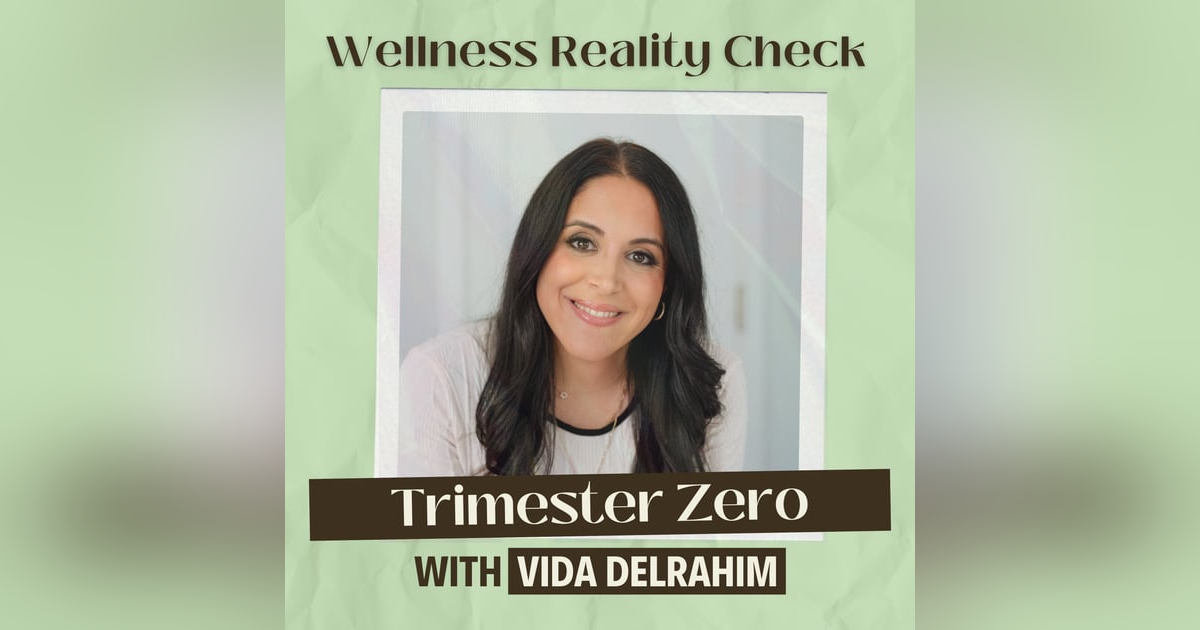



Ashley and Jess are joined by Vida Delrahim, co-founder of We Natal, to explore why fertility must be treated as a team sport and why the often-overlooked “trimester zero” is so critical.
Vida shares her personal journey of two heartbreaking pregnancy losses, the lack of meaningful guidance from conventional care, and how her best friend and co-founder Ronit—immersed in functional medicine—helped uncover root causes like Hashimoto’s and lifestyle-driven depletion. Their experiences led them to realize that men contribute 50% to pregnancy outcomes, yet are almost never evaluated or supported, despite sperm being highly sensitive to stress, toxins, heat, and nutrient status.
The conversation covers the global fertility crisis (rising infertility, plummeting sperm counts, and delayed childbearing), and the everyday drivers: environmental toxins, ultra-processed foods, chronic stress, poor sleep, and overtraining. Vida explains We Natal’s focus on high-quality, clean, evidence-based prenatals for both partners, and the importance of the three months before conception for improving egg and sperm quality.
They also dive into mental health, grief, community, and intuition—how mindset, support systems, and small, consistent lifestyle changes can transform the fertility journey and support healthier future generations.
Find WeNatal products on their website.
Instagram @we_natal
Ronit and Vida of WeNatal have a special gift just for our listeners! Head over to wenatal.com/wellnessrealitycheck to start your WeNatal routine today, and receive a free magnesium supplement ($30 value) with your first prenatal subscription.
Ashley Ihemelu 0:01
Hi, it's Ashley and Jess with the wellness reality check. We are two health practitioners, moms and best friends, bringing a dose of reality to the nuanced topics of Holistic Health. Today, on the podcast, we're joined by Vida delrahim, the co founder and owner of we Natal, a company reshaping the way we think about fertility and pre conception health. VITAS work is rooted in the belief that preparing for healthy pregnancy doesn't start with a positive test. It starts well before conception, and it involves both parents. Through we Natal, she's helped bring critical attention to nutrient sufficiency, education and shared responsibility in a space that has historically placed the burden almost entirely on the women. In this episode, we'll explore why preconception health is foundational, how modern lifestyles contribute to nutrient depletion, and what prospective parents often overlook when preparing their bodies for pregnancy, this conversation is about moving beyond checklists and supplements and into a more intentional, informed approach to building health before the baby for the sake of the parents and future generations, Ronit And Vida have a special gift just for our listeners, head over to we natal.com forward slash wellness, reality check to start your we natal routine today and receive a free magnesium supplement, which is a $30 value with your first prenatal subscription. You
Ashley Ihemelu 1:43
Jean, welcome Vida to the podcast. Thanks for having me. I'm so excited to be here. You started. We Nadal with your best friend, and we loved that story, because, as most of you know, Jess and I are best friends. So could you start it off by telling us how you two met and what your friendship means to you and what you were doing prior to maybe creating we Natal,
Vida Delrahim 2:05
of course, it's a fun it's a fun story. So Ronnie and I met over 18 years ago at Nike. We worked in our corporate headquarters in Los Angeles. We was our early young single days, we were hitting the LA dating scene together, establishing our careers, climbing the corporate ladder, and we quickly became besties. It was a very fun time of life. And we can save the LA dating scene for another podcast, because that deserves, deserves an hour. Let's talk about that. It was rough. Let me just say it was like 51st dates for me. I mean, like there's a lot of talent, but not a lot of good talent. So we we just had, like, a blast in our corporate careers, and we just, like, became best friends. We always said we wanted to work together, like, similar to you guys, but just assumed it would be in marketing or business where our careers had evolved. And so we never really imagined what would transpire out of the heartbreak when we both suffered pregnancy losses. And so essentially, what happened is around eight years ago, I was running global launches at Nike with impeccable precision. I'm thinking like through every detail that an athlete would have to go through to show up at their best possible performance or race day. And what's ironic is that I treated my own pregnancy just like a casual jog, like, Oh, we're young, like we're healthy enough, like we've been married a few years, we should start trying, no supplements, no prep, literally, life as usual. And at 14 weeks, I went in for a routine ultrasound, and I saw the room go silent. My OB GYN face dropped, and he delivered those like devastating words that no soon to be parent wants to hear. And he just looked at me and said, I'm so sorry. There's no heartbeat. Is needless to say, it still chokes me up, because it stopped me dead in my tracks, for sure, I was past the first trimester. I had told everyone I didn't even know this was a possibility, to be quite honest, and when I was bawling in the office, he just assured me, it's common. Just try again when you're ready. They literally handed me a pamphlet and ushered me back through this waiting room of glowing bellies, and I remember crying so hard that my jaw inked, and I thought through every single thing that I ate, the stress at work, the caffeine, the Soul Cycle spinning class, like I could have picked any of those things and just said, That's it, but I was given no guidance. And I, you know, lucky for me, my best friend Ronit had left Nike. She was working alongside Dr Mark Hyman, an amazing functional medicine practitioner, and she started, you know, after we got over the devastation, she's like, Hey, have you thought about checking your thyroid? Have you looked into like, you know, your lifestyle? And even though I was working at a wellness company, I was not well, I was not working out. I was not you. Eating the best, and I, lo and behold, found out I had Hashimotos with targeted diet, nutrition lifestyle changes. I went on to have my healthy baby girl. So Ronit and I had each had a daughter. At this point, we thought the nightmare was over, and you fast forward to kind of spring of 2020, and that early covid chaos. We were both trying for a second, and went for a routine checkup for that same deafening silence. And I remember thinking, you know, it must just be me or something I did, and I kind of kept it moving because I had a toddler at home. The only thing that changes time is ronee called me a week later. She had a miscarriage too. No, wow, yeah. And there we were, like, and I knew she had the perfect prenatal care routine because she was working for Dr home in the wellness space. It was definitely way more advanced than me. And there we were, like, two best friends, two losses, zero satisfying answers, and she was told the same thing when it happened to her. She was 41 and they were just told. She was just told, you know, it's your old, it's your age. Keep trying, and thank God for her, because she being immersed in root cause medicine, like you guys, she wasn't willing to accept there's nothing you can do that just did not sit with her. I took it as truth. And I was like, Okay, I guess, like, you know, but she made us dig deeper. And I remember the day she called me, she went into crazy research, PubMed, after article after research. And she was like, did you know that men are 50% of pregnancy loss? Men are 50% of pregnancy health, you know, lifelong health of the children, and it was so astonishing. It was so intuitive. It's like, such a dumb moment where you're like, of course, men are like, we know it takes you to make a baby, but how could it be that I've had multiple losses? My husband was standing in the room for both of them, and not a single person looked at him and asked a single question. Meanwhile, I had like, postpartum depression after my first launch loss, and analyzed every single thing I did down to, like my shampoo and like what I, you know, like it's, it was mind blowing that we could completely just be leaving out 50% of the equation. So once she called me, that literally was the beginning and the end. She put us on a formula, a DIY version of like, what we need to would come into she put our husbands agreed to, like, be on this supplement stack. We upped our supplement stack with all the research we, you know, went on like a cleaner lifestyle, even though we were, at that point living pretty clean. And we'll talk about all the things that we did, cleaner foods, organic Mediterranean diets, you know, removing plastics, better skin care and body care. And just like slowly, actually doing the things that you would want to anyway, when you're welcoming children into a home, you want to have a cleaner lifestyle. And so the experiment worked. The two of us went on to have another girl each. So by the way, between us, there's four girls, which is a very fun play date. And we literally realized amidst like us going through it, that it wasn't just about us. Our friends were going through it. There is a global fertility crisis, which we can get into. And we knew, like, we actually had to do something about it, that there wasn't just like, Okay, we figured out for ourselves, let's keep going. And that literally met led us to meet at a local Whole Foods we created a Google doc called bestie CO and the like, the mission was simple prenatal care for her and him, and like, shifting the gender paradigms, fertility is not a women's health issue, it is a team sport, and especially from the world I come from, it's something that we need to like, help empower and level up both partners. And so really we want to like reframe our cultural experience and make it better for those behind us. And so our mission was very simple. It was really about if equal biology, equal prep, we both put our best foots forward education over fear. I can't I can't even tell you how much fear mongering there was in our world and our friends experience and really empowering people with this three month prep and community over isolation, I felt so alone in my lost story. I did not know a single human had one until I opened up about my story and realize my own mother had multiple but people didn't talk about it back then, and so really, that community has become our why. And now, every day, we open our inboxes to ultrasounds and positive pregnancy tests. Customers invite us to baby showers. We even got one wedding invite, and it just feels you know that that was the beginning of the end. That's how we realized we have to leave our corporate careers. This is something bigger. And, you know, we created the best prenatal for her and him, and that was around 2022, so we were about at our four year birthday.
Jess Aldredge 9:54
Oh, congratulations. I mean, just incredible to turn you know, your. Pain into purpose and bring the male aspect into it. I just feel like that's such a, you know, typical that we just blame the female, right? And you're carrying not only the emotional burden, but also the physical, you know. Why do you feel like Men's Health, you know, in the prenatal phase, is not discussed at all?
Vida Delrahim 10:20
It's such a great question. I still can't even say I know why. I think, over the hundreds of years, societal pressures, you know, women are carrying the baby, and it's just more natural that they've placed the burden on us. So, you know, we're carrying it. We're scrutinized, because there are some truths and myths out there, right? We do have a certain number of eggs, and those decrease every month. That said, what's left out of that myth is that we can improve our egg quality. There are things we could do over those 100 Days that eggs are maturing. And so men are kind of the myth out there is they don't have a biological clock, right? We see these celebrities like Al Pacino and all these having kids in their 70s and 80s. And maybe it's just the misconception that, like, they don't age, which the research shows, actually that they do, and their fertility also drops at a certain age. And so I just think, you know, in general, it was just a it was just society, just like, kind of going where it's easy, where you're holding but reality was like, we weren't looking at it the way we do anything else in this world, most of us prep for our wedding day. We prep for baby showers and nurseries. We prep for a marathon. I ran multiple marathons back in my day, and no human on Earth that I know would sign up today and run tomorrow. They would get the training plan, they would get a coach do the miles. They would find the nutrition that works for them, the apparel, the footwear, and then show up at the marathon ready to not collapse, but put their best foot forward. And so how is it that when we're creating life, which is arguably one of the most important times of our life, myself included, I literally was just like, we're young, we're healthy, and we're also fear mongered To think every day that we wait we're getting older, so we skip the prep and we try, and that's our biggest PSA is that there is this golden window of opportunity, and there is so much you can do, which we weren't told. And I think until most recently, the sperm has and Men's Health hasn't been an issue until now. The staggering results about this global fertility crisis is that men are becoming less fertile. Men today have half the sperm their grandfathers did, so it's coming to the forefront, and I just don't think it was an issue before. And so no one really asked,
Ashley Ihemelu 12:29
What are some of those targeted nutrients that you're specifically formulating for the male
Vida Delrahim 12:35
Yeah, it's a great question. So it's, first of all, men's health and fertility go hand in hand. So it's not like, okay, let's check these boxes for the three months and then I'm coasting. It's like we've realized when we were formulating we needle for him. It's a very high, potent, pure multi it has all the vitamin spectrums, A, B, C, D, E. But then the real players are the CO Q, 10, which we hear a lot about for fertility, the NAC, the Alpha Lipoic Acid, these are the rich things that help repair oxidative stress. And men's sperm, as I know you guys know, is so sensitive to stress, to heat, to all the things, and that's why these nutrients have been proven to four to five times improve the likelihood of not only a healthy pregnancy, but a healthy child. And what most people don't know is that we're not just trying to avoid miscarriages, we're trying to set up our kids for their lifelong health. And so the team of doctors that formulated we need all spent years. We spent two years on looking at the latest research for men's fertility and women's they looked at meta analysis of hundreds of clinical studies, and that's how each dose and each ingredient was like, so thoughtfully formulated from the doctors, with all the power players of antioxidants, minerals, vitamins and to really just boost and so I say the men's health and fertility are linked. We notice that the men after their partners are pregnant, they're like, I have more mental focus, I have better energy. I have more libido. Like my hair is growing back, and it's like all the signs of vitality and health and longevity are for fertility as well. And so we really want to educate people that it's like great to start early. It's great to feel good, and even if you're past your child bearing ages, you should be on a high quality multi Whichever you choose, one that's clean and potent, because, and I know you guys know this well, our food system just isn't what it was in our grandparents generation. And so now, more than ever, these antioxidants are huge to help our overall health.
Jess Aldredge 14:35
Can you talk a little bit about the global fertility crisis and getting into some of the factors that y'all have identified, or you believe to be, you know, contributing factors to the crisis for sure.
Vida Delrahim 14:48
You know, it's so multifaceted, I think of the way I would boil it down, there's like this infertility main causes, and then we'll look at men's and women's health. But overall, like, I can't even tell you how stagger. Is because when we incepted, we natal It was early 2020 the World Health Organization was saying roughly one in eight couples are dealing with infertility. A few short years later, the World Health Organization is now saying one in six, and the CDC is actually saying one in five. That's really quick to move those numbers, to move that quickly. And these aren't really just statistics. These represent millions of people facing heartbreak and being told they're infertile, or IVF is their only option, or they have no options, or unexplained infertility, which is honestly more hopeless, yes, and like I mentioned, you know, sperm counts are dropping. Men today have 50% less sperm. We also know that women today in their 20s are less fertile than their grandmas were in their 35 at 35 and so overall, you see that, like this is a bigger issue than men and women. So there's like, the positive things of like, women entering the workforce, us choosing to have kids later in life. And it's not all like June and gloom. There's a lot of great reasons that we're choosing to have careers like me and ronee and we chose to enter the childbearing years later. But when you look at like the globe in general, I think the most staggering insight to me was that 2.1 births for every female is our replacement rate. So you realize half of the country is well below 2.1 and so the US even is at 1.7 Italy, I believe, is at 1.2 South Korea is at point eight. Oh, geez. This continues not to be like dramatic, but it really is like a human existence, population issue, like, we can be an endangered species. We hear a lot about global warming and some of these other big, important issues, but what about like, actually, for the people who want to have kids that can't, and so with the rising effect of this infertility, we also know there's something called the One, 1% effect, that it's across the reproductive spectrum, like this, fall in the sperm counts, miscarriage rates are rising, increased testicular cancer, erectile dysfunction. There are so many diseases that are improving and with time, that are not necessarily helping us have children. And so what tends to happen is you learn about assisted reproductive technologies, which we're so grateful for, which we're so excited, exists because it was made for those of us who have structural issues or really have no way of conceiving. However, the PSA for your audience is that that has also become a $20 billion dollar growing industry, and while it's a lifeline for so many and we're so grateful for the technology, it is important to know why you can't conceive, because there could be root causes that no matter what you do, natural IUI, IVF, the nutrition, the removing toxins, all these like little micro acts can actually help your chances, whatever route you take.
Jess Aldredge 18:03
And like you said, the the health of the offspring, then, you know, for not, you know, kind of supporting some of these causes that are contributing to the infertility, then we're also not supporting what may lead to a healthier offspring. You know, yeah, yeah, yeah.
Vida Delrahim 18:19
And fertility is dynamic. It can be improved. And that was something I was never told. It was kind of like, sorry,
Jess Aldredge 18:24
yeah, but what were you told? Were you just told it is what it is? I was
Vida Delrahim 18:29
just told, Oh my God. And I went to a predominant like, la doctor to celebrity, really, and I love him, but he just wasn't informed. He basically said, it just happens, it's one in four. You know? I was like, Is there anything I could do? Not really. Is there anything my husband could do? He likes to drink, he likes to smoke. He like, like, he's living like, No, keep smoking. He basically said, yeah, the strongest one will swim. And my husband heard that and thought it was a hall pass. Like, see, it's not about me. Yeah, yeah. Was staggering. And then we anyways, once the research showed actually, that is not true, by the way, there is both partners, should really take those few months. And I tell the men, including my husband, like it's not forever for you, right? Like it is about putting your best foot forward. And you know, the three biggest things, I think, driving back to your question about the fertility crisis, I'd say it boils down to toxic environment, which we're all living in. Some of it we can control. Some of we can't. Plastics are everywhere, pesticides everywhere, endocrine disruptors, they're in our water, our food, our homes, even in our blood. I mean, the research is kind of scary once you go down it, but we can filter our water we can swap out, you know, our cooking pans for better options, and plastics in our home for glass. And there are micro acts that can make a bigger solution in our what we can control. And you know, one of my favorite researchers, Dr Shawna swong, she has a book called The countdown. Have you guys heard of it? She links. A lot of these sperm decline and infertility to plastics. She actually has a crazy quote that, if the trends continue, sperm could reach zero by 2045, I know that's like around the corner.
Jess Aldredge 20:11
We saw that actual, that same study and quote, like, in our in our nutrition training, so like that is like the trajectory that we're on, you know? And it's just amazing that people like you are speaking up and creating solutions. Because, sure, there can be more that's even needed than taking a prenatal, but like, let's start there, right? And like, totally, how many women are just told there's nothing you can do? And I just have unexplained fertility, and, you know, I mean, countless 1000s, hundreds of 1000s. It's just, it's devastating, when you really think about it, or that their only option is IVF, you know, totally Yeah.
Vida Delrahim 20:48
And when you think about the things you can do back to, like, toxic environment, the other few are, like, going back to our ancestors. It's not like you have to spend millions of dollars for biohacking equipment in your home. It's like, nutrient dense and eat the best you can, whole foods, less Ultra processed. I know this is stuff you guys preach all the time, and we're also sitting and indoors way too long. Like our lack of movement and being indoors is also hurting men and women. Men who take 4000 steps can greatly boost their testosterone levels. There's studies that show it. So that's less than half a mile. Guys like, get out and get walking. It's and then stress and sleep, I'd say, is my like last thing, it's like, we're all more stressed than we've ever been. We're all doom scrolling. We're all sleeping less. And so going back to prioritizing your sleep, I I invest in the aura ring. It works for me, and it kind of teaches me when I get the deeper sleep and when not. But sleep is probably the most underrated thing that isn't discussed these days, and we're just doing less and less of it. And my, my biggest, you know, two cents is like, if you can just go back to some of the basics, like investing in your sleep, which repairs your immune system, which really also preps your body, that it is okay to get pregnant, that it is a safe I am taking care of herself. And most of our medical advisors would even say, during this time, if the workout makes you feel good, great, but if it's a stressor, if you're going so hardcore, if you're waking up at 4am to get the workout in sleep over sleep over workout in this crucial time, in that time period, exactly. And I had friends who were like, hardcore CrossFitters and, Oh, totally. 5am I couldn't get pregnant. And I'm like, Listen, I love that. You love this, but maybe you could just, like, sleep a little bit more and do a little bit less intensity so your body can repair itself. Because it is a stressor on our body. It's a great stressor, yeah, but during this time, it is important, and so I'd say those are just some of the low hanging fruit of what's causing the fertility crisis. Some of it's out of our control, but we're passionate about educating about the things we can do.
Ashley Ihemelu 22:48
While Ronit had your co founder, she had moved to you know, working with Dr Meyer kyman, you were still working at Nike. How did, how were you able to change your lifestyle while maintaining your corporate career to achieve the pregnancy that you wanted.
Vida Delrahim 23:08
Yeah, it was hard, but once you like, once she educated me, I couldn't look back. And so for me, I consider myself like a smart, well educated person, but I just didn't know I was snacking in the office with Ultra processed foods. Mostly, I would have like, 12 cups of coffee, no joke, like, I love coffee. I love coffee. And it was like a coffee culture. And we would go, we would walk to coffee. I mean, not 12 cups, you know what I mean, but I would have a few. And I would totally linger until, like, in the afternoon, which destroyed my sleep. But I wasn't like intuitive at that point. And it took it took one, I'd say, once I got educated, I couldn't not know what I then knew. And so first with the Hashimotos, I did attack that by becoming gluten free, dairy free. I did go on thyroid medication, which dramatically helped. I, like, took it seriously, and I did end up having a healthy baby girl. So I saw that for me, my body was not aligned, and, oh, by the way, my LA, I was doing labs, it was always coming up, quote, unquote, normal, totally. Nothing was being flagged by my regular doctor, my OB, GYN, and that's the other thing I learned that, like sometimes you I knew I was dealing with brain fog. Why else was I drinking so much coffee? And I knew I wasn't sleeping, but I wasn't digging deeper, I was just taking them telling me my labs are normal, as it's fine, but it's not optimal, and especially when you're trying to have a child, you need to make sure your hormones are in check. And that solve worked for me, and so once I learned it, I also did start feeling better on a cleaner diet, on not snacking all day, on processed foods, on I always loved working out, but sometimes in your corporate career, that goes to the wayside because you're working and you're sitting. I started incorporating, like, touch bases with I had a big team at that point. I managed like 60 people in our LA office, but I started doing walking meetings. So I was like, Okay, we'll do our touch base, but we're not going to sit in my office. We're going to walk around the block. Yeah. And I just made small acts that I could. It wasn't all perfect. I was still sitting in an office for most of the days, but I did control the things that I could, and I started to have a little bit better boundaries with work, because i You can't do it all. And my system had been in fight or flight, adrenal fatigue, cortisol like for 20 years in that corporate career, there was no turning back, and once my body stopped me, that's when I kind of woke up to it.
Jess Aldredge 25:28
And it's not to put, like, your career on the spot or anything like that. But like, do you feel like it was one of the contributing factors, you know, to your health and your you know, and not that you needed to totally quit your job.
Vida Delrahim 25:41
But for sure, like, some of it's my personality, right? I'm very type A I want to work hard, I want to do a good job, but I didn't have a healthy, like, the first 10 years of my career. I didn't even have a boyfriend or a husband, so, like, Nike was my, my everything, yeah, and I would work every night, every weekend, and I loved it. It was like, you know, the best sorority, fraternity, you like, breathe the brand and love it once I, you know, the husband was the first boundary. I was like, Okay, I can't work 24/7, now and then the first child dramatically. I was like, Okay, I don't have to go to every evening event. I cannot. I literally have another human to take care of. And so I wish to tell people before they hit that it's so important to figure out those things, and it doesn't have to be. I think the word boundaries gets a little misused as well. Like I still think the working hard and the hustle is so important, especially earlier in career, career, because I established myself that way, and I grew and I became, you know, like a better mother wife, because I learned so much and I grew and I loved my career and I was passionate about it. That said, What shouldn't fall to the wayside ever is your health. Is the things that make you thrive, whether it's it's always kind of nice to have like something on the side that you love, whether it's workouts, meditation, working like volunteering for a charity, whatever it is that kind of lights you up, because I will say the danger of, like, loving your career too much when something goes wrong there, or I've lived through, like, so many layoffs where, you know, economy shifts, that's your whole world, and me included, my identity was wrapped with Nike. I was known as the Nike girl and my family and friends, and there was so many layoffs where 20 year employees were walked out in front of me, and I was like, I need to have something outside this place, because if that was me, I would crumble. And so you should always have some passions outside. And it's great to give your all build your name, but also thrive personally and professionally, because the second that it becomes this outweighed scale where you're like losing yourself to one side, I'd say you need to rebalance.
Avery (Voiceover) 27:57
You're listening to the wellness reality check. The Wellness reality check.com
Ashley Ihemelu 28:04
How did your life change with just kind of deciding to follow more of, like, your gut and your passion and giving up that security of like a corporate job,
Vida Delrahim 28:14
it was hard, so I'll tell you how Ronit and I did it, because we didn't do it at the same time. And this is for anyone in you know, entering into an entrepreneur state. First of all, leaving a very cush corporate job with, like, a nice salary, health benefits. Oh, by the way, they call the corporate handcuffs, because no matter when you walk all that stocks that you give up is like, yeah, shed a tear like it was painful.
Jess Aldredge 28:37
I worked for Lululemon for a very long time, so I might identify with everything you're talking about, and I love to open a restaurant, so I completely relate to what you're saying. You're falling off a cliff, and it's like, here's a good punch.
Vida Delrahim 28:51
Totally, totally. And so what we did, Ronnie actually left Dr Mark Hyman, and she started doing weed needle for a time. I was the breadwinner in my family. I was the insurance in my family. So I started doing it nights, weekends, on my maternity leave, like, whenever I was off, I would be on we needle, and I just left last year, so like, I'm only yeah and so for us, that worked, because I want to make sure, also I didn't become a financial burden to we Natal, that we could grow this thing without, you know, two corporate salaries, and it's hard. We weren't VC backed. We're bootstrapped. We are growing this thing with, you know, integrity, and it was important for us to not have the pressures to reduce margins and make the product cheaper, which some of our friends in different industries did, sure. And so, yeah, so then when I did jump, it's still hard no matter when you do it, like you said, but it's kind of like your guts, like I can help so many people, and I can't look back and at that three years in, we were seeing the results of like 30,000 helping 30,000 families have kids, and we were seeing these, like, heart wrenching stories. Of people who were told IVF is their only option, or were told they have unexplained infertility, found functional medicine, found we needle. Both partners, got on board, and they have their miracle babies. And so I just felt like my impact on the world, and now that I have two little girls, I was like, okay, 20 year corporate career. I love Nike till the day I die. It's like where I grew up. But it was time, and Roni was holding down the four, and I think she would kill me if I didn't leave soon.
Jess Aldredge 30:26
So how amazing that that job prepared you for. Yeah, you know everything that you're doing in your business, can I ask now a little bit about, like, your sourcing, and how do you all source your ingredients, and you know a little bit about your process for your product, absolutely.
Vida Delrahim 30:43
And by the way, you would think Nike and we need to have nothing to do together. But so much of totally our ethos came from there, and it dramatically so. Everything from the sustainability glass jars, beautiful branding, a premium brand like these, are all things that we learned from Nike. And it was so important to both of us when
Ashley Ihemelu 31:02
I opened the product, I just want to let you know when I open the product and the glass bottles and the little packages of the actual pills so you can order refills, I was like, this is an entire experience, you know, like this. This just feels good. It feels luxurious. It feels like you know you're really doing something for your health. So whatever you're doing, it's
Vida Delrahim 31:26
working well, and it was intentional. I'll tell you. First of all, yes, we're both branding people, and the first thing we did was that we assembled this amazing medical board. So I don't want you to think like two moms formulated this product. Definitely not the case. Mark Hyman, Kelly, Levesque, Bridget tigemar, big names in functional medicine. We pulled the best of the best. Kathy Swift, I don't know if you guys are familiar with her. She is like the grandmother of functional medicine. She was told to introduce Mark Hyman to functional medicine. So we assembled this board of people that we knew would scour the research, would make sure the integrity is there. So that's how let's talk about you know, before even sourcing, we scoured the best medical board, and we knew, in our own experiences, there was a few subtle problems in the supplement world. One, it's not regulated by the FDA, so literally, anyone with an idea could put out a supplement. And I'm sure you've seen on Amazon, there's probably 8 million options. What you want to make sure, no matter what you guys are taking, make sure you go with a brand, that it's third party tested. So that was requirement number one. We were never going to create a brand unless we were going to do our own internal testing. And third party, which is external testing, we want to make sure it's clean. Have you ever noticed that some supplements have a whole paragraph of other ingredients, additives, fillers, colors. I mean, you never want to be taking that much less when you're trying to have a baby. And so we're like, okay, so it has to be clean, potent and pure, and the forms of the ingredients matter so much. And so we've noticed there's so many companies with synthetic forms and ones that not everyone can absorb. And so we wanted to re look at what was out there. Our original concept was actually just the men's prenatal. It didn't exist. When this stuff happened to us, we were piecing together the prenatal for our husbands. It didn't exist, and we saw that as the biggest opportunity. But then, when we looked at the Women's prenatal world, while we thought there was too many. We didn't need to make one. They actually there was a need. There were either over compensate, over over compensating, under delivering. Sorry, my coffee hasn't kicked in yet. I only do one cup a day now. For those who are worried about me, like we pulled back the covers on the female prenatals, and we realized there's two camps. There's, like, really expensive ones that are maybe eight to 10 capsules a day. Yeah, clean, good formulas, but medical, looking hard to get. Maybe you get it through a doctor's office, and then the really accessible ones that you might get at a local store, a drug store, horrible ingredients, additives and fillers, junk, not the bioavailable forms, definitely not third party tested. And so we wanted to really create fertility as like, to your point, thank you for saying the word experience. It like lit my heart up. Because we want to make an experience. We want to make you not like, so ashamed of these bottles that you put it in a cabinet, you forget about it and you never take it, because the supplements only as good as the consistency of you taking it. Yeah, and so creating something beautiful that you might leave in your kitchen or your bathroom, and we were ripping plastic every day, and that wasn't sustainable. So the glass drawer is a little bit about making a better planet for the kids that we bring back into it. So there was intention behind the design. The supplements, like I said, it took two years for the medical board to kind of work on what we can get into three capsules a day, because we want to make it doable. I Roni had me on this protocol that I swear with all the additions, extra choline, extra folate, extra vitamin D, then iron, I could not do it like choking. I was at, she had me at like, over 12 to 14 capsules a day. And she's easy. She's like. From the functional medicine space. She can, like, down 20. And I'm, like, nursing one or two per meal. Me too. It was about reinventing something and making a better experience for for anyone. And so we sourced the most pure, bioavailable forms. They're sourced from, like, one of the cleanest manufacturers, by the way, we had to go through 20 plus manufacturers, because they all want to produce with fillers. And now I know why, because it's cheaper, it's easier. They can faster. They could do big runs, and we do small runs, and it's operationally a nightmare. But like, we're not gonna, we're not gonna give that up. Our shelf life is only two years. Other companies is probably gonna sit on there. I don't know that. Like, some of these brands have been probably on the market since our parents, and the formula hasn't evolved. And we've been only around, you know, almost four years, and we've already updated our formula one time, because new research came out, and we always want to be with the latest research.
Ashley Ihemelu 35:56
What is trimester zero and why is this so important to a healthy pregnancy, and obviously a child, so many people don't realize how important it is to prepare for pregnancy and how this can even impact the child's health.
Vida Delrahim 36:11
Yeah, so I want to the the term trimester zero was actually coined by an amazing doctor who we're friends with, Dr afruz demiri, and she actually does an amazing course, and I believe she has a book coming out, and it was this idea of the three months before conception is this golden window of opportunity that no one's talking about. And so a lot of times we hear about trimester one and the nausea and the DA we hear about trimester two and that glowing belly and you feel great. And even we hear about fourth trimester, a lot like postpartum and how to take care of yourself and the hair falling out, and everyone has a different postpartum experience. But literally, no one's talking about trimester zero, which is the three months before. And so back to this being the opportunity where both partners can ditch the toxic lifestyles, can bring in cleaner versions of home care products. Can eat a cleaner experience, can move a little more. Invest in their sleep. These are like the lowest hanging fruit to creating a more optimal opportunity to welcome. You know that child and why the trimester zero occurs is because, for women, the egg matures around 100 days before it matures, and that's the time where you actually do have the ability to improve your egg quality. And for men, they go through something called spermatogenesis, which is that they're so that we call them the superhero, because they're making sperm every second of the day, about 1500 sperm a spec second, I believe. And so in three months, they completely have a new batch. And that could be the difference in having, you know, this healthy child of both sperm and egg being at their optimal levels. And so that three months of PrEP is truly, in my opinion, the best gift you could give your future children. And that's why we're so passionate about educating around it. And by the way, Dr damra is also part of our medical board and someone who helped formulate we natal that's awesome.
Ashley Ihemelu 38:07
How important is mental and emotional health when you're struggling with infertility? And how are you supporting women differently with your company? Because I know y'all have some other things besides supplements.
Vida Delrahim 38:19
Yeah, thank you for asking that. So this one's near and dear to my heart. When I was experiencing both losses, I kind of mentioned that I quickly went into a very dark space, especially as a type A like to control everything, like to know everything. It was very daunting for me to like, especially the first one, because I didn't know if I would ever have kids. Can my body do this is something, am I damaged? And so we knew when we were creating, we Natal. We can give you the best supplements. But if you are in a negative spiral, like I was, it's really hard for your body to prioritize conception. It is quite literally sending the blood to our limbs, as if we're being chased by a bear. I was in that zone, probably daily, and your body can't really nurture itself to know that it's safe to have a baby. That's why it protects you from times of war and famine. And like you know, it's basically being told warning, and it's harder during those times. And so what I what I didn't know back then, that I wish I knew now, wish I knew then was how important your mental state actually triggers your whole physiology. And we used to think of it like meditation, all this stuff as woo, woo back then, like no one really told you that you could check all the boxes, but your mental state is arguably as important as what you're ingesting, what you're putting into your body. And so it was daunting for me that I met our dear friend Lillian, who is a manifestation and life coach, and she told me how powerful My words are. She told me that like this is not going to help my body. And by the way, I'm so proud that more and more research is coming out about the mind body connection, and it's not as granola as it once was, if you will. So when we create. To the supplements, we just want to create a little bit of a gratitude journal and a beautiful journal for people to like even on the darkest days, find a few minutes of gratitude a day. And it's proven that a few minutes a day actually can improve your physiology and set your body into more safe space and a safe state. And so it is a gift to those people that subscribe together. It's a great gift for anyone newly maybe trying. And also, we just about to launch a series of meditations, depending on what phase you're in, trying to conceive, pregnancy, postpartum, overall wellness. And Lillian did these meditations, and they're short and sweet. I know many of us find it hard to still our mind. But the bigger PSA is, do what works for you. If being in nature, surfing, walking, I don't know what it is. Everyone has their own unplug from the stressful world. It's not good advice to say, don't stress when you're when you're told you're when you're miscarriage. We're all stressed. So all I'm saying is just find the things that bring you joy. For me, some days, the thing that I would write down that I'm most grateful for was, like, my cup of coffee. I know you guys are gonna think I have a coffee problem,
Jess Aldredge 41:10
really my own amazing
Vida Delrahim 41:13
it's finding the small things. The sun is shining today. Yeah, I got a new outfit that I love, like, whatever it is, if you can just slowly, do it daily. And it's changed the way I think that I talk. I used to like, every time people ask me how I was doing, I'd be like, I'm tired because I had two kids. But then I reframed it now, and I'm like, I'm grateful. Like, I'm so grateful that I have these two kids, and the slight work that goes into it is so worth it. And so it's a beautiful journal supporting our not yet pregnant couples, are pregnant couples. It's great questions to do together if you're in that trying phase. And it's also the bulk of it is a three minute a day gratitude for you, for your partner, for your future baby, and for yourself. I think sometimes the hardest one for me to write in is like, what's that loving thought for myself today? But it feels really good. It feels really good. And so we're big believers in the mind body connection. We want everyone to support themselves, however, is natural for them, if it's a red light mask and some self care, or, do you, is our saying? Like, you know, if there isn't a one size fits all, and I think that's also something super important to mention during fertility, I think, you know, I have friends who are done everything right and are struggling, and then they look to their right and they're like, my friend eats fast food and drinks every day, and they got pregnant, no problem. And so it's like your career. It's like anything else, like you're in your own journey. There isn't a one size fits all. And actually, the harder it is, but the more important it is to, like, kind of shut off the social and the narratives of everyone else, because it's you don't really know.
Jess Aldredge 42:48
How big a role do you feel like community played in, like your own, you know, getting through that time period and obviously having your best friend going through something similar, but actually opening up and sharing your story. Because I feel like it's something a lot of people keep very private. How important do you feel? Like that was in your both of your experiences?
Vida Delrahim 43:07
This is such a great question, because I actually, I'm Persian, so I come from a culture that typically sweeps it under the rug when things happen. Like I mentioned, I didn't even know my own mother had multiple miscarriages, because back then, it was just like, put a put a strong face forward, smile and show up to friends and family's houses as if nothing ever happened. That's kind of how I grew up, and when I had my first one, that was the go to reaction. Like, both both my parents and my in laws were very much like, you're good, you're fine, you'll have another pregnancy. Like I also mistakenly rushed back to work because I didn't want my career to suffer. I didn't want my male bosses, and it was a very male dominated industry, to like, think less of me. I didn't mourn, I didn't grieve, and I didn't talk about it. And I actually remember writing an email to the entire office, which was like hundreds of people, and saying, because they all knew I was pregnant, I was past the first trimester, so I had to write an email that said, this is what happened. I'm returning to work on Monday. I'd appreciate it if no one talked to me or hugged me or did anything that could trigger me at work. And I look back and realize that was like such a ridiculous mood, that's what move I needed community more than ever. Yeah, and so what I did I pushed it under the rug, and I showed up, and it wasn't till A while later that something else triggered me, and I fully grieved. And my only learning from that is the second time around, when I had it and my best friend had it a week apart, and we started, we Natal, and I started going on podcasts, and I started to share, I can't even tell you, what a different I felt that this, I was so grateful to have this ability to not like, not do what I did the last time, not just take my cultural cues as like what was right for me and nothing. Has helped me more than talking about it, and wherever is safe for anybody. But let me just tell you, we natal can be your community. We have a private Facebook group. We have an email. You can DM me personally. We're here for and I will hop on the phone with anyone. But it's so important for me to everyone has a safe place to talk about this stuff, because it really, for me, the first time was toxic, toxic living in my body, and I felt like I just had to be strong and trek along. When I was mourning and I was six months of scrutinizing what I did and what I ate. And it's not, maybe natural for everyone. Maybe some people can write it down, maybe some people can go in an anonymous forum and leave it there. But in my opinion, it is important to let it out and find a way you could go to the beach and scream, which I did after my first one. I just needed a space to go that no one would judge me. And I'm very proud that now I feel like the conversation is coming out and women are sharing their IVF stories and egg freezing stories, and it's not as taboo as it once was. And back to the male side, there's at home sperm testing kits, and men are talking about fertility in a different way, and it's not as taboo as it maybe was for our parents or grandparents. And it is so important to talk about that's all I'll say. Important to get it out. Because one, you're not alone. Two, sadly, this is happening more than ever. And three, it's just about doing your best and then having faith there's like, not much else we can do after that, and there's no foolproof method, or else we would all be billionaires if there was but there is so much you can do, no matter what route you want to take, and focusing on those fundamentals we talked about, and you and your partner getting on the same page, and the mental aspect which we discussed is a game changer. And I can tell you, we have the proof point of 10s of 1000s of customers who it's worked for.
Ashley Ihemelu 46:51
I feel like we talk a lot in this episode about how the female and the male experience infertility is not equal, right? And do you feel like your grief was different than your husband? I know that so many women will shoulder infertility on their own, and I can't help but think what that does to their overall health and well being even trying to conceive again,
Vida Delrahim 47:16
I 100% think men also suffer, but differently, like my husband's pretty Alpha Persian male, and I remember he was at the appointment. He was shocked. He was shocked, and he immediately went into like fixing mode, which wasn't what I needed. I needed to grieve. I needed to call every one of my girlfriends. I need to go to their houses. I needed to just, like be and someone not fix. And so, yes, that, I definitely think there's a different experience. And also, like, I think it's also so empowering for the men to have a tangible tool of something they can help us with, yeah, and it's like a supplement is, like, the lowest they all want to fix, yeah, lowest hanging fruit, right? And, like, just some subtle changes. And we are going through so much. And no matter what route you take, the women are going to carry the baby, maybe feed the baby, maybe go through injections like there's so many things that will happen that getting on the same page, and that's why, also it's even nice this journal to do before you even want kids and talk about some of the things that we never talked about. Who's going to help us when the kids come, what if we struggle a little bit? What's your point of view? What's my point of view? Like, I wish we did that when we weren't struggling, when we were in a loving, married state, versus coming from lack in the sense of, like, we're bitter and we're angry and we're coming at it very differently, and we handle grief differently. And so I just think it's so important for that conversation to happen up front, if possible, and if not, like, just know that they're whatever doctor you find, whatever community you find. It's it's like dating. It's like finding your partner. You need to make sure they fit your vibe and they support whatever you want to do. And it's not just like you're being dismissed or that they're not going to probe deeper if you want to. And so so much of our journey, even before you know, becoming parents, is about advocating for your own health and knowing what's right for you. And then more so when you have a child, you're going to have to really be your own advocate. And so some of my point is this, and giving men the tools has been amazing. Men have been loving, you know, the supplements, because they are feeling better. But I'd say it's back to like, you know, do what works for you, and the men have to take that as well, whether hopefully it's like a healthier habit, like a workout to let out the anger, or something like that. I know my husband tends to go to like, the not so healthy substances, and that was hard for me too, because I was like, Wait, we need to prep. And like, you shouldn't be doing that, but that was his, you know, outlet,
Ashley Ihemelu 49:49
yeah, it gives real context to when females are feeling all alone and like they're shouldering the burden, just to know that, like, men grieve in different ways and, you know, and
Vida Delrahim 49:59
that's okay. Okay, and hopefully they are finding an outlet that's like, safe and healthy for them to let it out. And they're they they do. And what we realize these we need all men are, like, going to be the best dads, because they're showing up from trimester zero. They're showing up to put their best foot forward, whether they're taking more steps a day, whether they're giving up the sauna that they love because they know heat is bad for sperm, you know, like they're giving that future child their best and they are going to be the best parents. And so like that parenting situation starts well before you conceive.
Jess Aldredge 50:32
I love that. What would you say to women that are maybe in their 20s, early 30s, that maybe aren't even married and not even considering having children? I honestly feel like our fertility crisis is often because we don't think about it until it's about to happen. Right? What would you say to those women? How can your company even support women who aren't even in the place of trying or anything like that, but to just start working on things then before it's, you know, kind of too late?
Vida Delrahim 51:00
Yeah, I'd say, what our medical board tells all of their patients and all of our community, it's never too early to be on a great quality prenatal and also to, like, make slow, micro changes in your home, those things add up. And so if you love your Chanel lipstick, you know nowadays, Sephora has a whole section of clean beauty. It's not as like granola as it once was. And so it's not saying go home, throw out everything you have and start from scratch when you run out of that, get a cleaner version. When you run out of your Windex, go to branch basics, or Levant, or one of these cleaner brands like do things in small, micro wax, because it wouldn't be realistic. When you're ready to have a kid or you find your partner, then to start making you don't you want to be healthier and have a life of longevity as a parent. And back to the point of the prenatal to us when we learn how depleted our food system is that average Americans are eating 70% processed foods. Our food and our minerals and our soils are so depleted that like, you know, the analogy I love is that, you know, eating one orange in our grandparents generation is equivalent to eight oranges today, even if you're eating full time for fertility, no one's eating 100% eight oranges. And so it just shows that a little booster and finding one that's clean and potent and pure. If you're in your 20s or 30s, you should be boosting your health anyway, and doing these small, micro changes. Honestly, it's, it's advice I wish I got moving, incorporating movement, finding healthy ways to mitigate stress, because life only gets more stressful. You think you find the love of your life and you're like, golden, and it's like, not. It's not like that. Marriage comes with its own challenges. Children more responsibility, more butting heads, and so having those practices in place, like the like, just knowing what sleep situations work for you, knowing your home is clean, then you're not just like, oh shit, I'm having a baby. Excuse my language. I need to buy new laundry detergent. I need to, like, remove all these things. It's like you've already made the changes you're living the life here in LA, it's so predominant that we all are kind of on this zone. But no matter where you live, it's important to try to find more whole foods, try to support local farmers markets and get know where your food's coming from. Food is medicine. I truly believe that if there's, like, one thing you can invest in, start with your food, then maybe add supplements. Then do all those free things, like a water, cleaner water, open up the windows and get clean air in your home every day, because the air outside is cleaner than the air inside your home. Get some plants. There's, like, so many little things. And actually we have, we needle.com/guide it's a free guide of like, Oh, nice, simple steps you can do like this, and it'll guide you through it. Like, okay, I'm thinking I might want to one day, either freeze my eggs or have kids. What are some small things me and my partner, or me myself, can do? And our amazing medical board put some tangible things in a fun little downloadable PDF that you guys can do. But it really is back to the basics. It doesn't have to be expensive. And it's about investing in your mental health, your physical health, your food I think the foundation there is so solid. It's wish. I wish I knew that 20 years ago.
Ashley Ihemelu 54:12
Yeah, yeah. What's the biggest lesson that you've learned with starting we Nadal?
Vida Delrahim 54:19
I think the biggest for Ronnie and I is trusting our gut. I think, as female founders, we've never done this before, and we've, you know, we've had a few situations that were costly, if you will, where we didn't trust our gut. The first was our website. It's a funny story. We interviewed like 20 website developers found one to say, all the right things. Love them. Gave them the work, and on round one, it wasn't right. And then we already signed a contract. We were 10s of 1000s of dollars in, and we just kind of buried our gut instinct. And what we ended up doing is like it was a painful process, till the day our website launched, and we've now paid three. Times over to redo it anyway, and sometimes it's hard in the moment when you think you're obligated by contracts, or you think you know, we're new at this, so we don't know, but like, it's even in your health journey, trust your gut. You know, if you're like groggy and that's not normal, you know when you're not yourself? And I wish I had done it earlier in my career. I wish I'd done it at we needle, and those tend to be not just like, costly mistakes, but time energy. Your consumer doesn't have the best experience because, you know, you you just push through something that could have been better. And so even if it is, like, cutting ship early, even if that's with a partner, even if it's that, you know, like, sometimes you're like, I'm in it and it's comfortable, and he's nice, but like, going back to our gut, and I intuitively think it's harder for women. I don't know why, but I feel like my husband, just like, has this ultimate certainty, even when he knows nothing about the topic, he is just like, certain. And I'm like, second guessing myself, and should I do this? And I'm trying to channel more of that certainty, like, that's something that I think whichever route you take, you'll figure it out, but like just go with your intuition, it's powerful, and typically, you'll be right.
Ashley Ihemelu 56:11
I love that well, from two besties to you and your co founder, we really appreciate you being on the podcast today and just sharing just a grounded approach to fertility, but also the resources to help people achieve those goals. So thank you so much for your time,
Vida Delrahim 56:30
my pleasure, and I hope it's helpful. And anyone can DM us, find us on wenatal.com or care@wenatal.com is our email, literally, if you say you want to ask vida a question, it will direct right to me, and community is, ultimately, I'd say, the best thing you're gonna want that village when the baby comes and well, into my kids are now four and eight, and I can't tell you, every day it's a juggle of, like, Who's picking up and a cousin and a niece and my neighbor sometimes, and like, community is everything. And if that's the one thing you take from this, I'd be so happy. And if you have any questions or have lost or anyone just wants to chat, I will make myself available. And I'm just grateful thank you for helping us share our mission and sharing this story. And we're just very
Jess Aldredge 57:15
grateful. Thank you so much. You're
Ashley Ihemelu 57:17
an easy company to get behind, so we are honored to share your message. Thank you.
Matt Cundill 57:23
Thanks for listening to wellness. Reality Check for more. Go to wellness. Reality check.com.
Tara Sands (Voiceover) 57:30
A production of the sound off media company. You.