
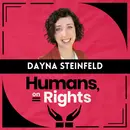
Dayna Steinfeld: The Notwithstanding Clause and the Silencing of Minority Rights
When governments can override the Charter before a court even looks at it, who's left to protect the people who can't protect themselves at the ballot box?
Winnipeg labour and human rights lawyer Dayna Steinfeld joins Stuart to break down one of the most consequential constitutional debates in Canada right now: the expanding use of the notwithstanding clause, and what Manitoba's Bill 4 is trying to do about it.
Provinces like Alberta and Saskatchewan are invoking Section 33 to push through so-called "parental rights" legislation: restricting access to gender-affirming care, controlling names and pronouns at school, limiting sports participation. Legislation that physicians say causes measurable harm. And some governments aren't waiting for courts to weigh in. They're invoking the clause preemptively, with the argument that courts aren't even allowed to look at it afterward.
Manitoba's Bill 4 is a direct response to that. It would make court review mandatory any time the province invokes the override, keeping the judiciary in the conversation even when government has the last word.

 Apple Podcasts
 Spotify
 Amazon Music
 iHeartRadio
 We're talking:
- What the notwithstanding clause is and how its use has shifted dramatically since 2018
- Why Alberta's "parental rights" legislation almost certainly violates the Charter — and why the government invoked the clause anyway
- Why this isn't only a trans rights issue
- Why "just vote them out" fails when the people most affected are children, or minorities without electoral power
- What Bill 4 does, and why it matters that a future government could repeal it
Dayna also shares how growing up in Winnipeg and studying the General Strike — particularly the role of immigrant and Jewish communities, and the women who helped sustain it — set her on the path to labour and human rights law.
Stuart Murray 0:00
This podcast was recorded on the ancestral lands on Treaty One territory, the traditional territory of the Anishinaabe, Cree, Oji-Cree, Dakota, and the Dene peoples, and on the homeland of the Metis Nation.
Amanda Logan (Voiceover) 0:20
This is Humans on Rights, a podcast advocating for the education of human rights. Here's your host, Stuart Murray.
Stuart Murray 0:31
Over the past few years, the Notwithstanding Clause has moved from a rarely used constitutional tool to the center of Canada's political conversation. Provinces like Ontario, Quebec, and Saskatchewan have used or signaled they're willing to use it to override parts of the Canadian Charter of Rights and Freedoms. That shift has sparked a growing debate: is this a legitimate expression of democratic power or a concerning erosion of individual rights? As governments reach for it more quickly and more often, Canadians are being forced to confront a question that once felt theoretical. How far should elected officials be allowed to go in overriding fundamental freedoms? My guest today is Dana Steinfeld, a Winnipeg-based lawyer specializing in labor, employment, and human rights. Can't think of a better person to have on on this conversation, Dana Steinfeld. Welcome to Humans on Rights.
Dayna Steinfeld 1:24
Thank you, Stuart. Happy to be here.
Stuart Murray 1:25
Tell the listeners a little bit about your background. Just, it's important. I've got some things, if you don't touch one, I may go to, but it's always great to hear from your perspective. Your background, how did you get interested in where you are today?
Dayna Steinfeld 1:37
So, I am a primarily, I am a union side labor lawyer, which to me means that in everything I am doing I am working in the human rights realm, because workers' rights are human rights and vice versa. So my practice involves acting for unions and their members, primarily in day-to-day issues in the workplace, but also in human rights matters in the workplace, and that can involve charter issues. So, we've seen lots of examples in the history of the Canadian Charter where there are charter cases advanced by unions, or that unions are involved in, and that's really the heart of the reason of why I got involved in the work that I'm doing, is that I've always really cared about workers' rights and human rights, and doing work that can make a difference in those areas.
Stuart Murray 2:36
So, you're a Winnipeg, or
Dayna Steinfeld 2:38
I am.
Stuart Murray 2:38
Okay, so growing up in Winnipeg, Dana just kind of put it in perspective, was there something that happened when you were going in, whether it's high school or what got you decided that you know this is a passion that you wanted to look at in terms of from a union perspective, workers' rights, is there something that kind of got you down that particular journey?
Dayna Steinfeld 2:58
Absolutely, so I think pretty common story for Winnipeggers who end up in this area. I was always interested in history, Canadian history, local history. My undergraduate degree was in history, and learning at an early stage in school about the Winnipeg general strike, and that really being a story of marginalized people of immigrant communities on my on my dad's side, my grandparents were immigrants, Jewish immigrants, and a big part of the Winnipeg Strike movement were other Jewish immigrants a few decades before my grandparents arrived, so it really inspired me and taught me a lot about the power that people have and the power that we have as a collective and then I learned more about the role of women in that strike and how big a part of the kicking off of the strike and maintaining of the strike women were and so it really just opened my eyes to those issues and to how important they are in Winnipeg's history, and really just started to pay attention to workers' rights and the labor movement.
Stuart Murray 4:09
And did you ever consider politics?
Dayna Steinfeld 4:12
My mom has always said that no child of hers is allowed to go into politics, she couldn't stand to watch us be attacked on attack ads and that kind of thing, but no, I mean, I think for me I really feel I get to be on the on the ground floor and working alongside unions to help advance workers' rights and the labor movement. So this is my my happy place.
Stuart Murray 4:35
Yeah, and I mean, I noticed wasn't hopefully you don't see that as a setup question. It's just that when people are passionate about making a difference, you know, they're looking for what does that platform look like. For some, you know, it's as you chose, through a through a legal lens to sort of, you know, how do you take the law and make sure that human rights are not being impacted in a negative way? But some people look at it and sort of jump into the into the political arena. I mean. I was one of them, but regardless, absolutely. So, Dana, before we jump into some of the specifics, you, your background is quite impressive. You, you spent some time working in the Supreme Court, I think under Justice Marshall Rothstein, was it? Yes, by March it was. So, what was that experience like, and how did you get there? The
Dayna Steinfeld 5:20
position that I had at the Supreme Court is called a clerkship, so typically law students will apply while they're in law school, and it's a job that you do right after law school or within a year or two of law school, and really you're working alongside the judge that has hired you to support their work, so it's a very heavy, very intense caseload at the Supreme Court. They're hearing really only the cases that have national importance, where there's confusion in the law or something that needs to be cleared up, and so you're doing research, you're helping provide assessments of the arguments that the parties have provided, and assisting the judge as they take the case all the way through to a decision. So, as a fairly recent graduate of law school, it was an incredible experience to really see law in action in that way, and I was also really lucky, the year that I clerked was a very charter-heavy year. There were lots of big charter cases, so it would have been interesting no matter what, but there were a lot of cases that involved issues that I was really interested in, and it was fascinating to be behind the scenes on that work.
Stuart Murray 6:38
Yeah, I would have to say that anybody who's interested in law, just generally, and understanding how it works to have an opportunity to be involved in the Supreme Court, it's aptly named, and has sort of that sense of really sober, thoughtful women and men who are really trying to interpret, and I also think Dana, not to go down this as a bit of a rabbit hole, but I do think that sometimes the public are frustrated because sometimes the law, as it is interpreted, may not have common sense as some public might see it, you know, and so I think always the understanding of when decisions are being made in the courts, they're being made under the auspices of what is the law written around that issue, and so you know, I just know that that I've had conversations with people a lot of times and say, but that just doesn't make sense, and you have to say, well, just I'm not a lawyer, but I would have to say standing up for lawyers, saying that they're interpreting this issue as it relates to the letter of the law, you know, and you can debate that back and forth, but that's a fact. So, for you to spend time at the Supreme Court must have been a real sort of a wonderful experience. And now you're back in Winnipeg.
Dayna Steinfeld 7:54
Yes, I am.
Stuart Murray 7:55
Yeah, you are. So, so Dana, with a little bit of that background, one of the things, of course, we wanted to talk about was Bill Four, that is being introduced here in the Manitoba Legislature, and that has an issue about the amendment to the Constitutional Act, and I wanted to just get you to sort of get a sense for the listeners to back it up and say, what is their Section 30-Three, the Notwithstanding Clause in the charter. What is it? Why was it introduced, and how does it work?
Dayna Steinfeld 8:26
Absolutely, so we hear it talked about a lot these days. The Notwithstanding Clause, it is Section 33 of the Charter, but what is that, and what does it say, and what does it mean? So the text of the provision tells us that in circumstances where even if legislation or a part of legislation violates certain provisions of the charter involving fundamental freedoms like freedom of expression, legal rights related to people who are engaged in the justice system and equality rights, a government can pass legislation to say that charter violating legislation will continue to operate. So, in the ordinary course, the charter might require that a provision of legislation be struck down or narrowed in its operation. Section 33 gives governments the power to say we still want this legislation to continue to be in place and actively apply to people, places, and things. That's the notwithstanding part, right. So, notwithstanding that this is charter violation, the legislation will continue to live. What section 33 also does is tell us the rules about how that has to happen, so a government has to pass legislation expressly saying we are enacting, we are invoking the Notwithstanding Clause, and the effect of that, it will stay in place for five years. And then the government, if they want to continue to invoke the notwithstanding clause, can reenact it after five years, so in other words, Section 33 allows the federal government or provincial and territorial governments to make laws notwithstanding the protections of certain rights and freedoms that are otherwise guaranteed in the charter.
Stuart Murray 10:23
Dana, thanks for that explanation. Because I, you know, one of the things that is happening more and more today, we're going to get into some of the specifics around human rights, but I think it was initially came to light, you know, under Bill 101 which out of Quebec, and then Bill 96 I think the same sort of thing on sort of the language rights, and at that point you know it seemed to be one of those issues that was relatively, I shouldn't say easy to understand, was complex in the sense of, you know, from a Quebec standpoint, but it was sort of looking at it and saying, well, you know, there was so much when Trudeau brought in the charter, I mean, he had to make some amendments in order to get it passed, and I think the Notwithstanding Clause was one of them, and I think one of the reasons that Quebec embraced it is because, from a language rights perspective, you know, they've always felt under attack, and so it was one of their opportunities to sort of introduce it, and you know, for those of us that don't live in Quebec. It was like, oh, that's happening over there, and you know, we've been to Quebec, and it's hard to understand they speak French a lot, as they should. But I think in many ways that language rights debate almost signified some of the challenges we have as Canadians. Are we a French nation, a Canadian English nation? No, we're both a multilingual nation, but let's bring it more, Dana, to kind of what we're talking about today with respect that the current Manitoba government has introduced Bill Four. Why is that bill important to be introduced, and what are they trying to do with that introduction from your legal rights perspective?
Dayna Steinfeld 12:00
Sure, and I think really to answer that, that question, a good first step is to go back to what you just touched on, which is why do we even have the Notwithstanding Clause, because it is unique in countries with constitutional democracies, it's uniquely Canadian, and you're exactly right, the common understanding is that the bringing in of the notwithstanding clause into the charter was part of this historic compromise, you know, Pierre Trudeau is trying to repatriate the Constitution from England and establish a Canadian Charter of Rights and Freedoms, and Canada is a, it's a big place with lots of diverse interests, and ultimately, in order to get everyone on board with bringing in a constitutional document that will limit government legislation and action. The bargain was really, we'll have an a constitutional override. So, you know, at the time, John Kai Chan is Minister of Justice, and he says, you know, we need this override because we need flexibility to make sure that it's the legislatures and not the judges who have the final say on important matters of public policy, so it is brought into the charter, which is a document that says we're going to have constitutional protections on fundamental rights and freedoms, and courts will get to make decisions on whether governments have violated those protections, but legislatures are going to hold on to this trump card to maintain parliamentary supremacy and have that last word, and as you've indicated, the common understanding has until very recently always been this is going to be very rarely used, that it would be significantly politically damaging for a government to invoke it. That was always the idea that the prevailing wisdom is Canadians do not want to see government run roughshod over people's rights. So it's sort of an emergency clause, it's there if we need it, but it's it's really not ever going to be used, because the charter is here to protect important minority rights, and what government is going to want to pass legislation to say we're going to violate those, those rights, and you're right. For a very long time, other than some early usage by Quebec, we really didn't see anyone using it until around 2018 when governments in Saskatchewan, New Brunswick, Ontario, Quebec all start saying we're going to invoke the Notwithstanding Clause for different kinds of legislation. It's interesting with Bill Four, because so far Manitoba has never invoked the notwithstanding clause, so what is before, and, and why does the government here think that we need it? Bill for is interesting in that on it, on when you look at it on its face, it's short and simple, it's an amendment to an existing. Piece of legislation called the Constitutional Questions Act. What that act does is create something called a reference power, so it gives cabinet the ability to ask the Court of King's Bench or the Manitoba Court of Appeal to hear or consider a question without needing live litigation, right? A person or group impacted by legislation doesn't have to bring a case forward. The government can just go directly to the court and say, can you look at this and advise us on this, and the court acts in that advisory capacity regarding constitutionality. What's really important is that act as discretionary, so the government gets to choose if they're going to send a question to the court, and what Bill Four is doing is making a pretty simple change, it's saying that in certain circumstances, specifically where the Manitoba government has invoked the notwithstanding clause, it is mandatory to have a court review the constitutionality of the legislation, so even though the government is going to use the notwithstanding clause to say, regardless of charter violations, the notwithstanding clause is going to continue to apply, the court still has to look at it and issue a decision to tell us, does the legislation violate the charter, and if so, could that violation be legally justified by the government? So that piece, where the court continues to be engaged in the dialog, continues if Bill Four is passed,
Stuart Murray 16:36
and so it's interesting, because, as you very clearly pointed out Manitoba has never invoked the Notwithstanding Clause, whereas you see Quebec, Ontario, Alberta, Saskatchewan, I think New Brunswick, you mentioned also has been very much a part of that, and a lot of it is coming down, Dana, it seems around the issue of pronouns about what you know, sort of the trans issue that some of the, you know, younger people are dealing with these days, it's becoming a big topic of conversation, and I know that there's one, I mean, I'm again not.. I'd love your thoughts on this, because I know that one time there was a conversation about, and I think it's Saskatchewan, they've introduced what they're called sort of a parent's bill of rights, if I'm not mistaken, that has to do with young people who are considering their trans position, whether they want to come out or not, or where they do that, and again, make sure that I'm saying this correctly, Dane, it's really important when you're talking about these things that they're accurate, but you know the one thing that I guess I just is not clear in my mind is when you look at the Universal Declaration of Human Rights, there are children's rights in the Universal Declaration of Human Rights, there are no parental rights, that is not something that exists, so into how do you introduce that as sort of legislation, and in terms of what they're trying to do in Saskatchewan, can you just walk through that, that process? I'm not asking you to get political about it, but just maybe just give us your take on how the Notwithstanding Clause introduces something that really is not part of the Universal Declaration of Human Rights.
Dayna Steinfeld 18:21
Absolutely, so again, we haven't seen the notwithstanding clause be invoked in Manitoba, but the government in Manitoba currently has been clear that they are watching what's happening in other provinces and they have concerns, so when Bill Four is introduced in the legislature here, Justice Minister Matt Wiebe says we think this is necessary because we see other provinces using Section 33 the Notwithstanding Clause, to impinge on what he says are the rights of minorities, and so you're exactly right. What is happening in other provinces, and at least in Saskatchewan and in Alberta, there is a commonality where we see the Notwithstanding Clause being used to uphold legislation that is really aimed at trans and gender diverse youth, so a big part of that is gender affirming names and pronouns, and should gender diverse and trans youth be able to go to school and say this is my name and these are my pronouns, and if so, do their parents have to be notified and consent to that, and that's what Saskatchewan is going after, is saying there's this idea of, you know, quote unquote parental rights, where we think, you know, there needs to be that notification and consent, and similarly in Alberta, it's not something that we see directly. Set out in the charter, and there's been very limited recognition in Canadian constitutional law of the notion of parental rights, so to some extent there's recognition that if Child and Family Services is apprehending a child from a family that would engage the parents' rights under section seven of the charter, which is the right to life, liberty, and security of the person, including psychological security. Beyond that, it's not really something we see particularly recognized in Canadian law. So, what's going.. what's going on in these other provinces? I think we can look at the example in Alberta, they've quite clearly packaged some legislation around this idea of so-called quote unquote parental rights, and I don't need to get political, I think they have, they've put some political spin on the legislation, they call it Protecting Alberta's Children's Status Amendment Act, so they have a particular view of what this is doing, but it is aimed at Alberta's trans and gender diverse youth, really in a variety of ways, access to gender affirming health care, the pronouns and gender affirming names at school piece, there's a piece around education on topics involving sex, sexuality, and gender identity, limiting participation in so-called women's only sports. So, what we have in Alberta is an example of parental legislation that is very expressly aimed at the rights of trans and gender diverse youth, and prohibiting gender-affirming care and identity validation and autonomy, and they're doing that despite evidence that is legitimate and recognized by physicians groups, for example, that these kinds of prohibitions cause harm to youth rather than protecting them, and that's in a context where again studies, doctors, those in the medical field, those working with trans and gender diverse youth, recognize that this is a structurally disadvantaged population.
Dayna Steinfeld 22:08
They're already at a significantly greater risk of exposure to harassment, to violence, elevated risks for negative health outcomes, and by contrast, gender-affirming care has been shown to reduce depression and suicidality, and so in my view, and no one has really asked me, but in my view, the legis, you're asking me, the legislation in Alberta, I think is probably almost certainly in violation of a number of charter rights again, including section seven, right to life, liberty, and security of the person, including psychological security, section 15, right to equality, and likely because Alberta is aware that its legislation may not meet constitutional muster under the charter, they've invoked the Notwithstanding Clause to say, notwithstanding the likely charter violations, those breaches of charter protected rights of trans and gender diverse youth, the legislation is going to continue to operate, and a court cannot strike it down, and I think what's really important in looking at the Alberta example to understand what's happening in Manitoba is that Alberta has invoked the Notwithstanding Clause before litigation over the legislation can be determined on its full merits, so if we summarize that up, the sound bite there is governments like the government in Alberta are passing so-called quote unquote parental rights legislation, and aren't waiting for a court process where a court would rule on whether the charter has been violated, and that's really, I think, the particular concern that the government in Manitoba has identified, right, because of Bill Four, they're saying even if our government or a future government is going to invoke the notwithstanding clause, we think a court still has to look at it, it's mandatory, a court must examine the legislation and must provide a determination on whether the legislation violates the charter, and if so, could the government justify it as a reasonable limit on rights and freedoms,
Stuart Murray 24:32
and so, Dana, one of the kind of challenges in the kind of the understanding that process is that I mean, I understand from Bill four, they're being proactive, but if you look at some of the other elements that we talk about, and you reference the Alberta issue, if we talk about that just for a second, is they're going to invoke an outwithstanding clause, the courts can take a ruling on. On what it is that the Alberta government's looking at doing, and saying you are, you are violating the Charter of Rights and Freedoms, and the fact is, is that the government says, "Thank you for your interpretation, we're the elected folks, you're not elected, you're a legal entity, we're going to take the fact that we've been given a mandate by the people through an election, a democratic election, so we appreciate your input. But thank you very much. We're not going to adhere to what you're recommending, that is an option. Am I correct about that?
Dayna Steinfeld 25:35
Yeah, so this is the really interesting, I think, is a bit of a legal nerd, the really interesting legal debate that is very much live, and so just within the last couple of weeks it's been before the Supreme Court. There are four days of arguments. So what we, what we have is this idea, first of all, that provinces can preemptively invoke the notwithstanding clause, like Alberta has in the example we just discussed. Can you
Stuart Murray 26:03
just, can you just explain what that means? Preemptive, yeah, please. So
Dayna Steinfeld 26:07
they're not waiting. What we, I think, typically in the previous world, where there was this common understanding, it would be used very rarely. I think a lot of people expected government would pass legislation, let's say, like this parental rights legislation in Alberta. There would be a process that would play out through the courts, where there would be evidence and legal argument, and the courts would make a determination: Is there a charter violation? Can it be justified as a limit? And then the government would take that away and look at it and make a decision: are we going to invoke the notwithstanding clause, despite this ruling, what we are now seeing in a lot of these examples, the Quebec example you've mentioned, the Alberta example, we're discussing our governments saying we're not going to wait for the court to weigh in, we're going to invoke the notwithstanding clause either right away or in the Alberta case, there was some initial legal process, and an injunction was stopped to temporarily pause the operation of the legislation pending litigation, and then they brought it in to say we're invoking the notwithstanding clause now, and it goes beyond that, because what it's not just this preemptive invocation of the notwithstanding clause that we're not going to sit around and wait for the court, we know very clearly, including because there's this Supreme Court case going on that involves Quebec's preemptive use of the notwithstanding clause in a, in a case involving whether certain public employees, like teachers, police officers, prosecutors, can wear religious symbols while they're working, but provinces like Alberta also had a chance to argue before the Supreme Court, and so Malcolm Lavoie, Alberta's deputy minister of justice and Deputy Attorney General appeared on behalf of Alberta and argued that not only is it okay to invoke the notwithstanding clause before a court takes a look at it, where a government does that, the courts aren't allowed to look at it at all, that's the argument, so when you've preemptively invoked the notwithstanding clause. The argument that's being made is that prevents a court from having a role to review the legislation, so in other words, it's not just that the government gets the last word, as we talked about with the notwithstanding clause, but that the court's not even going to be a part of the discussion, and that is really where Manitoba is saying we don't think that's the right approach in our democratic society, and that's where we come back to what they're looking at doing through Bill Ford, and I think reading between the lines of the legislation and what's been said in the legislature, it really all goes back to our understanding of what the Notwithstanding Clause is and what is its place in our constitutional order. So, we've already talked about Stuart, that when you're invoking the Notwithstanding Clause, there has to be a democratic process, right? The government has to pass legislation saying we're going to use the Notwithstanding Clause, and that's only good for five years, and then you have to reenact. So, yes, the government has the last word, but its word has to be part of a democratic process, so that the electorate, right, the people the government represents and answers to can be informed and voice their opinion with their power at the ballot box, and we recall the idea again that the use of the notwithstanding clause used to be considered incredibly politically risky. What does that mean? Well, the. People would vote out the government that invokes laws,
Stuart Murray 30:02
right.
Dayna Steinfeld 30:02
So that set up to give an opportunity for that to happen, that still happens whether the court has a say or not. But scholars who look at this issue, there's a scholar named Caitlin Calvino, who points out, just by definition, right, minority groups have minimal impact through the ballot box. They're not the majority. You can also appreciate that many minority groups face barriers to voting, whether poverty, if they're experiencing homelessness, or they may have no ability to participate in elections at all, right, due to their status, or with the example we're discussing, their children, right. So the Alberta legislation targets youth, they don't have an ability to go to the ballot box and tell the Alberta government, "We're going to vote you out, because we don't agree with you invoking this notwithstanding clause in a way that impacts us, and so I think what the Manitoba government is identifying is that yes, the notwithstanding clause can be used, and yes, there has to be a democratic process, but it's really important to ensure that everyone can be informed of a court's legal view of the legislation that is charter violation, and that I think makes sense, right? There's going to be people who maybe aren't really aware of the legislation or what's happening in the legislature, they may not be affected by it, so they may not understand what the impacts are, or that it may be a problem at all, but if a court is looking into it and issuing a decision and explaining their concerns about the charter violations, that's going to mean that the people who are able to go to the ballot box have a better understanding of those issues, and that is what lawyers acting for Manitoba told the Supreme Court. So we heard from Alberta, but we also heard from Manitoba, and Manitoba said to the Supreme Court, all branches of government, the court and the legislatures have to have a role in advancing the understanding of the rights and freedoms in our constitution, and it's really only through ensuring even where the notwithstanding clause is invoked, that courts still have an opportunity to weigh in that everything's going to function the way that it should under our Constitution. That's what we're trying to protect with Bill Four. It must go to the court for the court to take a look at it too.
Stuart Murray 32:35
Yeah, and it's interesting, as you so eloquently kind of laid out, you know, this kind of preemptive move that governments do. I mean, you know, you can kind of just simplify that and sort of say the reason we're preempting this is because we know what the outcome is going to be, and we don't want the outcome to be there, so we're going to basically just invoke the notwithstanding clause and move ahead, and so you know that becomes, you know, one of these very kind of interesting debates, I think, Dana, about the issue of the, you know, if I want to say the power of government versus the power of the legislature, and where does that lie in terms of what makes our country, and we're talking about Canada, a country that is very respectful to minorities, to different people whose voices aren't always at the table, and how do we ensure that that's respected, not only, I mean, obviously, through through legal avenues, but you know, there's also kind of that that human rights lens where you know that the right that they have is being violated, and you know, I know that, as you mentioned, that it's happening at the Supreme Court now, and I, the reason I was interested to kind of draw it back into this conversation is because you spent some time there working in the Supreme Court, there'll be a very interesting outcome as to how they're going to interpret this, and I would never ask you to do a crystal ball, because that would be unfair, but I do think that it's one of those issues, Dana, that you know you talk about yourself as a kind of a legal kind of nerd, but you know it's the outcome of that decision that the Supreme Court is going to have a massive impact on Canadians on provincial governments, you know, moving forward, and so you know, you know, I don't want you to sort of give your thoughts about, I mean, I know you might have hope, how that might come out, and that's for a comment, and you can talk about that, but what do you see if, if from your perspective, some of the challenges, if the governments take a view that, that at the, or at the end, I should say, I apologize, if the Supreme Court undertakes a ruling that, that at the end of the day, governments have final say,
Dayna Steinfeld 34:59
I. Think I have some fear in our current age about how that might end up impacting people who, again, particularly groups that, for a variety of reasons, may not be able to have enough power to make change at the ballot box, and the idea that, well, the government is democratically elected, and so they can have the last word because they're answering to citizens to the electorate misses the concern that we've seen many examples throughout Canadian history. We can look at Japanese internment camps, where there was overwhelming popular support for that extremely rights-engaging action, or rights-infringing, rather, action of the government that went to the very heart of human dignity and autonomy, but there was tremendous popular support for it at the time. There is considerable popular support in Quebec for the religious symbols law, but there are Muslim women, for example, who are a very small minority in Quebec, for whom that may mean the difference between being able to still work or continue to express their deeply held religious beliefs, so I don't think it is an answer to say, well, the citizens can show up at the ballot box and tell the government we disagree, and it's not a perfect solution to say at least to let the courts look at it, but it really plays an important role, and this is the legal position that Manitoba has taken at the Supreme Court, is that that commentary from a court provides voters with reliable and impartial information about the effect of the legend, the legislation, and that can provide that information to voters and allow them to meaningfully participate in the in the process, but it can also inform future decisions of the legislatures, right, that five year time clock, if you have a court decision saying here's all the issues that we've identified with this legislation that the government may not have fully appreciated, or they may not have seen all the legal ins and outs of it. Well, maybe they make a different decision in five years time, and there's other academics. I don't want to take credit. I think there's a lot of people smarter than me, who have commented on this, so Eric Adams and Aaron Bower, for example, have written a piece that talks about this, and they say having the court's involvement really brings the constitutional stakes that are at play into sharper relief and to broader public attention than the legislative process alone might afford. The legislative process can be opaque. It can be hard to understand. You may not be getting the full range of debate, and you certainly wouldn't be getting the same amount of evidence from people who are affected by the legislation, from experts in the field. All of the testimony that really brings in the perspectives of individuals and groups who are most directly impacted, and that's going to be really important when we're talking about rights infringements for vulnerable minority groups.
Stuart Murray 38:29
Yeah, yeah, and you know, it's a.. I mean, just I always sort of come back to that earlier comment, Dana, about, you know, parental rights, that is, it doesn't exist in the Universal Declaration of Human Rights. Children's rights do, I mean, it's, it's, it's, you know, codified in, in that document, and you know, part of the, you know, sort of interesting element in this conversation is you've got parents, you know, adults, if you will, who are able to go to the ballot box to the majority of people, who are, you know, they're voters. I'm not saying how they vote, but they do vote, and they're able to take a position as government to talk about, you know, trans rights, and what does that look like, and how they want to look at it from a parent standpoint, you know, where is the fight for the children, like, because they do have the rights, right? I mean, they're, they're, they're, they're kind of forgotten. I mean, they're almost trampled on with respect to introducing something that currently doesn't exist. So, how do we, you know, kind of have that conversation? Where does that, where does that lie in the sense that children's rights were put into the Universal Declaration of Human Rights for a very, very specific reason, and now it seems to be challenged, and you know, where are their rights to be able to stand up and say, wait a minute, we respect the fact that there's concerns about. What's happening here, but these are our rights, and it's children, and how do children argue on behalf of their own rights?
Dayna Steinfeld 40:07
Absolutely, and again, not at the ballot box, right? So that's the limit of the argument that this is okay. We don't need the courts to weigh in, because there's the ballot box. Where it can happen is through litigation, where either the youth bring it forward themselves or public interest groups who represent the interests of children and youth bring it forward, and that's what we see happening in Alberta, for example, where there are groups trying to bring that case forward, and it's same in Saskatchewan to say the law has, since the charter has come in, has recognized the importance of children's rights, and that international law recognition of the rights of children, and that has informed Canadian constitutional law and our understanding of the charter, and that needs to be worked out through evidence and full debate and argument through a core process, because it's not going to happen the way that it should if it is government alone, and you don't have what scholars have called a charter dialog, where the two branches are in conversation with each other. It doesn't make sense, I think, to say there's there's only one person, there's only one entity, there's only one branch in that conversation, because the way we've always understood the charter and the place of the notwithstanding clause within it is through that idea of dialog, and that's where the children get to have a voice,
Stuart Murray 41:41
and I guess the question becomes, you know, there's so many conversations that we have today that they're just so politicized. I mean, they're weaponized, they're politicized, and so the debate is really not a debate, it's almost a finger-pointing, yelling kind of conversation, which just doesn't get us to where we should be. When you go back to when Trudeau brought in the Constitution, and I mean, I think a lot of the premiers used the Notwithstanding Clause, some of the stuff I've read and read about it, and they use the term they need an escape hatch, right? I mean, you know that's their term, not mine, but when you look at that, you sort of think you know that there's something there that is sort of, you almost have to, you're bound, and you have to escape from something. I mean, it sounds, you know, really traumatic versus trying to do something that is looking at making somebody's life. You'd think about the fact that they would look at that and say, you know, we need to improve people's lives, we need to make it better, we need to find ways to improve people's human rights to their respect and dignity. So, how, you know, you'd almost say we need to invoke an outliers, Chris, we're not going further and far enough, we need to do that to do something better, but it seems to have done just the opposite, and you know, I don't know, you know, we are where we are, but I wondered if you had any sort of comment about where we are.
Dayna Steinfeld 43:10
I think you've hit the nail on the head, Stuart, really, which is it really was this bargain to get the charter done, that's how we've always understood it, and I think a lot of folks are really concerned about the prospect that it could become this much more broadly available tool that could really eviscerate the very deeply held beliefs about what Canada should stand for that we chose back in 1982 to enshrine constitutionally in the charter, and that what Canada is about is about respecting difference, about protecting fundamental freedoms, even when it's uncomfortable, even when it's, you know, expression that criticizes the government, making sure that people can live in dignity and autonomy, and that has always been understood to be an important part of the structure of our constitutional democracy, and I think there is a real and legitimate fear that a more broadly available, notwithstanding clause could tear at the heart of that constitutional fabric. Yes, it's in the constitution, it's available to be used, but how do we interpret it about when it's available, and are there safeguards? Is it narrower than it has been interpreted, and are there guardrails, such as ensuring that the court still has a role? Rejecting the argument that we're seeing being made that if the notwithstanding clause is invoked, the courts are silenced on the issue, so I really think there is not insignificant risk about what it could mean, particularly as we see increased populism for any range of folks whose rights might be violated, and in my area that includes workers' rights. One of the examples in Alberta of where the Notwithstanding Clause has recently been invoked is in the area of a teacher's strike and back to work legislation. So this is a real concern for all kinds of groups and ordinary Canadians day to day on the street, that what we hold really dear in terms of our protected rights and freedoms under the charter may be more vulnerable than we have thought for a really long time.
Stuart Murray 45:59
Yeah, no, listen, I sort of love your perspective, your background, how you're approaching this, what you've brought to this conversation, and you know, Dana, just as we kind of wrap up, I always sort of say to my guests, kind of the last word to you, you know, when I approach you to be on this podcast, you know, with your incredible background and the intelligence that you bring to this issue, is there a question that I haven't asked you that you say, "Gee, I really hope you asked me about this, so we can really talk about that. Is there something that I haven't asked you you'd like to make sure that listeners are aware of, whether it's respect to Bill Four or just the Notwithstanding Clause as it's currently being discussed in front of the Supreme Court today.
Dayna Steinfeld 46:44
I think the only thing I would add is, as we've already touched on, Bill Four is still before our legislature. It is just recently gone through the committee stage, I believe, and so, like we've been talking about, it's there's a democratic process happening, everyone has a voice, and so if anything about this conversation has moved you, and I'm not saying Bill Four is as the perfect answer to all of this, as we've discussed, no
Stuart Murray 47:15
perfect answer never
Dayna Steinfeld 47:17
is, it's a, it's a step in the right direction, I think, and hopefully accompanied with some important guidance from the Supreme Court on the use of the Notwithstanding Clause, but Manitobans have an opportunity right to reach out to your MLA to write to the Justice Minister, let them know that you support this legislation, because there's a risk that a future government could claw back, and so I think even if this legislation passes, I think it's important that this government and future legislatures have the awareness that this is something that's important to Manitobans. We want to make sure that courts get to maintain that role, so don't hesitate to stand up and make your voice heard. You have an opportunity right now through the process that's ongoing in Manitoba?
Stuart Murray 48:04
Well, said. Yeah, great way to sort of close the conversation, Dana. I just, just want to say, thank you for what you do. Thank you for sharing some time, and thank you for the clarification that you've brought to a relatively, as you say, something that was not really discussed before, but start seeming it find its way more and more into the mainstream, and so I think Canadians should become more educated and understand the impacts. As you say, there's always a democratic process, whether it's through the debate at Bill Four, it's happening in the Manitoba legislature, there's always hearings be between bills, people should get engaged, so Dana Steinfeld. Thank you for your time. Really appreciate it.
Dayna Steinfeld 48:45
Thank you, Stuart. My pleasure.
Matt Cundill 48:47
Thanks for listening to Humans on Rights. A transcript of this episode is available by clicking the link in the show notes of this episode. Humans on Rights is recorded and hosted by Stuart Murray. Social media marketing by Buffy Davey Musik, by Doug Edmund. For more, go to Human Rights hub.ca
Tara Sands (Voiceover) 49:07
Produced and distributed by The Sound Off Media Company.