Beyond the Gold: Kirkland Lake's Economic Renaissance
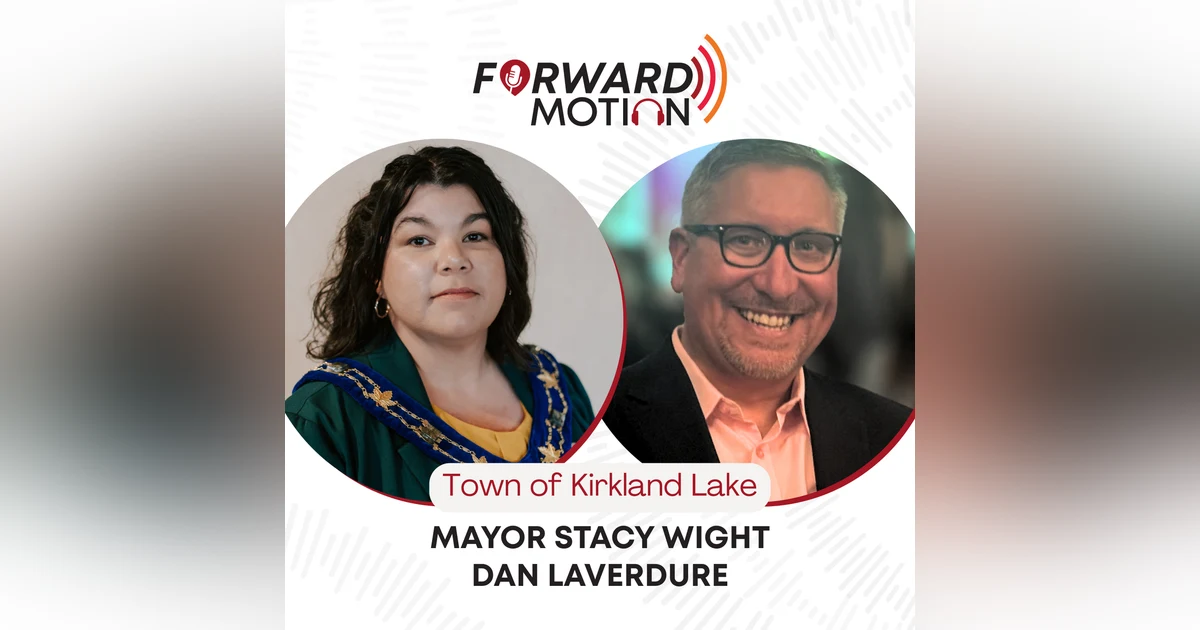
Andrew Siegwart interviews Kirkland Lake Mayor Stacy Wight and Economic Development Director Dan Laverdure about the town's transformative economic strategy. Kirkland Lake, a historic mining community of about 8,500 people, is reimagining its future by diversifying its economy and revitalizing tourism. The municipality is developing a five-year tourism plan that leverages its rich mining heritage, implementing a Municipal Accommodation Tax, and attracting new development through innovative approaches.


 RSS Feed
 Key initiatives include partnering with Keepers of the Circle, an indigenous women-led organization building a modular home factory, and creating a resident attraction campaign. The town is focusing on showcasing its cultural assets, including historical mining sites, the Northern Throttle drag races, and a multicultural center.
Wight and Labrador emphasize the importance of community collaboration, indigenous reconciliation, and targeted support from provincial and federal governments to help smaller communities grow and thrive.
Mary Anne Ivison 00:01
Foreign This is forward motion discussions about the important topic shaping Ontario's tourism industry. Here's your host, Andrew sigward, Kirkland
Andrew Siegwart 00:09
Lake is much more than a mining town. It's a community rewriting its own narrative. In this episode, we sit down with Mayor Stacey white and Dan Labrador, the town's director of economic development and planning, we explore how this iconic Northern Ontario municipality is charting a bold new course for economic diversification, tourism, growth and community revitalization. Thank you so much, Mayor white and Dan for joining us today for this conversation about your amazing community, the community of Kirkland lake. I was wondering if we could start with each of you just sharing a little bit about what brought you into your career, journeys into public service and economic development, and sort of what inspired you to take these leadership roles.
Stacy Wight 00:50
Absolutely so during the campaign season of 2024 I was a retail manager at the mall, oh yeah, and I was seeing, kind of our retail sector crumble around us. And it just so happened that I was able to contact both mayoral candidates, and I had them come and walk around the mall with me, and I asked them, you know, how are you going to support our local retail sector? And I wasn't particularly impressed with what they had to offer. So that really inspired me to kind of sit and join Council in the gallery and see what can be done, from a municipal perspective, to help our retail sector. So I sat for four years in the audience and watched Council, and that inspired me in 2018 to run, and now I sit as mayor, hopefully increasing our Economic Development and Tourism into the future. Amazing.
Andrew Siegwart 01:42
Well, I think it's great to have someone in your role who has deep experience working at that level, in terms of working with customers in a retail environment, because you learn so much, don't you, about what's really going on. Absolutely
Stacy Wight 01:55
yes, you're, you know your customer service. And I find that really translate to being mayor as well. I feel often time I am the Customer Service of the town of Kirkland Lake. Well,
Andrew Siegwart 02:06
you know what? One of the things we always say is that the skills that we develop and cultivate in tourism and the service sector really are applicable to so many different places, and you're such a great example of that. I'm sure you use those skills every day. Absolutely. Yeah, Dan, how about you?
Don Laverdure 02:22
Well, mine isn't as fascinating as mayor White's. But no, I started my career in the private sector, but always a champion of community growth, and that really, truly brought me into the economic development world. From there, moving into Kirkland Lake and seeing what opportunities lie ahead here, that's great. How,
Andrew Siegwart 02:43
in the in the northern context, Kirkland Lake, is approximately 9000 population. Is that? Do I have that right? Currently,
Don Laverdure 02:50
we're sitting at about that 8500 so, yeah, no, yeah, okay. I
Andrew Siegwart 02:54
was close. I was rounding up. Tell me, what does community engagement look like for both of you when you when you in a community of that size, like, how do you engage with and stay connected to what the community is looking for?
Stacy Wight 03:05
So absolutely, in a small community such as our community, engagement happens every day, whether it be through official means, like sitting on boards and committees or just going to walk your dog at the local park or being at the grocery store, you kind of don't have that anonymity in a smaller community that you may see in in cities. So our community engagement is quite high in the town of Kirkland Lake, both with staff and, of course, your political representatives.
Don Laverdure 03:32
Yeah, no, and I see, I see it in a very similar lens, but in some different words that I would think. And when I think it's just the collaboration in a small town, you don't have the large groups of community groups, for instance, so collaborating to make things happen and the cultural sensitivities, it's different. Here in the north, we look at things in our indigenous contexts, in working with our indigenous groups, inclusivity, it's really all working together to get a common goal completed. It's
Andrew Siegwart 04:03
an interesting dynamic you're both highlighting, and that is that sometimes in larger communities, you can have an umbrella organization or a spokesperson raise issues and your community, oftentimes people who are immediately affected are coming forward. So they are really being vulnerable, and they're sharing a lot about their personal experience, aren't they? So that does take a different a different approach and and empathy and appreciation. It's funny, I You reminded me so I worked in a small market South Georgian Bay Area for a number of years, and prior to that, I had a worked in an organization with a national portfolio, and I worked across the country, and I remember the best advice I ever received from someone was they said, Andrew, you're going to go to the supermarket, you're going to be shopping, and someone is going to see you, and they're going to want to come talk to you, and your natural reaction is going to be to walk the other way, because, you know, that's what happens in the city. You your private time is your time. And they were like, be open for conversations wherever you are in a small town. Own, because you will learn so much. And you know they were absolutely true, but I really did learn a lot by being open, but it took me a bit of time to sort of train myself to do that. But you're in your leadership position. 24/7, aren't you? Definitely Okay? Let's paint us a picture what defines Kirkland lake today and its economy, business mix, community character. For those who maybe be less familiar, just give us a little bit of a lay of the
Don Laverdure 05:26
land. Mining continues to be the cornerstone of Kirkland lakes economy. We have, you know, several mining operations within the jurisdiction of Kirkland Lake and surrounding areas, particularly in the gold sector, which most would know that we are a huge player in the Ontario mining sector. Currently, they drive the economic factor here in Kirkland Lake and bring some vitality through the exports of industry. And really from there is the mining supply sector that that really complements them. But as we embark in a new journey as we'll get into later this morning, we'll really, we're really looking outside the box now to really diversify,
Andrew Siegwart 06:07
and it's great when you have such a strong foundation that allows you that jumping off point. And there's going to be lots of lots of opportunities. There. Isn't there? What about are there any myths or misconceptions that you think people have about Northern towns that you think people in bigger centers would sort of tap into and understand? Oh, absolutely.
Stacy Wight 06:27
So I think, you know, the misconception of Northern municipalities is we're all very, very tiny, and we're just in the middle of the wilderness and we're so remote and we have very little to offer, and honestly and truly in the north, that's simply not true for a town like Kirkland Lake, though we are very proud of our natural amenities, you know, our walking, our fishing, our hiking, ski, doing all those activities, we also have like a dynamic theater culture and music culture as well in our community, And we're just over an hour away from larger centers, like Timmons on one side, ruin Miranda on the other. So we have the best of both worlds. Yes, we're surrounded by nature, but just, you know, a small trip down the highway and you're in the middle of 45,000 other individuals. So it's just really a unique place to be that it's not just, you know, you're out with the bears and the raccoons. You're absolutely in the middle of a wonderful culture as well.
Andrew Siegwart 07:29
Yeah, did you did you see, as I know, during the pandemic, there was a big migration of people to smaller communities, more rural experiences? Did was that a factor in Kirkland lake. So
Stacy Wight 07:40
definitely, I think it did play a small role. We weren't as prepared to welcome people on mass as we would have liked to be. But I mean, a global pandemic, you never know what's going to happen, but the ability to work remotely really assisted people to come home to Kirkland Lake and work remotely. And I think we've retained some of those individuals.
Andrew Siegwart 08:01
I think a lot of people are familiar with the fact that people might have gone to, you know, cottage country communities that everyone is familiar with, particularly around the southern Ontario hub. But it is interesting to see just how far reaching that that migration was, and many small communities saw that and experienced it and and learned from it. So let's, Dan, you sort of gave us a hint there about some of your sort of economic diversification work. And there's, there's quite a lot we're gonna, we're gonna go through, but let me just ask you as a start point, like, how are you diversifying beyond mining while still sort of strengthening its legacy? Like, obviously, you want to grow and change, but you don't want to lose what's so special about what where you already are. So how do you balance that?
Don Laverdure 08:44
Oh, for sure, we're looking at different opportunities that still keep us, keep the legacy of mining alive. But nowadays, diversification has to take place. Mines aren't here forever. There is limited resources below us, so we need to look to the future in opportunities that we can so we look to diversification in the forestry industry. We are working currently on some housing initiatives here in Kirkland lake that will hopefully benefit Kirkland Lake and region on a housing level, but also some economics to the community.
Andrew Siegwart 09:22
Now I would imagine that just sort of what's happening, kind of globally, and some of the shifts that we're seeing, there's likely a lot of talk locally about the opportunity of the the mining sector and the mining support sector, and likely there's expertise in your community that will will will be there to support critical minerals and technology and other things. So is there a buzz around that sector as well? Change your foot so to speak,
Don Laverdure 09:47
most certainly, and I think a lot of the technology and mining not only goes to the mining practices, is just also the personnel shortages and how, how mining. Technology is going to play a pivotal role in keeping minerals and mines operational, with dealing with the shortages of personnel. Yeah,
Andrew Siegwart 10:09
yeah, of course, yeah, that is a challenge in every industry, isn't it? And then I guess it's also multi layered, with the housing piece and having the infrastructure there to sustain that. But we'll get to that in a bit. A question to both of you or whoever would like to respond. Correct me if I'm wrong, but it's been quite some time since the municipality had a tourism focus and a strategy. So maybe talk to us about sort of why that lag was there and why now. Why is the municipality looking at tourism as a key focus? I
Don Laverdure 10:40
think it has to be, it's a hidden gem here. And I say that pun intended, there's reasons to be in Kirkland Lake and to visit Kirkland lake. We really want to get back at being a key player in the tourism industry and show regional tourism and the potential for international tourism. Here in Kirkland Lake, we were a hub of the snowmobile industry for many, many, many decades, and we want to become that hub again.
Andrew Siegwart 11:12
And has that as that snowmobile culture and traffic been sustained like is it? Has it continued to grow? Or is it still a big part of the landscape, or have there been changes there? It's still
Don Laverdure 11:24
a large part of the landscape. But I think with changes on how to reach people and reach potential visitors, have changed over the years, and it's time for us to diversify in how we reach people and how we promote ourselves as a key destination? Absolutely,
Stacy Wight 11:41
I think, for a long time, we took our visitors for granted as the hub of our communities. We just took the fact that these individuals would be coming to us year over year for granted, rather than targeting individuals to let them know we welcome you here and we want you here. We're not taking you know your presence in our community for granted any longer, and we understand that peace that tourism gives to the broader community. You know yourself, if you you make a community that people want to visit, you make a community where people want to live as well. That's
Andrew Siegwart 12:15
right, that's right. So yeah, it's definitely part of the strategy, isn't it? It's having those assets that attract visitors, but also attract residents and folks. Yeah, it's a it's a great it's a great purpose for a tourism strategy. Tell us a bit about the strategy. What does it look like? Think you have a five year plan, so walk us through it. What is it? What does it look like?
Don Laverdure 12:35
We have a five year plan that we've we've put together, and we're all very excited about it. Obviously, we have an existing tourism industry in our winter, but it was really looking to the shoulder seasons and the summer opportunities that we could offer. And it was is really laying the groundwork as to what we can do and and making some sector enhancements visible, and getting the promotion out there so that we can be a four season destination. So
Andrew Siegwart 13:05
what does that look like in terms of the product mix? Is there a focus? Are you are you looking at more attractions, more hotels, a food and beverage scene? Like, is there a direction that's taking, or that you envision, I would envision,
Don Laverdure 13:21
and the plan kind of speaks to that is the culture and heritage piece of mining history. It's a great niche market to be in, and we are quite fortunate here in Kirkland Lake to have some of the existing historical mining shafts still visible, along with having an operational gold mine right on our front step. Wow,
Andrew Siegwart 13:44
are there existing experiences related to that, that you're that you're leveraging? Yeah, there's,
Don Laverdure 13:49
there's definitely existing structures, like our toe burned operating authority that has a wonderful self guided tour on the property that everyone can enjoy, and it's leveraging that with maybe some enhancements to a walking tour and different geological sites that we have here in Kirkland Lake, fun,
Andrew Siegwart 14:10
I could just envision hidden, hidden chunks of gold for kids to try to find along along a trail. I mean, think how much fun that would be. It's all sorts of things you can do, didn't you? Was there not a trail at one point that that you had launched?
Stacy Wight 14:25
Yeah, so. So during our 100th anniversary, we had a walking tour of Kirkland Lake, and it really did highlight some of our historical locations that we've always had tourist plaques available, but it had never been presented in such a cohesive manner. And so definitely, you know, we are on the mile of gold. Historically, there is, you know, this myth or legend, that instead of waste rock being used to pave our main street, it was actually gold. That had paved. And it is, it's lost in history. Is it myth? Is it legend? Is it something that actually happened? So that is something that really is a tourist attraction and something we're quite proud of, you know, being on the mile of gold. So we're looking forward to leveraging those, you know, historical facts or fiction
Andrew Siegwart 15:20
facts, fiction, mystery. That's great. Well, you know, I mean, who knows, right? That's, that's actually really fun to think about. And no doubt, I mean, no doubt, when you've got that kind of material, especially when you're, you know, geologically, you're breaking up a rock. I mean, sustainably, you would think there would be some repurposing. So who knows what people might find when they look down at the roads. How have you been engaging with traditional tourism operators so far in the plan, and from your perspective, what are they excited about? Yeah,
Don Laverdure 15:50
the interesting thing, Andrew, is the fact that we currently don't have a lot of tour operators right within the boundaries of Kirkland lake. So it's really working on on a semi regional basis, where Kirkland lake can be something that people can visit, but if you want to do more, you're stepping outside the boundary. So we're we're really looking forward to working with some of the different municipalities in the area, but make Kirkland lake
Andrew Siegwart 16:18
a base, that's great. Yeah, and leveraging what your neighbors have to offer. And it's actually a smart strategy, because, you know, building a hotel as an example, or or investing in large attractions takes time, and so if you have those those assets nearby, it's a great it's a great jumping off point. But
Don Laverdure 16:37
when we speak to our hotels and our restaurants, with already having an established winter tourism season and product, it is very successful, and it does really add to their venture here in Kirkland Lake, yeah,
Andrew Siegwart 16:51
and I'm sure they're looking forward to seeing that shoulder season expanded and so they can grow their business and employment. And I think it's fun for a lot of people to think about that. Your shoulder season is summer. Yeah, you're right. It's, uh, it's, you know, it's, it's a, it's a good point. We know a lot of people talk about shoulder seasons. They think about the traditional shoulder seasons for certain areas, but a shoulder season just means the season where you're under, where you're underperforming, and you have the potential to grow. And I think that there's, there's so much opportunity there tell me you've had, you've had a municipal accommodation tax recently implemented in Kirkland Lake. What was that process like to implement and to get rolling?
Stacy Wight 17:30
Honestly, I would say, you know, from the political side, the lessons I've learned is implement sooner than later. I think, you know, we've been on our journey since 2019 and the most important thing is engaging the public and making them aware of the benefits that the mat will have for not only the tourism industry, but the community as a whole. I think it's a matter of how you sell it to your community that makes the difference. And I mean, we're on year one, and we're seeing massive impacts already, especially, you know, from the financial side, I think it's exceeded what our expectations were. But I know Dan can speak to that.
Don Laverdure 18:12
Yeah, the matt actually was the very first thing that was on my plate when I joined the team in Kirkland Lake. Mayor white alluded to the messaging, and I think that goes really back to the very first question, Andrew, that you asked us this morning, was just the collaboration and how the community engagement is important in a small town. So once the messaging was strong about the benefits that the municipal accommodations tax would have on the economical landscape of Kirkland Lake. The setup went smoothly, and I've been really happy with the feedback that we've received. But now that we're into our second year in the collection of the Matt It's now time to show the community the rewards of the of the of the municipal accommodations tax, and that's when we're talking about a 20 year hiatus in the tourism industry. We are, we are essentially starting from the ground up. This is where the very evident fruits of the labor will be, will be seen, yeah, really working on sector enhancements and really taking undertaking all of the essential items to lay the groundwork for a strong mandate moving forward. Well, I
Andrew Siegwart 19:29
have to say you to be commended, because you are you are already operating at a best practice level in that you've implemented a mat as you've implemented a new strategy, so you have a plan for how you're going to leverage those resources, and you'd be surprised how many communities have implemented first without those plans. And what happens is it creates the opposite effect, where industry is not aligned, there's a lot of confusion, and it makes it harder to ultimately deliver what you're trying to do. So you're. Already, so ahead of the game. And it's pretty exciting, because you have a bold vision to to layer on a visitor economy on top of a very successful resource economy. And so that takes investment, and I think it's very cool, what Tell me, what are if you can, if you can share what, what do you think the local residents are looking for, are they excited about maybe more things to do, or are they, are they happy that maybe some amenities will be enhanced in the town? Absolutely,
Stacy Wight 20:29
I think, you know, we have very strong community groups that offer experiences. We talk about snowmobiling, for sure. We also have a thriving the group is called northern thought, throttle drag races and and so we have that, you know, and they do snow drags in the winter, and they do drag races in the summer as well. So I think a lot of the support that we initially got was the community wanted to support these existing community groups. And our vision, I think, from political side and from staff, is we're not pigeonholing ourselves to those two items. We want to expand what Kirkland Lake has to offer. And now, with Matt as financial backing. We have the opportunities to expand our offerings and to support new ideas coming through as well that fit into our strategic plan. Well, you know,
Andrew Siegwart 21:31
I'm glad you raised that, because it's an example the northern throttle drag races. I mean, that is a tourism product and an attraction, but it's maybe been more historically thought of as a local initiative, but it's actually there, and you can build on it. So there's a lot of potential there. And I got to tell you, I mean, I grew up in Thunder Bay, Ontario, so drag race culture for me is, was, I'm very familiar with it. It was so much fun. And I'm, you know, I'm an age where that muscle car experience is very resonant for me. So, like, as soon as you said that, I was like, Oh my gosh, what a fun thing to come in. And I think these are things in a, I don't know, in a in a world where we're so disconnected technology, and we're behind desks all the time to sort of get out in and watch a race and be part of that experience. I think it's, it's needed in a way. I love it. I'm coming just for that.
Andrew Siegwart 22:28
Let's, let's talk about housing and inclusion. And I think, as you were alluding to earlier, I mean whether it's growing your resource base and readying the community for expansion in mining and how that's going to change, and also driving, no pun intended, your your tourism journey. There's some critical infrastructure that you need, and that's housing, and you need people to come and live in the community. So how are you working with employers to, sort of, you know, employers and builders to get the housing needs met? What's the status? No,
Don Laverdure 23:01
that's it's kind of multifaceted, your question. And the first thing is, is that with the new strategy in Economic Development and Tourism, one of our key areas of focus was on an employer attraction and resident attraction campaign that really showcases Kirkland lake as a favorable place to live, work and play. So we are embarking on a resident attraction campaign, and that truly is going to help our key employers, but it also sends a positive message from the town to our key employers that we are here to help bring people to Kirkland Lake, and the second prong of that is the housing and that is is working with our key employers to really see the need, what their needs are, and following those needs and those timelines to make sure that we can attract developers to look at Kirkland lake as an option for an expansion. Yeah.
Andrew Siegwart 24:05
And what's that is it difficult to attract developers. Typically, it
Don Laverdure 24:09
comes with its challenges. Andrew simply just geographically, and as I had said earlier, it's employment. It's getting people to be on these job sites that developers in the south are dealing with their own struggles to get people to the north is also can be a struggle and a price, and we need to do a little bit of selling to see that it's a viable option. Would
Andrew Siegwart 24:33
you say that part of the the secret formula is having employers at your side who who can talk about the the type of of jobs that they're looking to recruit, so that developers get a sense of what the market potential is most
Don Laverdure 24:47
certainly and that's what we are doing. We are working with our major employers to really give the data to these developers of what's coming and what's in store for them. Should they choose. Circle. Mike has a place to build. No, no,
Andrew Siegwart 25:01
do you are you looking at any municipal levers around development charges or, like, what's the status of the land availability? And you know, those kind of municipal planning frameworks? Are you in a good shape there? Or do you have to adapt
Don Laverdure 25:15
the North is, is, is, can be different. We aren't in the Development Charges world as the South and with the provincial policy statement changing and kind of shying away from the Development Charges world, we can be a little bit more attractive to developers. So that is, that is a positive selling point.
Stacy Wight 25:35
And I think just to add, we've seen a lot of local developers come out to buy, you know, historical properties that have been in the municipal hands for a long time. And we're seeing these properties come up for sale, and these local developers have interest now, and we've sold quite a few over the last little bit of singular properties, mind you, rather than large sub developments, even though we are open to that, and we've had developers kind of come and inquire. So we are seeing more interest in our community, I'd say, in the last three years, than we have possibly in the last 10. So, you know, and it's just a matter of bringing it to scale. We know that the mine is looking to employing multiple, hundreds of people in the in the future. And so we we know that that is coming in our future. We're just waiting for that development to scale up, for
Andrew Siegwart 26:32
sure, for sure. Well, it is. It's great to see when you have community members investing in properties that are already there, that tells that tells people listening, that there's a sense of community pride, and people who live in the community are putting their own dollars in to to take advantage of the opportunities. So that, in of itself, sends a message that's very good. And you know, I know a lot of small towns wish that they could be in that position, where local developers would would redevelop properties. So that's a great starting point. I understand you have a really cool local developer who's doing some pretty neat things. Can you sort of share a little bit with with us about that unique, not for profit development company?
Don Laverdure 27:15
Yeah, for sure. And it is a very exciting, exciting project, and it's been one that's near and dear to my heart since I've joined the team here in Kirkland Lake. Keepers of the circle is an indigenous women led not for profit organization that has embarked on a multi million dollar modular home factory that's being built here in Kirkland lake. I think what's exciting about this project is that it is not only going to service the indigenous communities of the North, but it also can help the town of Kirkland lake with its own housing needs and struggles and affordability issues that we see across the entire country, so it's going to be in our backyard, and we have a wonderful working relationship with the organization, and it's just beginning. That's incredible
Andrew Siegwart 28:10
talk about the right product at the right time, when everywhere we're talking about is, is housing and with the with Prime Minister Carney's plan on modular, specifically modular, there's got to be some opportunity for that organization. I'm sure they must be quite
Don Laverdure 28:27
excited about it. They're very excited. And the the energy is infectious, and it's it's going to be a very, very unique project to to see, see forward and come to Kirkland Lake.
Andrew Siegwart 28:40
Amazing will I'll make sure to include in the show notes a link to that organization so people can can find them. And what an inspiring story. It's very cool. Tell me is, was there an aspect of the mining and resource sector that was there that probably gave this business, like local suppliers and support like is the is there a community there to support other manufacturers and creators? Is that part of the story of Kirkland lake?
Don Laverdure 29:11
I would say it is. In this specific project, we have local forestry companies that are getting behind them for local products. And that really aims to keep the affordability of these structures that are being that will be built in the ballpark for everyone to afford. And so I think it really hits on a lot of our key areas of concern, of affordability of homes nowadays. So the project is exciting,
Stacy Wight 29:42
and I think in terms of investment too, because we have the CIP in place too, that's definitely a benefit for the municipality to offer these, these programs to people that want to invest in our community. And that's something fairly new that came out of last. Rep council as well. So I think when people are looking to invest in a community, having a community improvement plan in place is really, you know, a perk to everybody involved, for
Andrew Siegwart 30:10
sure, for sure. So what is that? What is the nature of your your Community Improvement Plan? Is it? Could you describe a little bit about what, what's involved, and what it includes?
Don Laverdure 30:19
It's quite an extensive CIP program. I'm actually in the process of of updating it this year in hopes of of creating some residential aspects to our CIP and creating some less restrictive barriers in geographic regions. But it's your has some typical tip grant funding for facade improvements renovations, but also includes a tax increment component, a land sale component, along with brownfield cleanup and such. So it's exciting to see that council has has seen the importance of the CIP and that we're going to look at making it even more enticing for our existing businesses, but also new businesses that may want to come to Kirkland Lake.
Andrew Siegwart 31:11
Yeah, congratulations. And you said this is relatively new, right, within the last year or so, sorry with that in the last last term. Yes, that's good. So you've had some time for it to germinate and grow. That's That's great. That's great. Tell me when, when it comes to collaboration, where do you look for models for inspiration, like other communities around you that you you lean into and tap into, and how does that take place? Yeah,
Don Laverdure 31:35
I think that we do look at our communities, we try not to look too closely to our neighboring communities as we're all very different and we we may share some of the same challenges, but we look to our neighboring communities for successes that they've had. So looking at ruin naranda, looking at Timmins, but stepping outside of northeastern Ontario as well. I look at communities like Dryden, yes, very different, but yet a Resource Based Economy, similar population, and really look to where their success has come from, and see how it could fit in the Kirkland Lake landscape for
Andrew Siegwart 32:20
sure, and ruin naranda is in Quebec, yeah. And there is it, it's also a mining, has big mining and resources, yes. Largely, is that a, is that an interesting sort of cross cultural connection? I mean, is there is, are there a lot of francophones up in, in Kirkland lake? There
Don Laverdure 32:37
are. There are. And Rouyn-Noranda gives a different perspective on a larger scale for us, but it is one of the largest city centers to Kirkland Lake, and there is some connections between the two communities as well.
Stacy Wight 32:53
For sure, I think from you know, as a person that was born and raised in Kirkland Lake, we kind of have a shared history, from Ruan naranda All the way kind of to Timmins, and Tim is coming shore as well. We're so close within that two hour range that oftentimes, you know, when you think of shopping and experiences all throughout my my own life, traveling to Ruan is nothing. It's a day trip. Yeah. You know, traveling to Timmins, you can basically go around the tri towns, cobalt, hilleberry, New lisgard, which make up two miscommunic shores. That is something that we have a shared history of. Of we travel this highway up and down for all kinds of opportunities. So when I think of Ruan naranda, I think of it as a part of us as well, you know, an extended version, because we have that shared history and so much, even in times of economic uncertainty, we've always had each other to rely on.
Andrew Siegwart 33:53
Yeah, that's that's amazing and and I think there is something in that, in that dynamic where you are always traveling to visit each other, whether that's for work, whether that's for pleasure. So you know folks from that community are used to traveling, which makes them attractive, also to recruit to come visit in other locations, right? Travel is not a road trip. Is not something that you bat your eyes at, right? No, not
Don Laverdure 34:18
at all. And you would know Andrew from growing up in Thunder Bay that a two hour drive is a normal adventure. Oh
Andrew Siegwart 34:26
yeah. I mean, I've just getting started at two hours absolutely, yeah, it's it's a different culture, for sure, it's a different culture. And I mean today, when I think about back then, what a what the experience of being in a car was like compared to today, where you have much nicer cars, great sound systems, temperature control. So, you know, it's like today. It's luxury compared to, you know, the burning seats in the back of the old Ford. You know, tell me, one of the things that brought us all together in terms of chatting was a was a month or so ago, we were at a northern conference, and we were talking about. About the Community Vitality wheel that destinations International has been sharing, and it really talks about how a vibrant tourism economy can connect people to visit, to live, to invest. And I'm just wondering, you know, this is clearly a philosophy that Kirkland Lake is embracing. Where do you feel that you are on this journey, and what gives you optimism in terms of where you're taking? It
Stacy Wight 35:24
definitely, you know, as a lifelong Kirkland Laker, as I've said, I've always believed our community is worthy to visit and to live and work and invest in. But as we're over 100 years old now, we're really starting from that stage one again. We really want to, want to build that idea, that Kirkland link is a good place to visit. And I think through leadership of you know, our director, Dan, I think we're really establishing partnerships and a pathway forward to build on our strengths well into the future. I
Andrew Siegwart 35:56
think that's I think that's great. And I also think there's something that you highlighted that, I think is important, that wheel, that vitality, wheel can stop spinning if you don't invest in it. So and the longer you wait, the more, the harder the work when you when you get back to it, isn't it at
Stacy Wight 36:13
its height? Kirkland Lake had a population of 25,000 people at its height. We're talking decades and decades ago, and I just grew up kind of on the end of that height. So I watched what happens when you don't invest in your community. We are kind of not victims, but we that boom and bust mentality of mining. We have experienced it, but also we've survived it, and so now I see the next 100 years of being more than just surviving that cycle that we're going to thrive because of people with vision. And Dan certainly has a vision for Kirkland Lake and myself too. I I know what I want my community to look like in 20 years, and I know that there is members of our community as well that are looking towards the future and see something better. But I know Dan has his own thoughts for sure. Yeah,
Don Laverdure 37:04
I think we're just, we're like you said, Andrew, that the wheel can stop turning and you're starting over. And you can see that as a negative aspect, like the mayor alluded to about, you know, when you're not investing in your community. But I look at it as this is a time to reinvent Kirkland lake. We are in an upswing in our community currently, and it's it's not time to let off the gas. We are in that reinvention. And that can be exciting, and that's exciting for newcomers that want to come to Kirkland lake, but I think it's also exciting for the historic families that have lived here for generations and generations to see what the new Kirkland Lake is going to look like and how they can be involved.
Andrew Siegwart 37:50
Yeah, there's nothing like community pride. And you know, that's what visitors, that's what they love to experience when they go to a community. Yes, it's the attractions, you know, all the experiences, but it really is the people and the local culture. And so when you have an excited community, you deliver a more dynamic tourism experience. It's all connected. And I think you really are, you're what you're talking about. It's really inspiring. And I hope, I hope you know what a what an incredible job you're doing, and you are at the forefront of community development and innovation. And you know, everything we've talked about today is it's so inspiring, from sort of indigenous reconciliation to layering on and diversifying economies, to pulling together the community and giving people something to get excited about, and to harnessing their pride. It's really, really special, and this is why I really wanted you both to come and share your story with us. Tayo, we've been working on a strategy for tourism, and we're about to launch this. It's sort of planned to get us to 2030 to sort of grow markets. And your community is exactly what we're talking about, which is there's so many places in our province that offer great experiences that might not be on the radar, but that have so much potential, and we see the North as such a competitive edge for Ontario, because it is an experience that is so unique. And so we're really excited to see your journey and to support you. And I just wanted to take a minute to before I get to my wrap questions to just celebrate you both, because what you're doing is really special. And, you know, props to the whole community and council, thank you. Really, I'm wondering is we, you know, it wouldn't be a tayo podcast if I didn't ask you to talk a little bit about what you think our higher levels of government can do to support municipalities. So you know, whether it's at the the Ontario government or the federal government, you know if you both just any any thoughts or recommendations on where you think the the province and the feds can most help communities like yours going forward. So definitely,
Stacy Wight 39:53
I've been advocating for this for for probably since as long as I've sat on council. Is smaller communities. Need their own funding stream. So for communities of 15,000 and less, we cannot successfully compete with larger cities for those funding dollars. So we need targeted support, financial support from the province and the feds to grow our economies. We know that our successes don't seem as grand as you know, larger 100,000 populations, but those differences mean sustainability to our communities. So when the province and the federal government gives us financing, it has a return on investment that can't be seen on the provincial scale, but it really makes a difference for our communities, and it could mean the difference between being a sustainable community or a community that grows. Yeah,
Don Laverdure 40:54
for sure, yeah. And for myself, it's the it is the funding, but it's if the mandates of mining and minerals for resource based economies in the north are going to be a focus, then there needs to be a concerted effort being placed in our provincial and our federal partners in assisting us to build capacity so that we can grow and we can support families to live here, to to work for these major employers, and without that, it's going to take us twice as long we are small communities, so tax base is smaller, and we need that. We need that subsidy to to help us build the capacities in our systems and our infrastructure to not only welcome visitors, but to welcome people that want to live here as well.
Andrew Siegwart 41:47
Yeah. Well, you your calls to action, I think are well placed. And you know, one of the things that I keep talking about when I speak with various ministers and and leaders in all parties, we don't need to look at our sectors in silos. So Kirkland Lake is a great example of where the mining sector, the housing sector, the visitor economy, they're all connected, and their growth will be amplified by by supporting what your municipality brings to the table. And then you do that a number of times across various different communities, and suddenly you have the impact of a major market. So I think for us, that's part of the story that we really want to tell. And I think there's a deep interconnection between the resource sector and the tourism sector, and it's all about shared resources and infrastructure. So I think for us, we have to do a better job of also telling that story and supporting you. So certainly something that I'm, I'm passionate about, wondering if we, when we did our sort of prep talk, we didn't cover this expressly, but I'm wondering if, if you have any advice or any thoughts. So obviously, it where we're looking at mining, and you know, some of these bills that are coming forward, like Bill five, there's a lot of controversy around how community consultation and indigenous consultation should be taking place as it relates to the resource sector. Do you have any experience there, or any thoughts on how communities can bring those parties together for good dialog? For me,
Don Laverdure 43:13
it's crucial these conversations need to need to take place. Yep, and we are in constant consultation with our First Nations, groups. We don't have a problem having those conversations because we've built those relationships over time. Yeah, there. It's embedded. Yeah, it's embedded. It's a part of our it's our nature, it's our landscape. But it's it's not only paramount that those conversations happen, we understand that we want projects to move faster, and that would benefit, it would benefit communities like Kirkland Lake and other resource based economies, but the Open dialog and conversation needs to take place that's just on a sustainability and a collaboration. Definitely.
Andrew Siegwart 43:56
Thank you for that. I think it's an important part of the conversation, and one that we're certainly tracking as well. And and, you know, as I was mentioning earlier, that that intersectionality of all of this, all of those, all of those players, and, of course, indigenous and economic reconciliation, count on it. So it's really important. Last but not least, I always like to add on, you know, this is tourism. After all, I'm wondering if you could both share with us. You know what you wish every Ontarian knew about Kirkland Lake, and what's the one thing that we need to see and do and visit, aside from the drag race event, which, of course, we are all going to check out.
Stacy Wight 44:33
Excellent. I think, for my part, I feel that Kirkland Lake is on the cusp of redefining ourselves, and I think that's really important to put out there, that we're not going to rest on our laurels. We're going to keep those engines running well into the future. And I think for something that people would be remiss if they didn't see when they're visiting us, is our multicultural center. So the folks over there have developed. You know, incredible programming and events entertainment. They even have drop ins to welcome our people from all over the globe. And truly, once you visit that center, you feel like you've come home to Kirkland Lake.
Andrew Siegwart 45:11
Oh, thank you for sharing that. Dan, for
Don Laverdure 45:13
me, that's like the mayor said, that's a wonderful place to start as well. One thing that I'd want Ontarians to know about Kirkland Lake is just the rich history that that is here. I'm from small town, Eastern Ontario, and growing up, I knew nothing about the resource economy and what was, you know, merely five hours away. And I really think that it's, it's one thing to come to a town to just, just see the mine shaft that's operating right in our boundaries of town, but to go across the town and see what a mine shaft looked like 80 years ago that still is still up in our town. So that's that's one thing I think, to visit. I'd say maybe take a look at Kirkland Lake, and if you visit the Sir, Sir Harry Oakes chateau, okay? And look out back, you can see what used to be Kirkland Lake. That's
Andrew Siegwart 46:10
right, there's a story. There isn't there. Well, let's leave that as a mystery for people to to search on their own. But I know I've heard that there may be some discussions, or there's often been talk about how that lake might be revitalized in the future. I don't know if that's a thing or not, but we'll see. Listen. I want to thank you both very much. Municipal planners, economic developers, you do a tremendous amount of work. It is difficult, it is technical, and you know, on behalf of every community and all of the tourism operators in your region. Thank you, Dan, for the work that you do. And Mayor white, you know you are one of us. You come from the service sector. Nothing makes me more proud to see someone from our industry in municipal leadership roles and demonstrating the skill set that we bring to the table. So congratulations for all of your success in your term and all of this great leadership, we can't wait to support you and see what happens next. Absolutely.
Stacy Wight 47:06
I just want to thank you for your time and seeing you at funam, you were an inspiration and really invigorated my ideas for the future, and so I do appreciate you know when you have the opportunities to speak at phonem I just want to let you know that it's felt, it's felt in the community. So thank you for your time and for everything you do. Thank
Andrew Siegwart 47:28
you very much. It is a privilege and a pleasure, and look forward to seeing you soon. Thanks
Mary Anne Ivison 47:32
for listening to forward motion. This show is created by the tourism industry association of Ontario and is recognized by government as the voice of tourism, introduced by everyone at the sound off media company. You.


