Les Éléphants in Ontario: Cote d’Ivoire’s World Cup Journey and Diaspora Pride


 RSS Feed
 As Ontario embraces being one of the hosts for FIFA World Cup 2026™, Forward Motion continues its Road to FIFA World Cup 2026™ series, celebrating the countries, cultures, and communities that will be part of the tournament experience in Toronto.
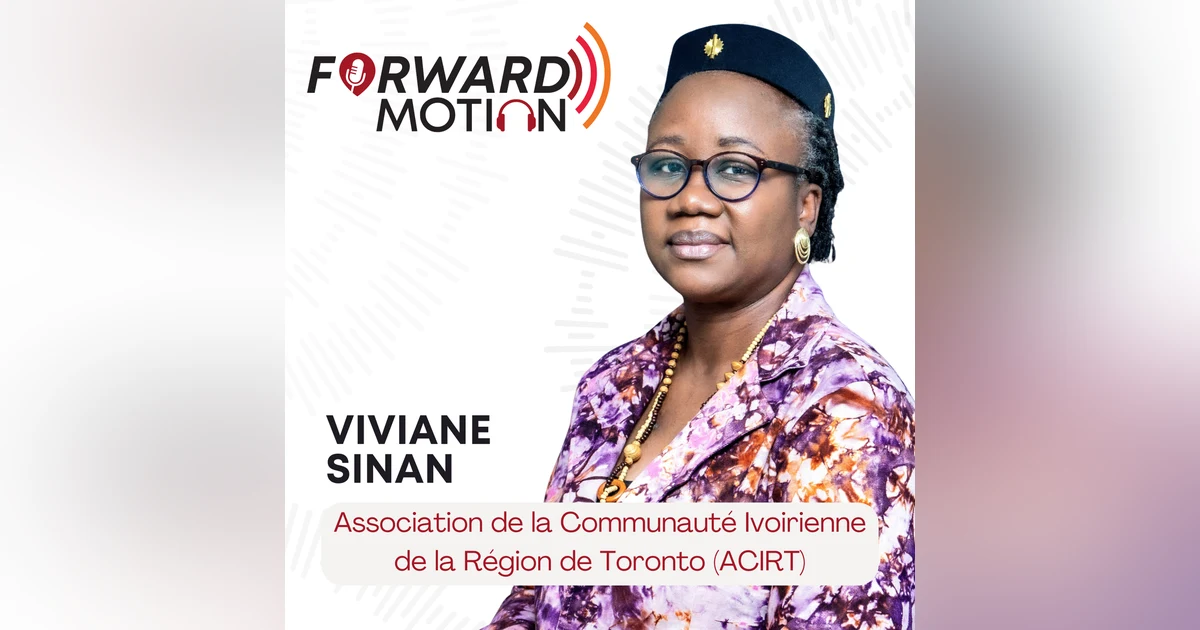
In this episode, host Andrew Siegwart speaks with Viviane Sinan, Vice President of ACIRT (Association de la Communauté Ivoirienne de la Région de Toronto), about the Ivorian community’s rapid growth over the last five years to roughly 30,000 people across Canada.
Vivian explains how Ivorians contribute to Canadian society through education, culture, festivals, entrepreneurship, public service, and the Canadian Forces. ASIRT’s mission is to unite and organize the community, support newcomers, and enhance their impact in Canada. The organization hosts welcome days, sports activities, participation in a long-running multicultural festival in Mississauga, and workshops on mental health and financial literacy, particularly around navigating Canada’s credit system.
The conversation also spotlights Ivorian culture and tourism, from Abidjan and Yamoussoukro’s basilica to coastal beaches, waterfalls, diverse regional cuisines like attieke and alloco, and vibrant music scenes including zouglou and artists like Magic System. Viviane underscores the significance of World Cup 2026™ for Ivorians at home and in the diaspora, describing the national team “Les Éléphants” as resilient, proud, and deeply connected to millions of supporters worldwide.
Forward Motion thanks its partners for their support of this show:
Ontario Travel & Tourism Monthly
See Privacy Policy at https://art19.com/privacy and California Privacy Notice at https://art19.com/privacy#do-not-sell-my-info.
Mary Anne Ivison 00:00
Hi, this is Forward Motion discussions about the important topics shaping Ontario's tourism industry. Here's your host, Andrew Siegwart.
Andrew Siegwart 00:09
As we continue our special FIFA World Cup 2026 series, we've been exploring the incredible communities, cultures, and connections that make Ontario one of the most diverse and welcoming destinations in the world. One of the themes that has emerged throughout these conversations is with the World Cup here in Toronto. Every match feels like a home game for someone. The players may be traveling 1000s of kilometers to compete, but many will discover passionate supporters, vibrant cultural communities, and deep connections waiting for them right here in Ontario. Today, we're sharing a spotlight on Cote d'Ivoire and the growing Ivorian community that calls Ontario and the rest of Canada home. We're delighted to welcome Vivian Sinan, Vice President of the Association de la Communite Ivorien de la Regent de Toronto, the Ivorian Community Association of Greater Toronto Area, known as ASART. The Ivorian community is an important part of Ontario's broader Francophone African community, contributing to our province through entrepreneurship, education, arts and culture, community leadership, and countless other ways. Organizations like ICE Art help preserve cultural traditions, support newcomers, and create the connections that help communities thrive. And, of course, Cote d'Ivoire has a proud football tradition, from producing some of Africa's most celebrated players to capturing continental championships and inspiring generations of supporters. Football occupies a special place in the country's identity and culture. Today, we'll explore the connections between Cote d'Ivoire and Ontario, the important work being done by ASART, what visitors should know about Ivorian culture, and what FIFA World Cup 2026 means for supporters both here in Canada and around the world. Hello, Vivian. Thank you so much for joining us today. Hi,
Speaker 1 01:56
Andrew. Thank you so much for the invitation.
Andrew Siegwart 01:58
We're thrilled that you could be with us. Let's get started. For those who might not be familiar with the history and growth of the Ivorian community in Canada, could you tell us a little bit about the community in Canada and what makes it such a vibrant part of our multicultural landscape?
Speaker 1 02:14
The Ivorian community grew over the years, but we can say in the few last five years we have seen a significant amount of people from Ivory Coast coming to Canada, and we can say that today we have around 30,000 people all over in Canada, the Ivorian community. You can find the biggest part of the Ivorian community is in Montreal, so in the province of Quebec, but you have Ivorian in Ontario, in Quebec, in Alberta, in New Brunswick, you can find Ivorian everywhere in Canada.
Andrew Siegwart 02:56
That makes a lot. Safe Safe du Sons makes sense because of the French language connection, and
Speaker 1 03:04
the French language. Yes, that's why most of people, when they come in Canada, they landed at in Montreal. Yeah,
Andrew Siegwart 03:12
still I was surprised by the 30,000 number, that's a lot. And just in a short period of time, which is also pretty interesting for your organization, which we're going to get to a little bit, because I know your organization really supports newcomers, and I think that's amazing. But before we get there, tell me, what are some of the contributions that Ivorian Canadians are making to business culture, education, community life?
Speaker 1 03:36
We have a strong communities, community of educator people in the education system. We also have a lot of people in the cultural field organizing festivals. We have a mayor, I think it's New Brunswick. There is a mayor there, which is from Ivory. The background is background is from Ivory Coast. Yeah, we have Ivorian contributing in many ways in the in Canadian society. We have Ivorian also in the military, Canadian forces. Okay, yeah, we have some, yeah,
Andrew Siegwart 04:20
yeah, really experiencing Canada in so many different facets and ways. That's really fascinating. Now, the AC IRT plays an important role in supporting the Ivorian community in the Greater Toronto Area. Specifically, can you tell us a bit about the organization, its mission, and sort of the role that you play in supporting Ivorian community members,
Speaker 1 04:42
in Frank, we say ASIRT, A C I R T, it's as the the association of the Ivorian Community in the Greater Toronto Area, and this organization was created in 2018 to foster. Like unity and growth help the community be more organized, have a better impact in Canada, a better contribution in Canada. So we had the first president, his name is Justine JJ, is the one who founded, like, created the association, because he found it will be good for the community to be together, so that we can know the challenges, or we can also know what we have inside the community, so that we can improve it, or we can use it for the community, or for Canada in general. The vision is to make the community welcome, to make the community strong, to make the community more involved in Ontario and in Canada in general. Yes,
Andrew Siegwart 05:53
that's an amazing, it's an important role, it's helping people as they make adjustments and settle in a new community, but also to see them thrive and connect to their Ivorian community here, as well as well as abroad. Tell me, are there any specific programs or events or initiatives that you're really proud of, or that really stand out as making a difference?
Speaker 1 06:14
Yes, we have a lot of initiatives that we can be proud of. The welcoming day, for example, for the newcomer, we organize these types of events to welcome the newcomers to make them like adjust with the new environment. We also have a sports event or festivals that we have, for example, we have a biggest multicultural festival here in, we can say, in Canada, but the festival has been taking place in Mississauga for 41 years now. Wow, but the community has been involved in this festival for 20 years, and we also proud of organizing trainings or webinars to work on the well-being and the mental health of the community, or also financial literacy to help the community better evolve in Canada, because in Ivory Coast there is no credit card in the bank system.
Andrew Siegwart 07:29
Oh, really?
Speaker 1 07:30
So, when you get here, it's a big change. They need to know how to manage this kind of financial situation, so that they don't get impacted negatively,
Andrew Siegwart 07:44
of course. Yeah, of course, you could see how that would be something important to learn, and if you haven't been exposed to that sort of credit payment system, it could be, yeah, it's a learning journey, right? It's a really good example of all the different things that people have to learn when they, when they move to a new country, and things are so different.
Speaker 1 08:04
One of our dynamics youth, who was sharing her experience when she got here in Canada, she got the advice that, okay, you can get money from the bank, and you can use it, and then pay, but she didn't get the right information, so at some point she got in trouble, but she learned for that from that, and today is teaching others how to not be in such a situation, and everyone, every time she gives her own testimony to tell people that that's happened to
Andrew Siegwart 08:41
her, yeah, and it makes so much sense for a member of the community who's had that experience to share that with others. That's the value of the ASE art community, right? Is that all those lessons learned, you can share them and and prepare people. That's amazing. You said that it's been the last five years, there's been a very big spike. Is there any? Are there particular reasons for that? Is it just been economic opportunity?
Speaker 1 09:07
I think Canada has always been a place people see themselves in, because of the diversity, because of the stability. So I don't really know the reason why the last five years or so people are the the number is getting high, but I think it's because of what Canada has to offer as a place, safe place, a place of diversity, or a place where everyone can have the opportunity to thrive.
Andrew Siegwart 09:42
I hope this is part of it too, but I know that the federal government and other regional governments are really committed to building ties with francophone communities, and that language, and so that's a, I think, a real opportunity when we think about the opportunity to. Expand relationships globally. This French language connection, I think, is something that we can continue to build on.
Speaker 1 10:06
Yes, you're right. Yeah,
Andrew Siegwart 10:08
so you mentioned Mississauga. Are there other places in Ontario that we can experience Ivorian culture? There are restaurants or festivals or other things you could, you could highlight that we should be thinking about or exploring.
Speaker 1 10:22
Yeah, you can have the Milton Festival, African Festival in Milton. It's happening, I think, in August. Also, in the Greater Toronto, you have, I think, three Ivorian restaurants, so you have Eston du Palais, you have the restaurant in Ganda, and you have another one called Plateau Royal. Okay, so you have those three restaurants in the Greater Toronto, and you can also find some restaurant, Ivory and restaurant in the Gatino Ottawa region, like so, for example, the one Esther Du Palais is there, is one place here, then, and she opened another one in order, like I think one month ago.
Andrew Siegwart 11:10
Oh, well, that's amazing. Good, that's great for her. Well, try to find the links and include those restaurants in our show notes, so that listeners can check them out, or oftentimes, especially for people in Canada, when they, they might try a different culture's food or attend a festival, and then it sort of opens the doors, and people think, oh, maybe I should travel to Cote d'Ivoire, and and learn even more. What kind of places would you, do you think Ontarians should be thinking about if they, if they want to consider traveling to average.
Speaker 1 11:44
Oh, there is so many, so many places Ontarian can visit in Cote d'Ivoire, Abidjan, the capital itself. You have many places, I think, few weeks, no, few months ago, the I don't know if you guys heard, but I show speed, he made an African traveling, and he went to Ivory Coast, so he was, he were, he was in Abidjan, and you have many places in Abidjan. Okay, you can go also when you go in the country, you have Yam Soko, that's the second big city in Cote d'Ivoire, and there you have the biggest basilica in the world, La Basilique Notre Dame de la Paix. You also can go southwest, you have beaches like Saint Pedro, Grand Berry B, you have amazing beaches that you can go and see. You also can go in the west. You have a place we call a cascade, the cities, the city name is Ma M A N, and there you can have like the falls, like, like Niagara here, but you can have the falls there, like Asca de Monts. You can go also north, Corgo, you can find some artisan there. There is so many places, if you want to go visit, you go called D'Ivoire, you'll see so many beautiful places you can experience, and Ivory and we have over 60 dialect like languages that people share, so and it's not just about language, it's about the culture, it's about the food, so you can taste so much foods when you go to Cote d'Ivoire, we have some food that are well known now, like Achique, which is a cassava couscous. You also have a loco, which is a plantain, like fried plantain. We have traditional, like meals, like fufu, and always people, when they taste, when they try, they taste, they keep, they keep doing it, because they love, they want more, they want more, they want more. Yeah, talking about the music in Cote d'Ivoire, you have so many artists in so many styles, so you can have, we have, for example, a typical sounds in God's word that we call Zuglou. Zuglou is, we know, magic system, the magic in the air, Ali, Ali, Ali, this is Magic System. They are known internationally. You also have some young singer, they're called Happy War, because they, it's like hip hop, but with the Ivorian, they customize it, like, so, yeah, you can have, you have GDB, you have Imara, you have so many artists, like in Cote d'Ivoire, that you can enjoy. Yeah,
Andrew Siegwart 15:00
so there's lots of live music or music venues, and
Speaker 1 15:03
yes, and for example, for Magic System, they're organized every year a festival called Femur, so the festival of urban music. Yeah,
Andrew Siegwart 15:16
oh, that sounds great, so tourism overall growing in Cote d'Ivoire?
Speaker 1 15:26
Yeah, the what made the tourism row. The last Afcon that we organized in 2024 this one showed Cote d'Ivoire to the world, so people, they all want to go see Cote d'Ivoire after we were organized because the Confederation of Soccer in Africa recognized that which was the best ever organized Afcon, so since then not only because of the games but because of the hospitality, because of the people, because of the energy, because of everything. So, yeah,
Andrew Siegwart 16:08
such a good point. And you know, many of the different countries that I've been speaking with, who are playing in the FIFA World Cup 2026 here in Toronto, they've had similar experiences with sporting events, like it really boosts and grows their their reputation and awareness, and it's the same thing for FIFA that we're seeing right now. It's a real opportunity. Tell me, what does the FIFA World Cup 2026 mean to Cote d'Ivoire Ivorians back home and folks who are living in Canada?
Speaker 1 16:39
World Cup 2026 is extremely important for Ivorian back home. It represents pride, international recognition, and the opportunity to see the team compete on a world biggest stage, right for the Ivorian community here in Canada, it's historic, because Toronto, as you say, one of our games, which will take place at BMO field, and it will create a once in generation opportunity for the diaspora to see the national team in person, so the World Cup has united the community organization, businesses, nonprofit, so that we have a common goal, celebrate our identity and proudly representing Cote d'Ivoire here in Canada,
Andrew Siegwart 17:42
it's funny because we often talk about different communities and the opportunity for them to travel here, but I've spoken to a few folks now who talk about how important this is for those who are living in Canada and diaspora communities, and how special that opportunity is to connect to the team and to just connect with each other. Will there be a lot of Ivoryans from Africa coming to the games in North America? Yeah,
Speaker 1 18:08
from Africa. Yeah, I know, for example, that we have the officials, like the delegate, the minister is here, and many people are here, but there will be many people from Africa, and even for from here inside Canada, people are coming from Quebec, coming from Alberta, people are coming also from the United States. Yesterday we were at the welcoming of the team in downtown, and people came from everywhere.
Andrew Siegwart 18:41
Yeah, that's amazing. You do a lot of work here in Toronto for the Ivorian community who's coming from Africa and maybe exploring Ontario and Toronto for the first time. What parts of our community do you think will appeal to them the most?
Speaker 1 18:55
Besides the match, Toronto, there is many, many spaces that people coming in Toronto, can visit, they can go to the CN Tower, for example. In downtown, you have the Niagara Falls, you have the Arbor Front, yeah, or you have the Royal Ontario Museum. You have so many places that people can go and have a taste of what it is to be in Toronto or what it is to be in Ontario, if they are coming for longer stay, right?
Andrew Siegwart 19:28
For sure. Yeah, yeah. I was, I was wondering if they might be adding a visit to Montreal or Ottawa, Gatineau, just given the French connection.
Speaker 1 19:38
Yeah,
Andrew Siegwart 19:39
possibly.
Speaker 1 19:40
Yes, if possibly, yeah,
Andrew Siegwart 19:42
exactly. Check out a brand new restaurant in the Gatineau area, Ottawa Gatineau area. Yeah, tell me, what should we know for those who, who might not follow every team? What should we know about the team from from Cote d'Ivoire?
Speaker 1 19:55
Good question. The team Lesley Fall, the elephant. We are one of the Africa's most respected football nation, because they're known for their resilience, their fighting spirit, because for them, until the referee, we tell the end of the game, everything can happen. Yes, so they still, yeah, they still playing, even if, and Cote d'Ivoire, the team of Cote d'Ivoire has given so many legends. The most known is Didier Droba, the you have also Yaya Toure and Kolo Toure, and the current generation carries that same tradition of excellence. Okay, so they, they have, as I said, the fighting spirit, and they have earned this admiration from football fans worldwide, and I can tell you, before, few days before they arrive here, I went to Toronto. I had my the jersey, and I was surprised to see the number of people who were who could divorce, cod d'ivor, but it's because of this team, because of how this young generation is playing good football, like Ahmad Diallo Giladwe, so what the listener should know about the team: never underestimate the heart of an elephant, because he can do anything.
Andrew Siegwart 21:35
That is very good advice, and I know we're all very excited to watch the match, it's going to be a good one, and it's an important one, isn't it?
Speaker 1 21:45
We are, we are honored and proud to have this opportunity to play with the German team, which is a great one, and for us it's an opportunity to show our excellence, to show our love for the team, and also for the players too, to show that they can do it, to show that they love the game, to show people that they earn the place to the FIFA World Cup. So it will be a great game tomorrow.
Andrew Siegwart 22:20
Yeah, and like you said earlier, the pride of the nation is also a big part of this, and that's that, that, that's a big purpose, right? That's a big purpose,
Speaker 1 22:30
because it's not just about the team itself, it's about the million of hearts that are beating for them,
Andrew Siegwart 22:39
that's right, that's right, yeah, there's that, that connection is strong, and to your point about anything can happen. I watched the game, or the match between Panama and Ghana the other day, and that was a perfect example. I mean, it was just in the very final moments that the goal got scored, but that made it extra special for the Ghana team, it was, it was quite fun to watch. Well, thank you so much for joining us to share a little bit about the Avorian community here in Ontario and the rest of Canada, and sharing the spirit of your team, and giving us some travel tips. And just want to thank you for all the excellent work that you do, the ACE Art, an amazing organization, and I want to wish the team and all of the million of hearts cheering for your team all the best for tomorrow.
Speaker 1 23:28
Thank you. Thank you so much for the opportunity you gave us. Thank you so much for highlighting Cote d'Ivoire, and for sure your listener after hearing this podcast for sure, man. I'm pretty sure many of them want to go visit Cote d'Ivoire, and we will welcome them with our heart.
Andrew Siegwart 23:52
Amazing, merci beaucoup
Speaker 1 23:54
merci c'est moi.
Andrew Siegwart 23:57
Bon chance to me.
Speaker 1 23:58
Excellent
Andrew Siegwart 24:00
mercy.
Mary Anne Ivison 24:01
Thanks for listening to Forward Motion. This show is created by the Tourism Industry Association of Ontario and is recognized by government as the voice of tourism and produced by everyone at the Sound Off Media Company.


