Germany: Beer, Football, and the FIFA World Cup 2026™ Boom



 RSS Feed
 As Ontario prepares to welcome the world for FIFA World Cup 2026™, Forward Motion continues its Road to FIFA World Cup 2026™ series, celebrating the countries, cultures, and communities that will be part of the tournament experience in Toronto.
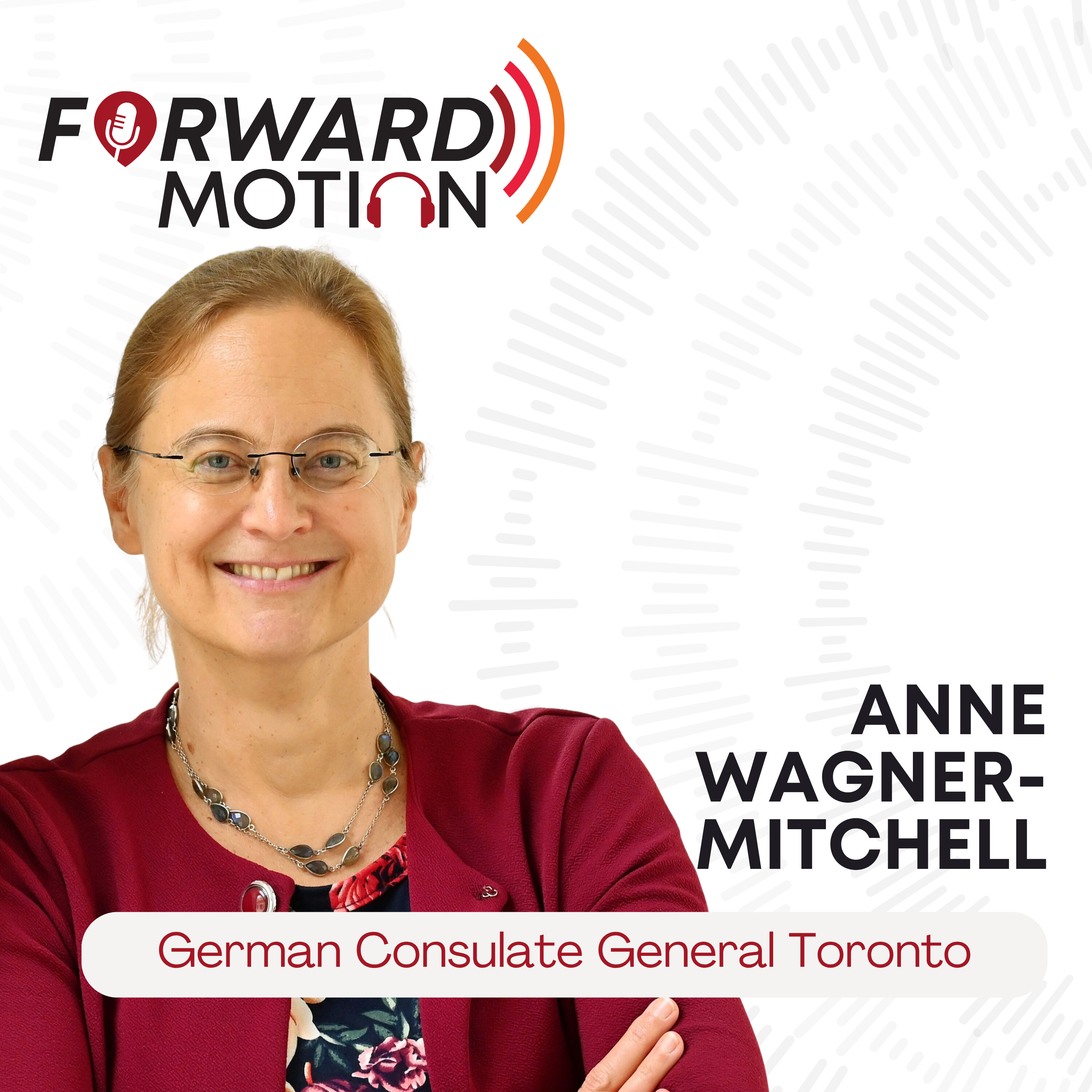
In this episode, host Andrew Siegwart speaks with Anne Wagner-Mitchell, Consul General of Germany in Toronto, about the deep ties between Germany and Ontario, including the more than 1 million Ontarians of German heritage and strong German roots in Toronto, Mississauga, and Kitchener-Waterloo.
From German clubs and Kitchener’s Oktoberfest to Toronto’s monthly German Walk, Anne shares how German culture continues to shape communities across Ontario. The conversation also explores German cuisine, beer traditions, and travel inspiration, including the Rhineland and Spreewald.
Anne reflects on Germany’s 2006 World Cup, remembered as the “fairy tale summer,” and what major sporting events can mean for tourism, culture, and economic growth. With Germany set to play in Toronto during FIFA World Cup 2026™, she shares the excitement building among German fans and the German-Canadian community.
The episode closes with Anne’s recommendations for visiting fans, from Toronto’s neighbourhoods and island skyline to Niagara Falls, Niagara-on-the-Lake, Muskoka, and Algonquin Park.
With Ontario Craft Beer Week running June 14–20, it’s also a great time for visiting fans and local listeners to explore Ontario’s craft breweries and the local communities behind them.
Resources:
German Walk with Bruce Bell (Toronto): German Walk with Bruce Bell - Federal Foreign Office
Ontario Craft Brewers - Find a Brewery Near You: Trails | Ontario Craft Brewers
Forward Motion thanks its partners for their support of this show:
Ontario Travel & Tourism Monthly
See Privacy Policy at https://art19.com/privacy and California Privacy Notice at https://art19.com/privacy#do-not-sell-my-info.
Mary Anne Ivison 00:00
Hi, this is Forward Motion discussions about the important topic shaping Ontario's tourism industry. Here's your host, Andrew Siegwart.
Andrew Siegwart 00:10
Today, I'm delighted to welcome Anne Wagner Mitchell, Consul General of Germany in Toronto. Germany, Ontario share deep and longstanding connections. Would you believe that there are over 1 million Ontario's who have some German ancestry. The Greater Toronto Area is home to a vibrant German-Canadian community, whose contributions can be seen across our economy, culture, education, science, and tourism sectors. German traditions continue to thrive through organizations like the German-Canadian Club Hansa, Oktoberfest celebrations across the region, and the many restaurants, breweries, and cultural events that help keep German heritage alive throughout Ontario. And when it comes to football, Germany needs little introduction. As one of the most successful and respected nations in the history of the sport, Germany has inspired generations of fans around the world and remains a true powerhouse on the international stage, I had the opportunity to experience the Euro Cup in Berlin a few years ago, and I can honestly say it was one of the highlights of my travels. What struck me the most wasn't just the excitement surrounding the matches, but the incredible energy throughout the city. It was a powerful example of how major sporting events can bring people together, showcase a destination to the world and generate significant economic and community benefits with FIFA World Cup 2026 bringing the world to Toronto. It's a perfect time to explore the connections between Germany and Ontario, the passion of German football supporters, and what this global tournament means for visitors, communities, cultural exchange, and future economic growth. Let's get to it. it. Well, hello Anne. Thank you for joining us today on the Forward Motion Podcast.
Anne Wagner Mitchell 01:48
Thank you for having me.
Andrew Siegwart 01:49
Before we start talking about the World Cup itself, many Ontarians might not realize how strong the connections are between Germany and Canada. For some of our listeners, can you tell us a bit about the German community here in Ontario, and what makes the relationship between our two countries so special.
Anne Wagner Mitchell 02:05
Let me start by the fact that I think in the last census, over 1 million people in Ontario, which is, I think, roughly 7.5% of the province's total population, reported German heritage, so that makes it one of the most widely reported ethnic backgrounds in the province, and people came from Germany to Canada and Ontario in several waves of immigration over the past 250 years, and today you can find them in absolute numbers, not surprisingly in the GTA, but there is also another cluster of German ancestry and heritage, which is the Waterloo Kitchener area. You may probably know that Kitchla was actually called Berlin in the 19th century to reflect the heavy influx of German immigrants at that time, and you may also know, maybe know even better, that Kitchener, until today, is hosting every year Canada's premiere Oktoberfest celebration, and some Kitchener even say that it is the biggest Oktoberfest in the world outside Munich. I don't know if there is any empirical evidence of that, but I think it is big, and it is in this area, in the Waterloo Kitchener area, where you even today find several German clubs, which are active community hubs and cultural hubs for people with German heritage, and they celebrate the Oktoberfest, they organize Christmas markets, and they have active groups who do German folk dancing and traditional music. There is this area in the Waterloo Kitchener area, but also here in the GTA, you find German clubs, for example, the Hansa Club in Mississauga, where you can find, by the way, an excellent schnitzel and sauerkraut. Oldest club is German club, is actually located in Hamilton. There is a very strong influence and heritage, and if we just, for example, just look at Toronto, every month we, the consulate, we organize a German walk, which is a free walking tour with a German guide who will point you to many German architectural influences in downtown Toronto. Did you, for example, know that the architect of the Eaton Center was a German, or that another German, he is known here as William Bursey, but his original name was actually Johan Albrecht Moll. He developed Yonge Street in the late 1700s So there are several places in Toronto which are still named like him, like Bergy Park. So you can find German influence in, in every, every corner. Nowadays, in almost every corner in the GTA, and especially Southern Ontario, and of course, what makes our relationship so special beyond that historic influence. Today we have so many German companies here in Ontario, not just selling German cars, which we are very happy about, but we have many companies in Ontario who have production sites here who manufacture here on site, provide jobs for the economy, and we have loads of German academics and artists who all have found their home base here in Ontario. Sometimes it's really hard to keep track for us, and I feel like every day I am discovering more German impact in Ontario. So that was it in a nutshell.
Andrew Siegwart 05:53
That's quite a lot. Thank you for sharing that. I had no idea that there was so much of an architectural connection. That's really fascinating. Now, just to pick up on that, if someone was interested in joining that tour or participating, how would they do that? Is it just on the embassy's website?
Anne Wagner Mitchell 06:10
Exactly, it's on the embassy's website, and we have a newsletter. You can sign up to the newsletter on the website, and then every month you get all the information about activities that we do here in other German organizations, and there is also always the information about the German walk. In that
Andrew Siegwart 06:27
amazing, the German walk, I will first thing when we're finished, I'm going to sign up for that for sure. Aside from all of these connections, and I'm really happy that you mentioned the sectoral and manufacturing and different companies that are here, it really shows that there's a 360 degree connection between our countries, and no doubt as we look to the future, you know, Canada's looking at trade diversification, we're looking at strengthening our ties with Europe. I think there's lots of opportunity ahead in that space. Do you see that as well?
Anne Wagner Mitchell 06:58
Oh, absolutely. I mean, I've been here now since last summer, one year, and in this year we have seen the German-Canadian relations really surging upwards at all levels, at high political levels. I think here in Toronto alone, we had over the last 12 months five German federal ministers, not speaking about visits to Ottawa, to the capital, but just here in Toronto, we have business delegations going both ways, German delegations coming in, Canadian Ontario delegations going to Germany, taking part in trade fairs, and so on. So we are very, very busy at the moment, and we really can feel that that interest from both sides to work closer together, as you say, 360 degrees in all areas, trade and investment, defense, academics, cultural exchange. It's a great time to be here and represent Germany here in Ontario.
Andrew Siegwart 08:00
Wonderful, the enthusiasm is there, and we're really excited about that as well. And we're going to talk a little bit about travel between our two countries in a bit, because I think that's where things get really exciting for our audience. As we're talking about this 360 degree sort of connectivity, I think we all know that a big entry point for a lot of us is food, it's food and drink, that's how we, that's how we get inspired. And then we want to travel. So I'm wondering if you could share with us a little bit about the culinary specialties that make up German cuisine, and where we can see or experience that here in Ontario.
Anne Wagner Mitchell 08:35
Schnitzel and sauerkraut, Ratwurst, which is grilled sausage, and you can find this. I mean, this is the beauty, especially about Toronto. You find everything here. We have, of course, I think I mentioned the German club, the Hansa House in Mississauga. I think once a month, on a Friday, they have a special schnitzel evening, and I can only encourage you to go there. This is where you really find like home-cooked German German food, and then some other things that I think Canadians connect or associate with German food is doner, which is that meat cut from a vertical rotisserie. It's very, very popular in Germany, and that is due to the many Turkish immigrants that we have in Germany, and so this Duna is actually originally from Turkey, and there are other variations from Greek and the Middle East, shawarma or guros, but in Germany, actually, dona has become one of the main fast foods next to a barchurst or currywurst, that grilled sausage, and I saw here somewhere in Toronto, actually shops or small restaurants selling German duna, which. Us is a bit, you know, because it's not originally German, but we love doing us, so we have somehow incorporated that into our culture as well.
Andrew Siegwart 10:10
That's amazing. Yeah, as are the, as the world has influences from other countries, our cuisine gets gets influenced, and it grows and evolves. I was in Berlin a few years ago, and I was in the neighborhood of Friedrichstein. There were two things that I had that was life-changing. The first one was dumplings in a farmer's market, and it really reminded me of my Slovak family, because I am part German, part Slovak, part Italian, bit of a mix, and the dumplings reminded me of the of the dumplings we would have from I still back side of the family and then in that neighborhood we also found this amazing fat noodle restaurant, I'm telling you, the noodles I had there were better than the noodles that I had when I was in Asia, when I was in Japan, and it was, they were so good, we went twice, so just to your point about like the world cuisine in, in Germany, it's, it's really special. I mean, I think we've skipped over maybe the most important, and that's the beer.
Anne Wagner Mitchell 11:09
Yeah, beer, I mean, has a very, very long tradition in Germany, and now you're catching me on the on the wrong foot. But what I want to say is, I don't know exactly the date since when our German law on the purity of beer is in force, it's kind of 500 years from 1500 something. This is when Germany decided Germans that beer should be pure and only be made out of hops, barley, and yeast, and water, of course, so no additives, and so on, and this law, it's one of the oldest German laws, it's still in place in Germany, so we don't have kind of beers with added flavors, and so on, but, but we love our pure German beer, and of course, I every German loves beer, including myself. I really, I'm more a beer drinker than a wine drinker.
Andrew Siegwart 12:09
Yeah, that's that's special, actually, because it really is the purity of what the beer experience is, and there's lots of different variations now, but I like that. I like that focus. It kind of reminds me of what some of the wine regions have done where they're really making sure that they're honing in on the the original recipe, the sort of the spirit of the of the beverage, so to speak.
Anne Wagner Mitchell 12:27
There is still today many small breweries, craft breweries in the small town I grew up. We had our own brewery, so it is really a tradition, and then also the brew houses, where you, you have your beer, right where it's being brewed, so it is, it is absolutely part of our culture.
Andrew Siegwart 12:48
Amazing. Well, and it's a big part of Ontario's culture as well. So, no doubt there again, probably a big influence of the of the million or so Ontarians who have German ancestry. Now, I know this is going to be a tough question, of course. It's silly. It's almost like asking someone to name one place in Canada you shouldn't miss, but I'm going to ask you anyway. If there was one place or experience or region, maybe something off the beaten path that you would recommend to Ontarians, should they find themselves in Germany, what should they not miss, besides the obvious?
Anne Wagner Mitchell 13:17
Yeah, as you say, Germany has so many gems and hidden gems, both in terms of landscapes, but also cultural heritage, plating back all the way to the Romans, 2000 years ago. So it's almost unfair to name only a few, and it really depends on what you are looking for, and in what region of Germany. Well, I'm of course a little bit biased. I come from the Rhineland, an area in the west of Germany, along the River Rhine, and I grew up close to Cologne, one of Germany's biggest cities, and of course one of the coolest cities. As I said, I'm a bit biased, but just south of Cologne, where you find lovely vine-covered hills, the winding, winding river Rhine packed with castles on the cliffs, and and small historic villages, those half-timbered villages. Maybe it's not really a hidden gem, but it's a really, really lovely area, and I think actually it's quite known by Canadians, because there are river cruises offered in this area, maybe now, because I lived also obviously and worked in Berlin in the Foreign Ministry, and Berlin is absolutely not a hidden gem, but outside Berlin, just about maybe an hour, hour and a half's drive, is an area called the Spree. Weld Spree is a river and wide is forest, and it's a, it's a area of lots of natural canals that go through the forests and the villages, and you can. Explore this on canoes, and it's a lovely atmosphere. It's very quiet. You pedal your canoe, and it's in the woods. And so, anyone who visits Berlin, for obvious reasons, I would recommend do this trip about an hour and a half outside Berlin to the Spree Wald, and experience this wonderful, calm, and picturesque area of the Spree Wald.
Andrew Siegwart 15:31
I feel like I have to share with you an experience I had when I was traveled to Berlin a few years ago. I was actually there during the Euro Cup, which was such an exciting atmosphere, and I really felt like when I was there experiencing it. To me, it felt like the blueprint for what the World Cup in North America could look like, the festivals, the everyone together, the atmosphere. When I was a kid, one of my best friend Ryan and I, we were big car buffs, and so we were very young teenagers buying all the car magazines, this was the 80s, you know, dreaming about the future. And then I read about this thing called the Autobahn, where there was no speed limits, and as a child of Northern Ontario who grew up dreaming about cars, that to me was like Disneyland, Nirvana, whatever, right. So fast forward 40 years, maybe more, I find myself in Berlin, so what I did was I rented a BMW m4 and spent the day driving on the Autobahn with my partner and zooming around and just having the time of my life. It was like being a kid, right? So to me that's always my recommendation for folks is do something fun like that, get your fun car, but then visit all those beautiful villages. So I just had to share that with you. It was a special experience for me.
Anne Wagner Mitchell 16:43
Yeah, I can. I can imagine, and I can picture you enjoying the drive.
Andrew Siegwart 16:48
It was one I will never forget, and a highlight for sure. But to me, that's what travel is all about, right? It's, it's memories and experiences, and you know, you learn a little bit more about yourself, or you get to fulfill those dreams. If you talk about the FIFA World Cup 2026 I wonder if you could share with us, you know, the importance of tourism and sport in Germany, and what role do they play in not only bringing people together but growing the German economy.
Anne Wagner Mitchell 17:14
Germany is a sports country, like Canada, and in Germany, it's really football is at the helm, it's the most popular sports in Germany, and we have the Bundesliga, our professional highest football league, with clubs like Bayern Munich or Borosia Dortmund, and they are attracting, I think, also more and more international fans that come to the matches, and that, of course, brings tourism also to the country, but let me maybe go back to 2006 when Germany hosted the World Cup. I think this one is still remembered as one of the best World Cups ever in history. Again, I may be biased, but I was there. I was actually in Berlin in 2006 and we still in Germany called this summer of 2006 the fairy tale summer, because we had such a good vibe in the city, not only Berlin, but all the other host cities that hosted matches. We had massive fan zones and visitors from across the world, and we had an incredible international atmosphere, because it was all in one country, and Germany is by far not as big as Canada, let alone the three countries that are now hosting the World Cup. Now, so travel between the host cities was easy, and even fans without tickets could just follow their team and be part of the atmosphere. So sports, and this particular event, really, I think, was a boost for German tourism, because the fans who came there for the World Cup, they experienced how nice Germany is, how easy transport is, and yeah, how you can just have a very, very good time. So, and I'm sure, and I hope this will be similar here in Toronto, in Ontario, that a lot of visitors will come for the first time to Toronto, and experience the city, and see, wow, and I have to come back another time. So, for Germany, hosting sports events are really something to boost the tourism industry, and therefore, of course, the economy, and it is also always just like showcasing your, your country to the outside world, so even completely football unrelated people suddenly have attention to to your country, to your city, and will will think, okay, maybe we should look to. Germany for investment or trade, and so on, because that was such a positive experience, the World Cup, and I really hope that this will be the same here for Toronto.
Andrew Siegwart 20:09
Yes, we do as well, and I think that's it's really good to hear that experience that was experienced in Germany, and here you are, 20 years on, still reminiscing about the experience, but also outlining how decades later it's still spurring economic development and growth, and that's why these types of events are so important. And I got that sense at the Euro Cup in Berlin a few years ago, I think it was in a few places, right? It was across multiple cities, yeah, but the the atmosphere in Berlin, and the, and the, the tourism, and the spend was, was palpable.
Anne Wagner Mitchell 20:44
I'm very glad you experienced that as well.
Andrew Siegwart 20:47
Yeah, we was ever, it was everywhere. We, we started giving up some of our sightseeing, and just finding a local patio, or a local pub, and watching the match with everyone around, and that was the fun, right? Was everyone being into it for sure. What does FIFA 2026 mean for Germany and its supporters back home and here? What, how is everyone feeling about the tournament?
Anne Wagner Mitchell 21:09
Everybody is super excited and is looking at the countdown as we are getting closer and closer. Football in Germany, I mean, it's the biggest sport in Germany, so back home people will be glued to their TVs when Germany plays. There will be also in Germany, of course, public viewings, or you go to the pub and meet friends and cheer the German team. And talking now about here, Toronto, you cannot imagine the cheers in our office when it became clear that Germany would play one of their matches here in Toronto. We are super excited, and we are expecting a strong fan presence here. We know that all the tickets that were made available to the German fans in Germany are completely sold out here, so we are expecting 1000s of fans here, probably also people without tickets, who again just want to be part of the atmosphere. Here, we realize from the Germans in Toronto, in the GTA intro in Toronto, in Ontario, they are also super excited. We get so many questions about watch parties. Are there any public viewing events? I see cars, you know, in Germany. It was very popular. Maybe you saw it also during the Euro, that you put little flags on your car showing support with your team, and I start seeing cars here on the 401 or wherever, with the German flag, so it means a lot to us, and yeah, we are, we are happy that so many German fans will come. We, as the consulate, try to provide them with as much information as possible, how to prepare, what to do, and so on, and of course, also help them if there is any trouble, like they lose their passports, and so on, but we hope that everything will be peaceful and just a wonderful atmosphere here in the city, and maybe they will suddenly pop up mini Germany zones across Toronto on the match days, where German fans gather and cheer, so then, of course, it depends a little bit how far we get, which is another question, but I think the further we get in the tournament, the more support of German fans we will see here on the streets,
Andrew Siegwart 23:35
for sure. The bigger the buzz, the bigger it builds. On that note, What should we know about the German team right now. Can you tell us a little bit about about the team? How does it play? What, what is it? What are the drivers? Anything that can help us sort of relate to them a little bit?
Anne Wagner Mitchell 23:52
Yeah, that's of course a difficult question to make any predictions. So, Germany's form in the run up to the World Cup was a little bit of a mix, we had some early setbacks, we started our qualification game with a loss against Slovakia, but then over the month I think we really came back rather strong, and we finished the qualification with a big win over Slovakia, when we secured the top spot of our qualification group, and I think that was maybe a decisive moment, and since then there is a lot of belief in the team, and we hope that the team believes in itself as well, and I think if you look at the German team today, it, it really represents modern Germany, because when you look at the players on the pitch, you will see a mix of different cultures. Many of the German players today have also a migration background with family roots from countries all over the world, and this diversity has become a strength of the team. We, it brings together different players. Styles, a lot of creativity and fresh energy, and even if these players come from different backgrounds, they all stand together on the theme field and play as one big team, one one family. And for us, it's fans, it's beautiful to see, and it shows no matter where your parents came from, you can wear the German jersey with pride, and it's not just about playing great football, but this team, I think, stands for a modern, open, and colorful Germany.
Andrew Siegwart 25:32
Yeah, and that sends a great message in and of itself, doesn't it? In terms of open economies, inclusiveness, and so many other great benefits that come along with that, that's that's that's that's helpful context for us, and and we look forward to to following the matches. You know, I can't help, as I mentioned to you earlier, someone with Slovak German and Italian heritage, it's a bit of an emotional roller coaster for me, looking at how things are.
Anne Wagner Mitchell 25:58
I didn't know you had Slovak heritage, and that was a tough fight in the, in the qualification, you know, but
Andrew Siegwart 26:05
it's great, it's great, it's great to see that, and it's fun when you have, you know, as an individual, even when you have different backgrounds, it's fun to see how, how all of these communities compete on the world stage,
Anne Wagner Mitchell 26:18
indeed, and we are actually, we are a German-Canadian family. My husband is Canadian, and our children have dual citizenship, so we will definitely also cheer the Canadian team and wish them all the luck, and hopefully they go very, very, very far. If Germany and Canada make it to the final, then let's see, where the family lighting lines are
Andrew Siegwart 26:47
fun, a fun viewing party, right. Well, one of the things we've been talking about, Andrew Weir, who leads Destination Toronto, often says that, you know, pretty much every game is a home game, because we have so many different cultures and communities who call Ontario and Toronto home, so I think that's part of what makes it so special to be hosting it here for us, for sure. Many Germans and German supporters will be visiting Ontario, perhaps for the first time. Based on your knowledge of Ontario and the Toronto area, what kind of experiences you think that German visitors will will enjoy the most.
Anne Wagner Mitchell 27:22
Well, I presume that most, most of the German supporters from Germany will, will come through Toronto and land in Toronto and Pearson. So, and they will have their base here. So, Toronto, as the city, is definitely the first destinations, and I mean, there are so many nice areas here, especially in the summer, talking about the harbor from the beaches, Toronto Island, so I'm sure German fans will enjoy that, but as you've mentioned, it will be a home game, like every game, because I think what really is so special in Toronto, you have the different areas, you have little Portugal and Greek Town, and I would recommend to the German fans on when they are not following the German match, go to these communities and experience the atmosphere there, and just enjoy the vibe in the different neighborhoods. Talking about neighborhoods, of course, there are lovely areas around St. Lawrence Market, Kensington Park, and so on. In Germany, we don't have many high-rise buildings, many skyscrapers, so this will be for Germans, really. Wow, if they see the skyline, so going out to Toronto Island and seeing the skyline from there, for example, should be a must, thinking a little bit outside Toronto, of course. Niagara Falls will be top of the lists, and it's also very, very special, and including I also very much like Niagara on the lake, which is so much quieter and picturesque, and we have a lot of the vineries in that area, if fans really come here to do more than football, and following the German matches, of course, I would recommend lovely areas north of Toronto, Muskoka, Gonkin Parks, and so on. So I hope fans bring a little time, or they come here as a first taste, and then decide we have to come back and bring more time, and and then also explore these wonderful areas of Ontario, like Agonkin, which is one of my favorites.
Andrew Siegwart 29:37
Yeah, it's quite something. Is it? Is it common knowledge in Germany that if folks are coming to Canada or Ontario, that they know about Kitchener Waterloo? Is that kind of on the list? Would you say, or do you think it's still an opportunity for us to, to educate?
Anne Wagner Mitchell 29:53
I, that's a good question. Of course, amongst Germans living in Ontario, they know about. At Waterloo and Kitchener, but I, for example, though I'm married to a Canadian who grew up in Toronto, and then studied in Waterloo, I had never heard about Waterloo and Kitchener, so until my husband took us there and showed us around, so I think Germans outside living here outside Canada, don't know much about this area, so yeah, that would be a good way to promote. Exactly,
Andrew Siegwart 30:30
it's an opportunity. There's another fun thing: Ontario Craft Beer Week is taking place, starting, I think, on the 20th or 20-first of June, so yeah, so we'll include it in the show notes for any visitors from Germany. There's lots of opportunity.
Anne Wagner Mitchell 30:46
This will be highly popular. Exactly,
Andrew Siegwart 30:49
great timing. Great time. Thank you for spending time with us today, for sharing with us a bit about your team, how sports tourism and the World Cup, what it means for the German community, and educating us a little bit about the influence of Germany right here in Ontario. All the best for the matches ahead. And thank you again for your time. I hope that we can continue this relationship. You know, there will be - there's going to be lots of opportunity to build economic ties and more diplomacy and economic development. So, you know, consider us on your call sheet, if you ever need any help, and we'll do the same.
Anne Wagner Mitchell 31:22
Thank you so much, Andrew. That is very kind of you. And I also think, as we've started off our conversation saying how much energy there is currently in German-Canadian relationships, and whatever we can do together to promote our cooperation will happily be part of that
Andrew Siegwart 31:41
wonderful, thank you. So much,
Anne Wagner Mitchell 31:42
thank you.
Mary Anne Ivison 31:43
Thanks for listening to Forward Motion. This show is created by the Tourism Industry Association of Ontario and is recognized by government as the voice of tourism and produced by everyone at the Sound Off Media Company.


