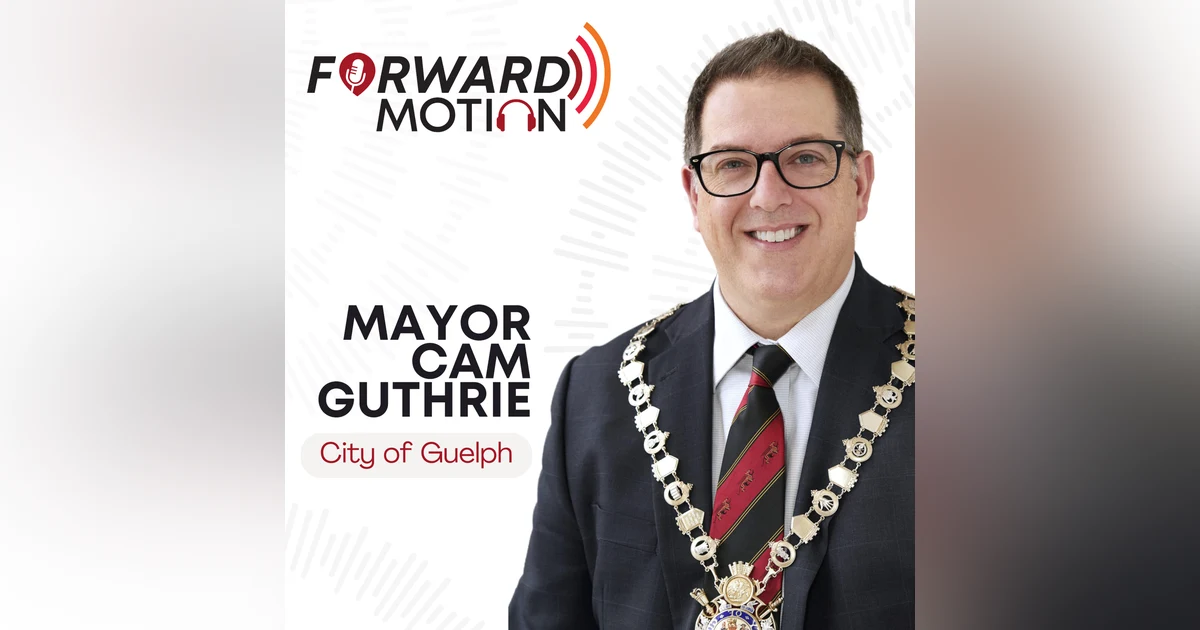
Guelph's Vision: Innovation, Tourism, and Community Leadership with Mayor Cam Guthrie


 RSS Feed
 Andrew Siegwart interviews Mayor Cam Guthrie of Guelph, Ontario, exploring how the city is setting new standards for mid-sized urban centres. Mayor Guthrie shares his personal journey into municipal leadership and highlights Guelph’s reputation as a sustainability leader and economic innovator. The discussion covers the city’s diverse economy, including its strong agri-food and automotive sectors, and the challenges of infrastructure and housing development. Mayor Guthrie explains how Guelph leverages the municipal accommodation tax to boost tourism and support local events, while also investing in both large-scale festivals and grassroots initiatives. The episode delves into Guelph’s commitment to sustainability, climate resilience, and community safety, emphasizing partnerships and innovative approaches to social services. Mayor Guthrie also reflects on the importance of regional collaboration and public engagement, offering insights into the city’s forward-thinking, community-driven approach to growth and well-being.
Mary Anne Ivison 00:01
Foreign This is forward motion discussions about the important topic shaping Ontario's tourism industry. Here's your host, Andrew sigward.
Andrew Siegwart 00:09
In this episode, we sit down with Mayor cam Guthrie to explore how Guelph is setting a new standard for what mid sized cities can achieve, from its reputation as a sustainability leader and economic innovator to its growing appeal as a tourist destination, Guelph is a leading, high impact human scale city. Mayor Guthrie shares his personal journey into municipal leadership and offers insight into the unique strengths that make Guelph a thriving place to live, work and visit. Let's get to it. All right, Mayor Guthrie, thank you so much for joining us today on forward motion. Let's start with a bit about your background. What led you into municipal
Cam Guthrie 00:43
politics? Oh, I lost a bet. No, I'm just kidding. You know, I have always, always been interested in this, always. I think, I think my dad probably was a big influence. I remember him yelling at the TV. Was something to do with Brian Mulroney when I was young. I don't know what it was. Was it the HST by chance? No, probably. I have no idea, but it was at that time I remember my dad was kind of pulling me around upcoming elections to put up, like election signs or something. I was young. I was 12 or 13 or something, and my dad never got any further into it, so he but I kind of grabbed the bug from there. And so, you know, for my whole I just remember in my teens, you know, into my 20s, being really interested in politics and serving the community in different ways. And I remember when I was probably 16. I remember calling a city councilor locally and saying, like, hey, how do I get on city council? I remember her saying, well, first you have to be 18. And so, I mean, I was literally very interested in it from an early age. And then, you know, fast forward, you know, I get to 30 some odd years old, and I decided to actually throw my hat in the ring for being a city councilor, and I lost that election. I was close, though, as a couple 100 votes away from winning. And I, you know, for my first time, I thought, okay, I was pretty, pretty close. And you learn a lot when you lose, that is a very sobering moment. You look back and you you say, Okay, I didn't do this well, I did this, right? These other people did something better than me. And you really take stock of what you can learn from losing. And then so the next time around, four years later, I put my name forward. I ran for council again, and I won, and then I was a counselor for one term, and then I decided to run for mayor, and I haven't looked back since. I absolutely adore it. So this is my third term as mayor now for the city, and yeah, my, I guess, my 11th year as mayor now. And now you're caught up on on my my journey. What's
Andrew Siegwart 02:58
inspired you to stay the course through this time. I genuinely
Cam Guthrie 03:02
really love helping people, and I haven't have like a I guess a knack is the right word, or a problem. When I see like issues not working, I love to be able to try to think outside the box, like what kind of a solution can we figure out for whatever that problem is and and I am often not the solution, but I know someone that might be able to help with something, or another way of doing something, might figure it out. So I just I kind of wake up every morning to fix things. That's kind of way I'm wired, I guess. And I do enjoy helping people. It's not the stuff that you often like will see like on the front page of a of an article or media. It's the behind the scenes stuff where you just, you help out somebody on something really small, like they're garbage didn't get picked up and, and you help them get it picked up and, and you make them happy. And, and customer service is just really something I thrive on a lot. So yeah, that kind of gets me going and motivated every day, and that's why I'm not slowing down. I love I love it. I love what I do. It's an honor.
Andrew Siegwart 04:07
It really is great when you're that connected to the community, because you do hear a lot of what people are experiencing, and you get to understand what the challenges and priorities are. And I think it's great when you're in a position like you are, where clearly you listen to people and you respond and you help them solve those problems, and then that builds that trust over time. And so I would imagine it, it probably doesn't slow down, it probably gets even bigger, doesn't it? Because the more people are aware that you help, the more they want your help, right? So that's a great self fulfilling cycle.
Cam Guthrie 04:41
That's a good way of actually doing it, yes or presenting it. I never thought of it that way, because there's a lot of problems when more and more and more people think you can help.
Andrew Siegwart 04:51
Yeah, but no, it's good. It's good to know them, isn't it? It's good to be
Cam Guthrie 04:53
aware. Is it? Is? I live in a great city like I and of course, every mayor you think has to say that, and you know, just. As a citizen, not as the mayor. Guelph is a great city of really dedicated people and businesses and our staff here. I mean, everyone's just trying their best, and I think it shows with what we do in the city. People love our city and and rightly so. There's a real
Andrew Siegwart 05:16
forward looking dynamic in the current of Guelph, it's very it's very modern, it's progressive. There's something about the innovative perspective in Guelph. Where do you think that comes from?
Cam Guthrie 05:29
That's a good point. And I would say yes to all those things. I think one of the reasons is we are that sort of sweet spot of a medium sized city where we can be a little bit more agile. We can zig and zag a little bit on some things, a little bit maybe quicker than some of the cumbersome, larger cities. We're willing to take some risks. And when we have sort of ideas, we're kind of a good pilot testing ground for stuff like because we're that medium sized city and and and so I would say that that is something that that we really hold dear here is, is the willingness to take risks, to fail, to learn, to be successful. You know, all within degrees of of of what we what we want to do. But the other thing too is, I think we're like, we're a university and college city that helps out a lot. So there's a lot of connections to the education side of things that, like we even have, we call it the Guelph Lab, which is up at the University of Guelph, that will do a lot of research for us for municipal things that and policies that we're trying to figure out. And so to have the connection through to them is really good. And finally, I would just say, even our geography, like, you know, between just outside of the GTA area, yet we have the Go service for the Metrolinx, and we're just, you know, we're just a little bit further outside of GTA, but not as far as Kitchener. But so you get everything that you kind of want, amenity wise, within our city and then just outside our city. So it's kind of a great place to land. And then finally, I would just say, you said the word progressive. I think some of it's by default. We are a groundwater community as an example, so we take like the environment pretty seriously here, because we have to protect those things. And so people are just really engaged on on making our city very livable city, not just a place to rest your head at night and get up and go to work in the morning, which is fine if you want to do that, but we have a lot of things that I think we want to make our city a good community that's livable for other things, other than just where you rest your
Andrew Siegwart 07:40
head? All of those dynamics lend really well to tourism and the visitor economy, which we'll jump into a little bit. And I also, I think there's, as I understand it, quite a lot of innovation in the food space that's also connected to Guelph, right? So you, you've got a lot of craft food experience that's really Yes, pulsing and growing in that community. Yeah,
Cam Guthrie 08:04
I'm looking out my window here as I speak to you, at all the amazing restaurants and stores and stuff like that, lots of food. And we also are heavy into the agri food sector here in the city as well. So sometimes people think of Guelph like, you know, we have a lot of automotive here, which is, which is accurate, but the one of the other bigger sectors is actually the agri food sector. I think a lot of that has a historical connection back to the University of Guelph and the Agricultural College and stuff like that. But we, yeah, we, we do thrive in that. And from a craft beer perspective, we have a ton of breweries here in the city. Maybe we'll get into it from even, like from a from a tourism point of view, a lot of people come to Guelph for what's called the beer bus. And there's a bus that actually takes people around to experience all of the the craft breweries that we have here. We have a ton of them and and so that that is, yeah, and probably it's because of our awesome water as that's why a lot of them come to our our city, because of our groundwater.
Andrew Siegwart 09:04
Who needs anything more than a beer bus? I mean, that just sounds like a great experience, right there. Yeah. So, so that was what going to be. One of my questions for you is, what is the makeup of the economy? So, great summary of agri food and so automotive, what? What's the flavor of automotive in in Guelph, is there a few manufacturing
Cam Guthrie 09:21
facilities? Yeah, it's, it's huge. I would say about 16,000 people are impacted through our auto sector, parts sector here in the city. You know, not that we want to get too much into tariffs and things like that, but you know, it's relevant. The you know, the reports, the outlooks that have been tabled by other think tanks over the last month or so, actually show that Guelph is probably the number one most impacted by tariffs city across Canada. Why is that? Yeah. It's, it's interesting, like, I knew we would be impacted for sure, but you know, you're all of our minds immediately go to like, an Oakville or a Windsor, like a Windsor, for sure, right? And those are impacted. Don't get me wrong. It's not, it's not a race, but it's, it's something that that I know that my city was going to be impacted, I just didn't know to the degree. Now we're faring well. We're doing well. Our companies and people are doing well. We're riding this roller coaster. But, yeah, the auto sector is quite big here. And with the diversification of agri food, you know, I think we can weather some storms, some economic storms that come. We've had those storms in the past where we've done really well in the city. But it does. It does a little bit of a shake up, I think, for every community that we need to look at our economic strategies and make making sure that you know, for things like what the Canadian economy is going through right now, that we have a city that's resilient moving forward into the future, and that's kind of focused a lot on that.
Andrew Siegwart 10:59
I think it is on the minds of every business sector, whether you're a small business, you know, a national player, a municipality, we're all thinking about that diversification and also supporting, supporting our core, so to speak, yes, yeah. So that's, you know, hopefully, you know, we've seen some changes of late, the sort of pausing of the digital services tax to keep the trade negotiations ongoing. So I know all of us are looking ahead to July 21 Yes, to see what comes and yes, as I'm sure all those people in your community who who work in those roles, did you are is the automatic automotive sector in Guelph? Is it? Is it more or less heavily tied to, say, the electrification in that sector,
Cam Guthrie 11:41
there is a little bit of that with one of our the largest company, which is Linamar and and they have plants all around the world, a lot of them in Guelph, a lot of them in the states too. And they are in that space for sure, especially with their research development and some of the innovations that they're doing. They're very much in that space. They're actually even in the hydrogen space as well, that they're very forward thinking. So we have a little bit of that, but a lot of it is, is, you know, the the ice parts, internal combustion engine, those, those are, for a lot of them, the big three, you know, the big three factories, or automakers. They're the ones that would use a lot of the parts, and the production that comes from the Mr. It's
Andrew Siegwart 12:22
just helpful to sort of educate people in general across Ontario just how far reaching the automotive sector is, and where parts come from and and just how wide scope this is how we all need to really sort of band together and support the sector. And yes, you know, we're certainly standing by to offer our help and support along the way? Absolutely. Yeah. You sort of talk a little bit about, you know, diversifying, future proofing, you know, do you see any any specific challenges to sort of, mid sized cities and sort of, what are other mayors like yourself in a city the size of Guelph like? What's top of mind right now, as you look at that over the next few years?
Cam Guthrie 12:58
Well, that's a great open ended question. I'm giving you lots of runway. Yeah, so I would say that probably my answer to that is something that would be echoed with any mayor that you speak to if you ask the same question, and that is, many of our cities are really falling behind on the needed infrastructure for maintaining and for growing our communities, and the amount of backlog of infrastructure that every community is experiencing is tough, but there's only so much that can come from a taxpayer's wallet, and there's a lot of policies that come from especially the provincial government and other other directions, sometimes from the feds, where money goes, How much money is coming, where it can be spent on and I think many municipalities are just really struggling on the infrastructure side of things, just like Guelph is, too. And that growth for the infrastructure, you know, it's for everything. It's for unlocking businesses. It's for unlocking more homes and and it's all types of homes. It can be a detached home, it can be 1820 story tower somewhere. It can be a homeless shelter or supportive housing units. It can be a rental home. It doesn't matter. There's no discrimination on infrastructure. We just need it, and we need a lot of it, and there's only so much to kind of go around when it comes to the costs and when it comes to the amount of people that can have the capacity to even install these things in all of our cities across Ontario. So I would really say that the first one is infrastructure. It really is the key to unlocking a lot of what we need in our province. And it's not sexy, right? There's not a lot of ribbon cuttings at a new pipe in the ground, even though we do that in Guelph. I try to try to try to try to make it as fun as possible. But, you know, it's so much easier to open up and cut a ribbon on a big, shiny new building. Like a library or a rec center, those, those are great, and they should be celebrated too, but sometimes it's the pipes in the ground that need to be celebrated just as much.
Andrew Siegwart 15:10
Yeah, the new the new roads, all of those things. You know, one of the things that I as I read the tea leaves and I look at sort of what I'm hearing from the province and the feds, it seems like what they're looking for is for municipalities to sort of remove some gridlock on planning and remove some red tape or barriers at the local level to achieve some of these infrastructure development goals. From your perspective, do you think that is a big part of the challenge, or and or opportunity?
Cam Guthrie 15:42
Yes, both. It can be a challenge and an opportunity. I I agree we should be removing as much red tape as possible. We should be speeding up processes 100% you know, I would say several years ago, municipalities deserve to have our fingers kind of pointed at us sometimes, you know, not all the time, but sometimes. But the thing that I've seen change since I've been doing this long enough now is that, you know, I'm sorry I could digress for a second. I'm a part of of what's called the Ontario Big City Mayors caucus. There's so there's 29 mayors with a population of 100,000 or more in the province of Ontario. And those 29 mayors and those cities make up 70% of the population of Ontario. So giving that kind of context, you know, I know all these other 28 mayors, and I can tell you with certainty that they are all wanting to get housing done and infrastructure done and unlocking businesses and homes for everybody, and they have made the changes that have been required over the many past few years, to speed up processes, to reduce
Andrew Siegwart 16:47
red tape, increase the densities, those sorts of absolutely
Cam Guthrie 16:50
we all, we all have, and I think what's happened now is just the market. You know, I talk to developers all the time. I had a developer just last week, tell me they sold their last few homes at a loss just to pay have cash flow to pay their employees, because it like the market has just crashed. And I think a lot of municipalities, there's an old saying that municipalities are creatures of the province, and it's true, we need the province to step up to continue to make some changes and to provide certainty for municipalities, so that everyone knows the playing field that we're playing in, that's both municipalities and the private sector or the nonprofit sector, so they know the rules of engagement on how to do things. And then the final thing I would say another great line from the famous mayor. Actually, I have a bobblehead of her just sitting over on my other shelf there. You know, Hurricane Hazel, Hazel McCallion, she had the most famous line. I use it way too much because I need to remind people about it. The feds have all the money. The province makes all the rules and the cities have all the problems. You cannot sum it up any better than than her when she said that, and it is very, very true. So there's good work that's being done. There's more to do 100% but I do sort of wish that the province and the Feds would take the housing crisis seriously for the urgency that is required as a response, municipalities are ready, I can tell you that for sure, and so we just need them to partner with us to see if we can unlock the things that we need to unlock as quickly as possible, because it is getting really
Andrew Siegwart 18:40
Bad Well, I think you highlight something that hadn't really, hadn't really hit me, and that is that, of course, you know, changing your planning frameworks, or your your densities, or, you know, zoning to permit more growth and more investment is great when everything is working and the economy is strong in The municipalities benefit from the tax rate, provinces, federal governments. Everyone benefits from the taxation and economic outputs. But when the development sector is at a somewhat of a standstill right now in terms of growth, it really highlights the fractures even, even greater. And probably points out that, you know, if we're just fully market driven and relying on market dynamics to then drive the revenues, we are probably missing something. And so I think that's what you're articulating here, is that there's a bit of a, yes, there's a bit of a, it's a bit of a gap in how we're balancing public good planning as well as the business side of development, and I think we need to close those gaps. Yeah, yes.
Cam Guthrie 19:38
I really, yeah. I really agree with what you're saying and that that partnership should exist. I don't think each of us should be in silos and doing things on our own, but there is a lot of policy driven things, legislation, regulations and funding. I can't forget that word that can come from upper levels of government to really remove a lot of processes or help with. Red tape, or give certainty around expectations that municipalities can have to help, then the private sector Go, go fast and do what they need to do to help with this. With this really difficult moment
Andrew Siegwart 20:12
on, it seems that there's been a fair amount of investment in in Guelph in a number of different avenues. Would you say that housing availability is one of the, one of the larger barriers to growth or expansion?
Cam Guthrie 20:26
Yes, I mean, it is a little bit, especially, I would say that sort of missing middle piece of housing, you know, I when I talk to some of the larger manufacturers, I even name some of them, like Linamar and some of the agri food sector, some you know where, where there can be these entry level sort of homes, either for purchase or even entry level for rental. They are either non existent or they're very scarce. And we need more of that so that the jobs can be easier to be maintained by the employers, because those employees have a place to put their head at night. So I think we're really trying to, I use this term, but stay and stay in our lane. Our lane is to try to unlock as much housing as possible. However, as everyone's supposed to know, municipalities approve housing. We don't build it, of course. So, you know, like Guelph and other municipalities, we have about 6000 approved but unbuilt homes in our city right now, and that can that's amplified across the province with all the other cities that I kind of partner with as well. We're talking hundreds of 1000s of homes that are approved and unbuilt right now. Yeah, but either the material costs are too much, the taxes and fees are too much, you know, the labor is too much, it's the interest rates can't forget about that are too much. And so this arena that everyone is playing in is just it is a true crisis. And as I said before, I kind of hope that the the upper levels of government that have the levers that they can pull, where municipalities don't have some of those levers, they can start pulling them pretty darn fast, because we need to address it.
Andrew Siegwart 22:12
What we're looking at right now, as we go, if we look toward, let's say, the next three to five years. I mean, clearly in other aspects of the economy, at a federal level, we're looking at an investment and investment economy where the federal government is looking at making strategic investments to help Canadians ultimately live in the communities they want, get the jobs they're looking for. Yes, and so think that's something we're all going to have to be advocating for, that smart investment. Yes, for sure, yeah.
Cam Guthrie 22:38
And just as much as you know, the federal government is trying to reduce interprovincial, you know, territorial issues. So do I, this is my opinion. So do so do municipalities too? Like, how can, how can municipalities be a bit more innovative and entrepreneurial about, you know, joining together in regions maybe to attract different businesses? You know, there's, I think, a lot at play that municipalities could also do to try to step into that space of removing barriers from a regional level, more than just trying to always go at it on its own. I think, yeah, that's a space that I'd like municipalities to start to look into. And
Andrew Siegwart 23:14
you have some best practices there. I think between kW Guelph and Cambridge, I mean, you have some shared infrastructure that you've been working on, like transit and different connection points. Am I? Am I correct? Yeah, well, the biggest
Cam Guthrie 23:26
one would be the go train, which is Metrolinx. So we kind of called it the innovation corridor Toronto through to Guelph through to Kitchener and kW what Waterloo area, and that is absolutely still on the horizon. You know, we would have thought by now we'd maybe have what was called the all day two way go between the all those stops. You know, with COVID, fair enough, there's got to be some grace given COVID, put a wrench in that. But there has been multiple, multiple millions and millions of dollars of investment that the province over the last seven years or so has definitely seven, eight years, has put into the whole tracking between Toronto, Guelph, Kitchener, Waterloo, and to try to, you know, increase the amount of transportation between all of our stops. Because it just makes sense that some people, you know, maybe they live in Toronto, but they work in Guelph, or maybe they live in Guelph, but they got to work in Kitchener or work in Toronto and so on. And to get those cars off of the 401 parking I call it a parking lot. The 401 parking lot would be a much better thing. So that's really a shared regional teamwork behind transportation issues. I
Andrew Siegwart 24:37
took the GO train to Barrie not too long ago, and I really just did it. I had, I had to go up to the region. I thought, I'm not going to drive and take the train. And I found it was such a pleasant experience. Had my laptop with me, I thought I'd do some work, and I ended up not even working. I was just staring out, looking at the countryside, and thought, this is such a sophisticated way to
Cam Guthrie 24:55
travel. It's coming. It is, it is it's coming. And there's a lot of tracking issues. And. You know, sometimes the people don't understand sort of the context behind a lot of I mean, these are, these are big, big issues of who owns tracks, who owns land. It's a big it's a big thing. It's moving along. No pun intended, but we would definitely love to, you know, have have the all day two way go experience during that through the innovation corridor as soon as possible, it that will be an economic driver as well. I
Andrew Siegwart 25:28
believe we had some announcements about the two way or the GO 2.0 in the most recent budget. So it looks like that's advancing still. So I guess
Cam Guthrie 25:35
there are some stuff still advancing there that's, well, I know I'm the type of mayor that always give credit where credit is is due and and also to, yeah, all critique, when critique is, is acceptable, respectfully. But yeah, I they are doing a good job. It's just, you know, we're all excited. It's kind of near the end, right? We just want to get get it to whether, where it's supposed to
Andrew Siegwart 25:56
be. It's always hard as the closer you get to the finish line. For sure. Yes, okay, let's talk tourism a little bit, as we've been talking about the sort of economic makeup. Of economic makeup of Guelph, why don't you share with us a little bit about the visitor economy in Guelph? How does that fit into the overall economic
Cam Guthrie 26:10
makeup? So we are pretty blessed as a city for a lot of great events and tourism opportunities in the city. I mean, just the last couple weeks alone, I've been running around saying hi to multiple different tourism sort of events that have been happening, you know, a few years ago. And please, this is your podcast. Interrupt me whenever you want. I'll probably blab too much here. But no, no, it's all about you. So, yeah. So a few years ago, the province allowed municipalities to opt in or not into the matt tax. Yes, the municipal accommodation tax, which, for listeners, if they don't know, is a small, little percentage fee that people would pay if they're visiting through hotel stays and through Airbnb and such. And so we figured out that the city of Guelph would probably collect, on average, roughly $750,000 a year. You know, on a good year with more hotel stays, maybe up to a million. And what how that works is by legislation, 50% of it can kind of stay within city hall, and we can do stuff with that. And 50% has to go to sort of an outside marketing arm. And for Guelph, that was actually put out as a, you know, as a bid, as an RFP, and the chamber, the local Chamber of Commerce, actually won that bin, so they started what's called gather in Guelph. It's a very good marketing arm for drawing people to our city and putting our city a bit more on the map for people to come and experience. And then, as I said, we have 50% of the money that we kind of we kind of use within city hall here. And what's interesting is, I remember when we were, when we were contemplating this, I remember bringing up a lot that, yes, it should be about some of it operating, but I would really love a lot some of it to go into capital. Because, you know, if there, if there is a electrical outlets at a park that need to be installed so that we can have live music there. Then let's put some capital into building some electrical units in a park, you know. So those things are all being done now within the city of Guelph of looking at opportunities for capital, but also on the operating side, we landed the Grand Slam for curling just a few months ago here, 1000s of people that came to our Sleeman center downtown. We just had multiple events here just in the last couple of weekends. We are very well known in Guelph for two things, kind of music and culture. Heavy on the music side, and then the other side is a sports a lot of sports tourism as well. And so we had the good games in Guelph, which is a, I think it's running its fourth year now, which is like a more, more like a an older adults event where people around the world will come and compete in really unique sports. And that was fantastic, people from Brazil and Mexico and the US and everything we're all up here doing, you know, real professional sports. That was really fun. And then we have a hillside Festival, which is a well known festival for Guelph for music. It's out at Guelph Lake. Oh, yeah, it's an icon, yeah. Some of the music bleeds into our downtown core to all the to all the restaurants and bars and coffee shops and things like that, the Jazz Festival, I am going off the top of my head here, but, but there's more and more and more that's happening. And because of that Mac tax to kind of bring it back to that, I think we've really secured annual funding that we can continue to reinvest into and try to draw even bigger events here for people to experience and and I'm telling you it, I run into people like, all the time. It's always interesting to run into people you're your own self critique your critiquer, right? Like, oh, this, this part of your city needs help, or this means that. But, and then then you meet people that are tourists here, and they're like, your city is so. Clean Your people are so nice. And it's like, it's like, oh, you know what we got. We're doing pretty good here. And so I think people really love our city for not just the events, but for the culture and the vibe, if I could call it that, and sort of the DNA that our citizens and businesses have as well. There's, it's a whole package. When you come to our city,
Andrew Siegwart 30:21
and I think you use the right word, vibe is a very it's sometimes hard to pin down what that means, but it, you know it when you feel it, and that's what drives great destinations. And I think you raise a really good point about about the mat, because it's one thing to leverage that those dollars for marketing and and product development, but if you can, if the municipality can support the industry by that type of investment needed so that infrastructure is in place. I mean, you talk about infrastructure from a housing perspective and others. I mean, this is a funding lever for infrastructure to continue to build tourism. So I'm glad to hear that the municipality is using the funds for those purposes. It is a best
Cam Guthrie 30:59
practice for sure, many cities rightly so they think about or they promote the big stuff, the big huge festival or or the big, huge curling thing, you know, the grand slam that I talked about. And those are awesome. Those are great. But one of the things that we did internally here was we did micro grants, very smart. And we did micro grants of, like, just a few 1000 bucks for people that just had really unique ideas that needed to sort of like test them out a little bit. And even some of them were really unique. Like, we have a lot of thrift stores in our city, a ton of vintage and thrift stores and used clothing stores and you name it. So, like somebody said, You know what I have an idea of doing, like a thrift sort of journey through our city. Can we make up, like maps that we could give to people, how they can go on a journey in Guelph one day to all the thrift store? Yes, we will do that. So we made up maps for thrift stores across the city. So these micro grants have come up with some really cool, out of the box ideas? Again, that's that entrepreneurial sort of spirit that our own staff have to partner with other entrepreneurial people to say, like, yeah, we got this money. Let's do these. Let's do these little, tiny things and and see what happens. And I think they're great. I would also say our dgba. Dgba stands for downtown Guelph Business Association. So our BIA, they are, like, phenomenal. They they bring a 1000s of people to our downtown core every year now with spirit of the season, which is like a Christmas holiday festival downtown for like a week. And they do downtown events all the time. And closing the street art on the street is a big one. They're doing one, I think it's next weekend, for the first time ever, a trunk sales like so streets are closed garage, kind of a garage sale, but out of the trunk of your car. And they, they only thought they would sell like 30 spots or whatever. And I think they're up to like 70 spots now. So there's our downtown war is really, is really sort of thriving through the efforts of the BIA. And so that's a big draw as well. What
Andrew Siegwart 33:07
a fun nod to the the automotive sector as well. Yes, I love that. That's a great idea. It's interesting because what you're also doing is you're inviting people in the community to participate in the visitor economy through these micro grants and opportunities, so you literally are giving people access. Was there any pushback from residents or industry when the municipality was thinking about implementing a mat and, you know, what have you? What did you do to sort of overcome that? I would imagine things like your micro grants are a great example of that. But you know, what was that journey like?
Cam Guthrie 33:39
Not really, so that existing taxpayers didn't mind it, because they're now, now not paying it. So it is visitors that come and then they rent the hotel room. They're paying the extra few bucks on their bill, and that goes into the pot. So you know, having, having non taxpayers sort of put put their efforts behind that. I thought was was well received. There was a working group for about a year, at least, before the approval of the matt tax that included people within the BIA, the hotel industry, like lots of stakeholders that worked with staff about how it would run, how what, what the amount would be, and so on. So I think by doing the one year engagement, at least before it landed at city council for a final vote, it took care of a lot of the unknowns and questions and things that people were asking and and since that time, I've heard nothing but positive feedback. It's a growing thing. You know, you live and learn what works and what's not. I think both from the city end and with the marketing arm, with gathering Guelph as well, because this is a new space for us, but I think it's been working out really well.
Andrew Siegwart 34:56
Another best practice is taking some time to have. Good consultations and discussions and yes, and I think that's one of the things on this journey that with with about 80 municipal, close to 80 municipalities, with Matt's now in place in Ontario, that's kind of been the experience, is it takes some time to get a get a lay of the land, to engage the communities on on all sides, and then, you know, troubleshoot along the way so that it is seamless. And ultimately it's a net benefit.
Cam Guthrie 35:21
The worst part is what it's called, yeah? Because when you when people hear the word tax, immediately, you're immediately on the defensive. Now, right? What do you mean? You're taxing me more. I'm not taxing more. Well, why is the word tax in there? Because that's what it's called. But it's there has to be a different way of saying what it is, I think, because that was the biggest hurdle to get over. People thought we were taxing them more for tourism, and in fact, it was the complete other way around. We were not taxing them more. We're collecting a fee from visitors to our city, and that goes towards tourism to draw more people here and and it just took a lot of time to actually explain that,
Andrew Siegwart 36:01
yeah, yeah, that makes sense. If I was a resident in a municipality, thinking about it, and you just hear there's some new tax coming, you think, Oh, it's on me. Yeah, I don't blame them. I don't blame them. Consultation takes time. I have the sense that in municipalities across Ontario, consultation windows are not getting shorter, they're probably getting longer or more in depth, is that a fair
Cam Guthrie 36:20
statement? I mean, yes, in some cases, you know, my preference would be municipalities in general, we really need to find a way of reducing the amount of time of engagement, because to be nimble and innovative and get things done, we still need to find a way of doing the engagement. So I'm not trying to say no to engagement, but to do it in a method that is faster, you know, we should be moving at the speed of sort of business, and we should be moving at the speed of what expectations are from citizens, while still maintaining transparency public access and engagement. And there's got to be a way to figure that out so that things don't take a real long
Andrew Siegwart 37:01
Yeah, and can be dynamic and inclusive. And, I mean, there's, there's so much with technology that can help on that front for sure, yes, 100% Yeah, totally agree. Yeah. I have a list of a few questions or sort of topics I wanted to cover with you that are sort of, I think, the front burner of municipalities. We've, we've covered a few, so I'll skip some. But I'm wondering, I'll just rapid fire sustainability and climate resilience. What's happening in Guelph on that front? So
Cam Guthrie 37:28
you know, we're doing well, but it's also hard to continually reduce like greenhouse gas emissions as an example, or reduce our energy consumption as an example, when we're a fast growing city. So more and more people are coming here to live, which is great. You know, we're 158,000 people. And by 2051 the province wants us to be 208,000 people. You know, that's like 60, almost 60,000 people coming here with a lot of growth in 30 years, base under 30 years. So so that's a lot of people and industry and jobs and stuff like that that bring with it greenhouse gas emissions and energy consumption and such. So what we're really trying to do and is trying to model the city is trying to model how to be good stewards of those things, so that our citizens and businesses can also start to adopt that type of philosophy as well. I think we already have a very good foundation of that, already for years and years and years, even before me, yeah, it's part of the culture in the community. Yeah, I'm not trying to take any credit at all. Previous to me, there has been a lot of that embedded in sort of our DNA. A lot of that, though, comes with education, with conservation methods that we need to make sure businesses and citizens need. Then we just try to, we just try to portray that in all that we do, even, even in a tourism event, you know, we'll have the different garbage cans for sorting that we want, not just a big garbage can or, or we'll, or we'll try to say, like, hey, you know, in these buildings here, let's try not to use bottled water, you know, like, so we try to, we try to promote what we what we also believe in from our values point of view. And and it seems to work really well, but it's still a tough go. Our transit system is doing very well by transferring over into EV vehicles, that's helping out a lot. And we've got some other great programs here to help with houses, in regards to helping them make their people's homes bit better with grants, but, but, yeah, that's, you know, it's, it's, it's never ending work, and I'm glad I'm in a city that kind of balances that a little bit, doesn't completely shove it off to the side.
Andrew Siegwart 39:40
And I think it's interesting, because I know that it's been, it's been a pain point for all Canadians as they looked at the cost of energy. And you know what was originally a cost on carbon through the carbon tax regime. But it seems that while consumers are not happy with that framework, they still are. Committed to reductions in sustainability. It's just they, I think they want more tools and more opportunities to engage in a way that feels like it's not punitive. And I think that's probably where we all need to continue to focus.
Cam Guthrie 40:12
I think that's the space where we need to be. And I would agree with you, I think it was punitive, and I think it was a very fractured issue. And you know, the Prime Minister, our new Prime Minister, I think, made the right call on that one. And from a municipality point of view, municipalities are now saving millions of dollars because those those carbon taxes were also applied to municipalities and that and at the end of the day, the taxpayers had to pay for the diesel in the bus, or for the energy of the rec center or whatever like those were all passed on to the taxpayers. So now, all of a sudden, halfway through this year, with the carbon tax being removed, municipalities are saying, Oh, hey, now for the rest of this year, we're going to save X amount of millions of dollars so that. So in a way, it's helping from an affordability issue, not the direct affordability issue with individuals going to pump up gas on their own car, but it's also helping on the city side, which trickles down to the end. Use taxpayer anyways.
Andrew Siegwart 41:06
And you can use the you can, you can funnel those investments into your EV fleet, or other things that have a similar effect. Yeah,
Cam Guthrie 41:13
yes, yeah, reallocation, or, or, you know, giving it back to the taxpayer. I kind of believe in that
Andrew Siegwart 41:18
That's right, but that's exactly it right? Like the grants or more dollars that a taxpayer can use to to to invest in their home, is great. Let's talk about community safety and well being. I know that you talked about the Big City Mayor's caucus. I know that was a significant concern and and an ask for more resources. How is community safety and well being taking shape in Guelph. It
Cam Guthrie 41:41
is a constant, I would say, struggle. And it's not just a Guelph thing. It's not it's everywhere. In fact, if you look at the polling even across Canada, it's interesting how community safety crime has really risen to, like the top three sort of issues. And I think rightly so. And a lot of what happens at the municipal level, you know, it kind of comes back to that Hazel McCallion line. The feds have all the money, the province makes, all the rules, the cities have all the problems. And so when it comes to sort of the criminal aspect, crime, community safety issues, the mayor and the council who runs into the neighbor is so local, they're the ones. We're the ones that hear about it all the time, because we're seeing it, living it, and our citizens and businesses are seeing it and living it every day, and so we're the local conduit, right? But I think I'm pleased to hear that the federal government is looking into cracking down a bit more on bail reform. That is something that myself and other mayors have been screaming about for a few years now. I think, I think it has to be taken care of a lot more I and I really hope they rush that. And then I would also say that, you know, from a from a specific Guelph perspective, when I became the mayor, we were, I think we were 14th or 15th, safest city in Canada based on the Canadian crime index. As of today, we are now the eighth safest city in Canada. So that is a lot of investment, yes, in enforcement and police, but there has been equal, equally, some investments in, you know, the non enforcement, non police side of things as well, social services side of things that I think have really born well for us to really have a great a great city that's reducing those crime issues, yeah,
Andrew Siegwart 43:33
that's a significant move. Was that, yeah, on the social services side, was that, through partnerships with social agencies or or or some more in house measures. Yeah,
Cam Guthrie 43:42
a lot of partnerships. A lot of it had to do with housing, supportive housing, and we really had a focus for about five or six years on getting up and running supportive housing and working with our social services manager and then other stakeholders as well. So before COVID hit, we actually were already pushing hard on trying to open up Supportive Housing Well, thank goodness we started before COVID. So just last year in the city of Guelph, we opened up 108 supportive housing units within a 12 month period. But that's because we started a few years earlier with getting it all together, and there was provincial funding and federal funding and even local funding and municipal funding, so our community came together for that. You know, I know of cities that are scrambling today to start those issues, but we started it many years ago, and I think we're very blessed to have those 108 units open today. Housing is a very important first start to help with the social services side of things. You know, one of the things that we did in our downtown core, we actually used police, some police funding, to actually hire Canadian Mental Health Association worker to be a partner with a police officer in our downtown core. And the results of that is. Been unbelievable. So we actually used police funding to do mental health. Oh, that's really interesting. We're one of the first ones that kind of did that. And a lot of other municipalities are kind of looking at that, and especially in our downtown core, it's been a big, a big win. There has to still be the enforcement side, of course. And I'm a big believer in sort of that balancing of those things. You can't let people off the hook. I'm pleased that the province has introduced legislation around open drug use encampments and things like that. I think, I think there has to be some accountability there on those issues, too, for our communities. But I remember somebody once said to me, you can't arrest your way out of these situations. So there has to be a balance of the social services, addictions and mental health help, as long as there's also the balance of the enforcement side too.
Andrew Siegwart 45:51
And I would imagine that the local police service was supportive of that move, because it frees up their team to focus on what they with their best sort of trained to deal with. And then you have the, you have the the mental health, social assistance expertise on team to take care of that, of that aspect, so it, it's rounding out the skills you need.
Cam Guthrie 46:12
Yeah, and the business is down in the downtown core. You know, they, they have their feedback, visitor feedback, tour, tourism feedback, amazing and much better over the last couple of years because of taking care of sort of these issues. You know, if your downtown cores go so does the city. The downtown cores are the heartbeat of our cities. You can't turn away or ignore these issues in downtown cores. And so I think we've done a really good job in Guelph, and it's still a struggle. And I think the province especially does need to step up in these spaces of mental health and addictions, because that's health care. And municipalities don't have money go to health care stuff usually. So we need, we need that just to be stepped up a little bit. And there are investments coming from them. I do want to acknowledge that, but we do need more well.
Andrew Siegwart 46:57
And I think you're, you're highlighting some ingredients of the right formula right now. So with your, with your supportive housing, start as early as possible, yes, make sure you've got pathways for investment. And then, of course, partnerships with the right organizations that can bring those skill sets. So you're, you really are showing the right formula. And I think it, you know, at a municipal level. I mean, yes, you have all the problems, but also too, I guess you also have to be the architect of the solution. Yeah, now more than ever, so the funding is there, but it's when you're bringing that those creative solutions, that's probably why you're getting the funding and support. So yeah, yeah, that's very good advice for everyone. Good. Thank you for sharing that. I always like to close with a fun question. We didn't talk about this in advance, but I've been asking people lately, because we've been talking about, you know, staycations or traveling within Ontario. Is there a place that you'd like to travel in Ontario that might be off the beaten path that you would recommend people think about over this summer,
Cam Guthrie 47:56
I'm going to both Windsor this year and up to Ottawa. So I'm going, I'm going one end to the other, and now look, I guess I'm going to open up the, you know, inside me a little bit here for people, I am a huge Thrifter myself. Me too, me too. And I love collecting vinyl. So as I hit Windsor, or as I hit Ottawa, there are some great vinyl record stores there, there and all in between, my wife and I really aren't going away this year too much. I mean, we originally had thought maybe we would go to the States, but forget that now. So we are looking at other places we could maybe go and experience in in Ontario because of not going to the States now. So I would say that, you know, Windsor. I actually really enjoy Windsor, and I really enjoy Ottawa, but there is a lot of camping grounds that I've been looking at, and haven't gone yet, but looking at, considering maybe up in the Orillia way, okay, as well. And so we'll see kind of what happens. As I said, we don't have anything really planned, just because our normal plans of going to the States didn't happen so
Andrew Siegwart 49:07
well. Again, you're, you're revealing a little bit about the about the Guelph spirit, a little bit of thrifting, great music, final camping in the outdoors. So you're, you're a good ambassador of the of the Guelph way of life. I just want to thank you for taking the time to connect with us. It's really important to have these conversations about how our big cities, early cities of all sizes, how you are navigating and setting up the conditions for business and community and so thank you for sharing your insights with us. The Guelph way is is really it does stand out as a market leader and and just thanks for sharing your insights. So really look forward to my next visit to Guelph, and we'll we'll see you soon.
Cam Guthrie 49:49
Well, I can't wait to see you here. Make sure you let me know so I can take it all is a date. Thanks again. Appreciate what you and the organization does, too. For all of Ontario, you. Great work.
Mary Anne Ivison 50:01
Thanks for listening to forward motion. This show is created by the tourism industry association of Ontario and is recognized by government as the voice of tourism and produced by everyone at the sound off media company. You.


