Burlington's Bold Move: Merging Tourism and Economic Development
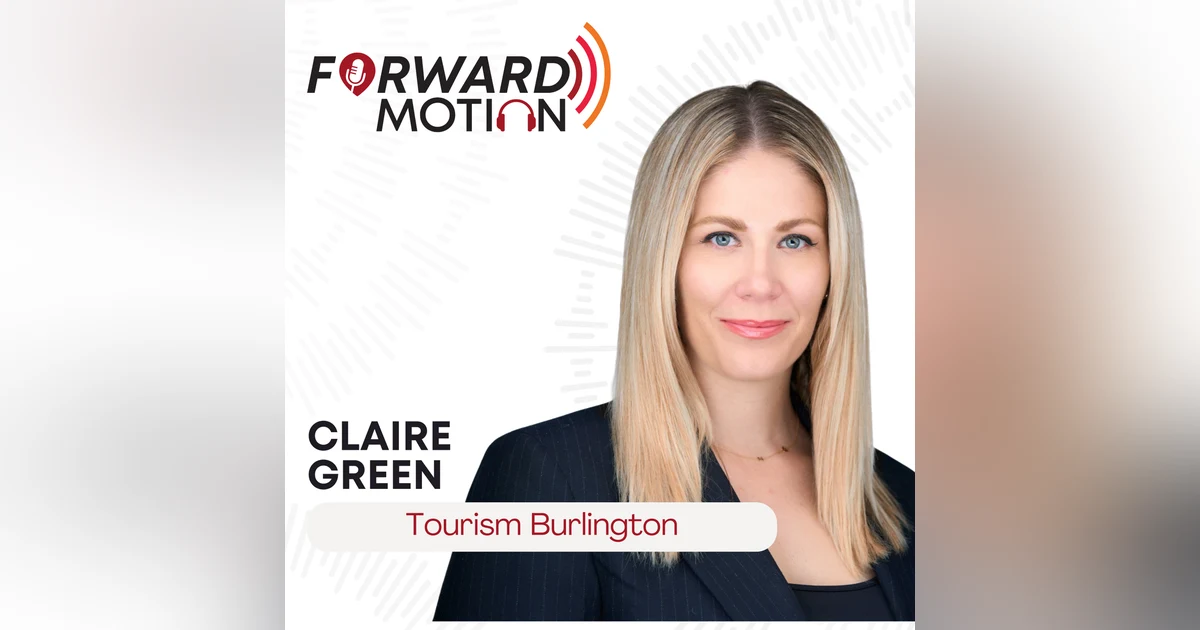
Andrew Siegwart is joined by Claire Green from Tourism Burlington to explore the city's innovative approach to destination development. Green shares how Burlington has merged its economic development and tourism departments into a single organization, creating a unified strategy for growth. The discussion highlights the city's new destination stewardship plan, which focuses on marketing, product development, and community engagement.


 RSS Feed
 Green explains how Burlington is positioning itself as more than just a pass-through city, showcasing its unique blend of waterfront, nature, and urban experiences. The conversation delves into the city's rebranding efforts, which aim to attract both visitors and investors by telling a compelling story about Burlington's character and potential.
Andrew and Claire review the importance of collaborative planning, understanding audience synergies, and creating a dynamic brand that resonates with both residents and visitors. The episode offers a blueprint for mid-sized communities looking to reimagine their tourism and economic development strategies.
More about Claire:
Claire Green is the Director of Destination Development and Marketing at Burlington Economic Development and Tourism, the official economic development and destination management organization for the City of Burlington. In this role, Claire is responsible for implementing the city’s destination stewardship plan and delivering the marketing and communications objectives of the organization, ensuring Burlington is strategically positioned to attract both tourism and investment.
A strategic and collaborative leader, Claire is recognized for her ability to translate complex ideas into clear, compelling strategies that inspire action. She is a skilled communicator who excels in building partnerships, engaging stakeholders, and leading high-performing teams to deliver innovative, award-winning results.
Since joining the organization in 2013, Claire has led several transformative initiatives, including the design and launch of TechPlace, Burlington’s innovation centre providing space, resources, and programming to technology start-ups and entrepreneurs.
Claire holds a Master of Arts in Cultural Analysis and Social Theory and an Honours Bachelor of Arts in Communication Studies from Wilfrid Laurier University, as well as a Business Marketing Diploma from Georgian College. In addition to being recognized as one of Business Link Media Group’s 40 Under 40, Claire has led award-winning initiatives that have received national and international recognition from the International Economic Development Council (IEDC) and the Economic Development Council of Canada (EDAC).
Forward Motion thanks its partners for their support of this show:
Ontario Travel & Tourism Monthly
See Privacy Policy at https://art19.com/privacy and California Privacy Notice at https://art19.com/privacy#do-not-sell-my-info.
Mary Anne Ivison 00:01
Voice. This is forward motion discussions about the important topic shaping Ontario's tourism industry. Here's your host, Andrew sigward,
Andrew Siegwart 00:10
what happens when a city takes a bold step to merge tourism and economic development into a Unified Vision for growth? In this episode, we sit down with Claire green of tourism Burlington to explore how one of Ontario's best kept secrets is redefining its place on the visitor map. Claire shares the story behind burlington's new destination stewardship plan, the integration of tourism and economic development under a single arms length organization, and how a forthcoming rebrand will position the city for future success. We'll also talk about why Burlington mix of nature, waterfront and urban charm offers a compelling alternative to some of Ontario's tourism heavyweights. Let's get right to it. Well, hello Claire, thanks for joining us on forward motion.
Speaker 1 00:54
Thank you for having me happy to be here. It's great to
Andrew Siegwart 00:57
have you. I always like to start by asking our guests to tell us a little bit about your career journey and what led you into tourism and economic development. So could you share your story with us?
Speaker 1 01:07
Yeah, so I've been, I've been in economic development with Burlington for almost 13 years now, which is wild. So I joined Burlington economic development, I guess you could say as an intern, I guess, in a marketing position, and I've had the opportunity over the years to work my way up through a number of positions, working on a number of projects, ranging from marketing, of course, which is primarily my background, but also innovation and entrepreneurship, branding, of course, strategy development, and now moving into the tourism side, which has been really exciting,
Andrew Siegwart 01:49
and it's great when you can work within a community, particularly on something like economic development over that period of time, because you really get to understand the history and the pace of change and and All the players. So, you know, what has that been like? Like to see, you know, where, where Burlington was, say, 13 years ago, to where it is today. Any anything jump out as a big change or transformation? Absolutely.
Speaker 1 02:12
Well, first of all, it's made me extremely passionate about Burlington. I mean, I grew up here. I moved away for school, my husband and I were very lucky to be able to come back and start our family here. But working here for so long has made me not only passionate about it personally, but professionally with the business community. And I have so many relationships in the business community that I've developed over the years, and it is incredible to see how that community has evolved. I mentioned I worked on the innovation and entrepreneurship side, so working with a number of startups over the years, even seeing their growth and progression, it's incredible. And even working with our partners, say at the chamber or the BIA, or any of the business support organizations that we work with, or, of course, in the community, and how we all sort of work together in this sort of joint enthusiasm to move Burlington forward together. I think that's one of my favorite parts.
Andrew Siegwart 03:11
And it is so fun to see those businesses just get rolling, and then a decade later, they're, you know, continuing to expand and putting the city on a map in a different way. So it, it starts to amplify, doesn't it? Absolutely, I was doing a little bit of background research beforehand, and I and I saw that you were a student in communications in university, and so was I. I thought that was kind of something interesting that we had in common. I'm wondering, you know, how did, how does that sort of education help you prepare for the work that you're doing today.
Speaker 1 03:42
Yeah, absolutely. I was also at Georgian in Barrie, where I did marketing. But then, yes, I did do communications, as you saw at Laurier. Where does communications not come in handy, right? I mean, it's everywhere, everywhere. So yeah, I mean, you'll recall from maybe your time, where did you go to? Where did you do your York? Oh, York University. Yeah. So, I mean, you might recall, I don't know how York is different, but, you know, I am sure I can still write a mean essay four years of essay writing, but communications as a degree program, it's not just preparing you for a career in public relations or journalism, which that might be the perception. It's really interdisciplinary. So pulling in sort of philosophy, sociology, psychology, a lot of these different areas, and looking at different topics through a variety of theoretical lenses, I think it really set me up to have a lot of confidence and think very strategically about how we approach different problems. And so I think that's really where, where that came in handy. I also did a master's at Laurier in a program called cultural analysis and social theory, which is where I sort of furthered that even more. And again, it sort of set me up to be able to. To again, focus a lot on sort of strategy and problem solving, and sort of how you take an idea or a topic and sort of move it forward in really robust and critical ways.
Andrew Siegwart 05:13
I had the same experience, and I feel like what's interesting is that intersection between the social sciences and then the work that we do in community building, because, you know, whether it's economic development or tourism or or leading organizations, it's, it's really about bringing communities together. And I think it just helps you understand how people engage, what motivates them, and what are the barriers. And so, yeah, that was definitely my lesson learned.
Speaker 1 05:40
Takeaway, absolutely, I think for me, you know, a lot of what I can recall focusing on is media and media representation. Well, that obviously plays into marketing, because you're looking at media, you know, and understanding that landscape, and understanding how that plays into things. And then, of course, I I really ended up sort of moving into a career in marketing and economic development and and I really do think that when you're looking at building a place and understanding a place, it's about the people that are there and the things that happen there, and what motivates people and excites people, and all of it sort of comes together,
Andrew Siegwart 06:14
and that's really at the center. Like we often think of place as the built form, but it's actually what's happening there, who's there, who's driving it, and the built form can tend to follow that. So yeah, that's a really good point. Now it's a good segue, actually, because one of the things that I know that you and your colleagues have been working on is the creation of Burlington destination stewardship plan, which is pretty interesting. So I was wondering if you could share with us, why was it important to create such a plan
Speaker 1 06:44
for us in Burlington? It was really about understanding what Burlington has to offer. We know that Burlington has a lot to offer from a tourism perspective. It was really sort of collecting that information, going out and engaging with our stakeholders, with industry, with visitors, with residents, and understanding, where are we really strong, where are the opportunities and where are gaps or challenges, or where can we develop further? So I think for us, the opportunity to do a destination stewardship plan and develop a roadmap for how we as an organization can steward or move that forward, was a very important step. So we started to do that, because up until that point, we really didn't have that information. There had been some strategic plans done along the way, but I don't think it was truly informed by any sort of robust asset mapping or information on our data, on our audiences. So it was a matter of going out and doing that work. And so we took our time to do that and do it right, and we worked with the team at resonance to do that. And we were inspired by other great examples, like Ottawa, who had done a destination stewardship plan, and sort of moving that forward to make sure that we were positioning ourselves authentically and understanding where our opportunities were and how to grow those.
Andrew Siegwart 08:19
And I think when people hear stewardship plans, they often think of, maybe they think of environment, or they think of, sort of asset management, but really there's, there's a whole bunch of pillars in these plans. Could you walk us through maybe what some of the pillars are, and kind of what is the area of focus in this plan?
Speaker 1 08:37
The plan itself is made up of three key pillars, marketing and branding, product and programming and environment and enabling conditions. So the first one marketing and branding, this is our this is our narrative for Burlington, our you know, it's who we are as a destination and how we're positioning ourselves. So how are we seeking to increase awareness, attract new audiences, and we're doing that through content. What channels are we using, partnerships, sales, strategies, all of these different ways for us to make sure that Burlington is on the map. Because, again, up until this point, I think we weren't doing that. Burlington, you know, started collecting the municipal accommodation tax in 2022 so this was the other opportunity for us, as we had, you know, more than doubled our budget as an organization, and we had this tremendous opportunity to really grow. And in order to do that effectively, it was to understand sort of how we could go out externally and position ourselves to make sure that we were talking to the right audiences, positioning ourselves authentically and effectively, and developing the right strategies and tactics to to what where we need to go.
Andrew Siegwart 09:51
Yeah, and, and it's, it's good that you mentioned that point about having a new municipal accommodation tax, because that really can be an accelerant. And. Can provide communities the resources they need to start to do this important, foundational work that you've done on the marketing and branding side. How are you positioning Burlington to your audiences?
Speaker 1 10:10
I think it's really about for us, making sure that people know that Burlington is not a pass through city. We're not just a city that's in between Toronto and Niagara, we're a great option for both leisure and business groups that are looking for something different. We rolled out a concierge service where we're working very closely with business groups to make sure that when you're not in your formal agenda or at your conference, there's all kinds of unique experiences and options that you can be doing in Burlington. So there's lots to do, and from a leisure perspective, Burlington is a great option for a weekend away when you're looking for that balance between sort of relaxation, but also easy access to those bigger attractions that you can find in Toronto or Niagara. So we can be a great home base for you. You also get this great balance of our waterfront. Or you can go just a little bit further north and find that you know, the the nature experience, or to Royal Botanical Garden. So no matter which way you go in Burlington, you're going to be met with something truly fantastic.
Andrew Siegwart 11:19
That's great. That's great. And I can, I can, I can see the the potential for the different stories and itineraries and that sort of rich offering that will come from your your continued work. That's, that's great. Thanks for sharing that with us. How about on the on the other pillars of product or environment and and space? That's, those are two interesting pillars, too. Yeah.
Speaker 1 11:38
So the product and programming one really excites me a lot, because I, you know, there's so much already here in Burlington, and what I've what we've really discovered, is it's just a matter of nurturing it and growing it. And so we've been doing a lot of that. Another piece of it for us is we know that we're well known for our waterfront. If anyone has been to Burlington. You've probably been to Spencer Smith Park, which is our fantastic waterfront park where we have Sound of Music Festival, Canada's largest Rib Fest, Canada Day Festival. But when a festival is not happening there, you can also just walk through the park, and you can walk out onto the pier, which is iconic, and that's definitely a big part of it, or our downtown shopping or art galleries or museum, but there's a whole city outside of our downtown, and so really trying to activate our other neighborhoods, for our restaurants, our shopping, our visitor experiences, so making sure that we're doing what we can to support building those out. And we have some really exciting initiatives in the works in terms of how we're going to be doing that in the coming in the coming months, also in that pillar, you have those festivals. So how we're growing that, not just at Spencer Smith, but working with our partners at the city to grow other festivals and events at other spaces in the city. Of course, culinary and nature are big opportunities for
Andrew Siegwart 13:06
us as well. How was the festival season this year? Good?
Speaker 1 13:09
Our whole summer campaign this summer was get your festival on in Burlington. And it was really, you know, you don't need to go to festivals in Toronto. We love Toronto. We love Toronto. We do. We let as our friends at destination Toronto and our friends in Toronto, but for us, it's just, you know, we're a great option as well. If you're looking for just something a little bit smaller, can easily get there and back on the go train. But we've got great festivals here too, not just again at Spencer Smith, but at other ones. So we really sort of featured all of the different festivals in Burlington, how to experience those.
Andrew Siegwart 13:45
That's great. That's great. And it was nice to see here in in Ontario, so much local interest in staying closer to home, which we'll get to a little later. But also, one of the things that I saw in some of the data that I've been looking at is that you could see that Ontarians chose places that they might not have been to before. And so you're seeing some interesting growth in in different parts of the province this summer. And I think it it just shows that what you're doing, you're on the right track, because it's essentially providing more information to people to choose different options, right? So this is the this is the whole point. One of the things that's really interesting that I that I learned through some discussions with you, was that you're you're on the cusp of another trend in Burlington, in that the economic development engine, or entity for the municipality, as well as the tourism entity, posts, Matt, You are now a combined organization, yeah. Is that not correct? Yes, yeah, which is pretty innovative. There's a few other places that I've heard of recently where the the economic development initiatives and the tourism, the visitor economy development, destination marketing, are being put together into a singular entity. Sorry, if you could talk to us a little bit about what led to that. And. And why That move was an important one.
Speaker 1 15:03
So, yes, so in Burlington, we merged Economic Development and Tourism. So to back up a little bit on on that, in Burlington, Economic Development and Tourism were set up as two separate arms length agencies of the city. So basically what that means is we each had our own board of directors that included a mayor or her designate a member of council, and then the rest of the board is comprised of industry professionals Based On A skills matrix, and there's a lot of great benefits to that, but we still are fully aligned with the city's strategic plan, and we work very closely with our colleagues over there. And on the Economic Development and Tourism side, we each had our own board of directors with our own mandate, operating as two separate agencies. In 2024 a decision was made to bring those two organizations together for a few reasons, and I can speak to those Yeah. I'd love to hear more. And then in January as of this year that merge was completed. So yeah, we're really proud of this move, of this decision, and it's it's opened up a lot of opportunities and synergies, I think, for the business community and for our services and for our team, and we're really focused on sort of creating alignment, and, again, synergies across all areas of the organization, where we don't have economic development services sitting over here and tourism services sitting over here, we're really taking a cohesive approach to all of it, an economic development based approach to tourism, in terms of how we're doing customer service and making sure that we're working with our destination businesses in The same way that we would do Business Retention and Expansion or Investment Attraction on the economic development side. So that's just one of the synergies. In terms of the other reasons why, you know, streamline processes. We had a lot of the same processes that were being done that could have been that could be done together, unified branding so I can speak to we're working on sort of a new destination brand for Burlington that will speak to both investors, businesses and visitors, the reasons why people are choosing to visit a place or live in a place or locate their business In a place these, these reasons are all very similar, and they're converging. When I started in economic development, a good deal of the messaging on the marketing side, or Investment Attraction was access to markets, you know, labor pool, taxes, you know, this is a lot of what you would see in that traditional messaging. Well, some of that's changing, and you've seen more lifestyle messaging that you typically would have only seen in, say, tourism messaging around sort of safety, friendliness, retail, vibrancy, things to do on the weekends, family friendliness,
Andrew Siegwart 17:51
your experience, your lifestyle, yeah,
Speaker 1 17:53
your experience, because it's, it's what the talent is looking for, right? Companies want to go where their talent want to live. So these things are all sort of coming together. So from a branding perspective, it allows us to create an identity and to create messaging that sort of speaks to both audiences and to sort of lean into that a little bit and take a really sort of fresh approach to it. The other piece is sort of strategic alignment, so being aligned with the city, but then making sure that we're aligned completely on our strategic plan. So we have a new strategic plan, and the pillars of our strategic plan are completely integrated across Economic Development and Tourism. Again, we don't have economic development sitting over here and tourism sitting over here. It's all
Andrew Siegwart 18:38
completely integrated, yeah, and that, it just allows you to have such a strong starting point, to be able to move forward and to be more resilient and to be responsive. So it makes a lot of sense. We were we did a we had a conversation with a team at Kirkland lake in northern Ontario recently, and they had talked about a very similar initiative of wanting to see the tourism brand develop, to attract workforce, to attract people who want to come and live in the community and then work in other sectors, and attract investment. And so what you're talking about is, I think makes a lot of sense, and in some respects, I feel like the municipal accommodation tax framework came into being in around 2017 and at that time, you had traditional destination marketing organizations. This framework came in to raise dollars for municipalities as well as tourism. And you can see how far we've come where this collaboration between industry and municipal governments is strengthening and strengthening, and you're seeing, you know, efforts like this take shape, and I think that that's a part of it. I would also imagine, because I should know the answer to this question. But in the economic development world, is it common for a municipal economic development team to be a municipal services Corp or a separate entity, versus core staff with the municipality?
Speaker 1 19:58
From what I understand, it's more common. In the States. And I would
Andrew Siegwart 20:01
imagine that one of the benefits of the arm's length setup is that there's potential for grant participation, maybe in ways that not for profits, can qualify for the municipalities can't. So it gives this diversification approach, I would imagine too, right?
Speaker 1 20:15
It does, yes, it does. It does allow us more of those opportunities. Yeah, it also allows us to be a bit more agile and to Agile with our businesses and our responsiveness as well, in terms of how we're working with them and advocating,
Andrew Siegwart 20:33
that's great, and how is the business community reacting and responding? Are they? Are they pretty engaged? Do they see it as a synergy and a benefit?
Speaker 1 20:43
Absolutely, I think the the big, the biggest response that we've gotten is that that makes a lot of sense. Tourism is tourism as an industry. It's a key industry in Burlington, retail and hospitality are two of our biggest sectors. So it makes absolute sense that economic that there would be an economic development lens on tourism sectors and how we're supporting the growth of those areas, but also making sure that we're taking tourism and destination development lenses as well, to ensure that we're understanding the nuance of tourism and destination development, whether that's small business or services or hospitality. You know these pieces, I think you know also speaking to we have a great relationship with our chamber of commerce, and they have great relationship with their businesses, with their members and the businesses. And so it's great to hear feedback from that side as well, to say that this makes a lot of sense for us to be moving it forward together as Economic Development and Tourism. So we also, you know, right away, we rolled out a corporate calling program that we've run on the economic development side for years. And basically what that is, is going out and speaking to our tourism businesses. Previously, we hadn't done that because it was sort of in the area of tourism, and so that was sort of the tourism agency's area. And so now, being one organization, we've expanded that program to include those and it's been met with great response, because it allows us to go out and meet one on one with our our hotels, our attractions and and ask those series of questions and address some of those issues, whether it's from a technical economic development standpoint, if they're looking to grow or expand or or need support that way, but also just building those relationships.
Andrew Siegwart 22:35
No doubt it's taken a fair bit of time to get the structure in place when I know, I know very well how long that can take, but just sort of starting and launching this year, you know, have you, you've probably gone through a first cycle of some, some programs or activations, initiatives, anything that you want to share, that that you've experienced, any lessons learned so far?
Speaker 1 22:59
Yeah, absolutely. So we're in fall now, 2025 so this we're coming at our first seasonal campaign that we did was fall 2024 so we're coming up to a full year of what we call our seasonal campaigns, which we're really proud of and have done quite well. So we're setting a lot of baselines in terms of doing a lot of things for the first time. So now, as we go into sort of our second year, we'll start to get to see some of the results of those. A lot of our services, you know, we're continuing to sort of nurture those. We laid a lot of really great groundwork. Last year, I mentioned the corporate call the concierge service, you know, where we're facilitating hundreds of connections between local businesses and groups. You know, if a conference or corporate group is coming to town, we're we're literally connecting them and building out an itinerary saying, Well, when you're finished your conference for the day, you're going to go to this restaurant for dinner, then you're going to go to this team building exercise. You're going to do this the next day. And that's resulted in, you know, hundreds of connections to local businesses and handed mountains that they would not have otherwise known about, and also building up those relationships to support in the attraction process with hotels and our venues. So we're going to be doing more of that. I think that's one area where we're looking to grow.
Andrew Siegwart 24:21
Can you tell us a bit about the rebranding process that's currently underway in Burlington?
Speaker 1 24:25
So we've talked about the destination stewardship plan, which we're currently so focused and will be focused on for a while implementing, but right away, right on the heels of that, we started work on developing a new destination brand for Burlington, and this brand is a new organizational identity for us. We cannot go on being Burlington Economic Development and Tourism doesn't exactly roll off the tongue. It's a bit of a mouthful.
Andrew Siegwart 24:55
It might not attract the the attention on the social algorithms that you want. We actually.
Speaker 1 25:00
Don't use it externally at all. But anyway, so we're going to move away from that. So we're developing a new organizational identity, but also an external consumer brand that will really let us take this home and position Burlington for visitors and for investment. And I'm so excited about it, so we are looking to really launch that in the new year, and it's going to be vibrant and exciting. And, yeah, we're very excited about that.
Andrew Siegwart 25:31
Wow, obviously, you're looking at the brand to attract investment, potentially for obviously, for visitation, is there an angle on it that's about sort of community pride and engaging the local community? Absolutely.
Speaker 1 25:47
So when we did engagement for again, so we did all the engagement for destination stewardship plan, and then we did more for the brand, because we really wanted to make sure that this brand went way beyond a logo to really capture the essence of Burlington in terms of who we are, what do we represent? Who do we aspire to be? And I'm, I'm really proud to say that I do feel like the direction that we're going in is is capturing that. And what we heard the other piece that we were up against was, again, we're an Economic Development and Tourism Organization, so making sure that we were developing an identity that represents both sides of that, and also not as we described it, getting caught up in a sea of same and so a sea of same being. You know, you can look at any sort of not any. There's a lot of fantastic examples out there, but economic development collateral or websites, and you see some of the same keywords, imagery, that sort of thing, and on the tourism side. So we looked at all of that, and really said, Well, how can we set Burlington? How can we stand out? So we took a good look at that, and then had to figure out, how do we position ourselves in a way that captures both the economic development and the tourism side of who we are speaks to both audiences? And then how do we represent that,
Andrew Siegwart 27:14
just knowing that it's coming in in the new year, as you said, sometime in the new year, I think that's great. We're excited to see that come to light. Tell me, you know, branding, marketing, it's a lot about storytelling. And you know, storytelling and tourism is certainly something that a lot of destination marketing organizations are, are are strong at. How does how do those stories connect to Burlington, wider economic development goals? Do you see them helping the
Speaker 1 27:40
storytelling goes back to the stories that we're trying to tell about what you find when you come to Burlington, people that you find here, the places that you encounter, the feelings that you have, the emotion, and that's you know, that's a key part of it. And then how do you visualize that and use that to represent yourself, and also make it available for the community to to champion, right? So making accessible to the community and to our businesses, for them to also play a part in it, and that is really important. So having something that is dynamic and something they can be proud of, and something that they can really hold on to and say, Yes, this is Burlington, and I feel like this is something that I can that I can use and integrate into what I'm doing and how I can help champion Burlington and be a part of the story.
Andrew Siegwart 28:44
Yeah, and that sense of community pride, I feel like it's more important and more resonant than ever, especially with what we've all gone through in this sort of Canada, US tariff dispute, we're sort of, I think in many ways, we've rediscovered what you know our home communities mean, and how special they are, and our sense of pride in that. And so I think you're, you're all on the right track with all of those sorts of approaches.
Andrew Siegwart 29:17
It's funny, when I was in, I was in, came to visit Burlington. I was there for for work, and it was in the it was, I think it was late spring or early summer, but it was at a time when you wouldn't expect there to be a lot of people out. And I was, had been at a conference all day, and I just decided to take a walk at the waterfront. It was already dark, and a few things stood out to me, the like you said, the iconic pier, just how beautiful it was. I was I was struck by how many people were out walking on the pier at night. And you could tell it was a mix of locals and visitors. There was a big it was a big convention in the in one of the downtown hotels. Our big event, the energy was just It surprised me. I wasn't. I wasn't expecting it. And then there was also a local art installation. And that was set up all along the boardwalk, and it was sort of a very compelling modern art I think it was, it was related to the gallery in some way, but it was just so cool. I was like, this is really interesting. So the point you made about like, the feeling and finding something unexpected, i That was the exact experience I had when I was there for work. So what you're describing is what I experienced. So that's another note to of authenticity.
Speaker 1 30:26
I love hearing about things like that. Like that makes me so happy. And that's, that's exactly what we love here. And that's, that's exactly it. And when you asked me the question of, well, what do you what do people not know about Burlington, or what are the hidden jumps? It's like, it's that, it's that you can come down and you and maybe you've been to our waterfront five times, but if it was always for a festival, or if it was always on a random night, you never you could come down next time, and you're there for the Burlington waterfront sculpture trail, or you're there and there's an activation, or the pier is lit up for, you know, something special, which is spectacular when it is and it's always something different,
Andrew Siegwart 31:11
yeah, and that sculpture trail was very cool, because that's what it was. It was a very cool and I I've seen a lot of these in my career. I've been around this in a long time, so I checked them all out, like I read the plaques. I was taking pictures. I was really engaged. It was well done. Let's talk a little bit about the broader economy. What are the what are some like? What are the Aside from tourism, what are the key sectors in Burlington? What like? What's driving the economy overall?
Speaker 1 31:36
So Burlington is a very diversified economy. We do have key sectors, but we're very diversified in that we don't overly depend on one industry. Our key industries include advanced manufacturing, ICT, professional services, food processing, bioengineering, just to name a few.
Andrew Siegwart 31:56
Yeah. Have you experienced or heard from the business community about the tariff impacts from your sense, how is the industry reacting to that ongoing situation?
Speaker 1 32:07
When this started, our mayor, Marianne Mead Ward, launched the mayor's tariff Task Force, and we had the opportunity to participate in that. And I think overall, there the it's the level of uncertainty I think, that businesses were faced with in terms of, what is this? How long is this going to go on for? What is this going to mean for our businesses in the short term and in the long term, and what supports might become available at all levels of government? And so I think that's something that I know the city was looking at locally in terms of what was possible at the municipal level, but also looking at higher levels of government as well to make sure that our businesses were being supported.
Andrew Siegwart 32:48
Yeah, I think that's the name of the game right now. There's been a few federal support programs and some programs at the provincial level that have come into being, and I think the industry is digesting all that now and seeing what works. And one of the things that we're certainly looking at is, you know, are there opportunities for different types of supports that we could recommend? We're we're in market. When this, when this episode goes live, we'll be in market with our post summer 2025 tariff impact survey. So we're going to be assessing what happened in the summer. We had expectations for summer. We kind of want to get a sense of how the summer unfolded, and then understand some of the different visitor trends, as well as costs trends and other barriers. So we'll be able to speak a little more expertly on that soon as well. It is a it's an evolving issue, yeah.
Speaker 1 33:35
And then from a tourism perspective, I mean, we, we followed your lead, the the the provinces lead in terms of, you know, we're open for business, where we welcome UX visitors. And that was something our mayor really promoted as well, was, you know, you're welcome in Burlington. And that our our friendliness and making sure that we were maintaining that
Andrew Siegwart 33:59
so many communities and local governments did all the right things on that front, by remaining welcoming and putting that messaging out there. And the proof is in the pudding. I was looking at the July numbers in terms of visits from or spend from the US, and preliminary numbers are showing it's only slightly down from last year, and that's way better than what we were expecting. So I think a lot of that, that messaging and reassurance has worked. You've really articulated well how the economic landscape in Burlington is deeply connected to tourism and the visitor economy, and how they will all continue to work together to grow. And we're really excited to to track your progress and to support what you're doing. It really is, I think, at the forefront of innovation on moving municipal economies forward toward a more productive outcome. So I think you're really on the right track. I'm wondering, you know, for the I know we talked about this a little bit earlier, but for those unfamiliar with. Burlington, are there any other other things you'd like to share, any hidden gems beyond what we've already talked about, that you could suggest for some of our listeners?
Speaker 1 35:08
One thing I could mention, I guess, is I could plug our Instagram a little bit. We recently did a five things you didn't know campaign, and it was exactly that which was promoting some of our hidden gem and we went out to, I think, eight different businesses and said, Here are five things you didn't know about this business. And it it blew up. I mean, it was like, tell us which one surprised you the most in the comments. And people just loved it. And there were so many things that they didn't know. Whether it was mountain email, which is up in the Niagara Escarpment, you have backed by bees, which is a honey farm and meatery, which does unique experiences. And they gave some fun facts about bees. You can go do a bee beard, if you want. Into the extreme. Our museums were there, art galleries there, RBG, which is not so much a hidden gem anymore. We're so proud of the Royal Botanical Gardens and having that here, but yeah, there's eight of them and some great hidden gems. And you can learn a thing or two.
Andrew Siegwart 36:09
That's great. How about you? Is there anything yourself personally? I know it's hard to choose. Was there anything personally that you just love to do in your community that is your, your your happy place?
Speaker 1 36:19
Well, yeah, that's so funny that you say happy place, because my family, we have two boys, and we call the RBG our happy place, and so we love going there incredible events, and you can wander through the gardens and their hiking trails. I'm sure the average family who goes there doesn't know that it's 2100 acres Botanical Garden,
Andrew Siegwart 36:41
yeah, it's massive, yeah, and some of their really creative seasonal installations that they're creating, multimedia, really dynamic, exciting programs there, yeah, it should be on everyone's must list. To be honest,
Speaker 1 36:57
it's an absolute must visit. Their Alice in bloomland Last year was a must see. They now have a Downton Abbey inspired series that's launching. They also have music in the garden, live event, live music series that happens during the summer. It's really spectacular all the work that they're doing. It's much more than a garden. You don't just go to smaller roses anymore and back by bees is another favorite of mine. It's an incredible place to go, and you can find them at our farmers markets as well.
Andrew Siegwart 37:27
Yeah, two things about the bees. I need to pull a thread on a little more. The first one, did you call it a meadery? Meadery? So that would be like a cidery, but so I'm assuming it's like honey related alcoholic beverages.
Speaker 1 37:39
Is that my right? I mean, I'm no expert, wow, but from what I understand, what grapes is to wine, honey is to meat, okay, okay,
Andrew Siegwart 37:53
okay, okay, I got it. So we have our homework to do. That's great. More more local food and beverage. That's fantastic. We have a lot of great mid size communities and destinations across the province. Many of them have programs in place and strategies, but some of them are just getting started to develop a tourism strategy. What advice would you have for those communities that are just getting
Speaker 1 38:17
started, definitely understanding those synergies that I mentioned between your audiences and between those different areas, between investors, residents and visitors, and their reasons for choosing a place, and the opportunities to unify messaging when you're out developing programming or products, aligning your services across those different areas as well. Don't wait for your businesses to come to you in terms of your outreach, so being proactive and how you're doing that, and going out and getting that information, and then I think making sure that any strategy that you're developing is as community led and collaborative as possible, implementing, developing the destination stewardship plan, was completely informed by the engagement that we did as part of that process. It was extensive, and making sure that you're putting in the time to do that right, but also understanding that in implementing it, you can't do it overnight, and you can't do it alone. So a lot of things in the plan, we can't do either we have to. So you know, whether it's infrastructure, working with our colleagues at the city to understand how in the long term, we're going to work towards those pieces, or how we can only advocate for certain things, how we can support on certain things, and then really understanding where we do need to take the lead and pushing those things forward.
Andrew Siegwart 39:44
You've brought together today some really great advice, I think, for people working in your space, it's about being collaborative, working with your teams and your industry, and also really finding ways to be as productive as possible and doing things. Little differently and finding synergies where you might not expect. So, for example, the great move done in Burlington to harmonize and bring together the economic development teams and the tourism teams sort of really make that focused and effective. And I think that is really leading edge. And thanks for, you know, sharing the story with us and and for all the great work that you're doing to to champion and build your amazing community, and we can't wait to follow and champion you along
Speaker 1 40:31
the way. Thank you. I really appreciate the opportunity. This was a lot of fun. Well, we'll
Andrew Siegwart 40:35
have you back to get a progress report.
40:37
Okay, absolutely.
Mary Anne Ivison 40:39
Thanks for listening to forward motion. This show is created by the tourism industry association of Ontario and is recognized by government as the voice of tourism and produced by everyone at the sound off media company you.


