Future Leader Award Recipient Libby Worden: Live with the Tourism Champions


 RSS Feed
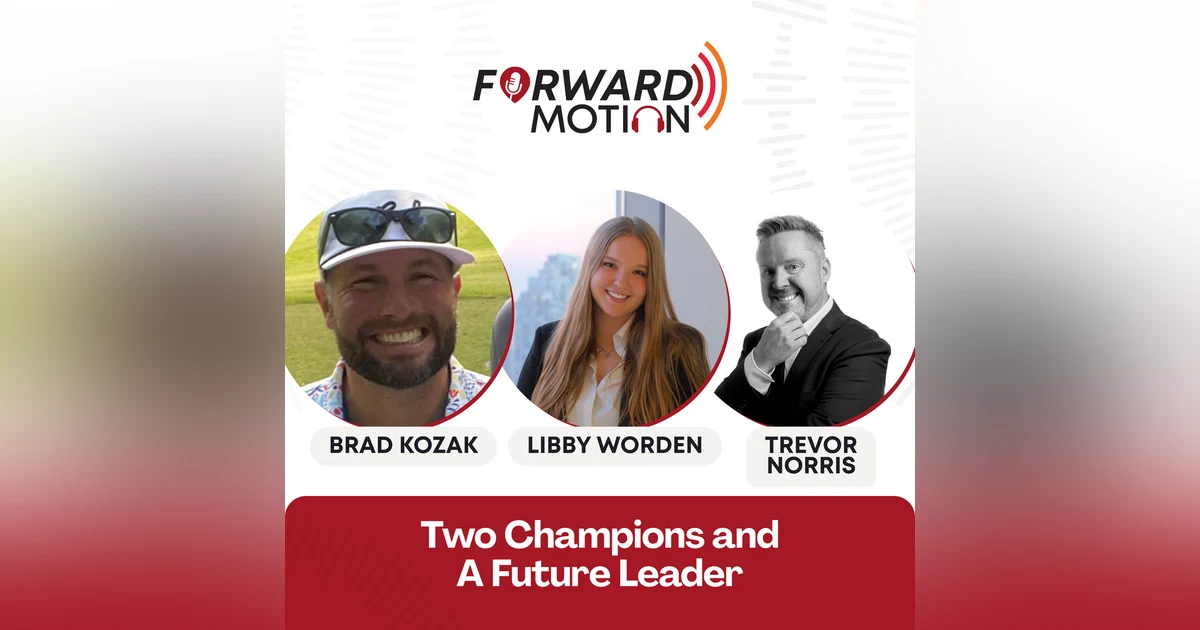
 In this special live episode, join Ontario tourism leaders Brad Kozak, Trevor Norris and Libby Warden at a live panel moderated by Abdullah el Safadi of Air Canada, where they discuss the evolving landscape of tourism in the province. Key themes include the importance of authentic experiences over technology-driven tourism, the value of storytelling and community connection, and the need for clear communication with visitors. The panel highlights the role of younger professionals in sparking innovation and encourages organizations to invest in mentorship and align with their values. Collaboration is emphasized as a path to industry growth, with stories of partnerships and trust-building. The episode offers advice for new entrants—network, seek supportive organizations, and prioritize values—and for industry veterans: stay open to new ideas. The discussion wraps with panelists’ dream travel destinations, exemplifying lifelong curiosity and passion for tourism.
Forward Motion thanks its partners for their support of this show:
Ontario Travel & Tourism Monthly
See Privacy Policy at https://art19.com/privacy and California Privacy Notice at https://art19.com/privacy#do-not-sell-my-info.
Mary Anne Ivison 00:00
Hi, this is Forward Motion discussions about the important topic shaping Ontario's tourism industry. Here's your host, Andrew Siegwart.
Andrew Siegwart 00:10
Our next session brings together our 2025 tourism champions, Brad Kozak with Golf in Ontario and Trevor Norris with the Bay of Quinte Regional Marketing Board. I think we've heard some pretty glowing intros to them earlier today, and Libby Warden, a Toronto metropolitan student and recipient of this year's Air Canada Future Leaders Award, for an important conversation about engaging with the next generation. And moderating this panel, which is also being recorded for our podcast, is Abdullah El Safadi, Manager, Community Partnerships with Air Canada, so come on up, everyone.
Speaker 1 00:48
Good afternoon, everyone, and welcome aboard this special podcast exploring the future of tourism. And I'll be your captain today for today's journey. So I'm joined Parry Libby, a fourth year hospitality and tourism student at Toronto Metropolitan University, and our two tourism champions, Trevor Norris and Brad Kozak. So today we're cruising through three destinations: vision and values, innovation and adaptability, and collaboration and impact, guided by incredible tourism champions and a rising future leader. So, buckle up, relax, and get ready for some bold ideas in smooth landings ahead. So, we'll start today our discussion with our theme that focuses on personal motivation, values, and vision for tourism. I'm going to start with you, Libby, and I know that's a question that you've prepared for, so tell me, what does meaningful tourism look like for you?
Speaker 2 01:46
Yes, I saw this question on the list, I was very excited about it. I think meaningful tourism is a little bit lost these days, and to me it means stepping away from the technology a little bit and experiencing destinations and allowing space to experience those destinations. I was, I did a lot of traveling this summer. I was in Dubai, and I was in Paris, and I went to the Louver to see the Mona Lisa. Has been my dream since I was a little kid, and I almost missed her because there was a huge crowd around, there were selfie sticks and big cameras and tripods, and it was a mess, and I got to see the photo or the painting for maybe two minutes, and I was shoved through the crowd, and it just wasn't a great experience, and I was so sad that it was that way. The same thing happened at the Burj Khalifa. There were selfie sticks and tripods, as I mentioned, and I think meaningful tourism is bringing back the space to experience and not just going snapping a photo and posting it on Instagram and saying I went here even though you probably don't know much about where you actually were,
Speaker 1 02:54
so what would you tell the, for example, tourism leaders or destination tourism destinations, what should they do to avoid this happening? Because we know everyone wants social media, everyone wants to post their journey, everyone wants to do these real videos or TikTok, like there's this new generation traveling. So, what should they do? I
Speaker 2 03:13
think that's it's so tough to figure out how to get people away from the screens. I think making tourism more of a story and introducing more of the story behind it, so people are learning and experiencing the history. I don't know if the solution would be to paste no photo signs, I think that would ruin it as well, but educating more on why people should travel and why tourism is so important, rather than just getting that memory, snapping the photo and leaving.
Speaker 1 03:42
Okay, pass it on to Brad. How would you respond to that as someone who's been in this industry for many years? What challenges like have you seen, and what can they do?
Speaker 3 03:54
I work in golf, so we talk about experience all the time, and the experience at certain places is good one day, bad the next day. I think consistency across the board can help with that, knowing what you're kind of going into, and that can even roll over to if it's something's going to be busy, you know it's going to be busy, setting consumer expectations. This summer's was the busiest summer Ontario's had for golf in years, and we started to set expectations that, you know, you might have to wait a little bit, or things take a little bit longer, or, you know, a bunch of different reasons why things are how they are. So, I think being upfront and honest is, it's good to be busy. So, being upfront and honest is an important one,
Speaker 1 04:41
so how about you, Trevor? So, taking those two colleagues, so how do you see success looking like in tourism by taking those two points into account?
Speaker 4 04:53
Well, you know, we actually talked a little bit outside about success and in it being. Less about the numbers for me personally, it's always about connection. Libby kind of already intuitively understands the importance of story, and I find like a younger generation kind of is in tune with that a little bit already, which is great news for all of us, and so for me it's people, place, and story, and you know, Brad understands that, you know, intuitively with how we work together and how we create a connection between the guest and the and the destination, and really it's about uplifting community, right, and so to do that you have to have you, you need the guest to experience the story of that, that destination and those people, and be in front of them, and then that's where that transformative element comes, and then trying to figure out, you know, how do we report that, you know, that's one of our big problems, and Libby was talking about, she wants to get into analytics and into data gathering, and couldn't we all use a little more help in that area, and so for her to think outside the box of how we can do that and find some measurables and some metrics on, you know, what you get out of an experience or a tourism product that's not just, you know, bums and beds, and here's the ROI on this specific thing. It's like multi-dimensional, so yeah.
Speaker 1 06:26
Well, that's that's a really great component to mention, Libby. So when he mentions that, what actually pushed you to pursue like studies in tourism? If tourism these days, it's all about the selfies, you know, people doing all these experiences. What? Why tourism?
Speaker 2 06:47
Yeah, I think as I'm getting deeper into it, that reason is changing. I think now it's about wanting to make change in the industry. If you had asked me before I went into school, it's really.. I'm, I'm so proud to be Canadian. I'm so proud to be from Ontario. I was born in Markham, grew up in Stouffville, went to high school in Aurora, and now, as every suburban kid's dream, I live in downtown Toronto. And I think just seeing how much we have to offer, and then seeing my mom, who's also in the industry, showing me that you can have a successful career, and you can, and you can gain that success from doing something that's fun, and, and we're not doing rocket science, we're not curing cancer, but we're making people happy, and at the end of the day, that's so important, and no AI, no robot is ever going to replace that. So, I think that's my why tourism.
Speaker 1 07:38
Well, the reason for someone that chooses tourism always changed myself, I you know, I'm an Eric at Air Canada, but Air Canada came to me, I think Brad also tourism came to you, was that the case?
Speaker 3 07:51
Yeah, it was, you know, I always had a passion for small business, and kind of when this pro we started this program with with Chuck and Sue from Central counties, like kind of had to figure it out along the way, which is part of the fun journey in travel and tourism, is it's not one size fits all, it's very much wearing different hats and figuring out answers and failing sometimes, and I think that's kind of the beauty of it.
Speaker 1 08:16
So I'm going to go to Trevor. I have a question here. How do you do your personal values shape your approach to tourism development or leadership?
Speaker 4 08:28
Yeah, well, I would say, you know, I think collaboration is always like at the forefront of everything I do, and you know, you know, when you
Speaker 1 08:41
say collaborations, you mean partnerships.
Speaker 4 08:43
Yeah, partnerships, but also you know giving as much space so that collaboration can happen and bringing people along the, you know, on on all these initiatives and on along the ride along with you, because it, you're much stronger as a, as a group, as then you know, obviously, the parts, but and I also think, you know, you know, tourism allows people to kind of really be a little, you know, they're authentically themselves, which is, you know, such a great thing to see, so you know, encouraging that, and people know me at a fault, I wear my heart on my sleeve quite a bit, so you know it's I love being able to champion other people who can, you know, be themselves and do something really amazing and inspire other people, so you know finding those people in my community that like haven't hasn't haven't had a voice at the table or their story has never been told and what deserves to be told is something that, like, I find very rewarding.
Speaker 3 09:45
I have a good story about your area of how you guys kind of brought everyone together, because there was golf courses that would drive by the parking lots of other golf courses in your market to see if they were busy, and I don't think they do that any. More, because they kind of know that, like, you guys are on the right same team.
Speaker 5 10:05
Well,
Speaker 4 10:05
thanks to thanks to Brad, I mean, we honestly, it's also about people who believe in you and will and stay the course, you know. He, he worked with us so many years ago and unreal, his unrelenting support and vision to where we could get and to build that confidence, you know, is amazing, and he's huge part of our story.
Speaker 1 10:31
So, you've mentioned collaboration, you've also mentioned inspiration. So, is there anyone, or what have you learned from someone since you've been in the industry for so long from a different generation that you want to share, for example, with Libby within the tourism sector. What is something that you, you know? Oh,
Speaker 2 10:51
my question.
Speaker 1 10:52
No, it's this question.
Speaker 4 10:53
Yes. Well, first I would say, you know, well, Libby, and, and sort of the young professionals, you know, remind me that, like, optimism can be a strategy, and that, you know, you know, working with, like, younger colleagues, you know, they question more there, they work in purpose, which reminds me to like do that, and to question, and I think you know, as you get older, your experience, you think it's, you know, it's work sometimes, in a lot of time, works for your favor, but it can work against you, because you bring that baggage to the table, you bring assumptions, and so younger generations that don't have that, you know, they always remind me to, like, you know, leave space for people to surprise you, and that's what you know, kind of Libby's sort of taught me a little bit, even,
Speaker 1 11:51
yeah, leave space for people to surprise you, but also allowing them to show you that there is more to what you know we've been doing in the past, Libby, what challenges have you seen in, you know, in tourism that you want people from, you know, older generations or have more experience in tourism that they should be more open to? What would you like an advice? What would you give them?
Speaker 2 12:14
Yeah, I think Brad, Trevor, and I were talking about this outside a little bit more, is that good people will do their job, they'll work nine to five, they'll get it done, they'll go home, they'll do a good job at it, but great people is who is going to make the change. And I think being able to pick those great people out of a crowd and give them the platform, give them the voice, give them.. it's been a lot of talk about funding, so giving them those resources in order to shine, I think is important, and maybe lost sometimes finding those champions, finding those leaders, and giving them more of a platform,
Speaker 1 12:47
talking about platform, and earlier you had mentioned about meaningful tourism. So, what role does technology, sustainability, or storytelling play in shaping the future of tourism? We had a session about AI earlier, you've talked about meaningful tourism and how to connect with people, so what? Yeah, go ahead.
Speaker 2 13:08
I think I talked about technology and tourism a little bit negatively before, but to flip it on the other side of storytelling, is storytelling is instant these days, with the click of a button, I can share Canada's most well-known secret, Niagara Falls, for example, but I can also find Canada or Ontario's best kept secrets. I went to an amethyst mine in mine in Thunder Bay, and I posted about it, and one of my friends went the next summer. So, with the touch of a button, you have that ability to story tell, not only in your community, in your, in the country, in the province, what have you, but across the entire world, you can tell a story with the click of a button, and I think that's how people will be reached globally, provincially, and all over the world.
Speaker 1 13:55
Yes, for sure. Brad, question for you, you're in golfing, you're in this industry, so how do you stay innovative in this industry? How can you change it? What can you learn from the new generation?
Speaker 3 14:12
Yeah, it's we talk about it a lot on the tourism side, is like, how do we get people to stay one extra day, how do we get them to do additional activities, and my kind of response to that is always, it's like golf, eat, drink, sleep, repeat, and it's just kind of like that every day. So, it's always kind of the golf guys don't necessarily care about what the other people are spending their time doing, but it is important for someone like me, who's kind of a conduit between both, to bring other activities and other things to the table as an idea, and like an easy added thing goes a long way, for you know something as silly as like the group gets lunch when they pass the halfway shop at the golf course is like goes a very long way for them, and that might be the best Caesar wrap they've had that year, and they remember that chicken Caesar wrap forever, which is. Hilarious, so yeah, just bringing different ideas to the table. The golf world's an old boys club in a lot of situations, and it's changing, and the people that are innovative and care are trying to change
Speaker 1 15:16
it. So, you've talked about innovation, Trevor spoke about partnership and collaboration, so how do you build those partnerships? How were you able to build a partnership between both of you? Because there's always that you always have to show the other partner why is it worth it to work with them. So, what's what piece of advice would you give to Libby when she wants to work with, you know, different partners in this industry.
Speaker 3 15:45
Yeah, you kind of got to be relentless. I think a lot of times where there's still people that I've left multiple emails, voicemails over the last five or six years, and they still don't answer. So, I think it's like proof of concept is important, but when you have an idea and you have people that support you in that, the path to getting there is a lot easier. So, making sure that being relentless and like passionate, I think, is always something that shines through, regardless of what you're doing. So, if, if you can be passionate about what you're doing, I think that, that, regardless of people think that you have a good idea or not, they still like, okay, at least that you know that person cares.
Speaker 1 16:25
Yes, for sure. It's about being passionate, but also attending events like this, where you are able to make connections, talk to people, you know, build partnerships, or just have meetings to talk about your own projects. How about you, Trevor? How would you see that? What piece of advice would you give to Libby in your approach, because Europe, you're very different than Brad, probably in your approach.
Speaker 4 16:46
Yeah, but there is a lot of similarities, like I would say, you know, come at it with a shared purpose is really important, and I think, you know, I've learned the hard way, you know, taking the time to build trust is huge, and to have both those things as the foundation point, then you can really build on that solidly. So, yeah,
Speaker 1 17:19
so Libby, I'm going to move now to the other part of the discussion. You've been in this industry recently. What piece of advice would you give to new people, new students entering the industry?
Speaker 2 17:32
Yeah, I think I'm definitely newer in the industry and looking forward to graduating next year and really immersing myself in the industry, but my two biggest pieces of advice are work with someone or an industry or an organization that's going to invest in their people, whether it's promoting from within mentorship programs or even just noticing that people are staying at the organization for a long time, is so important because we talked about this outside again. No one is going to stay somewhere that they hate for an extended period of period of time. My other piece of advice, for again any industry, is working somewhere where your values align, because if your values align, then there's some sort of positive connection that you'll have with that company, and even if it's not the correct fit for you in the moment, you'll realize that keeping your values, keeping your morals, is so important above everything else.
Speaker 1 18:25
So, you've mentioned investing. How do you invest in the new generation? Does that mean allowing them to attend events, or how would you describe that?
Speaker 2 18:35
Yeah, I think I've been very lucky in my time as a student that I've been invited to events such as this tourism summit today, and events in the past, and through those events is how I've built most of my network, made most of my connections, gotten most of my internships, and for students that haven't had those opportunities, you can see them struggle. I have friends who have applied to 200 plus jobs and not even gotten an interview, I have friends who have stayed at the same job they've had since high school. Just because there's no other options in the tourism industry, it's so important. Your network and students aren't able to build networks unless they're given the platform to do so. So, which networking with other students is amazing, but it's really talking to people like all of you and building those connections outside of the classroom, that's the most important.
Speaker 1 19:24
Yes, for sure. So, your network is your net worth. And going back to Trevor, if there's a student or someone who's new into industry, you have all these applications that you're receiving. How would you choose which one you want? What would advice would you give them to enter your industry, for example,
Speaker 4 19:44
well, I love what you said about the importance of values. I find, you know, a younger generation, they value that value, that those values alignment, and as we move in tourism to this more, hopefully. I'm, you know, hopeful that we're moving to this more regenerative mindset. That's what we're trying to do, you know. We're trying to align values with our guests and our destination. We want trying to find, build harmony between, you know, the tourism industry and our local population, and for that to work in harmony, and for communities to thrive, so I love that, you know, come at whatever you know, job or career that aligns with your values, because you can, you know, give us a lot to think about, also, you know, I think, you know, you've already kind of done it, as you know, working in a lot of different areas, you know, having time. At one point, I thought, you know, we have a big problem in tourism. We can't attract a workforce because we don't have a straight line, you know. We don't do a very good job of this. You do this, do that, and then you can be in tourism. But over the years, I've realized that's our superpower, that's our strength. Everybody in this room has come to tourism not in a straight line, done all sorts of things, and I think all our perspectives, and to have, do more things, so you have more perspectives on things, you can bring, you know, a different mindset, a different lens to the work we do, is so important at understanding humans and people, because you, you know, that's where we break down barriers or break down biases. We connect with people, so that's important. I mean, that's what I would impart, I guess.
Speaker 1 21:34
No, for sure. You said understanding people, and maybe that leads me to a question to you, Brad, you know, understanding people means you have to be an extrovert to be, for example, in the tourism industry, is that the case? But I think we've spoke about it last week, you can be an introvert at the same time.
Speaker 3 21:54
Yeah, it's just finding the kind of the right role. I think a lot of people put tourism and kind of sales together, and there's a lot of other, like I think, roles that can fit into that. It's certainly not one size fits all.
Speaker 1 22:10
Yeah, so like for example, in the tourism industry, you can work behind the scene, but you're still in the tourism industry, you can also be in front of the scene, and you can have that, that you know the that knowledge of being in front of people, for example, so maybe Brad, I'll go back to you too. What kind of change would you like to see in the tourism sector, or what, like, how do you see the tourism sector evolve, maybe in the five to 10 years in your industry. Specifically,
Speaker 3 22:44
I'm a tough one to ask, because our golf industry is actually very similar to what tourism is. I think everybody, every tourism office could say they need two or three more hands, or two or three more people that do different roles. I think that expanding is maybe the next step, and bringing on data type roles that Libby likes to do, and making decisions based off that. I think expansion is a big one, and making sure that you can touch more things. I learned the lesson the hard way a year or so ago is that you can't do everything yourself, and bringing on good people, and training people, and investing time into people is the next, I think, step for my business, and also for, I think, tourism in general.
Speaker 1 23:26
So, how do you invest in people in your industry?
Speaker 3 23:30
Yeah, that's the
Speaker 1 23:30
approach.
Speaker 3 23:31
So, I'll use an example, because I just hired two kids in my office that are 24 years old, and while I don't really relate to what they talk about, it's it's showing them kind of like how I see things through the lens that I see them, and letting them make their own decisions based off that. So, putting the time in, sitting there, you know, letting them ask questions, and just giving them opportunities. Like, the biggest thing is that we're not doing brain surgery, like I saw golf trips, like it's fun and rainbows and sunshine all day every day, so messing up is okay, like it's giving people the opportunity to mess up in a, you know, an email conversation or a phone call, or you know, letting them know that, like, if you don't have the answer, that's okay, you don't have the answer, you, it's more important for you to find the answer and give them the answer in a timely manner than it is to just always be rhyming off stats and this and that, so yeah, investment in people. I think Libby kind of hit the nail on the head
Speaker 6 24:29
there.
Speaker 1 24:30
So, do people have to know how to play golf before joining your industry?
Speaker 3 24:34
I don't think so. I think that you have to know the consumer and knowing, knowing the consumer and how they think and what they want in anything is kind of the secret sauce. So, while I could sit there and kind of stereotype like a customer that comes to us, whether they're kind of good, better, best, I don't think you need to be good at whatever that is. No, no,
Speaker 1 24:57
good, good for that. So, Libby. Question for you, how can we better connect tourism with local communities on global travel? You spoke about meaningful tourism, meaningful connections, storytelling. So, how would you do that?
Speaker 2 25:15
Yeah, I think, as I spoke about before, is getting the story out there with the touch of a button. There was some talk about digital marketing today, and I think improving that digital marketing and working with countries around the world. I was working at an event space in Aurora, and there's a town in Sweden, I believe, and they were home to the women's national hockey team, and when they had the World Juniors in Ontario, we actually hosted them, and it was our sister city. So, I think finding more connections that we can make around the world, whether it's something as small as a sister city or as large as a big marketing campaign, I think using technology to our advantage is is going to be a huge asset in the future, and now, quite frankly, and being able to get the word out efficiently and correctly, and not getting the word skewed at all,
Speaker 1 26:11
for sure. So, you're saying the word be to be out, but you also need people to be holding a, you know, their phone like this, and making videos, and putting them on social media. Yes,
Speaker 2 26:23
so it's a tough one, for sure. It contradicts a little bit what I said before, but being able to get the word out, maybe as an organization, rather than have people spreading the word for you, essentially.
Speaker 1 26:38
Okay, that's that's a great component to share. Trevor, maybe going with her idea, how can we better connect tours and businesses together? You've talked a lot about collaboration, you know, partnerships, especially in this current world where it's a lot of global travelers, there's a lot of competition. So, how would you do that?
Speaker 4 27:03
Well, the first thing is demystifying the idea that you know of competition, and you know competition, like collaboration over competition. So you know in our region we took a lot, it took a long time to kind of align everybody to the idea of, you know, we just all share what we're doing, and you know it adds this, it all of a sudden got us so much closer, and that sense of community starts to happen organically and very and very quickly, so you know, it's been an interesting journey to see now that I've been at a bit of a runway to see the effect of that, and you know, I think you know when it comes to smaller communities, to even though they're smaller communities, people do still feel disconnected, and I, you know, I've been lived in big cities as well, and so you know, creating opportunities for businesses to connect more regularly, so that they know that they share some common elements and can share practices. For instance, my experience partners, they now all, you know, meet and do things together, and they're partnering and doing initiatives together without me, and just seeing them, you know, do this on their own, and for all that collaboration to happen organically outside of that little snowball that we pushed down the hill, and now it's starting to gain momentum, is really, you know, is very amazing, you know, and rewarding.
Speaker 1 28:41
No, for sure. This, the collaboration, I like the idea that you said it's not a competition, some like we think it may be a competition, but it's everyone has something different to offer, and that's why collaboration is very important in the tourism sector. I have one last question to ask Libby, what piece of advice would you give, not to the new generation, but to the people who've been in the industry for a long time? Maybe tell me a story that something happened to you that was a bit challenging, or maybe that pissed you off, that you want to, you know, people to like understand what the new generation is coming with. Yeah,
Speaker 2 29:24
I think that's interesting. I, without giving too many details, I was in a meeting one time with school, and our program at TMU is quite small. I talked to a few people today who have actually graduated from the program, and we have about 90 students graduating per year, and I've sat in a lot of meetings talking about how do we fix that, and how do we, how do we go from here, and I've been met with a lot of, oh, that'll never work, we probably shouldn't even try, that's not going to work, but as I said before, giving people the space to. It might not work, but it's something we can try. We're at a spot right now where we've got to do something, because our numbers are so small, and just something has to be done. So, being constantly met with that'll never work. We've already tried something like that, or I don't think that's a good idea. It's frustrating, and I know we can do it. It just is about getting the resources,
Speaker 1 30:21
100% so that's something that pisses you off when they tell you, you know, when they tell you this is not something that we should try, and you know, we come up with new ideas as the new generation, and just let, let the people do their thing, let us try, if it doesn't work, then it doesn't work, and I said it was my last question, but I actually have a last question. We have 30 seconds here. Libby, I want to know where you want to travel next.
Speaker 2 30:45
I would like to go to Switzerland or somewhere where I can ski the Alps.
Speaker 1 30:50
How about you, Brad?
Speaker 3 30:52
Um, where..
Speaker 1 30:54
don't tell me golfing. And Chuck,
Speaker 3 30:55
Chuck's trip to New Zealand and Australia has kind of inspired me to do that, that's that's definitely on the list. Beautiful.
Speaker 1 31:02
How about you, Trevor?
Speaker 4 31:04
You know, it's funny, I've been, you know, been traveling across Canada, and I'm lucky to see, but I keep getting pulled to the East Coast. There's a, you know, wonderful.. I've been out there once, kind of full circle moment, back to Newfoundland, where you know, seeing small communities, you know, build a tourism infrastructure under like these amazing stories, you know, of the place and community, and yeah, I'd love to go back
Speaker 1 31:33
beautiful places to travel to, which are destinations flown by Air Canada. So, as we begin our final descent, thank you for flying with us on this inspiring journey through the world of tourism. A big thank you to our panelists for sharing their insight into our listeners. Since this will also be on the podcast, whether you're on the ground or at 30,000 feet, we hope you're leaving inspired to keep exploring. And in true Canada fashion, this conversation arrived right on time. Thank you.
Mary Anne Ivison 32:03
Thanks, Bill. Thanks for listening to Forward Motion. This show is created by the Tourism Industry Association of Ontario and is recognized by government as the voice of tourism and produced by everyone at the Sound off media company,


