Indigenous Tourism: Stories, Collaboration, and the Path Forward


 RSS Feed
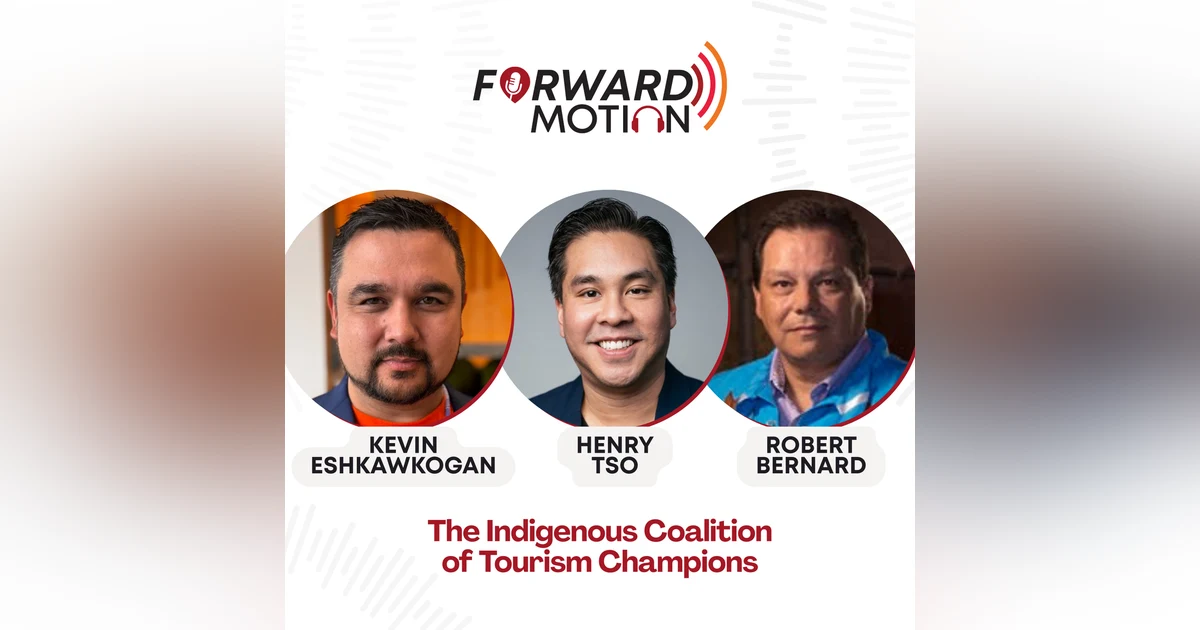
 Andrew Siegwart is joined by Indigenous tourism leaders Kevin Eshkawkogan (Indigenous Tourism Ontario), Henry Tso (Indigenous Tourism British Columbia), and Robert Bernard (Nova Scotia Indigenous Enterprise Network) to discuss the transformative impact of Indigenous tourism in Canada.
Kevin, Henry and Robert share their personal journeys into the industry and reflect on how Indigenous tourism fosters reconciliation, cultural revitalization, and local prosperity. The conversation highlights the importance of authenticity, community-driven approaches, and the need for collaboration across regions. The episode also introduces the Indigenous Coalition of Tourism Champions, a new initiative aimed at uniting provincial organizations to amplify Indigenous voices and support grassroots development. Listeners gain insight into innovative programs, such as cultural authenticity designations and frontline training, and receive recommendations for unique Indigenous tourism experiences from coast to coast. The episode emphasizes the value of storytelling, partnership, and building a more inclusive and meaningful tourism landscape in Canada.
Forward Motion thanks its partners for their support of this show:
Mary Anne Ivison 00:01
Foreign This is forward motion discussions about the important topic shaping Ontario's tourism industry. Here's your host, Andrew sigward.
Andrew Siegwart 00:10
Indigenous tourism is one of the fastest growing and most transformative segments in Canada's visitor economy. It's also a powerful driver of reconciliation, cultural revitalization and local prosperity. In this episode of forward motion, we're joined by three leaders shaping the future of indigenous tourism, Kevin eshkegogan, leader of the indigenous tourism Ontario, Henry so from indigenous tourism BC, and Robert Bernard with Nova Scotia, indigenous tourism enterprise network. Together, we explored the evolution of indigenous tourism in Canada, progress on truth and reconciliation, and we also spotlighted the launch of a new Indigenous coalition of tourism champions. Finally, our guests share a few off the radar indigenous tourism experience that every Canadian should have on their travel list if you're in the business of tourism policy or simply seeking a more meaningful way to explore indigenous tourism. This episode will give you much to think about and act on.
Andrew Siegwart 01:09
Well, hello, gentlemen. Thank you so much for joining us on the forward motion podcast. I always like to start by asking folks, sort of how they got started in their career journeys. So this question is for each of you, what brought you into the tourism space and what inspired you to champion indigenous tourism in your regions all across Canada. Kevin, why don't we start with you?
Kevin Eshkawkogan 01:29
Yeah, so I'll try to keep this story short, because our story as First Nations people goes back hundreds of years, and in my family lines, we've been involved in tourism a long time in different capacities from my grandmother early on, having her my uncles and my my aunts go down to in McCormack Kong and sell birch Park canoes that they used to build. So now, in the more modern context, to be quite frank, how I got started was I was working at an economic development corporation called Bob attack, which means the future. And they asked me if I wanted to get involved in tourism. And I My background is political science and business and accounting. And I said, Sure, that sounds like fun. So being in my early 20s, you know, the idea of traveling internationally was very appealing. We went to the first thing they they really did with me was I signed me the task of attending the international tourism burst ITB in Berlin, Germany. So that was a lot of fun, and here we are. You know, that was a 2003 so here we are, 22 plus years later, and we're still having fun doing tourism, because it's a great industry to be in. And there's a lot of stories in between that 2003 intro to now, and of course, pre that with our family doing all kinds of things in the industry as well.
Andrew Siegwart 02:50
Yeah, thank you. And yeah, no doubt we'll touch upon some of those through this conversation. Robert, how about yourself?
Robert Bernard 02:57
Well, yeah, I was just thinking about the same question. And I think it goes back to being a kid and watching my father as an artist sell his work on the side of the Trans Canada Highway, and he was a folk artist. And, you know, I didn't realize that that was tourism. You know, he was expressing his culture through art. And many people stopped by to ask questions and to it was interesting, because he never really put price tags on his work. He kind of asked people what he thought they wanted to pay for it, and if they both agreed that was good. And so, you know, growing up, saw a lot of beautiful work and artists, but I think I got involved when the culture bug really hit me for the first time, similar to Kevin's story, I was involved in a lot of business, business development, and I was helping a cultural center with their revised revising a business plan, and I realized that the culture and heritage center didn't have a lot of culture and heritage in it, and so we got an elders advisory group going, and in that process, you know, they really wanted more things happening in the community at the center. And so we started bringing events and festivals and and then we partnered with an international music festival that hosted. It was it was a large center, so we could heat, we could seat 500 people there. And so that international festival brought, you know, tourists and visitors from around the world to the location. And when we hosted, just before it, when people came, they asked, Where do we pay for the festival? We didn't charge anything for the festival. And they said, you know, you're doing a lot of stuff that you know people would pay for. And they said, Do you guys, you know, do you have a tourism coordinator? Do you have a tourism plan or strategy? And I'm like. A no so from there, it was actually a guy who was a consultant from the States, and he said, You guys need a tourism strategy for your community. And he asked me a few questions, and he said, You should go to a Tourism Conference. And so we actually found, I believe it was the second international indigenous tourism conference that was held in Whistler I believe it was 2013 It was around that time. And so we took a a group of people from the island here we call onomagi, which is the land of the fog. People know it better as Cape Breton Island. That's the traditional name here from Nova Scotia. We call it megamagi. And we took about 20 people to the international indigenous tourism Summit, really opened our eyes in terms of what other people have from around the world, similar struggles, similar challenges. And we, you know, we heard this amazing one word that we're still challenged with every day, and it's authenticity. And how do you achieve that, right? How do you achieve that? So since then, been involved nationally with Kevin, and, you know, like, we've been working together now for many, many years at the national board too, and, and so, I mean, these are, these are things that we're trying to implement into, into our regions back home. And, and tourism is a different definition for us, you know, like we are very holistic as a people. We don't just focus on money and, you know, money and positions and and jobs. I mean, those are important, but the real history, the story, the the impacts that have happened, and sharing that, I think people really, really enjoy our version of the story. And then, you know, of course, along the way, we meet special, special people, Henry as well, and I got to know these guys on the way, and good friends today so well. And I
Andrew Siegwart 06:54
think you know from both of your stories so far, you know, it's discovering that network and making those connections, you know, and how often going to a conference starts to spark that knowledge, and then in the work that you're all doing now, you're just continually bringing people together and layering on and growing that impact like a like a stone in a pond. So I think it's quite something. How about you?
Henry Tso 07:18
Henry, well, I actually started my tourism career later in life and more in Del hood. So I worked for destination BC, which led my work to the Vancouver 2010, Winter Olympic Games. Oh, wow, yeah. And that's my work alongside with the four host First Nation, under the leadership of tawani Joseph, and one of the activations that we did was one of the first indigenous fashion show in downtown Vancouver and and that really brought excitement and pride and confidence, and I saw in everyone's eyes, especially for the indigenous people that were there, and at that point, just kind of knew, like there's so much potential for indigenous tourism. And that's kind of where I thought to myself, How can continue to build the legacy of the 2010, Olympic Games? And that really started my career, indigenous tourism, you know, which really led to my work here, indigenous tourism BC, for the last 16 years, work with the World Indigenous Tourism Association, and now with Kevin and Robert with the indigenous coalition of tourism champions. You know, which we'll talk later.
Andrew Siegwart 08:35
Yeah, there's, there's so much happening. I love that you, you referenced that 2010 Olympics in in Vancouver Whistler, because I do think it was one of those moments that started to raise more awareness of of indigenous communities, but also that part of the country that maybe didn't have awareness. And here we are approaching FIFA next year. And you know, hopefully we can take some of those lessons learned and and apply them, but we'll, we'll get to that a little a little later as well. I can ask you a question that might seem at a surface to seem strange, but I'm really asking so that we can maybe shed some light on this, to to listeners who are less familiar. But how would each of you define indigenous tourism? Like, what does indigenous tourism mean to you, or what does it mean economically, and you know, how is it performing right now?
Henry Tso 09:27
Our slogan here indigenous tourism, BC, is our story your experience? I like that. Yeah. And we have a branding that also talks about everything is connected. I mean, the whole point we what we want to do is really invite the travelers to experience the storytelling side and learn the diversity of First Nations here in BC and their perspectives. So it's what makes, I think, indigenous tourism unique, and what adds value to travelers coming to BC or Canada. Another slogan I saw recently. It was, indigenous is the future so and that really resonated when I saw that they go, indigenous is the future and and again, here in BC, there's so much you can experience, from outdoor adventures, which includes bear and whale watching to walking tours to kayaking canoeing. There's arts and culture. Obviously, there's cultural centers here to art galleries. We also have accommodations, from campgrounds, hotels, resorts, indigenous restaurants and even wellness. Again, think people forget. There's golf courses, our indigenous owned to even hot springs and, of course, supporting you know, retailers. You know people like shopping. You know, they can shop for jewelry, clothing, even coffee, and even, we even have one that has a micro brewery if you enjoy a beer or two. So, yeah, it's indigenous tourism. It's quite vast, and I think, you know, I really invite travelers to go and visit, you know, indigenous tourism business,
Andrew Siegwart 11:06
there's a beauty in that. There's a lot of, like you said, our story, your experiences, a lot of history and culture and things that are very traditional. But there's also fusions and new ideas and modern interpretations that young people are bringing to the table from indigenous communities that that are that are probably different, even for you, I would imagine, Kevin, what, what? What's your sense? How do you? How would you, how would you define indigenous tourism?
Kevin Eshkawkogan 11:31
Well, defining something for like on a broad scale is very, very difficult to do, right? Even the question itself is a challenge, yeah, yeah. It's different in each of our respective regions, from coast to coast here. And with that, though, I think of I've heard all the introductions, and it's the commonality, which I often seen over my 20 some plus years, is it all boils back down to community, and it's telling your story on your terms and what, or through your lens, or whatever phrase you want to use, but it's it comes down to then I think of my time at the Great Spirit circle trail, and I got tasked with, this is early on in my tourism career, in the modern context and the I got tasked with developing fit experiences. And to be quite frank, without a tourism background, I really didn't even know where to begin. And to be quite honest, I had to look up what an fit was right and ask people what it meant. You know, that's 20 some years ago, but how I approached it with from a very, as Robert said, a holistic approach and a very organic manner, as I asked all of my my colleagues at the time and friends and family, I asked them this simple question, and it was, How did our grandmothers host people? And the answer was resoundingly the same. And I still ask that question to this day, wherever I travel, and it boils down to some really simple things. Is that we our grandmother, used to give people something to eat, something to drink, and they visit, and they often do some kind of activity. So in my grandmother's house, yeah, she'd always have tea ready to go. She'd always have, like, fresh bread or or something that was ready to go, Bannock or whatever it may be. And, you know, we'd sit and talk, or I listen to them sit and talk, and they in my grandma's house, often work on a quilt, is what they would do. And, you know, I find that's true across the country. Is when you boil it down to these simple terms, yeah, you can kind of get a definition. But the beautiful part of indigenous tourism is it is different everywhere we go. So although we can get the framework and the skeleton of the industry put in place in a particular region like Nova Scotia, Ontario, BC, at the end of the day, each one of those experiences goes going to be different. So we can do canoeing in Nova Scotia, British Columbia and Ontario, but each one of those experiences is going to be different on the water, and it's going to be different with your host, who's going to tell you different stories local to that region. So there's a lot in there. And indigenous tourism has a lot of potential and still untapped. And we often hear me saying, you know, things like, once we figure out how to work together on this, with everybody involved, indigenous and non Indigenous, we're going to find ourselves in a really prosperous region, and you know, there's, well, some hurdles that are there, but we're working through them with our allies and our partners, and we're seeing the benefits of all of that type of work.
Andrew Siegwart 14:29
So it's a lot of fun, yeah, and I think it's a really great point that you make. There are community so many different communities across every aspect of this country, and so that's part of the joy, is to experience all of these different communities and cultures and geographies and and there's just so much to discover, right? It could take you probably years and years and years, and you'd never tire of the new experiences, which is something people probably don't realize. How about your. Yourself, Robert, what comes to mind when I ask that question?
Robert Bernard 15:03
Yeah, I think Henry shared some, I guess, slogans. I'm not sure if we call them slogans, but it's a way of life, I guess, of understanding, you know, like one of the ones that we use is honoring our past and embracing our future. And so, you know, it's, it's part of that story of respect, part of the story of truth. You know, there's this huge initiative going across the country, or should be going much better than that, is trc, truth and reconciliation. And people often say reconciliation, and they forget about the truth. And you can't have reconciliation with the truth. So for us, the telling the true story is is so important. And connecting, connecting with the land, connecting with the culture, connecting through language, connecting through, you know, the land, the waters, the all the things that we have a special connection to through the natural laws that we, you know, live by. And I think it's difficult sometimes for mainstream tourism to understand that, to be honest, you know, to support that, to to slow down enough for that to make sense in their own lives. And because it's part of our life, we sometimes, maybe we accept it a little too quickly on our behalf, or maybe we assume that others will do the same thing and but, you know, society is just going way too fast. The world is going way too fast. So for us to try to slow it down, such a huge engine of, you know, the world, it's, not a realities, but, but I think for us, if we can be given the opportunity to host and to share our stories and to and to, you know, share our foods is a big one. You know, Kevin mentioned that it's a it's a big thing. I go back to that word authenticity, where, you know, we're still struggling with that because of the losses that we've had, you know, in our in our backyard, we've, you know, we've been one of the ones that have been hit by contact with the settlers the longest, you know, over over five, 600 years here in present day, Nova Scotia mimugg And You know, if we go back further, we've, we've had contact with Vikings and Spanish and, you know, way before Columbus came. So even that, even the challenging stories of, you know, like what people are finding out today, of what history is true. But for us, I think you know, we're, we want, we're a proud people, but we also want to show how proud we are to the world. And sometimes those doors don't open as as quick or as as respectfully as we would like. And, you know, we we're not the type of people to, you know, to bang and kick on those doors. And then we want to build strong relationships. We want to build trusting relationships. We want to build mutual, meaningful opportunities, right? So I think our version of tourism is is much more meaningful, much more deep, much more, you know, like the the the experience that will, you know, you will remember, not just going to a hotel, going to, you know, have a nice meal and jump in the pool and then, you know, all that stuff. It's something that we want you to take back for the rest of your life, and maybe even come back for some more,
Andrew Siegwart 18:32
and hopefully get a better understanding of that truth and that history and be more open to being a part of making things better and and where we go into the future. And I think that's a big part, that that's the that's the opportunity and potential there, and I think we all want to see that advance. I'm a question for all of you. You know, there has been, you know, you mentioned the TRC and truth and reconciliation, and this has been, I would say, a formal topic of conversation around many tables, around many government tables, family tables, communities. What's your sense on the progress there? How far has Canada truly come in that regard? Where do you think we're making strides? Where? What areas specifically do we have a lot more work to do.
Robert Bernard 19:22
Maybe I can let our elder, Kevin there, start the conversation. Yeah, that one, that'd be great.
Kevin Eshkawkogan 19:27
And just so, you know, Andrew, I'm not the elder of the group. Feel like I've been around a long time, but that's the case.
Andrew Siegwart 19:36
Was that, was that a subtle was that, was that a friendly dig,
Kevin Eshkawkogan 19:43
Robert deflecting that he's the true elder.
Andrew Siegwart 19:46
But I love it, as an elder would,
Kevin Eshkawkogan 19:48
yeah, like, there's a lot of work been done. And I like to talk, when we talk about this, there's still, like, obviously, a ton of work to do. The reality is, what are we actually measuring? So putting my bit. Perspective on what are we actually measuring, and how are we measuring that success, and what does success look like? Well, that's a very corporate approach to it, but on an anecdotal level, I'll just say this, we're having conversations now in 2025 that we didn't have in 2015 or we didn't even have in 2019 like, you know. So we've made progress, but we're not measuring that progress, and we don't really know. Is the short answer to this, and, you know, it's all I can say, is this is, I think we're helping shape world views, and that's a really positive thing. So, like, everything that everybody is talking about is, that's what it boils down to, like I, you know, as Robert was talking. It reminded me of my very first fan Tour, where I had a Russian lady come in and didn't speak English, and I didn't speak Russian, and through a translator, I shared our ways of life. You know, at one point, as we were sitting around a fire on Manitoulin Island, I'm telling different stories about that area and our belief systems. This lady started breaking down and crying, and I thought I offended her. This is my first damn tour. It was 2003 something like 22 years ago, and the reality was I didn't negatively affect her. It was actually a positive reflection on what she hoped for the world, and her comments through the translator were really simple. She says, I'm crying because I can't believe there's still people like this on the earth that respect the earth the way that your people and you know, that type of stuff, you know that wouldn't have happened necessarily 20 years ago. So indigenous tourism open the doors? That's just one example, and there's a ton of more people that need to kind of maybe get involved in that. And it leads us down the more structured path of tourism, like, you know, talking about Experiential tourism and transformative tourism, where we're connecting with people's spirits. And there's been many times where our guides, and I'm sure, right across the country, people have had, you know, their their guests crying on tour, because it's so moved by things and our views on things, and when we think of truth and reconciliation, that's starting to happen at the domestic level as well, not just with the international travelers who are seeking us out, but other people who are interacting with on the day to day basis. And that's that pride that we see in indigenous people now, it simply wasn't there, you know, six, seven years ago, 20 years ago, 30 years ago, it was in a small handful of us, but now it's more of us, and we're willing to share and where we want to, and it wouldn't want to share those good practices and things that are there. And I see it in all the facets of the industry, like from, you know, when we talk about our fee strategy choices around culinary Well, you know, there's farming practices that are being reinvigorated that were actually practices that we had as First Nations people on these lands going back, you know, hundreds of years, if not 1000s of years, depending on who you talk to. So we're making progress. There's still a ton of work to do. And if we want to see more advanced progress, more quickly, I think we need to simply now start measuring some things, benchmarking where we're at, taking a business approach to it, but generally speaking, we're making progress. But it's, it's slow progress, and that's understandable.
Andrew Siegwart 23:19
I like what you're highlighting there, because you're also talking about within the communities, more self confidence, self care and self appreciation. And when you have that, it actually or when that gets strengthened, it leads to all the other conditions you need, confidence to build a business confidence to be a better leader, providing authentically the experiences and the history. So it's, it's always like, you know, building from within to then expand without. And I, I that really resonates with me, and it makes me think about even what the whole country is going through right now, in in what we're experiencing with south of the border, and this sort of renewed pride in people in terms of what our values are as a country, or nations within a nation. I mean, that's something that I think many in tourism are grappling with as well, like we're good enough to be on the global stage, and we have to believe it, so that we can sort of communicate it. And I think there's a thread there somewhere,
Kevin Eshkawkogan 24:20
absolutely and I'd add to that, Andrew, is there's groups like ours. We support that system like we had when I ran the Great Spirit circle trial and I started another new library called them. But at the circle trail, we had a library that our staff had access to, and they would go and, you know, pick up bucks on their downtime if it was slow in the office or there weren't very many tours that day, they would learn about themselves, and that's a huge part of what we do with tourism, indigenous tourism, and we learn about who we are as people. The beautiful thing I used to see at the circle trail was the staff would go out and they would talk to their family members, and they would then have conversations. Questions about our culture that we that has been oppressed for so long, and we were punished for practicing and all of those negative things. But it was its own sort of cultural revitalization practice that happened very organically, and it also happens with groups like ours who lead certain events or lead certain initiatives. And I think of, and I still look to it as one of the very first innovative ideas with indigenous tourism. And it was in BC when they ran the first host program. And you know, they would train people, give them the confidence, give them the skills and abilities, and they would enter into the workforce, and they would do what they do, and tell people who they are. And the most amazing thing about all of this is, as indigenous people, we don't have to be ultra creative about what it is we're presenting to the to the world. We just need to be ourselves. We just sometimes need a little bit of support to get there. But yeah, like BC has led the way in a lot of the France and that was, you know, that's we look to them in a lot of regards. And it's, it's great. So you know that confidence is huge, and it's going to go a long way in the long run.
Andrew Siegwart 26:03
And it's, it's building capacity in so many facets, which I think our whole, our whole society needs so much more of. Henry, any any additional thoughts or anything else you'd like to to weigh in on on that front?
Henry Tso 26:16
Yeah, I really just want to say I do agree with Kevin in terms of we are making meaningful progress. But again, there's, you know, lot more work for us to continue again, comment about, you know, influencing the worldwide views. You know, for a long time, you know, we fought the Maori were leading the way. And even work in Australia, you know, but we know, we realize indigenous tourism here in Canada and in BC is also being recognized, as you know, us being international leaders in leading a way in terms of tourism development. So there's a lot of thing to be proud of for the work you know, that we collectively do together for indigenous tourism, and even with the government at the moment in BC, you know, we have the legislation that was passed for implementation of UNDRIP, or here in BC, it's called dripa, which stands for Declaration of The rights of indigenous people. And even within the act, it discussed about free, prior and informed consent, which really means it's, it's more than just engagement and consultation with First Nations now and again. It's, it's, you know, there needs to be requirement for consent. And I think that is progress in terms of where we came from, you know, even since 2010 games is no longer just land acknowledgements, again, moving towards, you know, even getting code management, code development, co ownership, working with their local First Nations, yeah, I think, you know, in BC, you know, we're fortunate to have, you know, the legislation that was passed for drippa, there's a drip of action plan, and the two things that it talked about is investing into indigenous tourism businesses, which is very important. And another thing was investing into indigenous tourism. BC, so I think another thing that I believe that's gonna help is having, you know, provincial and federal government supporting our other indigenous tourism organizations across Canada and and I believe the work of the coalition is, you know, one of one of the work was for us to do that help support each other, provincially and even federally.
Andrew Siegwart 28:39
So yeah, and I think you're, you're, you're raising an in an important point, and that there, there are important reasons why it makes sense to come together across the country, to look at supporting the communities in a holistic way, because there's so much change happening, and a need to collaborate. But before we get there, because I wanted to, I want, really want really want to dive into that, but I want to give each of you an opportunity to just talk a little bit about each of your organizations and some of the, you know, innovative programming, or anything that you'd like to share with our listeners about how you're working directly with your in indigenous business owners to sort of, you know, achieve success. So it could be an interesting program, or maybe a recent win, or something that you've delivered for a long time, hoping we can sort of highlight some of the businesses that you support a little bit. Robert, why don't we start with
Robert Bernard 29:32
you? Yeah, it's actually a combination, I guess, from our point of view, working with our membership or business owners, but also our partners and our ally partners, the growing list, and I just noted some things while Kevin and Henry were talking away responsibility like growing growing that responsibility as as individuals, as business owners, but also as partners, as. As I mean, to some degree, government departments holding them responsible for, you know, for the implementation of not just funding, but you know, what do they do beyond, you know, the time they spend when they talk to us? Do they actually go and open doors that you know can create more opportunities for for our projects and programs and and our business owners, and then, you know, things like we talked about reconciliation, but we want to take the next step and call it reconciliation. So it's kind of like looking at that action around reconciliation. What are you actively doing? What are you actually actively doing as a partner, as as an ally, and when you work with us, you know, do you see the big picture? Do you see, you know, do you see what we're talking about? Do you are you actually listening? You know, creator gave us two ears, one mouth, for a reason, so you can listen better and talk less and and learn more, right? So we have this thing here called two white scene that was developed here with the magma people. And it's all about how, not just how the mainstream and western view is seen, but also how the indigenous view is honored, respected and included and so and so. I mean, all of those teachings, I guess, are important when we talk to, you know, our business owners in terms of expectations, expectations on you know, what do they expect from us? What do they expect from funders? What do? What do they expect from leadership in our communities, outside our communities? And then, you know, all of these things I'm mentioning. These are all elements of how we can help them better and how we can open more doors and create actually, it's interesting. I think, for us, the more relationships and Ally partners we've been able to really connect with. And those are the ones that you know you can call anytime during the week, not the ones that you feel guilty about calling, but the ones you can call anytime after four on weekends, in the evenings, you know, invite them to events. Those are the ones that are going to actually really work to help you. I'll give you an example for us. The cruise industry has been big. They they've really been opening the doors for us. They want procurement opportunities. They want opportunities for vendors. And you know, on the on the right, on the the big, the wharves right in downtown city, Halifax, where the cruise ships come, Oh, that's great, including, you know, including traditional aspects of the protocols that we talk to them about welcoming people. I think that's huge for our indigenous people, welcoming and then, of course, the whole process of education, how that happens, you know, the impacts beyond tourism and and it's so important for us that I believe, as a as an executive director for organization, that you know those opportunities, and sometimes you don't even realize the opportunities that will come and open just from educating people, just from you know, like working with them and and teaching them and inviting them to your community, to your to your events, to your you know, pow wow that we call Maui Omi, which is a traditional gathering. And you know that they can, they can dance, they can sing, they can, you know, they can feel like they should feel like. For us, we have this word here. We say jelasi. And jelasi is more than welcoming somebody. It actually means that we want you to come in and feel safe and warm and not to feel stressed. So it's kind of like that, just just you can just take a deep breath and know you're in a safe place. And that, to us, that's the welcome, right? It's it's not just a simple saying, it's how you feel, it's where you are, it's making sure you're safe, like all those elements, right? So, so for us, you know, and Kevin mentioned earlier that it's, it's beyond, it's beyond the KPIs. It's beyond, you know, like the targets that governments always, you know, shooting for, these are the impacts, the bigger impacts that we, we have been, you know, it's, it's, I wouldn't say culture has been guiding us to do to do it this way, and because we're listening to our traditional ways, and because we've honored the the importance of taking the time to do it right that now, after those you know, times that we've invested into it, naturally, those opportunities are coming. It's kind of like watering the flower. It's kind of like the trees are growing, the branches are happening. And you know what, when the branches come out, those also protect us from from the hot sun or from whatever elements, right? So it's like, it's a mutual understanding that we're starting to bring so it's, it's beyond the business, you know. I mean, we do the workshops, we do online training, we do, you know, events, we have conferences, we you know, like we have, we do all the business stuff, but it's really honoring each other in our in our and who we are in our in our cultural backgrounds. And you. Because those are the those are the things that will bind us longer and will hold the strength to hopefully get to where we need to go as a people
Andrew Siegwart 35:09
you know that really resonates with me, because what you're talking about is is not just measures you can see, but you're talking about measures, or measures you can read on a on a spreadsheet, but measures you can see in the natural world, and also how we feel and when we feel a certain way that has value and like you're just I had a an aha moment when you talked about the words welcome versus wanting someone to feel at ease, which is really what welcoming should be. But often we stop at welcome. So I think, you know, you started off talking about authenticity. I think that was such a great illustration of
Robert Bernard 35:46
that. Yeah, I was just going to mention one more thing before I finish. Well, I was talking about the the cruise lines and stuff, but the real interesting place that we're actually starting to delve into is immigration. And you wouldn't think, you wouldn't think Kevin's mind is going out. You wouldn't think that immigration and tourism can be involved in immigration. But for us, it's that welcoming piece. It's that educating pieces. Because when you think about it, Canada and different provinces, they recruit people from around the world to come work in our in our, you know, regions, in our provinces, right? And when they come here, they don't know much about the first people. They don't hardly any know anything. And it's not within the structure of the of the and the strategies of the immigration departments to educate them about the first people. So we, we took that initiative to make a connection. Actually, it kind of, it kind of happened again, organically. They attended one of our events that we the other thing we don't do a lot is we don't charge to host our events. So people come and we take away that element. Actually, covid kind of started, but we kept it, and they attended, and they said, Is there any way that we can work together? And I'm like, What do you guys do? We're like, immigration. I'm like, Ah, do you know tourism? We're not involved in immigration. And then I kind of had that aha moment that, who's educating you people that are coming? And they said, What do you mean? I said, do they know about our people when they come here and they're working right? So they're in the hotels, they're in the restaurants, they're in the taxicabs, they're all over the Walmart, everything. And so we started that probably about the last year, year and a half, and it's amazing what's happening. And so, I mean, we have some potential, some people that might actually work with us that, you know, like we never expected, but, but it just shows how much tourism, and I think it's just the word, really, it's, again, it's relationship building, and we just happen to be in tourism. It could be another industry, for
Andrew Siegwart 37:48
sure. I think that's great. And I think it just illustrates the value of organizations like yours to to to make an impact in your community and pave the way for your your members. Yeah,
Andrew Siegwart 38:05
yes, hoping we can sort of highlight some of the businesses that you support a little bit. Henry, how about you?
Henry Tso 38:10
You know, Kevin mentioned about our first host training program and and that evolved to what's called indigenous hosts now, and it is. It's really frontline training, working with indigenous, you know, workers and staff. And, you know, adding that frontline tourism training, customer service training and storytelling a component of that and and what's interesting is that, you know, it's been working really well here in BC, and we would love to share our indigenous Host Program with, you know, Nova Scotia and Ontario and across Canada and and, you know, these are, you know, many resources that we can, you know, develop together and share, and we don't need to, you know, duplicate work if we're able to share that. And the work was actually being shared, you know, internationally too. So we did have a few countries approached us for that first host, or what we call indigenous host program right now. So again, you know, part of the work here at itvc and indigenous tourism is sharing, sharing our best practices. But what the one interesting initiative I do want to talk about is we just launched our indigenous, owned and authentic indigenous designation. Yeah, they've, you know, there's a lot of talk about buy local, you know, here by BC and with the terrorists and trade wars. So we're hearing about by Canada. So how about buy indigenous? So that's the one for one of the first questions we get from travelers is, you know, is this business indigenous owned, and that's where we came up with the concept of having the indigenous owned designation. So there's a deco, a sticker that they could put in their storefront, put on their website. So again, when the traveler come to BC, you know, they can see the sticker. And. Know is indigenous owned, even sometimes, you know, it's a hot dog stand. You know, hot dog stand may not be typically considered a cultural experience, but I'm sure travelers want to support indigenous owned hot dog stand.
Andrew Siegwart 40:13
So unfortunately, there are likely businesses that that try to claim that their products are indigenous owned, and so part of that is helping consumers find what's authentic and real, right?
Henry Tso 40:24
Exactly, yeah, that's that's kind of where we want to help travelers easily identify and support indigenous owned business, right? So that's one of the reasons and and hopefully we can work with other provinces and create, helping them creating their own provincial program. And the second question we get asked, is it an authentic experience, or authentic indigenous experience? And that's where our second logo comes. It's kind of like the next step. It's almost like a Michelin star that you receive, Oh, yeah. And that's awarded to, like, you know, indigenous owned businesses that really demonstrate other additional pieces, you know, connection to the land, connection to the community, cultural preservation, storytelling, and even to environmental sustainability initiatives that they do and and if they meet certain criterias, they get our second which is authentic indigenous designation. So, those are, you know, I think it will make it really impactful in terms of helping travelers identify, you know, indigenous owned and, of course, authentic indigenous experiences. And the last thing I really want to comment about is what Robert was saying, his comment about immigration. You know, we started a new, I guess, initiative called the first welcome trail. And basically is to work. Actually, it's a initiative for the FIFA World Cup when when travelers are coming to watch the soccer game. There's a lot of indigenous totem poles, welcome poles, murals, artwork all around Vancouver. But there's no like app or a website that creates a database where you have, you know, again, a database of all the publicly accessible, you know, indigenous art, you know, where they can go to and read about it. So that's the point of our first welcome trail app, is to create that database where we're going to curate and work with the local First Nations on point of interest, where travelers, people, you know, new immigrants, to even local Canadians. Now, of course, you know, we're targeting people coming into Vancouver for FIFA World Cup to learn more about the local First Nations around here in Vancouver. And if it's proved to be successful, we're hopefully we can, you know, emulate to other parts of BC.
Andrew Siegwart 42:52
So it's brilliant. I love everything you're highlighting there. It's it's incredible. I mean, we could do a episode on each of those, but thanks for giving us the the highlights. It's incredible. Kevin, anything that you'd like to add before we we talk about the this new initiative?
Kevin Eshkawkogan 43:09
Yeah, well, as everyone on this call knows that I could talk about indigenous tourism Ontario for a long time and for hours on end here, but I won't do that today, Robert. I'll save you this. I know you're looking at me like, Oh no, here he goes. But I'll just say this. I gotta highlight the the similarities between our organizations. What's exactly? What the indigenous coalition of tourism champions is about is we have these similarities, like we're we're embracing technology, working on apps. Well, Henry and now and I now have, like, conversations about things, do we have enough of them? Not quite, but we're organizing even more as we go along here. But you know, there's things that, like Robert and I talk about cultural authenticity, right? And that's come out through all of our conversations. It's critical at this point. And what you've seen here, what you've heard here today, is, you know, it's, it's got to come from the grassroots levels. Like, it's, that's where it's got to start. It can't be a top down approach. It's kind of support the communities, with over 601st Nations, just as one example of 1/3 of the the indigenous definition, we'll call it with, you know, Metis and Inuit as well. Like, there's a lot of different perspectives, and it has to be boiled down, down to the grassroots level, on what's acceptable there. And you ask the question, What Are we proud of within our organizations? That's one of the things we're proud of with of at ito, is our cultural authenticity process, where we verify Indigenous ancestry. We have the businesses vetted against cultural integrity guidelines that were created by knowledge carriers from around the all over Ontario, not just Manitoulin Island, they're from all over Ontario, from every corner. So we have a really good cross section of 16 people that are on a committee they make sure that the business is doing business in alignment with these Guide. Guidelines. And these guidelines, they're not rules, and we're not police, we're not punishing people. All we're saying is, Hey, these are acceptable guidelines, as per the nations that we've engaged with and the representatives that are on this committee. And you know, if you want to do work with us, you need to abide by them. You do need to verify that you're indigenous, because there's just simply too many people that are claiming to be indigenous for the sake of straight up benefits to themselves. And that's not what this is about, as we talked about communal, you know, perspectives earlier, you know. And the other work we do, we've done a ton of work on marketing and branding. We do a whole bunch of work around product development with our paths program. There's a really cool project we're working on right now with a lot of heavy engagement in northern Ontario with our corridor strategy. Like Henry, we've embraced technology as well. And like we're, you know, we're now getting into the drone business, where we're flying and telling stories and using technology on those purposes. We got a really cool one coming out on September 8, up in Sault Ste Marie. You know, it's in the works. I can't talk about it too much, but the point is, we've done quite a few of these already, and they're always making people cry because they're just so moving. They're just such an interesting way to do transformative tourism, and they're a great addition to any event. And then, of course, there's our workforce development pillar that we work within, where we have, you know, we really rely on a lot of partners, and I know we know each other a little bit better, but like people don't realize, one of the things we're most proud of is how active we are in the industry with our partners. We don't try to duplicate what others are doing. We work alongside them and help try to tweak it so that it's inclusive of indigenous people. That's a really important component. So when we talk about, you know, how we're, you know, implementing training, and we, you're familiar with the three fires, collaborative quest, like we're re, you know, reinventing that right now and re implementing it. And I can tell you, I'm getting texts all the times about people saying, Hey, can I take this kind of training, or that training we get involved in, like, Hey, by the way, we got this really cool initiative going on right now, and it's in partnership with tayo and OTEC and a whole bunch of other partners. So when we do this type of work, it's really important that we, you know, we're proud of it, and then our partners are proud of it, and collectively, we're going to move the agenda forward in a mutually beneficial way, and it's going to be great. And, you know, I used to say things like, you know, and you got to be patient when you engage indigenous people have trust issues, understandably, for what's going on. Now, as I've thought about this, I spent a lot of time in a vehicle driving, so I have a lot of time to think. And I used to say that now I say, Listen, indigenous people don't have trust issues. What we've got issues with is people who are lying to us and exploiting us. And the sad part about this all is it's we're now learning that behavior as indigenous people, so we need to be on top of this and really transition to a better place, so that we're thinking of the communal we're thinking of the mutually beneficial arrangements, and moving forward in a positive manner.
Andrew Siegwart 48:12
Yeah, and you're Yeah, and you're also identifying that it's not something within you that's a that's preventing progress. It's identifying the challenges externally. And I think that's an important I think that's important thing to acknowledge. Well, thank you each for sharing what you're doing in your in your unique markets. I really felt it was important to start there, because whenever we start talking about national initiatives, I think sometimes they can lose what's happening at the regional level. And so with purpose, I wanted each of you to talk about what you're doing in your respective markets, and just hats off, and thank you for inspiring us with what you're working on with that setup. Big Congratulations also for the launch of the indigenous coalition of tourism champions. This is quite an exciting initiative that we've learned about recently. Can you tell us a little bit about the new coalition, what brought it together, and why was now the time to go national as a team?
Kevin Eshkawkogan 49:09
We often want to have these amazing origin stories. Andrew, the reality is, we've had these discussions going on 1520, years, and you know the idea of a coalition supporting each other, helping the regions grow in each of their respective regions is important. Like, you know, helping share things. So you hear today about some of the things we're proud of in each of our regions. Like, when I hear these two gentlemen speak, I get ideas. My brain starts working. We'll start thinking like, oh, we could collaborate on this, or, Hey, I'm already working on that. I can just share that information with Robert, you know, and you know, Henry already shared like they've got training that we can implement in each of our respective regions. So the idea of working together is not something that's new and innovative. It's like, Oh, right on. We should make this happen. It's like, okay. Hey, what? Let's enough. So now, if we've been in this industry for a long time, the three of us, we've got a ton of experience. Our organizations are have been around a while. We need to help each other and help others who want our help. It can be boiled down to that simplistic, simplistic model, in my humble opinion. But I'll let the other guys speak to their perspectives. Yeah. I mean, I think all of us believe in the same approach, which is very grassroots, as we talked about before, the importance of building those strengths in our communities and the trusts and the relationships.
Robert Bernard 50:31
And we've seen what works. We've seen what doesn't work. We've seen the models that exist with governments, tourism industry, and, you know, to be honest, there's reasons why our people have survived for so long, you know. And you know, before the impacts of colonization, we thrived. We thrived because we respected each other and we listened to each other, and we, you know, we took the time to, you know, really understand each other. So I think, I think it's slowing it down a little bit and making sure that, you know, people have the opportunity to connect with us. And you know, this organization, this new one that we're starting, is going to be very community based approach, filled with cultural protocols and understanding. And, you know, there's, there's challenges with keeping up to the Joneses. When you're talking about tourism, you know, happening around across Canada, around the world, you almost have to, well, you know, feel like you need to operate by the KPIs, and you're pressured to operate by the KPIs, well, why don't we grow and develop our own system? We've, we've talked about all these things that, you know, we're doing. Let's, let's look at, you know, evaluations that mean more to our people. And you asked a question earlier about, you know, like the business impacts and, you know, all three of us, you know, we've seen the challenges that the businesses face day in day out. And a lot of those challenges are because people in decision making roles do not know enough about our people and our challenges and our, you know, socio economic challenges that result from the Indian Act that, you know, like limits business opportunities, limits funding that goes directly to communities, not to entrepreneurs and like and and, you know, to a certain degree, tourism is not considered in the Top 10 priorities in many of the communities, just because there's so many issues, right? Housing, justice, education, you can name them. And safety, climate change is steadily rising now is going to be all the stuff that's going on across the country, right? I mean, so how do we strengthen the opportunity to bring tourism to light, and the answer is to connect that with culture. And that's what we do. And and we can, you know, share that story that we've been talking about, share, you know, share the opportunities that our businesses want to do in many aspects, from culinary to, you know, there's such a thing as, you know, sport tourism, there's, there's all kinds of, you know, different places, festivals and music. Music is one of the most the rising areas where, you know, our culture is showcased between the Juno Awards and, you know, all these, like our artists are just growing and and I think the other piece that we see, and I see here in Nova Scotia, is that a lot of people don't trust the government. A lot of people don't they don't want to have to fit into what somebody else that wasn't indigenous made made for them to fit into. And so, you know, it's, it's like trying to see the best of both worlds. And this is where the two eyed seeing really comes in, and how, how can we respect, yes, what's there and what, you know, the requirements may be, but how can the other side, on the western end, also respect and learn more about us and our challenges and meet halfway? And I think, as an organization, where we're obviously going to sit down and strategize and think about, you know, what best steps we need to take collectively, and what's the best interest for all of our people across the country, given that there's many different languages and tribes and cultural protocols, and that'll be a big challenge, but it's all about, you know, taking the time to do it right?
Andrew Siegwart 54:38
You both have made it very clear, and I like what you're talking about. It's not about that one project you're launching first. It's actually about how you're doing this and what the purpose is as as being distinct and more relevant, and then following where it takes you. So that that makes sense to me. How about Henry? Any. Have any additions?
Henry Tso 55:02
Yeah. I mean, I do want to mention that, you know, we all have a mandate from our Provincial Assembly of First Nations, from BC, Ontario and Nova Scotia, to be the designated kind of provincial indigenous Tourism Organization for our provinces, right? So, and there's also a resolution from the National if, and that talks about creating a national tourism body and and strategy too. And you know, Robert talks about, and even Kevin about grassroots and community work that we do. And that's what we're hearing and listening is to create the coalition, or indigenous coalition, of tourism champions. This is what champions. This is what the community wants. This is what the businesses want at the grassroot level. So that's one of the reasons we did it, and why. And it's because we want to have a unified national voice that we can bring our provincial issues to the federal government, be at the table and be able to negotiate. You know, doesn't matter funding infrastructure or even development or future of indigenous tourism. So again, there's many reasons I would say that brought us together, but another reason, I would say, Robert mentioned about to I seeing and, and I've been, you know, learning more about that. And again, another important aspect of tourism is the partnership, partnership with indigenous and non indigenous organizations. We've been kind of working with a lot more national organizations on projects, and that requires, you know, again, as working together to execute projects, and that's very important, you know, to, you know, bring in the two eye seeing, you know, again, how do we, you know, utilize both, you know, the Western and just values in our work? Yeah, I think, I think Robert and Kevin said most of it, that's the little additional insights I can provide to the group here.
Andrew Siegwart 57:04
So I like it a lot. And thank you. And I think it's very careful and thoughtful answers, and I think it's about how and why and and then we're going to see how, where that evolves. And, you know, it's interesting on, you know, putting my tayo hat on for a minute. Or, if I think about any of our, you know, national associations, you know, our sort of colonial structured. So when I think about our advocacy work, you know, day to day, we've got policies we have to talk to communities, and we're, you know, presenting or advocating to municipalities, presenting to provincial governments, federal governments. And one of the things that I've been thinking a lot about is looking at the, you know, you know, Ontario chiefs, or the Assembly of First Nations within Ontario, and trying to figure out, in a non decolonialized way, how can we interface with those, those those leadership bodies, in a way that we can do that that's similar to how we would do that with other types of government. And I don't have the answer for that yet, and I'm still thinking it through, but for me, it's something that I feel like in the advocacy world, we should be doing more of early instead of at the end, right? So it's something I'm thinking about. And you know, maybe I can pick your brains at another date and time on how we could best do that. But I'm really interested in exploring how we how we do that kind of work, but in a different way, and learning from what you're doing.
Robert Bernard 58:29
Really, Can I comment on that one? Yeah? Please, yeah. So it's something that we've been thinking about ourselves here in mcmoggy and Nova Scotia area, and what we came up with was to bring together, like an indigenous tourism roundtable, roundtable of champions, I guess you could say, and it's, it's really strategically inviting, I wouldn't say just the decision makers, but the ones that want To make a difference. Well, that's a big difference, right? The ones that are decision makers versus the ones that want to make a difference, because the ones that want to make a difference, they're going to take the extra mile, the extra 10 miles, right? They're going to be the ones are going to go get you the water and the food, and if you're you know, if you need it, right? And it's that sustenance, they bring the sustenance to the relationship. And those are the ones that you know. I try to, I listen to. It's interesting, because you meet, we meet so many people. We meet so many people, and you really get to know really quickly who means something in terms of what they say and what they do and when they reach out and follow up. And sometimes you're amazed that their willingness to take those next steps, that's it's kind of like that little wake up for me, that this person really wants to do something and really means what they say. So it's that, it's that sustenance that they bring. And, and maybe it's that food that we need to keep going, you know, like as as individuals that are trying to make a difference, trying to, you know, keep our organizations alive and impactful. And, you know, sometimes those models of just, you know, just always serving more meaningful than what I've ever had in the in the times when the funding was very, very low and hard to access, sometimes and sometimes I didn't get paid for months on end. And what did I do? I kept working. You know, I could have easily gone and gotten another job, you know, consulting work and stuff like this. But this means something. This means something more than just the job and the pay, and, you know, it means something to the people, to the culture, to the to the nation, to the future. Like we, we talk so much about the future generations of our children, you know, this stuff, some of the stuff we do now. I mean, I think in some way, people, people, and hopefully our children and grandchildren will see the impacts down the road, you know, 50 years from now. So it's easy to say, but it's, it's the investment that we put in. And going back to your question there, it's, it's these people that mean something and that really want to do something. Are the ones that you want to invite around that table. There's going to be the ones like Kevin mentioned before that. Hey, hey, I want to be there for me. Those are the ones you lock that door and you tell them where the meeting is at another location, and you don't invite them next time on the on the big email invite. But you know, it's funny. The other thing you should know about indigenous people, we we like to laugh. We like to, you know, it's part of our survival. It's part of our, you know, like way of life. And if we're making fun of you, that means we like you. It's, it's, it's just part of the way we are. So we, we know that at the end of the day, we've, we've gone through so many, you know, terrible things as a people, as a nation, and you know, somehow we've survived, and we want to come to a place where we can thrive again.
Andrew Siegwart 1:02:10
That's right, and that is inspiring, that that that sense of resilience and willingness to share, I think it's, it's what we all need. Great conversation covered so much, and I really appreciate all your time. I'm going to ask you, I've been doing this this summer with our interviewees. Of course, we're all traveling locally, and part of what I like to do is to spark some interest in travel. So I want to ask each of you quickly, is there an indigenous tourism experience in your neck of the woods that you you would highly recommend that people check out.
Kevin Eshkawkogan 1:02:46
Yeah, you're really putting us on the spot to almost both
Andrew Siegwart 1:02:49
favorites. I know it's hard to choose, and you know what the people you don't choose will understand?
Kevin Eshkawkogan 1:02:54
I want to put this out there. We've got over 500 indigenous members in Ontario. Okay, so that there's a lot out there. There's a lot of things to do, there's a lot of events, there's a lot of powers. Basically every First Nation in Ontario, there's 133 of them. They all have a powwow for the most part. And you know, if I were to say, you know, narrow it down to three of the most established, I'd say, you know, for those in around the Toronto area, and they could trip out to six nations tourism. They've got a ton of different things going on once you start, I can't even speak to it. There's so much. If you're out by Ottawa, go check out madoke farms with Trina math and her old team. They're amazing, like they're some of the best in the world at what they do. And you know, if you're heading up into Northern Ontario, a lot of people will go to Manitoulin, and that place is close to my heart. Uh, nadona, sing, donja, ba, that's where my spirit is on spirit Island. Or, you know, Manitoulin Island, as it's called Wacom tourism. You know, they're doing some amazing things. You want a closer location at point grande by Killarney Park, like there is a whole bunch of stuff here, but those are three of the main ones that are well established. But like I said, there's hundreds more people just need to get out and explore Henry.
Henry Tso 1:04:09
Well, we partnered with destination BC, and we launched six iconic roots that's called invest in iconic so that's a project that we co developed together. And one in one of the iconic route is called infinite coast. And there's a business on Vancouver Island, while Vancouver Island is like, is really a Canadian version of Hawaii. That's how I see it. So there's a city there, Campbell River, you know, instead of going to Victoria, I would recommend, you know, traveling to Campbell River and check out Homolka wildlife. They offer a boat tour along the coast. There I see the coastline. You see orchid whales, humpback whales, you know, sea lions, even black bears and and eagles. You know there's like they brought us as four. So eagles, like, there was, like two dozen Eagles hiding inside a forest there. Yeah, it was pretty amazing. So definitely, that's one place I would tell people to check out beyond Vancouver. Victoria Whistler here in British Columbia. A second iconic route that we launched is called the rainforest rocky it's really traveling from Vancouver all the way to the Canadian Rocky Mountains. And one stop, I would say, as we go towards the Alberta border, is Cranbrook, the city of Grand Brook. There's a business called St Eugene Golf Resort and Casino. There definitely has stopped, because it was a former resident, just residential school converted to a resort. They have a reconciliation center. You want to learn more about the tanaha history. There's a restaurant there. They have pool, hot tub, golf course. There Casino. So again, lots to do for a family. So those are two locations, I would definitely recommend people to check out. Great.
Andrew Siegwart 1:06:04
Thank you. Those are, those are really great tips. Robert, last, last word to you.
Robert Bernard 1:06:09
Yeah, just doing the same thing here, trying to make the best recommendations in terms of what what we have to offer here. So when you're going into Nova Scotia, if you're driving or if you're flying in, let's say you land typically in Halifax or go through the center of the province. So one of the first ones I'd recommend is the Millbrook Culture and Heritage Center. They they have a lot of different everything from traditional art pieces, high end crafts, storytelling, medicine, walk, they have bus tours. I mean, I don't know how many bus tours they do all summer, but they're trying to in the middle of expanding as well. So they would be located in Truro Nova Scotia, which is kind of like the center center of the of the province, and right next door, just maybe a mile down the road, one of our top artists, migma artist, Alan. Syllable is his name. He's got a brand new art gallery, and he sells authentic art around the world. He's got a beautiful new art gallery there. So they're two of them around the same location. If you're going to the city in Halifax, I'd recommend actually to go to two places, the Nova Scotia Museum, Art Museum there, they've invested a lot of money in helping to showcase the collections of the migma people here for the last few 100 years. And then there's an art gallery that is down downtown that showcases modern indigenous art. And then, of course, from the Parks Canada perspective, there's two locations, the kJm akujik National Park, which is about an hour from Halifax, and they actually hire some local migma people to take tours through traditional canoes that are made birch bark canoes, but they tell the story of the rivers and the waters. And kenjima kujik is actually a migma name, and the way they they pronounce it. Is not the actual way we pronounce it, but we pronounce it gem go, which means it's very cold on your butt. Which? Which? Which? Which translates to paddling through the canoes and the waters and in the cold times through the year. The last ones I would recommend would be more towards which is Cape Breton Island for us, more towards Sydney, Nova Scotia, and that would be the member to Heritage Park. And again, they have a number of collections, old maps, elders that come in share stories that you can make baskets, you can make quill work, all kinds of stuff there, like active like stuff going on. And they have connections with the cruise line, cruise ships that come into the city there. And the last one I'll recommend is probably the one of the richest, culturally rich experiences, authentic experiences at the eskizoni culture and heritage locations there the it's kind of like a one mile tour, and they actually have authentic songs, dances, food, authentic wigwams. So the way we used to live at the story is very strong. So they call that location eskizani cultural journeys. So that would be a few of them amazing.
Andrew Siegwart 1:09:19
Thank you all so much. You've given us a lot of options, and that's, you know, that's, that's, that's what this is all about at the end of the day, is getting people out and exploring and learning and and visiting our beautiful country. Thank you so much for the time and for sharing your knowledge. Your stories have been my experience today, and I've really enjoyed it. And same thing for the for our listeners. So we wish you the best of luck in this new endeavor, really inspired by the collaboration in the in the ground up approach, and please let us know how we can support along the way and look forward to our paths crossing again soon. Thank you for your time.
Mary Anne Ivison 1:09:57
Thanks for listening to forward motion. You. The show is created by the tourism industry association of Ontario and is recognized by government as the voice of tourism and produced by everyone at the sound off media company you.


