Eye on the Prize: Monet Chun's Resilient Rise in Women's Golf


 RSS Feed
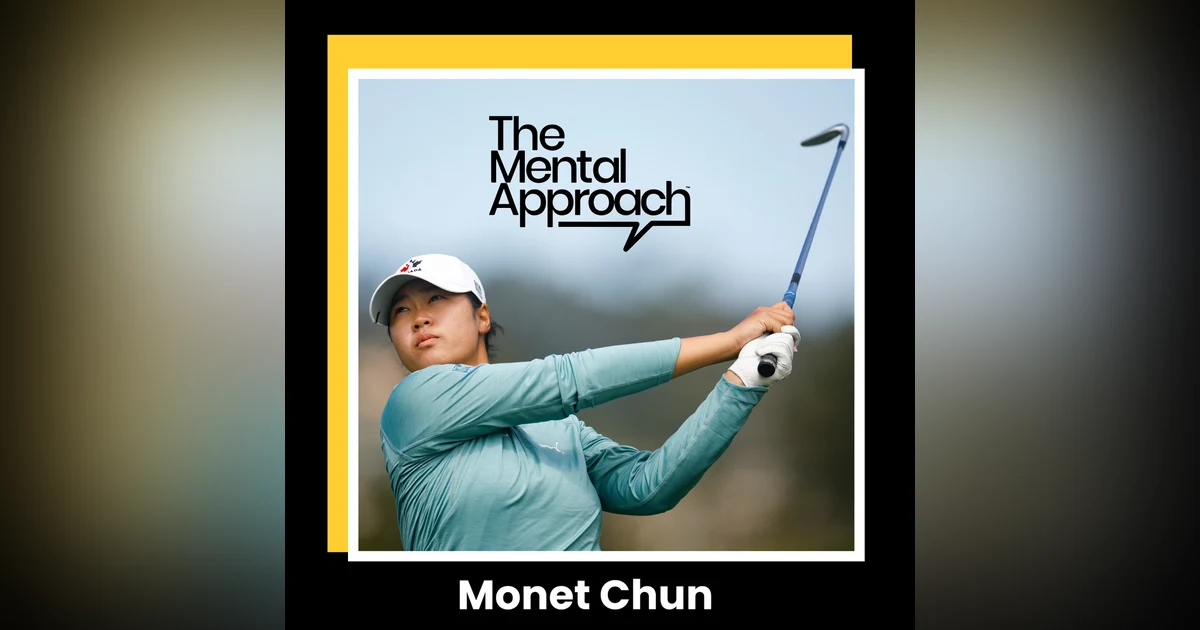
 Todd Arkell interviews Canadian golfer Monet Chun, who shares her journey from a young athlete in Richmond Hill Canada to playing at the University Michigan, where she won 2024 Big Ten Golfer of the Year and is a two-time Big Ten Championship medalist (2022, 2024). Chun now has her sites set on a LPGA tour card, currently playing on the Epson Tour developing her game to rise to the next level. Monet discusses the importance of mental performance in golf, her goals for the future, and the challenges of transitioning from the NCAA to the LPGA Tour. She emphasizes the significance of building confidence, handling pressure, and the role of a supportive community in her success. Monet also offers valuable insights for young golfers on improving their mental game and the importance of travel in gaining competitive experience.
See Privacy Policy at https://art19.com/privacy and California Privacy Notice at https://art19.com/privacy#do-not-sell-my-info.
Matt Cundill 00:01
This is the mental approach, where we discuss mindfulness, mental performance and the tools available for coping in a high performance world. Here's Todd Arkell,
Todd Arkell 00:11
welcome to the mental approach. I'm your host, Todd Arkell, and today our guest is Canadian female golfer, Monet Chun. Monet is from Richmond Hill played her collegiate golf at the University of Michigan. Listen to these accolades. People, 2024 big 10 golfer of the year. Two time big 10 Championship medalist. 2022 2024 2021 big 10 Freshman of the Year. And four time all big 10 honoree, four times. That means all four years you were at Michigan, I was all four years? Yes, wow, awesome. Welcome to the show. Thank you for having me. I think it's awesome to see Canadians having I think it's anybody who follows golf. We're always trying to look for where the Canadians are on the leaderboards all the time, right? Just to see that, it's definitely great. So let me ask you a question, how did you get started in golf? Like, when did it start for
Monet Chun 01:04
you? I picked up a club when I was five. Both my parents don't play any golf, so I kind of just started taking up lessons. My mom tried to put me in other sports, but she was just trying to look at what was the safest one, without me trying to go out there and get any injuries. So I went out, started taking lessons when I was five, and then start competing when I was
Todd Arkell 01:25
seven. So no hockey, no rugby, no boxing, sports. That's awesome. Have you ever thought about what attracted you you were five? Like what happened?
Monet Chun 01:38
I think I kind of was just doing what I was told when I was five, I started really enjoying the game. Once I kind of grew up, started competing a little bit more, and then I joined Team Ontario when I was quite young. So being in that, like team atmosphere, getting to know more girls while playing the game, I think really helped with everything.
Todd Arkell 01:58
Yeah, you know that that's awesome. So when you think about the game of golf, I think any of us who have played the game, the mental aspect is probably just as important as the as the physical. How would you define mental performance? In your own words? What does that mean to you?
Monet Chun 02:17
It's really how well you handle kind of the outside factors that are influencing your mindset while you play. So in golf, obviously there are so many different factors that can influence your mental game out there, obviously other competitors, spectators, just the golf course itself, and then just how your game is shaping that day. And so I think pretty much how well you're able to mentally handle all that throughout the day. Is how I rank my mental performance.
Todd Arkell 02:45
Gotcha. So when you say spectators, people may be chirping you or even just being loud, or give me an example,
Monet Chun 02:52
yeah, some people don't mean to be loud, but I think there are some occasions when they are and there's obviously some movement while you're kind of approaching your shot or hitting your shot, and so I think, like, some of those factors definitely take an influence.
Todd Arkell 03:06
Oh, there you go. Well, all my friends play with music and speakers on their carts now, so I don't think they care anymore, but, you know, maybe a little bit different for what you're trying to do. Like, how would you describe your approach? You know, how do you kind of get yourself locked in when you're going shot to shot. I know you hear people they say, Well, I'm just trying to take it one shot at the time. But you know, what are the kind of things that you go through, maybe mental checklists or self talk or whatever, as you're kind of going through the round?
Monet Chun 03:35
Yeah, I mean, I really stand by the one shot at a time kind of thing. I make sure that I just check off all the like little criteria that I have to make sure that I have before hitting a shot. So like checking wind and checking, I don't know lies, checking yardage, kind of those stuff. And I think those really help, kind of focusing into the shot itself, rather than what happened before, what's happening after so I've
Todd Arkell 04:02
been reading that when you joined the Canadian national team, you talked about how it helped you improve your mental game. Was there anything specific that they did to kind of assist you that way? I think
Monet Chun 04:12
that was one of the first times really talking to a mental performance coach, like, especially specific to golf. And so just being aware of that, I think, is, has really helped shape my game quite a bit, and then just progressively working through that at an early
Todd Arkell 04:28
age. Yeah, right. So what kind of exercises would they have you do?
Monet Chun 04:32
I think it's really individual based. I did a lot of just breathing exercises, a lot of goal oriented exercises, because that's kind of the areas that I thought I lacked specifically, but yeah, just a little bit of everything.
Todd Arkell 04:44
Okay, so I've read as well. You talk about Goal, goal setting. You set a bunch of goals for yourself, and so far, you've sort of smashed them all, as far as as far as that when you were 17. What's next? I mean, I know you just started. We're gonna talk. I want to talk about your transition for. I'm an amateur golfer to now being on a professional tour, on the Epson tour. But what, what kind of goals have you set for yourself now, in the future,
Monet Chun 05:09
I'd love a win on the Epson tour, something that's, I really kind of just want the for this season, but eventually, like making the LPGA Tour, and then having a win out there, winning a major, kind of all that stuff. It's, I think the performance goal kind of has been pretty basic, like that. And then obviously, under those goals, I have all the what do I do on the day to day kind of deal. So I'm very focused on those little goals.
Todd Arkell 05:36
Do you set kind of a goal for yourself to take, like, so many swings, so many chips, like that kind of thing. Do you have that sort of built in your routine
Monet Chun 05:45
during in season? It's more so kind of performance based practice right now. And so I've switched over to setting like, how many putts do you make out of how many so because I'm not Laura, all out there all day. And obviously our practice is limited when we're playing on tour, and so a little more focus towards those instead of, like, trying to hit 100 golf balls, you know, making, yeah, with a little bit better mindset, I'd
Todd Arkell 06:11
say, there you go. What's the process like to get to the LPGA Tour? What do you have to do to qualify? Is it win a certain event to get on, like, to win, win your card, I guess, like, how does it? How does it work?
Monet Chun 06:27
There's a couple different routes you can do it through. I'm not 100% sure, but I'm I think one of the ways is to win on the LPGA Tour. I think you get LPGA membership for, I think, either a year or two years or something like that. But the most common way is through Q school. So at the end of the season, we have qualifying school, we have stage one, stage two, stage three, and so if you make it past stage through three, get within the top, however many they have that for that year, you'll make it on C LPGA, no pressure, no pressure. Yeah, no pressure, big tournament. And then the other way right now is the Epson tour. So if you make top 15, you can get status on it. So cool,
Todd Arkell 07:09
yeah, it's always, it's always interesting. I mean, on just how that all feeds together, like, here's a here's a good question. I, I had known a young guy, he's now older now, but he had played, you know, he played NCAA golf. And the question we asked one day was, how many players did you play with that are maybe on the PGA Tour or against, play with or against? And his answer was zero. And I found that super fascinating when you think about how good the competition is. Are there, are there people that you played with that have kind of started to make it onto the tour, or are you maybe ahead of some of your peers? Or where does that? Where do you kind of fit in?
Monet Chun 07:53
No, I think I'd say I'm kind of on par and a little behind some of the girls. They kind of turn pro right out of high school. And now girls that have graduated have been have come in the same time as I did, but I've seen a lot of girls that I've played with during junior golf and then growing up in college kind of thing. So it's a pretty familiar environment. I'd say, Yeah,
Todd Arkell 08:14
would you say Canadians are at a bit of a disadvantage because of our climate? Or did you travel south a lot?
Monet Chun 08:22
Yeah, I'd say we were a little bit of a disadvantage. Our winters are long, and so that definitely puts a little bit of the practice indoors throughout the year.
Todd Arkell 08:31
Yeah. Now, why choose Michigan as your school? Because similar climate, you know, did you have other opportunities as well?
Monet Chun 08:39
I had a couple other schools that were offered, but I really enjoyed, like, my visit at Michigan, and then the coach is obviously Canadian. I've she kind of recruited me at a younger age, but that was my first time actually seeing her in person. But I just loved the whole atmosphere, environment at Michigan, and obviously a good academic schools, and that's kind of what
Todd Arkell 09:01
I was looking for. So yeah, I have a golf course right on campus
Monet Chun 09:05
right which isn't open for very long throughout the year. But no, but it's there. It's there itself. Are actually phenomenal. But obviously the cold kind of gets, gets away from that.
Todd Arkell 09:17
Well, in September, you can play 18 and then mosey on over to the big house and watch a game. So nothing wrong with that. It's, yeah, it is. It is one of those schools that when you're on that, I've been on that campus several times, it does have a certain, certain feeling. There's, there's no question about it. How do you handle tough moments? You know, you see a shot you hit, it doesn't go the way you wanted it to. Like how do you kind of reframe things for yourself when you're when you're in the heat of the competition?
Monet Chun 09:49
I try just to move on as best as possible. I think I've really learned throughout the years that a bad shot can happen, and so being able to reframe. Met as instead of, oh, that kind of determines what the rest of my game would look like. It's just more so it can happen, you know. So I actually had a period of time, I think, kind of more during the recruitment process, where I struggled with all of that, like I had hit a bad shot, and I put a lot of meaning into into that shot, and so it kind of escalated and influenced the rest of the game.
Todd Arkell 10:27
So, right? So you're pressing, trying to impress the recruiters and made it harder, possibly, possible. You know, I get it. I mean, there's, there's so many you talk about pressures. There's definitely that internal pressure. I think as a young athlete, you're trying to trying to do something, you're trying to impress somebody, and I think it's easy to get caught in the outcome trap, yeah, no. And especially it's interesting, because a lot of times I interview people, and they're team sport people, right? And an individual sport, I think is so much different, because it's just you and on the Epson tour, do you have the same caddy every week, or do you have different caddies?
Monet Chun 11:11
So I'm actually pushing the bag for most of the weeks on my own, yeah, out there, just with my own thoughts for most of the
Todd Arkell 11:18
day. Damn nobody to talk to or do other players have caddies? Or are they all, is that all kind of the same?
Monet Chun 11:24
Yeah, there are quite a few that do have them, but there are still, like, I'd say, I'd say, it's almost 5050, some girl, a lot of girls push on their own too.
Todd Arkell 11:33
That kind of puts a little bit extra pressure on you, because you got to go a little earlier, you got to study the course, the conditions, all that other stuff, and kind of figure it all out yourself, more
Monet Chun 11:44
or less. I think I really just adapted to playing by myself, kind of through junior and then through college, and so it's, it's almost like a nature, nature to me, just kind of doing on my own. Yeah, that's fine
Todd Arkell 11:57
you talked about in the recruiting process. You know, you struggled a little bit. But have you ever, have there been periods of time where you've you've kind of been, maybe not at your best mentally, and how did you sort of dig out of that?
Monet Chun 12:10
It's funny, because I think pretty much great nine or 10 of high school all the way through first year college, I was really struggling mentally. And so there was span a couple years where a lot of the stuff I did on the during practice, like technical stuff, that definitely was a big piece of the game, but the mental part was where I really struggled with everything. I'd say, the way that I really handled it was just trying to build confidence as much as possible. And then, yeah, really just dedicate time into the game in itself, but also, also the mental piece,
Todd Arkell 12:47
yeah, so how did, how did you work on your confidence?
Monet Chun 12:50
It was more so being able to see the results, so putting in time into something that I really needed to fix, and then seeing that kind of get better. Like, not obviously a huge difference over a day kind of thing, but over time, like seeing it get little bit better every single day. Like, I think helped me grow the confidence.
Todd Arkell 13:15
Yes, you see, had bad confidence in your first year, yet you were the freshman year you want a freshman award. So how does, how did that happen? What happened there? You just kind of let it you just let it go,
Monet Chun 13:27
right? Yeah, it's weird. I don't really know what the big switch was there, but I think the freshman year first semester, it was covid. I came in the year after covid really hit. And so freshman year, first semester, we didn't play any golf, so we were out there just with the team practicing, kind of doing our own little like with the team tournaments. And I would be shooting mid 80s average. And I think we took that semester, came back home early, and that was the year where we couldn't go out and practice, and so I was just hitting golf balls in my garage that whole winter, and then got back to school, and then started playing well. And so I think really just taking the time and reflecting on everything, not really going out doing the things that I normally do, but kind of switching it up, I think, helped me quite a bit with that
Todd Arkell 14:20
good, good resilience, good, good lesson, and resilience just kind of stick with it. And you know, for those people that don't play a lot of golf or or maybe they do play golf, and I don't think people truly understand what it what it takes. I remember being at being at an event, and Luke Donald was there, as you know, he wasn't a world number one, yet, he was about a year away from being a world number one, and he was kind of doing this demonstration, and he says, he takes a five iron out, and he hits, he goes, Oh, I'm just going to hit a high cut, and I'm going to hit a low cut, I'm going to hit a high fade and a low fade, and all the balls were within like a yard of each. Each other, like in a grouping, and I'm, I'm just looking at that like I could appreciate the fact that, you know, the guy who's the scratch handicap, you know at the at the club, he just cannot. There's no way he could even do that. Not even close.
Monet Chun 15:14
Yeah. I mean, it's, it's a, definitely a technical game, but there are just so many different factors that influence it.
Todd Arkell 15:20
So, yeah, I mean, I think there's so many, so many shots that you have to be able to make. I mean, golf is more than, you know, a lot of people, they go out on the weekends and, hey, I shot a 73 or whatever, and they, they think they're great. But, I mean, there's truly a lot, lot difference that goes into doing it on a professional level. There's a lot there. I think there's a lot of intention. I do remember even being at the teleskins game and playing in this Pro Am, and Sergio Garcia was there, and a person in the group had the audacity to say, oh, Sergio, I out drove you. And he hit his shot, and as he hit it, he just turned around he says, I had the better lie, and he stuck it to, like, a foot from the pin. And I was like, I was going, anyways, you know what? I mean, you're laughing because, you know, you're intent. You're intending to hit the ball in a particular place on the course correct, right?
Monet Chun 16:15
Yeah, yeah, for most part, yeah, if you can, usually people that can get it there will,
Todd Arkell 16:19
yeah, right. Like, I mean, you're like, hey, I hit I want to be a nine iron in and I know, you know, I know where I need to be, or whatever it is, right? I need to put it here, because then I'm going to have a better chance of of being on in two, right, or in regulation, whatever it is. I get it. It's just, it is funny. I want to just pick on that for people that are listening. Because, yes, you can be good at golf, but you're nowhere near that good at golf. That's just the way it is.
Matt Cundill 16:48
Now, more the mental approach with Todd Arkell,
Todd Arkell 16:52
it has to be, I think, somewhat mentally exhausting. We're just talking before you said, Okay, I just got home from a couple of events. I got a couple days off now. I'm gonna go back out for a couple more events. How do you kind of, how do you balance all that like to be able to just kind of decompress, right?
Monet Chun 17:12
I'm still trying to figure out ways to decompress and which one's the best for me, but I, honestly, I think I just take a couple days away from the away from the golf. Just make sure that I mentally reset myself before the next stretch, because it does take a lot out of you. Pretty much every week it's, you play a tournament, go on to the next prep for the tournament, play the tournament, go on to the next week. So it's, it's four weeks of that. We'll definitely take it away. Take it out of you. So I really just take a couple days to either go spend time with family or friends or something. So yeah,
Todd Arkell 17:47
do you have Pro Am responsibilities at these events too, where you have to play with we,
Monet Chun 17:52
yeah, we do. So with my priority this year, I am a lot wait listed in a lot of these programs, and so I'm just required to be there for a couple hours, but I've played in a couple this year, and, yeah, usually it's not too bad you get to go see the golf course one more time. And so it is, it's okay.
Todd Arkell 18:10
I mean, it's a PR exercise, right? So at least maybe it can turn it into a second practice round. Have you ever had any kind of just I mean, obviously, to get to the level you're at now, you've obviously had to play a lot of golf. Was there ever any sort of burnout kind of factor at all? Or did it always just seem like, Hey, this is still fun and I'm going to keep going? Or did it, did it ever kind of become a bit of a grind? And if it did, like, how did you sort of get past that.
Monet Chun 18:41
I've kind of had a couple instances where it has and I think when that happens, I really just try and step away from it just a little bit and find other things that are more enjoyable to do at that time. And so during college, it's really just meeting friends and spending time kind of away from the Gulf, really, and then doing, are there activities? I mean, obviously we have school and college and so that was a whole nother aspect of it, but yeah, just really spending time doing other stuff that is enjoyable.
Todd Arkell 19:13
So how hard was it to balance school and golf tough? It's very tough.
Monet Chun 19:19
I I knew I was expecting going into it, because you get warned so much about it, but it definitely does require a great amount of just juggling your time and scheduling every day.
Todd Arkell 19:32
So, right? But you don't, yeah, you don't believe it until you're actually in it, right?
Monet Chun 19:37
Yeah. And then even when you're in it, you're like, I don't know how I'm doing this, so
Todd Arkell 19:42
you'd probably go away. I mean, like during the season, you guys would go away for how, what would be the stretches that you would go to play other schools.
Monet Chun 19:50
We'd go to a couple events each semester, and so every two weeks, we'd be traveling, okay, for how long? For about. Three four days, we would play 36 holes for on the weekends, and so that kind of makes our trip a little bit shorter. But also, with the 36 holes, you don't get very much time to study through the week, or if you have a test the next day, you really got to prep beforehand for that.
Todd Arkell 20:18
So it takes a lot of a lot of scheduling and setting your priorities. Yeah, definitely. Other sports. You know, you hear the same thing, but I know, like, I think about you guys for golf. I mean, often it's like, you know, you're going south somewhere for a period of time, right? And then it's trying to keep on top of you so you're not really missing class, but you're losing out on free time to study.
Monet Chun 20:41
I mean, there are a couple times that we do miss class and because we play on, let's say we play Saturday, Sunday. We're still there for a practice run on Friday. So yeah, and then we have the travel. And so we definitely do miss quite a bit of school as well.
Todd Arkell 20:56
Lots of success so far, which is awesome. What what do you think's contributed most to your growth as a as an athlete,
Monet Chun 21:04
just having a very good community around me, just a lot of good supporters and people that really care about my success and just helping me as a person, I think has been a huge factor in my success. Yeah, I have. So Matt Wilson is my coach currently, and he works out in New Jersey, but I've been with him since being on the national team on golf Canada. So I just been working with him, and he's been a huge part of my success, for sure,
Todd Arkell 21:34
and obviously family and friends and and the like,
Monet Chun 21:38
yes, yeah, my parents, if that, without them, I wouldn't be able to do
Todd Arkell 21:42
to be her. How do you view failure? That's a
Monet Chun 21:45
hard question, because I, because I, I do set goals every year, just performance based and other stuff, but I don't necessarily say that if I don't meet those goals, that's been a failure of a season, kind of thing.
Todd Arkell 22:03
I just want, yeah, I guess I I'll follow it up with like, do you see the failure? Can you learn from that, or does it feel more like a setback? How does it kind of affect you?
Monet Chun 22:14
Um, I'd say it's more so setback, but I also think it's a good experience for you to learn something out of it. Obviously there. I mean, it's not all the time, but there are obviously some reasons for failure to happen. I think it's a little bit harder with sports, because you're competing with other people. And so ultimately, it's not always something that goes wrong that causes your failure. Yes, right?
Todd Arkell 22:39
Yeah, you could have played the best you've ever played in your life, and somebody else did the same thing. Yes, exactly out of your control, right,
Monet Chun 22:47
exactly within the goals that you have, up in your control. If you aren't able to succeed whatever you have. There's obviously a learning point from those
Todd Arkell 22:57
what's a mental performance tip or just something you could recommend to young golfers to help improve their game that would kind of get them dialed in a little
Monet Chun 23:07
more. I think that you should just find just the one piece of your game, or your mental game, that you think really needs improvement. So for me, that was the goal setting aspect of it, and that has really shaped the game to what it was, to my game, to what it was today and so or what it is today. So I think being able to just key in on one piece of your mental performance and focusing on that for a little or a little bit of time has can really help push you.
Todd Arkell 23:38
When you talk about goal setting, was it? It's great. You say, Okay, I want to do this, this and this, but then did you do kind of a work back plan, like for me to be able to do X, I think I need to do Y. Was that kind of how you put it, put it into action? Yeah.
Monet Chun 23:56
So the way that I do it is, I have a big goal for the season or for the for the next couple of years, and then the smaller goals kind of go below that. So let's say my goal is to get onto the LPGA Tour. What do I have to do to get to the LPGA Tour? You have to play well, top 15 in the Epson tour season. So in order to do that, you need to accumulate points, so you're either winning tournaments or you're getting top 10. So my goal kind of was try and get into top 10s through each tournament. And in order to do that, I take a look into all my stats that I have, and what areas of those can you really improve? So the areas that I saw were my putting and my chipping, and so being able to focus and zone into those you I really just was able to use my time more effectively.
Todd Arkell 24:43
For young golfers, I'll say, Well, I'll say Canada, but I know our audience is much wider than that, but let's say those cold weather kids, you know what? What can you just kids starting out in golf? What can they do, like, if they're really passionate about the sport? Because there's a lot of young golfers that are super passionate. It. What can they be doing to, sort of, where can they go to play better competition, or, you know, how do they kind of expand upon just going out and playing at their local course?
Monet Chun 25:11
Honestly, I grew up playing through kind of the ajga field out in the US, and so being able to travel was a huge bonus for me, obviously, my parents supported me kind of through that as a as a young golfer, and that's really helped my experience quite a bit. And I think that's where I how I've really adapted into the college experience as well. And so being able to get out, obviously, there's so much good game in Canada, but it there is a very limited field here, and especially with the climate, I don't think very many are able to have the experience that a lot of the US Americans do. So I think being able to get out play as much competition as possible, it's nice just to go out and experience different kinds of grass and stuff, being able to adapt to that as well. And so, yeah, being able to just travel, if it's possible, and go play different different golf courses.
Todd Arkell 26:07
How young were you when you started traveling?
Monet Chun 26:10
So I started with the US kids, kind of every year that was nine through 12, and I'd say probably a little bit after that, started playing the ajjj events.
Todd Arkell 26:21
You see, you think that's a good age. Was that felt kind of appropriate for you? You kind of enjoyed it.
Monet Chun 26:29
I did. I think there is still quite a bit of a commitment to traveling, because I'd have to travel through the school year, and so I was still missing a little bit of school. But definitely, if you want your game to grow, there is some, some areas that do have to go and commit to golf instead. And so that's kind of what happened.
Todd Arkell 26:49
Yeah, I think it's the same for for all sports. I mean, my son attended a school that was a, you know, a regional sports school. So it was something in that, you know, they at least made accommodations for athletes when they had to be away, right? So some teachers a little better than others. There's my little dig. But you know, for the most part, the administration were, were part of it anyways, and trying to figure that out to help help the kids do that. Because, yeah, it it's quite the balance to be to have to do that for sure. Do you think the mental side of your sport gets kind of the attention it deserves? Or do you think that, you know, there should be more focus put on mindset,
Monet Chun 27:29
there is more attention now than there was when I first started? At least what's what it seems I definitely had a little bit more exposure, like through team kind of environments. And so growing up on Team Ontario, Team Canada, and then going into college, at least, I had a little bit more of a support system through the mental performance side. But, I mean, there's never you can have an endless supply of it, I think, and it will never be too much, for sure. So when
Todd Arkell 27:59
you're not on the course, you kind of mentioned, well, I just like to kind of get away. Is there anything you do specifically to unwind or de stress?
Monet Chun 28:06
I'm into a lot of movies and TV shows, just like everybody else. But yeah, I started trying to get into reading a little bit more after coming out of school. Now that reading isn't required, it's a little bit more enjoyable. And then I have three younger siblings, and so I kind of just spend time with them when I can.
Todd Arkell 28:28
If you're not, if you're not competing golf, what do you have? Do you have a favorite course that you like to play?
Monet Chun 28:33
Yeah, I love my home golf course. Home course. I'm at Summit golf club, and it every time I'm on it. It's super, super challenging. I mean, I feel like I don't have enough good rounds out there at times, but it's definitely a good track to be out and playing
Todd Arkell 28:50
shut out summit golf course. There you go, show up, say Monet's name, get a 20% discount. Kidding not happening. What if you weren't golfing? What do you think you would have done if you weren't a golfer? Where did you see yourself? Like, what did you take in school? Was that something that you thought was a was a plan B? We'll call it definitely.
Monet Chun 29:11
Yeah, I took kinesiology, so I was kind of thinking around the lines of physical therapy, something I think I enjoy. I don't know if it's because I got into golf so early that that's what just I'm I like being involved in. But yeah, I think my second job, or my other job, would have been physical therapy if I wasn't a golfer right now.
Todd Arkell 29:34
Well, speaking of that, like, does the tour have therapists like that? Are there at for you guys to take advantage of? Guys are so young, though, what do you need a therapist for? You know, does it? Do you get sore?
Monet Chun 29:45
I do sometimes. I mean, there are a lot of the girls now on tour that were out working out quite a bit, and so that's part of it. And just honestly, injury prevention has been a big thing.
Todd Arkell 29:57
So I can imagine it's, you know. A lot of sports. See, if you go back 20 years ago, nobody did anything, right? They took, kind of took time off. They didn't, kind of put extra work into it. And now it seems like you've got to, got to do that stuff, sort of to keep up with, keep up with everyone else. So you talked about reading, I get into asking a bunch of different rapid fire questions. So what's, what's a book that people could read right now that you think they get something out of?
Monet Chun 30:26
I just finished a book. It was about a girl who lives a very particular, I think it's particular life of somebody. Yeah, I but I don't, I don't even remember the title. It's been I picked it up before I left the stretch and then finished it, but I haven't picked up another book in a couple weeks.
Todd Arkell 30:45
Perfect. De stress, I'm reading. I don't know what I'm reading, but I'm not thinking about golf.
Monet Chun 30:50
No, it's it's really just, if I can read something that can just take me away from everything else, and that's perfect,
Todd Arkell 30:58
fair enough. And I do like the non school related stuff, because I'm sure that's a lot more technical, and you got to try to remember everything you're reading. So if somebody's out there, young golfer, what's this? What's a small change? You would ask them, you tell them they could make to their daily routine. That would probably make a difference in how in their game.
Monet Chun 31:20
I think stretching is a huge part of it. Being able to get your body warmed up for kind of going out to practice every day and then winding down at the end of the day has been a huge thing.
Todd Arkell 31:31
So do you do any yoga or pilates or anything like that for flexibility?
Monet Chun 31:37
I used to do Pilates a little bit, and I love it. It's It was great. But right now it's more just kind of what my body needs, like flexibility wise, and just a little bit of stretching more. So I love my foam roller. I take it everywhere I go, and so think that's really, has been really important to my career.
Todd Arkell 31:56
There you go. Listen up, foam roller. I got so many people. They're like, I don't need the foam roller. That's a good advertisement for the foam roller. I i find it hurts, but I'm old. I'm like, Oh, that hurts. If it hurts, you probably did need it. There's no question about that. What's one piece advice you'd give 13 year old you that wasn't that long ago, either?
Monet Chun 32:18
No, 11 years ago. Putt some more. Stop hitting the range and go. Putt some more.
Todd Arkell 32:26
Oh, man, right? Everybody wants to hit that long ball off the tee. It looks pretty all the time, right?
Monet Chun 32:31
But, yeah, but I'd say putting has been the most difficult part of the game.
Todd Arkell 32:35
So what do you think? What do you think is difficult? Is it, is it the reeds, or is it like, you know, everybody's got to work on something. You think that's probably the part of your game you got to work on the
Monet Chun 32:46
most right? Now it's been less, but I'd say it has been for the last couple years. But I think it's hard, just because, like, you don't have a huge amount of error that you're allowed to make. So it's like you're trying to get into a little cup and out there on the golf course, when you're hitting a big swing, like, you have a huge fairway, that's your target, and so if you miss it a little bit, that's fine, but when you're putting, you're kind of just battling, like, can't miss this, can't mix this. And so, yeah, I think that's really the key to being a good
Todd Arkell 33:18
golfer. Yeah, I think course experience helps too, right? Like, you know, I was talking with somebody the other day, and they were making this comment. I said, Greystone. And he said, Yes. And I go, you can't trust your eyes. Everything goes away from the escarpment, and it looks like the putt goes right, but it goes left. And they were talking, he said, Oh yeah, it was hole after hole, like I'd hit the ball and it would go totally opposite direction. I couldn't figure it out, and I go, you have to literally, I don't know how you do it on a consistent basis, but sometimes you have to betray your what your brain is telling you, I guess, to make Oh yeah, all the time, right? It's not as straightforward as as people think it is.
Monet Chun 34:02
Yeah, I mean, I stand behind the ball and I see the line. I'm like, Okay, this is it. Get over the ball. And then you're like, I see a completely different line, like, I don't even think that was the same break. And then you're just kind of juggling different things in your head.
Todd Arkell 34:16
So and there is the mental piece on trying to commit to a shot, right? Yeah. So what do you do in that case, if you walk up and you go, oh, boy, don't think that's good, do you just kind of back off and take a few more seconds to figure it out?
Monet Chun 34:33
Yeah, definitely. I try and back up. Sometimes I don't, which is, I'd say it's bad, but I try and back out as much as possible, and kind of reset, come back, look at the line, and then if that's the line I know that I need to commit to, then I get up there and try the second time.
Todd Arkell 34:51
What's the best advice he ever received?
Monet Chun 34:54
If you're nervous, it means you care. That's cool.
Todd Arkell 34:57
And who provided that advice? Tristan.
Monet Chun 34:59
He. He works with the team Canada, and he I think it was just like a day, kind of one of those Pro Am clinic situations that we had, but I was out there. I'm, like, I was just so nervous. And he goes, Well, it's good that you're nervous, because that means you care.
Todd Arkell 35:13
That's awesome. Monet it was great chatting with you. I wish you the best of luck on the Epson tour. I'm going to be following now to see where you sit in the standings. No, no added pressure, but I wish you the best. It'll be awesome to get another Canadian on the LPGA and and kind of watch you rise and
Monet Chun 35:32
golf. Yes. Thank you so much.
Matt Cundill 35:37
Go to the mental approach.com
Tara Sands (Voiceover) 35:42
A production of the sound off media company you.

