From the Mound To The Mind


 RSS Feed
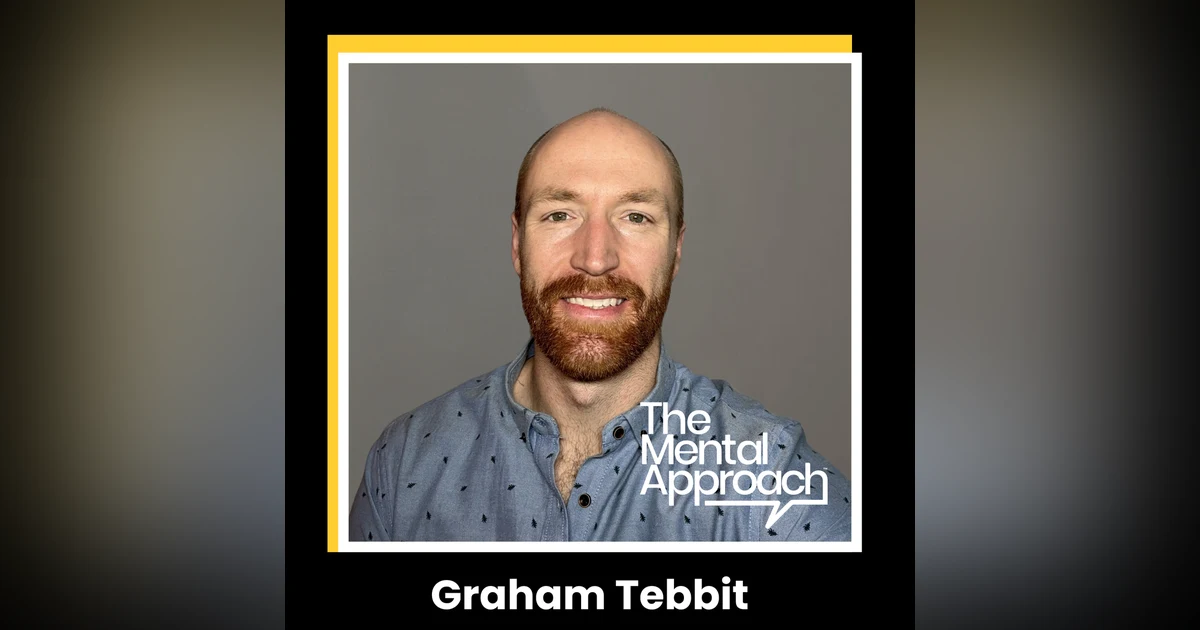
 In this episode of The Mental Approach Podcast, host Todd Arkell sits down with former Canadian baseball player and current mental health professional Graham Tebbit. Graham shares his journey from growing up in Canadian baseball, earning a college scholarship in the U.S., and playing semi-pro in the IBL, to transitioning into a career in mental health and performance coaching.
Drawing on both personal experience and professional training, Graham dives into:
- The mental ups and downs of being an athlete and how to normalize them.
- Strategies for building resilience and reframing setbacks.
- The role of cognitive behavioral therapy (CBT) in sports performance.
- How perfectionism, ADHD, and social media influence young athletes today.
- Common mistakes parents and coaches make—and how to better support athletes.
The conversation also explores myths about “mental toughness,” why early mental skills training matters, and how to balance external expectations with personal passion for the game. Graham’s perspective blends the competitive mindset of a high-level athlete with the empathy and insight of a therapist, offering practical advice for athletes, parents, and coaches alike.
See Privacy Policy at https://art19.com/privacy and California Privacy Notice at https://art19.com/privacy#do-not-sell-my-info.
Matt Cundill 00:01
This is the mental approach where we discuss mindfulness, mental performance and the tools available for coping in a high performance world. Here's Todd Arkell.
Todd Arkell 00:11
Graham tebbett certainly has a unique vision over some other guests. Was a was a baseball player here in Canada that made his way south of the border, played baseball in junior college and in in an NCAA four year school, got a degree in psychology and kind of carried through, still plays semi professional baseball and and now has a master's in psychology and works as a works as a therapist, so has really a unique perspective on, you know, the things that you go through as an athlete, and ways that you can kind of help quiet those negative thoughts that always seem to creep in. I think you'll really enjoy the conversation. Enjoy the show. Graham, welcome. How are you?
Speaker 1 00:58
I'm good. Thanks for having me on the podcast. Appreciate it.
Todd Arkell 01:02
Happy to have you. I mean, you have a you have a unique position in that. You played sports, went through all that stuff, and now have educated yourself to, you know, help people around mental health, and maybe not just athletes, but you obviously have a unique perspective from from that. So it's great to have you. So that's kind of a great place to start. Right as both somebody who, you know, played sport at a high level, you're a baseball player and a therapist, how has your personal experience on the field sort of shaped your approach to, you know, supporting mental health with with youth athletes? I think
Speaker 1 01:38
it gives me perspective on a lot of things, like understanding what the athletes are going through, what that training environment is going to be like, you know, all the pressures they're sort of under, and all those things. So I mean, when I when I go to talk to athletes, it's even though sports might change, you know, between client to client, I find really the like, overarching themes are still present. So when we're working with them honestly, like, I think it forms, helps form trusts between myself and the client, because, you know, they know I've been there. They know I've sort of had similar experiences. So it's nice, like, a lot of therapeutic relationships have to be developed to start. And it's nice when you can come in there with some ascribed credibility.
Todd Arkell 02:19
Yeah, I think, you know, people do have a, have to have a little bit of trust to be able to open up to somebody they've never met before. There's, there's no question about that. I mean, I, I've always thought a big part of the mental part of the game, for at least in from my perspective, is, you know, for an athlete to create consistency, so eating enough, almost programmically, right? You know, like overeating, almost because they're trying to gain weight or whatever, lifting weights, you know, all these different things, getting an extra work on things that they're not good at, because everybody likes to work on the things they're good at. You know, I often wonder if players don't go all in because they're worried about, what happens if this doesn't work out. I've done all this stuff, but if it doesn't work out for me, like, have you ever had any sort of doubts that way was along the way, when you were a player
Speaker 1 03:10
all the time? I mean, I think it's, I think it's natural, right? Like, there's the ebb and flow of training and performance. Like, even without, you know, you know, talent being a factor. There's just the things that you could do, like, you could do all the right things and and still have not an unfavorable result, right? And, or just, you know, the circumstances of your life are sort of like, you know, working against you in that at that point. And so, yeah, like, I've definitely had some of those experiences, I would say, you know, all the way throughout, like, I started about, like, a house league, a level and and, like, started from, you know, wearing jeans to training and not really knowing what I'm doing, and then starting training, getting a lot of momentum, and then, you know, sort of, like, stalling. And I think it's natural in those moments to sort of question, be like, okay, am I really doing the right thing? Like, is this the thing that I should be committing to? But it's just, I think about, for me, like, sitting down problem solving, like, kind of figuring out how much time is worth investing into, you know, becoming the player that I want to be, and, like, doing the things that I want to do. So yeah, I think, I think that's fairly normal, honestly, to have those, those ups and downs. It's just really a matter of, like, how you deal with it. I think the people you're around how they encourage you, the things you learn from it.
Todd Arkell 04:27
Yeah, got a young client, and they're kind of going through these things. Like, how do you give them reassurance that it's normal? Ways that they can help, you know, kind of be resilient and kind of carry on and go towards it like, what are some of the tools or or sort of, you know, tips you could give them? I mean, I
Speaker 1 04:47
think probably one of the more powerful ones is just, you know, talking about other professionals and superstars, guys that they look up to, and talk about the struggles that they went through. Right say, every, almost every, good. Athlete has a story, right? And has a story of overcoming adversity and persevering. So that's one way to do it, I think, to also, like, kind of looking at giving them perspective on these, on these situations, and getting them to zoom out a little bit and see that if you are, if you're having a moment of challenge or like you're a setback. How much time do we have to then progress to the next stage? Is this really? Does this really mean that you can't keep progressing? There's a lot of questions that you can, you can actually just get the athlete to sort of think about in a way that helps them arrive at that conclusion. It's just a matter of, like, asking really good questions and then getting to kind of think critically about about what's going on in their life and how they can change that.
Todd Arkell 05:45
So you went, I mean, you went to school. You got a degree. What did you get a degree in it at university in the States, in
Speaker 1 05:51
the States, I actually went to JUCO. First I got a university parallel, which is like an Associate's degree. And then I had a psychology, a degree in psychology for my undergrad. So BA,
Todd Arkell 06:02
so that's was this kind of, that's what I was kind of going was like transition from being a baseball player to working as a as a therapist and stuff. Was that kind of in mind. I guess when you were going to school.
Speaker 1 06:13
Yeah, it came to mind when I was in school. I when I went originally, I didn't really know what I wanted to do. And then my first year, I actually had a psychology professor that was the psychologist to the youngest woman on death row. So we actually got to interview this woman, Krista pike. And you know, aside from that experience, he was great psychologist, and he got me really into that. And then when I got to Hofstra my third year, I had another really good professor that really sparked my interest. And I think I just started seeing the relationship between, you know, how the mental side of the game would impact performance, right, like all the traps that you can fall into. But then also, you know, I had some good baseball mentors at the time that helped me, sort of, like, reframe performances and look at them a bit differently. So I'll give you an example, like, as a pitcher, you know, I'd be so focused on the outcome, you know, I'd throw a pitch, it would get hit. And then as a reliever, you know, if you give a couple of those hits and walk like you're out. So I had guys, you know, come over me and say, okay, like, okay, the outcomes suck. But what happened leading up to that point? You know, like, you made five really good pitches, and then the sixth one just happened to be a hit hole pitch. The guy did a good piece of hitting. You know, can't do anything about that, but it's really about focusing on that process, all those things leading up to the outcome that you can't discredit or just ignore. You've got to really focus on those things as well. Yeah,
Todd Arkell 07:43
I think baseball is one of the worst sports for that. It's almost, you know, you can, as a pitcher, make the best pitch you could ever make, and the guy hits it, or the hitter crushes a ball, and somebody makes a superhuman play and defense, right? Like, I mean, it's just, it's, I still can't quite figure out how you detach yourself from the outcome sometimes, right? I guess that's the challenge. Yeah, I
Speaker 1 08:06
think it's like, sort of how you see it, like, especially, I find some of my athletes are so bent out of shape when, you know, they go over four and then I ask them about what happened. Like, okay, well, what were those outs? Like? And they you go, Oh, I hit three balls hard at guys, so you did your job. You know, you can't help where the ball goes. Sometimes it's, it's sort of like you're focusing on the wrong thing, essentially, like, if you just do the right things, you get hits. It ball hard. Sometimes it gets caught, but you keep doing that, more often than not, you're going to get
Todd Arkell 08:36
a hit. You know? Yeah, I know. I laugh. And just even talking to my son about these things, you lose some game, I remember last, last fall and huge cut, jammed him flared over the second baseman, single. I go, Well, are you not happy about that? I was crappy. I go, but it's a single. You write it in the book. Nobody knows it was hard hit or blooped, or whatever. You obviously were strong enough to muscle it out, right out of the guy's reach. It's a like, it's funny, right? Like, I just feel like sometimes, or he'll text me, go, ah, three, KS, garbage. And I'm like, okay, man, reset your approach and carry on, right? Like, you have to think about, what did you do during those at bats? Like, did you get yourself out, or did you just, was the guy that good, right? Like, I don't know, and
Speaker 1 09:23
you're doing it right there, right? Like, that's what we would essentially do. Like, when I work with an athlete, is I, I sort of just, like, reframe it so, like, they're, like, your son, for example, so been out of shape about, like, getting jammed, but still getting a hit, and then, like, ultimately, like, you can kind of think about it from a team perspective. In that case, like, Okay, you got on base, you're gonna help the team win. You get the chance to, like, steal a base, create some havoc. You know, it's, it's just a matter of, like, how you see it, and sometimes, like, what I use the most right now in therapy is cognitive behavioral therapy, okay, yeah, the main idea behind it is that oftentimes it's not the situation that. Causes, you know, like, emotional sort of, like, disruption and like, and frustration. It's our perspective on it, right? So if you can, like, take that situation, your son's perspective was, Oh, I didn't hit the ball hard. So, like, it's a crappy hit. That's his way of thinking about it, versus yours is, well, you gotta hit you got on base. Like, that's awesome, yeah, right? Two completely different reactions to the same thing,
Todd Arkell 10:23
yeah. And I think, you know, honestly, I think deep down, I'm sure he's happy he got the hit. Is that, that first, I think, always, that first thought, right? That's where I'm always kind of going, don't let the first thought be the one that spins you into the into some cycle of discontent, right? It's, you know, that's, and I think we're, I don't know. I just think, I think innately, as human beings, we definitely our self talk is something we could all do a lot better with. We're always talking ourselves down, I think, or questioning that. Can you think of, you know, can you think of any times when you know pressure to perform, kind of affect your mental well. Being, like, affected, you know,
Speaker 1 11:04
like, like, all the time, yeah, I'd say, like, in the past, when I, especially when I was younger, it affected me a lot more. You know, I was, like, engaging a lot in like, foresight, like, what I wanted to sort of happen, or what I thought would happen, or then, you know, spend too much time thinking about a past mistake, and it's tough, right? Because, like, there's this thing that I really want to achieve and be a really good baseball player, or want to play at the next level, and then there's, you know, the reality of it, but not every game is going to go my way, not every time I go to perform and be my best. And so trying to wrestle with that, and it's like, it really affects, like, self confidence too. It's weird having this identity as a baseball player, especially like at my high school, that's what I would have been known for. And and then, you know, they, they see, oh, Graham, the baseball player. You know, all we can throw baseball the length of a football field. It's super cool. And then, you know, trying to talk to people about about it was confidence, and not really in in reality, I'm thinking about the poor performances I've had and that I'm not living up to that expectation I had, right? I feel like now it's a bit differently. Mountain of it different, like, I definitely get frustrated by poor performance, and I sometimes obsess over getting better in training, but it's a lot more of, like, a problem solving attitude that I have. So I just go out there with what I have that day. I learn to identify a problem that I want to fix, and then I spend the whole next week of training trying to address that problem.
Todd Arkell 12:31
You read all kinds of stories or read interviews with players that saying, oh my god, I was terrible that day, and yet they threw a perfect game, like, they didn't have their best stuff, and then, you know, like, I think wasn't David Wells, like, didn't he throw a perfect game and he or a no hitter, and he was hung over, like, horribly, had been out way too late the night before? Like, just lots of those stories around. But it's, yeah, I think that makes sense, right? When you think about it is just try to do, you know, compete the best you can with what you have that day. Because baseball, still, that's that sport. I mean, I talked to Jason Grilley recently and just talking about, you know, that 162 game grind, right? Like it's just, it never ends. It's relent, you know, how do you can't show up and be 100% every game. It's impossible. I think we're human beings, right? Like, it's just, you're gonna be run down. You didn't get enough sleep, you got you know, there's problems at home, your baby's sick, your wife's mad at you. You know, there's all those extraneous things, right?
Speaker 1 13:37
I think that's where, like, the mental side comes in handy, right? Like, it's super important. If, you know, you're not getting a lot of sleep, there's a lot of stress at home. You have all these stressors sort of affecting and distorting the way you're thinking, you know, if you don't have the right perspective, or, you know, you fall into some of those, those traps, then that 162 game grind becomes a real impact on your performance, right? Like, what am I gonna get out of this? It's a six month season, you know, and I'd say, like, that's sometimes a differentiator between the guys who perform really consistently, really consistently and really well, and then the guys who tend to be fluctuating. Is that stress or something is playing a role on that to affect their ability to be the athlete that they are usually.
Todd Arkell 14:18
How early do you think a young athlete can, can start to embrace some of these things. Like, you know, obviously, we talk about teenagers and their prefrontal cortex is not fully developed, and all these different things. But, you know what? What's kind of an age where, you know, I guess the science says, Hey, this is a good, good place to start.
Speaker 1 14:37
I think you're gonna have a bigger impact, typically, on on your high school aged athletes, because it's, you know, proximal, it's within four years, there's a little bit of pressure to perform and secure that scholarship if you want to go on to the next level. But I think as far as having impact goes, you can start early, like you start as early as 10. It's just sort of securing the foundation and doing it in a. Bit of a different way, right? Because, like, the way and a 10 year old is going to think about, you know, their thoughts and, like, how that affects the way they feel, is going to be a little different, more abstract than, say, like a high school kid, who's, you know, a bit more mature, like, understand the world a bit differently. So, yeah, you could definitely start early. It's just about the skills and, like, I think with anything, it's like communicating it to the athlete in a way that they're able to, like, digest it and make meaning out of it.
Todd Arkell 15:28
Most 10 year olds might say, I want to make it to the NHL, but they really don't have the concept. Now, their parents, on the other hand, they've already planned that all out for their kid. It seems, in in the country that we live in, you know, so that's, that's a different thing. So do you see any commonalities, or any sort of common things that that athletes are facing today, that where they're struggling with, or is it pretty much common from the past, or is there new things that have kind of been introduced?
Speaker 1 15:57
I mean, I think it's a lot of stuff from the past is, is still present today. Like, I think, you know, perfectionism is, is one of the things that will, will always affect the high performer. I think it's just naturally. Part of being a high achiever is that you have to sacrifice a lot. You have to do a lot to beat out the guys that are trying to take your job and trying to get to that same spot, right? Like it's, it's a natural product of it. But I think, like when you look at perfectionism, you can kind of look at it in terms of, like, perfectionistic strivings, which is, I'm going to, I want to achieve this particular thing, and I'm going to do these things to do that, right? Versus you have perfectionistic concerns, which is concerns about being perfect so that can take place in the training environment, that can take place in competition, and it tends to be a negative thing. You don't want to be concerned about being perfect, because we know, in all reality, like you're not going to be perfect. And then when you're not, how does that athlete wrestle with, you know, not performing that standard? And that's typically where the problems come in with perfectionistic concerns. That would be one, I'd say, you know, like, very common. I think it's partly induced by their athletes own goals, you know, wanting to play at the major league level. But then it's also, I think, you know, coaches do it, and I don't think they it comes from a bad place, necessarily. But, you know, there's, there's mistakes that guys make that are just, you know, takes a Bad Hop, and there's been a couple errors that day. And, you know, coaches gonna get down there everybody's throat about being more mentally tough, or being more focused, working harder, stuff like that. And I think athletes internalize that as well. So, I mean, I'd say that's, like, pervasive, you know, but then I think there's other stuff that sort of kind of fly under the radar. I think, you know, people with ADHD typically are sort of affected, not necessarily because of, like anybody else, but more so like, you know, I'd say for myself, in particular, I have inattention. So I have mind wandering. It's not like I'm not focusing. I just tend to get caught up on something and focus on something else, right? So like, when I was pitching in the past, I'd get into, like, the second or third inning and in the focus went from like looking through a pinhole to then very broad and like, not really taking in, focusing on anything in particular. So it was hard for me to sustain that, right? So there's just challenges associated with that. And then I think too, like, you know, with that, with, like, ADHD specifically, just like interpersonal stuff, man, like, you are on a team full of, like baseball, and maybe, like 20 guys, right? And you say something that's, like, a bit not well thought out, or like half baked, and guys dumped down your throat that affects your confidence. And so like, those kind of things, I think, will definitely play a role. The other thing, I think, is fairly common now, especially with like, the age of social media, is in social comparison is like social anxiety, you know, like fear being being judged, fear of not acting in a way that would be like, socially acceptable, and the consequences that come with that, yeah, and
Todd Arkell 19:03
I think social media people will hear me beat this drum all the time, is probably heightened a lot of that as well.
Speaker 1 19:10
You're watching a highlight reel of somebody's life. Essentially, they only show you what they want you to see, essentially. So it's, it's tough, right? Because, like, you know what's going on in your life, but it's really hard to tell what's going on in somebody
Matt Cundill 19:24
else's now, more of the mental approach with Todd Arkell,
Todd Arkell 19:29
let's, let's talk about ADHD stuff that's, I mean, that's interesting to me as well. Like, how did you, how did you kind of overcome that? Was it medication? Was it practice, or does it still exist for you? Right? Like, yeah. So
Speaker 1 19:43
I had a bit interesting in this way, because when I was diagnosed in grade five, and, you know, at the time big, like, ADHD denier, I was just like, I'm just not interested in it, you know, like, ADHD is made up and, and so I eventually did. Go on medication in grade nine, and it was okay. It was good, like, help me focus. I got some stuff done, but I also the medication I was on at the time was Concerta. I didn't have a good reaction to it. Made me really anxious, so I eventually scrapped that. So from grade nine to my junior year of university, I wasn't on medication, I had to work super, super hard to, you know, do well in school. Like, eventually University, decided I wanted to, so I'd lock myself in the the library for like, five hours. And I remember saying to myself, you know, I don't care if you don't get anything done, you're going to stay here for five hours and try to work through it. And that helped me actually do well in school, yeah. Now in, like, in my junior year, I switched back onto that medication, and it was completely different. The only way I can describe it is like it was like being able to have thoughts for the first time, like coherent thoughts and being able to express myself in the way that I wanted to express it. And it was huge, right? And I, from that point on, like I dove into the research a lot more, and we know that it's a neurological condition that it is present. It's typically under diagnosed because of affordability and awareness, and I think a lot of stigma as well. People avoid it because they just think it's a bit made up. But, yeah, it's pervasive. It's it can be bit of a problem for for people, if it's not handled and managed.
Todd Arkell 21:27
Yeah, my son was diagnosed with ADHD. My wife's pretty sure she has it. I'd agree on certain things, right? Like, because it's like, for her, it's like, object, object permanence. I What did I do with my phone. Where did this, you know, like stuff, where she might she'll do something like, my favorite one the other day was she goes, How long ago did you let the dog out in the backyard? I said I didn't let the dog out in the backyard, and she had actually walked over, let the dog out, closed the door and with no kind of because she was thinking about something else, right? And because she could hear the dog bark, so it's like, these types of things. And you go, that's interesting, where, I think with my with my son, it really showed up more executive functioning. You give him three instructions he might remember half, like at a younger age, right? It started coming up, and then he's managed to do very well in school and be focused and do that. But we tried the medication as well earlier. How many years ago? Same thing makes me feel weird, and we go all right, done. That was it. And nothing else other than than just trying to work on strategies to help him remember to bring these four things, or whatever, you know, those types of things, like trying to chunk it up for him a little bit, right? So, yeah, I think, you know, it's probably something, I think as he as he's getting older, that, you know, he'll probably have a little bit more sense into it, because I've talked to other parents and like, oh yeah, my son was on the medication and laser focused now in school, and totally chin. But, you know, I don't know it's, it's, I don't think there's ever a really great answer to that, but I find it interesting. There's a lot of baseball players with ADHD, and I wonder why that is. Yeah, I
Speaker 1 23:12
mean, if you look at, I think sports in a whole you're probably seeing a lot more people with ADHD just gravitated towards that stimulus rich activities or sports, right?
Todd Arkell 23:21
Okay, right. Like, yeah, okay, yeah. It's interesting, right? Like, I you go, like, how did they get in there? What was it? Chris Davis, they got suspended the one year because he forgot to put his ADHD medication through for approval or something like that. And I was like, does he really have ADHD, or does he just want to be zoned in to hit? I don't know. Yeah, hard, hard to tell, right? That's, that's where people start questioning the science, I think sometimes is if some people are, are using it, you know, for, for other other purposes.
Speaker 1 23:49
Yeah, that's where the unfortunate truth, though, is, is that some people will misuse it, right? And I'm always cautious about that, because I think, like, you don't want to throw the baby out with the bath water, but, yeah, some, there's always going to be people not using, you know, whatever they're given for the right reasons.
Todd Arkell 24:03
Have you ever worked with a with a young player, yet that kind of reminds yourself of your of yourself when you were that age?
Speaker 1 24:10
Yeah, all the time. So I work at a baseball facility. I co own this baseball facility with my my friend, Tyler. So it's called below baseball. It's out of Kitchener, just off the highway, and we get tons of athletes in. So, you know, oftentimes we'll get athletes that will come in and are sort of, you know, sort of doing the things are going about things the way I would have done them at their age. So, yeah, like, working with those athletes is always a bit interesting, right? It's both rewarding and then can be bit frustrating sometimes, just because, you know, like, we want them to succeed, we believe in their ability to do that, and then we see them make sort of similar mistakes that we would have made at that time. It's always a bit of like a an interesting process of like, meeting them on their level, building them up to the point where, you know, they're sort of understanding that, understanding, trusting what we're saying. And. Uh, and getting them on the right path.
Todd Arkell 25:01
Here's the thought I had was, what's a myth about mental toughness, you know, for young athletes that you'd like to debunk, you know, based on your expertise, right? Like, come on, you got to be mentally tougher. Like, you got, you got one, you got an example maybe.
Speaker 1 25:17
Well, yeah, I mean, I think, I think that one itself, like telling somebody to be mentally tough, it probably not the right way to go about it. I'm not sure that you can, just like, sure instantly, you know, callous your mind and and and go nor, nor do. I think that might that is the best way to do it, but I think it's, it's like, the biggest myth, and one that I see most often, is sort of related to, like, you know, keeping your body healthy as well is like, if you go to see somebody, or you go to talk about something with somebody that that means you're not mentally tough, right? And I would argue that a lot of people that don't admit it, don't talk about it, are just not admitting the fact that there is some aspect of their life that needs development or needs work, right? Like mental health is like, so broad. You could literally go to see somebody to help you, you know, with your sleep, like your sleep routines, you know, you can, you can go to help with your organization. It's like, I think people think about mental health as as being like, sort of what they see portrayed in movies, like laying down on a couch, you know, you got like Sigmund Freud there. I don't think that. You know mental health is
Todd Arkell 26:18
Dr Melfi and the sopranos, yeah.
Speaker 1 26:21
You don't need it doesn't need to be a major issue to go see like a mental health professional, right? Like, even if you just want to look at it in terms of personal growth, right? If there's, there's something that about you that you want to improve and that you want to work on, or that you recognize is a problem, then go talk about it. You know, like I, in my third year, I was doing Honors Program at Hofstra training. We had like, three, four days or three, three day workouts starting like 5am and then on top of that, like a long distance relationship that I was in, I was trying to manage all these things at the same time, and stress just, you know, accumulates naturally, right? There's just a ton of stress that I experienced that time. So I used the mental health services at my university to deal with it, right? It just felt good to go out there and get everything out talk to somebody about it, because, like, it realistically, like, you know, we have, like, somewhere in the range like 8000 thoughts per day, and which comes to be about like 6.5 thoughts per minute. And a lot of those thoughts go unchecked, right? And they're manipulated and sort of changed by stress. So, like, the way we see things sort of gets distorted based on how stressed we are, right? For in a good mood, typically, we see these things in more favorable light or neutral. If we're stressed out or, you know, in a bit of a bad mood, we're going to interpret things being more negative. So going to see a mental health professional can really help, you know, get you to think about those thoughts and dive into them. Because when, when do you ever really sit down and process all the things that come into your mind? You know, I'd say almost never, unless somebody asks you about it.
Todd Arkell 27:57
I mean, part of this podcast, you know, keep it light. Let's talk about things for mental performance, but it's true. I mean, just just recently, a kid in our community who was in my daughter's age and was an older brother to to to somebody who was in in my son's class, and he just passed away, took his own life. And you know, it, if there's any way, you know that's to be able to reach out to some of these kids, because I think there's a lot of pressure put on them, and I don't think they don't think they have the tools to deal with the stuff. And it's, it's sad to to hear these things, and it just absolutely is uncalled for. So, you know anybody listening, if you, if you're feeling down or feeling blue, there's people like Graham that are out there that can kind of help you kind of get through that. And there's, I think there is a way path just just from talking to people. Maybe it's not always your friends that can help you there. Maybe it's a stranger that can kind of help you figure out what's going on, right? I think it's important.
Speaker 1 28:52
Sometimes it's easier to, you know, we have you're talking to somebody with a little more distance away from the issue that you're dealing with. So in some ways, that helps us see things a little bit more clearly, or at least more neutral, you know, like, a little less bias behind what we're saying.
Todd Arkell 29:06
Yeah, it's, I think there's, you know, honestly, I talk about this a lot about the professionalism of youth sports, and I think there's just a lot of pressure put on kids to do whatever. I still wonder, you know, like, I kind of wonder, like, how many kids actually want to go to the next level? Or is it just because you got on that, on that treadmill and that seems like the next logical step? Did you ever feel that way, like, when you were kind of, was it or was it like, yeah, man, I want this. Or was it like, well, I guess this is what the next like, I don't know, right? Like, what? How did can you think back to that
Speaker 1 29:40
at all? No, I like, I know exactly. I know I'll be the first to admit, like, I don't think I worked hard, but usually, like, the hardest I've worked was when I was frustrated and something didn't happen. I remember like I gained. So I gained, like, 20 miles an hour in like, two years, and then that got me to AAA, and it felt good being good at something like, yeah. I felt good to be really good at something. So sure, I, you know, got on that track. And then it was, you know, everyone's like, okay, like, you know, you want to go to university, you want to go d1 you want to play in the States. And so that was just the next objective, right? And, like, I don't think I really took time to process, like, what I really wanted to do, but I stuck with it because I was just good at the thing, you know. And, and I think that was true, like, all the way until my third year went away to summer. Or, actually, no, really, it was my after my freshman year. So I was gonna, I felt like quitting baseball after my freshman year, and then I played for the brand for Red Sox, and they had, like, ex pros and big leaguers on that team, and just, like, just a great group of guys that really got me into a sport. But I think, like, when I really started loving playing was my junior year, when I went to the valley League and started pitching there, and, yeah, it sort of shifted my perspective. Like, now I love playing the game. Like there's this, like I need for, like, compat competition and like this, have this competitive drive. And like, I love all the aspects about, all the nuances about, you know, strategy and how you play the game. But yeah, like, I definitely got pushed, pushed that way. I think just because that was where I was at, like, that was sort of the expectation,
Todd Arkell 31:12
probably an unspoken expectation, right? Like, you just felt like the pressure from people around you that, yeah,
Speaker 1 31:18
like, I don't think anybody ever came to me was like, you have to do this. But it was like, Hey, this is what everybody's doing. If you want to keep if you want to keep playing, like, you got to go to the next level, right? It wasn't like, hey, you know, you go play Ontario baseball, or, Hey, you could do this. It was like, no, no. Like, this is the way to go. Like, there's some part of it that was good, right? Like, I had all these incredible experiences because I got pushed to do that. And I got played baseball in Australia. I got to make a start for a professional team. That was really cool. I got to win a couple championships. I got to meet all these different people along the way, too. So yeah, in some ways it was, it wasn't a really healthy way of approaching it, but I learned to love the game and like love, like all the experiences that I
Todd Arkell 32:00
had, you know, as a parent with an athlete, I'm always like, Okay, you try to back off, but you're like, but are you actually saying something without saying it? I think is, you know, often what I'm concerned about, are you actually putting pressure when you think you're not right? So I mean, that kind of segues into from a parental person. Perspective, like, what do you see, like, what mistakes are kind of coaches or parents sort of making when they they're addressing a young athlete, you know what I mean? Like, how, how are they maybe putting them in a bad spot, or helping to create, create struggles, as opposed to avoiding them.
Speaker 1 32:43
I mean, one that we see all the time is just over involvement. You know that could be something as simple as when your kids probably, like, 16 years old, 15, like, they're they're old enough to send an email to a coach and say, Hey, like, this is I have to do this. I have this responsibility or this commitment. I can't come right. Like, just very simple. And so when they go out on their own, they're gonna have to learn to do these things. So if they're, if they're, I won't say coddled, but if, if the parents too involved, they don't learn to, you know, deal with those kind of conversations and and sort of have some of these hard talks that they need to have. But then, you know, you can extend that towards like the training and training environment, right? If mom or dad's not pushing them, are they going to be able to self sustain and do that on their own, right? And you mean, you you can keep going with that, like, all the way to the point where, you know, mom or dad's like, telling them what they need to do to get to that next level, you know, as opposed to, I think, and you know, sort of brings me to the next point, which is, like, Mom or Dad doesn't ask enough questions. They just assume they tell their kid what to do, what they need to do, like, like, ask the simple like, and you can have, like, one of those honest to god conversations with your kid and just be like, hey, there's no repercussions. Like, I don't I just want to hear your perspective on things. Like, how are things going? What do you really want to do? Because, yeah, I think, like, I think, you know parents, just like, you know me as a coach, like you sort of like, get involved, and you don't want to see them make the same mistakes that you made, and you want to see them have the success, because you assume that that enjoyment is going to come from that success. But I think, you know, even if, like, you ask them that question, you know, I think it's meaningful to that kid, in a way, because they get to, sort of, like, understand that you're trying to understand their position, rather than tell them what
Todd Arkell 34:23
to do. You were a pitcher, I think, Well, you were a two way, but you were a pitcher predominantly, and you're playing in the IBL. And for those that are listening that don't know what that is, that is the inner county baseball league. It's a semi pro league here in Ontario, which, as you mentioned, lot of X pros, a lot of X College, d1 guys, JUCO guys, it's good baseball, you know when you look at it. So how do you go from being a pitcher to then finding yourself a roster spot as a hitter? I mean, pos don't hit, right?
Speaker 1 34:56
Not normally, not normally. I. Yeah, there's definitely, we have a couple of guys in the league that have done that just they're exceptional athletes, and they've done at the same time, which I would say is, you know, different from what I'm doing. So I was a starter for a number of years, and then I tore my my lat, my tricep and my rotator cuff and labrum, because the recovery was a bit, a bit long for that, and I just found that I wasn't able to come back and throw at the same intensity and nor that I have the endurance right, like I could throw. I got up to a point where I could throw like, 50 pitches without a rest, but at the moment I took that rest, I couldn't get my arm to go again. It just, it was like, almost like it was fatigued, like I did a whole workout. Part of this is, you know, I have this background as being a hitter when I went to school, but I think more than anything, I was just, you know, really fortunate circumstances. So when I went, when I came back to the team after, or, you know, do my rehab for my shoulder, our team wasn't, I wouldn't say the best. I think we were finishing last place, or, like, second or last at that point. And I just had one wanted bat at the end of our season where I hit off London. I hit living piss out of a ball right at the shortstop, and the guy bailed out of the way. And I was like, Oh, this is cool. Like, I loved walking up to the plate in a big stadium like that. And it was just an experience that I wanted to do. And like, I, you know, one thing about me is that, like, when I'm really motivated to do something, I obsess over and I grind, grind it out. So I did, like, the whole next off season. I just hit, hit, hit, I kept training. I was like, This is what I'm going to do. I had the backing of a couple guys that were on the team, and I got some of the bats. Needless to say, I sort of approached my lead up the wrong way. So all power, no consistency, so I gave the ball really hard, no contact. Yeah, zero contact. I struck out a ton that season. But then, yeah, it was just like, okay, like, identify what the problem was. It's like, okay, it struck out a lot. Need to hit the ball more physically. I'm there, so let's just, like, be a better contact hitter. So then I went in the next season. That was the objective. And funny enough, I actually like, I think I struck out, like, I think eight times, eight or nine times in the first 18 at bats of the previous season. And and then I was like, I remember going for my coach. I was like, listen, like, this will not be the season like it was last year. Like, yeah, my words gonna change. And then I ended up going on a bit of a tear for a little while. So I've got my, my average backup, but I, yeah, just like, I kind of alluded to it. Like, problem solving, right? Like, what is, what's the problem? Identify it. Okay, now, just solve it. Like, I kind of, what I like to do is I have two things right. I like look for one positive thing that I do, and I want to make that, make sure that stays consistent and stays right. And I identify one thing that I want to work on, and I just hammer it out until I get it down and or I find a problem that's where it needed, needs addressing, and then I tackle that. And so that's really how I got to be a hitter in the IBL. Funny enough, I ended up being an outfielder, which, like, I didn't play outfield since grade nine, and the one time I did play outfield, it was, like, literally one game and not a full game. I like, line drive. Got hit on me. I got a beat on it. I got there. Ball hit my glove and then shot at like, 20 feet from my glove. And after the inning, I remember coming in my coach, like, Hey, you're like, never playing outfield ever again. Yeah. So he was almost right.
Todd Arkell 38:28
He was almost right, yeah. But pitchers shag a lot of fly balls in the outfield at the pro level and everything else. That's if you're not pitching that day, you're usually out pretending you're a ball player, you know, catching balls. So you're definitely getting reps. There's no question about that.
Speaker 1 38:43
Anybody who does know me, who has played against me or with me in the IBL knows that I power shake. That's the one thing I love doing, like I go out there and I just trying to get every baseball. So that definitely helped as well, that with the outfielding skills, a little
Todd Arkell 38:55
bit, it's a big thing, you know. I think you know you're playing everybody's a shortstop, you know, or they think they're a shortstop, right? But when you're younger, if you're decent at fielding the ball and you have a good arm, you know, you're a middle infielder. And then eventually people go, Yeah, you're not a middle infielder anymore. And so, you know, you end up somewhere else. And even when you look at MLB rosters, Mike Trout was a shortstop, you know, there's all these guys that you know transitioned and you're going, okay, so you gotta, you gotta have certain skills. And you know, there's always ways to to get better at other positions. Whether you're elite at them or not, is always a different story. But I think, I think that's a cool story, because, you know, most people wouldn't have the conviction to make it happen and still kick around. So it shows how much you love the game. For sure.
Speaker 1 39:45
I definitely had some teammates that helped me out too. Like, I think that's I always forget to mention that. But you know, anywhere like whether it's me being an outfielder or me playing as a pitcher, like I always had teammates that helped me when I needed it. And. It went a long way.
Todd Arkell 40:01
As I rap, usually I go into these rapid fire questions, so I'm gonna shoot some things at you. Sometimes people have great answers. Sometimes they struggle, but it's okay. What's one book you could recommend?
Speaker 1 40:13
It takes what it takes. He was the, I'm gonna say, psychologist for quarterback for the Seahawks. Russell Russell Wilson, thank you. Russell Wilson, yeah, really good book. I'm the name or the author's name is just eluding me
Todd Arkell 40:27
right now. We all have Google out there. It's not that hard to figure it out. When you start typing those things in, you'll get 15 ads of where to buy it, for sure, what's, what's a small change somebody who's listening can make to improve their daily life
Speaker 1 40:40
in sport, I would just say, like, look at what the lowest hanging fruit is, and kind of, look at where, where you want to go, like, what's the next step? And look at what you're currently doing, and then just add something to what you're doing. Or, you know, make refine it, make a little better. So if that's, you know, training three days a week out of fourth day. Or if you know, you haven't addressed nutrition, address nutrition. Address nutrition. You haven't done strength conditioning. Add strength and conditioning. So just adding something like that will help sports, wise, general life, I don't know, like, I think it you kind of have to have, like, a real moment and and look at what's what's not going well, and what you where you want to be, and then, you know, take the necessary steps to do that right. Like, for me, being more organized in the morning, like, just seemingly small thing, but if I know, if I start early, and I get get down to it, then I'm highly focused. I achieve a lot. And if I choose to watch TV or do something else, I know it's going to be a bit of a slower day. So just looking at really, like, those, those areas, and then it's seeking out, you know, professional help if you
Todd Arkell 41:41
really need it. Yeah, that's the ADHD for sure. I guarantee that. Which way the days could it go? I hear you. I we live it around my household every day. It's always, it's funny. I just kind of, now, I just kind of laugh. I'm like, Alright, let's Hey, have you got your That's my favorite one in my and my son's always like, yeah, and then he'll come back in this, I forgot my water bottle or whatever, right? Like, there'll be not every day, but there's the often the day where there's two returns. I forgot this, God damn, you know, like, so, yeah, so I'd always, it always makes me so I'm like, do you want me to ask? You want me to remind or do you want me to just let you go through, you know, like, which is, which is the best it always it does make me laugh. It is, it is what it is. You got to try to help. What's the best advice you've ever received?
Speaker 1 42:29
Oh, that's a good one, I think, not really going in and second guessing the work and really like, what I mean by that is, just like when you start doing something, this can be a lot of opinions, a lot of different perspectives on, like, what you should do, I think going in there with like, a plan, and being committed to what you're doing and and just trusting yourself when you need to, like, ask for help, or you need to ask questions, right, like, stuff like that, but not being swayed by anything that happens, or, like, Not anything, but like, by every little thing that happens, all
Todd Arkell 43:03
the external stuff, yeah, no pressures, for sure. What would you tell your younger self?
Speaker 1 43:09
Probably not to be so hard on myself and trust the things that I've been told and I know so, like a lot of the mental side of the things I know, not to think ahead I know, just to sort of be in the moment. But I never really trusted that. But I think too, like, you know what I'm gonna do, a little, little pivot here, switch it up really. I think communicating that all the hard work that I'm putting in will be worth it, right, even if you don't, even if I didn't make it, I think you know, the experiences that I got in the way it shaped me as a person, was worth it in the end.
Todd Arkell 43:40
Well, I think, you know what, you're right, you have, you have a lot of perspective to give in what you've kind of taken on your next chapter of your life. You're, you know, you do have a lot of perspective to give people on what goes on that. And I think team sports is one of the, one of the best things out there to kind of create goals for people and help them achieve and and kind of move forward. And I think just even any, any environment you want some sort of teammate, right? Yeah. So it is somebody in your corner, always, yeah, no, it's, it's always, it's always interesting, and you certainly hope for that. So if you could suggest one guest for my show, we let the universe manifest this. Sometimes, sometimes I actually get them, sometimes I don't, but you never know who, who could you, who would you suggest, who'd be a good guest?
Speaker 1 44:28
There is one of, like, my teammates, who would have been, you know, really influential too. I don't know if you've had, you know of, or have had hung Cho on the show. No, I haven't. So he, I think he still coaches with Team Canada. We played third base, I believe, for Pittsburgh or Seattle. But from the pro guys that I've talked to in like my old teammates, they say what, he was one of the best Canadian baseball players to come out of Canada at the time. And unfortunate for him, you know, he had a couple injuries that set him back. Little bit, but one, one of the most knowledgeable guys that I played with,
Todd Arkell 45:04
cool. All right, universe, do your work. Graham, thank you for the time. I love the chat. I wish you the best. Obviously, you're still involved with baseball, but I wish you the best in all the endeavors going forward. I think it's, you know, it's a, it's a noble cause to go on and work in sort of that therapy and and psychoanalysis world, just to kind of help people figure out their issues, because we're all complex human beings, and we need somebody to talk to from time to time.
Speaker 1 45:33
Absolutely, I appreciate you having me on the podcast. Hey, that's great. Have a good one. Dre, thank you. Thank you. You too.
Matt Cundill 45:40
Thanks for listening for more, including resources and more about the show. Go to the mental approach.com A production of the sound off media company the.

