Martial Mentality - How Young Athletes Can Learn To Play Offense



 RSS Feed
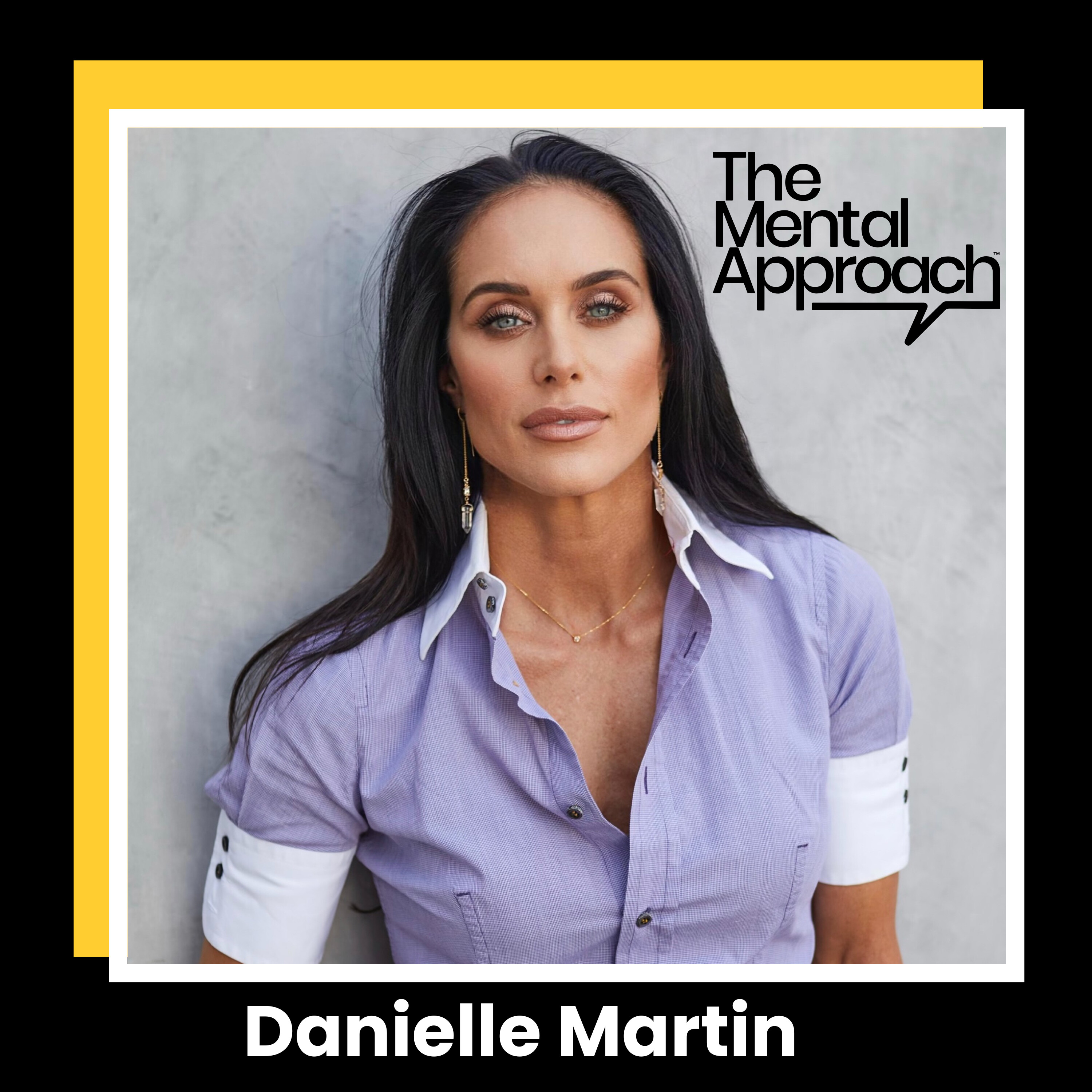
 When your sport background includes, national champion and professional surfer, UCLA collegiate softball player, dirt bike racer and Brazilian Jiu Jitsu black belt multi-world, national, international, and Pan American champion, you might know a thing or two about mindset. In this conversation, Mental Performance coach Danielle Martin joins the show for a second time to discuss her upcoming book Martial Mentality as well as diving into the importance of embracing failure in sports, particularly in baseball, where the statistics show a higher rate of failure than success. She emphasizes the need for athletes to prepare for failure as a rational approach and to reassess their performance without labeling it as good or bad. This mindset allows for a more constructive evaluation of their experiences and fosters emotional resilience.
See Privacy Policy at https://art19.com/privacy and California Privacy Notice at https://art19.com/privacy#do-not-sell-my-info.
Matt Cundill 00:01
This is the mental approach, where we discuss mindfulness, mental performance and the tools available for coping in a high performance world. Here's Todd arc hell.
Todd Arkell 00:11
Today I'm talking with Daniel Martin, owner of true mindsets California. If you're intimidated by strong, accomplished people, you might not want to listen. Danielle's personal achievements are absolutely incredible. But her work, the character will also astound you recently having her own life challenged by a traumatic brain injury. Listen, as she explains how she's fought her way back, and continues to help her clients and what she feels as important for kids as they make their journey through eSports. How are you Daniel?
Danielle Martin 00:44
I'm well, thank you. Thank you for having me. excited for this.
Todd Arkell 00:48
Yes. So so am I. And I mean, you know, it's really funny. I'd ask you to introduce yourself, but I gotta tell you for those listening, when everybody talks about you know, play multiple sports, be a multi sport athlete, I look at your resume of athletics, and I am absolutely mind blowing. I just gotta I gotta read this off. So, California State Athlete of the Year, we won't say the year, state national champions surfer, former professional surfer, UCLA, collegiate softball player, dirt bike racer, Brazilian Jiu Jitsu black belt, world national international and Pan American champion. How does that happen? That's a journey.
Danielle Martin 01:28
It's a great journey. It's it's fun to hear it actually played back like that. I just feel like it was just one at a time and all in, in all the ways I could be always. That's
Todd Arkell 01:38
amazing. So I came across you online through Walter Beatty, who is somebody who I follow. And, you know, I was asking Walter, who were some people I can talk to, and your name came right to mind because I think you've collaborated on a project with him. And I was reading in your Southern California Person. Were you born and raised? Have you always been in Southern California?
Danielle Martin 01:58
I have not. So I was born in Idaho. And gosh, I think I was four, maybe five, left there. My parents very, very young. They separated and my dad ended up on the island of kawaii, where I spent a lot of my childhood, which is wonderful. And also in data points. So I've kind of had the best of both worlds,
Todd Arkell 02:22
I would say. And that's where the surfing comes in. Yes,
Danielle Martin 02:25
surfing comes in on both coasts. Yes,
Todd Arkell 02:29
I know. But I, I remember being on the, on the Big Island and going out to the North Shore and what I was, couldn't believe the fearlessness some of those waves were I couldn't even there's not a chance he didn't get me out there. It looks crazy. So you draw some inspiration from Ken re visa, another Southern California person, and he comes up a lot. And some of the guests I've talked to, you know, reference heads up baseball as a big thing. And one of the things probably mess up his quote, but was it was about something like be where you are. Did you ever meet him? Did you get a chance to meet him? Oh, I
Danielle Martin 03:08
met him several times. He was in the dugout with us at UCLA, our coach went out and got him and he was a part of our team. And he brought a lot of security, a lot of, I don't know, he just Ken was a connector, he could connect with you, you felt that he genuinely cared. Anxiety was not something that you felt he read in a book on page 12 And just regurgitated to you on how to deal with it. I just feel like Ken, Ken was a listener, and he could hear where we're we were at at any given moment. And even if he didn't have the perfect thing to say, or sometimes people say something, and then the other person doesn't know how to go out and translate that I was one of those. But it was just his presence can add an incredible presence. So
Todd Arkell 03:51
he inspires you. Is that how you started down this path? You know, it's
Danielle Martin 03:55
not Chuck Norris group are my mentors. And they were like, you know, Reggie Cochran, who's kind of Chuck's right hand guy was like, you know, you have this gift, and you should go put it to work. And I'm like, What do you mean, I don't have the PhD and all that. He goes, No, no. I said gift, go give it and I was pretty intimidated. You know, I think a lot of us have the tendency to go to the I don't know if I'll be good enough. And what if this and I went down there? What if rabbit hole right away? And they're like, we're not asking, we're telling you to go do it? And I was like, okay, and, you know, I was teaching jujitsu to some celebrities at the time and mentoring some pretty high level athletes through jujitsu. I had NBA player like, hey, I want to learn jujitsu, too. And I was working at this place out of LA ton of pro athletes moving through there pretty much that's all that's moving through there. And they would ask me stuff and I'd always have something to share with them and it was kind of paralleling what was on the mats. You know, I feel like being a black belt is it's just a white belt putting quit and yeah, there's there's some advanced off as you move up the ladder of of that ranking system is just hours and tears and sweat and beat downs, nonstop, a lot of adversity on the mats, especially for a female. But, you know, I just I started letting coaches know what I was doing that I was doing that. And I got quite a few Uber superstar baseball players that started working with me and I set out on this journey and just really being somebody that was standstill long enough with them, PACE along with them slowed them down, I have a certification and breath instruction. One of my dear friends Stig Severinsen is the world record breath holder, he held his breath 22 minutes 10 seconds, he has a company called technology. So stakes been around, you know, wander around my life. I've assisted him on some of his breath holds as well. I worked in really high level personal security for a while, I use my black belt to go around and empowering young girls, inspiring confidence, situational awareness, talking to people about intuition and how to not only listen to it, but to hear it and obey it. So I kind of took all these different pieces, put them together and gave them to these athletes laid it over a game like baseball. And I just think like Bruce Lee said, always have the student mindset always be learning. And there's something to learn from each and every single person that crosses our paths, especially the young kids playing a game like baseball, I learned every day, I work from the MLB on down every single day with every single level of athlete. So I feel really blessed. It sounds
Todd Arkell 06:35
incredibly serendipitous, but I think based on your background, just listening, I'm like going, wow, you know, lots of things to draw upon lots of different experiences to draw upon, as opposed to one thing, I want to touch on the breath stuff. Because for people that, you know, as we're going through this, and you know, I hope listeners are young kids, and I hope they're also their parents, maybe the parents need to breathe a little bit in the stands as well. That's another story. But I was trying to think about that could be a great episode just talking about how the parents, you know, it's it's funny, my youngest plays a high level of baseball, he's in search of a spot south of the border. And as a Canadian kid, it's a little more difficult, but certainly achievable with the effort. And I don't really get to up and down watching him play, you know, you're excited for him. But just recently, he's been competing in the regionals. And now they made the final four for provincials, which would be like state championships for high school baseball. And I find myself with like butterflies watching him play for high school like I'm going, why is that? It seems like for a lot of people in Canada, high school baseball is not as important it is, as it is in America. However, it just seems like for them, they're having so much fun, so much joy, playing against guys that they play against in other teams or guys who are teammates, who go to different schools, it it seems like there's a different vibe to the whole thing. So going back to that, you know, so I think, you know, parents probably need a little bit of this as well. But what are the components you think, make up sort of a mindfulness practice? You know, is it breath meditation? What do you think is a good recipe for somebody who's just getting started and wants to kind of dip their toe in this in this world? Well, mindset
Danielle Martin 08:21
is important for each and every one of us. Mindset is just our brains in action. That's mindset. It's our brains in action. Because for me, you know, the conversations are great. But I always felt as an athlete that I could have great conversations, but how, how do I how to what we spoke about, how do I how to it, the thing about breath being kind of a pretty pertinent aspect of anything of any type of performance, but even just being because we take about 20 to 30,000 breaths today. And if we could learn to use some of those breaths, and understand why we're doing that breath is our greatest reflex as a human being. It's our greatest reflex. So if I hold my breath my attention immediately goes right here. It brings me to present quicker than anything else, because it's my greatest reflex. And without me taking that breath, or releasing the carbon dioxide from my body. I'll pass out I could die without my breath. So it's our lifeline. It is the greatest and quickest way. It's our greatest reflex, but it's the quickest way to bring you to the present moment. So the inhales, controlled exhales the ways in which we use those breaths. We actually have the power to shift our nervous systems sympathetic fight or flight. That's that kind of breathing from here up like you see a lot of pitchers doing it. People do it when we get anxious, stressed, depressed. We're like this. We're down. We're tight. then everything gets tighter, little tougher to breathe. And we have the power with our breath. When we do it a certain way, when we utilize it to shift from the sympathetic to the parasympathetic, fight or flight to the rest and digest, that relaxed. When I'm relaxed, my body actually has a better opportunity to work for me to show up for me. Also, I think clearer. I have the ability to think about what it is I'm going to do whether I'm going to compete in the midst of this moment, I don't feel the greatest. So there's another one. We are the only creatures on the planet that can think greater than how we feel. So I have players coming to me sometimes, I'm overthinking. I said, How amazing. And then I watch. The people tell me not to overthink all the time. I said, Okay. You're overthinking. But what are you overthinking? They're like, Oh, no, no, I'm all it's beautiful that you we can overthink actually. So how about I overthink the fact that I feel awful, because I might have been over for yesterday. But today, I'm grateful. I'm full of greatness. I'm gonna take my greatness and go move it into the space of baseball. Wow. How blessed Am I to have the opportunity to be in the lineup again today to go give my greatness in the form of offense, and just just allow my feelings to be there. Not let them steal from me. Not let my feeling steal from me because yes, they don't feel good. But I remind them again, sports, baseball especially does not care how you feel, does not care what you want. I want to hit I feel this way. Baseball goes, I don't care. What are you going to do about it? So mindset is our brain and action. Breath gets us clear. Now I'm able to identify what are the next actions I need to take. And I organize the athletes once they're organized. And they understand these concepts, tools, assets, and how to use them utilize, put them into action. Gratitude is being grateful. But it's it's the action of being grateful. And it's understanding what that means to each person. Confidence may be this big international word. But what makes me confident and what makes you confident are different things. being aggressive, aggressive, never won a baseball game. Offense wins baseball games, when kids know how to move through a space offensively and they're organized and they're breathing and they're aware of their breath, then they're aggressive. Baseball is not won by aggression. It's not the game that aggressive wins its offense that we're seeing, and we're mistaking it for aggressive. So when kids understand action, thought overthinking my feelings, I care, baseball doesn't care, big difference. And also when you are moving up the ladder to being and becoming a high level athlete, it's not if it's when you fail, get knocked down, are intimidated are afraid of all kinds of things. And you need support. We all do. It's not help. I don't go around helping players, people, anything who might help. But I support. I know how to do that. I know how to listen, I know how to hear you. I know how to connect with you. I know how failure feels. I've lost World Championships. I didn't just show up and win them. I've been knocked down many times I've been picked up and dropped literally on my head. And half my brain right now is not functioning still. They tell me it'd be 100 I'm giving you 100 of the 50 that is functioning right now. I know it's not perfect how I talk my words twist. I could isolate and say oh, you know what, I'll do this podcast when I'm back to 100. I can wait, let that time go by and assume I have that time. But time is precious. And what we have is right now and my breath tells me that every day when I take a breath in, we never know what will happen in this life. But for the kids out there that are aiming high have dreams of playing at that next level. You will need support. And it takes courage to say yeah, I do need that. And it takes courage to get back up when you fall down. And parents. We need support too. I'm an only parent of two boys, two high level athletes. And it's been very challenging. It's been so scary at times lonely at times dark at times times I'm going how do i hemorrhage any more money for all these things, trying to keep my kids keeping them up with the Joneses is what it seems like sometimes, but just don't quit lean in. There is support we all need it doesn't matter who you are. You need it.
Todd Arkell 14:52
I appreciate you sharing that that's credibly I can feel the passion there. And you know what? You're right. We need some pouring in. I can remember years ago, even just with my son with hockey when he was playing hockey, and one of the parents saying, We can't afford to be here this weekend, our bank account is overdrawn. We got three kids playing high level hockey, I don't know how we're going to, you know, make our mortgage, all these things. And I was, you know, just listened. I didn't know what to say. But just listen, because I think they needed to get it out. And I felt to myself, you know, it really explains sometimes, especially in Canada with hockey, why there's bad behavior by parents in the stands sometimes. And I feel like there's this overwhelming stress from all the external things that are going on trying to get them there to the game to having to leave work early, whatever it is, the financial pressures, everything that goes with it. And if there's a child isn't performing well, or they're not getting the playing time that you see them sometimes react in bad ways. And it is one of those things that just over time became evident to me. And part of why I wanted to start this and it's funny how you said, like, you know, just keep going, don't quit, how you kind of move forward. My first guest is a gentleman by the name of diamond Hall, and he's the mental performance coach for the Baltimore Orioles. I met him in 2017. And we started talking about this concept. And he worked at Wright State at the time. And you know, I'm just a, just a guy with a passion for, you know, trying to figure out things different. And I said to my go, you know, what, like, I thought it'd only been a couple of years since I was talking about doing this. And I realized, I let seven years go by just talking and not taking any action. So anyways, so I've taken action, and I'm so incredibly, I have gratitude for the people who have I put it out there to people in the world. And I'm just amazed by the caliber of guests who have wanted to come on, it's been great. And anyways, I'm kind of almost at a loss for words, because you know, listening to your talk there is that just absolutely hit me right in the heart.
Matt Cundill 17:10
Now more than mental approach with taught our cow.
Todd Arkell 17:15
So what do you think makes your approach to mental performance unique? I think you might have answered it in the last one, that you're there. You listen, support, but in your words, what makes you unique over other people.
Danielle Martin 17:27
I can really hear people and I meet them where they are. And we work from exactly where they are. I don't come in just dropping, you know, tools. I kind of describe it like this. If let's say if you're like, hey, Janelle, I want to show you this dream house I have, and I want to build it. And I said, Okay, let's go look at it. And I looked at it this beautiful, giant, big mansion. And I said, okay, and we went to Home Depot, and I said, Okay, I know all the tools, you're going to need to build that house. And if I drove you after we picked, we bought all the tools, and I just dropped you off in a driveway and threw the tools out there. You would be calling me going, Hey, which one do I use first? And how do I use it? And then what? And then what? Like I need some help here? I need some support and building this great, beautiful house. Hey, thanks for the tools. But I don't know how to use this. And what are the best ways to use them? And in what order? So I can't just, you know, some people do this, they get on the phone, they just start, you know, you should be confident you shouldn't feel that you need to not be this until you do that. It's just not realistic. I've been an athlete all my life. And I've talked to a lot of mental coaches. And I asked my big Lakers a lot. Why do you keep coming back? I have some guys I'm going on eight years working with. They've been all stars. They signed the contracts, they have multiple Golden Gloves. They've done all the things and I'm like, so why do you need me? They're like, Well, I still need the support. And you know, this game gets harder. It's not getting easier. It's not like I thought it was and I said, Okay, I said, So why me not the next guy. And they're like, because you have a great way of articulating the How to you have patience skill set 2030 times if we need to do, there's no judgment. You're honest. And you know what else you'll say is you'll say, I don't know, let me call you back. And I do and I surround myself with people like Steve Severinsen Barry Bonds if I have to call him and he has always been more than generous to be someone I can lean into incredible human being. I see aside I'm sure a lot of the world has not seen but he's one of the most incredible human beings I've ever met. He's a genius when it comes to the game of baseball, a legit genius.
Todd Arkell 19:43
I would agree with that.
Danielle Martin 19:45
And he's got a giant heart. His reasons why he doesn't want to put it out there for everybody to see there are his reasons, but I don't know goes a long way with people because it allows them to trust you because we don't know everything. We are human beings, we are imperfect creatures moving through the perfect space of whatever we're doing. Baseball is a perfect game. We're imperfect moving through that space parents as well to players. And I always say baseball is kind of like Victoria's Secret. Who's Victoria? And what's the secret? No one knows. No one knows. Why is baseball a mental game? No one knows. I do. And I'll tell you how I figured this out. I had a stroke and died and came back. And I have been given downloads that have literally blown a little piece of my mind that is still there. But I've been writing it all down and drawing pictures because I had to learn to write again. But I started thinking like about two weeks ago, and I'm like, Victoria's Secret. Nobody knows. I'm like, huh, baseball actually doesn't have defense. It says it does. But it really doesn't. You've never heard somebody walk away from a game or baseball game and go wow, defense won that game. No one does Said no one ever a lot of people. I don't get baseball. It's just kind of boring. I'm like, No, it's not it's cerebral. And you a lot of human beings, the majority of the population is pretty insecure. Look at our world today. You can really see it now. But insecurity breeds defense. So people identify with defensive games that have defense like defenses popping out. It's offense and its defense. But baseball, really only the offense sticks out. Because there really only is offense, offense wins the games of baseball offense wins the game in baseball, a pitcher baseball says a pitcher is playing a defensive position. Now he's not. He's the most violent job on the field, as a matter of fact, but baseball calls his position defense. So therein lies some of the mental aspects that really trip. People up baseball trips you up before the coaches trip you up before lack of opportunity trips you up and on down the line. We could have a whole podcast on each one of those topics. But baseball's like Victoria's Secret.
Todd Arkell 22:08
I love it sounds like a title of a book. Get that locked down that get that URL. Baseball's like Victoria's Secret. I tell you, it's funny. It's I mean, outside of being good analogy. You're right about what I think about the offensive nature, right? Everybody says you listen to you know, the pundits, defense and pitching wins championships. You know, I agree with you and hadn't thought about it that way that pitchers are offensive, I mean, they're attacking the hitter,
Danielle Martin 22:37
they are throwing an object that could kill you at speeds in which could kill you into a personal space again, and again and again and again and again. And you know, music lives between the notes, when a pitcher understands and knows his one job. And he knows his music. Because those notes if a if a C note was a slider, and a B note was a fastball, and a D note was a curve for a knuckleball, whatever you want. You get it. The music lives between the notes. So it's not the balls, he's throwing the pitches. It's the process in which he goes about delivering and executing those pitches. So the music and life lives between the notes. There's a lot of reasons why baseball is a mental game. And nobody ever answers that. Oh, well, it just is okay. Well guess what baseball is also probably the hottest and most beautiful woman any those guys will ever date. And she's psychologically abusive, and they have to learn to have a relationship with her. So a lot of times, I'm relationship coaching, because it's the individual's relationship with the game, and everything surrounding the game.
Todd Arkell 23:44
So it's funny when you said about people, you know, the game being cerebral, and a lot of people will say to me, you know, I don't like baseball, it's slow. And I always say, Oh, so you're not that intelligent, and then grin because I don't want them to punch me in the face. But that's truly how I feel because there is so much going on in a game and I can take back even would go on trips with my son every summer around his birthday, we go to multiple parks, minor league, Major League, whatever, and go watch games. And we were sitting in Pittsburgh, in the outfield. Max Scherzer was pitching. I can't think about who was hitting I think his nickname was El Kafei. And I can't remember his real name right now. But anyways, he had pitched I don't know probably had a 1011 pitch at bat. And I said to my son, where are the fielders? And he told me he told me I said, Where's Max pitching. And he told me just based on the alignment of everything. And then after all these pitches, I said he's going to hit a bomb. And the next pitch he put one right over our heads into the Allegheny River. And my son looked at me like I go, he saw everything. He saw everything and he was waiting, right so there's so much going on in a game, you know from player to player and guys in the dugout watching what's going on. I'm trying to process that for themselves. It's a beautiful game. I mean, it really is, from that perspective,
Danielle Martin 25:06
it's a lot like jujitsu as well, because it's technique and leverage that beat strength, technique and leverage that beat strength,
Todd Arkell 25:14
understanding how to use that leverage, yes,
Danielle Martin 25:17
understanding what their leverage is and how to generate it. And technique, it's not always mechanics, a lot of players, my mechanics are off, no, it's not. You're a mechanic of hitting, once you pick up a bat. Now, how you shape the space, you move through with that bat, the choices you make the choices, you execute what you execute your balance, I cannot win a fight, if I'm not balanced. I mean, I could get lucky. But if I'm balanced, it's gonna be very tough to beat me, I hit her is in a fighting stance, whether he knows it or not. And that pitchers throwing a punch at you, you need him to you need him to initiate that battle that fight that interaction. But your punch hitting is a punch to, I'm here. And I'm here, and I'm actually making a fist, they don't realize they're holding this year. And I'm almost blocking, punching, it's martial arts. And it's going to be tough to beat these guys, when they're balanced. And when they have that in their mind, and we hit from the ground up. So if I step into balance, and I know my job, and I'm breathing, and I'm balanced, and I'm resetting between every pitch, and my music is offensive, then it's gonna be tough to beat me. Because now I've absorbed probability from the equation that is four balls, three strikes, it's a mathematical equation, I need to absorb the probability before I ever get to that box preparation, executing approaches. What is my job? A lot of people don't know it, your job is not to hit the ball hard. As a hitter. Look at the size of those guys, please go hit it soft for me. That'd be bigger channel for you. So the language the words matter, our bodies listening, it wants to show up for you. We have a subconscious that resonates with the mind's eye, there's a difference between go look for strikes versus go attack, go attack fastball, make adjustments to anything else, because then I'm always ready. Always balanced. What is ready even me go get ready. I ask players, what is your ready mean? Could you articulate ready for me? What do you mean? Exactly? So let's do that. Let's define you're ready. Once you do that for a player, now they have a real preparation, approach execution, they know their job. Now we move through that space. Now they've got gold in their pocket. Where does the support come in. Because when we run, sometimes gold falls out. When we run mentally, emotionally, physically, gold can fall out of our pocket, I can see that gold on the floor. So I run over I grab it, polish it up and go put it back your pocket, go spend it, breathe, relax, get clear, calm, cool, collected. parasympathetic nervous system is the rest and digest. I used to be like, what does that mean? But you know what it means digest, where I'm digesting energy, using it for us. So it doesn't get used against us. Sounds easy. Never easy, but we can simplify that process. And we can let you understand it, we can let it land for you. I can teach you how to do that. I can teach you how to hear and listen to your own body. So that when you're an injured pitcher coming back from Tommy John, like so many are right now. And understanding that your job is not velocity. And that if you listen and hear your body and you respect it, and if it says I'm 60 and you take 100 of the 60 and you do not try to take more, guess what, you'll be healthy. You'll actually have a great career when you are the boss, when you are driving your hands around the steering wheel and not everyone else's who wants you to do this, guess what or expects you to do this. Your body says what you can and cannot do. And when you learn how to hear it, listen to it, and it will reward you. And you actually can be competitive without being 100% or without throwing 100 miles an hour example Greg Maddux. There's a lot we could talk about, you know this, but I'll leave you thought.
Todd Arkell 29:13
Perfect. We're almost at the end. I have a bunch of questions that I call them rapid fire questions, which I like to just get pop quizzes. So we'll see how this goes. What's one book you could recommend for people to read right now?
29:26
Legacy?
29:28
Who's the author?
Danielle Martin 29:29
Is it James Hart? Nope. James Kerr. It's about the All Blacks. It's brilliant. I have a lot of books but that one is just in this one's right here. So let's say this one, chop wood. carry water. Brilliant one and it's little
Todd Arkell 29:45
quick rate. I know that's, you know, today's a God talk about youth. Nobody reads anymore. It's all on their phone. It's a little amazing. So the smaller the book may be the easier for them to pick it up. less intimidating. Yes. So what's one piece of advice you would give teenage you? So look back and think, Is there anything you might have wanted to know, back then?
Danielle Martin 30:11
Yes, have the courage to ask for help. Ask for support. Something's not wrong with you. You deserve that you are worthy of that. You have a purpose, you are very important. You don't need to know your purpose yet, but you do need to keep taking steps forward and lean in. It's okay. I wish I could say that to my 15 or 16 year old self, best
Todd Arkell 30:33
advice you ever received and who provided it? My little league coach,
Danielle Martin 30:37
he said, You can do anything you ever want to do. You're coachable, you're strong. You're confident and I love that. And that's why I draft you every year, when I asked why me, I was the only little girl in a league of 400 boys. And he said things to me that to this day. I'm very grateful for that's awesome.
Todd Arkell 30:56
One Small Change somebody could make to their daily routine that could start making a big difference in them moving to a more mindful approach.
Danielle Martin 31:08
conscious breathing, learning how to use your breath.
Todd Arkell 31:11
Perfect. Danielle, you have me all emotional today. You really speak from the heart. And I want to thank you so much for being a guest and those that are listening please like and subscribe where podcasts are available.
Matt Cundill 31:24
Thanks for listening. For more including resources and more about the show. Go to the mental approach.com produced and distributed by the sound off
31:36
media company

