Ontario’s Lakes Are Changing. Here’s What It Means for Tourism



 RSS Feed
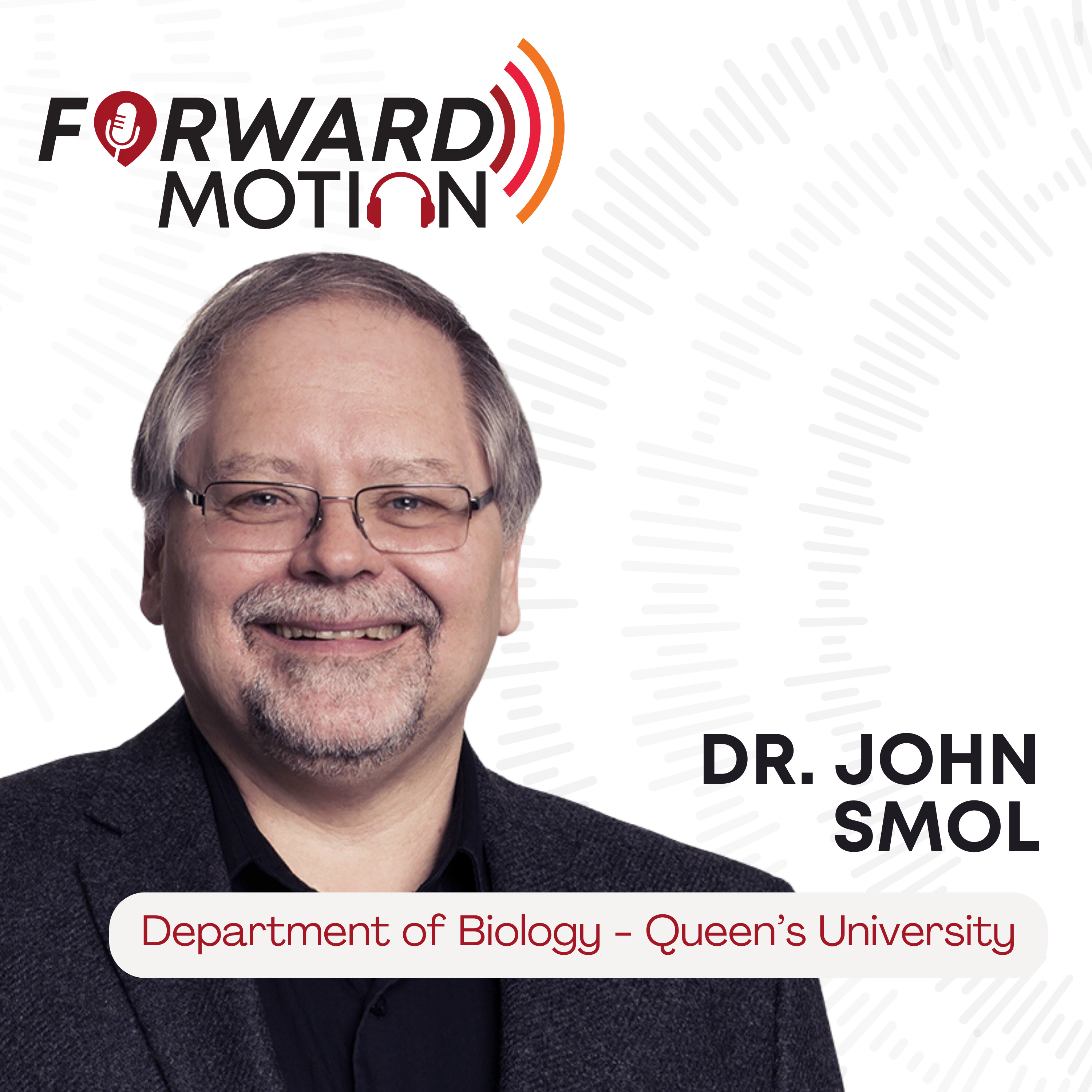
 Water is Ontario's most powerful tourism asset. Our 250,000 lakes drive billions in visitor spending every year — from angling and paddling to cottage country getaways and waterfront dining. But those lakes are changing in ways that are already affecting visitor experience, destination appeal, and long-term business viability. In this Earth Day episode, Andrew Seigwert speaks with Dr. John Smol, one of Canada's leading environmental scientists to understand what's happening beneath the surface, and what it means for our industry.
About our Guest:
Dr. Smol is one of Canada's most recognized environmental scientists and a leading voice on lake health and climate change. He held the Canada Research Chair in Environmental Change for the maximum three 7-year terms (2001–2021), has authored over 760 scientific publications and 24 books, and has conducted fieldwork on all seven continents. His PEARL Lab at Queen's University uses lake sediments to reconstruct centuries of environmental history — giving policymakers, municipalities, and industries the long-term evidence base they need to make better decisions. In 2013 he was named an Officer of the Order of Canada.
What we Cover:
- The science of reading lake history from sediment cores — and what centuries of data reveal about how fast things are changing now
- Blue-green algal blooms: why they're increasing, why the old solutions aren't working as well, and what operators in affected areas should know
- Lake trout, walleye, and the angling economy — Ontario holds ~25% of the world's natural lake trout populations, and warming waters are shrinking their habitat
- Invasive species at our doorstep: Asian carp and what it would mean for Great Lakes-based tourism
- Ice fishing seasons at risk — some communities have already lost entire seasons due to unsafe ice conditions
- Wildfire smoke: how fires hundreds of kilometres away are already forcing visitors to stay indoors and cancel travel plans
- What the Montreal Protocol teaches us about galvanizing governments — and the role industry voices play in making that happen
- Practical starting points for operators who want to act on sustainability — and why Dr. Smol says the business case is stronger than ever
Resources and Initiatives:
Looking to take action or learn more? Explore these programs, tools, and organizations supporting sustainability across Ontario’s tourism ecosystem:
GreenStep | Sustainability that moves business forward
Take the Pledge | Sustainable Tourism 2030 Pledge
Discover unique Native Experiences in Ontario
Forward Motion thanks its partners for their support of this show:
Ontario Travel & Tourism Monthly
See Privacy Policy at https://art19.com/privacy and California Privacy Notice at https://art19.com/privacy#do-not-sell-my-info.
Mary Anne Ivison 00:01
And this is forward motion discussions about the important topic shaping Ontario's tourism industry. Here's your host, Andrew
Andrew Siegwart 00:08
sigwart, when we talk about sustainability in Ontario, we need to talk about one of our most defining assets, our lakes. They shape our landscapes, our communities and our tourism experiences, from cottage country to our provincial parks, from paddling routes to waterfront destinations. Lakes are at the heart of how people experience Ontario, but they're also changing and understanding what's happening and what it means is critical, not just from an environmental perspective, but from the long term strength and competitiveness of our tourism industry. So today, we're starting with the right source. I'm really pleased to be joined by Dr John small. Dr small is a distinguished university professor at Queen's University and founder of the pearl research lab, a globally recognized team studying environmental change through Lake ecosystems. His work brings together scientists governments and institutions across Canada and internationally to better understand and respond to issues like climate change, water quality and ecosystem health. Dr, small, thank you so much for joining us on forward motion today.
Dr. John Smol 01:12
Go. Very nice to be here. Thank you for inviting me
Andrew Siegwart 01:15
before we get started. We always ask our guests to tell us a little bit about their career journeys. So I thought I would start without with you. What brought you into this incredible field that you work in, and what led you to your work with Queen's University.
Dr. John Smol 01:27
I grew up, actually, mainly urban in Montreal, and I was always interested. I grew up, you know, let's say the 70s, when the environmental movement was happening. Well, it's still happening, I guess, but it was having some of its roots at that time. I was interested in that. And then I got into McGill University. And there was also the time there were, like, documentaries about Jacques Cousteau and ocean and so McGill had a in Montreal had a marine biology stream, so I went to that and but sort of along the way, I found out there's a thing called limnology, or the study of lakes and rivers. And that seemed like a good gig. It seems most people I knew went to lakes on holidays. Then I found out you can have a job. But I really got into it. And so I finished my degree at McGill, and then I started my master's in Brock University near St Catharines, and then finished a PhD here at Queens, working on lakes and working how lakes change over time, I got a little frustrated with reading a lot about lakes, how difficult it is to go from year to year and make predictions. So the field I work on is a little different. I look at time over time, and basically, lakes are quite wonderful. They're like time machines in the bottom. They have sediments. I think some people might be familiar with ice cores or tree rings. Well, lakes and oceans are like that too. They record a history book in their mud at the bottom each day, 24 hours a day, a bit more of that history book is accumulating, and if you can remove go, but the deeper you go, the older it is. And look at the information that's contained in this time capsule, if you like, it contains a lot of information that we can use to understand multiple stressors and why, how lakes are changing, and that's one of the biggest challenges we have in ecological and environmental work. Most when we do have long term data, it's three years or less, which is not really that long. So we can, we can start go back decades, centuries, even millennia, if needed, and often back in history is where many of the answers lay hidden for environmental work. So that's what we do here at Queen's University. So it sounds a little hocus pocus and specialized, but there's about 30 people in my lab, so it's a popping place.
Andrew Siegwart 03:39
Oh, wow, that's that's good to know. It's a reassuring, I think, for our listeners to know that there are so many people working in this important field. And I think it's I like how you started there, because, you know, we're so in the here and now, in our in our culture and our economy, and we tend to in the business world, look at, you know, how are things happening this quarter based on last quarter? How are things functioning this year compared to last year, and that's where our data efforts tend to stop. So going back, you know, centuries through soil, is probably where we all need to be in some way, shape or form. So before we jump into the depth of the interview today, I have a question or a theory. As a kid, did you spend a lot of time at a cottage or on lakes or swimming.
Dr. John Smol 04:20
You know, this is where it gets strange, not really. I'm very peculiar in that case. But I grew up urban. We moved quite a bit for at least the first part of my life, often in apartments and so on and so forth. Now, at one time, when I was eight, we moved to an apartment complex that had a big swamp that flooded each This is suburbs of careful parts of Montreal, and it flooded each year. And I would that was kind of my playground. I would go there. And I was amazed what, you know, it would come to life with tiny things I could see swimming around. And I was fascinated by it, and I went and sampled it with jam jars. And. Things like that. So I so it wasn't a cottage, it was urban, but that was my root being fascinated, probably, by what can grow in water. I had a lot of wet feet and mosquito bites those years, but so, but I'm sort of peculiar in that respect. I think you know, when you talk to most people in my field, all they had summer camps and stuff. Our world was different, but now I've made up for it. I mean, I work hard, but, you know, I do a lot of things. Go to many exotic places, doing research and teaching, but mainly research. I go to a lot of places where people go think they're going on holidays, and now I'm working, I am actually working quite hard, but I've made up for that. I've worked on all seven continents, so I've really seen the world and lakes around the world, including, you know, Antarctica, the high Arctic. A lot of work in the high Arctic. I've been there for over 40 years. So wow, yeah, made up for it, for sure.
Andrew Siegwart 05:56
Well, I think there's something really, really nice about having those, those swamp roots. And, you know, making me think of my brother when we were kids. He we had a family cottage, but I saw him come to life when he was in the creek down the road, catching minnows and exploring all of that and learning about it. So, yeah, it's the same thing. And, yeah, it's very cool. Okay, let's, um, let's jump right into it. You know, as we were just saying, for many of us, lakes are, you know, the landscape, it's what we see, what we visit. But from your perspective, why are lakes so important, and particularly to Ontario?
Dr. John Smol 06:30
Well, they're critically important. I tell you, you know, we're kind of blessed with fresh water, the term Ontario, if there's some controversy, but it's an indigenous origin, there's no question about that. And it's, it's either a Huron, meaning a great lake, or possibly, wouldn't show me worried, meaning beautiful water, but clearly, it has its roots in water and and with good reason, we have a tremendous number of beautiful, sparkling lakes this way. That wouldn't show me term is not all of them are sparkling, which keep that in mind, and we have to protect them. But you know, water is critical, fresh water. You know, you without water, there's no way. There's no other substance like water in that respect. I mean, as far as last I checked, you know, you can't drink oil and you can't eat gold, but you need water. Wars are centered on water, and more wars will be centered on water, I'm pretty sure, with that the way things are going, but water for everything. We call it ecosystem services. That's sort of a, you know, so maybe an academic term, but to get you know, and I'm just mentioning a few come obvious drinking water. I mean, we need drinking water. Agriculture, all industries need water, transport, moving. Fisheries and other food security. Need water. Angling and, of course, tourism, you know, we take water for granted, especially in Ontario, but a lot is happening, and a lot is happening in water. Sometimes we don't visually see it until it's very late. I've called it under the water line or under the radar. Happens incremental climate warming is a classic incrementally. There's changes happening where you don't necessarily visually see them, but they're, you know, people study this go, what the hell's going on, you know? And climate warming is, I referred to it before in my publications, as the big threat multiplier. Almost every water quality problem we deal with gets worse in a warming climate. So almost all aspects of Lake ecology are important here, and it's affecting it all in and not necessarily in good way. So water is just critical for all those things, including the tourism industry. When you look at the numbers of how many tourists come to Ontario really, for the nature for the lakes, angling, absolutely, you know, water skiing, just hiking, and they want to go to a lake that's got dead fish floating, and they don't want to go to a lake that's full of algal blooms. And they algal blooms, and they don't want to like that smells, and they, you know, can't drink the water and can't swim in it. So it's important to the industry, for sure.
Andrew Siegwart 08:49
That's right, yeah, it's we're all. We all have a vested interest in being good stewards and driving that forward. We didn't prepare for this question, but I just thought I would ask, you know, as you sort of open the door a little bit and talking about wars and resources and sort of the state of the world, but you know, there's been some talk about, you know, how our fresh water is a resource that needs a little more protection, maybe than we thought it might have. We've certainly seen the US president talk a little bit about Canada's water in the circles or in the pools that you swim in. Is this a is this a conversation that's getting a little more attention? Or it's definitely
Dr. John Smol 09:29
getting attention, but not so much, since I'm a biologist, less so it's more in the policy, right? Yeah, so people who talk about policy and international trade and stuff, it's more an issue there, but of course, it has ramifications for ecology to start moving water, but it's not so much in my area, but it does, does actually come up and but that's more in the policy like, you know, it ever happened. How would it happen? Should it happen? Or should, how much of it should happen? You know?
Andrew Siegwart 09:57
So would you say that you've observed more of those conversations? Conversations in the last year or
Dr. John Smol 10:01
so, yeah, oh yeah, yeah. I think so. I think we've seen, wow. We all know what's happening.
Andrew Siegwart 10:05
Yeah, that's our yes, good, for sure. So we're stating the obvious. But I thought, you know, interesting sort of some follow ups and further thinking. So, you know, you set the stage on reading, reading environmental change. You You often say you can read environmental change through the lakes. So maybe, if you want to expand a little bit upon that for us, and also, what are the what are the lakes telling us right now, based on your research,
Dr. John Smol 10:31
depends where you are, and there's telling us lots of things. So the overall process is fairly straightforward. It's a little more complicated than I'll explain, but lake sediments, as I said, is like a time machine that build up over time. The deeper you go, the older it is. So our first job is to remove the history book, and we do that with a tube of sediment and fairly straightforward process. It depends. How much do you want the last 200 years? In most places in Ontario, the top 50 centimeters will be last two or 300 years. Oh, wow. You want to go back to the Ice Age 12,000 years ago. Let's say you need about three, typically, three, four meters of centill. So there's different tools to get that material, but basically, you carefully remove a core, what we call a core of sediment, typically is about the size of a paper towel, you know, like a rolled up paper towel, or less. There's different we can do that fairly carefully. You don't want to mix it up, because if you mix it up, because if you mix it up, if you think of it like pages in a book, you'll be mixing up the pages if you so there's ways you can do that. Then we we section it so, you know, maybe half centimeter, all the way down. The deeper I go, the older it is. Then the next thing we have to do is, is this 1920 is this 1820 Well, there's independent ways we can date the sentiment. So we could say this is about the 1950s This is about the 1920s This is about the 1850s so we can do that. And then in it looks like mud. But in that mud is an incredible library of information. There's chemical information, things like DDT and PCBs. It's in the sediment. It's a history book of past sins, if you like, you're working on, like in a metals area like Sudbury, you know, copper, nail, copper, nickel, zinc. You know, that's all in the sediments. But we also biologists in the sediment is a tremendous library of information of organisms that lived in the lake. A central theme in ecology is, if you know what lives in the lake. You know a lot about the lake, and because of different types of micro fossils and other types of information, we can reconstruct what lived in Lake in the 1850s in the 1750s so we have this chemical history, this physical history, and a biological history. So we're not quite like just going to a lake and sampling what's there, but we're getting, you know, in the ballpark, and we can show what happened. We can show history is important. It reminds us of our successes. It warns us of our failures. And sediments do a lot of warning. It also tells us what the lake was like before, significant human impacts. I said, there's some surprises there too. For example, people say, my lake has these algal blooms, these algal blooms growing on it. I want to get rid of them. What's important to know, what was it like before farming, or before anything was there? Maybe the lake always had algal blooms. And if it always had algal blooms, it's naturally high. You know, there's not that much you can do, and we have some. It's not common, but we have had lakes so in the prairies, where they've always had high nutrients, high algorithms and so forth. So some lakes have are fishless people, especially anglers say, put fish in the lake stock it. Well, we should probably find out there are some naturally fishless lakes. They've been fishless since the Ice Age, not many again, but they are. And if a Lake's been fishless for 12,000 years, it's probably not a great idea to add fish. First of all, they probably won't live for various reasons. And secondly, this whole ecosystem has developed without fish. It's its natural state is fishless. So there's some of that, of what, what are back? What are realistic targets for mitigation? We can do that. We can also show how things have changed over time. How many cottages can you build around the lake? You know, if you have 10 cottages, very little effect. And we go back in time like no cottages. Say, 1850 1910 10 cottages, everything's fine. You know, 1950s 100 cottages. Oh, something's happening. Uh, 1970s 200 cottages. Hold on, you know, we got proud. You can look at at what point. So these are the types of things we can do with quite a practical
Andrew Siegwart 14:32
component to it. Would you say that just since you you raised that comment about uh, cottages or development along lakes? You know, obviously in tourism, there's a lot of that, a lot of development. Are you seeing municipalities do that level of Lake analysis to inform their development plans? Is that something that's being done more and
Dr. John Smol 14:53
more, it's more happening. It's not happening commonly. We tend to. We tend to be a bit like on an ambulance. See, we often come after the problem, like people call us, but we got dead fish. We have an algal bloom, you know, it's so we're almost like detectives. I call it forensic paleontology, you know, so often we come after the fact, though it is more and more being used like that. Yeah. So, for example, I call it preemptive. We did some of that work the ring of fire that was called the far north of Ontario. Many of your listeners might be aware of it, massive amounts of different types of elements that we need, the critical minerals that everyone talks about. It hasn't started yet. So we had a project there. We decided, let's find out what the lakes are like before anything happens, you know, so we can have, and of course, the lakes are changing already because of climate change. So also, this is what the mining companies might want to know, but they might get accused. Look at all the changes you caused. Well, some of those were happening already. So it works both ways. So the more information you have on a temporal or timescale, the stronger your analysis will be, and you're, you know, basically we're gathering evidence where the evidence gathers. So what people do with that evidence that becomes a policy decision
Andrew Siegwart 16:09
in your in your work, sort of studying, let's say, you know, lakes that are that have development on it, or, you know, what has surprised you. So obviously, there's going to be some things where, I'm sure you could expect that based on the time frame, you'll see different types of pollutants and different types of things based on what's happening. Did you ever see a finding where you was a head scratcher?
Dr. John Smol 16:29
Definitely head scratchers. But also surprises. There's a lot of surprises in sediments. Yeah. Can you share one or two? Yeah, let's say Yeah. So how things happen incrementally under what I call under the radar. There's some problems that we've had. Some successes with acid rain is one, not many success, but we've had some, and it we celebrated because the lakes are recovering in lake water city. They're not totally covering biologically. That's a whole other story still. And then we find out it's you really need many years of data to show this, but they have other other things happened under the radar. We were looking at pH and stuff like that, but we now realize that one element that's critical to biology is calcium. And people know that osteoporosis, you know, aquatic osteoporosis. Every living organism needs calcium. Some need a lot, crayfish or mollusks. You know, shellfish need a lot, but they all need some, and there's a whole spectrum of how much they need. Well, we've slowly found that, working with colleagues, that the amount of in these acid sensitive lakes, even though the pH has recovered, they lost their calcium. Calcium was flushed out of the system, and that calcium is very hard to get back. And now they they look the pH is fine, but the calcium is very low, so they're not getting all the biological recovery. Some organisms need more calcium, and that's a hard thing to put back in. So that's an example of of surprises. Not good one, not happy surprise. I say you got to know what you're dealing with, we find problems. We're not necessarily so good at the solutions. That's more an engineering issue. But before you can get a solution, you have to identify a problem. We live in a world where people won't do anything until you identify the environmental problem. So we're, we're in that sort of detective phase, if you like, right? Well, and
Andrew Siegwart 18:20
you're and you're you're highlighting how important that detective phase is, because you're right where what moves is is, is knowledge and awareness. And so that's that those surprises are important. So tell me. And I know it's hard to generalize, because, as you said, different lakes, different regions, have different things. But based on your your research, you know, what are lakes telling us about the environment right now, depends where
Dr. John Smol 18:42
you are. They're all changing. You know, we keep talking about these pristine lakes. You know, they're changing. If they're not changing because of local impact. With local impacts would be like, say, cottaging or, you know, the things that we normally think over near a mine or or receiving road salt from a road. So you go to a wilderness like a middle of Algonquin Park, those are changing too. They're changing largely for a variety of reasons. There's some long range pollution being transported. But a key one is climate. They are really passing thresholds that are not good. You know, we think, Oh, it's only a degree and a half or so. It's really made a big effect on lakes changes, the ice cover changes. And people think, well, I refer to it as a longer summer. Yeah, longer summer. Canada. We can use longer Well, it comes with a cost. You ever notice all those cyanobacteria, the blue green algal blooms, coming in August, September, that's probably a close link to the longer summer they every it's a perfect storm for for example, blooms. People don't want blooms taste and order problems. They look terrible. You don't want to go fishing in there. You don't want to go swimming in it. You don't want to go boating sometimes in it, so bad. And especially those Santa back or Santa bacterial the blue green algorithms, many of them produce even toxins. They can Well, if your dog drinks enough of the water, it can kill it. It can. And affect our health too, we now believe so that's part of the longer summer. It's a perfect storm this. We've got these conditions back in late August, September. It's perfect because of warming, we've extended the summer, and it's perfect for these problem causing organisms. Just gives you one of many examples. So it's the lakes are changing. We have to realize that, and some are getting worse than others, but they're all changing. So there's no such thing as we don't see straight lines anymore. We have a few lakes that are close to straight lines going back in time, but none of them are straight lines. They're all affected. The human footprint is everywhere. Sometimes they're all more light. But climate change is a
Andrew Siegwart 20:40
big threat multiplier. That's right, and it's it's not climate change itself is not localized, but the the effects are, and those ones where you said you saw a little bit of a flattening, or, you know, the positive bend is there, is there something that's been done that's contributed to that, or is it just from
Dr. John Smol 20:56
green news ones like acid rain? But even acid rain is a partial success story. It's a partial success story. And that we've the acidity has gotten better, but things like calcium haven't, for example, to give you one example, so they're not. Another partial success story is ozone depletion. Back in 1980s it was identified with CFCs, you know, going off this. These were everything from, you know, spray cans, from deodorants to refrigerants. And there was these chemical, human made chemicals, CFCs would go up into the stratosphere. It'll disrupt the ozone, which was a protection against UV that, that's an often said, is a massive example of a very rapid administrative, political change. It was Montreal Protocol, 1987 88 in that part of the world, and everyone signed on to it. And the reason say, even the data, even that time, wasn't as strong as it was like for climate changes, for example, but that had a human component. I'm always convinced they showed figures of like people in New Zealand or Australia, how many people will have skin cancer in 30 years? And they're the ministers of Never mind, the ministers of health, ministers of the economy, were looking at it stunned. They said, it's gonna bankrupt our countries with, you know, having this many people not working and in the hospital. You know, if you show a human effect. You get action pretty fast. You show effect on fish or algae or something a little slower, because, you know, it's a less vested, vested interest. So that's a success story too, for sure.
Andrew Siegwart 22:30
Well, I'm glad, I'm glad you raised that, and you know, a lot of it is the purpose for this interview today too, because part of what we're, you know, we have, you know, quite a sustainability practice, and in Taio and within our membership and and we have a lot of champions, and we know that we want to continue to push the needle forward. And I think the advice that you're sharing with us around, you know, telling those human stories or human impact risks, I mean economically, regionally, at the community level. I mean many tourism operators are right at the front lines of that, and I think that's where we can, you know, raise awareness and help to tell that story and align with organizations like yours to make better impact or to advocate for change, where where the decision makers need to be. Yeah, it's good advice. On that note, I'm wondering if you could maybe share with with your lens where you think in the tourism space. What is tourism operators in Ontario or tourism regions? What do we really need to be focusing on in this in this changing environment? What should we be tracking here?
Dr. John Smol 23:30
Yeah, well, I remember I Googled once, why visit ontario when I did one of your earlier, earlier, uh, lectures, actually. And the first that I got was 10 reasons. The first reason was, it boasts 25 250,000 lakes, very first one, and then I saw of the first five were associated with water. So this kind of tells you something, you know, I mean people, if they're coming down to now, of course they might be coming to Toronto or say, Ottawa, but even a lot of those people, I think you know, especially they're coming internationally, are coming. Canada's famous for the lakes, the forests, the parks. That's part of the thing. And the numbers I see online are quite stunning. You know, the numbers in this, these are probably old numbers, but 26 million visitors engaged in resource based tourism in Ontario each that's, you know, $6.4 billion in water related activities. People don't want to do that. You know, this include water sports and angling, of course, is big, and you're not going to do that. If the lakes are not well, they'll fish. You're not going to get the anglers, and you you're not going to get the bird. I mean, these, some of these things sound trivial, but, you know, bird watchers are it's big. A lot of them have money too, when they travel to see the in this part of Canada, these birds, and they're gonna check them off their list, which is, which is great, you know? And these are big things, you know, angling is always, I work on lakes. I'm always surprised how much money isn't angling. And it's not just the fishing rod, you know? It's the restaurants, the guides, the. The operator. It's a billion, billions of dollars each year just in Ontario. Last number I saw was two point fill, 2.5 billion in Ontario. And so lakes are often a driving force of a lot of the tourism, and especially northern Ontario, but large parts of Ontario, and yet, you know, we are under threat. I mean, we shouldn't be, you know that we have a biodiversity crisis even in Well, let's take fish. For example. I talked about angling. You know, fully 56% have recently been efficient in in Canada have been estimated at risk. That's more than half. We don't think of that, you know? We think we got all these lakes, you know? Well, it depends. It's already lost 13 species in Canada, and a lot of this is coming, you know, sort of under the radar. People don't when you talk about the biodiversity crisis, people think of the tropical rainforest or the coral reefs, freshwater. Biodiversity is up there, and it doesn't seem to get the same type of of recognition, let's say, and again, under
Andrew Siegwart 26:04
the water line. Is it fair to say that those other, those other ecosystem situations or crises, they just have more awareness because the crisis is real and it's more visible, right?
Dr. John Smol 26:16
They see it. They see, you know, see the trees being cut in the rain forest or coral, even they see it turning white, or, you know what we call bleaching, you know. And a lot of this is happening under the radar, again, you know, habitat destruction, climate change, pharmaceuticals, roads are a lot. We're constantly synthesizing new chemicals, and without much testing, releasing them into the environment. Some of these are called Forever chemicals, going to be around forever. So, you know, people don't want to travel to a region where the lakes are choked with green slime algae or dead fish floating. It's not, it's not where they came here. This one the water inks,
Andrew Siegwart 27:00
for those of us in tourism, who who rely on and depend on and care for our lake health, obviously you mentioned sort of that blue green algae, sort of paying attention to that, or maybe just learning a little more about it so that you can be part of and I know we're going to talk solutions a little later, but are there other things that people should just be sort of tracking invasive species, or they're like, is there like,
Dr. John Smol 27:24
a top three things? I mean, invasive speed, yeah, climate change is the big one. Invasive species is a serious one. Again, with angling, we've got Asian carp right at our door, you know, which is they get in the Great Lakes? Well, it's, it's a nightmare, you know? But there's even more subway things that are would be affecting the tourism. Forest fires, for example, there's whole areas you can't go get into in the summer because of forest fires. Never mind that that smoke blows quite distance. You go paying quite a bit of money on a holiday, and they say, stay in your motel room because it's not safe to go outside, because you can't inhale the you know, I live in Kingston, some small urban center. Let's say there are days where, a few years ago, where you couldn't even go outside because the smoke was so fire is hundreds of kilometers away. So it's canceling trips. It's canceling air travel, extreme weather events, including, like massive rainfalls and knocks off the bridges. You're isolated. This is all. It's all coming. You know, it's this isn't. This isn't really so much a warning for the future. It's already partly here, and it's gonna get worse. So these are all important, and you know, some of it is, again, subtle. Let's talk about let's talk about fishing. And one of the big key species for fish that people come to angle is lake trout. Ontario is famous for lake trout. Approximately a quarter of the world's naturally, natural lake trout populations are in Ontario lakes. It's hard to believe, wow, 25% and that is a key species, let's say, keystone species for anglers. It's it's in trouble. It's in trouble because of for many things, but one is climate warming. What does lake trout need? If you get into it, it needs it's a cold water, what we call a cold water fish. It's physiologically best in cold water, and it needs high oxygen. It's man. That's why it's good fish for angling and for eating and all sorts of things. The problem is, warming is reducing the cold water habitat, and we're also losing oxygen. We lose oxygen because now we don't want to get too much science here, but warm water holds less oxygen. That's a starter. But also, because of this longer summer, this longer period of stratification and not mixing, the deep waters where the cold water is, is losing oxygen. So we call it a squeeze. It's a temperature and oxygen squeeze. Its habitats getting smaller. So in many places, lake trout are being displaced, and, you know, and of course, there'll be there's also winners and losers here. Lake lake trout, surprise, but other species, like smallmouth bass, is increasing, but it's also. Displacing the lake trout and the walleye, which is another important fish species, there are winners. I mean, just in Kingston, it's, it's becoming a tournament for small, no bass fishing. You know, a large number of people come from around Northern around the world. In my North America, I see Swiss flags and stuff. They come for the small loaf bass fishing tournament, you know. But the reason they're doing better is they've sort of displaced some of the other species. So they're, they
Andrew Siegwart 30:26
can tolerate that warmer surface water.
Dr. John Smol 30:29
Yeah, it's warm water fish,
Andrew Siegwart 30:30
and I guess the lake trout, they're staying deep, right? That's it, because the flip
Dr. John Smol 30:33
isn't happening, squeezed out so, so, you know, that's, that's, that's problem. But there's even some people won't come, you know, to a major industry. And there's some niche industries too, linked to climate. And I just mentioned one more with fish. We're taking fish in the summer. There's some communities, a significant part of their economic well being is ice fishing. Yes, smaller communities often, but around Lake Simcoe, for example. And a significant part of the tourism industry is in winter for ice fishing. Some of these places had, you know, closed the entire ice fishing season, the ice wasn't safe enough. So that's going to have local effects to tourism and the industry.
Andrew Siegwart 31:13
What I like about, and again, really appreciate you sort of sharing all of these, this, these data points with us, and sort of the the trend lines. I think what it's, what it's sort of awakening in me, is how important it is for us to, as an industry, to dive in and understand some of this more, so that we can be armed to make better decisions and to think ahead and find an impact. I want to ask this is a, you know, many people probably know the answer to this, but I'm curious about the blooms that you're talking about. No doubt that's one of the bigger things that we're seeing in many different lakes. Are there, are there ways in which responses to blooms are helping to sort of, let's say, mitigate or adapt? Let's say there's a, you know, a municipality, a community, a bloom, a bloom is happening. They traditionally weren't there, but they're starting to come. Are there measures that that can be taken to try to correct them or stop them?
Dr. John Smol 32:08
Yeah, well, that's a tough one. Well, we used to think we had good measures. Okay, I don't want to how much science you want me to get into, but I'll try to make this fairly straightforward. What we thought we understood algal blooms perfectly. I'm talking not we, but the collective we in science. And this came in the set before my time in the 70s, primarily. And it came down to nutrients. And think of nutrients as fertilizer. And if you put too many nutrients in the lake, just like a farmer's field or your grass, you put more phosphorus. Phosphorus and nitrogen were key, especially phosphorus, you add more nutrients to your field or your crops, you think more stuff grows. That's what was happening, causing algal blooms, mainly in the 1970s and 1980s before we got good legislation and we could to cut foster these nutrients additions. Those nutrients were coming from sewage, and then we put in sewage treatment, and it was also coming in from what we call diffuse sources, runoff from farmers fields or lawns or from our roads that had nutrients in it that's harder to control because it's easier to control something coming out of a pipe, like sewage, but they had some control over that, and I often refer to it like Moby Dick, the big white whale We all went after was nutrients. We weren't wrong. Collectively, we weren't wrong. Everything that was there was accurate science, but we re shifted the scenario with climate warming. With climate, what nutrients are still important? We don't enough nutrients. You're not going to get algae, but we can now get algal blooms at a much lower nutrient level, and that's because with climate warming, we've shifted it. A lot of information is coming from our lab, but elsewhere, we've shifted it all. It's like a perfect storm. We have warmer waters, we have less wind mixing, we have longer summer, longer what we call stratification, this perfect conditions, and they do very well at the end of the season when the nitrogen is low and they can fix nitrogen. Don't want to get into all the science, but it's a perfect storm to get these, these exactly the blooms we don't want. And so that's harder to fix. Reducing nutrients still important. Reduce some more, but it's getting tougher. The easy solutions are gone. And again, it's another example of climate warming being this big threat multiplier. It's making everything worse.
Andrew Siegwart 34:28
Yeah, I guess it begs the question, because, you know, my brain goes to, okay, there's some interesting measures in agricultural communities where you you try to stop that phosphorus from entering the water. And there's some pretty I've, I've learned and read about cool projects where you create sinks and you use natural, natural things like a bull rush and all that sort of
Dr. John Smol 34:49
stuff, yeah, and you try and put a buffer zone from the lake, yeah, the bull rush sucks up the nutrients rather than
Andrew Siegwart 34:55
going in the lake. But the interesting thing is, is it's like, I mean, when I think about I always. Think that infrastructure conversations are important. So the agricultural community probably doesn't have the resources to build that kind of natural ecosystem buffering everywhere. But if that's what's needed, how do we get policies to go there right? And then
Dr. John Smol 35:15
that's where science is really part of the solution. We don't make decisions.
Andrew Siegwart 35:19
Yeah, so it's interesting. But I guess my question to you is, I know I'm asking you something that is hard to distill, but is that kind of conversation a worthwhile one to be having with communities across the board?
Dr. John Smol 35:31
Yeah. I mean, I talked to a lot of communities. Lake boards asked me to talk and stuff, and I think it's important, I you know, and my message is, reduce nutrients as much as you can, but we've got to make, we've got to make climate change a higher priority in
Andrew Siegwart 35:45
our lives. Yeah, it's like we're just fixing the we're just plugging the holes in the boat, right?
Dr. John Smol 35:49
I don't understand why people aren't walking in the streets, protesting every day against, you know, greenhouse gas emissions. It's, it's we, we're sleepwalk we don't. Can't seem to grasp how bad the situation is and how serious it is, and how, the farther we go, it's very hard to go backwards.
Andrew Siegwart 36:06
So it's a tough decision. It is, and it's also a challenge in that you know, right now, you can see how governments, particularly in Canada, how they are trying to balance the economic headwinds that we're experiencing, and they're trying to balance policy. I think one of the things that you you highlighted was the the ozone depletion scenario. Are there any lessons that you can remember, or you've seen from that time that might be helpful to advocates today on how to keep pushing ahead and what, like, what, what? Ultimately, Galvan galvanizes government, even though they're trying to balance difficult, difficult issues.
Dr. John Smol 36:49
Ozone or acid rain is another good example. So you need good science, you need evidence, and evidence comes from science, and you need it from independent sources. I mean, we saw, well, we don't want to get too much into politics here, but, you know, if an industry causing the pollution is doing the science to show there's no pollution, maybe we can be a little skeptical. You know, follow the money to some extent. And that's why we have universities, typically, if they're funded independently and with, you know, freely. That's one of the reasons we have big environmental research in universities. Technically, you know, I don't have a vested interest in stocks or whatever. So you need the research. You need then to make it clear to policy makers and politicians that this is a priority and you have to do the right thing. That's a bigger step, because politicians and policymakers have multiple so if you think of a pie, a policy pie, sciences is a wedge, economy the wedge, you know, we have to make it more clear that I understand science is only part of it. I understand that fully. But environment touches if you look at the cabinet table in Ottawa or in Toronto or wherever or in Washington, environment touches every Cabinet position. I mean, it touches employment. It touches forestry, touches fisheries, touches agriculture, touches health. I can just keep going. Definitely touches the economy. I can good evidence of that touches energy, and somehow it's not grasped with that. It's seen almost like education, to see education is a cost, not an investment. I'm both education and in the environment, and it seems I have a I have a publicity problem, you know, comes down as being a cost. It's not really a cost. It's a investment, just like education is an investment, and it touches on all of them, and that's a hard thing to get across. And the other thing is, sometimes these policy decisions won't have an immediate and immediate effect, like with climate change and politicians. You know, I deal with timescales of decades and centuries. Politicians Lee, think of timescales, four years at most. That's right. Industry think in quarters, 90 days. You know, we're talking different timescales. Just as it's hard to sometimes get a politician to make a decision that will have some positive effects in 2030, years, I think a lot of CEOs have trouble understanding that their whole main job is to get more money for their well, for their stockholders. And you tell them, but this is going to be really good in 20 years. You know, we're on different timescales. The environment doesn't matter what time scale you're on. It runs
Andrew Siegwart 39:35
its own environment. That's right, it has its timescale. Regardless of what we want.
Dr. John Smol 39:39
We have a problem getting that kind of information across, that even with climate change, no longer doing it for yourself, to some extent, almost no longer doing it for your children. That's how bad the situation for your grandchildren and onwards, you know. But to get that
Andrew Siegwart 39:52
across, I'm glad we, we dove deep there, because I think there's two things that you, you highlighted for me, and one of them. Was just the importance of partnerships with learning institutions and research initiatives like this. You know, we're kind of it's an interesting parallel track, but one of the things we're assessing right now is just the challenges that the college system is having in Ontario and universities too, as it relates to policy changes and sustainability of student enrollment. And so we've been convening the industry and players to talk about supporting the culinary tourism and hospitality programs and working and I think what you've just sort of triggered in my brain is how we need to be thinking about learning institutions more holistically. And if I can draw the link a little further, one of the things in tourism, we're not just businesses or or operators large and small. There's a real network of of community minded organizations whose mandate is to think of the long game and to think about community development and destination development, and I think that those are the stakeholders that we can be engaging and working more on some of these solutions. So I'll, I'm going to put that in my vault for now. And I think there's some, there's some direction you're giving me and thoughts. So tell me, Dr small, you work globally. So a lot of what we're talking about is planning for responsiveness and then also making, you know, bigger picture commitments to climate change. How do you how do you believe Ontario is stacking against global communities? So I would
Dr. John Smol 41:35
think Ontario is mixed. To some extent, depends on who's in power. It's strong in some domains of the environment, weaker or more debated in others. So on the spectrum, we have relatively clean electricity, primarily hydro is not, again, not perfect. You know, coal was phased out. You know, there's a clean tech innovation industry in Ontario, but yeah, and we have a relatively engaged citizenry, especially the youth, I would think, but it's weak as areas and getting weaker. I hear expressions with politicians like, we're going to make things more efficient and cutting red tape, usually cutting red tape means loosening environmental protection. And again, I'm going back to the short term, short term benefits, and not sort of the long term benefits. If you lose, if you kill all the fish in the lake, you know they're gone, or you pollute a lake mercury, it's gone. And so I call it mixed. And people, when I have these discussions, they start giving examples of places that are worse, and I like to respond by saying, it's not really supposed to be a race to the bottom.
Andrew Siegwart 42:47
No, it should be a race to the top.
Dr. John Smol 42:48
Yeah, yeah. So, you know what? Let's learn from places that are doing better. And you know, we're not, we're not, you know, if you did, if you did, a spectrum of the world, we're not doing bad, but that's not necessarily good, you know, it's like in my you know, my class has a class doesn't have a class average, but my class average has a 50% Oh, I got 55% above average.
Andrew Siegwart 43:15
Yeah, we should try to be aiming for a little higher. Tell me. And, and I think probably one of the challenges here is that, you know, our geography is quite unique, so the concentration of fresh water and lakes in this part of the globe is very different than many other places. But thinking to other like, as you said, let's, let's aspire to, or try to learn from places that are maybe performing better than we are. Is there a comparator region or country or community or ecosystem that has a kind of a water focus, like we do, that is doing innovation, or that is driving innovation that we should be learning more about. Yeah, usually
Dr. John Smol 43:50
when they do comparisons, well, often this Scandinavia, you know, things like Sweden, Finland, Norway, when I read comparisons, they usually come up pretty well, you know. And there's very different countries too, though. So it's, you know, again, an apples and oranges type of thing, you know, I think we should learn. We should look every country probably has some good ideas and some bad ideas. We should just not so much, follow a country, get the good ideas and follow them. And, you know, learning from our mistakes. We don't learn very well from our mistakes. We'll do them all over again. Yeah. So, yeah, I think that's part problem. It is, yeah, it's, uh, yeah, short term thinking again is the, you know, and I understand that we're hardwired for that. I mean, people are worrying about their mortgage due at the end of the month, not, you know, in 10 years. It's and, you know, it's understandable, but it's, it's a problem.
Andrew Siegwart 44:40
One of the things that really I found quite fascinating, we we created a new strategy for Ontario's tourism industry over the last year, and there's a number of pillars. And what we did was this wasn't a strategy created by Taio or the provincial government or leading organizations. We just were a facilitator, and we started by talking to folks on the ground, so operators in every community. And what was really interesting was we my my sense was that business community might might be a little fatigued with sustainability, based on what was happening with the economy and and some of the global shifts we've seen, but the quite opposite. Most business operators in tourism said, We want to stay the course on sustainability in focus and practical ways, and we want to we want to continue on our journey. There's a lot of interesting work happening, and a lot of business operators also noting and noticing that there's consumers who want to leave a lighter footprint, and they want to patronize businesses who are who are doing their part. So I'm wondering, maybe, for those businesses who haven't quite made that decision yet, what advice would you give them on where they should start? So if you're a tourism business and you're thinking, gee, this is complicated, but maybe an opportunity, what advice would you give them in terms of getting the ball rolling? Well, I
Dr. John Smol 46:02
think, I think people are becoming more educated on the problems, and I think it's only a matter of time that more and more people will make a decision of which operator they'll go to based, to some extent, on their footprint or the environmental footprint. So my first advice would be, don't ignore it. And I know we, you know, people have ignored things like this before, and they've suffered for it. It's, I think it's a stronger movement, especially with the young still so and I would look and see, you know, you could, it's not necessarily a cost everyone. You know. It's like what I said earlier about the environment. You can do things with the same amount of money and same amount of profit, but do it well that and yet, you just have to do some research, like, how can I do this with a less of a footprint? Or, how can I add an education component? People want to learn things they want. They don't want to be in a university first year class. I know that I've done enough sort of outreach. They want to, they want to be educated. They want they want to learn stuff. People are naturally curious, and they're curious about the natural world around them, and they do want to know what it is. And go back to the you know what I say, we have. Citizens have power. They have powers to choose. One is our actions. You know what we do, and they might be, they might be on a tourist operation, and they're not pleased with the fact that you can't recycle anything or something, and you know that comes back in comments and stuff. So our actions, there's our wallets. They can choose where they go and how they spend their money. And eventually, in a democracy, we have our vote, and you know, it's if they vote for different types of legislation that makes a difference, too. So all that affects the tourism industry in different ways. So I get on board fast, because I think people will be choosing. They'll choose on a whole spectrum of issues, cost, location. They're also going to choose on issues like that. I see at least the ones I've been a lecturer on, you know, this is a renewable energy boat. You know, all the guides are indigenous guides or local guides. We're eating local as much as, you know, little things like that. People. We don't have bottled water. You know, there's nothing wrong with the water. If you want to buy a bottle of water, go to the store, we're not going to sell it or give it to you here. Those are little things.
Andrew Siegwart 48:27
Yeah, you're right. It does add up, and it sends a signal. It's, I think it's funny. You you'd made that comment about consumer. I agree with you. 100% consumers always drive industry, and we know that consumers care. So that's point number one. You mentioned something which I thought was really interesting to probe on a little bit. You talked about people looking for information and looking for education, and also that connectivity to the natural world at the same time. And I can't help but think in our current state of the world, and the economy where there's so there's almost information overload. But is the quality of that information actually good and healthy and enriching you, or is it just Doom scrolling overwhelming, right? So the potential to look at nature and to interact with it, and to learn what an antidote to the to what everyday people are experiencing, right? So that's, I think, what you're what you're sort of trying to to recommend to us is, let's connect
Dr. John Smol 49:28
to that a bit more, and let's connect to credible information. You'll find anything online. I mean, I can Google anything. Give me 20 reasons why climate warming is not happening. I mean, they'll be ridiculous, but you're playing that, you know, I mean, it's, there's no filters anymore. You know, the peer review science has filters. It's called the peer review system. You know, you write a paper, you agonize over the data, you make sure it's accurate, then you send it out, and people, other scientists, read it, and they criticize, they they poke holes at it, then you get it back, and all. Oh, you know. And then you work on it again, goes back out. There is a system of filtering nonsense and filtering making sure it's good information. It's gatekeepers, but, yeah, it's there. That's not the case for the internet. Anyone with a internet access has become the publisher, basically. And I mean, that's danger, and AI isn't gonna say that's going so fast, so out of the blue. I mean, I knew it was there, but I when it came a couple of years ago, like, what the heck? How did this happen? You know, it came right out from under, under our feet as how? Yeah, it's quite something. So we have to, and universities are sort of the information keepers. That's where I like university. I mean, we we produce, we create knowledge. We call it research, with the evidence gatherers, and we're also the what. We call it teaching, but outreach or knowledge translation, if you want to call it. So that's part. That's our job, and we have to keep doing that. And we could do that with tourism too, you know. I mean, I've been lecturer on, you know, on ships or something, and people seem interested, you know, they're interested in, you know, they don't always agree with me, especially sometimes we're training, which we're at, you know, I I kind of say it doesn't matter what you believe is what you can show, you know, I don't believe in and you can fill in the rest. Okay, well, that's fine. I mean, that's sort of how religion is and stuff. But this is, you know, what you believe doesn't really opinions don't mean much. In science, data matters, and so don't mean that you know? I mean, well, okay, I don't believe it, but you can't just science. You can't just say I don't believe it, I don't believe it because, and here comes 10 Reasons that are reproducible. That's, that's the difference,
Andrew Siegwart 51:52
yeah, and, you know, it's, it's funny. I feel like this is where the business community and and problems like this align. Because while we might, we might have a bias toward short term results, and looking at the shorter term horizons, we get data, and we get and we understand that correlation. And so I think the more we work together and collaborate, that that those strengths only can help to amplify. And we've been, we've done, you know, I want to, just want to thank you for the work that you've done with us. We've hosted a number of sustainability events, and I know our our delegates at that event always look forward to your your your reality based conversations with us and inspiration. And that's partly why we wanted to have this conversation with you, is to sort of spread that word beyond the the sustainability inner circle within tourism. And one of the things that Carol and I are going to do in a little bit from Carol Greenwood from tile, we're going to share some further examples of some products that and programs that people can get engaged in so that they can participate. There's a lot of really cool things actually happening in the space. But I just want to thank you for taking the time to walk us through what the research that you do, the insights that you have, and you've got a wealth of knowledge, and thanks for sharing it with us. And one of the things that I'm going to continue to follow up on is to figure out how we can build stronger relationships with yourself and queens and connect you with community based organizations who I know are going to be aligned with what you're doing. So thank you. Well, thanks for having me.
Mary Anne Ivison 53:26
I enjoyed it. Thanks for listening to forward motion. This show is created by the tourism industry association of Ontario and is recognized by government as the voice of tourism and produced by everyone at the sound off media company.


