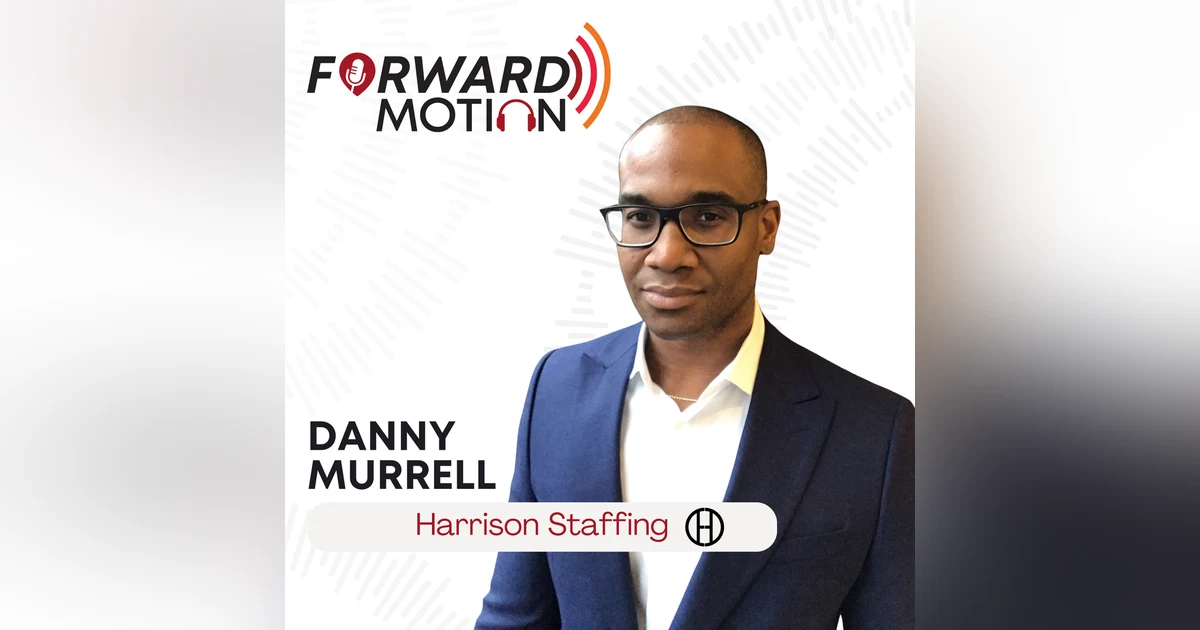
Danny Murrell and The Story Behind Hospitality Workers Appreciation Day


 RSS Feed
 We explore the origins and impact of Hospitality Workers Appreciation Day in Ontario through the story of Danny Murrell, founder and CEO of Harrison Staffing. Host Andrew Siegwart traces Danny’s journey from an international student at the University of Toronto—who stumbled into catering to pay the bills—to a purpose-driven entrepreneur building a people-first staffing company.
Danny shares how early frontline experiences in serving and janitorial work shaped his belief in dignity, respect, and genuine human connection at work. He explains Harrison Staffing’s model, centered on flexibility and opportunity for newcomers and international students, and how word-of-mouth and strong culture drive the business.
The episode then explores a simple question—“Why isn’t there a day to recognize hospitality workers?”— which led Danny to work with MPP Ernie Hardeman and secure unanimous support at Queen’s Park to formally establish Hospitality Workers Appreciation Day, celebrating the people who power Ontario’s tourism industry.
This episode was released on February 23 which is officially recognized as Hospitality Workers Appreciation Day, proclaimed through the Hospitality Workers Appreciation Day Act, 2025. This day honours over 426,700 workers in restaurants, hotels, and catering services.
See Privacy Policy at https://art19.com/privacy and California Privacy Notice at https://art19.com/privacy#do-not-sell-my-info.
Mary Anne Ivison 00:01
And this is forward motion discussions about the important topic shaping Ontario's tourism industry. Here's your host, Andrew sigwart, hi everyone.
Andrew Siegwart 00:10
Welcome back to forward motion, the Ontario tourism Podcast. Today we are diving deep into a story that's both heartfelt and historic, the origins of hospitality workers Appreciation Day in Ontario. This day now officially recognized every year, on February 23 celebrates the people who bring Ontario's Hospitality and Tourism experiences to life, from servers and chefs to hotel staff, events teams and so many more. With me today is Danny murell, founder and CEO of Harrison, staffing a company that started with the people first mission and has become a model for workforce development and empowerment in hospitality. Danny's leadership was central to the creation of this new day of recognition, and we're going to hear both his story and what this recognition means for the industry. Hi, Danny, thanks for joining us on forward motion. How are you?
Danny Murrell 00:58
I am doing well. Thank you very much for having me. It's a pleasure.
Andrew Siegwart 01:02
You have a very powerful personal story, including how your own journey in hospitality shaped the work you do today. Can you share with us and our listeners a bit about what brought you into hospitality at the very beginning?
Danny Murrell 01:14
It's going to go way back. In my mind, we're talking about, you know, more than two decades ago. So back story. I am from Burbank, born and raised. I was there until I was 18 years old. I did go to school with the goals of becoming a doctor. That was that thing for myself. All my childhood, with the goal of helping people. That's all I knew about it. And I just knew I wanted to help people. So then years went by and I ended up getting into University of Toronto. Big culture shock for myself, being an international student, coming from a very small country, very small class sizes to this massive city, many different types of people from all over the world. Quite an adjustment, I'll bet. Oh yeah, so I entered school with the best intentions. You know, I remember I was 18, going to 19. Then I discovered there was this alternate lifestyle other than school, called the social life, and I definitely indulge. And then, you know, I discovered what, what having a social life and being popular and going, you know, having lots of friends and things like that meant, but it came with its trade off, where school kind of took an island for myself, didn't do so well. That was definitely not in the plans, and then I just had to make some choices. So discovered that I need to work, I need to earn money in order to support my lifestyle. And that's when I fell into to serving, something I'd never done before. I had no idea about. Friend just told me, okay, there's this thing called catering, which you can just go into. So I called up the owner of the company, sent over my my very scant resume. At that time, I had no experience in anything, and she gave me a shot, go here. I'm a shit is going to be from four to 11 at this address, dress in all black. That's it. I'm like, Okay, what am I doing? She was, like, you'll find out, talking about jumping right into it. Yeah, it was, she was she was literally jumping right into it. So I went, and that's where my first day on the job in this temporary help agency role, catering, as we colloquially call it, was, and I was hooked from the first day. Hooked. Why? So it was not so much about the mechanics of the job, but I got to meet so many. I mean, I was into socializing at that point, and I get, got to meet so many people like myself and similar stories who are just trying to figure themselves out and make it and earn an honest dollar. That was the beginnings of all of it. That's how I all started in this in this industry. I can definitely relate to that experience when I was, you know, maybe a little more than 20 years, not much more. But when I started out, it was a similar experience for me. I mean, education was one thing, and I got started and on the path, but I really had a hunger to start earning money right away and and just starting to live my life, I was impatient, I think, and so I followed a very similar path as you, and took a break for a while and lived life and and tourism was a big part of my way To survive and to learn new skills. So I totally get it. I'm curious. I mean, how is your family? You go your way to school, to go to medical school, and then you arrive and you decide, I think I'm going to take a different path. Did they get it at first, or was it a challenge for them? They got it because I really was going to sell on it. So I gotta give the credit. I have such an amazing, supportive NewCo family, actually my extended family. They honestly did not give me her time. They let me make my choices in life. Was it my, you know, my late mother's best choice for her son, her first son, who, you know, who was doing so well in Barbados? No, I could tell not, but not one point did she kind of well see my decision or let me do that. And they were very supportive. Now they did not understand the world of serving either. It's not something that we were exposed to. Barbados, in my opinion, I was more into sports and school, that was it. So it was uncharted territory for myself. I just kept them updated as I could, and just assured them that I. Was, I mean, whenever people go away to school or move to a different country, I think some of it is career, but some of it is finding yourself and and self discovery, and sometimes those things are really critical to give you the foundation to become an entrepreneur and to find your pointing. So to speak, fast forward today. So you're a you're a business leader, and we'll talk about the the actual Harrison staffing in a bit. But just from those early beginnings to where you are today, or were there any lessons that you took from that early time when you were working in the front lines of caring and service that apply to running your business today? What kind of skills did you learn at that point that you really use today. I think there I could summarize. I learned so many skills, but not the technical skills of the job. But really it was about break just being a person, a human, a genuine person. And you know, you might hear people say that, but you know from my experience, it was that while I was on the floor, there was no ears or hidden mask that I could wear. It was just, Hey, my name is Danny. Doesn't matter where I'm from, doesn't matter what I'm studying. Nothing of that matters at the point I'm here to do a job. I'm here to work alongside you. Do you need help? Whether it was someone three times my age or a couple years younger than me, just being a person and a gendered person to them, and that human lesson stayed with Me all through every iteration I've done in this industry to where I am. It is something that I live day by day. Just see a person, even though I run the company, I don't see myself, honestly, any different. I'm not any different from them. I'm a step away from being a server. I say every day. I'm sure there are times when you step in and need to who are. So, you know the famous saying, you know, my clients, CVT on the side, and I'm not walking around you shaking hands. I'm in the I'm in the clearance station, you know, back there with the staff, helping them, assist in them. So it's just always keeping that humanity above myself and grounded in myself from from day one. I like what you're saying, because in the service industry, it is about people to people connection, and it's not just a transaction. So you clearly felt that from a very from your early beginnings, and it sounds like that's a big part of how you drive your business today. Absolutely something I imported imparting in the current team I have just being genuine with myself and then asking them to be genuine with themselves too. Just come to me in honesty and humanity, and I will give you the same thing back. There's nothing more than that. So I'm wondering now, let's go sort of somewhere in between. So I mean really sort of a human centered approach to service, to running a business, to working with employees. It almost sounds to me like perhaps you experienced some gaps in that, or could see that there was a need for that. So can you expand upon maybe what that gap was that you saw in in different service businesses, that maybe left an opening for you to fill with your philosophy and approach? You know, I've always been grateful for every opportunity. So this is like a school back is 2004 let's say five, six, soft that's when I really got my foot in in the industry. You know, besides serving, I also did janitorial roles. So I, you know, had to really put my hope there was, again, something brand new to me, but I and what I noticed and what I experienced, sometimes not directly onto myself, but see this happen to colleagues, and was a direct lack of respect, let's say ownership towards them, just not understanding them, or given the time to understand them, or the space or the forum to let them express themselves. It was very transactional. You know, you're here to do a job, that's it. They were not even sometimes accessible. And these are not owners of massive corporations, as we know too. They can be accessible if they choose to be. So then it really created this route, this rift between them. And you know what? I sometimes I did step in. I remember I just saw someone speaking not so well to to colleagues. This happened in both in the catering and both in the in the janitorial world. And I took it upon myself to speak up, because that person, being an immigrant, didn't have the didn't have the vocabulary or the grammar or the courage to speak up for themselves, but I did. So I was born too. And again, it's something that I've maintained in the companies I've started, and especially in Harrison's staffing.
Andrew Siegwart 09:17
That's wonderful. That's wonderful. Yeah, it's really important. I mean, who we are, our values, if they don't translate it to how we work, what's what's the point, right? And I would imagine that's probably something that attracts talent. People respond to that, right? Yeah, this is sort of leading us to to your business. Harrison staff thing. Maybe could you just walk us through, what's your business like? What do you services you provide? How do you attract talent?
Danny Murrell 09:40
It's a company I started back in 2018 not the first one I started. I had a different one, maybe about six years earlier. Had to close that one for various reasons, but landed onto Harrison. Had an old client of mine. One might just tell me, you need to restart. There's something missing in this industry, and I know you have it. You need to start back. So I did. And Harrison. It was born. It was named after my high school in Barbados, and that's a place where I had all of my ethics pumped into me all through my early years. And what Harrison is our technical term in Ontario, is a temporary health agency. Okay? Our core business is provided servers, bartenders and chefs, so front of house and back of house staff, two clients throughout interior. That's a core business with a number of staff that we need some time. Field on our busiest times is three, sometimes 300 per day. Oh, it's all working and then producing all all around. Then we service Toronto, Ottawa and certainly Montreal also, too. That's the core business with me. What Harrison stands for, what it's about is a people. Our business is a people. We are a people company. We see ourselves as a people company rather than a staff agency. We are a people company, and our core team is made up of newcomers and international students. Explain how this happened, what that demographic, how that became about. But our main skewing components are international people. And, yeah,
Andrew Siegwart 11:04
it's really quite special because it's, it's a part of your story. You're really building on your story and then creating opportunities for others who are our newcomers, and getting them to experience our industry, and all of those paths to growth. So it's really quite it's quite noble and really quite overwhelmed. Actually, it's, it's very important work, and I think right now, especially because there's been such a challenge in Canada as we've been dealing with and reacting to, sort of the changing shape of how immigration is talked about, and some of the changes to international students. We value our international students so much. It's such an important part of what makes tourism special, because we are a global country, and we're connected in so many ways. To me, when people choose to learn their skills in Canada from another country, I just see as such a it's such a gift. This is a great way to keep people engaged and successful. How has How has your business been adapting to some of those changes in those policies?
Danny Murrell 12:10
It has been challenging for more so for the worker I'm for us, we're able to and figure our business sense out, but for the persons that we deal with, absolutely has been challenging. It's been massive changes in their lifestyle and their ability to produce and to live. So if you cycle back out before covid, the industry was not that dominated by, let's say, international component. I were to put a measurement on it roughly about, say, less 20% I would say the other component was largely permanent residents or citizens and so on. After covid, that completely changed, one the influx of the changes in policy, which was very well known, there are many more international persons here able to treat, go to schools, so on, so forth. And that changed our whole demographic dramatically. There is not a high barrier of entry into our industry, thankfully, and we welcomed anyone and everyone. We also had quite a lot of demand after covid on the business end, so we had to find people and they were able to enter. Now, as you know, policies changed again for the reasons they had to Yes. So then the limitations came down, one on the persons here, the hardest thing that we saw that they had to adjust to is the limit of 24 hours per week work, which is tough if you were to do the mathematics on that what your potential is. But they still had to survive either two issues. So as before, those are the rules. So we we also had to abide by it and respect those rules, which we did, but it is tough to see change what they had to go through. Also, from our business end of things, it has made it harder, more challenging, to to recruitment, to have an influx of persons coming in when we opened up a spot in that category of workers. Now we don't see that. It's just a lot different, a lot quieter, naturally, because they're not that many persons coming in as before, and that's okay. That's okay. Have you done outreach with, you know, sort of domestic youth? I mean, it's interesting. Whenever I speak to policymakers, they usually say, you know, we have a youth unemployment. Is that a cohort that you've been trying to reach out to and engage with? So we try to engage on colleges and universities directly, whether it's tapping them, because that's that's our strongest component, the that that age bracket. So we try to reach out to them. Sometimes it can be challenging and get a response to so on so forth. Our biggest format of hiring is referrals, right? Rarely do you see us going on to job board and open a post, because we attract those who are actually not able to work. We get many persons applying from various parts of the province and like, it's not going to it's not feasible job for you. We heavily word of mouth through that, and that works fantastic for us. We are going to have to investigate other forms of hiring. We haven't quite pulled the trigger on those things yet, but in word of mouth, is it the biggest? A source for us. You know, it's so interesting. Conducted a recent interview with an organization that's just starting out. One of the things they were talking about was how important word of mouth is to connecting those communities. And it's interesting. There's so much technology around us and there's so many different systems, but I keep hearing about local networks, word of mouth, peer to peer, sharing. It's almost like the more technology we have, and the more access we have in this kind of like digital world, the more people are relying on those relationships that they have. It's like something you can more authentically trust, and hearing that mentioned in so many different places right now that's interesting. What comes down to you is that we were able to rely heavily on our culture. We have such a positive culture that that word of mouth works perfectly for us as a business and culture is our strategy. Talk to me about why folks would choose to come and work for Harrison staffing versus, you know, deciding to work for an organization directly, like what, what attracts people to come work for you, as opposed to working in one location, at for one employer, the flexibility, I said that the largest component of it for persons that exist in our industry, the shift work and being able to choose where they want, where they go, when they go, that is a high priority for them. It's a premium. Why? Why? I loved it. You know, I wasn't have to, I didn't have to be committed to, let's say it's standard nine to five at XYZ place. I would be able to say, Okay, I don't want to work today. I want to work today because many of them are students. Yes, naturally makes sense. They can tailor their work and their earnings around their college tuition, their times, their locations, even, and cover such a massive swath of clients that works with them. We have single mothers who are able to you know, I have daycare, my child has to be a day cure, or my babysitter is not able to support me at this time. But do you have shifts at this time? We do. So it works fantastic for everyone. It sounds like it's more it's more worker centered than it is business centered. So I'm getting a little bit detailed that when people are part of the team, do they literally, like go onto a system and just say, here's when I'm available. Yep, they tell us there's, you know, we don't have any obligations on them. You must go to work at this time, and all you paint the picture for me. I My job as the owner of the company is to source as many appropriate clients as we can, to provide you with many ship opportunities as we can. Based on that, what you tell me you can work, then I build your schedule for you. You say it works for me, and then off you go. That's it. You built a nice bridge to talk about employers and businesses. So what type of organizations do you tend to bring on board, or is it more event type driven engagements? Or do you work with, you know, restaurants and other other service providers that rely on your talent team, maybe when they have lulls or when they need more support. Is it a mix? It's a mix. Now it's always been. This industry has always been catered, driven, caterer driven. So the large catering companies, their workforce is largely supplemented by companies like Harrison staff and but we have a let's say 60 or 50% are caterers, and about maybe 30% are corporate clients, where they have an internal operation, a kitchen, let's say, and you know, they need service staff throughout the day. They come to us directly, business to business. We have also private clients, many homeowners. They're having private gatherings, so on, so forth. That's a small percentage of it, but growing now. When it comes to restaurants, specifically, it's also small component. We do support some it's morally largely larger in the backup house support, gotcha dish lectures, that level of support, I find it. I think it's tougher for them to come to us in terms of servers, because got another menu. It's quite challenging to learn a menu in a day and to really good because level of service that's required. We have done it sometimes, but more on the back of how support is where we find that demand for restaurants, and we know there's so much demand there, yes, there's got to be an opportunity in in this scenario, where as people who work in your in your organization, over time, they must become quite skilled, because you're going to get experience different styles, different types of events, different kitchens, different environments, different processes. So I would imagine like, do you see that? Do you see that kind of 100%
Danny Murrell 19:34
so they become addictions in what they do, because their job is literally walking in, sometimes through an empty space, and then constructed the event from start based on stack of papers or digital papers. So let's say our leadership. We call them service coordinators. We moved away from the term supervisors, more service coordinators, because they're coordinating service team. They are absolute gems and masters at what they do. Take that pack. Edge, and they just execute an entire wedding from an empty hall four walls, take a pack of rentals, construct it all, follow the guidelines and execute a beautiful event from start to finish. And you do see that evolution of them from day one, where they walk in, they can't hold a tray. Some of them can even hold two trays. Some of them move from not even being able to hold two places, sometimes hold in four plates, and just that skill set develops quite rapidly, because every day is different. In our industry, it's not the same. I worked in banqueting and catering for many, many years in hotels, and there was nothing I loved more than I used to do a lot of setups, like in the night shift, and I would do a lot of setups for like weddings and big events. And I loved that moment when it was all done and all set up, but no one was there yet, and it just everything looked perfect. It was my favorite. And to this day, it's really funny, I am the person when my family does their big holiday Christmas party or with everyone coming over. I'm the person that leads setting the table and folding the napkins and putting all the cutlery out, because I know how to do it right, like, I can fold many napkins, many different ways, and it's a skill that, you know, I use to this day in different ways. So yes, are you like that based on your background, or do you bring all that into your sort of, like, personal life? Definitely AM. I mean, I ever go to a restaurant, I'm the one taking everything I see there, just making sure it making sure it's set perfectly in line with the chair is a good thing. That attention to detail. It's very huge in yours. And yeah, we pride ourselves on that for sure. And it's you respect it when you see it out in the marketplace, don't you? Yes.
Danny Murrell 21:41
How do people grow in their careers in your organization? Like, is there, are there pathways for people to move to leadership roles? I would imagine there's a spectrum of people in their how their career paths go through your organization. So maybe talk to us about some of the different paths you've seen. Well, you know, being, being very student centric. At this point, we have students from every walk of education come into to us, those in hospitality, in particular, they're able to to move on to whatever it is they're studying. Now, it's hard to kind of call means or career paths at this point, but let's just say all career paths honestly, they come to you and they thrive. The biggest part with thriving in your career chosen career, is that while you're pursuing that career, your life is stable, yes. So whatever it is, they're able to hit that goal because they're able to navigate all the tricks and paths of life, earn ins, especially commonly leading towards that end goal. Now internally in Harrison, we are always trying to innovate. What can we offer? What else can we do to validate their experience well with us. So when I was on the floor, it was just Cqp, server, bartender or supervisor. We coined the term service coordinator. But we're always trying to think of, what else can we do differently? This year, I'm toying with leadership positions on the floor as we're growing so larger, I can't be everywhere, my eyes and ears. So just empowering staff to not just be there, leading the teams, but to be coaching people on the floor. We're trying to develop roles for that, to give them the opportunities to do that. We have administrative roles that we're trying to innovate, to give them a chance in the office. We're doing internships, whatever we can do to not let me eat it, as small as it may be, as large as it can be, is something that we can do. We're always trying to think of that. So you worked with NPP Ernie Hardiman and others to bring forward what is now officially a hospitality workers Appreciation Day in Ontario. Congratulations, by the way. It was quite an achievement. Thank you. We were really thrilled to see this come together and to see how much support there was for it. Walk us through how that idea took shape, took shape from a casual conversation, just feeling that okay again, what can we do? What more can we do? What more can we bring to the table for not the business, but for the people, the people here, and, you know, think of it in Harrison, we brainstorm, and then we realize, is there a day of recognition in the province? And we did our research, and there was not, and it was just more of a shock, like really, because you just hear of all these different days, you know, your casual life, and you might hear about it existing in the States or, you know, other other markets, but didn't this is Ontario. The next question was, how do we do this? Would this even go forward? You know? So we did our research again, and would it really needed to be a grassroots akin on the political end of things, because, you know, to be formally recognized, you need support. Yes. So got our boots on and lots of different meetings across all party lines. And initially my approach was to really bring awareness to one this industry that I exist in and what we do. It was very curious to learn that many people did not know that companies that Harrison existed or what they were i. In the political sphere. When they did, they were very supportive of it. They were like, Wow, what a really interesting model you have. And I never thought about that server, that Sherpa, he served with champagne last night where he came from. I just assumed he worked there. That was the initial approach we had. Then we took it a step further and said, Wouldn't it be awesome to recognize those persons. Just that simple question, that's all. It was very, very honest approach to it. And the eyes lit up. I went, Yes, of course, you know, of course, it would be amazing to do that. It was that was that simple of a question, and we got support everyone. It was just an unanimous support. Now, when we approach MPT hat or Hadrian, we had to find someone to take it to the highest top of everything to really use, get that private member's bill passed and an emotion for us. And he was able to do that. He was a true partner from day number one, and he was a champion, and delivered, delivered that win for us, unanimous support. I was there when the second reading happened. That was chills moment for myself, just seeing everything culminate. Now it's it's law, I say so the day that's going to be recognized annually, for all workers in Ontario, every server, every bartender, every chef, every dishwasher, so on and so forth, has a day that legitimizes what they do on a day to day. And there are many different organizations that work for years and years with members of Provincial Parliament to explore private members bills, and they take a long time. This was very fast. This is very impressive work. Should be very proud of yourself. It's it's a big achievement. Thank you. What do you think it was about? MPP Hardeman, that what resonated with him, he is just such a genuine human being. You know, I was a bit nervous, you know, entering his office just thinking, Oh, he's not gonna want to put him down. I'm just too Junior for him. But no, he really did listen to me. He did generally sit there and entertain everything I had to say. And what it was was that he just understood that human connection that I was trying to convey, just all I wanted to achieve was recognition. There was no ulterior motive. There was no business motive. There was nothing attached to it. Barely talked with Harrison for a couple seconds because I just told him, Listen, people just need to be recognized. Do you agree? Yes, that was said. We said, Well, this sounds pretty simple this, you know, it's just sounds something really genuine. Who's not going to want to do this. We want to recognize people, you know, something that's nice. You know, everything that's going wrong in the world, like do something nice. And it was just really about that, and you just ran with it, you know, I think it's also another indication of the support that the provincial government here in Ontario, they really have chosen to invest in tourism and to put it on the map, the province operates many, many tourism platforms that they're investing in, destinations like Niagara there, you know, the Ontario Place. They operate a number of cultural institutions themselves. They understand that tourism is a big part of our economic growth. And I think their willingness to partner with yourself, to recognize the people who power this industry, is really meaningful. And I think for for, you know, organizations like ours, you know, we were very happy to write a letter of support to be there when the when the second reading took place, and we feel the same, we feel like it really, really aligns with what we're all trying to achieve, to raise awareness and to and to just give, give the kudos to those people who who do so much to support our communities, right, right? What role did your personal experience play in championing this i guess i I can't help but feel that this is, is a mission for you. You know, how did it feel personally when you when you saw that you got unanimous support across the whole the whole political spectrum for this, there were there were tears, tears of joy, tears of realizing that that 20 plus years of certain plates, vibrant tables, plugging my co workers just going, we are working 5am working to 2am that was we were being recognized all those people that I encountered, everyone from all my job to when I've gone to restaurants and I've interacted with servers and, you know, bartenders at different places, we're All just being recognized and finally being in champions, and it brings a dignity, yes to what we're doing. And from that dignity so much work and flow, it's a it's a foundation and a building block. Yes creates a pride, pride in pride in when you do, pride in your industry, and to know that hospitality is valued from the top. From the top, it's just that now we have this blank canvas to create within the province and to really elevate this more and more annually, and it gives foundation for investigating. You know, how can we further enhance the experience of the hospitality worker? Be it wages, be it different laws, support systems? What can. Do next. It really did create that wild moment. This is real and it's valued, and the dignity is now where it is deserves to be absolutely Well, I think it's also really important. You know, at a time when we are seeing a lot of our post secondary programs canceled or put on pause, when we've seen this, these sort of dramatic swings in things like international students, moves like this, are important to send a message that this industry matters, that our people matter, and then we need policies that can help continue to drive this growth, because it's not only about the businesses being successful, but it's about the careers of everyone who works in our sector and what their futures look like. That's correct. How did your team react to this when it was finalized? What feedback did you hear back back in the office from the team? It was, it was a definitely pride, definitely a proud moment, and more of a can't believe is that real? You know, did this actually happen? How did you do this? How many just I just spoke, I just spoke about you guys. I honestly just spoke about you to whatever political door was open to me. I told your stories, and that was required, because your stories are real, they're valid, they're powerful. And there was no business, business motive here, it was just human motive to speak your names in those halls and speak what you do every day and what I see you do, and that resonated with them, and just a general pride of like, oh, you know we're
Danny Murrell 31:35
seeing, yeah, we're seeing absolutely and I also think that it sets your organization, the culture that you have cultivated within your organization. I mean, you can see that the values that you are bringing to your work and that stands for something, and I would imagine that that does attract people who are looking for that kind of culture. So it's part of it. I think it definitely is, tell me for businesses right now. I mean whether you are, whether you're a business like yourselves or yourself, or whether you're an independent tourism operator. How would you suggest people think about leveraging this new day, new recruitment efforts like, what would you do? What are you thinking of doing now as a business to leverage it to to anyone who, I mean, the day is real. Okay, it's here. If you have workers connect with them. You know, it might be that simple. If some someone say, Okay, what do I ask them? Just ask them. You know, how's your experience been here? Is there anything I can do better for you? Are you happy? Straight questions. Nothing more than that. And listen to them, understand them, and most of all, genuinely respect them. Genuinely respect them. To take it further, partner, just speak to your local MPP if there are any concerns that you're experiencing. It really just take a knock on the door. That's all it took for me. I didn't do anything special, anything you know, supernatural. I just brought my concern and what I saw an opportunity I saw, and it was, it was listened to, just be brave enough and just go bad for them. Go, be that champion for your workers. They're doing it being a champion for you every day. Just do it for them. Simple initiatives that we do. I mean, if you go to our Instagram and see that we highlight our staff heavily, our workforce, their face is our Instagram alone. There's hardly anything about serving a plate. There hardly a post. I think there's one post about me, maybe in all three years of existence, something because I'm not, I'm not Harrison. The Harrison are the workforce that is up there day after day, and we turn them now hospitality heroes, small initiatives. We highlight them who they are, and that schools that just builds our culture so strong when we put the focus on them, the lens on them, wonderful. And I like the idea of, you, know, talking to your local MPP, and even if it isn't with an ask, but just to educate them. Did you know that we operate in your community? Did you know that we hire and support X number of jobs, and this is what doing every day in the community. It does matter. We talked a lot about big achievements, having this hospitality workers Appreciation Day. We've talked about some challenges in the industry, the the current approach around international students and immigration and others. Tell me what inspires you most about the future of hospitality in Ontario as you kind of look to the next horizon, what excites me? Excites me is what I see here, you know, day after day, just the increase in, you know, for our business, increase in demand we're experiencing. It's a sign, and it's a sign that can be mirrored in many industries, because we support many industries, um, so there's a demand for, for for what we do, for the the work that we bring to the table. It's exciting to see it coming back. You know, covid was a very tough time for us all, especially in the hospitality industry, especially um, so to see the momentum starting to build slowly. Excited, and then with this big, huge, legitimate, legitimate step forward of recognition from the province, it does signal that there's validity in this industry in Ontario. And we're excited to see how far we can take this. You know, can champion for more ethical employment, fair compensation, leadership, development, mentorship, the list goes on. Now the door seems to be it feels open. It is open in the highest halls, and we will be pushing things forward in support of everyone that can bring this concern our problem. The ears are open now very well said. We work with a lot of entrepreneurs in tourism. So much of our industry is small business. One of the things that I know about our our members at Taio across the province, is days are long, challenges are always there, opportunities are always there. It's fast paced, it's all that's all encompassing. But I'm wondering, do you still have that sense of adventure that you had in your early days. Now that you're an entrepreneur running this business, how do you take care of yourself so that you could take care of your business? Oh, yeah. So that's just one of the biggest personal challenges I've been I've been dealing with for years and years and years, and always the ball of in Canvas that probably handle it. You know, my 20s, it was more in my early 30s, more of a I was put in the gym and doing these things to keep myself, you know, physically, mentally there. I still do so, but I had more of a, I mean, I value my quiet time. I've learned to value time to pull myself back, because the more my mind is sound, my heart is at peace, the more I can serve, you know my team, and be there for them. And it's like having an open ear to persons. People see you. They see how you are. They see if you're doing well, if you need they advise you, and just being humble enough to listen to that guidance, whether it's from your floor staff, if they see you and they say, Oh, you look tired, listen to them. Not only you can tell them that they look tired or so as a fork, they have the right to kind of advise you to be human. It's all about the human connection, right? That's right. So just being able to take that advice and just the ears open and to respect the time that I need for myself. You know, it's hard. It's definitely being an entrepreneur. My industry, it's quite demanding, because every day is different. It's honestly a 24 hour, a 24 hour operation that I now run. Yeah, I lean on my team, and I learn to respect myself my time, and that's the only way I can give back. I think you have cultivated quite a formula of success, really, stemming from some of your very early experiences, but I can see how you're paying forward your learnings and amplifying that experience to others and through others. And you know, the proof is in the pudding. Look at what you were able to achieve in terms of the hospitality workers Appreciation Day. And just, you know, it's, it's such a win, I think it it shows that what's in your heart is leading your organization. And I also really encourage listeners to take a look at Harrison staffing. I think you can provide an opportunity for many different businesses that might be experiencing staffing challenges. And I like your people centered approach and worker demand driven approach. I feel like that's an innovation that is a longtime company. So congratulations and thanks for sharing your personal experience with us, and thanks for taking this on and making it happen. You know there are hundreds of 1000s of people across Ontario that work in tourism who are going to benefit from this recognition, and on behalf of all of them, thank you. Thank you also. And pleasure is mine, and I'm there to support and keep doing whatever I can in service of others. How can people find you? So you can find us on our website? Staff, Harrison calm, easiest place is Instagram. We are at. Harrison, staff, in is our handle on Instagram. Find us there. And easy to reach me, just send a message, I'm there.
Mary Anne Ivison 38:59
Thanks for listening to forward motion. This show is created by the tourism industry association of Ontario and is recognized by government as the voice of tourism and produced by everyone at the sound off media company. You.


