Shore Lunch, Shared Lakes, Unequal Playing Field: Fixing Cross-Border Angling Policy


 RSS Feed
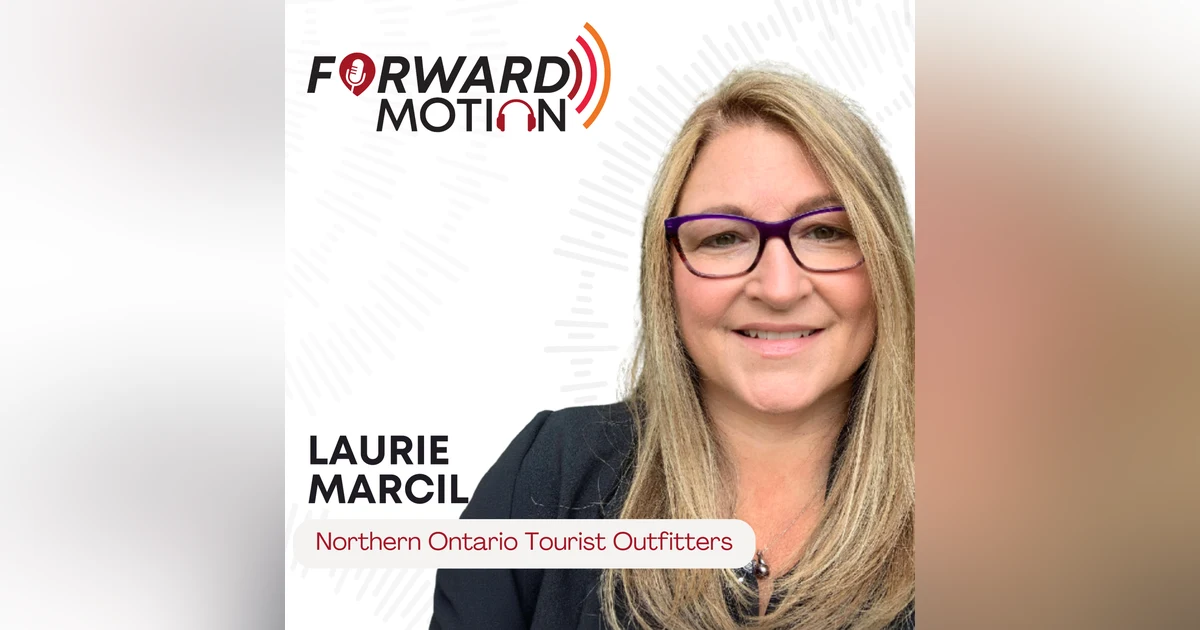
 This episode of Forward Motion dives into a growing challenge I’ve been hearing more and more about from operators in Northwestern Ontario. I speak with Laurie Marcil, Executive Director of the Northern Ontario Tourist Outfitters Association, about how U.S. angling guides are increasingly bringing clients deep into Canadian border waters—profiting from a “Canadian experience” while contributing almost nothing to local communities or tax bases.
Laurie explains how LMIA‑exempt work permits, bigger boats, and changes in border practices have created economic inequities, border security gaps, and serious conservation concerns for fisheries on Lake of the Woods and the Rainy River. We talk about invasive species risks, lack of data and oversight, and why local outfitters, First Nations, municipalities, and other partners have formed a coalition to push for policy change, better enforcement, and true reciprocity with the U.S.
We also explore what makes Northern Ontario tourism special: remote fly‑in and train‑in lodges, iconic shore lunches, authentic hosting, and emerging trends like more family and couple getaways grounded in sustainability and genuine connection to place.
Forward Motion thanks its partners for their support of this show:
Ontario Travel & Tourism Monthly
See Privacy Policy at https://art19.com/privacy and California Privacy Notice at https://art19.com/privacy#do-not-sell-my-info.
Mary Anne Ivison 00:01
This is forward motion discussions about the important topic shaping Ontario's tourism industry. Here's your host, Andrew sigwart,
Andrew Siegwart 00:09
joining me today is Laurie marsil, executive director of the Northern Ontario tourist outfitters Association. We explore a growing challenge facing Northern Ontario tourism operators, from cross border angling activity to enforcement gaps and federal policy barriers. This conversation unpacks the real impacts on business communities and the sustainability of Ontario's fisheries and what needs to happen next. And Laurie also teaches me a few things about angling, including what a jig is, and she explores the iconic shore lunch.
Andrew Siegwart 00:46
Hi Lori, thanks for joining us. Thanks for having me. So I'm excited. Yeah, it's really good to see you, and thanks for all of the work that you do with us and all the collaboration.
Laurie Marcil 00:57
I always love working with you and the team. Thanks so much, Andrew, and it's you're working with you guys too. Let's jump right into the issue we wanted to explore today, something that's been gaining quite a bit of attention across Northern Ontario. And for those who are listening and might not be familiar, can you walk us through what's happening in our border waters right now, and why has this become such a concern for operators in communities? Absolutely so in Northwestern Ontario, and I'm talking at the end of Northwestern Ontario, right at the Manitoba border, and in the corner, where we also border the United States. So Minnesota, there are waterways that are shared by both countries,
Speaker 1 01:37
and in these cases, we're seeing a high number, higher number every year, of us angling guides. So these are angling guides that work for resorts or work for themselves in the United States, that are bringing their clients into Canadian waters, which is fine, but they're bringing more and more of them, and they are traveling further into Canadian water. So on Lake of the Woods and on rain River, they're spending a whole lot of time on the Canadian side of those waterways, and they're bringing guests from the US into Canada. And the way that they're doing it now is a little different than how they have been in the past. It used to be the guide would be in the boat with the clients. Now they've got a lead boat, and they've got four boats following them, full of American gas. Oh, I so it's, it's really building. And you can tell that it's very it's been very profitable for them. You can see the buildup of resorts and the buildup of hotels just on the US side the shore, on the US side, and we're seeing a steady decline in people using, you know, coming up from the States, and using our hotels and using our lodges along those waterways. So that's where the concern sort of lies, but it's a very complicated, as you're going to learn. It's kind of a complicated issue
Andrew Siegwart 03:04
very Yeah, let's, let's dig into that a bit more so the Help me understand the guides that are the US Space guides who are bringing visitors into the Canadian waters. How are they able to do that? Are they? Are they receiving work permits?
Speaker 1 03:25
They certainly are. And they're LMIA exempt work permits, so they don't have to go through any kind of, you know, all of the work that it normally takes to get a work permit to come and work in Canada. And so there's, there's an agreement dating back to 1909 where it's a reciprocal agreement for both countries to it's acknowledging the economic benefits of fisheries. It's, you know, looking at here we are, let's be partners. You know, we're sharing this waterway. Let's both benefit from it. However, when it comes to a Canadian angling guide who wants to work on the US side. We're not granted the work permits. So we haven't, I haven't run into anyone. I haven't heard of anyone who has been able to successfully obtain a US work permit to guide anglers on the US side of the water. So it's not a reciprocal agreement. They pay, you know, a minimal amount for their work permit, and they're able to run an entire business and profit off of people. And they, you know, they're advertising that it's a Canadian experience,
Andrew Siegwart 04:32
but it's really not, is
Speaker 1 04:33
it really not a Canadian experience, not to our standards. Anyway,
Andrew Siegwart 04:37
I would imagine,
Speaker 1 04:38
oh, that's how
Andrew Siegwart 04:40
I would imagine this must be quite a tough pill to swallow for all of your members on the Canadian side, you know, I mean, here we are listening to some of the major tariffs that have been applied to many of our sectors, and putting a lot of our. Our industries in harm's way, and here we have a loophole where we are providing work permits to business operators and employees to come into Canadian waters build business while we stand by and watch it all happen. That's got to be
Andrew Siegwart 05:15
frustrating.
Andrew Siegwart 05:16
Your members
Speaker 1 05:18
absolutely are not dropping a dime. They are not spending any money here. They are not paying Canadian taxes. They're the only thing they have to do, really, is buy their work permit, right? The other thing, the only thing their guests have to do, is buy a fishing license. That's
Speaker 2 05:35
all the money that is being brought back into the country. That's it. And it's not right?
Andrew Siegwart 05:40
No, no, I can definitely see that point of view. Tell me what are you seeing on the ground. How frequently is it happening, and maybe, how has this evolved over the last little while? Like, has this been a slow build, or has it really reached? Has it like, peaked for any particular reason of late?
Speaker 1 05:58
I don't, I'm not sure. I mean, I think that. I certainly think the pandemic helps throw on more people that thought, well, I can, I don't have to travel to another country. I can just stay here, but I can still experience the, have the comedian experience. There's also some changes around border crossings that have come up that if you have a DUI, if you have a any kind of criminality. But let's talk about DUIs. That's considered a felony in Canada. It's not in the US. So we used to be able to see advertisements. They figured out what we saw them, and they expect them down. But it was you're not admissible to Canada, and you still want to get that Canadian fishing experience. Come with us. We'll take you and they because they don't have to check in at any border crossing, I guess. So, you know, there's those, those kinds of things are really, I think that's something new that we're seeing more and more of. Also, we noticed a couple of years ago that boats were getting bigger and motors were getting larger so that they could travel further into those Canadian waters. Now we're seeing they're bringing slips of boats, you know, filled with filled with clients that and they're bringing them. So there definitely has been a change. It feels much more intrusive. We know that they are. Everybody is just waiting for that season opener for either muskie or walleye or, you know, they're just like you could just feel the tension that they can't wait, and that's a wonderful thing, but we want to have them experience it on the Canadian side. So, you know, those are things that we've noted in the last little bit. I think those things are getting are raising more and more kind of alarm bells and concerns that we kind of need to nip this everybody under the underlying thing is here, we're worried about the fishery as well,
Andrew Siegwart 07:44
for sure. For sure. Yeah. I mean, there's a couple of dynamics, right? There's economic, border security, conservation, etc. Let's, let's start with the economic so if we, if these operators are bringing clients into Canadian waters, that means they're not necessarily coming through Canada, staying on our side of the border. You know what's at stake for the outdoor adventure guides, the angling outfitters like what's at stake for them in terms of their businesses? Are they seeing declines right now? Are there? Are they concerned?
Speaker 1 08:12
Yes, they absolutely are seeing declines. I would like to say, though, before we get into that little bit, is that it's important to note that those American angling guys that have these work permits. Those work permits are specific. They cannot dock their boat. They cannot stop so they can't even bring people. They can't even help us a little bit. They can't bring their guests in to have lunch, you know, or buy gas here, or buy bait, which is a concern, you know, all of those things. So they can't even contribute if they wanted to,
Andrew Siegwart 08:45
right,
Speaker 1 08:46
based on the type of work permit it is. So yes, absolutely. All those boats on the water going by, and none of them actually coming and stopping to get anything, it's definitely hurt. I know that our operators that are on on Lake of the Woods, on Rainy River are definitely feeling the pinch. They're, you know, basically on Rainy River, you can actually see the, just about see the other side so you can, you can see the guests coming over, you know, almost, almost coming to the end of your dock and saying, Hey, Tom, how are you doing this year, you know, and it's, this was a former guest, you know. So it's definitely working. People, the economic pains are definitely there. We're hoping to kind of nip this so that it doesn't go any further. But we're seeing in places like emo and places like, you know, right down the lower part of the Lake of the Woods, they're definitely feeling the pinch, and that means that so are the local shops, the suppliers that they use, you know, the employees they may not be able to hire, all of that. I mean, it's compounding, right?
Andrew Siegwart 09:53
That increased volume of visitors coming into Canadian waters from us resorts means that we're not the. You don't have those overnight stays on top of that, so the overnight stays aren't happening, then all the additional spend, et cetera, and then you couple that with the ability to fish on Canadian waters without having to cross a land border, you can see how the incentive is there. It's like from a consumer perspective, it feels frictionless, but you know, that might be a short lived thing if it's not managed properly. So let's talk about the border security and sustainability. So there's clearly a challenge on border security. Walk us through that. What? What is this? Tell us a little more about how this is happening and why.
Speaker 1 10:33
So I think, you know, we've had reports from our members and from people in the communities like we're also working with the municipalities and the First Nations on this, because they're feeling the pinch as well, and they're very concerned about the fishery. And I think you know, what we're hearing is that they are, in fact, stopping for shore lunch. They are meeting up with other boats, and there's been some activities that our operators have seen on the water that has them concerned. For instance, you know, you've got the boat with the angling guide and his clients. You've got a float plane that comes down and comes right to the boat, something is given, something is taken, and then they part ways, you know. And who knows? Who knows who they are, what they're bringing. There's been other scenarios where the boats come across and pluck something out of the water and put it in their boat and made their way back. So, oh, wow, there's just a real gap there, I think, because we haven't really paid attention to it, people are feeling a little loosey goosey. They're feeling like, oh, you know, nobody's watching. Nobody's watching. So, you know, if they're, if they're attempting to do a shore lunch, or if they're, you know, that op, that guide that came in with four boats following him, and they're all mooring together. They're all tying the boats together. That's not even allowed under the permit, but they're still doing it. So, you know, I think it just begs the question, what are we leaving ourselves open for in that situation? It's not then just about the fishing might be a little bit something else. So I think that's the kind of stuff that, this kind of scenarios that we're sharing with government right now, yeah,
Andrew Siegwart 12:26
to just raise awareness, right and no doubt, in the, you know, in the ecosystem, in the media, you know, we're hearing as it relates to the trade war between Canada and the US, we've heard that that narrative around reinforcing the border, or the Americans claiming that the Canadian border isn't well maintained, or that there's, you know, fentanyl coming through. And imagine, for operators who are out there seeing these sorts of things happen, it must be frustrating, right? Like here, here we are having to hear this narrative from you, and yet there's clearly, or not clearly, but there's likely something going on that they can see with their eyes, right?
Speaker 1 13:03
Yeah, I guess it's just been an open system on that walk on those waterways for so long that people are just comfortable, right? And when we get comfortable, other folks can come in and take advantage of that. And I think I just we don't want to see that happen.
Andrew Siegwart 13:20
Talk about the concerns as it relates to the like the long term sustainery of the fisheries. So there's a conservation angle here too, right? If you've got that large, those, those large outfits coming and with not enough oversight, are there concerns about overfishing or other environmental impacts?
Speaker 1 13:39
There absolutely are. I think one of the big things is, if they don't check in at the border crossing, then no one is checking to see that their boat is clear of any invasive species. We're promoting that clean boat, clean dry boat. Also there are live bait is prohibited in Ontario to cross like to come into Ontario, so nobody's checking that stuff out. They're not stopping for bait on this side, unless they're just using jigs and lures. What are they using? So there could be an introduction to the leases species that way, which does seriously impact the fishery. I think there's lots of studies to show that, and there's already zebra mussels hitting some of our northern, Northwestern lakes. So, you know, it's not allowing us to watch these kinds of things. So there's that piece, and then there's the fisheries. Like fishing regulations, I don't want to sound like I think, like that, these folks are meaningfully doing something wrong. You know, they buy their fishing license. That's great. They've got the they know the ranks. But who's to say that if they're already advertising to folks that are you know may not otherwise be admissible to Canada? You know? Who knows you. But they could be coming not once, but twice a day, and getting their limit right. So we just don't have the checks and balances. And recently, Lake of the Woods has gone through an entire new process of fisheries management, a review, they came up with new regulations. But that's it's almost like we don't. And when they go through those reviews, they look at the numbers, they look at the resident, non resident fishing, they look at First Nation use. But it's like this, we can't really track that. You know, there's just no real way to make sure that that we're counting those when we're looking at the fishery. So I think those are some of the areas around our concerns about the fish being able to have the fishery remain sustainable.
Andrew Siegwart 15:51
Yeah, no, that makes a lot of sense, because at the end of the day, it's all about the data, and you need the data and the numbers to be able to plan and assess so that makes sense to me. I know you work very closely with there are many owners and operators in the US that also operate in northern Ontario. So I know your perspective, again, it's not about individuals, it's about policy. And are there differences in the types of regulations, say, between Ontario and Minnesota that are changing as well. Like I know, in the in the in the US, there seems to be a pulling back on conservation measures and environmental measures. Is that something that's a concern when you're looking at a shared resource across borders?
Speaker 1 16:33
Absolutely. However, I did hear recently that Minnesota is looking at changing the regulations on on the border waters, on, from their perspective, that I don't know exactly what it is yet, so I'd have to, I'm not really sure exactly what they're doing, but I do believe it's a better that a, you know, we're going to just back off and let the fish do what the fish do. So I think it is better. I just don't know exactly what it is, you would think, though, and I, I thought I was, when I came into this issue, I thought, well, there must be a joint I was sure there was a joint group that managed the fishery together. On both sides, they could agree that this was going to be the limits and the, you know, whether there was going to be a slot size or a daily limit or, you know, that sort of thing. I haven't seen anything. Guess I was wrong
Andrew Siegwart 17:26
that me, you know, is, does it exist? Is there an opportunity there? Who knows i I am seeing a lot of different regions. It's really fascinating to me. And I think people don't realize this. How many areas in Ontario we we work cross border in such an integrated way. This is another example, like Northwestern Ontario Lake of the Woods, you have a somewhat of an integrated economy there and landscape. And so thinking about these integration points, and what you're doing, which I think is really important, is you're highlighting where there are gaps and potential and equity inequities and potential security risks that we really need to be thinking about. I know you've been very actively engaged with different levels of government. You're getting some progress at the provincial level for some collaboration, so maybe give us a sense of of what, who's come forward to help so far, and what, what are you seeing as some next steps?
Speaker 1 18:17
Definitely, Minister Harris from Natural Resources has been very engaged. So have the district offices all along like in the impacted area, and I think they have assured us that they're working with not only their enforcement branch, but they're going to work with the opp and potentially our CMP to do sort of blitzes or to do more monitoring of the area. We've given them a map of pinch points where we we've seen that the operators have seen a lot of of activity and different we've even given them different times of year, different fish species season openers, that would be good to have a presence on the water. Minister Harris is has offered, he's got some other ideas around, you know, using, you know, some other, some other, maybe technology to try to help, you know, monitor that better for a time, to see what they're seeing. Because really, it's just an understanding. It's important to have his interest in it, because the districts and the enforcement branch only have so much, so many people and so much time and so much money. So having him, you know, supporting this is really important. You know, that means that they'll have a little, I think that they're going to have a little bit more flexibility. The opp detachment that we met with is feeling the same kind of pinches the budgetary constraints. But they're, you know, very much interested in in coordinating efforts within MMR. Enforcement. So that's really good to hear. To be honest, we haven't heard a whole lot from the federal side, which is, it's it's basic, it's agony, really is what it is. It's very frustrating, because we've gone to immigration, we've gone to public safety, we've gone we've even gone to defense, we've gone to the DFO, like, Department of Fisheries and Oceans. They, they're, they actually did respond. They did a presentation for us, and that's how we learned about the zebra mussels coming, you know, being a problem. So,
Andrew Siegwart 20:41
with respect to immigration, you're asking for some clarity and follow up on those work permits, I would imagine, like, how, how can we not be revisiting this at this stage, given what's happening within our trade relationship and what's coming forward, right?
Speaker 1 20:55
Absolutely. And I think you know, on the federal side, we originally asked for there was a permit called the remote area border crossing permit, and that allowed for people who were going to enter Canada in an area that was remote and not near a border crossing. They could fill out that permit ahead of time, and their admissibility would be checked, and they would be given this permit and they were able to use land like, I'm thinking of, like Quetico Park, and right along the border, right so we had originally asked if that permit could be used for these folks that were coming in by water and maybe not touching land, or could we let them Touch land so they could at least spend money here. But the response to that was, No, we're actually getting rid of it. So as of this September, there will be no more remote area border crossings for permits allowed. They are increasing the number of remote like phone in locations. So you'd come across the border, you'd have to find one of these sort of remote sites where they have, like a phone booth, and you pick up the phone and you say, I'm here, and this is my who I am. They give your credentials, and they would mark you down as in the country, and and away you go, you know, for whatever purpose you said you were here for we thought, okay, well, then maybe we could have some of these, I don't know, on the water, like we have
Andrew Siegwart 22:27
floating phones,
Speaker 1 22:28
floating phone. Can we put them on an island, you know? And there are stuff. There is one on, I think it's Sandy light. So anyway, it was just, it was they did the opposite of what we wanted. It made it more complicated, and they had to spend way more money doing it. So it was a little,
Andrew Siegwart 22:47
I wonder what the rationale is to go with landlines or some sort of cellular phone network instead of an online platform that I wonder, maybe it's internet connectivity or something. It's it's interesting. So tell me, what are so what are you asking? So what are your key asks of the federal government right now? Like you know, if this were to, if you were to find the right resolution, what would it look like?
Speaker 1 23:12
Well, it would be no longer issuing those work permit, having everyone have to check in at a border crossing, whether it's I, it doesn't matter whether it's by Internet, whether it's by, you know, could be online, could be phone. It just has to, it has to be somewhere. Now, ideally, in this situation, it would be in person, because then the boat could get checked. They get the like right now, those people coming in don't have any idea that we don't take live bait like they may, if they look it up, right? But there's lots of messaging that our border officials give that help people have a good, smooth trip within Canada, they're not getting that help, right? So I think we really don't think that it's fair that they don't have to check in at a border crossing. Everybody else does.
Andrew Siegwart 24:13
Yeah, that is that is a logical ask on a number of fronts, competitiveness, security and safety to be able to get more data to mA to monitor. Are you asking for the ability to capture angling data to to help better understand the the impact on fisheries?
Speaker 1 24:34
We haven't yet. We haven't done that, but we're hoping that the additional enforcement on the water, the additional presence there will help us gather that, because they're always taking that information right. But I think, you know, with a work permit, I think it's really important that we emphasize that either they have to be affiliated with a company here in Canada, or they don't get a work permit right, like it's just, there's no it. It's that loss of economic return on a very valuable fishery
Andrew Siegwart 25:07
well. And I think where you're going to find a lot of empathy and sympathy, and your members will find sympathy, is the industry is grappling with workforce challenges, and we've seen so many dramatic changes at the federal level to things like immigration, to things like students and other things, to know that we're giving work permits without any strings or accountability, and it might be putting, or is very likely putting business operators at risk. I think that is that it needs to be, needs to be questioned and answered to for sure. So I also want to say, and I just want to give you a shout out, because it's clear that your relationships with the Ministry of Natural Resources and the folks here in Ontario, getting great, great collaboration, you have formed a coalition of partners as well, maybe if you could share with us and for our listeners, how this relationship building and coalition building is actually helping to get momentum.
Speaker 1 26:08
Well, I think it's because every every stakeholder, every so we've got municipality we've got First Nation communities, we have tourist operators, we have like, municipal councilors, mayors, we have economic development folks. We have, you know, Canadian like, just a Canadian residents, not just not as a very like our wonderful Canadian residents as the Chairman, and I think, you know, everybody's got different contacts. Everybody has a different perspective. So when you put all of those people in a room, sometimes it could be a little a lot, right? But other times, like, you can glean, you know, important pieces that we know government needs to hear. And then everybody has their own individual contacts. So you've got, instead of, like, you've got this field of vision of three people that you want to three ministers, it's you've got, you know people. Know people they we've talked to CBSA agents who are very supportive of what we're doing. They can't necessarily help us, but they are very supportive, but they have helped us in a way, to make sure that we understand why they're frustrated, because they are frustrated that to have to give these work permits out, because it's not immigration officers that are doing it at the border. It's the CBSA agents that are doing it on behalf of right? So with all those different people at the table, like the first nation, communities are really concerned about their you know, the sustainability of the fishery. They're very concerned about the over harvesting, overuse, you know, for their own sustain it, for their own sustenance. So that's definitely it brings a different perspective, and the fact that you're going together as a united group, and you represent all of these different types of stakeholders government. I've noticed, in two big projects that I've done are really happy about that. They really take to that, right? They you've done your homework. I don't have to do as much, you know, you've already done the consultation kind of thing. Yeah,
Andrew Siegwart 28:20
you have, you're bringing an aligned point of view so they don't have to question whether there's support for it. And you know, a lot of what you're talking about here is reciprocity and finding ways to work better together and have a level playing field, right? And that's what, that's what trade and trade agreements and security are all about. So but, but but congrats on all this work. I think it's important, and I'm really, I'm really glad that you shared it with us, and we'll continue to support and help in any way possible. And I know that the season is fast upon us, and so the pressure's on, right?
Andrew Siegwart 28:55
Yeah, we just need the ice to leave. That's right. That's all just
Speaker 1 29:00
people are already talking about pushing back the start of the season.
Andrew Siegwart 29:03
Oh, really, really interesting. Yeah, that's, that's something. It's, I think
Speaker 1 29:09
that's a whole other story.
Andrew Siegwart 29:10
Yeah, I think a lot of people wouldn't expect that, right? Probably people are thinking that it's happening earlier, but it's, it's not this year
Speaker 1 29:16
over here in the east, sure, but in the West, not so much. And even just north of us right, there's still snow on the ground. There's still lots of ice on the lakes. I was just talking to an operator this this morning from Lake of the Woods area, and they're concerned about having to push push the season back a couple of weeks.
Andrew Siegwart 29:35
It all matters, doesn't it? I mean, I I'm always reminded of how on the edge our industry players are. So there's they're always dealing with so many issues at once. Nature and weather is always a factor. Our seasons are never consistent. So yeah, it's a lot you gotta you gotta be tough in this business. You gotta really be tough.
Mary Anne Ivison 29:58
You absolutely do.
Andrew Siegwart 30:00
So I'm going to switch gears a little bit. Normally, I start with a couple of fun questions, but today I thought we get right to it, and I want to end with a couple of a couple of fun things. So first, we didn't prepare this, but you said a few things when we were talking that maybe some people in the fishing or maybe some people who aren't just familiar with angling might not know what these things mean. So I'm going to do a rapid fire. So jig. What's a jig?
Speaker 1 30:22
It's a type of floor. It's a little ball and a hook.
Andrew Siegwart 30:25
Okay, my father and brother are going to be very ashamed that I'm asking these questions. And
Speaker 1 30:29
they're different. They're like, bright colors, bright colors. They're like, you know, and specific like, specific colors work better
Andrew Siegwart 30:36
beautiful. Specific colors work better for different species that you're trying to catch, right? Yeah. Okay, you mentioned shore lunch. Talk to us about what that is. It's a fishing cultural experience. What's that?
Speaker 1 30:48
So a shore lunch is like a iconically Canadian event that happens. So you would go out, if you come to a lodge, you're going to go out fishing in the morning, likely first thing in the morning, you're going to catch a number of fish, you're going to take that and the operator will generally give you a box, a Rubbermaid or they'll come and do it for you. But if you're on your own, they're going to give you a box, and it's going to have a can of beans. It's going to have shortening in it, or oil, big old cast iron frying pan. It's going to have everything you need. Is going to have the seasoning for the fish. It's going to have the board and the filling knife. It's going to have onions, potatoes, those are all very, very important. And lemon and tartar sauce, those are all very important pieces to your shore lunch. So then you would they usually have marked in different areas around the lake, like little points that will have a shore lunch sign on it, or you will see that they have a pit, a fire pit, set up with a grate on it. And you'll pull up to that area when you're hungry, and you'll pull everything out of the boat, and you will create a shore lunch, and you'll eat it right on the Shore's edge. You know, a lot of folks will take the once they're done filling or filling the fish, the seagulls will approach, or eagles, you'll get to see eagles come by, no way, no and they'll come and get the rest of the fish that you're not going to that you're not going to consume, obviously. And so that just brings wildlife. It brings a whole different perspective. For anyone who, anyone who hasn't had a shore lunch before, needs to have and you don't like if you don't like fish, no big deal. The operator will usually ask you, and they may pack you a bagged lunch. You know, you don't have to, but for the most part, I I highly recommend a short lunch. It's just so fresh and so amazing. It's the best way to eat fish.
Andrew Siegwart 32:46
Sounds great. Seems like all of the Northern outfitters should be going after groups like Hello Fresh and asking for royalties, because it seems like we had the food box way, way, way before. Those players did
Speaker 1 32:58
way before.
Andrew Siegwart 33:00
Oh yeah,
Speaker 1 33:00
way before.
Andrew Siegwart 33:02
Thank you for sharing that so everyone, if you've if you're not familiar, if you have not experienced that, put that on your bucket list for 2026 as you pledge to travel in Ontario and across Canada. I wonder, you know, Lori, maybe, could you just maybe describe for us a little bit about what your members like, what what is, what are the tourism operators like in the northern communities, and are there any interesting trends, or anything new that's happening in this space that you might want to share with
Speaker 1 33:28
us, our operators? I mean, I love Northern Ontario because it's there's such a wide variety of types of experiences that you can have here. So you could vote in train, in road, in, fly in, right? So some of the and that the fly in and the train in will get you into some of the most remote areas, most pristine areas of Northern Ontario, like you just can't it's a totally different experience. And there's also a ton of drive to locations that you still have that northern wilderness outdoor feel, you know, and most of their, if you look at most of their facilities, there's lots of wood, lots of trees, lots of natural, you know, use of natural products to build those facilities. Insurance companies are a little tough on us for
Andrew Siegwart 34:22
that, yeah,
Speaker 1 34:22
but it is what it is. And I think, you know, there's operators tend to, there's so, like you said, they're so resilient. They honestly are. They're so passionate about what they do. That's how I kind of develop my passion for industry. Was just taking their cues like and learning from them. So you know all, no matter who, what type of facility, or how you get to those facilities, I always like to say they're the host of the North. They really are. There's they want to share with you what they love about. About their their particular area, you know, they'll go out of their way to tell you where the you can see pictographs, or where you can go mushroom picking, or where you're going to see the bald eagles, or, you know, they want you to have the full fledged experience. So I just find that that the industry is full of people that are just very open and very passionate about what they do, for sure,
Andrew Siegwart 35:26
and in this day and age, that that ability to connect in an authentic way has never been more important, right?
Speaker 1 35:32
Yeah, I think that's why, you know, a lot of people say, well, they don't use like, why don't you have booking online? And it's because they still want that one on one connection. Why do you still do sports shows, you know? Because they want that one on one connection,
Andrew Siegwart 35:48
you know. Yeah,
Speaker 1 35:49
they really want you to understand what their vision is and what they're so we're trying to convince our operators like we talk about environmental, environmental sustainability and that sort of thing. Our guys have been doing it for a long time, like a lot of their stuff that they do, and it's a matter of trying to get them to talk about it. Well, we've been doing that forever. That's not Yeah, but it is. It means something to the newer generation. Yeah, this next generation cares about what you're doing for the environment they want to, to go places that they can feel comfortable, that they're not making a negative, you know, they're reducing their footprint, or that they're, you know, not making a negative environment, negative impact on the environment. So we need to get our operators talking more about that stuff. Because I really, I think there's some really good stuff in there.
Andrew Siegwart 36:38
Fully agree, yeah, it's, in their nature. And, you know, you think of some of these trends that you're seeing that often come from urban environments where they're trying to recreate this. But think of forest bathing, or think of, you know, the slow travel, you know, trying to disconnect. I mean, these are all really big trends. I mean, that is, that is exactly what is on offer in northern Ontario, authentically, without a marketing team spinning it. You know
Speaker 1 37:05
exactly? Yeah, and I think we're seeing for, for, for more trends we're seeing, you know, it used to be that the this would be the fishing trip for the guys. I think since, you know, we started seeing it a little bit pre covid, but now we're definitely seeing it post pandemic. We're seeing that, you know, disposable income is not as they don't have as much, so they're kind of building trips together. So we're seeing more family trips, more husband and wife trips, you know, and that's, that's that may mean for our operators, that they have to have more amenities, or different types of amenities, they may have to, you know, bust up the cabin a little bit more or, you know, and I think so. I think that's important, and I think that's going to if operators take on that challenge, if they do those things, we're going to be able to remain competitive on a global basis. I worry, with all the attention going to critical minerals right now and extraction of resources in the province looking in that direction, I'm a little worried that they don't remember that. You know, the tourism industry has been here. It's a stable industry. We have our ups and downs like everybody else, but we still pull through and that we can generate new money for the economy, for all economies, whether it's, you know, federal, provincial, municipal, local, like it's, it's, we can help with that, but we're going to need some kind of support. And I'm not saying in a big way. I'm just saying it might be policy. It might, it could be money for sure programs that help with product development and, you know, just getting people, just incentive for our operators to reinvest in themselves.
Andrew Siegwart 38:52
I think that is very astute of you and your your members to be looking at that we, I was recently attended a meeting with Minister Valdez in Ottawa, along with as part of the tourism week, the recent tourism week. And one of the things we talked about was we were encouraging the federal government to look at all of these nation building projects, where there's a lot going to be happening in the north with critical minerals, and we shared the story of different resource based economies that have grown in tandem with tourism and visitor economies. And so one of the things that we had recommended was that, as they're building these projects, let's engage tourism along the way, because they often develop together. So whether that's whether that's the energy sector in southern Ontario, whether that's mining in, you know, Sudbury, Kirkland Lake, critical minerals up north. I mean, there is a real adjacency here, yeah. So it, it received a positive response. So I think, you know,
Andrew Siegwart 39:52
that's great,
Andrew Siegwart 39:53
but I think that this is a good opportunity for us to work together to to bring that message on behalf of all of your operators, right? Yeah. Yeah, thank you again. It's clear that your work is collaborative, and you're you're fighting the good fight with your team and raising important issues. It's a really a pleasure to work with you, and thanks for all of your support of Tayo. You're always there with us when we attend our advocacy events, and you're always reminding us how important the northern voice is to our overall province's growth. So on behalf of all of our listeners and team, just thank you. Thanks for everything that you do, and thanks for being
Speaker 1 40:30
here with us today. Thank you, Andrew. I really appreciate you having me. I haven't done many podcasts, so this is kind of, kind of a new thing for me, but it's, it's, it's kind of a neat way to get your message out for sure. Yeah, it's just a car. It feels like just a conversation, exactly. Thank you very much for all the work you guys
Andrew Siegwart 40:47
do. Oh, you're welcome, and thanks for finally teaching me what a jig is.
Mary Anne Ivison 40:54
Thanks for listening to forward motion. This show is created by the tourism industry association of Ontario and is recognized by government as the voice of tourism and produced by everyone at the sound off media company


