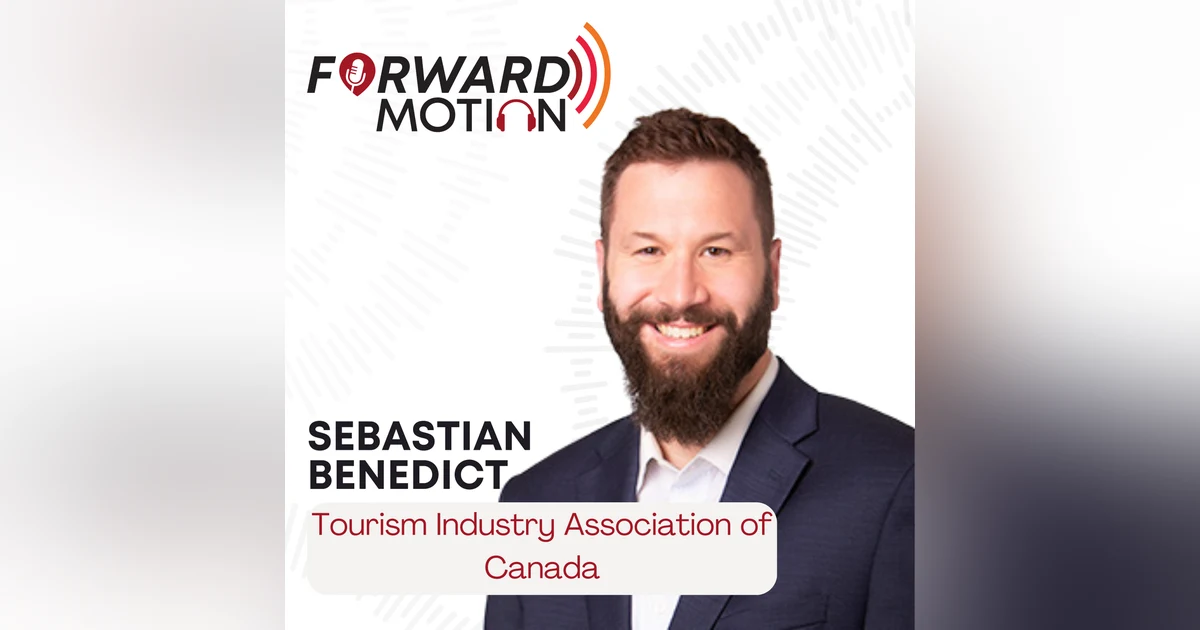
Ready for What’s Next: Sebastian Benedict on the Future of Canada’s Tourism Industry


 RSS Feed
 Canada’s tourism industry is emerging from recovery into a high-stakes transition, and TIAC President & CEO Sebastian Benedict argues that the sector is both underestimated and ready. In conversation with Andrew Siegwart, he traces his path from political staffer and lobbyist to national tourism advocate, explaining how listening to operators across Canada has shaped his agenda. Despite headlines about record visitor spending, he notes that many SMEs still struggle with labour shortages, access to capital, and air access, while federal policy shifts on immigration and international students are compounding workforce challenges. Benedict stresses that tourism is a service export and economic solution, not just “vacation,” and that fragmented advocacy weakens the sector’s influence in Ottawa. He calls for unity, stronger investment in marketing and destination development, better emergency preparedness, and more federal champions for tourism, emphasizing that the industry is resilient, mobilized, and poised to play a bigger role in Canada’s economic future.
Forward Motion thanks its partners for their support of this show:
Ontario Travel & Tourism Monthly
See Privacy Policy at https://art19.com/privacy and California Privacy Notice at https://art19.com/privacy#do-not-sell-my-info.
Mary Anne Ivison 00:01
And this is forward motion discussions about the important topic shaping Ontario's tourism industry. Here's your host, Andrew sigwar,
Andrew Siegwart 00:09
as Canada's tourism industry moves beyond recovery and into a period of transition, strong leadership and clear advocacy have never been more important in this episode of forward motion, I'm joined by Sebastian Benedict, President and CEO of the Tourism Industry Association of Canada, we take stock of where the industry stands right now and how it's being leveraged at the federal level. Sebastian reflects on what he's heard from tourism leaders across the country, offers his perspective on the current state of the sector, and discusses how political uncertainty, trade disruption and shifting federal priorities are shaping our path ahead. This episode offers thoughtful insight for tourism leaders, policy makers and partners looking to understand not just where tourism is today, but how to influence where it goes next. Sebastian, welcome. Thank you for joining us at the podcast. It's a pleasure. Thanks for having me. You stepped into this role with Ty ACK at in a moment when tourism is facing a lot of trade uncertainty, workforce disruption and a lot of priorities that are shifting, it seems like every day at the federal level. But before we get into all that fun, can you just sort of talk us through your career journey and really what led you to this exciting new post?
Sebastian Benedict 01:18
Yeah, thank you, Andrew. Ironically enough, I started as a driver for a minister in my early 20s. At the time, it was not very invested in politics, but I graduated from Police Foundation job as a driver, and this is kind of how I started following politics. And then through that Minister, I made other connections. Started being interested, lighted a job as like a junior advisor. They called it special advisors. Back then, it felt really cool for a title and minister office, and I climbed through the rank, spent over 10 years on the Hill in Ottawa, working for various ministers, and then was able to move to provincial politics in Quebec. I was able to see both side, you know, the difference there. And then I did lobbying on the Quebec side for an organization called Lally honest Quebec. So I was able to start really lobbying for the tourism industry. So when the opportunity to work for kayak came up, I felt that I had, you know, political experience, both in the federal government and provincial experience, and I had done lobbying in the past as well, so I felt it really matched my skill set, but also I, when I started working towards them, I discovered an industry that I really love. It's a underestimated industry. It's an industry that often the government overlooks. They deserve strong champions. I know this might almost sound like a an interview pitch, but they really do. They're they're they're passionate. So I really felt like, you know, if you're going to be a lobbyist like, you need to really like the people you represent. You need to really want to fight for them if you want to be efficient. So for me, it was a natural fit to come and bring my political experience and just try and help our tourism small creators
Andrew Siegwart 02:56
that's amazing, and correct me if I'm wrong. And just to share for those of our listeners who might not know, but the Allianz also had a marketing function as well. So in addition to the advocacy side, you also have a great understanding of market development from your colleagues on that side of the business too. Is that correct?
Sebastian Benedict 03:13
Yeah, definitely. So it's why it's very it's a very interesting organization. So they are obviously lobbying for tourism, but they also receive important funding from the government of Quebec for, you know, international marketing. So I was able to see the synergy, the important synergy between the two. I had the chance to work closely with Destination Canada during my time at lions. So for me, coming in, they're a natural partner. For me, an organization I appreciate, as would also facilitate, you know, the collaboration with them.
Andrew Siegwart 03:40
Yeah, I think it's a really great left brain, right brain sort of experience that you can bring to your advocacy that is very unique. I have to say, You talking about starting as a driver and coming from law enforcement and then starting to work in government. You know, one of the things that I know about you, and what are the a lot of the industry is saying, is what a great listener you are, and I would bet that you honed that skill as a driver and as a support to those ministers, paying attention to what's happening, being a bit aware. You know, what was that experience like at a starting point in your career?
Sebastian Benedict 04:12
Well, when you're in a car with a minister, of course, you're not hearing anything he says, right? Like, for sure, like officially, but no. Listening for me has always been super important. You know, when I wasn't in politics, when you're meeting with stakeholders as a staffer, like the important thing is use that time to hear their feedback, what they have to say. You know, you're not there to sell their pitch or give them the political line. Just listen to what they say. It's always been the way I've been in my career, and it's the way I intend to be a
Andrew Siegwart 04:39
tie following that train a little bit. I know that you have been doing a lot of listening and connecting with businesses and sector partners and DMOS across the whole country. So tell me, what are you picking up right now? What are you hearing about the state of the industry and some of the things that you're thinking about implementing as a result?
Sebastian Benedict 04:59
Well, you know. The thing we're hearing a lot is there's this feeling from a lot of people that everything's going well on tourism, because we're hearing about a record breaking summer, and there were numbers out there of like, $60 billion this summer. But when I talk with operators, you know their situation hasn't changed just because the top volume numbers are well, they're still struggling with labor issue. It's more difficult than ever, especially with a lot of restriction that the federal government put in the last few years regarding temporary foreign workers, some reform in education and so forth. So labor, they're still struggling there investment. You know, access to capital for businesses is so hard. We are viewed as a high risk industry, those challenges are still there. And I'd say the last one that comes up a lot, you know, when I go outside the major city, is really access to our destination. You know, especially air access. It is still a big challenge in a lot of places in our country. If we want people to be able to visit, you know, we need to make it more
Andrew Siegwart 05:58
accessible, for sure. And those sorts of priorities should help build the top line and help to overcome some of those cost increases that operators are facing. We hear the same thing when we talk to members in Ontario like the the sales numbers are good, and it's nice to see that we're finally past 2019 but most businesses since 2019 their costs have gone up exponentially higher than what the sales numbers have. So it's a it's a challenge. What do you think is most the priority to help mitigate those costs for businesses right now? Like, is there one or two things that you're thinking about right now that could make a big impact?
Sebastian Benedict 06:37
Yeah, that's mostly, well, labor. A lot of things can be done for labor, right? Like, it's, it feels like we've been talking about, you know, labor issues for so long that we've kind of given up and just say, this is the way it is. But, you know, we are people in the street. Everyone talks about AI as if it's this magic solution that will make everything go away. It will not solve everything, especially not in towards them, where people will always be necessary. And when you build you know your industry and some jobs, you know you rely a lot on temporary foreign workers or immigration workers. You can't just overnight decide that this is over and people will start doing these jobs. You know you need to rethink your system. And this is where we're really trying to make the federal government understand that if they want a major shift in such a big industry as this, they need to help businesses, you know, make this shit
Andrew Siegwart 07:24
for sure, and that's going to take better policy investment and a number of other things for sure, but
Sebastian Benedict 07:30
also better collaboration between all speakers, right? It's one thing to put money on the table and say it's there, but then, you know, you need the association and the organization that are helping there to do their part for sure.
Andrew Siegwart 07:41
Yeah, you're absolutely right. We have work to do and homework to do, and I think that goes right down to operators, support organizations and the government, right? It's it's really facilitating better teamwork. On that front, it's hard. It's hard Tell me, when you've been talking to businesses, was there anything that that you heard that surprised you or maybe challenged some of your assumptions going in, in terms of what operators are feeling about tourism right now.
Sebastian Benedict 08:05
One thing that really struck with me at our at our Congress, just before Christmas, I was talking with a gentleman who runs a smaller hotels, and he was telling me about all the challenge he was going through. And I said, Wow, you're so passionate about your job. And he said, well, in tourism, if you're not passionate, you're bankrupt. And I feel like this is something that I hear a lot, especially, you know, our industry is made, yes, there's some big players in there, but it's made of a lot of SMEs, and a lot of our operators from coast to coast, are going for these challenges. So it's the fact that, you know, without this passion our industry, it would be so hard for them sometime, and it gets frustrating. And I understand the frustration sometimes, when they say, How come nobody sees it? How come we're so important in the community, so important in the economy, but we are still a second job often, you know, on our own stage,
Andrew Siegwart 08:56
yeah, and it's hard. I mean, everyone wants to be recognized for their contribution, and our members do contribute so much to the economy, it's difficult. You're right, though it's a great way to put it. You need that passion, and it's probably surprising to see how many people have that passion, considering the challenges they've been facing. If you had to describe the industry in one word today, what would it be and why?
Sebastian Benedict 09:19
According to what I heard the last three months, I would say, ready? I think our industry doesn't want to fight internally. They want to all stand together and really take the next step to be recognized for our real value with everything that's happening in the world, with everything that's happening in the economy right now, we all see clearly that we are a solution to the problems in our country, and we can play a bigger role. So I feel like everyone is ready to push in the same direction
Andrew Siegwart 09:45
right now. How is this early listening in this, this sense of readiness? How do you think that's going to shape the role that kayak is going to play as a national association right now?
Sebastian Benedict 09:55
Well, the way I really see my role is, and I spoke a lot about this during. My first speech at Congress. It's about unity, something that I say a lot because I've been on the other side of it. You know, meeting with stakeholders, supporting ministers. When you meet with a minister, he doesn't look at you. You look at who's behind you. And you know, if our industry is fighting among each other, or we can't agree, then they it's easy for them to dismiss us and say, you know, we'll put our time, our resources, somewhere that, you know, as a real impact here, they can't figure it out. So for me to see that there's this unity that's building that no matter which sector, people want to work together, and a lot of them are looking at tie act to kind of take the lead on this, and say, You know what? Restaurants, hotel, airlines, this issue, we all have it. Or outdoor, we have this issue that another sector is having, and they all want to collaborate and look to us and say, you know, can tie act, take the lead on this. So for me, I see this big potential where we can play this role of unity,
Andrew Siegwart 10:51
for sure, for sure, it is critically important. And, you know, I'm always reminded that if we can't bring unity when there are so many voices, it actually holds us back from winning when we're trying to get policy changes, because when you're fractured, you're less effective. And so having that unity will only strengthen the outcomes for the whole industry. And you're right, it's an important role for Ty ack, but you're
Sebastian Benedict 11:17
right about fracture. Andrew, when I'll give a quick, quick anecdote during the pandemic, I was Chief of Staff to the Minister of Agriculture, Food and fisheries in Quebec, and when it came time to reopen restaurants after that big first wave of shutdowns, the restaurant industry was asking us to sit with them. So, you know, I got the deputy minister at finance, Deputy Minister at public health, we got this big meeting with and there were four restaurant associations at that time in Quebec that were representing restaurants, you know, one for the big banners, one for for like, smaller like, cook owners restaurant Canada, and then the provincial one. And they were all asking different things to the government. We got out of that meeting behind closed door, you know, the Deputy Minister of Finance was like, they don't know what they want. We have limited resources, like until they figure it out. You know, we're gonna move to the next call. And it always stuck with me that see, like as a as an industry, we need to talk together.
Andrew Siegwart 12:09
I had the exact same experience, starting at tayo post pandemic, with our own tourism minister at the time who said the same thing. So many of the players are coming to us with very different asks, and they see that as risk, so the ability to simplify that for them is really critical. Now we're going to talk a little bit about what's happening on the federal scene from a politics perspective, but as it relates to within the sort of provincial and federal dynamic in the association space, how are you thinking about striking a balance between sharpening and delivering a focused goals for Ty ack, for our national objectives, but also reflecting those regional differences and needs, you know, at the provincial and territorial level? How are you starting to think about that right now,
Sebastian Benedict 12:57
one thing that people often confuse is, you know, having a unified voice doesn't mean adding a single person that talks, right? It just means that, you know, everyone is saying the same thing, and to that regard, like, yes, sometimes something We will advocate for might not directly impact, you know, other sectors. But you know, something that that helps airline and helps access to our destination will help others. Something that helps bringing more accommodations to our destination will help other businesses. So it's, you know, making the different partners realize that. You know, whenever we're able to help a sector, it helps the whole industry. And then with the government, it's always about not having a grocery list. Like, if you show up and, you know, you get asked, what are your priorities? And you have 102 things, you see, you know, you've got no priorities. You just have a wish list. So for us, it's really to make sure which things that we ask for at the bigger impact and impact that is in every province or as many provinces possible, and that can help as many sectors and identifying those, and really, you know, trying to get those 234, big wins during the year that really moves it even.
Andrew Siegwart 14:02
And for those that might not know, we have our own version of a Prime Minister's Council in the provincial and territorial tourism industry association committee as part of Ty ack, where all of us come together and sort of hash out, you know, where we have common interest and needs. How valuable is that to the tie ACT team.
Sebastian Benedict 14:21
It's so important, like, for us, it's the soundboard of what's going on in the province. It's so easy for national installation to kind of get lost or, you know, but being in your ivory tower and not seeing what's what's really happening, and for us to just have, like, a dialog with the federal government where we're solving invisible problem together, because we're we can be disconnected from what's really happening. So having this direct line with all the province and territories where we're hearing it from provincial Association, which are usually closer to the ground, the reality that operators are living, which allow us not only to hear from them, but then to compare, okay, this is happening also in Newfoundland. This is happening in the Northwest Territories, you know. So getting that feedback for us is.
Andrew Siegwart 15:00
Is crucial. Prior to your current post, you were in that space and working in that network, so I can just say firsthand how helpful it had had been over my time in that network to be able to connect with my colleagues at different regions and to learn as much from your team in Quebec as from the folks in Newfoundland or Alberta or BC. It helps us a lot at the ground, too. It goes both ways. Let's talk about, what's the state of Ottawa right now. Talk about an interesting time. How would you characterize the current political environment?
Sebastian Benedict 15:32
You know, I spent more than 15 years in politics, but even when I wasn't, you know, a staffer on the hill. You know, I was always involving politics, following politics, and what we're seeing right now, I've never seen it. What we're hearing a lot that is creating a lot of frustration inside the government is, apparently everything right now is very centralized. You know, maybe it's Prime Minister's Carney style, or he's just came in, he's always, we're hearing a lot at some moment, it's still like, it's being around like a private business, right? So a lot of things, a lot of decisions are being made, you know, at the Prime Minister's level, and sometimes, you know, Deputy Minister staffers, even ministers in their own department, sometimes they they feel out of the loop on some stuff. So it's really, you know, sometimes a challenge to coordinate that when things feel really centralized. So that's from a political side. And then, you know, in the public service, there are budget cuts coming. There are a lot of position that are about to be cut. Some have already been cut. So when we're dealing with with the public service, it's normal for them to be very worried about this. So sometimes we feel like the focus right now is really about, you know, will, will we be able to save our jobs? Will we still have a job in six months from now? So it can be harder to focus on the industry or on the mandates that they have to deliver when you know they don't know from a day to another if they'll have a job, yeah.
Andrew Siegwart 16:43
And it's been, I know, a big concern of many in our collective memberships, with that pace of change. And, you know, there's been some big things we've been advocating for over the years, and there's always a concern that that gets lost, or new people come in, and there's a big change in terms of at the staff level or at the political level. So yeah, it's it's definitely a challenge to keep the momentum up, but maybe there's an opportunity in it as well, because if there's less resources at the public service level, they may rely on some of our content and recommendations a little more. Do you see that as a potential opportunity?
Sebastian Benedict 17:17
I think you're right. And honestly, you know some of the things that have been attacked for a little over three months now. And you know, some projects that the government has reached out to us to see if we can collaborate on, I think, goes in that direction where they see they might not have the resources in the upcoming months. So let's turn to trusted partners, and this is where we come into play.
Andrew Siegwart 17:36
Are you able to talk a bit about the emergency preparedness project? Because that's a really good example of where the federal government is relying on the network of tie act, tourism, HR, Canada and others to support the sectors. That was a big win,
Sebastian Benedict 17:49
yeah, for sure, and it's one of the things we keep hearing about right with climate change and everything we've seen across the country. You know, wildfires, floods, so many things happen since the nature of our industry makes it that, you know, our operators are often extremely impacted by these situations. So how do we help our operators be ready for this where it's the new reality? There's already great things that are happening. I know BC shows a lot of leadership in that field. There's great things happening all across the country. So how do we make sure that the best practices, you know, are known and shared across the country, across the industry. How do we see what's lacking right now, what kind of support is needed, what best practices are out there in the world that we can, you know, maybe bring here. So, you know, the government really has an appetite for this. I was in Winnipeg back in November for the Federal provincial Minister of Tourism Council, and I was on participating on a panel about this subject with Mr. So you can see it's really something that everyone is concerned about. So it's great to see that the government, you know, wants to find solution and wants to involve the industry in this solution, because that's the worst when the government sees a problem, kind of try to solve it on its own, without consulting or working with the industry, and then, you know, brings it up. So at least now they're working, you know, with us from the ground, to build something up.
Andrew Siegwart 19:08
That's good. That's good. Yeah, we've certainly experienced that. Let's say, for example, you know, the Swift changes to international students and the lack of consultation, what that's resulted in, right? Yes, I know it's a fool's errand to try to ask folks for predictions, but I do it anyways. What's your sense on a federal election in 2026 what's the likelihood on a scale of, say, one to 10? One being not at all, 10 being likely?
Sebastian Benedict 19:32
I think it's likely because, no, I've been in two government that were minority governments, and it's very difficult because it's you can't plan plan. The only thing you're doing is you're getting ready for the next election, and it's very difficult, you know, to govern in that type of atmosphere. So right now, I'm sure someone like Prime Minister Carney, someone obviously likes to plan. A very smart man would like to have more predictability, you know, to be able to say, you know, I've got. Four years to do changes that I want. I think he's being very appreciated. You know, he's done a lot of noise with stuff he's done in Davos and so on. So I think they will see a window in the next year where they say, you know, maybe we have a shot at getting a majority here and with on the other side, with the conservative and Mr. Polyev, getting that, that strong, confident vote last week, where the party feels like, you know, he's their man, he's the guy that will lead them to power again. So I think both side kind of feel confident right now, so like, very likely,
Andrew Siegwart 20:30
yeah, yeah, the conditions are set for both parties to bring it to voters. So it's a critical time in terms of what might be happening on the on an election landscape. It's certainly a critical time for what the industry needs to see achieved, and you've outlined kind of buckets of priorities for those of us that are in the business of bringing ideas to government, whether that's at the municipal level, for our DMO partners, or at the provincial level or at the federal level. You know, what are you seeing that is actually moving the needle when you're starting to have conversations. Is it data? Is it jobs? Is it the regional impact? Is it more storytelling, more emotional? You know, what's the mood of policymakers right now in that regard? And what advice would you have to anyone who's making pitches to government on how to tell the story in the best way?
Sebastian Benedict 21:20
So what we've seen that works the best is really showing local data. We launched a tool in September called local impact. It has had a great success with MPs, where we basically show by federal writing, you know, we're able to tell every MP, you know, this is how many tourism job you have in your writing, how many businesses? And then break them down by sectors, you know, accommodation, food and beverages and so on. They're always shocked, you know, we thought, well, this represent 8% of your workforce in your writing. And they're like, What I don't have, the tourism writing? Well, you all do. And something that I like to do when I meet an elected official, I sit down, I tell them, can you take up your phone, open Google Map, type the name of your city in it. And they do. And then I'm like, zoom in, and what do you do? You see? And then they'll say, you know, there's logo of hotels and motels and then restaurants and landmarks and and advanced site. And I say, imagine if you remove all of those from your community, like when you live there. And they're like, No. I'm like, Well, see, this is the impact that tourism has locally, in your city, in your town, and this seems to always work. It makes them realize that it's kind of embedded in our everyday life. We almost forget that it exists, right? So for us, it's really going back to this. Yes, it's important to bring the big numbers, but when we just sit down and say, talking billions of dollars in terms of what we bring, and the 100 1000s of jobs and so on, sometimes it's so big that it's hard. So when we bring it down to this is the impact in your riding, in your city, we feel it as a bitter better impact,
Andrew Siegwart 22:46
yeah, because it's more personal to a decision maker, right? It's their portfolio, but it's personal to them. It's so smart, I have to tell you, because you shared that with me a few days ago, and I just thought it was such a brilliant way to get people to think differently, using the phone analogy. So I was speaking at a conference for economic developers this week, so I borrowed that idea from you, and I asked people in the audience to take their phones out and to do it. And I used the angle, you know, see all these great visitor economy businesses in your community, and then I said, Imagine if they weren't there, you know, how successful would your job be? Right? It worked. I was like, it was great. So, you know, I love to borrow ideas of wherever I see them, and that one was a very good one.
Andrew Siegwart 23:34
So thinking about the federal government and thinking about potentially heading to an election, where do you think the current government's core priorities are, and what's driving their decision making right now,
Sebastian Benedict 23:46
there's three thing that we're really hearing, obviously, security, you know, with the situation with the with the United States, but it's really about, you know, diversifying our economy because of the tariffs and everything like that, but also something that seems to be extremely important to Mr. Carney and his whole government is Canadian identity, you know. And this is why something like the Canada strong path that we launched last year and that be renewed in the last budget is very important to the government, because for them, they see it as a way for Canadians to discover their backyard and so. So these really seem to be the priorities that the government is aiming at. And thankfully for us, these are things that you know tourism can relate to. Tourism can be part of the solution. So this is why, you know our role right now is really to make gun discover that. You know, tourism is part of your agenda right now. So use us.
Andrew Siegwart 24:35
We're so connected to Canadian identity and, you know, soft power and diplomacy. Can you maybe lean in a little more and share with us what you're thinking about in terms of linking tourism more directly to that broader global trade mission of diversification and other things. How does tourism fit into that economic diversification story?
Sebastian Benedict 24:56
When I ask politicians, you know, when I say tourism, it comes to your mind. Unfortunately, too often, you know, it's vacation, you know, it's the answer they'll give. But one thing we always say, it's, you know, tourism is a service export. You know it is. You know, we're bringing new money, you know, inside our country, and it's really what they need to realize. You know, exporting is not only goods. You know this, obviously people will think of goods when they think of that. But we're, a service export. You know, the trade and travel is so important, and they need to see this. You know, when you have a healthy travel business between two countries, it helps everything else. And this is what we're trying to do, to make make them realize that this is so important, to make sure that travel between, you know, countries are good partners. Is important, not just for goods and products, but definitely from a tourism perspective,
Andrew Siegwart 25:43
yeah, and I think most folks, they tend to think about goods and goods exports, and the service exports seems a little more more fuzzy for them. So helping them really understand that, I think, is very important. Do you see the same sort of rupturing at a global economic norms that the Prime Minister has has shared. What's your sense about how we're going to fare in, say, Kuzma negotiations, and are we really looking at starting over, or are we looking at maybe changes to the current system in terms of a Kuzma, I guess, 3.0 now,
Sebastian Benedict 26:18
great question. I mean, I think the Prime Minister sees us as a good as a good leverage in there, like we've saw it with their recent China trip. You know, where they a they were able to get Chinese group travel back in Canada. So obviously this was a point that they use were, you know, there's a lot of place in the United States right now that are hurting from Canadian not going there. And, you know, besides, you know, Republican and Democrat state, the democratic state, they'll need to realize it like it right now, it's hurting them more than it hurts us, the fact that so many Canadians are not going there. So I think it's inevitable, with the way that tourism has been such an important part of the relationship between our two countries that this will be part of discussion at some point. You know, border security is something that the US government puts a lot of importance there in but I think it's inevitable, given the impact that tourism has with them.
Andrew Siegwart 27:12
And I think it's going to just be an ongoing conversation. And it's probably an example of maybe a narrative that we, ourselves as an industry, haven't leaned in too much on so it's our opportunity to sort of shape that a little more as we go forward. If you could only move two or three federal levers in 2026 what would they be?
Sebastian Benedict 27:32
I really like to make a big leap on access, because access, our destination, is key. You know how often you hear Andrew that oh, why would I go out west for my vacation when I can get a flight to France or Europe or for the same price we need for our country to be more accessible. Yes, it's big, but you know, making it where, where it's easier for Canadians to stay here for their vacation if they want to. And it's so different. Like last week, I left from Ottawa to go for an event in Victoria. You know, I left from Ottawa, it was minus 32 I land in Victoria, it's 10 degrees. You know, it's the same country, but it's still different sometimes. So sometimes you don't need to go in another country to live another experience. So to give that opportunity to Canadian. And I really feel like this is something we can we can move on fairly quickly. You know, if the government decides to act on it, we get all the right partners to act on it. So for me, this is something I'd really like to rally around this year and try to make the needle.
Andrew Siegwart 28:31
Yeah, that. I think that's a really good goal, and I think the numbers should show that based on 2025 because there was a good amount of travel domestically, and a good amount of interest in in moving within the country. And so that's leverageable now that Canadians have had that experience, they traveled less to the US. They did travel a little more at home. So if we can make more access for them, it's just It builds on that momentum, which is, I think very smart of you to to focus there, thinking about tayak And you know, associations are fascinating organizations because they're really communities. They're really about building communities and creating space and listening and advancing their interests, less so on the policy side, but just in terms of tayak as an organization, what? What would you like to see as 2026, rounds to a close. What are some of the things that are important for you to achieve and the team to achieve in this year?
Sebastian Benedict 29:26
Well, one thing I would like is to find new champions in the federal government, because I think one of the reason it can be hard for us to be heard is there's so much going on and so many people you know at the table. Yes, we have a tourism of Minister of Tourism, you know, and we have a good relationship. With her, but she can do it on her own, you know, she needs other ally around the table. So for me, finding new voices within the government, other people that want to champion our industry and it go, you know, once we make them realize the impact that tourism has in their own writing, in their own region, province, sometimes it's easier to bring on the table afterwards. So for me. Me, you know, if at the end of the year, we have a bunch of new champions around the table, I'd see this as a huge win, as not just for Ty AG, but for our industry as a whole,
Andrew Siegwart 30:08
for sure, for sure, following the sort of market diversification piece a bit kind of go back to that. It's one of the things in Ontario we've been talking a lot about, and it's a big part of our new Ontario tourism strategy is looking at how we look at all the segments and really leverage them. So domestic Ontario, the rest of Canada, traveling to Ontario, or, you know, or within the country, the US visitor, and then, of course, international visitors. And then looking at things like business events and how important that segment is to overall demand. Thinking about some of your recent work on the international conventions, attractions fund, and, of course, some of the tie acts advocacy work in support of destinations Canada's base budget. How critical Do you believe sustained investment in Destination Canada, as well as programs like icap are at this point in time, it's
Sebastian Benedict 31:03
so important, Andrew, because we can have the best destination as possible, right? Let's say we managed to solve the labor issue, and investment is no longer a problem, you know. So our attraction, our destination, is easy to access if people don't know about it, you know, there's no point we need to sell ourselves, and the competition is out there. We are not the only country in the world that wants more tourists, that wants to use tourism as a economic lever, so we need to put ourselves out there. And, you know, there's no magical way to do this. We need resources and regarding, you know, invention and these type of events, there's a lot of places in the world that people don't want to go anymore, and we are a safe country. We're a place where big events people feel comfortable coming to Canada. We saw with the International Convention attraction fun out work? Well, it worked. It was almost 90 events in less than three years that were, you know, international bids that were won thanks to this fund, thanks to Destination Canada support. So this is great, not only for the industry, but for our reputation as a country. So to us, it's a no brainer. We we've been advocating for the government to put more money in that fund that is supposed to sunset on March 31 and it would be a big loss, not just for our industry, but for our country to not have this ability to attract these big flagship event in our country.
Andrew Siegwart 32:17
And I think one of the things that a lot of folks who might not be dialing in as much to the international development work, but the competitive landscape globally is has been changing a lot in the last few years, and I think based on what's happening right now, it's going to change even more. So think of like the UAE in terms of their marketing campaigns and just the global push to build such strong assets to attract those global conferences. So it's not just like London, Paris, you know, New York, that we're competing against. It's it's new visitor economies globally, and I think that takes more investment. And I don't know, do you have a sense that policymakers have a sense of that the resources that are needed to do this, or the fact that there's so much change globally and that there's bigger competitors than we might even think there are. You know, we tend to traditionally look at different European markets, maybe the US, but you know, there's whole economies I don't think we've thought about as a comp set, and I think they're really growing, and they're going to be soon,
Sebastian Benedict 33:18
yes, and it's not just the ones we don't think about it. So how reaching people is different nowadays? You know, people's attention is shorter, and also the methods that are used to reach tourists and get people interest, I've really changed. So it's important that, you know, organization that are up to date on what are the best way to market ourselves. So it's not just about the money itself, not just investing the money, but having, you know, these, these great campaigns, the way to really reach out there. So you need, you know, an organization that is strong doing this. So we need to keep supporting our marketing organization, not just obviously Destination Canada from a federal perspective, but the provincial the municipal BMO is like, they need support as well. We need this whole ecosystem to be very strong, yeah.
Andrew Siegwart 34:01
And I think sometimes policymakers think of marketing as a cost, and really it is an investment that drives short term economic output. And I feel like it's almost like redefining what marketing means is important. It shouldn't be, but it's still something we have to work on, and I think that's why it factors so much in a lot of our advocacy work. Obviously. Tayak tayo, we're not marketing organizations, but I think our job is to educate folks on the value of the marketing function and how critical it is to our economic growth.
Sebastian Benedict 34:34
You say marketing organization, we're not marketing an organization in the general sense of like we're not marketing ourselves internationally, but we do market our industry to the government, you know, yes, exactly to get them understand how important we are, the impact that we have. So in a little bit of our own way, we are kind of marketers to the federal government, for you, you know, provincial governments.
Andrew Siegwart 34:55
And yeah, you're right, and it's an opportunity for us, I think, to learn from some of our members who are really savvy. Marketers to bring some of those creative tactics to our work? Absolutely. Yeah, it's a really good point. Never forget that everyone's in marketing on the workforce side. So I would say if you talk to certainly your provincial counterparts or sector organizations, we are acutely aware of how challenging labor force is we're also aware that it's hard to sort of identify exactly what's going to fix the problem. I'm wondering, how are you assessing the current situation with you know, the changes in immigration international students, the loss of a post graduate work permit, eligibility for tourism graduates and other service sector pathways. How are you thinking about, first of all, what the impact is right now and what we might want to be bringing forward as solutions?
Sebastian Benedict 35:48
The challenge, like you mentioned, what is the solution? It's, there's not no one magic solution. You know, we need to change a bunch of smaller, big things, and it's slowly what we'll see a shift. But the challenge is often perception. You know, for especially you know, politicians and the government often thinks, you know, we're a low wage industry, we're entry level industry, when we're not, you know, there's all all type of jobs in tourism, and it's making people realize that, no, it's not just a summer job. You know, yes, it's a great summer like entry for for a lot of people, for students, for a job to come in the tourism industry, but there's so much growth they can do, and it's to really kind of that gap that is existing right now to make to make people realize you can do a full career in tourism and have a great life and make a decent living for yourself in tourism. So working on that perception, not only from for the government itself, but for people. And then, you know, regarding the immigration front, you know, for years, when we stop, you know, supporting a type of job here, and we and we rely on people from other countries to help us with these jobs, and all of a sudden we say, well, that's over. And we just expect Canadian to just come in and say, Okay, well, I'm doing this job now. It's not how it works during the pandemic, when we weren't sure if we were going to have, you know, temporary foreign workers in the country I mentioned earlier I was for the Minister of Agriculture, we said, well, you know, we'll just get Quebecers to go in the field and work in the field and get and pick up vegetable and fruits. And it didn't work that way. We launched our program. We literally launched a program to where we were paying, we're paying people over $25 an hour to come work in the field during the summer to help us, because we were not getting temporary foreign workers, and people were not applying, they were not coming. So it wasn't just a reason of salary. It was just like, no. It's something that, unfortunately, some jobs we've kind of lost. The culture of doing it here, and you know, we need to find ways to get Canadian to do these jobs. But it's not going to happen overnight. And you can't just say, Okay, no more external labor available. Use people internally, and expect Canadians to just pick up the flag and say, Okay, now I'm doing this.
Andrew Siegwart 37:55
Yeah, it feels like what's been happening is a series of short term reactions, as opposed to data driven planning, to get to a bit of a calibrated equilibrium where the labor market can feed industry in the right way, it's going to take a fair bit of work for sure. Do you think one of the challenges that I've been running into is in conversations that I've been having with, you know different ministries, or at the federal or even at the at the provincial level, there is this reticence to not want to discuss immigration pathways at all, and we understand there's a lot of political reasons for that, but the reality is, we are not having as many children to replace the People who are retiring and exiting the workforce. That's just a fact, and so we were going to need to rely on a more balanced immigration approach in the future. Do you think you know based on your experience, particularly with federal government work, how long do you think it's going to take for that kind of a framework to emerge? Is it just too much of a hot potato where it'll just get sort of left for a while? Or do you see that either a current Liberal government or a potential future Conservative government would take this seriously and come up with a plan?
Sebastian Benedict 39:10
Well, that, like you mentioned, the issue with that right now, it's just so political. It's a wedge issue. So decisions are not necessarily being based on the impact of changing the immigration level. It's just, you know, a lot of people are have the feeling that a lot of things that are happening, the crisis for housing and so many things are because of immigration. So when you look at it from this angle, a lot of people are blaming it on this and feel like the government is doing the right thing, and they just need to shut it down because they're not directly impacted by it. They don't see the impact to be to businesses and operators. So as long as this remain kind of a political wedge where it's not based on data, it's based on emotion, and, you know, it's popular with a majority of the population. So as a government, you know, it's easy to say, we're going to keep moving forward. And those who are impacted, well, you know, they can find their own solution, because for us. Politically, and especially in the minority government. So to your question earlier, you know, will they win an election next year? It's much harder for a government in a minority position to make courageous changes or make decisions. So obviously it's not a reason why. It's always better if you if you have a majority government,
Andrew Siegwart 40:19
yeah, and then I think for us and for the industry at large, what we have to start thinking about is, what are the small things that we can do in a time limited way within this calendar year to make a difference, and how do we carve out time to start thinking about the future model, to be ready for when government's ready, to have more research done, more solutions for them, to be able to act fast when they're ready, but it is a tough pill to swallow to be able to talk to operators and say, Yeah, we're going to have to wait for the political mood to move on this one. It's ironic, because we're talking about boosting our economy, and yet this one factor will continue to be a limiter on the economy. So it's, it's going to be a challenge. We're, you know we're not here giving solutions everyone, necessarily, but adding adding more, more context to why it's so hard to move these things. One of the things I know that you've also shared with me that is a priority is an investment, attraction and product development. It's certainly something that we've identified in here in the province of Ontario, and I'm hearing from our colleagues across the board. To share a little bit about your thoughts on that and what conditions are going to be needed to unlock that investment, I
Sebastian Benedict 41:27
feel like I'm getting the same answer as I did for labor. Andrew, but it's perception once again, right? We are a sector as perceived as high risk, and as long as this perception is there, it's going to be really hard to attract investment, either private equity or, you know, more government funding program. One way to do this, to showcase this, is statistic Canada. Every every three years they publish this, this big survey, this big study on the state of SMEs. And when you look at the most recent one that the most recent data from 2023 there's a real big discrepancy in terms of the access to investment that tourism operator have versus other sectors. And you know, the number one reason that bank will give to operators when they deny a loan is that the sector is considered too risky, and that's twice as much as other sectors of the economy. So the data are there to show that there is really this perception about our industry. So we need to work on changing this, and once we improve that, and we make, you know, politicians and other institute institution, realize that we are a sector worth investing in, then it will, it will be much easier for us.
Andrew Siegwart 42:39
Yeah, that's a really good point. I know when we worked on our Investment Attraction proposal, we found some stats. It was it really interesting. In Ontario, we're about 18% below the national average in tourism investment, so it's actually a little more challenging here compared to other regions. We put together a couple of recommendations, just curious to get your thoughts on it, because we identified that same issue risk, our sector can sometimes be perceived as high risk for a number of reasons. We've injected two things into our proposals on tax credits for small business as well as some product development funding, and one of them was to talk about the different collaborative networks that we have that can support these businesses be more successful. So your sector organization that specializes in the product category, your regional tourism organization who really helps businesses understand what's happening in their region, even a local destination marketing organization who can be there to market these businesses for them. And then on top of that, in Ontario, we have municipal accommodation taxes, where municipalities earn revenues which could be funneled into community improvement plans or other kind of business plans to help co invest and then share with either lenders or governments that in fact, we are mitigating that risk because we have such a strong network of tourism support organizations. Do you think that has viability?
Sebastian Benedict 44:03
Definitely, it's a model that we're seeing more and more when I was when I was in Quebec, you know, there's the accommodation tax there. And at first, when this was launched, I think it was like 30 years ago. It was purely for marketing, right? The money was used for that. And over the years, we've seen a big shift. It is redistributed in every region. They're pretty one touristic region in Quebec, and a lot of them are using a lot of the local association are using, sometimes 50% of the money for actual product development to help businesses, so not just marketing. So they have to get creative, because, like, like you mentioned, it's hard to find investment elsewhere sometime, so definitely it's one of the solution. But we always have to be careful when there's these pot of money, you know, government, other entities, start looking at it and say, well, there's also stuff we could do with this. So it's important that this money stays. You know, within our industry,
Andrew Siegwart 44:53
one of the other things we were thinking about is embedding into the criteria that there could be benefits. And supports when municipalities come to the table with things like development incentives and other other ways to eliminate red tape. Because a lot of the reasons why some of the small businesses are less viable is that it's so harder for them to get things built. Things take time. They're expensive, permitting, zoning, all that stuff, so trying to fit it all in. But you know, what I'm finding it's hard to do. I'm finding it hard to distill that into a three point talking point in a, you know, 30 seconds, to win people over, so figuring out how to deepen the model and mitigate the risk, but also articulate it succinctly.
Sebastian Benedict 45:34
But it's also, it's also to change government criteria. I'll give you food sector, the agriculture sector, example, okay, when we, once again, when I was the that department in Quebec, we were trying, after the pandemic, or during the pandemic, to be more autonomous with our food production, right? So we were trying, with government program, to open new plans for to transform our own food here. But when, when companies applied, they did not meet the criterias of investment Quebec because it wasn't creating enough job, or they were low paying job, and didn't they didn't take into account how this would help the ecosystem as a whole. They were just looking purely at it from a well, I mean, job is this creating an already well paying job? And no, we're not financing this. But ironically enough, the there's a type of cheese called pits Quebec. Well, it's transforming Ontario because they did not have the capacity to do it in Quebec, right? So it's, it's producing Quebec transferred to Ontario to be transformed there, and then goes back, wrapped in Ontario, goes back to Quebec. It's ironic, so, but the reason we don't have the capacity in the province to do it, and if you don't, if the government criterias are too strict for this. This project will get dismissed a lot of time. It's making them understand that there needs to be different criterias when it benefits your community and the economy in different ways, and simply the amount of job, wage that these jobs are paid,
Andrew Siegwart 46:54
flexibility, creativity, because that's a really good news story across different jurisdictions, and and it's about food security. At the end of the day, it's a very good point. We've been working hard to try to dive deeper on it and try to bring more solutions to the table. But it's a journey, for sure, but we know that it's a path to the future. Is helping get more investment. Tell me what gives you the most confidence about tourism's role in Canada's economy over the next few years. Where do you think we are going to make the biggest impact, based on your sense? Right now,
Sebastian Benedict 47:27
we're industry that is so resilient, right? Like the pandemic could have completely wiped industry like ours. And, you know, we're here a few years later, and we're breaking, you know, record number last summer. I know some places I'm not completely recovered, but you know, overall, you know we're getting back. So the fact that an industry like ours can go through this and five, six years later, be as strong as they are, and now that I really feel there's this this mobilization, and there's this desire to work together between sectors to get bigger gain for our industry, I think we can really make some giant leaps and giant steps, you know, in the upcoming years, really fast, by working together as an industry. So I'm really optimistic. You know, I wouldn't I'm someone who likes challenges, but also I don't like impossible missions, and I don't feel like it's impossible for industry to reach that goal right now. You know, we have the right players for it, and the fact that we're collaborating closely, you know, you need the provinces, the national level, and all the sectors. To me, it's very encouraging.
Andrew Siegwart 48:31
And I think you said it really well earlier in our interview when you said that, you know the industry is ready. And I believe that too. I see it. I can feel it. And I just think it's exciting to be at this point, the beginning of a new year, having gone through 2025 which started out fairly risky, and landed pretty well considering think we've shown that we're resilient and we're bankable. And I think it's up to us to educate the politicians and the community at large how important we are. And I think it's going to be a really good year. I just have to say, on a personal level, thank you so much for taking this time to share your insights and to have a good conversation with me today. You know, I'm asking you for advice and other things while we're talking, but you know, I think it really does show the role that tyac plays and the approach that you're bringing to the organization, and just in what you're doing in such a short amount of time, it really matters, particularly in Ontario, but my colleagues across the country, they are seeing the presence. They know that you're listening, and it's going a long way. And I just want to thank you for that, and I want to wish you all the best in the year ahead. And I hope you know how much of us are behind you and behind the tie ACT team, and we really look forward to deepening our collaboration and being of service to the tie ACT team to deliver on your objectives. So really looking forward to that in the year ahead.
Sebastian Benedict 49:52
Thank you. It's it's really kind for you to say, and I care, like I said in the like, it's an industry that I discovered for your four or five years. Go. I fell in love in this industry, you know. So I want to be one of their champion and, you know, we're going to be seeing each other a lot. You know, I have a lot of travel. I'm attending a lot of event in Ontario in the upcoming months, all across Ontario. So looking forward to meeting, you know, more tourism operators. It's the best gift they can give me is to explain their reality, because it makes it easier for me when I'm meeting politicians, to really have concrete examples. So I'm really looking forward to meeting more of our great industry. Thank you so much. Thank you.
Mary Anne Ivison 50:30
Thanks for listening to forward motion. This show is created by the tourism industry association of Ontario and is recognized by government as the voice of tourism and produced by everyone at the sound off media company you.


