Tomorrow's Tourism Talent: Challenges and Opportunities in Education
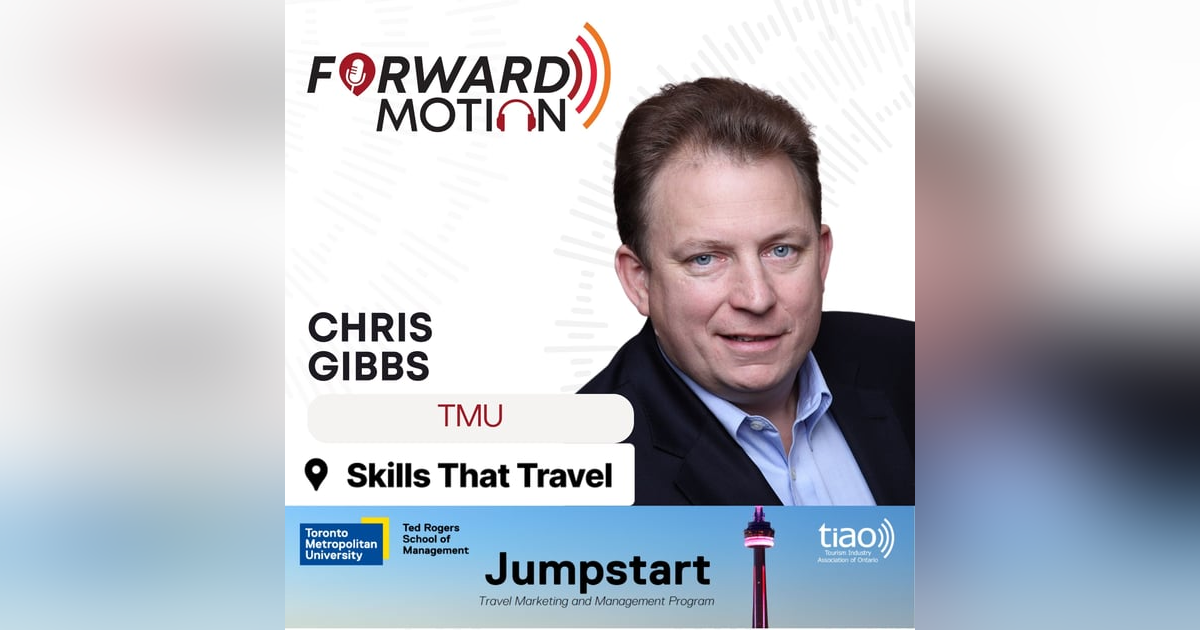
Dr. Chris Gibbs from Toronto Metropolitan University joins Andrew to explore the critical challenges facing tourism talent development. Drawing from his extensive experience, Gibbs discusses the evolving expectations of students, who are increasingly motivated by financial stability and career growth opportunities.


The conversation covers the shifting dynamics of workforce recruitment, highlighting the need for employers to adapt to a new generation of workers who prioritize work-life balance and clear career pathways. Gibbs emphasizes the importance of work-integrated learning, introducing the Jumpstart initiative as an innovative approach to early student recruitment and engagement.
Against the backdrop of funding challenges in post-secondary education and declining international student enrollment, Gibbs advocates for reimagining tourism education. He suggests focusing on core skills like service, leadership, and sustainability, while telling compelling stories that attract talent to the industry's diverse and dynamic career opportunities.
Forward Motion thanks its partners for their support of this show:
Mary Anne Ivison 0:01
And this is forward motion discussions about the important topic shaping Ontario's tourism industry. Here's your host, Andrew sigwart,
Andrew Siegwart 0:10
today, we're diving into one of the most pressing and promising priorities for our industry, the future of tourism talent across Ontario. Employers are navigating a rapidly shifting labor landscape. Student expectations are evolving. Competition for skilled workers is intensifying, and post secondary tourism, hospitality and culinary programs are facing unprecedented disruption. At the same time, we're seeing incredible new opportunities, tech enabled learning experience, design innovations and a new generation of students who are bringing their own fresh perspectives, creativity and interests to help us make sense of the moment and hopefully chart a path forward. We're joined by someone who sits at the center of this transformation, Dr Chris Gibbs is the director and an associate professor at Toronto Metropolitan University, School of Hospitality and Tourism Management. He's a leading voice on tourism, education, student experience, employer engagement and future ready skills. Through his work at Tmu, he is helping shape the next generation of tourism professionals who will power our industry's growth. In our conversation today, Chris and I explore the full spectrum of that talent pipeline, from early experiences that shape student choices to what employers are doing right and wrong in attracting emerging talent to the shifts we need across industry, academia and government to build a strong and sustainable workforce for the decade ahead. Well, good day, Chris, thanks for joining us on the forward motion podcast. Thanks for having me. Andrew, excited to be here. I think it's a really important time for us to be having this conversation, given everything that's happening in the world of workforce and as well as the learning institutions across the country. But before we get into it, I always like to start by asking our guests, you know, what was your what has been your career journey, and what led you to where you are today? How did you find yourself at Tmu teaching in hospitality and tourism,
Chris Biggs 1:56
like everybody, a lot of what we do are is shaped by our families and our first jobs. I came from a mining family in northern British Columbia, little town called Williams Lake, but also Fraser lake and a whole bunch of them. Anyway, in grade seven, my dad decided to get a job in Kentucky to be a manager of a coal mine in Kentucky. So we picked up the family and drove 4000 kilometers and lived in Kentucky, and then in the summers, we experienced this thing called excruciating humidity. So we had to leave Kentucky every summer and we drive back to British Columbia, up to our cabin. It's like 4000 kilometers. So I was like 12 years old, and I had in the back seat of my car I was in charge of I had a Best Western catalog, a Holiday Inn and a Ramada catalog. And my mom would say, we're going to be in St Louis for this evening. Chris, find us a place. So it was an industrious 12 year old kid, Andrew, I'm like, I'm looking for a place with a pool. I'm looking for a McDonald's. And once I checked into the hotel, I'd also collect brochures of all the things to do while I was it was really weird. Anyway, eventually, when it, you know, comes time to pick a career or do that when you're in high school, I'm living in Calgary, and my one of my first jobs after I bought a car that I shouldn't have, that I owed my sister money for, I worked as a bus boy for the whole summer at the village Park Inn on Highway number 1/16, Avenue in Calgary. I worked there full time and went, I sort of put the two and two together, but I think I like this. So I looked for a hotel school. You know, I've been in, kind of in and around the business ever since I was probably 14 year old. 14 years old now,
Andrew Siegwart 3:34
wow, that's amazing. I mean, I think yours is the best origin story I've heard in terms of as a youngster, literally becoming a travel counselor, primarily, so you can make sure that you're staying in the places where you're going to have the most fun. I love that. I think that's great.
Chris Biggs 3:49
And the innovation story there I teach to this day is the holodom Holiday Inn innovated the concept where they built a there's the beginning of recreation of parks and and they built a sort of a motor in with a pool in the middle and outdoor and rooms around. It was all the rage. So I always looked for holodoms,
Andrew Siegwart 4:08
so you don't have to step outside to get to that pool, right? You can go right from your room. Yeah. Two follow ups. Curious, when you were, when you were growing up with with a parent working in the resource or manufacturing sector, mining. Did you ever do any summer jobs in those environments?
Chris Biggs 4:25
My first summer job out of high school, I worked in Marathon Ontario, in an industrial kitchen feeding the miners. Interesting, interesting. And I did that for about four weeks. But I was there to make money. I was working for, I think was Compass Group or beaver foods, I think it was, and I wasn't getting full time hours. So I was like, I need more money. I'm going to university. I need more money. And I ended up getting a job on a crew digging ditches, and I made, you know, probably double the money. And that kind of feeds into some of our discussion today, right? Like it was, you wait. Where the money was, yeah, yeah, I needed I needed money. 30 hours a week or 32 hours a week wasn't enough, and I just found another opportunity that
Andrew Siegwart 5:08
paid me more, another fun intersection, the village Park Inn. You mentioned I lived and worked in Calgary a while ago now, and the first week I was in Alberta, I stayed at the village Park Inn. Gave myself a week to find a job and to find it an apartment, and I did it, but I don't think you could really do it that way today. But anyway, so anytime I interview folks for this show, I always find there's some connection or overlap or a shared experience. So that's becoming it's like my little easter egg now in all of these so that's really fun. I'm glad to know we have an Easter egg together. We sure do. Tell me what you know. Looking back on your on your long career, are there any pivotal moments or any mentors that that really shaped your path that stand out for you,
Chris Biggs 5:52
like there's so many, because I believe that career is made up with a whole bunch of what I call happenstances, meetings and this and that you don't know what pushed you down that path until later, back, you can look back, but probably working. I worked at a company called maple sports for a guy named Bob Hunter, and also then our president was Richard Petty, and they just had a culture and an environment where it was different than anywhere else I'd worked. They had mentorship, they had training programs. They they were in a growth mode. So every two years I got an opportunity to move businesses. But what I really learned from that is I ended up working with a lot of young people that were just my staff typically. And what I learned is I really, really enjoyed mentoring and and making a difference in their lives by helping them. So people like Tom McDonald and Julie and Vince bazo and Natalie and all these others that I work with, it was like, wow, I can make a difference in people's lives. And that kind of probably led me towards teaching. What attracted me to teaching was because you can, you can help people a lot in the early stages of their career. And that's I found it very
Andrew Siegwart 6:57
rewarding, for sure. Yeah, and a bit of a pay it forward moment, isn't it absolutely you have that ability in your life to benefit from that mentorship, and then you want to bring it forward and help others. And I think that's a great it's a really great mindset to be bringing into the profession of education, for sure, I would imagine you must feel a sense of students are entrusting you with their futures, right? So there's got to be that sense of of of a desire to want to do everything you can to
Chris Biggs 7:22
help them. Yeah, I don't know that they they entrust me with their future. They're just there for a class, because all they know is going to school. So they're there for a class, but with their real connection hits when they they really latch on and different for every student, they really latch on to something you said, something you did, right? And then you see them five years later and they say, I still go by what you taught me. That's that's like, okay, that's really cool.
Andrew Siegwart 7:48
Yeah, it's being relevant and bringing an idea that sticks, something that resonates. So tell me you've been you work very closely with students and with professors and teachers and course directors, and you have a good sense of what they're looking for. So maybe share with us what what you think the type of work culture and employment opportunities students right now are are aspiring for.
Chris Biggs 8:15
So first off, what people are aspirational towards is typically things that they see in the media or bigger brands, it's the things that they know. A lot of the aspiration is driven by our media and driven by the consumption of different things that's first and foremost. But probably the biggest sort of external force that I've seen in the last four or five years, that's become even more stronger today and more evident than it has in the past, is just on future compensation. So you know, the average student in Ontario graduates with $33,000 in debt, business students, and I can't speak to art students or engineering students, or my world is typically business students. They're getting more pragmatic. In other words, I need to make a living. I need to do this, I find they they're attracted to those they're getting more attracted to those industries that compensation drives, whereas 10 years ago, I didn't a passion or a lifestyle job might be interesting. Compensation is driving a lot of their behavior.
Andrew Siegwart 9:13
I would imagine it's linked to media in some ways, in that what the media portrays is a light as a lifestyle goals and aspirations that are highly driven by wealth, expensive items. But on top of that, they're also dealing with cost of living, housing pressures, etc. So I guess it it makes sense that that would be a number one, number one objective. Do you see a challenge there where today's students and graduates are being driven more by that financial necessity versus the passion. Point. Do you think that's going to have an impact in the workforce?
Chris Biggs 9:49
The impact on the workforce, it's always a balance, right? There's times when there's too many jobs available and times when there's not a lot of jobs available. So right now, we're at a time when when there's a lot of. Of media and pressure around jobs and good jobs students are now. They're looking for an employer that gives them the opportunity to advance, to make more money, learn new skills and grow. There are those passion jobs and those passion people, and I think they come into it looking for passion, but by two or three years out, the passion's gone in there I have to pay the bills.
Andrew Siegwart 10:22
And I also wonder if this generation has a different, a different relationship with passion and work. So passion is something that I aspire to my life, in the things that I do, in my own experiences, versus work, which is a means to an end, and perhaps an older way of thinking is passion will be my work and my vocation. Any thoughts on that? If there's is that at play here,
Chris Biggs 10:47
the loyalty to the employer is different today, because people are going to have multiple jobs, and there isn't that loyalty to an employer, but the work life balance is very much a part of who they are and what they do like I look at my own kids, my daughter's, like, she's a total nine to fivers, you know, she works hard, does her job, but doesn't do what I did and what my generation did, which just, you know, how do you get ahead? Just work. What do you what does that mean? Just work. Okay, that was just sheer volume of work, right? You look you, you know, you had two or three jobs at a time, you they don't want to do that, and that's probably healthier and better for them. They think that's different than the generation that a lot of people are hiring them from.
Andrew Siegwart 11:31
Yeah. And I would imagine, you know, the This generation has seen the prior generation do that work, and you know the trade offs that that involves, right? So no doubt each generation's parents, in many ways, influence their kids and their objectives for life.
Chris Biggs 11:46
So yeah, my kids, my kids, didn't go into the industries I went into like I worked nights and weekends, and neither of them want to work in that world.
Andrew Siegwart 11:54
Tell me, as it relates to employers, I mean, there's a lot of expectations that employers have that can cover the spectrum. Employers sometimes they're looking for extroverted, front facing personalities, or they're looking for people to join at an entry level and work their way up, whereas other employers are looking for, you know, operational like very specific skill sets and and they want to hire talent and have them, you know, start at a, at a at a different level. How would you say employers, expectations of their needs are changing?
Chris Biggs 12:29
I find when I talk to our industry partners and stuff, they just they talk about the student being different than years ago. So there's this almost nostalgic of you. It has come in and you work and you work your way up, and that's kind of the way that you did it. And I think that there's a disconnect between the expectations of today's generation and what you know, a lot of the leaders came from. But so the question is, you as an employer, what do you what do you do? You can choose to try to stick to your path and say, hey, you know, start from the bottom, work your way up and see how it goes. Or you can try to meet the audience, and the audience saying, Okay, this audience needs a little bit more cajoling, little bit more of a path cleared for them, a little bit more they want to see a little bit of direction and a little bit of commitment. And I think that employers probably need to go down that path more, because that's becoming what I call sort of the norm. You know, you have to come start as a busboy. No, do you have to come work as a busboy? Yes? Why? Because you will get the empathy and understanding to lead the future, but you're not staying there. So that desire or need for frontline service experience is will only make you a better leader in the long run, but we need to do a better job of packaging and communicating that. You know, I
Andrew Siegwart 13:50
think when you're a large corporation, you probably have a little more HR practice within your organization, and you can devote the time to do some of that and and have the pathways. And I think sometimes for smaller businesses, they don't have the resources or the time. Are you seeing any trends there between different types of business and their let's say, adaptability or readiness to pivot and change to meet the needs of current workers or job seekers or students?
Chris Biggs 14:17
I think it's literally on a case by case basis. You know, there are those employers that have an HR manager, and then there's some that even have just recruitment managers. The bigger side of our sector, the big hotel brands, you know, people like Earl's kitchen and that they have recruitment people, they have specialists. But for the lion's share of our sector, which is dominant in tourism, at least, it's dominated by small to medium enterprises. They don't. So it's just a question of, is there, you know, the leader of that organization, small or large, what their perspective is, are they ready to commit and make a commitment to growing and developing talent and not knowing where that will go, or do they want to just stay? The same, because that's worked for them. And I'm, you know, I got a busy summer season coming up. I need to hire 10 people. It's hard to change. Yeah, it's hard to say I want to be that more future, forward looking person. Say, Okay, I got to provide career path and mapping and stuff like that. When, you know, at the end of the day, they just, they've got a four month season, it depending on their business. But if they got four months, they just want four months. He's done. They want hired, right?
Andrew Siegwart 15:25
You know, our point in time is an interesting one too, because we've certainly come out of a period of time where there has been a lot of disruption in the market, some economic uncertainty, employers doing more with less and and I think, hesitant to make some investments because of the uncertainty, and so all of these different dynamics can, I think, drive a bit of inaction or keeping things at the status quo? So I would define it as All right, let me get through the season, and then I'll figure out what to do next. And what tends to happen is you, sort of, you start to go season by season. You're living in that short term world, and it becomes habit, and then it becomes harder to operate differently. And I also think our sector is very operational in that, you know, we are serving customers day in and day out. It's high lift, it's high expense, it's low margin. So there's so much effort in the operation. I think having that bandwidth for strategy and planning and and testing new innovations is that much harder.
Chris Biggs 16:25
It really. You know, it comes down to, let's say you hire 10 seasonal employees in a year. It's like, how do I get two of them to come back? Yeah, oh, we got three of them to come back. Because then that lift the next summer, if you've got three repeats, and they're the right, repeats, will increase your productivity, increase the level of your service, so you don't have to think big picture all the time. Some it could be sometimes just as simple as any I mean, if you're a small operator, I've got 10 students this summer. How do I get three of them to come back? Now, you may want to pay them each a little bit more, but they're going to be that much more productive. They're going to train people better, right? That the whole service, returning employees, all that stuff can help. You may not be able to keep them for an entire career, forever, depending on your operation, but if you can keep them coming back, you know, two summers or three summers, that's that should be a goal,
Andrew Siegwart 17:11
iterative productivity gains. You're absolutely right. Yeah, yeah. And leveraging, leveraging the opportunities that you can't follow us like that. That's a really good example. Tell me, in your in your work, sort of looking at you do a lot of work with employers and placements through Co Op and other help with graduates, connecting to job opportunities of the employers who are are doing well and are attracting students, what are they doing differently to win?
Chris Biggs 17:39
So again, I'm going to talk from a business school perspective, please. Yes, they're the employers. First off again, they're back to these employers. People know their names. The students just are aware of their names. What do they do? Really well, they have designated recruiters. They come on campus and talk to students. They engage in student competitions, whether it's a sales competition or a case of a competition, or they go to guest lectures. They're recruiting early. They're recruiting in like November or January for a may start. Wow, yeah. So they're recruiting really early. And then they have these programs that have, sometimes the cohorts of people going through them, that have leadership training and development, that have some career mapping and stuff like that attached to it. They have mentorship built in and all of that. I recognize. I'm describing a very large business to you, and I don't know how relevant that is to a small you know employer from from the tourism sector, but the right owner, nurturing their people the right way, can create all those similar things. It can be as simple as inviting somebody into a management meeting or meeting with a client like there's other ways to create that feeling of mentorship and feeling of growth than just simply acting like the big boys, the big banks or the big organizations, or just keeping your the way you've done it, the same way you've done it.
Andrew Siegwart 19:00
I think it's important for you to share that, because I think no matter what size of business you are, you know, the larger the organization, the bigger the brand, so to speak, there are steps that they are taking to be present, to be engaged, and to attract those, the talent right out the gate. And so for small businesses, it's helpful to be aware that that's happening. And if you don't see or if the smaller businesses aren't seeing those graduates finding them, it's likely because they're getting job placements before long, before you're even thinking about hiring. So I think that level of engagement is important with a learning institution, no matter how big your business is. And like you said, a few things you can do to give that student that sense of more than just their what they're doing on the job, so that they can feel that they're learning and have that potential to grow. Yeah, I know we've talked about this a few times, but there are a lot of industries that come to recruit your graduates from the Hospitality and Tourism. Management Program, maybe give us a flavor of what those sectors look like and why they are approaching Tmu students.
Chris Biggs 20:07
Couple of things our students are really good at that stand out amongst other students is service so financial institutions, insurance companies are recruiting our students. The service side also means they can sell. So a lot of our graduates, we have a sales sort of a sales club on our campus. And a lot of our students that end up doing that sales club, they just did it as an extracurricular activity, but they also worked part time as a waiter and worked in the service industry. So they they tend to ramp up much faster than all the other business students, because they they've had a volume of customers they used to talking to. So then being in a sales environment, they end up working with IBM. They end up working with soft choice. They end up working at Rogers for sales. They work for LinkedIn, things like that. They end up getting jobs in sales. The students came in. These were like students that came in saying, I want to be in Hospitality Management. But they get introduced to this other world, and they go, Well, I couldn't get a coop in hospitality, but I got a co op at an insurance company. I'm just going to stay in the insurance company, right? And that's not uncommon, right? Like these transitions are they happen, right? Like we all have seen people that start in one and go to another, that's that's very natural.
Andrew Siegwart 21:20
I think what it also highlights is that the skill set that someone learns in this program is desirable by many sectors. It really is an in demand skill set for our own industry to leverage that and lean into it a bit more and make sure that we're competing to keep those graduates in core tourism, I think, is a strong call to action of those employers who maybe aren't as successful. What are the mistakes that they're making when trying to attract and keep recent graduates of Tourism and Hospitality Management Programs?
Chris Biggs 21:54
From a recruitment perspective, I think that the challenge is they haven't joined the whole Workplace Learning shift. So what does that mean in the 1980s and 1990s Andrew, I would have said, like myself, you want to be in hospital. Just start. Just when you're at school, just work, right? You'll end up with a job and you graduate. And for all my cohorts of friends and people I know in the industry, that all worked out, it was all fine. Then starting, you know, around 2014 when I came into Tmu, they there's thing called Co Op education coming in, and it's called Work Integrated Learning, where works and that become that. And I always thought we don't need that in our industry. Nobody needs that because they can just go get a job anywhere, and you can turn that into anything. Now I was fortunate, because I was just there the right time. There was growth and opportunity and it was good. It's not like that anymore. So the students are really looking for these work integrated learning, things like, when you go to career fairs and job fairs, employers get asked by students, do you have Co Op? Do you have internships? Like because the social norm now has become that's part of business school education, and parents are looking for it, students are looking for it. That would have never been in my vocabulary, and even when it first came out, Andrew, I didn't buy in. I was like, we don't need it as a school bus. I can see how an accounting school needs it. Because how does a student need an accountant?
Andrew Siegwart 23:14
It's harder a job in the in those types of occupations.
Chris Biggs 23:17
Yeah. So I feel like the employers need to understand, and people not doing it need to understand this world called Work Integrated Learning, or co ops or internships, and they need to give it a shot and lean into it.
Andrew Siegwart 23:30
And the expectation isn't just you're studying work with us, and that should work. The Work Integrated Learning, the expectations are higher, aren't they, they are looking for more than just a work experience. They're looking for more skills development to be able to stretch themselves, to be ready for great job offers after a graduation, right? So I think that's the difference.
Chris Biggs 23:53
So picture of this, you could recruit and hire a student to go work at the front desk at your lodge or in or your hotel. An internship or a workplace person says, Yeah, I'll do that. But then you know what? Have them sit on your weekly sales meeting. Have them sit on your reservations department, where they have a debate, do I take this group for 20 or not? Have them right? Have a signed up mentor. Have them work a shift in housekeeping. Do that stuff with them, intentionally talking about, have discussions about with them, but Okay, next summer, when you come back, here's what we're going to do, let them look at your income statement, depends on your business, right? And what you do? Yeah, let them in on it.
Andrew Siegwart 24:32
It's a different type of experience I would imagine. I would imagine, though, it's a challenge, right? Because a lot of these businesses, they've got a lot of employees, and so suddenly, in a co op or a work integrated learning, individual is coming in, and they're getting all this access, and then regular employees aren't and I imagine juggling that as a challenge. So I guess it begs the question, as a practice, are you doing that kind of work with your workforce on a more regular basis?
Chris Biggs 25:00
There's a crutch there. You can use the internship as a requirement to say, Listen, I have to do that. Yeah, that can help you. But it's also you should be doing this type of stuff with your staff regularly, too. That next level, I think the gap in in our innovation, in our industry, is that next level of manager. That's where the challenge is. That's where the gap is right now, they're able to always find somebody frontline to fill a role, but there's a vacancy at that next level. And the talent, the talent that drives your business and your long term profitability, is at that next level. Yes, you know, first time supervisor, middle manager of some type, that knows how to, okay, I know how to run this operation that I have a volume of people that requires 10 staff, but we only have eight, and I know how to make that work, and for the guests to walk away going, I had a great experience and not realize that you were down 20% of your staff.
Andrew Siegwart 25:52
Yeah. And you need exposure to the whole the whole business in order to be able to be successful when you're in that position, absolutely, yeah. I mean,
Chris Biggs 25:59
I was, I was scheduling staff when I was 14 years old at the University of Calgary as a supervisor. No funk. I was 15 by that time. But because I was exposed to that stuff so so young, it just was like, sort of natural to me. But that's what kept me interested in this, in the industry, in the sector, was I was already, you know, I was already given responsibility. Oh yeah, wow. It's only making 250 an hour.
Andrew Siegwart 26:30
To your point about just work as much as possible. I always said, Yes, I always took an extra shift. If someone was sick, I would be the one to call who got called in, I would go, I was always just flexible. And there was thinking back on it. I think there was a there was a shortage and a scarcity of people even back then. And so what happened was the people who were a little more able to do so could get that experience, and then it eventually helps them, because they develop knowledge. It's not a sustainable growth model, for sure, and it doesn't look at things like skills development. It's like, whoever is is present can win. And I think that that's not where we are anymore. It's different.
Chris Biggs 27:09
It's different now. And like, I have a student I worked with a few summers ago. She was exceptional, but she couldn't do that because she had to go home and take care of her grandma Exactly. It's just, it's just like, oh, well, that stuff didn't, didn't exist in my in my world, I just said, Yes, like you to work and I didn't have these other responsibilities. That's right, some of these young people do, right?
Andrew Siegwart 27:29
So what you're talking about was more meaningful co ops. So, you know, work integrated learning. We are. We worked on a project together called the Jumpstart initiative, and it's looking at test pilot to figure out if we can create a better approach to co op placements over a longer period of time, to move people through that experience to be ready for great job posts post graduation. So wonder if you could just highlight a little bit about what that program looks like and where we are in the journey.
Chris Biggs 28:02
So I'll just highlight sort of the insights that got us going down this path together and collaborating with tile. It was to the point when I became the director of our program. It's like one in four of our students is registered to be a co op student, right? So they've intentionally said, I want to take five I want to pay you money University. I'll pay you to be here for five years instead of four. It's like, Oh, great. That's an increase in revenue for me. That's great. So they're saying, intentionally, saying, I want, I want this in my experience. So they're in there. They're giving more time and money to it. Some of our better students, we noticed, were leaving to these insurance companies and things like that, because we were having problems finding Co Op jobs for them. Our talent competition is with big brands and employers that do this type of thing. So the talent goes that way, that competition starts recruiting in November and January for summer positions. Yes, all of those characteristics go that doesn't behave like our employers, small to medium sized enterprises, not tons of brand recognition. Yeah, I'll start hiring in March, for May, like, all of those things. So we're like, how do we do it? So jumpstart became the main but it's to jumpstart, like, to get ahead, think ahead, right? Our tourism industry is traditionally, you know, when we hire for the summers, it's like, well, you might get 20 hours, maybe get 40 hours a week, and you're going to stay mostly in frontline operational roles where we need you. And you know, I'm going to start recruiting in March. So we basically flipped all of this and we said, Well, why don't we start to recruit early? We started recruitments in November. Let's give that same recruitment benefit of having a recruiter work for you. Like these big companies have full time recruiters. Well, let's give these employers that participate access to recruiters. So we have staff go to recruiters, so let's give them access to do the posting for them, market the job for them, help arrange for interviews. So all they do is they give their initial posting, they come down, they interview five people, and they pick the one and make the offer. Like, let me, let me take part in that.
Andrew Siegwart 30:02
Yeah, huge, huge help and resource for a business, for a
Chris Biggs 30:06
small business, I think that's something that you can't you know, time is everything. And then the student, what does the student get? The student gets a commitment in January or in December for a job that starts in May, full time for the summer, right? Not for 22 hours a week, not for this or that. They also get connected to a series of workshops to make sure they're prepared. So we have four weeks of learning workshops. We're going to connect that student with a mentor that sits outside of that organization, but Wiz is parallel to the industry within which they're working. We're going to develop a community amongst the students and the employers, so that they get that sort of little bit of a big company feel right, and they get exposed to more people and not just, Well, I'm working for this one person. Away we go. So I think my favorite early success story so far Dionne Bishop, who's on your board, she said, Yeah, Sign me up. I'll do that. Here's an independent event planner that has a business that does a lot of pickup in May and June and July. And every year it's like, do I take somebody on and train them? Do I not those constant did an entrepreneur those constant decisions? And then she has to make the decision and come up with a post that you can do all that. Anyway, she came on with us. She met with us in November. She was interviewing in December, I think I saw a job offer go out to a student. She has a student now hired, ready to start in May. So she's probably got, because she's out early, probably has that keener student, if you know what I mean, for sure, there are those students that aren't that keen and they sort of, Oh, I gotta find a job, and it's like April 29 Yeah,
Andrew Siegwart 31:43
that's probably not the one you want, right?
Chris Biggs 31:46
But that's, you know, that that keen, you know, motivated student is typically a little bit earlier. So I hope that what you know she finds will the result will be in September, when we get back together with her, the candidate, and we all come back together and have a meeting with everybody together? Yeah, we'll know whether it worked out for her. But so far, she's come down for one meeting, come down for a day of interviews she's done.
Andrew Siegwart 32:10
Yeah, it's amazing, and it's not even the new year yet, and that gives that business owner an ability to to now actually think differently about the sales planning and the types of contracts they can enter into for summer, because they know they have staff now. So that might mean signing one or two more clients. That might mean building the business. So this is, this is the Jumpstart that this is talking about. I think it's really brilliant. What challenges have you experienced so far in getting ready for this?
Chris Biggs 32:40
It's classic sales, right? We had lots of meetings with employers, yeah, I'm really interested in this. But then to get them to sign, to fill out a job form and commit, they fall off. It literally is, is a hardcore sales function. It's changing habits. Give you an example, four seasons, hotels, we don't know our budgets yet for May. I don't know if we can get in, but they saw this program, and they said, I want to be in. They went to the gym. They said, we always hire three people in the summer. Why do we wait till January till our budget's approved? We know we're going to need it. Yeah, let's just do it. And it was the ammo that allowed the HR manager to to get out in front of it, versus waiting behind. Can't remember how we came up with Jumpstart. It was probably one of our meetings that we had with Tarot and Kim. And it just, it just came out naturally, and it just sort of went, that's, that's all we're trying to do.
Andrew Siegwart 33:34
It's smart, in a way, because you have a recruitment and a placement function within the university, because you are already supporting students, and there's a whole team that manages Co Op placements for all your programs and sectors that have Co Op and so it's infrastructure that's there, and this, to me, is a smart way of trying to get ahead by leveraging the resources we have. And I feel like sometimes that's what we've really missed. And when we think ahead about workforce and continued labor shortages and increases in competition, I think we need to be working more smartly like this and with some more opportunities. So I'm really excited to see how it pans out, and we'll learn from it and continue to grow. And I mean, one of the reasons why we're recording this interview is just to raise awareness of of the issue, and this, this pilot and a few other things, and hopefully listeners who are interested can reach out, and we'll get more employers on board to hire more students and add more value students or grad or graduates for that. Matt, we've had a lot of conversations of late about the, you know, the current situation in Ontario, but this is the same across Canada. You know, with the changes in international student levels, with some of the persistent funding challenges we're seeing, we have had quite a loss of tourism, Culinary and Hospitality programs across the province, primarily in the college side of things, but I'm wondering. Wondering if you could just share with us your perspective. You know what really brought us here? What conditions led to this moment where we are feeling that the system is so out of balance?
Chris Biggs 35:10
I hope this doesn't get you in trouble with some of your colleagues at Queen's Park. Oh, from an Ontario perspective, you froze tuition, and you said no increased funding for Ontario universities or colleges. We're going to freeze it great if the Spirit was to make education more affordable, awesome, but it was really just a free spending. And that's that's there. So, so what has to happen? Then the organizations where the funding is frozen started to say, Well, where do I find more funding? University and colleges? Just call it 3% a year just in cost of living, because 85% of their costs are people. Most of their people costs are contractually obligated, labor contracts, so 3% a year easily inflation. What happens is, these schools have to go out and find money. Hey. Well, there's these international students. Let's go after them. What ends up happening is, you know, over a period of 10 or 12 years, tuition is frozen. Basically funding to universities College has been cut by 30% factor inflation, yeah, and the only place that they went to go find the fill up was University. Was everybody went after international students as a way to do that. So hence, when that tap got cut off, the real lack of funding started to show. So that policy decision had that impact, the
Andrew Siegwart 36:25
vulnerability and the sustainability was was painfully revealed.
Chris Biggs 36:28
You know, University College is now at their bones, and there is no international students coming to save them. So we're we're not even finding like we found Laurentian University go bankrupt. You've got schools like queens that are basically almost bankrupt. We're not even speaking of all this. We've only heard about the ones that have gone bankrupt. There is a whole layer of 10 or 12 others that are like on the verge. Yes, and when you, when you hear it's established schools like queens, you okay, this isn't just a college thing. This is a, this is a how do you choose to fund education thing, that's the question, right?
Andrew Siegwart 37:02
Well, we recently had Queen's Park Day, where we brought the industry together to talk to members of of all parties, whether it's ministries, MPP, parliamentary assistants, staffers. And, you know, we highlighted just the the impact. You know, 57 or so tourism, Culinary and Hospitality programs have either been closed or suspended, and so for us, and we know that there are many more that are still in play, but we don't know if how close they are to additional decision making to suspend those programs, so we're really calling for some immediate action to assess the situation and Come up with some solutions to to rebalance and to bring some sustainability back into the system. Let me paint the picture right now. We're at risk where the large number of those programs are on pause. There are lots of graduates at the domestic level and domestic students who have suddenly lost access to these programs, where, just 12 months ago, they could go take tourism, culinary, art, hospitality in many communities, large or small across the province. Suddenly, that has shifted dramatically, and maybe more to come. What is needed to take place with the dollars, with the program audits, and make up in the future to be more accessible and reflective of the labor market. What needs to happen to ensure we have a post secondary framework that can support tourism?
Chris Biggs 38:32
Good question that wasn't on your list that you gave me earlier. Man, you're just throwing me under the whoops here, under that.
Andrew Siegwart 38:41
And listen, I mean, we're, I think we're all in this position where everyone is kind of assessing, still assessing, the impacts. But I think in some ways, we kind of have a sense of what change could really help. Storytelling.
Chris Biggs 38:53
The schools are strictly market based, right? We're reflective of the interest of young people into that sector. That's kind of what they are at the heart of it. Then the industry needs to somehow tell a better story of what a career and that you enter this industry for a career looks like. And what does that mean? I don't think there's enough budget to do that. You know, when you look at the things that have driven interest in our sector the most, the cooking channel, when it first came out in the early 2000s registration to cookie schools went through the roof. These cooking shows and the whole cooking culture, people want to be a chef. Why? Because it's cool and it's in the media. Yeah, definitely. I mean, that's that's driven a lot of that. We need to tell a story of this as a career industry. You know, the challenges we have is that, you know, something like 50% of high school students their first jobs in food and beverage Yes, chances are they had a good or a terrible experience with that picture, your first food and beverage job, right? Some were good, some were really bad. So that's their perception of the whole industry, right? Because it starts at a really young age. So somehow we have to reframe people on what we are, and I come from a business school. I'm not looking at this from a culinary perspective. I'm not looking at this from an arts perspective or engineering perspective. It's business school perspective. We need to reframe it. This is a career. This is a business. It's it's the business of hospitality, or it's the business of tourism. What does that look like? That looks like revenue management, it looks like accounting, it looks like human resources, it looks it looks like all other businesses, and it just happens to be experience based. I'm trying to convince myself, ourselves and students and even the industry, that we need to increase the size of the funnel. I think, I think you're on the funnel. Doesn't just need to be. You know, as an example, Dion the one of the offers that she went out to hire somebody wasn't a hospitality student that got hired. They were a business law student. I think I should be upset it wasn't one of my students, but I'm not, because talent will find it. It will all happen. We're a business, and I need, we need to increase the size of the funnel and tell people that you know, you can be in marketing and find a career in this sector.
Andrew Siegwart 40:58
What you're saying there. And I think it's actually a really good place to start, Chris, because at the end of the day, it has to be demand driven. We know that domestic enrollments are what we have to focus on, because the immigration numbers and international students, that's going to continue to get more tight before it ever comes back. And that's years in the future in my estimation. So I want to ask you a question about that, because, and I've had conversations with some policymakers where they've said, Well, you know, just you're going to have to recruit domestic students. So go, go, go, share the the opportunities in the sector and recruit them. One of my concerns is that I don't know that the size of the domestic student market is big enough for the labor needs. I'm wondering, in the last few years where international students were the money makers. Did we leave opportunity on the table by not speaking enough with domestic students? Or is it just that we have to do a better job of better describing the career opportunities in tourism? Or is a bit of both?
Chris Biggs 41:57
I want to make sure you're clear on language here. When you say students, are you just referring to those registered in hospitality and tourism programs? Or when you say students in
Andrew Siegwart 42:07
general, students, I'm talking Yeah, domestic students who are looking for learning opportunities in the post secondary stream. Did we lose ground building relationships with secondary schools and better understanding the domestic market so that we could leverage it, or has that, as the domestic outreach always been strong, continued to be and now remains more competitive than ever with from a worker's perspective,
Chris Biggs 42:33
I actually do not feel that there has been a huge connection as much between small businesses that make up tourism and recruiting at universities or colleges. I don't think it really existed before, during or after, international students. The ability to tap the talent that is sitting at universities or colleges is something to look at. It's a talent that could represent your future leadership, and if you can get them to come back for a second season, or get them to to retain them, can can make a difference for you. Gotcha, I wouldn't say that the industry and the universities have done a fantastic job. There are some employers that have done stuff, but again, they're those employers that that have the money to invest in recruiters and programs. There's three operators in Canada that really do a really good job of it, three big hotel chains, four seasons of core and Marriott. They're here. They're on campus. They're present. They're doing stuff. They're placing between them kids all across the country. Other than that, I would say we don't tend to have really, really active employers coming into work, that's
Andrew Siegwart 43:42
that's helpful, because I think what you're saying is, on the demand side, the learning institutions need more partnerships with businesses to help better sell interest in the programs and then experience through the learning and in the workplace to stay in the sector. And so I think based on the current paradigm, that's a requirement now in order to be competitive with a limited domestic student market, if I could just steal it down, we have to up our game to compete with every other sector, more so than maybe we had to in the last few years, because there was more there are more students,
Chris Biggs 44:18
and it's a talent war, the big technical challenges and the big how to implement the technology and how to rethink your business. You're at war in getting the talent it'll help you solve that problem. And you know, I don't think that the way that we've been doing it is the right way in the long run. And I'm saying this for myself too, right? Like an academic institution, we're doing outreach programs in high schools. We're doing stuff like, like we're doing here with with Jumpstart. We're doing things where we run two different kind of flip, the fair type career fairs a year. Now we're buying into doing those types of things that help tell stories that students will connect with and go I really want to do that. Why? That woman I heard Dion, was really interesting, and I. I just want to do what she does right?
Andrew Siegwart 45:02
I think thinking about that shows us that some of the pilots that we're doing, some of the things we're investigating, some of the things you're doing as a learning institution, it is it's leveling up to be more competitive. That is the name of the game across most of the learning institutions and across the country now, setting aside the demand side and the industry side. On the policy side, from the government perspective, I see two things I'm wondering, if you could just comment on that. On one, obviously more funding, so dedicated funding for for the learning institutions to have more sustainability. However, that, however that comes out, is whether that's tuition rates or whether that's additional funds to support sustainability. And the other thing for me is, is now the time to start looking at different models for education. So is it more partnerships among learning institutions instead of perhaps too many competing programs across communities? Is it looking at adding things like micro credentials or different types of programming that can better fit a new reality, or, let's say, a scarce workforce and a highly competitive dynamic. I'm wondering on that side, you know, and again, I'm not asking you as Tmu, but I'm asking you as a as an expert in education writ large, do you see any talk, or hear any talk of new models to to be able to deliver and meet the moment that might be different now, because of what we've experienced from this
Chris Biggs 46:27
disruption, I'm going to speak from the perspective of, how do you the audience I deal with a lot is sort of 19 to 2223 right? You know? What do we know online learning and online stuff doesn't really do much for them. They came out of covid going, I don't really want to do that. It can add a micro credential. But in order to connect with people, you have to stimulate feeling in them. You have to get them aware of and motivated by something. And that's going to be connecting to an individual or a story or a person that they say, Hey, I look up to that person. I really find that they do really interesting. However you do it, you need to find a way, even as an academic institution, to bring those people in, right? So that these students can look and see themselves in it, right? So as an example for myself, I mean, I look at myself sometimes like, oh, man, I brought a bunch of guest speakers, and they're all my friends. That's the stupidest thing in the world. Chris, so I was like, I got to try to find not my friends, yeah, because all my friends are kind of my demographic, I need to find a 30 something, not first generation Canadian, that my students can look at. Ah, she's really cool. She's I like that. I could be that person. We have to find those people that are examples and get them out there recruiting and promoting our places of employment, like we do things where we do peer to peer promotion of jobs. A student that goes down and works Disney program in the summer, works for Disney, comes back and does an information event for Disney to promote, hey, go back there next summer, because they had such a great experience. But again, that's one of those aspirational brands that not all
Andrew Siegwart 48:02
companies are. But it's great to have that in the mix, isn't it?
Chris Biggs 48:05
Yeah, it is. It's so some of the stuff we're going to be doing as marketing our program is we're going to be leaning on aspirational natures of travel. So we're going to be putting travel up front more when we interview students. We talked about, why were you attracted to this, this industry, to travel, then I'm going to put in my images and in my stories travel out front. I'm not going to put an image of somebody serving somebody a drink or somebody cutting a piece of roast beef. I'm going to put out there. Let's build off at the aspirations. If I want to work and travel, they see it as more aspirational from a lifestyle perspective than just, I'm here to slug food and beverage.
Andrew Siegwart 48:42
Yeah. I mean, I like that, because it puts you in the context of the bigger picture, not just on your particular current skill set or role. All of those elements ultimately lead to a great experience. It's an experience economy, and I think that's what people are attracted to. I fully agree. You can specialize in culinary or hotels or events. But at the end of the day, you are, you really are working in this great experience economy. And I also think that therein lies really great perks and lifestyle benefits as well. So when you work in this sector, you you tend to travel more, you tend to see the world. You tend to have access to that. So it's a real it's a real bonus. And thank you for sort of indulging me on the on the policy side.
Chris Biggs 49:25
No, that's okay. I don't know if I answered your question. No, you know you gave you gave me
Andrew Siegwart 49:30
some good things to think about. We do a really good job of highlighting when we see something that's not functioning anymore, but it takes us a little longer to come up with the solutions. I think we're on the right path. We're looking at the demand side, we're looking at the workplace experience side. I still think there's going to need to be greater discussion about learning institution viability. I'm really concerned about student access in small markets. I think there's going to have to be some collaborations with learning institutions new models, so that. You can have access without necessarily expensive capital outlay. And I think there'll be some creative ways to land. I'd love to be a part of stuff like that, right? Like, yeah, went to the northern community for a month and take on a group of students to lead them through an experience that they can learn. And then they're qualified to start working. Gives them some credential, gives them maybe a course credit back to our place. There's a lot of stuff like that. If you're looking for those models in the indigenous community, yeah, they have, they have a ton of models out there that they've been doing with different universities and colleges. You know, we heard team you, we learned about program we've been doing for years that I didn't know anything about that type of thing for the smaller communities is for sure, worked with the boards of edge on almost at the co op education level. It's interesting. So we've been we have this skill set, travel program and initiative, and we have a number of different learning opportunities. And one of them was a, was a micro credential through Lakehead University. And it was interesting, this micro credential in terms of sign ups filled up immediately, and it was a course called The Ontario professional tourism industry specialist micro credential. And really what it's all about is destination development. So it's all about product development, marketing, visitor experience. And when you think about it, it's an interesting way to look at a micro credential. It's actually aimed at destination leaders and destination developers, and you can't, you don't necessarily find a program in that space. So I think there's all sorts of interesting opportunities. What surprised me was that was the program that really stood out and sold out right away. So again, it highlights the diversity in the industry itself and what people are interested in learning more about. But yeah, it's going to be an interesting journey. And you know, for me, I'm just really glad we're working with partners such as Tmu and others to test and see how we can help and be part of the solution.
Chris Biggs 51:53
We're excited to work with you as well. I mean, from our first lunch that we had, we said, let's, I like to call it throw a spaghetti together, right? Like, yeah. And here we are, you know, the did it stick or did it not? And it's okay to try stuff and fail, and it's okay to learn from it, and then just keep, keep iterating till you get something that works.
Andrew Siegwart 52:10
Looking at tourism writ large, and some of the changes, whether it's technology or trends, do you see areas in traditional tourism curriculum that are that are changing as a result of some of those shifts in tastes or technology or or other trends in tourism.
Chris Biggs 52:26
You know what's funny you asked that question, because when we just went, what do we want to do in the future, and what do we want to do as a school, technology is always going to shift like that's a constant that's just never going away. The fundamental things that we're going to focus on at a school, as a school is we're going to double down on things like service. We're doubling down on leadership training, because our industry is, no matter what happens with AI, the need for human connection and the need for humans to be involved in this experience will continue. And then sustainability around how do you make good decisions? Ethical, ethics and sustainability, those are the three areas we're going to dig down on. And some what somebody in my advisory group, well, how come you're not like, all about technology and AI and I'm like, and this is somebody who did my PhD in a technology based world and was all about innovation and that, that stuff's never going to go away. Don't get me wrong, that we have to keep up with that, that person that can understand the service and the leadership, they'll just adopt the technology.
Andrew Siegwart 53:30
Yeah, they'll work with the partners who can, who can make it happen.
Chris Biggs 53:33
Our industry is not a first mover. Industry as an example, you know, we're never the alpha or the beta. We're after, and then we adapt to the natures of the consumer that we're never called. Find me a time where our industry's been ahead of the technology curve? No, we see it happening, and then we start to adapt it. It's kind of like the food industry. We're always chasing that latest trend, but we get really good at adapting and chasing to the latest trend. So having somebody who's really good at service, what does that mean? I'm empathetic. I can listen to people, I can read people, I can understand people. They'll adapt to whatever's going on.
Andrew Siegwart 54:06
I think what you're describing at the end of the day is a sector that is acutely tied to what the customer wants, and because we're so connected to them and we understand what they want, then we can adapt to meet it. So we don't have to bring something to the market that's untested. We just have to listen. And once we listen and once we listen, and our customer tells us, then, then we can meet those needs.
Chris Biggs 54:26
But we also have to treat our staff. That's why leadership comes in. We have to treat our staff like their customers, yeah, so that they listen our behalf too, right? So it's, it's the kind of the we're extremely human connected sector, and we need to own that. That's what makes us so special. Like the ability to, you know, we were talking from an educated perspective, changing lives is nice, but the ability as a tourism operator and somebody that creates memories. I mean, I miss those days when I get to serve customers and bring a smile out of their face. Those are, those are special moments.
Andrew Siegwart 55:00
Being of service is a privilege, right?
Chris Biggs 55:03
So what's wrong with telling people that we're that proudly where we can be of service to others, right? Like it's, it's one of the greatest feelings. And what I give a sort of an annual speech on hospitality and service to people, and they're always students walk away and go, that was amazing. It really is to be service to others and the joy you
Andrew Siegwart 55:21
get doing it. Tell me. I was going to ask you about what you're looking forward to in the next few years, but I think you really answered that in the last question, talking about adapting to trends, I would just just one final thought from you for for employers or students who are looking to establish themselves in tourism. What advice do you have for both sides as we look ahead to 2026
Chris Biggs 55:45
I guess, from an employer's perspective, take a run at some students. Invest in them, do something different that maybe you wouldn't have ever done. And it can be as simple as just going for coffee with them. Could be as simple as inviting them into a meeting, if they're an existing employee, doing something. It could be as simple as that. It does not need to be a whole program or anything. Understand their motivation. Say, do you want to do that? And help them do it, bring them along the journey. And then, from a from a student perspective, I still think young people could do a better job of always going out there and just calling somebody up in an industry they're interested in, and having a coffee with them, there's so much that can be learned from that informational interview. And to have the confidence, confidence to do that, also be able to articulate who you are and what you want. The number of young people I know I asked the question, What? What do you want to do? They can't answer it. And the challenge is, they think it's supposed, supposed to stay permanent, and it's not. My response changes every two years, and I'm like, almost 60. Yeah, I totally get it. Yeah. Don't think it's the world's first. Because what they don't understand is, there's, there's a network of aunties and uncles like they my last speech before the end of every semester before they go off for the Christmas holidays, is be able to be able to answer this question. Because when you're at the Christmas dinner table. You're the holiday dinner table, or you're here with family, whatever your celebratory things are. As a person, during this time period of December, you are going to get asked the question by family members or friends, what do you want to do? And if you can't answer that articulately, your network of people at that room, aunts, uncles, cousins, brothers, friends, whatever, can't help you.
Andrew Siegwart 57:22
It's very sage advice, yeah, know where you're going and make sure people around you know it.
Chris Biggs 57:26
You don't even know it permanent. You just need to be able to articulate something with confidence.
Andrew Siegwart 57:31
It doesn't have to be too, too precise, but you know, within a within a short time frame. But no, that's really good advice, because at the end of the day, it's usually your network that helps you find an opportunity and make connection.
Chris Biggs 57:43
Even to this day, of all this internet stuff has made it worse. Put out a job. You guys are hiring for a communications manager. You put a job, you've got like 300 responses. What do you do with that?
Andrew Siegwart 57:52
It's good, it's great. It's it's I have the I'm of the mindset everyone who sends an application, I want to read it. I want to take my time. It's getting harder and harder to do.
Chris Biggs 58:01
It gets really hard to find that needle in the in the haystack. But good old, I guess networking or letting other people help you is is my advice to young people.
Andrew Siegwart 58:12
I love that, and I think it's a it's also a great way to close our discussion and thinking back to the Jumpstart initiative that we're collaborating on is sort of exactly what you're doing. Is inviting the industry to ask your team for help to play that role of a little more of an employment services, support. You have a great, strong team there to do that. And you know, I really want to thank you and the team for for working to make that happen and to pilot test this with us, and I think it shows how the Tmu team and yourself, you live by your advice, because it's exactly what you're doing with us and providing that opportunity for the industry. So thank you so much. Thanks for your time and insights and knowledge. You really are at the front lines of talent development and the war for talent. And so I know that this information will be a valuable will be a value to our listeners, and really looking forward to more work together in the new year.
Chris Biggs 59:07
Thanks, Andrew, I feel the same way about to tie out team that we work with been great, and I enjoy working with them. It's looking forward to more, more of the same,
Andrew Siegwart 59:18
exactly, more more spaghetti stuck on the wall. Yeah, and hopefully someone
Chris Biggs 59:24
exactly you come to see my fridge all messy one day. It's a good thing.
Andrew Siegwart 59:29
Well, I had Happy Holidays and Happy New Year to you.
Chris Biggs 59:31
Okay, you too as well. Andrew, bye,
Mary Anne Ivison 59:34
thanks for listening to forward motion. This show is created by the tourism industry association of Ontario, and is recognized by government as the voice of tourism and produced by everyone at the sound off media company the.


