Protecting Destinations: Public Safety in Ontario's Tourism Industry


 RSS Feed
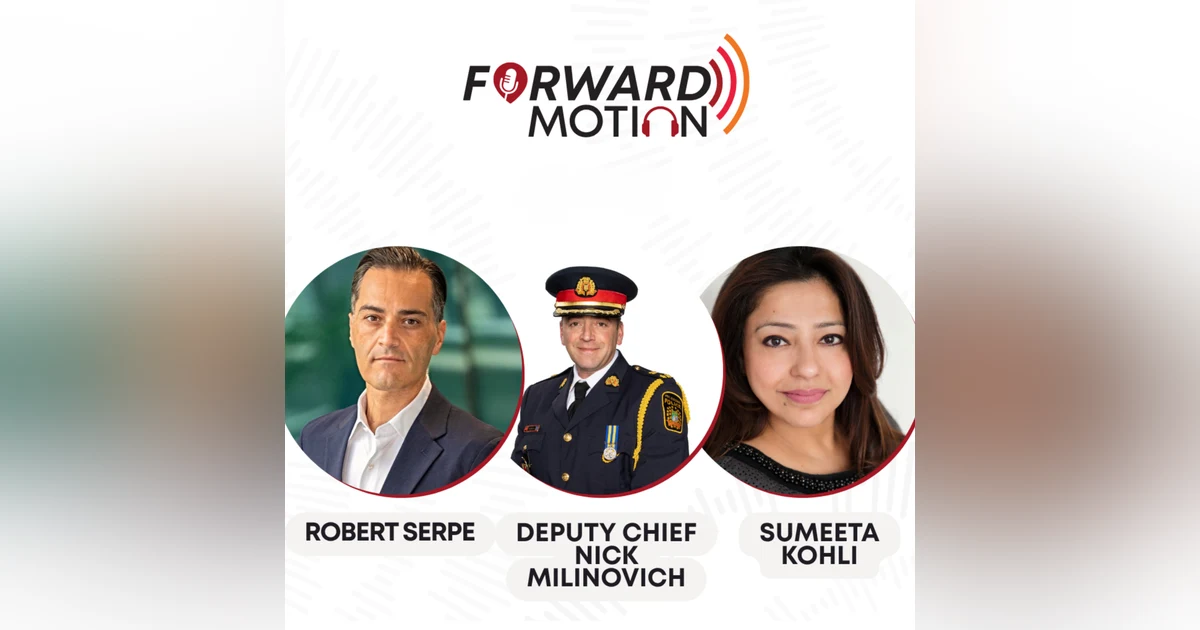
 Andrew Siegwart leads a powerful discussion on public safety in Ontario's tourism industry. Joined by Deputy Chief Nick Milanovic, Robert Serpe, and Sumeeta Kohli, the conversation delves into critical issues like human trafficking, active shooter preparedness, and community protection.
The panel explores the evolving landscape of public safety, emphasizing the importance of proactive measures over reactive responses. They discuss how technology, diverse communities, and changing communication channels impact safety strategies. A key focus is human trafficking, with experts highlighting the vulnerability of international students and the need for industry-wide awareness and training.
The discussion underscores the collaborative approach required to combat safety challenges, stressing that public safety is a shared responsibility. From law enforcement to tourism operators, everyone has a role in creating safer destinations. The episode concludes with a call to action, encouraging individuals to stay aware, speak up, and be part of the solution.
Forward Motion thanks its partners for their support of this show:
Ontario Travel & Tourism Monthly
See Privacy Policy at https://art19.com/privacy and California Privacy Notice at https://art19.com/privacy#do-not-sell-my-info.
Mary Anne Ivison 00:01
This is forward motion discussions about the important topic shaping Ontario's tourism industry. Here's your host, Andrew sigwar,
Andrew Siegwart 00:10
today we're tackling a side of tourism. We don't always talk about public safety from human trafficking to increase public violence, these risks sometimes show up in our communities and our businesses. So how do we protect visitors, support operators and keep Ontario's destination safe? I'm joined by Deputy Chief Nick Milanovich of Peel Regional Police, Robert serpe, executive director of the peel Police Services Board, and tourism industry leader Samhita Cowley, together, we'll unpack the challenges and the solution, and this conversation doesn't stop here. We'll take it even further at the upcoming Ontario tourism summit this October. Stay tuned. Hello everyone. Thank you so much for joining us, and you know we're really here to have an important and frank conversation about safety, but about becoming a better destination and a more safe and welcoming destination. But before we get started on that, I wanted to sort of ask each of you what inspired your personal journey in the field of public safety and advocacy, and maybe sameda, we could start with you.
Sumeeta Kohli 01:12
So I think two things. So one is, I'm fortunate to sit on the peel Police Board, but I'm also fortunate to sit on the destination Ontario board. And I think public safety was something, I mean, it's it's personal. We live, we breathe, we function within our own societies as well. But public safety has been a personal concern of mine as well. We all have families that, you know, function in where we are and what we do. I'm very fortunate to sit on a board that I'm so beyond proud of Peel police and what they're doing, and the constant proactive approach to making community safety a priority is just something a privilege to watch. As a board member, as you know, we watch this force do what they do. So I'd say for me, I'm I'm a very proud member of a very, very good force.
Andrew Siegwart 02:02
Well, thank you for that. I really appreciate it. How about you, Deputy Milanovic, I
Nick Milanovic 02:06
think it's, you know, terrific question, and it's not going to be entirely different from what you've already heard from Vice Chair Coley. For me, it started almost 26 years ago, and, you know, I decided to get into policing and and public safety. And the reality is, and it's very, very relevant to the topic that we're going to discuss today, I've never liked a person that targets another person or group or the potential vulnerabilities there for their own game, and so like when I became a police officer. Quite simply, I just wanted to protect people, you know, I believed in that idea. You know, you scale that up to where I am almost 26 years later. You know, from an organizational perspective, we continue to do that, and it's why conversations like this have become more important. When I was a constable dispatched to a call, you could protect a person immediately where I'm sitting now, I think it's conversations and devotion of resources to spaces that our community need, that are also equally as protective as you know, my experiences 26 years ago. So it's, it's something I take tremendous pride and very proud of. And you know, thankfully, I get to a lot of people like Vice Chair Coley, Executive Director serpe, who who are a part of that journey, but also promoting it and advancing it and pushing us it absolutely. And I think you're highlighting an important dynamic of law enforcement. It's what we do, or it's what you do to respond to a situation, but work like this, being proactive, planning ahead, taking all the knowledge that you've gained to sort of keep people safe before things happen, is really probably a lot more of work that takes place that people don't realize, isn't it absolutely like, you know, the I think, generally speaking, most people think of policing. They see it as heavily reactive. You know, when you talk about proactive, it's like the police officer patrolling a neighborhood, but where we've done things here slightly different in Peel are really, really pushing very heavily is, yeah, we're looking at prevention from the opportunity to educate on a systems wide level that results in people not having the experience some of the things that you know we are going to talk about here today, or communities being happier and healthier, and that's that is like, the satisfaction in that when done properly, is unrivaled.
Andrew Siegwart 04:39
Robert, how about you? I
Robert Serpe 04:40
think the easiest way to answer that, I've spent an entire career basically in government and politics, so I've seen the impacts public policy can play on the lives of Canadians across the country. I've worked at the federal level, the provincial level, the municipal level, but it's really at the local level that you start to see how. Are the various initiatives, the various you see these government announcements all the time, and they're all intended to make life a bit easier, a bit more affordable, but at the end of the day, having done this job for 10 years, and having seen some pretty rapid growth, both in terms of just sheer number of peoples, but also the demographic change that's taken place in Peel Region, it became pretty clear that if people don't feel safe, if businesses don't feel like they have the ability to thrive, then all this work that's being done is essentially useless, right? If people are afraid to go out and enjoy community centers and parks and businesses are worried that they have to cage up their stores at the end of the day. Then all this work we're doing feels like we're either, you know, behind the eight ball, or use the analogy you want, right? We're working with one arm tied behind our back, so the opportunity to contribute to making lives healthier and safer, and doing with this team, I echo what Deputy milenovich said, you know, I have the privilege of being the executive director of a board that of members who come from various backgrounds who really care about the community and a chief and leadership team, including the deputy who you know, they are not afraid to step into areas of public safety that in the past, people might have been a bit hesitant or resident to to do. So for me, it's really about making sure that we're all working together. And I know it sounds, you know, Kumbaya, it sounds a little bit but really it is. It's working all three levels of government. The amount of money that is put into our communities and into society to make life easier and better for Canadians needs to be like our role is to make sure that it's also safer,
Andrew Siegwart 07:00
yeah, yeah. And just that, this sheer investment and the sheer costs and all the infrastructure, there's so much that needs to be protected and secure, and your time in this important role and really a convener and bringing all of community members together. Have you seen that that change for a need for more proactive and preparedness kind of work, as opposed to assessing what's happening in the moment or being more reactive, absolutely, oh, 100%
Robert Serpe 07:27
I mean, listen, we live in a world where we are all more connected than we've ever been before. You know, even the idea of something like a podcast 15 years ago would have been what I understand. You're just talking and I'm just going to listen to listen to you. But so and it's a bit of a double edged sword, right? Every the amount of information our ability to communicate with our community has never been easier, but it's also never been more important, because at the same time, members of our community are more educated, they are more in tune with what's happening. We have a mayor and a deputy mayor on our board, and anytime they come to us and talk about an issue, they don't find out about it because it was on the news. They find out if they find out about it because it's come through to them on one of their you know, 50 or 100 WhatsApp groups that they're a part of. Communities have and communities have come together in ways that have been redefined. Right? What creates a community is no longer a neighborhood or a municipality or a province or a country, right? We have these micro communities that have been forged and created through social media groups, through church groups, you know, and in Kiel, a place that is, you know, 60% racialized. We had to figure out pretty quickly that traditional channels of communication, traditional ways of being proactive, aren't working anymore. And to the deputy's point, a lot of people think policing is reactive. We don't have the ability to be reactive. We have to get ahead of a lot of these issues, and we've tried our best to lean in as much as we can, for sure.
Andrew Siegwart 09:03
You know, Samhita, I can't help but think about your the other work you do in the marketing sphere. And it's interesting to me how what what these gentlemen are talking about is no different from what marketing teams and businesses think about in terms of how to connect with communities. You know how to understand that communities take different shapes, and maybe you can't find them in the traditional places you used to. So it's an interesting intersection, which is why I'm glad you're, you're all with us. You know, any thoughts on that intersection?
Sumeeta Kohli 09:30
Samita, yeah, I think, look, you know, just even from a marketing perspective, we talk about this at Peel, right? So, you know, we, I think Nick's talked about it, Rob's talked talked about it myself, as well as that, there's so much good work happening. First of all, one on one marketing, if the end user doesn't know what you're doing, it doesn't really matter. And I think that's one thing that's really changed because of social media. And As Rob mentioned, because of the way communities have become you have to communicate very differently, right? I think there was a time where talent. Halls were a way that you would communicate today, the first thing people do is look at what's happening on social media, even reporting. You know, I know it sounds really funny, but we hear more of what's sometimes happening because the amount of videos that get taken of a situation and and frankly, for officers, it's a way to better understand because not everybody is everywhere they need to be, but it is completely different than what it has. And I think marketing, at the end of the day, we're all marketing, you know, at the end of the day, we're all a brand. Everything we do is a brand. So I think the key is to be able to make sure that, from a community perspective, they understand what's happening is relatable to them as well, right? It's what's happening in their neighborhood. So and one thing I'll tell you that was fascinating to me during covid, also culturally, our environment has changed. How we take news has changed. You know, our teams today, because of all the different communities that we are around, they take news in a very different way. I can tell you, within the South Asian community, just using it as an example, the amount of South Asian media that's ahead of the game to get information into your whatsapp, you know, before it's even happening on cp 24 sometimes. So it is very different how we have to market as
Andrew Siegwart 11:15
well, and how we have to find those communities to be able to engage in the conversation Absolutely, which is as true for business as it is for law enforcement and so many spheres. Okay, so one of the things where, you know, we're going to talk a bit about today, or the bulk of our conversation is on, is on human trafficking, and you know what's happening in that space? How do we how do we prepare for it? How do we work together to fight it? But I'm wondering if we can just start, you know, what? How would you define human trafficking? What really is it, and how does it show up in tourism environments? You know, maybe, Nick, can we start with you?
Nick Milanovic 11:50
Yeah, so, and I'm going to, of course, I want to keep it like digestible for those listening and and simple. The reality is, is human trafficking very simply and plainly put is the use of control, manipulation, coercion, or however you would like to frame it, to force somebody to do something against their will, for a person or a group. And you know, it can take forms that span from like sex human trafficking all the way to labor, but it's, you know, taking advantage of a person and then capitalizing on that for another's benefit, whether it be, you know, monetary or otherwise. And you know, the first thing I wanted to say is, when you ask me, what is human trafficking, I want to say it's disgusting. It's one of the absolute worst crimes you know, that that we investigate, and it absolutely is cause for concern.
Andrew Siegwart 12:51
Absolutely Anyone else want to sort of share any perspectives there?
Sumeeta Kohli 12:56
From my perspective, I think the part that scares me the most is and as first of all, of course, Nick defined it the best way possible, but it's the fact that they take advantage of the young kids and girls and boys. You know, I think at one point you had thought it was just girls, but it's boys and girls, and the fact that you're taking advantage of somebody who really doesn't understand what they're getting into and then when you start to understand grooming and how some some of these things take and the way they're doing it and and I think with human trafficking today, it's so advanced in how they're approaching that's what's also scary, because it's no longer somebody just simply approaching you. There's technology involved, and technology has made some of those advancements and vulnerabilities Much, much easily. You know, I would say much, much more easily targeted. And that's personally what scares me. For me, I'm really passionate, and I appreciate tayo really taking a step up and really making this conversation happen, is, you know, this all began because I have four nieces, and let me tell you, all I want is a better world for them and opportunities. Nick has three daughters. Rob has a daughter, and I think we think the same way is them, their friends, our families. You know, at the end of the day, we just want to make a safe place they can go to a place, a tourism place that they love to go, not have to think twice, that they may get approached or something may happen, not have to be with them and hovering. And you know what I mean, like what we were able to do? So that's kind of why, for me, this is a very important and passionate topic.
Andrew Siegwart 14:23
And I think you're really right. Both of you are really right to point out the the changing dynamics on communication technology social media is access to the internet. I mean, really, we have to be aware of all of that in order to understand it, so that we can track some of this stuff and combat it. And I would imagine just the overall awareness level and training must be incredibly the needs must be incredibly hard. I'm wondering, you know, from a law enforcement perspective, how do you stay ahead of these technologies, you know, thinking of AI and other other innovations, you know, how do you, how do you stay ahead of that stuff? In order to you. To find out what you're looking for,
Nick Milanovic 15:01
continuous improvement, innovation, like, it's about innovation as being, like, primarily oriented, fudgy, etc. But, you know, we're always looking for opportunities to innovate in our delivery and our response models. You know, peel was one of the first police services nationwide to establish a human trafficking investigative unit. You know, we've had some from an investor perspective, some first, like we've prosecuted these cases without which establishes a benchmark. So, you know, we continue to push and that's the way. Well, it's twofold. You need to be committed to it. You have to have the right people in those spaces that are passionate about it, and we need to spend as much time trying to figure out how we can stay ahead of it as the people are victimizing our community are spending and trying to avoid us. And, you know, here's the reality, we're better at it than they are. We're better resourced and and I really believe that we're we're better motivated. So, you know, we just continue to push. And this is a great example of that, right? Like so 20 years ago, a police service having a conversation like this with an organization like Teo or like in this venue doesn't exist. That's why, as a police service, we've realized that the value here, and sort of the ownership of making it better in that space is does not sit exclusively with a police service. And if anybody believes what they're doing is in effect, there's so many different opportunities and stakeholders that should be brought along in that conversation, because it this is a community problems, like broad community problem, the best response is inclusive of our community, and this is a great demonstration of that.
Andrew Siegwart 16:48
And you know, I can tell you from my own personal experience, when I worked in market at a local destination, I was always very surprised by and impressed by the level of data that our local law enforcement could bring to the table. And often, what happened is it was that local opp team that caught the risks and brought them to us, as opposed to the other way around. So it's, it's a real it's a network to tap into for industry. You know, it's for those who are listening. So we have a greater understanding of really what human trafficking is, to the best that you can what's happening in this space right now? Are we seeing incidences and networks growing? Is the risk getting more severe? Are there? Are there things that we need to be aware of in our industry that we might not be aware of? What can you tell us about the status quo in Peel in Ontario
Nick Milanovic 17:36
and Canada continues to be a growing concern. Like in terms of statistics, we are seeing more and more incidents of human trafficking. So like, purely from data perspective, continues to be an issue. You know, the other element I would add to that because, you know, the numbers are always interesting. They kind of indicate what's already occurring. But if we look at the reality that is Canada right now, and the way that the country is currently situated, it's going to continue to be an evolving and increasing concern. You know, we are having more and more people visit our country. You know, immigration continues to be at all times highs. There's just so many different elements that contribute to the idea. And really, I think what should be a commitment from everybody to see this as the priority that it is, in order to prevent it from moving to where it already is, which is a huge issue, to crisis levels. And again, you know, I'll say it over and over again. It's why these conversations are so incredibly important. It's why it's so important that everybody who has a potential stake in resolving this as an issue or combating it does that. And you know the value of that's incredible.
Andrew Siegwart 18:57
Is it common in countries where there are more open borders and more, and say, more multicultural and just sort of open societies. Is that just something that comes with the territory? Does it, or does it also have to do with sort of the the size and just distribution of Canada as a as a nation?
Nick Milanovic 19:19
You know? The from my perspective, the answer to that is both, you know, there's so many different cultural considerations, nuances to the conversation. You know, of course, like, if you take like, size of a population, of course you're going to have an element of people that are looking to gain from manipulation, coercion, violence, to force people to do things that they want to do that's like a reality of the world. But then you over top of that, you layer some of the other things that make Canada great, but also potentially attractive to people or organizations who would like to take advantage of those types of things. It's it's naive. Not to consider the same things that draw that either, you know, keep people in this country and be thankful for being here, or draw people to this country are going to naturally also draw an element that's looking to capitalize on that and isn't interested in or is not concerned with whether or not they hurt people in benefiting from
Andrew Siegwart 20:24
their activities. In terms of these networks, are they typically large networks? Is it like an organized crime, sort of multinational, large networks? Or does it tend to be smaller operations or a mix?
Nick Milanovic 20:39
We see both, you know, you see everything from very small, localized networks where you have maybe potentially one or two people who manipulates people into certain lifestyles that they wouldn't otherwise be in for their own personal gain. And then we also see like larger, more organized networks. And you know, whether it's human trafficking or any of the other things that we're we struggle with as a country in terms of protecting our community. I'll say this, anywhere there's an opportunity for profit, there is a element of community that is willing to take advantage of that and could care less about who it hurts or the laws they break.
Andrew Siegwart 21:22
And then I think there's another dynamic too, and I'm drawing on when I used to work in the retail space, and there was a lot of organized retail crime, and I was often something we worked on to address. But one of the things that we knew was true is that it was also demand driven, so the end consumers. There was a demand in a market for those stolen goods, and there's for the for human trafficking and the outputs of that, there's demand for for that, for that behavior. And I'm wondering if you could just sort of speak to a little bit about that, because to me, that that's part of the problem.
Nick Milanovic 21:58
Yeah, and you know, there's, there's always this, I think interest, generally speaking, in the public, to separate, like the idea of, I guess, priority crimes, or more organized crime, from private, legitimate or commercial enterprise. The reality is, they operate on the same concepts, which starts with demand. This is a and I'll say it over and over again, another great demonstration of it when we start to build response strategies. And okay, how are we going to deal with it? Of course, you have the individual incidents, the big projects, like from an enforcement perspective, what people assume from policing? We do that here in Peel, and I would argue with probably anybody in the country, we do it as well, if not better than anywhere else. But I think part of the reason why we are also really, really good at it is we understand those things, those concepts. So when you talk about demand, it cannot just be enforcement driven response. We work with community partners to try to lessen the demand, to, like, elevate the levels of understanding from our community of what it actually means. You know, like, there's, I've been, like, personally, part of investigations many years ago, where you have a conversation with a person who has been arrested as part of a human trafficking investigation on the demand side of things, ie it's a person who has paid money for whatever the case may be. And you hear from these people like they have families too, and the idea that they're willing to do those types of things to somebody else's family member, I think they, they almost, you know, they sanitize themselves from that. That's why, like, the prevention, the education piece that's super important to try to push down the demand. And then you have other elements too that you could talk about, like, you know, in for, like, sentencing those types of things. But yeah, it really has to be a whole of continuum approach to this, if you're going to be successful in in addressing the issue
Andrew Siegwart 24:04
here. Thank you. Yeah, that's, that's very helpful. It really is a 360 degree way of looking at things. Samita and Robert, any additional commentary to share?
Sumeeta Kohli 24:13
So I think one thing Nick said very well is the awareness piece. And I think one of the, you know, so one of the groups I'll mention. I mean, just speaking of human trafficking and and also looking at who, you know, who being taken advantage of. You know, international students was a big population that we've seen. I can at least in Peel, I know, and I'm sure it's in other areas too. You know, they came in New Post covid. We saw it in flux. Many of them are part of the group that's been taken advantage of because they were vulnerable. You know, they came into difficult situations. And I think the big thing that even for me, a big learning from actually talking to young girls and students and sometimes even mentoring and learning, is they don't even know their rights, because sometimes they're coming from countries where they don't feel comfortable going to law enforcement, so they they were being taken I mean, I've. Personally, had conversations with girls where, you know, for rent, they got taken advantage of because they didn't know any better. They didn't have family, or they didn't know who to go to, and you had to say to them, No, this is not okay. These are not things that are okay and you can go so I think that awareness piece, and I'm very proud of the work that's happening, and that's why the community conversation comes in, right, being entrenched in there, talking to them about it, making them aware, and say, you know, not all countries are the same, because we do have a big population that is in that situation. And when it comes to tourism, many were big working force within this industry as well. So I think that's what, where our sector comes through, to say, how do we and I think we have a lot more work to do on this to help this population. And I think, you know, tourism is an amazing industry where they hire, whether you're a newcomer or not newcomer, everyone is welcome to work, and they're proud of that. But I think the part that we can get better at, and I think we are, I'm seeing it from a lot of our industry individuals, is you're starting to see more awareness and conversation, and you know, an average person working in it to know something's not right here, something's not okay for this person. How do we help them? So I'm hoping that as we keep doing these we'll see better, better results of what's happening.
Andrew Siegwart 26:16
Yeah, and thank you for sharing that one example, because I think that is a really good example of where people might not have thought about that. But when you stand back and think about it, all the media attention that was happening about the number of international students, some of the challenges. So, I mean, all those numbers are publicly available. So if you're a network that's looking for opportunities, the story's out there, right? So it becomes an entire community is is suddenly at risk of being targeted. And I think that's the those are the things we have to be thinking about. Robert, anything else you wanted to share? The only
Robert Serpe 26:51
thing I'll add, and I, you know, I think I, you know, I'll start by echoing exactly what Nick said at the beginning of this right human trafficking is such a heinous and despicable crime, and I don't want to boil it down to sort of classic economics, but you both started this question, talking about the demand. There is a demand out there, and taking same as point about just this incredible influx of international students, many of which are coming in extremely young. They come in vulnerable from day one, uneducated, many of them don't speak the language. The reality is, demand is high, but so is supply, and that is a really scary thing for us to have to think about. You know, we talk a lot as a police service board about this concept called adequate and effective policing. It's as complex as the role is, and Sumida can speak to those complexities. It really boils down to that's the simple responsibility of the board, right Nick and his team and the chief, and they have incredible responsibilities that go far beyond adequate and effective policing. Our job is to provide that, and that's to give the chief and the team the resources they need, but also to ensure that we as a board, understand the changing nature of the community's needs. So when it comes to you know, the new risks associated with the mechanisms that exist for human trafficking. We need to get ahead of that awareness, absolutely is one of the things that becomes part of that effective policing part. But the other part is ensuring that the chief next team are adequately resourced to make sure that if we can't stop human trafficking from happening, from happening, we're going to get the guys that are that are perpetrating these, these crimes.
Andrew Siegwart 28:43
Having that readiness and resources available is critical. And the more we talk though, the more the more clear and obvious that that becomes, doesn't it? Beyond sort of the human trafficking in the way that we've defined it, what other public safety concerns do you see affecting tourism destinations or the industry at large,
Nick Milanovic 29:03
you name the public safety concern. It exists there. And, you know, contemporarily, I think it's unavoidable. You know, the reality is, is okay, we've got FIFA coming, you know, all of these large events, or any place where there's large amounts of people, we have the same public safety concerns that exist there, and the planning that goes into them is, you know, we're really, really good at that. But I think the being able to predict what is, you know, you've got extremism, human trafficking, of course, is an issue. You know, I would go everywhere from auto theft, carjacking, like those big buck items that we're talking about on a national level, exist in any space, and they exist exponentially more anywhere where you're drawing people in large numbers. Dollars or drawing people from outside of a geographic area to the destination. Now, it sounds a bit doom and gloom, but what is also available, there is opportunity, right? Like, you know, the I've had a lot of conversations with friends who are in policing, they're like, Oh yeah, it's, you know, for example, like, you know, I have a really, really close friend who is a doctor, and one of the things that he is really, really heavy in is being able to predict a negative outcome based on what's occurring, and then try to get engaged prior to the negative outcome. And that's the reality of what policing has become. You know, we aren't any different here in Canada than anywhere else in the world, and we've seen these things, like history repeats itself. So okay, what is possible here? Where were we most afraid of and how do we insulate ourselves from that occurring? And you could really pick, you know, any global or world news story and say at the next big event, is this possible and what's being done to prevent it? And that's kind of the starting point of the conversation.
Robert Serpe 31:08
Yeah, I could jump in maybe at that point. I think it might be interesting for your listeners as well. I mean, we've been going to talk a lot about peel, and some people might not even know what peel is, where is peel. You know, we've always been for the longest time, peel was, you know, the suburb next to Toronto, right? It's where you lived in the suburban place, because you either couldn't afford the city or you didn't want to live downtown Toronto. But the reality is, peel is the fastest growing, most diverse and probably the most strategically located region in Canada, we have almost 1.7 million people, 60% of which have come from another country. Seven major highways pass through peel and we're home to the largest airport in Canada. 120,000 passengers per day come through. So from a tourism perspective, the economic activity and opportunities for peel are endless. What it also brings though is we like the ability to celebrate our diversity, to celebrate our multiculturalism means we have more mass gatherings, parades, food festivals, you name it, all the time. We also have a number of protests, right? I mean, there's a lot of a lot of differing opinions. When you have you bring in this many people, but we also, because it's such a fast growing community. You know, as our Regional Chair says, all the time kills, bringing in almost 100,000 people per year in new we're going to be over. We're going to be over 2 million people in less than 10 years. We're also a community that, you know, if there's news that's happening in another country or a inciting event, you know, halfway across the world, it may lead to a protest. It may lead to a celebration in Peel Region, and we see it all the time. So it brings unique opportunities, especially in the tourism industry. We're seeing more hotels than we've ever seen spring up in Peel just the other day, I drove by what is going to be an 80 story condo building in Mississauga that was that's something you couldn't even have dreamed about even 10 years ago, but it also brings those challenges, right? And we understand that, and when I talk about adequate and effective policing and resourcing our police, it's something that we both take pride in, but understand that responsibility. Last year alone, we brought in one of the largest budgets in Canadian police history, 300 new officers, 65 new civilians. And we plan to continue to build off of that this year, because we have to keep up with this growth to ensure and you know, we said, I said at the very beginning of this, to make sure that our community feels safe, our businesses feel like they can thrive and succeed. And it becomes a place where we're no longer a suburb of Toronto. We're a place where it becomes a tourist destination. It becomes a place where people are going to choose to live, not be forced to live. So we appreciate all of those opportunities, but we also appreciate those challenges at the same time
Andrew Siegwart 34:19
and being so globally connected, it's an example like from from perceived suburb of Toronto to actually portal to the world. In
Andrew Siegwart 34:34
light of the tragic shooting in the United States, I wanted to ask you about active shooter preparedness and and public safety, and, you know, all these gathering spaces that you're that you're talking about. I know that this, it's a far away example, but I think we can learn from some of these tragic situations. You know, how should businesses right now? It really any. Business that's that is operating in public spaces and bringing people together, you know, how should we be tangibly preparing for these rare but devastating threats? What? What advice do you have for us to balance safety without creating fear? You know? How do we how do we balance that?
Nick Milanovic 35:17
You know, for me, safety is created through awareness, you know, and you mentioned, like, a far away incident that happened in the US. I think it starts with the concept of no like, the world has become a smaller place. So when something occurs elsewhere, the first question that you know, particularly like our our corporate citizens should be asking themselves, is, well, what is being done to make sure that the people that we're trying to deliver to are able to enjoy in a in a space, in a place that not only is safe, but feels safe? And it starts with that conversation. We need to rinse ourselves of the idea that what help happens elsewhere doesn't happen here. And I know, like, you know, listen, I'm going to tell you I am an eternal optimist. I really, really believe in the community country and that I live in. But I think part of the reason why I do is because the application of the idea that we need to work at that it doesn't come free. So asking ourselves, okay, what have we done in these spaces in order to prevent some of those things, with the understanding that something that happens, and you know you can fill in the blanks however many hours away has the potential, within minutes, to polarize a community that exists here, very locally. And if you fail to recognize that, that's when, as I mentioned earlier, history repeats itself. But if you are, I guess, responsibly aware and engaged in sort of preventing that polarization. You really can make a difference. And like we've seen it, you know, Rob's heard it, samida's heard it, they've supported it. You know, that approach has saved lives in Peel and in Canada, and it's something that I just really believe in, yeah,
Andrew Siegwart 37:26
and it's, it's really good advice, because sometimes things are far away and it's really easy to go, Oh, we don't, you know, it's not us that's not us. And being more, more less naive and more proactive is, I think, really important for all of us, and it's it almost forces us to puncture the safety zone we might feel we're in. But the irony is, when you accept that and then you prepare for the risk you you bring the safety bubble back. So that's the it's we're all responsible for that, aren't
Nick Milanovic 37:53
we, absolutely and that would just, you know, like there's like, this element of scalability to everything that you approach too. So when that occurred in the US, like, of course, had conversations with my team. You know, I have a large intelligence section briefings, okay, what are the risks? What do we know? Connect with partners. So, like, on a on a 50,000 foot level, it's like we're, we're trying to assess the risk and then mitigate it. But, and you know, on a personal level, for anybody that may be listening to at one point, I realized I hadn't had the conversation with my daughters. We're absorbing social media, right? What's their interpretation of it? Have they seen these things like and you apply that approach to, you name, the next incident equally as important, right? Like it's, you know, it's, uh, the idea of, it takes a village. It really is. You need to invert that as well, right? If everybody was aware of those things, and in their day to day, they approached it with, yeah, this is a very real possibility in their work life, in like, in terms of corporate orientation, you know, whatever the case may be. But also applied it locally or more specifically with their family to identify those things like, we are so much better insulated and prepared to either respond to or prevent, and to me, that is the golden equation.
Andrew Siegwart 39:28
Yeah, for sure, awareness and talking about it and factoring it into your planning, even at a even at an awareness level, is a good place to start, isn't it, sort of bringing it back to the the human trafficking topic, although I think really we can some of these questions that follow really kind of relate to to all of these, these, these risks and opportunities. What's your sense of how aware tourism businesses are about this? Let's call it a threat level. And you know how, how are they doing in terms of their prepared. Preparedness. What from your perspective, what do you see are the risks and the in the opportunities?
Sumeeta Kohli 40:04
Today is an example, organizations like tayo stepping up, perio is stepping up, and many of them all, I think what we're discovering is many are doing a lot, but in pockets. And I think what's missing from an overall industry for tourism is kind of all coming together. So I think many are aware. I think there's an opportunity of more awareness. So one thing that you know, when we look at we talked about technology, it's been quite scary when it looks at tourism. So keyless room entries, right today you're going into that room. Fact that we're talking about sustainability and tourism, which is fantastic, but it also means that nobody goes into that bedroom for three days, right? If they don't have cleaning and they don't want anyone to clean their room, nobody is going into that room. Many hotels today are removing phone. I've experienced it in Europe quite a bit because they're like, you don't need a phone in the room. Because what that means is now that person who is stuck in that room, they also can't, you know, can't call out. So I think what it's doing, while it's great in other ways, opportunity to say, what are the things that we can do to put in preventative or safe treasures, you know, to sustainability? Yes, you have to go down that path. But now we say, right, how do we make this make our a little bit more responsible? And I think a big thing is also training. I think there's an opportunity. And I look at it, I take it from Nick was an eternal optimist. I think there's a really good opportunity when it comes to training within our industry, in parks, right? A lot of times it's 1517, year olds, 18. I worked at Wonderland. That was my first job. I did it three summers in a row. It's tastic, but they're the closest to what's happening in that lineup. They're the closest to the people that are lining up for us. So I think there's an opportunity for us to, you know, and make more training and more awareness spotting. Now our kids live on social media. Let's be real. They're going to live on it. They're going to continue to live on this. We know that's how they are going to learn. When it comes to our industry, I think we're aware. We want to do things. There's a lot of opportunity to do right things.
Robert Serpe 42:07
Listen, there's, there's obviously a lot that can be done. We have always been proponents of being prepared, right? And, you know, bringing it back to your last question about, you know, these mass gatherings and the fear of a mass shooting, it's, and the deputy mentioned about being prepared, right? And an analogy, and it's actually linked to the tourism industry, is, you know, being home to the largest airport in Canada, the fear is always something happening at the airport. So you prepare for every one of those scenarios, and one of the things they trained for forever is a plane crash. And this year, we had one. Haven't had one, you know, at Pearson Airport, but we had one. And you know what? The training kicked in, and it was managed in as good a way as you can manage a plane crash. Thankfully, it wasn't a tragic plane crash, but it was still a plane crash that disrupted the airport, it disrupted traffic, it disrupted our own ability to police our community because of the number of resources required. But being prepared, I think, is extremely important, and part of that is ensuring we have the right partnerships with the industry and with government, Sumida mentioned legislation. You know, we're constantly working with the justice you know, Ministry of the Attorney General, with the tourism minister as well, to find ways at looking at strengthening legislation and regulation so that public safety and law enforcement can partner with places like hotels and businesses, in a way that, I think, ensures that we are all working towards the same end goal, which is the safest possible destination, whatever that looks like, and whatever that is. We don't want to be reactive. We talked about that already. Sumida mentioned training, I think, regular training, this whole preparedness scenario based workshops and building these relationships so that, you know, if we talk about hotels, hotel owners and staff know what to look for, but also who to call if they need to, if they need to call somebody right away, having those direct communication channels so that there's a clear, trusted Contact in, our case, in law enforcement, and not just some generic number that you call that, you know, I think that there's a lot that we know we need to do, and I think it's really just about bringing the right people together at the right time. And I think we find this a lot, you know, we find ourselves next to me and I are often talking about all kinds of things, and before you know it, we realize, Hey, why aren't we talking to, you know, this partner or this stakeholder more? Because we can all be working more closely together. And I think this was a great opportunity when, when Sumita brought this to our attention. I mean, it was one of those things where, why haven't we been talking about this more? Why haven't we been thinking about toolkits and training and figuring out ways to work more closely together? Because there we can't just simply rely on the same methods when everything else is becoming more sophisticated more complex, if we're not keeping up with it, which we know we are. And the deputy said it himself. We're really good at catching these guys, so we're going to continue to do it, but we want it. What we want to do is make it hard for them to actually carry these, these, these crimes out.
Andrew Siegwart 45:30
A big part of that is that that law enforcement, government industry collaboration. And you know, I know that you know this. This interview today is a bit of a teaser, and we'll be talking more about it at the Ontario tourism summit, but you've shared a few examples of some of the things that are that are planned to come. More tools, more tips, best practices. You know, I can tell you, just from my own personal experience, one of the biggest pieces of advice that I give any operator, whether it's an individual operator or a cluster of operators or smaller destinations, is just to set up a regular line of conversation with your local law enforcement, whether that's municipal or whether it's opp or, you know, whomever is in your jurisdiction, and just meeting a few times a year as a starting point starts to get the ball rolling. And it's like it's a relationship. When you have a relationship with law enforcement, then together, you can be more connected. And so to me, it starts with relationship building on top of that, and I've seen firsthand how it makes all the difference. But I like what you're talking about legislation, you know, just thinking about it, I can remember times where we had to submit fire fire plans to the city, and there was a real process for that, right, based on fire roots and things like that, but there's never necessarily a templated approach for other types of things, although I would imagine for some festivals, depending on where they are, there's a law enforcement tool and requirements. But I think we're going to probably see more of those kinds of planning frameworks become the norm, aren't we?
Robert Serpe 46:59
I think so. I think, so, I think, and this is one of the things, especially, you know, we were talking here in Ontario, obviously, this is we've seen from this government, at least the government of the day, who, you know, I'm open, I can openly say, have been a good friend to public safety and they, you know, In a number of conversations with both senior government officials, elected officials, public safety matters to them, and finding a way to strengthen areas of personal safety, I think, is something that they're always willing to listen to, and that I find has been a Bit of a breath of fresh air. It's a government, you know, and in the past, the government has a bad reputation of moving slowly. Government has a reputation of not wanting to rock the boat very much. But when it comes to this public and personal safety narrative, this government is leaning in with both shoulders, and we are here for that, and we are willing to lean in with them, and we'll continue to do so great.
Andrew Siegwart 48:03
Yeah, and we will be right there with you, and we see it as an important process. So, you know, I think this has been a really informative conversation, and I think really does set the stage for our next engagement together at the Ontario tourism summit on October 28 and 29th and we're going to dive in a little deeper. There's an initiative on the safe tourism zone. We're going to talk about and and a few more items. What I what I have a parting question for each of you and for those who are listening right now. Today was a bit of an orientation. We talked about some of the issues, raising some awareness. But if, if there's a listener today who is thinking, Gee, what should I do to be part of the solution? What can I do in my role? What advice would you have for them as a start?
Sumeeta Kohli 48:48
You know, we talked a lot about awareness today, and so I would say that's one thing that's really important of you, whatever role you're in, whatever industry you're in, whatever opportunity you have, but I think awareness is the number one thing. So if you see something that does not seem right, or if you see something that's a situation that does not feel right, I think one of the big things is awareness and learning what you can and can't do. I think that's a really important opportunity. I think that if it means that you know you're in a situation, and you observe somebody who's being taken advantage of, if you're in a situation, I'm not saying go and intervene, but I think you need to know your I think you need to be able to say something. I think especially in the tourism industry, you are part of such large gatherings, and, you know, individuals coming through and much in big groups. I think if, if there's something that you see an organization, if there's a way make them, make your staff more aware, and help them with the right tools to be able to access how to report something. I think that's probably the best art you can give to that individual, or to somebody who observed something
Andrew Siegwart 49:50
as well. And in terms of that you know where to report same day, is that. I mean, obviously businesses can reach out to their local law enforcement to find out where. The right channels are. But is there another place you would direct them to in the absence of that?
Sumeeta Kohli 50:04
Yes, and actually, I would like to actually turn this over to the deputy, because I think he's the perfect person to kind of share of what are the resources available and what many teams are doing today to actually engage with the community. So maybe I'd for everyone as a deputy.
Nick Milanovic 50:19
My belief is there's this element of scalability. So, like the reality is on an individual level, depending upon where they are. At this point, I like to believe that there's so much available in terms of where you can make a report, who you could call. You know, are you calling the front desk of your local police station? Are you going online Crime Stoppers, those types of things, but to Vice Chair coley's point, it starts with awareness, right? It starts with awareness. It starts with whether it be individual citizenship, corporate citizenship, or just like an assertion that I'm not willing to see what's happening here and accept it. To me, it's about momentum. So either way you slice it, we really need to create and support the momentum of change. We need to fight against these things. So if I could leave one message with a person, a group of people, an organization, it would be we don't have to accept these types of things in our community, and collectively, we really can make a difference. And when we acknowledge that like and it's not just by what it says on a business card, but it's you know, by what you're able to report, what you're able to advocate for, what you're able to refuse, that's where we're going to make a difference and where we're going to make our neighborhoods, our communities and our country better. And like I will give a tip of the hat to Vice Chair Coley and Rob, they have not only equipped us with the resourcing, empowered us with the voice, but also encouraged and pushed us. We just need to continue along that path, and it's going to be better for the next generation.
Robert Serpe 52:16
Robert, so I think the message you know that I think I would want to leave with your listeners, it'll be the same type of message I want to leave with the audience at the Ontario Tourism Conference in October as well, is that I think we don't want to underestimate the power individuals can play in in being a part of a solution here. Don't, don't, you know, underestimate your role. You know, you don't need a badge, you don't need a title to make a difference. And really, I think, to me, it's three things, right? It's paying attention. It's just if something feels off, trust your gut, trust your instinct. It may be nothing, or it might be someone that needs help. You know, the other one is to speak up, right? You don't have to be an investigator. You don't have to you're not a member of the police service, but if you can speak up and as both same and Nick said, report your concerns to law enforcement or victim services, or walk up to a hotel worker or a staff member at a venue and say something feels off, those little moments could save someone from being human trafficking. It could save a intimate partner, violent event, and then the last one, again, we talk about awareness. Is just to support that awareness, right? Make yourself a part of your community. Share information with your networks. You know, the more we talk about it, the harder it's going to be for exploitation to take place in plain sight. You know, we always say it all the time. Public safety is not something we can do on our own. It involves, you know, everyday citizens, residents of our communities, paying attention, speaking up, and basically deciding that, you know, today I'm going to be a part of the solution, and I think that that is the the message I'd want to leave behind to everybody who's listening and to everybody who will be joining us in October.
Andrew Siegwart 54:01
Well, thank you very much. Thank you all for a great conversation. Awareness certainly step one, and we've done some great work on that today, and we look forward to continuing the dialog later in October. And I just want to say personally, on behalf of the industry and myself, you know this is great work. You're showing such leadership at the community level. So much happens within our communities, and we really need to rely on all of our partners. And I think for businesses, particularly, our partners aren't just our customers, our staff, our suppliers. And you know, it's it's law enforcement, it's your local government. I mean, the partnerships are only growing. They're not shrinking. So we look forward to helping to foster those partnerships going forward. And I think I shared with you on our prep call, I grew up on a household My mother was a police officer and a detective when she retired, and so I have a great deal of respect for the work that you do, protecting our communities and all this. Proactive work to really protect those in need and those who are vulnerable. And so I just want to thank you, both, all three of you, for your work in law enforcement on the Police Board. Your volunteerism makes a difference. So thank
Robert Serpe 55:11
you. Thank you. Thanks for having
Mary Anne Ivison 55:13
us. Thanks for listening to forward motion. This show is created by the tourism industry association of Ontario and is recognized by government as the voice of tourism and produced by everyone at the sound off media company the.


