Elevating Black Tourism Experiences in Ontario
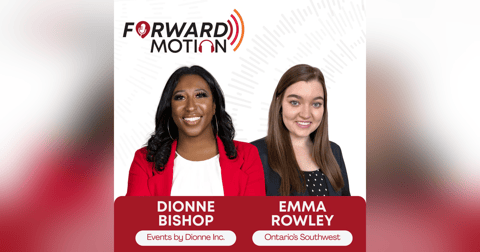
Andrew Siegwart explores how Black tourism in Ontario is evolving from a niche offering to an essential driver of both culture and the visitor economy.


Guests Dionne Bishop (Events by Dionne Inc.) and Emma Rowley (Ontario’s Southwest) share their career paths in tourism and discuss how the Black Tourism Working Group organically grew into the Black Tourism Alliance of Ontario.
They highlight the impact of the Black Tourism Spark Program, which has helped catalyze new Black-owned restaurants, culinary tours, and Black history experiences while building vital networks and mentorship opportunities.
The conversation also explores standout destinations and experiences across Southwestern Ontario, including festivals, Underground Railroad heritage sites in Chatham-Kent and Windsor, and emerging culinary and storytelling ventures.
Andrew, Emma, and Dionne discuss the economic power of Black travelers, the importance of visibility, safety, and authenticity in tourism, and the need for intentional partnerships between entrepreneurs, DMOs, RTOs, and community organizations.
The episode offers a clear call to action: integrate Black-owned experiences into the heart of Ontario’s tourism story and recognize tourism as a tool for equity, belonging, and economic growth.
Forward Motion thanks its partners for their support of this show:
Mary Anne Ivison 0:01
This is forward motion discussions about the important topic shaping Ontario's tourism industry. Here's your host, Andrew sigwar,
Andrew Siegwart 0:10
today on forward motion, the Ontario tourism podcast, we're exploring an important and timely conversation about how tourism can be more inclusive, visible and impactful, both culturally and economically. I'm joined by Dion Bishop, owner of events by Dion, and a partner in a new initiative focused on elevating and integrating black tourism experiences in Ontario. We're also joined by Emma Rowley, Tourism Development Manager with the Southwest Ontario Tourism Corporation. In this conversation, we're going to unpack what black tourism looks like in practice, not just as a cultural lens, but as a growing opportunity to attract visitors, extend stays, support local businesses and strengthen Ontario's visitor economy. We'll talk about visibility partnerships and why making experiences easier to discover matters for travelers and destinations alike. We'll also explore why this work is resonating right now, from growing interest within Ontario to the opportunity to invite visitors from outside the province and beyond, and how collaboration between entrepreneurs, destinations and regional partners can help turn great ideas into real, bookable experiences. It's a conversation about confidence, belonging and growth, and how expanding the way we tell Ontario's story can ultimately strengthen tourism for everyone. Emma and Dion, thank you both so much for joining us here at the forward motion podcast. Thank you for having me before we get into talking about this exciting initiative itself. I'd love to start with each of you. Can you sort of take us through your your career journey? So what? What brought you into your work in tourism? What and what led you to start thinking about black tourism in Ontario in a more intentional way. Emma, why don't we start with
Emma Rowley 1:46
you see, in my case, I've always seen tourism as such a powerful way for us to really benefit communities. For sure, it's a tool that we can use to, of course, welcome visitors into a destination. But looking at different examples around the world, we're seeing that tourism is a way that we can look and address many like social, environmental and economic challenges. So I actually have a master's degree in responsible tourism, which basically means that I am looking at tourism a little differently in that how do we not just focus on bringing in a lot of visitors, but focus on bringing in visitors with intention and really focusing on that community first approach. And so with that, it kind of evolved, where our team at Ontario Southwest was looking at different ways that we can support underrepresented groups, and after some discussions and some research, that then ended up transitioning to us focusing more so on black tourism. And so then I got brought in a little later on to support in what we were doing at the time, which was black tourism spark programs. And that's evolved ever since to now me becoming a member of the Black Tourism Alliance of Ontario.
Andrew Siegwart 2:50
Amazing a master's in tourism. I love when I meet people that have have taken that level of of training in our sector. What What led you to to do a master's in tourism.
Emma Rowley 3:01
I kind of, I think I'm a weird situation where I kind of always wanted to work in the tourism industry, and it was kind of just that industry that always pulled me in, because you see the influence that tourism can have with it being connected to so many different industries, and they're just not many industries like it. And of course, as an industry where everybody is just so collaborative, focused. There's not much competition. It's more collaborative. I know I joke and I tell friends often, like, when you go to a Tourism Conference, everybody's hugging each other, and that's just the environment we're in. And others are like, That's so weird, but it's like, no, everybody just wants to work together, and we're just focused on achieving the goal of really supporting the industry overall, and supporting businesses, and really just seeing what we can do to make a better difference.
Andrew Siegwart 3:44
For sure, did you work in tourism part time while you were studying?
Emma Rowley 3:48
Yeah, I did. So I was doing my master's degree part time and then working at the regional Tourism Organization, which I've now been at for almost six years. Amazing.
Andrew Siegwart 3:57
Congratulations. That's wonderful. Dion, how about you talk to us a bit about your career journey before we talk a bit about this initiative?
Dionne Bishop 4:06
Well, I don't have a master's in tourism, me neither, but I did start. I actually did take an elective in grade OAC, so I'm dating myself, I'm of that cohort, too. Lovely. Welcome. I took that class, and I absolutely loved it. And fun fact is, I used to, honestly just hang out at the airport, looking at people and wondering, Where are you guys going, where are you coming from. Look at this different language. So I was always very fascinated with just the movement of people. And, you know, supporting that from, I don't know, just being interested. And so when I moved from that, I started off in Centerville, people from Toronto, know, Centerville and the center islands. I was like, Oh, yes, I can do this, yeah. And I was, you know, again, with the tourists. And I just thought this, this is fun. But I think it really took hold when I started to work at exhibition place, and I was. In marketing at exhibition place. And it was really about positioning that facility to attract visitors, to attract new business events, conferences, leisure. It just became a well rounded opportunity. So I spent quite a few years there in that space, and I think that really, really opened my eyes to say, hey, tourism events. This is a really strong business sector, and so I kind of landed there, and now I run my own company, and, and I make sure that I continue to support the tourism sector as much as I can. And, and it's, yeah, it's really good spot to be. So not much like Emma. Everyone's always hugging, but I think it's just because, yeah, I think there's a passion that you kind of have to have if you're going to be in this world.
Andrew Siegwart 5:45
I think when you're working in events, whether it's corporate events, whether it's festivals, there is such an energy when you're live, so much happening. There's so much teamwork required. There's such a buzz. And talk about hugging at the end. Sometimes it's a requirement because it's a lot of hard work. Literally, yeah, everyone has their favorite stories, post conference or post event on what worked and what didn't, and the nightmares are always the things that that bind us together, aren't they trauma bond? Yeah, exactly. Now. Dion, what was it that convinced you to start your own business and go the entrepreneur track. What led to
Dionne Bishop 6:22
that, ooh, solid question. You know what? It's probably a little bit of what we're going to unpack with my interest in doing the black Tourism Alliance of Ontario. Because to be honest with you, I recall a certain point in my career when I was still in house, just being a little bit frustrated with the ability to lead, not just the execution, but to lead sort of what it looks like, and curate who gets to come into these rooms and and how they operate. And I just felt a little bit like there was a ceiling that I was hitting around just curating experiences. And I take it seriously about how we pull people together, the atmospheres we create, who we put on stages. You know, how we decorate places that feel inclusive. So I broke off and said, Okay, let me just try my own thing. And I really started off freelancing in the beginning, and I think, I think that's a really great opportunity, because I got to see different festivals and different tours, and I really worked behind the scenes for a lot of different organizations as a freelancer, and so when I created events Bojan as an agency, and kind of went this entrepreneurial route, it was really just to be able to make change and decide which clients I was going to take and which type of projects I wanted to do and and really help, I guess, educate people too, on how small gap missing can make such a big impact. You know, people don't feel welcome in your space, that's gonna, it's gonna really impact how they how they interact with the organization, or how they feel welcome. So, yeah, I went off on my own to that's great. It's crazy. It's very bold. We make change, I guess, which is crazy?
Andrew Siegwart 7:54
Yeah, you know, it's interesting. A lot of people might not be aware of this, but was, I won't have the exact number, right, but working with our colleagues at tourism HR, Canada, one of the biggest cohorts of tourism businesses is the solopreneur category. Now, so many people are doing their own things and starting their own business. And I, you know, I think what you're doing and what we're going to talk about is really coming at the right time, because there are so many solopreneurs. There are so many people, I think, who understand that corporations might drive a certain value, but individuals can bring different things to the table, but they need support, and they need networks and help along the way. Talking about the black Tourism Alliance of Ontario, which is a new initiative, which is very exciting. You talked a bit about this at our Ontario tourism summit, but for those who weren't there, I'd love if we could unpack it a bit more. What was the moment or a series of moments where you realized that more needed to be done beyond individual events or experiences?
Emma Rowley 8:55
I wouldn't really say there was a specific moment, because we're lucky that it was such a strong group of people that came together when we were first having these conversations, and it was a group of people that just wanted to keep collaborating. And so just to provide some context, in 2022 was when this initiative kind of first started, and it's evolved quite a lot since then. But in 2022 we created what was called the Black tourism Working Group at the time, and it was essentially created with the purpose of designing and developing the black tourism spark program. And for those that don't know, it's essentially we adapted the spark program that already exists, which is a Dragon's Den style program where winners then get mentorship support as well as grant funding, and then we focused in on really supporting Black tourism entrepreneurs, and then not for profit organizations that were also related to black tourism. And so we hosted the first iteration of it in 2023 in southwestern Ontario. And then in 2024 we ended up posting it again, and it expanded quite naturally, where we ended up adding Hamilton, Halton and Brandt to that program. And. So since then, where there aren't any current plans to host spark program, but the group wanted to continue collaborating, because we were having these regular conversations, and it was just a group of people that had such a diverse knowledge base, and we all had our own networks, and it was just something that we wanted to figure out different ways that we can work together in terms of different programs, or how do we provide different education opportunities to people? So it was really, there really wasn't a fixed moment. It kind of just happened over time. I was like, Okay, why won't we stop like, why would we stop working together? We want to keep doing stuff and supporting each other. So that then evolved into what is now called the Black Tourism Alliance of Ontario, and so we're looking to expand, and we're bringing in more people from other different organizations to have conversations and look at how we can really make sure we're having a stronger impact.
Andrew Siegwart 10:48
Now, when you were when you ran some of the spark programs, what were the outcomes of those? So was it around providing some funding to different entrepreneurs to to level up, or, you know what? What came out of those two initiatives?
Emma Rowley 11:02
It really was just to spark ideas. I think so many entrepreneurs like in my role focusing on tourism development, there's constantly operators coming up to me, or people that have these strong ideas that they're so passionate about, and they just don't have the momentum to get to that next step, or they need those cheerleaders to really help support them. Be like, yeah, you have a really strong idea. Let's help you get to that next step. And so the results end up being that we did have winners for both iterations of the spark program that we hosted, where in many cases, they end up fulfilling their idea. There's new restaurants, there are new culinary focus tours, there are new black history focused tours, like, there's a lot of new product that's come out of it, but there's also been a lot of relationship building. So we've seen event just stronger relationships among those that participated in the spark programs, among like, their mentors, but also by each other. And I'm fortunate we're we're able to connect with no matter if, say, someone won the spark program versus didn't, we still have these new relationships and understanding of these ideas that are people are kind of creating within the community, specifically in southwestern Ontario, in my case, where we're still able to provide that support. And it's hard because, you know, we just get busy in our day of just there's so much going on. So this program really provides the opportunity for us to be like, Okay, wait, hold on a minute. These specific people have these really strong ideas. How do we support them to get to that next stage and really just provide an understanding of what people are thinking in terms of tourism ideas, and how we can help support them and really evolve over time.
Andrew Siegwart 12:40
I love the idea of incubating new ideas, but also creating networks around them, like when often we think of entrepreneurs, we sort of think of the lone wolf who does it on their own. But really, I think it's part of the Canadian way, in many respects, where we want to support that by building networks and communities. And I think that that helps those entrepreneurs really get a much more solid footing. So bravo. I love that you talked about, in addition to the new products that came into market, it was this relationship network that was started to form Dion. Did something feel missing in the current landscape, the current tourism landscape that you feel this initiative is going to sort of help to address?
Dionne Bishop 13:21
Yes, definitely. I think for me, much to what Emma said around we were kind of organically working together. I think there was always in the background for me, noticing the gaps. It's something I think I just do generally, based on what I do for a living, but noticing the gap. So I think for me, when I look at you know, tourism stories that are told, and I I go, Oh, that's great. And then on my personal life, sort of in my in my community space, I don't see those same stories being told, or I kind of have to tap into two different, you know, sections to get stories from everywhere. So for me, I just felt when I looked at my professional life, I didn't see the community as much as I would when I just I'm on the weekend, and I know what festival is happening, and I know where to go, where to eat, but that story wasn't really making it into the bigger picture. So for me, yeah, I definitely felt like there was a gap around just having access and so that relationship building is so important. Because another key piece that really came out of it is I would realize there's things that I knew about what the tourism industry as a whole was doing, but the community didn't, you know, and vice versa, there'd be things going on, and I'd have a partner in the tourism sector, and they'd like, I've never even heard of that. That would be great to have us, you know, come out to that, or to have that participate, and they didn't even know it existed. So just that, that connection of resource and facilitating those conversations, I think, is what really is driving me. That's an it's huge. It's important, because it exists already, but no one really are talking to each other, to. To strengthen it, yeah.
Andrew Siegwart 15:01
Well, I think also it's an example of how sometimes we we need to think about our whole selves in the context of work. And this, to me, sounds like an example of where you were looking at your work life and your personal life, and you could see all these efforts about building tourism, and yet you could see they were completely not connected, but because your whole self, you're thinking that way. You could see the links, right? You weren't compartmentalizing, this is my weekend life. This is my work life. You were seeing it all together. And I think that's a benefit. I think what entrepreneurs bring to the table, to be honest, because you are more embedded in the business that you do, it helps us see these, these gaps, a little differently. Is there something along that line? I would imagine. So you yourself, you know you're embedded in a community. You see all the festivals, but then you see, you know, festivals, restaurants, culture, you know all of that stuff, but you don't see it reflected in maybe mainstream tourism marketing, so to speak. Would you say that this is something that travelers are are also struggling with when they're coming to Ontario.
Dionne Bishop 16:01
Oh, Andrew, yes, well well done. Yeah, there's definitely one of the things that's I can say for sure for myself, if I'm going to a destination, I tend to go looking to see how friendly is that destination. You know, just being black and female. What does it look like over there? And I look for those stories, and I look for those sort of markers that let me go, oh, this actually looks pretty cool. And I think on the reverse here, yeah, we there's a lot of people that will reach out to me and tell me, Okay, you tell me where to go and what to do, and it's like you, you almost need to have a local contact or connection before I have people come in and really understand how to move around the the city, speaking specifically for Toronto, just because that's where I'm based. But you know when I'll say, Oh, you can go to Niagara you can go to Windsor. This is happening there. They're looking at me with like, I have six heads because they don't understand, you know, anything? So, yes, I definitely think super important to make those connections, because people are missing a lot because they just don't know where to go unless they have a personal contact, right?
Andrew Siegwart 17:13
Yeah, it's interesting, because I know from my time in the destination space, so much of the data we would get from visitors was, you know, how did you hear about us? And it was word of mouth, and it was leveraging connections. But I think in the context that you're talking about it's even more important, because you are looking for destinations that you know are going to be welcoming, that are going to be able to serve you properly, and that might have some of the interesting experiences you're looking for, and if you don't see that as transparently in in the algorithms or in the in the destination marketing materials, it's an easy way for people to not look at a destination if they don't easily see what's on offer. So bringing this grassroots sort of referral network to the surface, I think is really a way to sort of overcome that. And I think correct me if I'm wrong, but this is a little bit of what you're trying to achieve in bringing the network together. Absolutely.
Dionne Bishop 18:12
I think for me, the mission when we sat down and kind of worked on it, the mission was really to integrate. So it's about elevating, like black heritage, culture entrepreneurs and making sure that integrates is an essential part of Ontario's tourism industry, right? We just want to connect people. We want to be a facilitator and really be a resource that helps to strengthen and I think, you know, tying back into a little bit on on that Ontario tourism strategy that tayo released, it also made me go, ding, ding, ding, because there was an opportunity to really say, Well, if we're looking to expand visitors, we're looking to increase, you know, capital and support infrastructure and things like that. Well, we don't need to create so much new product, because with the black tourism, you know, offerings, a lot of it exists already. It exists already. It just needs a little bit more support. It needs integration, and it just needs to be amplified as well, right? So, yeah, definitely, this is what this one of the main goals, especially from speaking for myself, definitely, this is one of the main goals we want to do with the with the organization. So for
Andrew Siegwart 19:17
those people who might not be aware or might not think about, you know, Ontario is a rich destination for black tourism. Can you maybe give us some examples of the types of experiences or assets that we have?
Emma Rowley 19:30
There's seriously so much, especially like in southwestern Ontario, like some Well, in Ontario in general, like, there's so many festivals. Like a common one is the Toronto Caribbean Festival, and then there's also Island Fest in London, and both are quite popular. And then many don't know that Windsor and Chatham served as the final stop for many of the Freedom seekers for the Underground Railroad. So there's so many spots in the Chatham and Windsor area where people can learn about black history and Black Heritage. For example, the Amherst freedom museum. And then there's also the Buxton National Historic Site and museum, and both are just such strong sites for sharing stories. And then I've been seeing a lot more focus on culinary tourism. So for example, there's yayas kitchen, which is based out of London. And so it's so good, yeah, it's become quite popular because it's a multi course dinner, and they only do it about once a week. And it's a multi course dinner where people learn about different ingredients related to black culture that maybe they wouldn't have known about otherwise. And there's also an interactive component where people create an art piece together, and it's really focused on community. And so that one becomes very popular, to the point that, yeah, yes, kitchen has now evolved to have a cafe in museum London. And so we're seeing more examples of that, where these black owned businesses are growing and evolving within their communities. And then another example I really like to share is the blaze of story, which is actually one of the spark winners from one of the most recent spark programs. And so the individual's name is TJ Travis, and he's basically created a tour within different cafes in southwestern Ontario where he's highlighting people's stories. And it's very focused on immersing people, versus like someone showing up, maybe they learn one thing and they kind of leave it's how do we create these experiences that are more in depth, and people are actually going to walk away remembering what they learned and have some sort of personal connection with people? So we're seeing more and more of those cases come up.
Andrew Siegwart 21:34
It's amazing. Dion, anything else to add?
Dionne Bishop 21:38
Yeah, I'll just jump in there too. There's the other piece for me is a lot of music live, like lounges. There's a lot of great exhibits that sometimes I don't even know existed, you know, and I find out it's the last day of the exhibit, and it's I got to run immediately because I didn't even realize it was happening. But there's so many great Arts and Cultures. There's so much great even, you know, what's interesting is just, it's, it's even like the product that is out there, like, whether you want to go to, say, a candlelight concert, which is really popular, right? And I love that, and I go all the time, they're so good. But it's like, what you could do after that, though, is, if you want to go for a meal. So a lot of my friends, what we'll do is we'll go to the concert, and then we might go down to Kensington Market and go specifically to a restaurant, but we're looking for that flavor that we're kind of used to, or we're in the mood for, whatever, right? So even just beyond some of those specific ones, yeah, there's food festival, there's Black Restaurant Week, there's all these different great things. And another piece I think I want to highlight, too is that there's a lot of influencers, specifically black influencers, that people go to Tiktok to follow and find all of these things. So Ryan, I think it's I forget his tag now he's gonna kill me sorry, but Ryan Hinks, can he does like I think it's eat famous. And it's a great, great resource to just see where he goes and finds all the different spots and and the same with, you know, black foodies now kind of more in the US, she's bouncing back and forth, but there's just so much that's out there to add to what Emma was saying. Yeah, and for me, it's a little bit like, I'll go to a festival, but I also want to go for a drink or go for dancing or, you know, and there's so much, you just have to pull it all together and find it and tell that
Andrew Siegwart 23:26
one story exactly, pull it all together and find it. I also love when you're talking about the influencers. I mean this, to me, is such a great example of where some of these new forms of technologies and new storytelling channels, like working with influencers or storytellers, is it's reflective of what's happening in the community, so that that culture of grassroots friends and family sharing, referrals. I mean, this is probably why the influencers are doing so well, probably for many people who might want to tap into black tourists, this is a great these are great players to work with, right to help spread the word about what you're working on. We'll get into that a little bit later. But yeah, I'm glad you raised that in the black Tourism Alliance of Ontario. Is the initiative focused on enabling businesses and partners as well as raising awareness of those businesses from a marketing perspective? Or are you starting with the community building first?
Dionne Bishop 24:23
Yeah, so it is definitely first. More about the visibility the community building will happen organically, in my opinion. But yeah, it is definitely about supporting the businesses. I mean, there's a lot of grants, there's a lot of opportunities and programs that, again, a lot of people don't know. A lot of organizations don't know. I've chatted about this before, but till still, to this day, there's a lot of people that are in business, a lot of operators, and they don't even understand yet that they are part of the tourism story. So it's really about just reaching out. I think for me, one of the. Asks that I have, of all of us in the industry, really is, you know, take just cut some time away and sit down and go, Okay, I have this program that I'm selling. Yes, I can put it on my website. And yes, I can, you know, put it out on Instagram or something. But perhaps just take, like, a day and search out and find people and say, Hey, this actually exist. My name is, and introduce and bring them into the conversation, because people don't realize sometimes that that, you know, those programs they could benefit from. And then the other piece of it too is, yeah, definitely infrastructure. We don't want it to be just about showcasing businesses that exist. That is, of course, part of it. But those businesses need funding. They need grants, they need support. They need access to, you know, resources that, whether they know existed or didn't know existed, that need that additional support. And there's a lot of programs that you know, I'm sure Emma could speak to in terms of what they're doing to do for tourism development, right? But it's really just taking that extra step and saying, Hey, there's this company or this organization or this operator in my region, they don't come out. I wonder why? Let's just call let's find out. Let's let them know that there is supports that we can provide, right? So I definitely want to go there first. Then I think, as I said, community building will naturally happen out of that.
Andrew Siegwart 26:28
There are so many different grant programs at the federal level, at the provincial level, at the municipal level, our regional tourism organizations, you know, you sort of sit at the at an important place in in Ontario, where you often are the connector with industry wondering. You know, Emma, if you could share with us a bit about what opportunities you see, like, how do you think that will help raise the bar for some of these businesses? By making those connections,
Emma Rowley 26:55
there's a lack of understanding, just in general, about among operators, like, what kind of support is available to them, which is what they're saying, not just in terms of funding programs, but in terms of maybe what the regional tourism organization can offer them, as well as their destination management organization. Like I know I have my usual spiel when I'm talking to an operator, making sure that I kind of giving them the basis knowledge that they need to understand how the system works. And I think that is kind of oftentimes where the regional tourism organization can have a role in being that connector, like you were saying, Andrew, and giving that just understanding of how the system works. Because we can't necessarily provide direct support for them from applying to like funding programs, but we can give them guidance as to, you know what programs are available, and it's more so that network that we're able to support them with. I know regularly I hear about operators working together in terms of learning about how to write grants, because maybe they haven't in the past. So us being able to have that knowledge of who has those expertise. So then we can direct operators into the right we can direct operators to the resources that are available to them. But I really just say it's like we're in a space where we can be that connector and kind of really a cheer reader for them, I think again, like that's usually what they need, is the people just need that support and understanding, okay, what they're doing makes sense, and there is support behind them. So I'd say it's just kind of general, just providing support, because that's really what they need most of the time.
Dionne Bishop 28:28
I think part of the the beauty of also creating this, this alliance, really, is that there is sometimes that miscommunication even around what an RTO does or what a DMO does for an entrepreneur, for a smaller business, right? And I think we, what I would love is to be able to say, like, here's some information on how to work this relationship, you know, and here's where you can go. But what to expect, what not to expect, those kinds of things, just facilitating those conversations, because, you know, we're not necessarily destination Ontario. We're not going to start marketing everybody's business. We're not going to be advocating for everybody, like Tayo is the advocacy arms. But it's really about bridging that gap. It's really about saying this does exist. You should be in this room, and here's how you can navigate that, and then just being of the community, but for myself, I understand sometimes the nuances around sometimes not trusting organizations, or thinking, you know, well, I did my best and it didn't go anywhere. And so it's the organization's fault that I'm still not moving forward, or whatever that looks like, right? And I'm sure that is, you know, something that can be seen right across many communities of just trying to figure out how to advance. But I think the beautiful part about what I see here as well is just again, having that opportunity to speak from both sides of that conversation and really just helping facilitate those entrance points, you know, having those conversations and saying, No, this is. Really, you know, join Taiyo, and this is what they can do, or join, you know, your DMO. Or these are the differences, those kinds of conversations I'm excited to personally have as well. But just being clear, it's really about facilitating the conversations and the networking and that kind of thing.
Andrew Siegwart 30:17
Yeah, you know, I've heard a lot from business operators and owners, and sometimes they feel that they don't fit into the bigger campaigns or the or the bigger initiatives. One of the things I love about what you're working on together is I think it's a really good example of that. It's a good example that that message is being heard. It's being heard by the support organizations, and what we're starting to see as the new strategy has been launched, but we are seeing different destination marketing and management organizations, regional tourism organizations, sector organizations, realizing that they can come together to support business operators in more detailed ways and more bespoke ways. It's not one program that's going to fit everyone. It's actually we have to get a little more specific and granular. And that's what builds compelling markets and diversity. And so I think, I think you're a living example of how the industry is changing, in fact, which is really exciting. It's hard work, for sure, but there's a payoff, isn't there? And you know, one of the things that really stood out to me, Dion, when we were talking a little bit, was, you know, not only do you see this as a an opportunity to bring the industry together and to provide a support network, but there's an economic opportunity here, not just a cultural one. So wondering if you could just share with our listeners a bit about the, you know, the potential of black tourism from an economic perspective, and how can it drive local economies? Yes.
Dionne Bishop 31:45
Love this question, because I love to talk data on numbers. Yeah, so one of the things that Emma brought to the table when our one of our meetings was this black travel report that OSW had, and it's put on by, I think MMG y global and black travel Alliance and among others, I think NCB, MP, regardless, it's a document or a report. Rather, that's talking about spend. And the two numbers that really stood out to me in this, like large report, was looking at that, you know, in 2019, because the report is a little bit older. But in 2019 there was $10.2 billion spent domestic and international travel for leisure travelers in Canada. And then the number jumps even higher for our American neighbors, where black travelers in the US leisure dollars were spending $129.6 billion but not all of it's making it to Ontario, right? So the interesting thing is, I'm thinking to myself, Okay, well, there's this huge amount of money that's being spent. I have colleagues. I was recently actually connected with a very prominent meeting planner out of New York who wants to come to Ontario. And she's like, Yeah, we should come well, she says Canada. They always say Canada, but, you know? And she's like, I want to come to Canada. I want to bring my groups to Canada. But, you know, what do I do? How do I go? Because we're not going to Florida, and we're not going to here. And she came with this whole long list of just from her personal views, yeah, from her personal views, she was like, Well, you know where we normally go, there's some potential challenges that we don't want to bring a group towards. So we're looking for new places. And so again, I think this example even just showcases, really what I was talking about. It was she got connected to me personally to help her navigate this. And I mean, happily, I'm happy to do it. But, you know, my core business is not necessarily talking about creating fans on behalf of Ontario and Toronto. So it's going, you know, where do I direct her, and how do we have those conversations? Because, you know, in America, the sort of HBCUs and, you know, even churches and sororities are huge. It's big business. They it's, it's massive. And they're looking for somewhere to go. And we're, we're 90 minutes north of, you know where they are, and they still don't automatically think they want to come to Canada, but like, where and where's this black experience that we want to have. And I'll also add just, you know, I've went to another conference last year, and from the main stage, it was very prominent that it was, you know, we're not just looking to go and check boxes as a black organization. We want to go to places that respect the community, that understand the culture, that it's not just frontline workers are diverse, and then everyone else isn't. So there's a lot of organizations that are also checking how integrated the experiences are before they bring their dollars to that to that space. And we have it here. We, for sure have it. It's just again, tying it all together to. Make it an easy find and an easy story where, you know, we can win better bids. Now, speaking on the business event side, you know we can definitely win some bids. I know a lot of work is going into to draw that, but it's, it's where, where's the black experience if I do come and that's on the tourism side, that's on this side, where we need to show here's where you can eat, here's where you can go for a drink, here's where you can go hang out. Those different stories
Andrew Siegwart 35:25
talk about a convergence of things happening all at once that presents such an opportunity just diving in a little deeper on the sort of political landscape in the United States and sort of what's happening there. And you know, how much of, how much of that do you think is driving some of this, these inquiries that are coming in? Do you think this is something that we're going to see for quite some time?
Dionne Bishop 35:49
I mean, yes, I do just again because, you know, regardless of opinion, it's really just there's a shaking of people that are looking for places to go. You know, whether there's international visitors trying to avoid maybe going into the US for their own personal reasons, and then Americans going, Okay, I want to go somewhere else. It's time to explore. And I don't see that slowing down any anytime soon, and again, just with being the so close, so accessible, it, from a business point of view, I'm thinking to myself, this is like, it's just so easy to grab. We just got to get the stories. We just have to line it all up, because it's right there.
Andrew Siegwart 36:36
Yeah, yeah, you're right. It's right there. You've got the proximity and the close and the Canadian the Canadian dollar, is still at an advantage. And then on top of that, we know that Canada is known for its inclusivity and its sort of social values, not that it's perfect, and not that we don't have our own work to do. And we're still, we're still focusing on those things that are needed. But we have this. We have this. There's this global understanding of who we are. So yeah, you're right. It is really right there for us to to go after. Do you feel like in your just as a business owner, you're thinking about your work with RTO, one and other partners, do you feel that some of the support organizations are like, does it make you feel good knowing that they're wanting to cultivate this community? Are you? Are you seeing this come from even larger organizations, other DMOS? Do you have a sense that people get this opportunity yet?
Dionne Bishop 37:28
I think so. I don't know. I'm like, I'm also, like, looking through the screen at Emma. I mean, I feel like the, yeah, I definitely feel like the conversations are a little bit more frequent and a little bit more intentional. I see. And what's interesting as well is, I think you actually, Andrew brought this forward with what Blue Mountain is doing, you know. And I just think that's great, because, again, I didn't even know that, right? And there's already such, you know, great work that's happening and experiences that are being developed. And why not have that amplified more? Yeah, it's like a moth to a flame like, I think now that we've kind of said, Hey, this is what we're doing. We're getting to see that there's so much that was already happening. We just need to pull it all together, right?
Andrew Siegwart 38:11
Yeah, yeah. I know at Blue Mountain they there was a Martin Luther King ski group out of Michigan that has been coming for many years. And during the pandemic, I believe there was a break, but it's probably one of the busiest, most fruitful weekends in that community, with the hundreds of black skiers who come up from the States to visit ontario and have a great experience, they've launched Caribbean Christmas concert series in the middle of winter. So it's sort of like a fusion between the music you'd typically see in the summer in the middle of winter, with DJs and performers, and it is a huge hit. So they're kind of like, they're sort of like, you know, blending two worlds that maybe you wouldn't think work, and it works really well. So they're, yeah, they're they're playing and having fun. And from what I remember, a lot of it is driven from local performers from the community who saw this big platform and came together to say, hey, we think we could bring our community here. And I think if you're open and you and you are accessible, people come and want to work with you, right? So I think that's an important opportunity. Yeah, definitely fun. I think you've articulated quite well. Now is the time for us to be leveraging these assets and wanting to bring the team together right now. Which, which you're doing, and you've really getting the word out, let's, let's look a year or so down the track. What would success look like for you?
Emma Rowley 39:35
I think if we're talking about, say, the black Tourism Alliance to begin with, like, I think we're at this point where the alliance is very much looking okay, we've done this work so far. How do we actually kind of broaden our scope, in a way, and build more of that network and build those connections. So I think in the short term, it's looking at, how do we make sure that we're almost having a ripple effect we have this strong group of people? People that already exist among the alliance with different knowledge bases, and everybody has their own teams that they work with. So now we're able to broaden that and bring in more people within our teams, more people within different organizations, and just have that ripple effect of bringing awareness and again, being that connector, because that is kind of where we're able to have that influence. And Dion, as she was just mentioning, it's there are these things that are already happening in Ontario when we're talking about black tourism, but they're not necessarily being amplified. So how do we then be that connector and helping to amplify what already exists, and then also demonstrating to tourism leaders that we need to be thinking a little bit more in terms of creating more of that equitable tourism industry, and just kind of thinking, how do we really make sure that we're making a stride versus, you know, hearsay? So I think in terms of short term is just, how do we take that step and build those networks and think about different programs and resources that already exist help amplify them, and then also support in creating new resources because we have such a strong knowledge base already that is able to contribute to creating new resources for people to really help implement within their own destinations, or help support businesses, and really just try and contribute to more of that
Dionne Bishop 41:14
community practically as well. What, what it looks like, you know, is we have some goals that we've set, some internal goals, and nothing too intense for year one, you know, year two, but to kind of get the train on the tracks, and we're, you know, looking for, ideally, there'd be another black tourism spark program. It's a infrastructure that exists, you know, the tourism Innovation Lab runs this frequently. It's, it's, you know, an easier one to plug into and and have another spark program in a different region, expand beyond where we've been. And I think just having new partners as well at the table and encouraging, you know, those partnerships one of the key pieces to, I think that really helped with the success of the spark program was partnering with an entrepreneurship hub empowerment square. And what their function really was, was to help feed entrepreneurs into the program right really kind of coaching and guiding and helping them be able to put together this bid and get into it. And where the RTO, you know, provided the funding and the support and the access and all these different things. But I just wanted to highlight that piece too, is just finding as well in each region. Again, it's about collaboration. So, you know, is there another sort of YMCA or an empowerment squared in your region that serves the black entrepreneurship community? And if that's the case, you know, then it's okay. Let's reach out. Let's make those connections, because that will help to feed so it's not one person doing all this sort of heavy lifting or one organization. It's really about finding the right partners who already do a certain type of work and just connecting it together, because that truly was the, one of the pieces of the spark program that I don't think we would have gotten the great success without having, you know, a partner in the community speaking to the people about how to feed into this system. So, yeah, I just, I think we want to find some new partners as well within the next year,
Andrew Siegwart 43:15
for sure, you know, one of the things that I've, I've seen in many different communities, and whether that's indigenous communities or LGBTQ plus, what is the mix of partners Dion that matters at this point in time? I mean, obviously this is a collaboration of black and non black individuals and organizations. How important is it to have that mix at this point in time, and why?
Dionne Bishop 43:42
Yeah, it's definitely important. Because, you know, you want to have the authenticity come from the community as well when we're talking about telling stories and creating product. And you know, an example is even for me, one of the spark programs that I had judged, I understood innately what the product she was trying to sell like was trying to pitch, where some of my my colleagues on the panel, they didn't quite get it didn't quite connect. And then I translated as to say, this is what this is, and it's very popular. So she actually is on the on the nose with it. And I was able to have that conversation. And then everyone went, Oh, I get it now. And then she ended up winning. But it's those moments where it's like, you need to have the conversation. You need to have the partners that can almost translate, or can advocate for or who understand the community. So it has to come from there. So again, like an empowerment squared, an entrepreneurial based organization from within the community is great. So I think we did something with Blackhurst Community Center, that's in Toronto, so there's another center called Nia center. So it's really, again, finding in the community. Who already has their finger on the pulse, and then tapping into an RTO to help with development and, you know, tourism product, and then maybe tapping into your DMO that's like, Okay, well, this is how we're going to market this product, or this is how we're going to showcase that to visitors coming in, et cetera, et cetera. So I think everyone needs to be at the table. It's not about the Ask isn't really about can you do more than what you're normally doing? It's really just about integrating what you already do with partners and just being intentional about bringing this group into the bigger
Andrew Siegwart 45:33
the bigger creature. Yeah, it's like a call out to ally organizations to sort of open up to us and and be more aware and inclusive, right? Intentional? Mm, hmm,
Dionne Bishop 45:46
yeah, and intentional, that's my keyword, because I think we, you know, we all are like, of course, yes, this makes sense. And then you get to your back to your desk, and your day to day is just, you know, and I get it, my day to day is, it's crazy, right? Your inbox explodes, and then the end of the day, and you don't know what you just accomplished, but go go for dinner. I think it's just, if you actually intentionally sit down and go, Okay, one day this week, this is what I'm going to do. I'm going to figure out, let me make a partner here. Let me make a connection here. Let me start that. Just being intentional about that is what's going to move the needle. I think at this stage to be, from my opinion,
Andrew Siegwart 46:25
I think, you know, one of the things that we've been advocating as part of our pre budget submission is an Investment Attraction. One of them is for capital incentives, and the other one is for product development. And the vision is we'd like some grant money is to go to organizations that are creating new products and new experiences and new networks. And I think what you're talking about here is the exact kind of spark program that we'd love to see that type of fund support. So really hopeful that we can get some traction on that, because these are the types of ideas that will come forward to broaden our community and bring better experiences and new experiences and and give people a reason to come to Ontario.
Dionne Bishop 47:08
What I really love as well as I think the pieces of what we're talking about as well will it provides two signals to people. And I think the signals that we're talking about is community respect and safety, and I think just from those two signals going out, we'll see a difference, and you might not see it on data and metrics, but intangible feeling it will move the needle, because I know the community looks for is this just a checking the Box moment, or do they actually care? Is this really something that they're trying to do? And I think everything that we've talked about today, just for me, gives off those two signals. It's a safe program to get involved, it's a safe group to chat with, and and it's also, it's respecting of the community. It's letting us tell our authentic story in a in a way that actually makes sense.
Andrew Siegwart 48:00
Well, Said. Lastly, is there anything that either of you, you know thinking about this initiative? Is there anything that either of you would like to share with any policy or government listeners? What advice would you have to our our provincial government right now in thinking about this opportunity and and what it can do to to support what you're doing. I think,
Emma Rowley 48:21
as John was saying, it's just we need to be more intentional about making our destinations more welcoming to all. For sure, there is this idea, like we are Ontario seen as a welcoming place, but there's still a lot of work that we can be doing to make it more welcoming and just create that more equitable tourism industry. And so I think about some simple examples in terms of like, the context of black tourism, would be making sure that destinations are being more intentional with their marketing materials. So thinking about, okay, how do we make sure that we are actually showcasing a variety of different businesses, including black owned businesses, but also paying attention to that safety component and including that in our marketing materials, and just making it aware. And then I think it goes even beyond marketing. I think a lot of time we focus on marketing, but it's also the development side of things, which again, we've touched on is, how do we make sure that we are really supporting black owned businesses and not for profit organizations that are associated with black tourism, and how do we make sure that we're really providing them the opportunity to participate in the industry and having those conversations and making sure that we're really helping strengthen the offerings? Because it's like we take for granted how powerful our industry can be when we're really making sure that we're creating it to be a more equitable situation, because it becomes a case where we are more competitive as a destination. We're more likely to be able to attract people from other destinations and really showcase the variety of cultures that exist. So I think it's just kind of keeping that in mind that we need to make sure that it's not just, you know, one thing on our list of things to do, but it's just something that. We naturally are doing, and just continue to be more intentional, as Dion was saying, that integration component versus it being seen as something different. And I know Dionne does a really good job of explaining how black tourism is seen as so niche, but it's something that shouldn't necessarily be seen as niche, because it should just be seen as part of a tourism industry. And that separation, we need to make sure that we're being intentional and creating less of that separation in the industry. And that's a huge responsibility for the destinations and the tourism landers that they need to be taking on to make sure that we are actually making some sort of impact, versus it kind of being pushed to the side over and over again, which unfortunately sometimes is the case. So I think when we're talking about the Alliance, it really comes down to, how do we make sure that we are working together, building those partnerships, creating that network, and just asking questions and having conversations. And now this alliance exists where there is a group of people that wants to have those conversations. So don't be afraid to engage and be interested in ask for resources and look for the programs that exist that can be easily implemented within your communities. For example, the black tourism spark program. But it's just, we're very much at the start of creating these strong programs and resources that everybody can use. But they do exist, and they already did exist. So just make sure that you're taking advantage of them and just being aware of what exists.
Andrew Siegwart 51:27
It's interesting in the US. So you said the black leisure traveler in the US back in 2019, $129.6 billion that's not niche. That's the size of Canada's entire tourism receipts for a year. So Ed is a this is a big, big market, and I think for us at this point in time, where market diversification matters, where leveraging what Canada has to offer and what Ontario stands for, it's never been more important. So I think what you are doing is absolutely at the right initiative at the right time. And, you know, oftentimes here at forward motion, we're talking to people who have achieved great success. They've they've got best practices to share. One of the things that we're really focusing on in 2026 and leading on our tourism strategy, is showcasing initiatives that are just getting started. Because these initiatives just getting started are going to take us to that, that next growth arc. And so, you know, I want to thank you both for joining us today, for participating and sharing what you're working on, and also, you know, encouraging others to participate, whether it's black businesses, black owned, black operated businesses, whether it's the Allied community, there's a real opportunity to get in at the ground level and shape what you're doing and add value and connect. So I guess my last question is, for those listening, who might want to get involved or stay connected, how can they best find you?
Emma Rowley 52:53
Black tourism.ca, will be the best way to find us. So we now have a website that everybody can go to, and we're using it to populate resources you can learn more about who is involved in the black Tourism Alliance of Ontario. So you know, maybe someone already in your network is involved, so then you can have conversations with them. People are welcome to join our alliance. It's something that is continually open for people to participate in, even offer recommendations, or it's really just something that will continue to evolve. Black tourism.ca will be the best way to reach us.
Andrew Siegwart 53:22
We'll share some resources in the show notes as well. So I encourage all of our listeners, check out the website, reach out, spread the word within your networks, to your community. We're right here with you and happy to support and thank you both for all of your work. Dion, for those who don't know, Dion sits on tayo board of directors as a volunteer. Thank you so much for all the support you provide the entire community and the great advice you give to the Taio team. It's invaluable. And Emma, same to you. Thanks to you and your colleagues. We know that you always do a great job of helping us understand what is important in the southwest region, and you know we couldn't be as strong without working with leaders like yourselves. So thank you
Dionne Bishop 54:06
both. Thank you so much. Andrew, this was great.
Mary Anne Ivison 54:10
Thanks for listening to forward motion. This show is created by the tourism industry association of Ontario and is recognized by government as a voice of tourism and produced by everyone at the sound off media company you.


